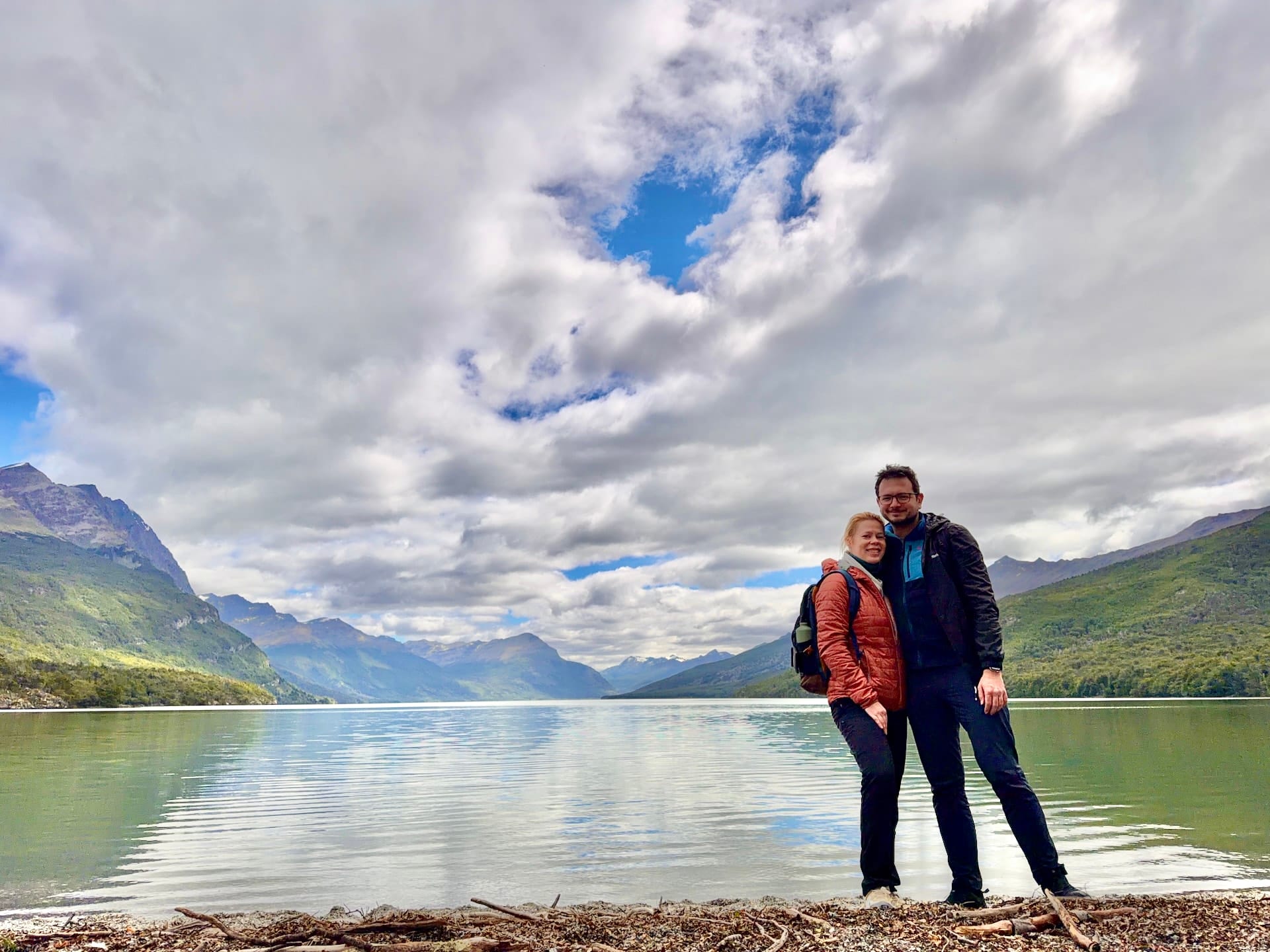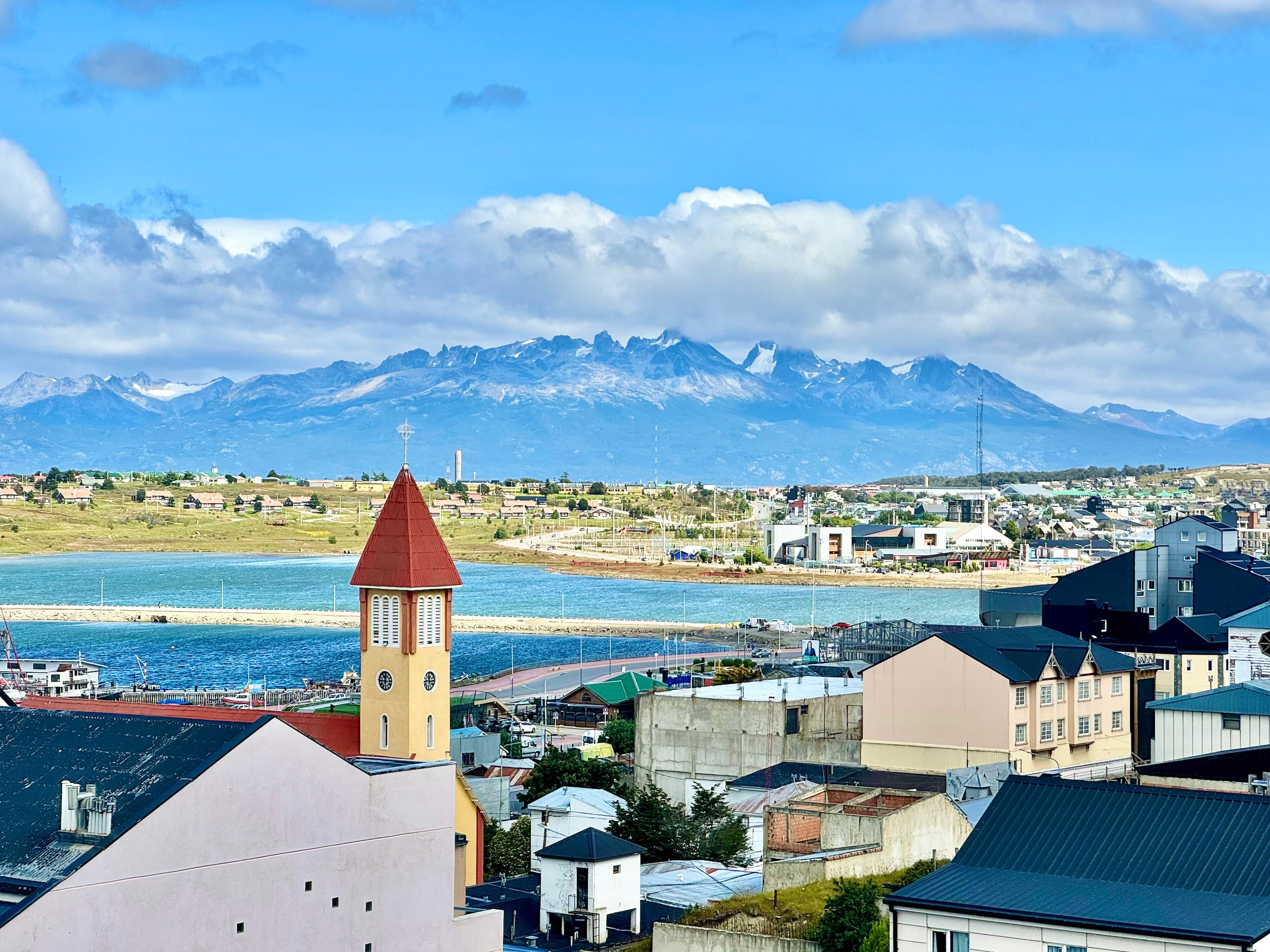
Ushuaia is a wonderful place in its own right, and a natural stop on any trip through Patagonia. That is not why we landed there one January evening, though. We came for the ship: a ten-day Antarctic expedition cruise that left from the port at the bottom of town. In practice our Ushuaia was a late evening and half a day before sailing, then a full day and a rushed morning after we got back. Roughly two days in total, which is far less than the place deserves.
My sister came through here on her big South America trip almost two decades ago and spent several days hiking around the town. Our Patagonia and Antarctica itinerary had no room for that. So this is not a hiking guide, and it is not a complete guide to the town either. It is for anyone in the position we were in: you are in Ushuaia because of an Antarctica cruise, you have a night or two on either side of it, and you want to use them well.
A Quick Introduction to Ushuaia
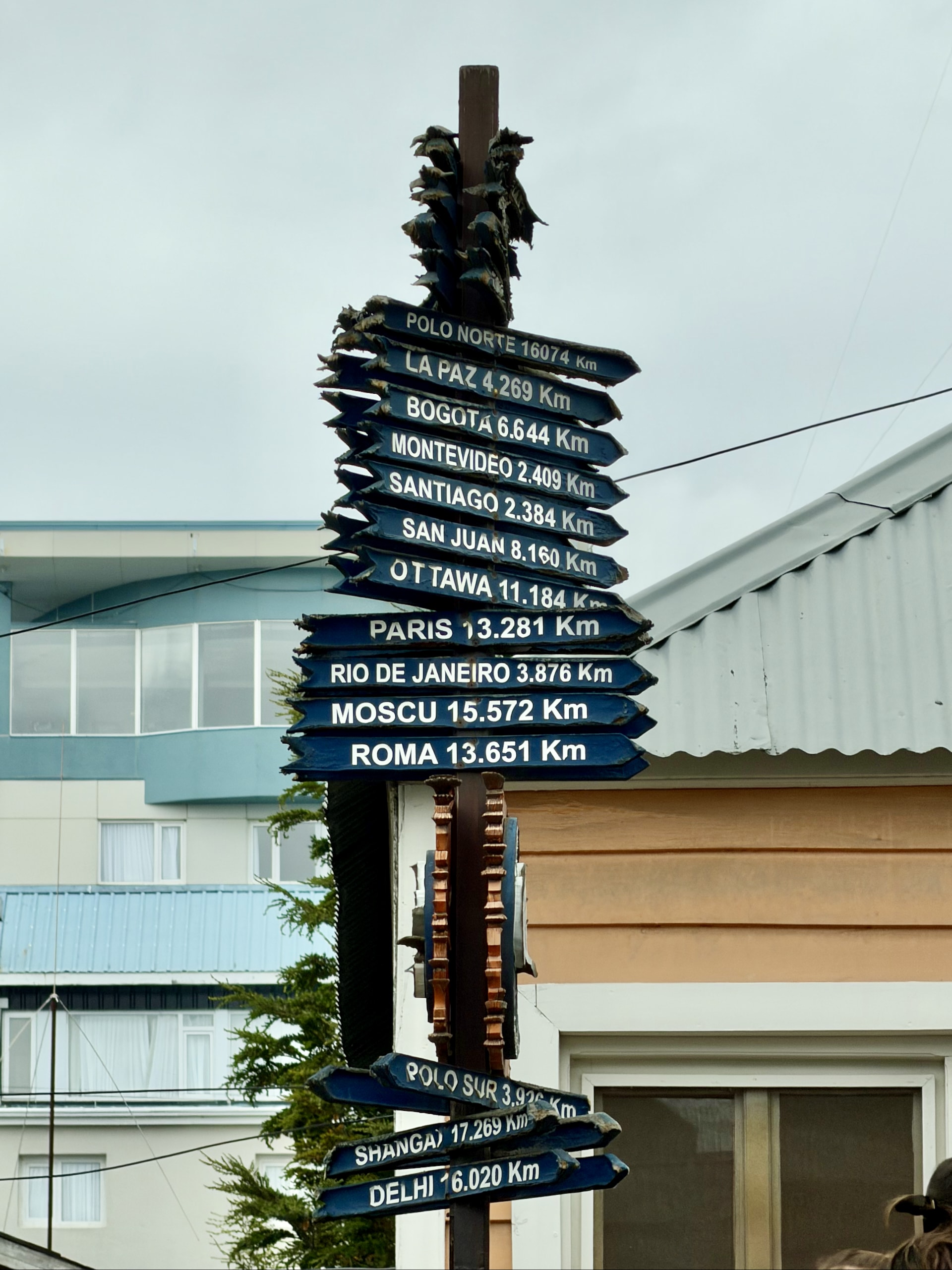
Ushuaia is the capital of Argentina’s Tierra del Fuego province, squeezed between the Beagle Channel and the Martial Mountains. It calls itself the southernmost city in the world, and you will not be allowed to forget it: “fin del mundo”, the end of the world, is printed on everything from street signs to souvenir T-shirts. Chile’s Puerto Williams, across the channel, is technically farther south, but with around 2,000 inhabitants it is more village than city, and Argentina has kept the slogan regardless.
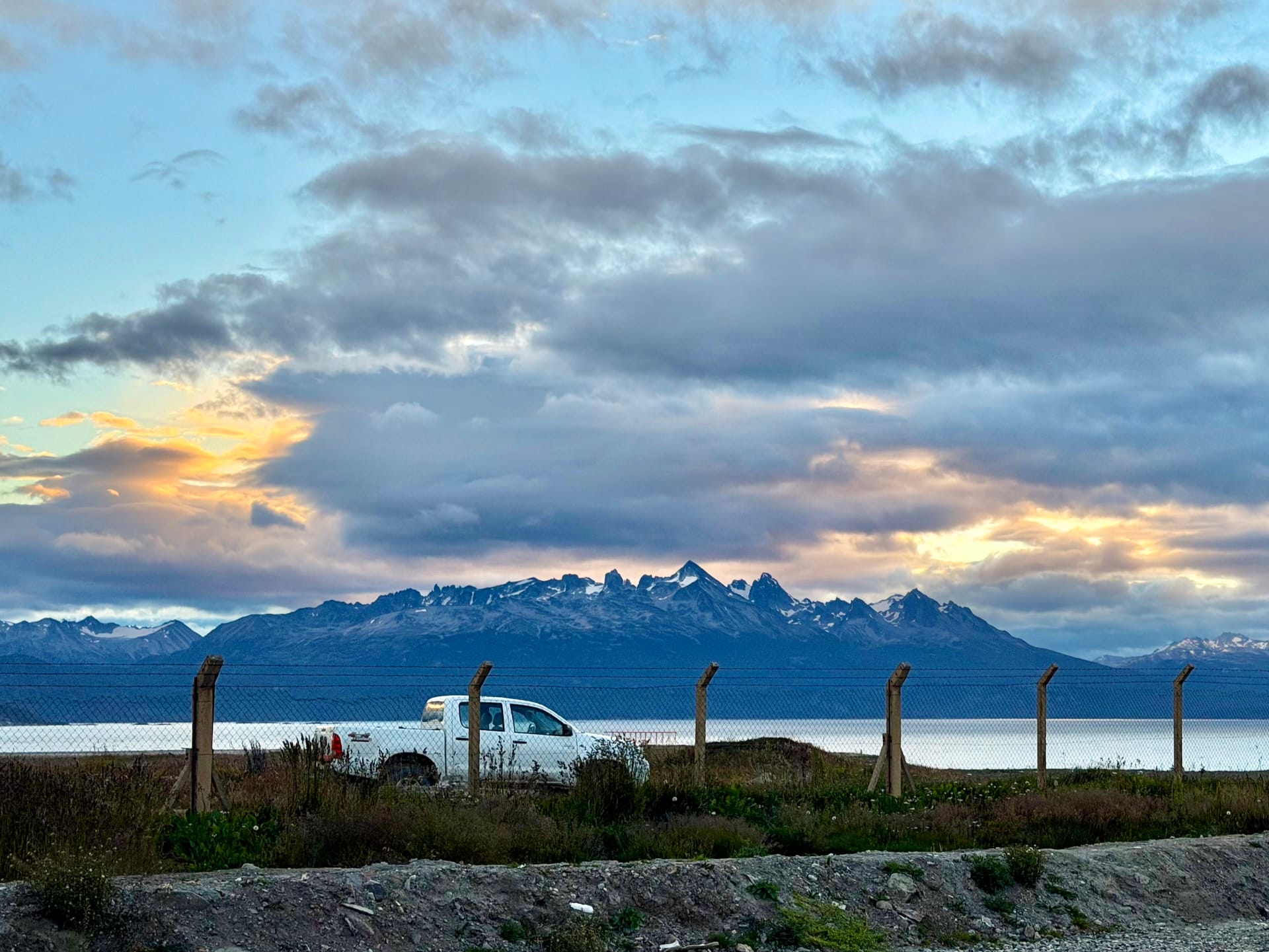
The Yámana people lived on these shores long before anyone else. We learned their story in the museum complex in the old prison, and it is not a happy one. There were around 3,000 Yámana in the mid-19th century. Then sealers and whalers stripped their food sources, European diseases such as measles and tuberculosis swept through, and the sheep ranchers who came later hunted them down for poaching. By 1890 roughly 300 were left.
An Anglican mission arrived in 1869, and Ushuaia was officially founded on October 12, 1884. For its first decades the town was defined by a prison. Argentina sent its most dangerous convicts here, and the inmates built much of early Ushuaia themselves, including the prison building and a railway to haul timber. The prison closed in 1947, and you can visit it today (more on that below).
These days the town lives off a different kind of visitor. Nearly every expedition ship heading for the Antarctic Peninsula sails from here, and Ushuaia has built itself around that fact. It is a tourist town now, and it knows exactly which tourists it serves.
How Many Days Do You Need in Ushuaia Before and After Antarctica?
Here is what our time actually looked like:
- January 22: we landed at around 9:30 PM.
- January 23: we dropped our big bags at 9 AM, then had the day until the bus to the ship left shortly after 3 PM. We were on board at 3:20 PM.
- February 1: we walked off the ship at 8 AM, a Sunday, and spent the day and night in town.
- February 2: we spent the late morning in Tierra del Fuego National Park and flew on to El Calafate at 5:30 PM.
So “two days in Ushuaia” really meant an evening, half a day, a full day and a morning.
Before the cruise, one night is the minimum, and it is enough. As we explained in our guide to planning an Antarctica trip, arrive at least a day early. Flights get cancelled, and the ship will not wait for you. Besides ours, four later Aerolíneas Argentinas flights would still have got us there before the ship sailed, but our 9:30 PM landing the evening before was about as late as I would cut it. The half day before boarding is enough to see the town itself.
After the cruise, it depends on how much you want to see. Ships dock early because most of them sail again the same afternoon. We were off by 8 AM and could easily have caught a late-morning flight to El Calafate. We didn’t know that when we booked, so we planned an extra night. I don’t regret it. That night bought us a rental car, a waterfall and a morning in the national park. And you could easily spend far longer here than we did, if hiking is on your list.
Before the Cruise: Arriving in Ushuaia
Flying In: Sit on the Right Side of the Plane
Aerolíneas Argentinas and the other carriers run up to eight to ten flights a day between Buenos Aires and Ushuaia in peak season, and the flight takes a little over three hours. The landing was, I think, the most incredible one of my life. The plane flies so close to the mountains on the approach that you feel you could reach out and touch the peaks. We spent the whole descent glued to the window.
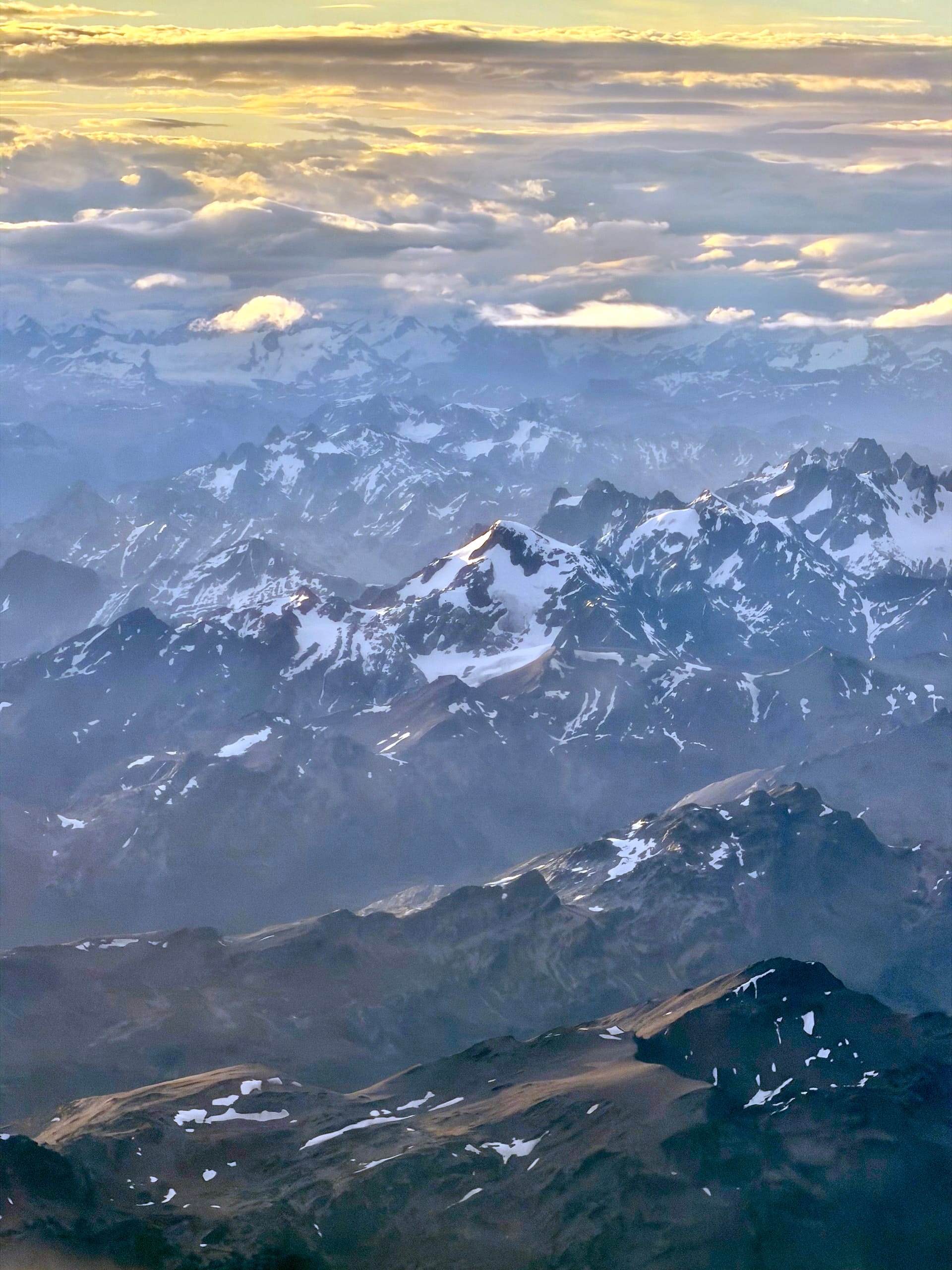
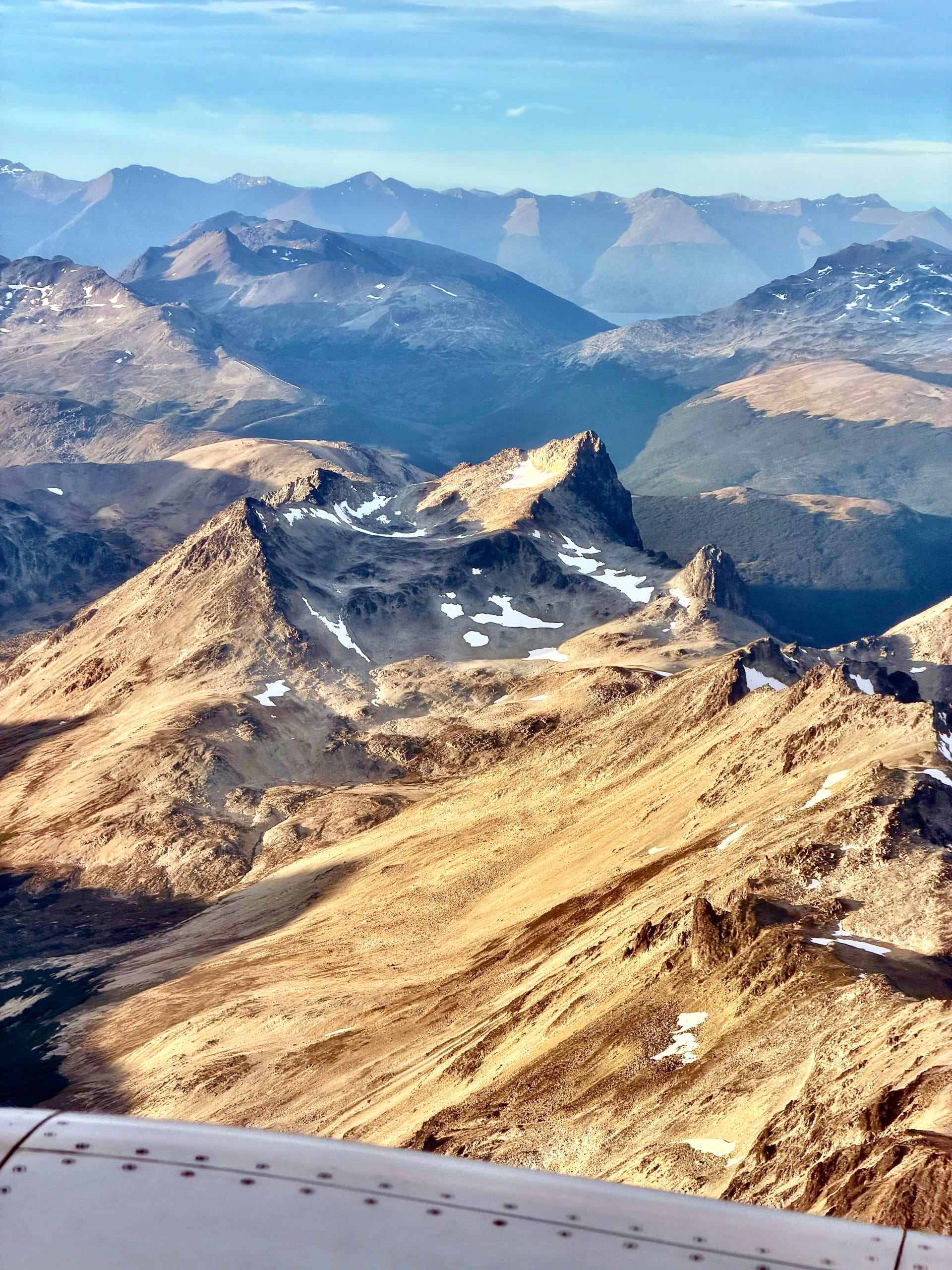
We were sitting on the right side of the plane. I don’t know what the left side sees. Possibly just the sea. If you want the same experience, book a seat on the right.
A Late Arrival
The airport is tiny, so we were out quickly and called an Uber. The 15-minute ride into town cost 9,000 ARS (~$6.2 USD). It was also the occasion on which I managed to keep up a more or less coherent conversation in my caveman Spanish for almost the whole 15 minutes with our very kind driver. Food, the weather, how long we were staying and where else we were going, and of course football, this being Argentina. To my surprise, it worked.
We reached our guesthouse, Hostería Foike, at around 10 PM and ran straight into a problem. Nobody was at reception, and nobody answered on Booking or WhatsApp either, even though we had confirmed our arrival with them earlier. A very nice American couple we met in the lobby tried to help, and it took almost half an hour to track down the owner, who handed over the keys. No apology. After a long flight, and the night before the trip of a lifetime, that did not go down well. To be fair, the breakfast staff the next morning could not have been kinder. It was only the owner who was grumpy.
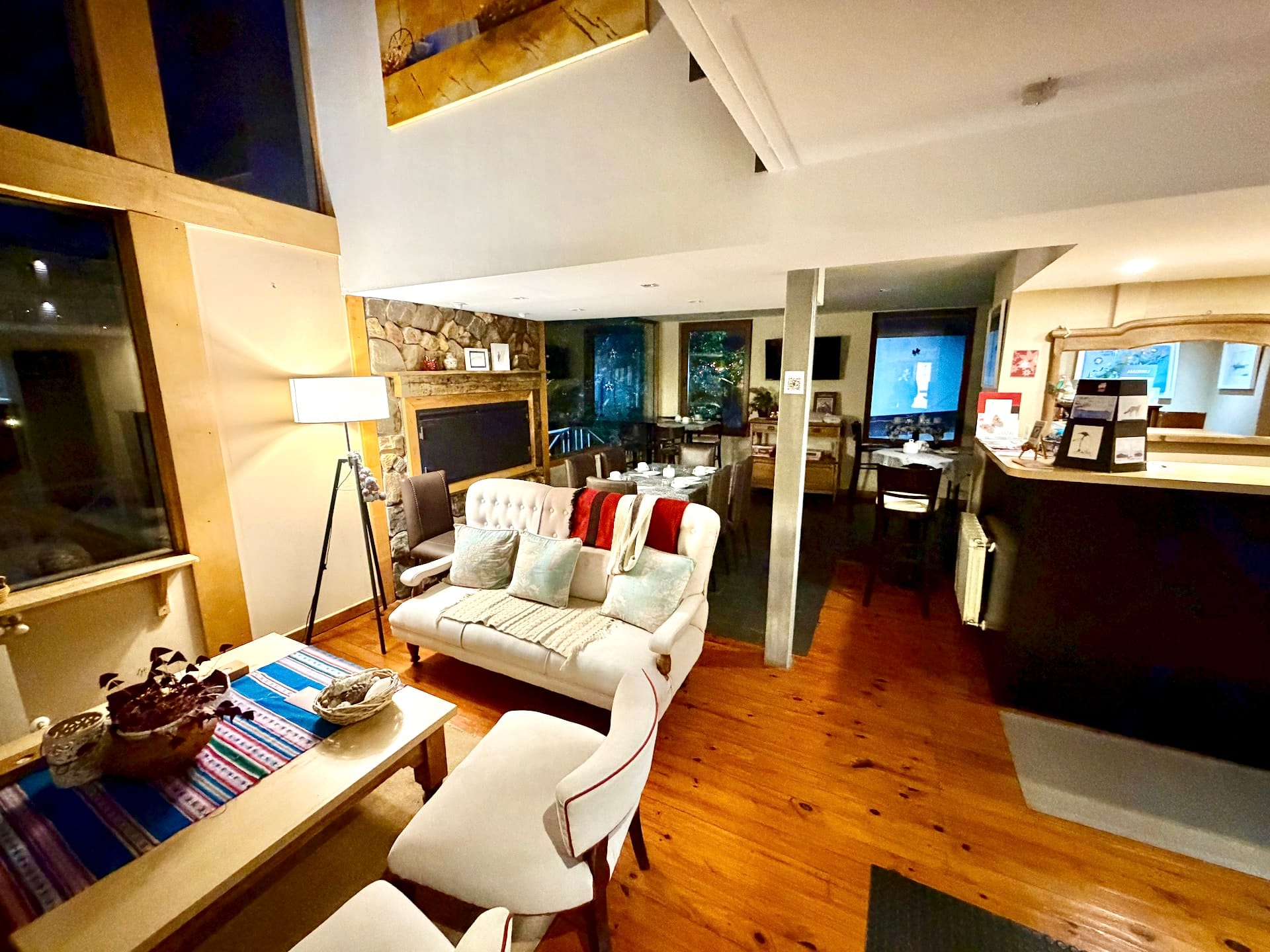
At 9:30 PM it was still light. This far south in January, the days just keep going.
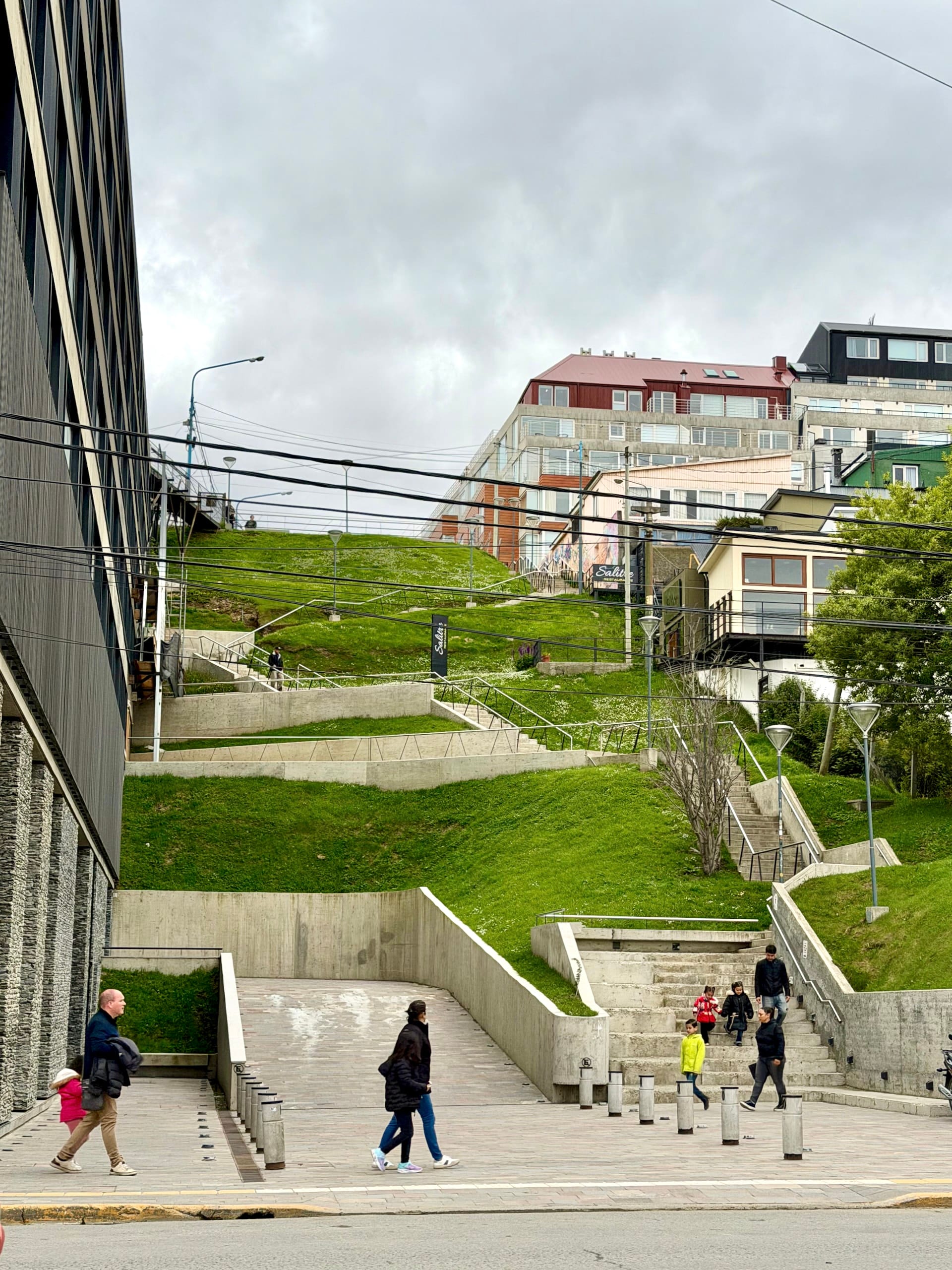
Since it was late, almost every restaurant was already closed. We walked down to the main street, and I do mean down: we took the stairs. I had not expected it, though perhaps I should have, but Ushuaia is extremely steep and hilly. The whole town is built into the side of a mountain.
If you have trouble with mobility, or you are traveling with older relatives, book somewhere as close to the port as you can. Getting to the higher streets is a real climb. The upside is that you get proper streets-and-summits photos out of it. The expedition companies’ own hotels tend to be down on the waterfront. Albatros Expeditions, which ran our cruise at the time (it has since been bought by Polar Latitudes), had the Albatros Hotel right next to the port, and from what I have seen since, a lot of cruises now include a hotel night before departure.
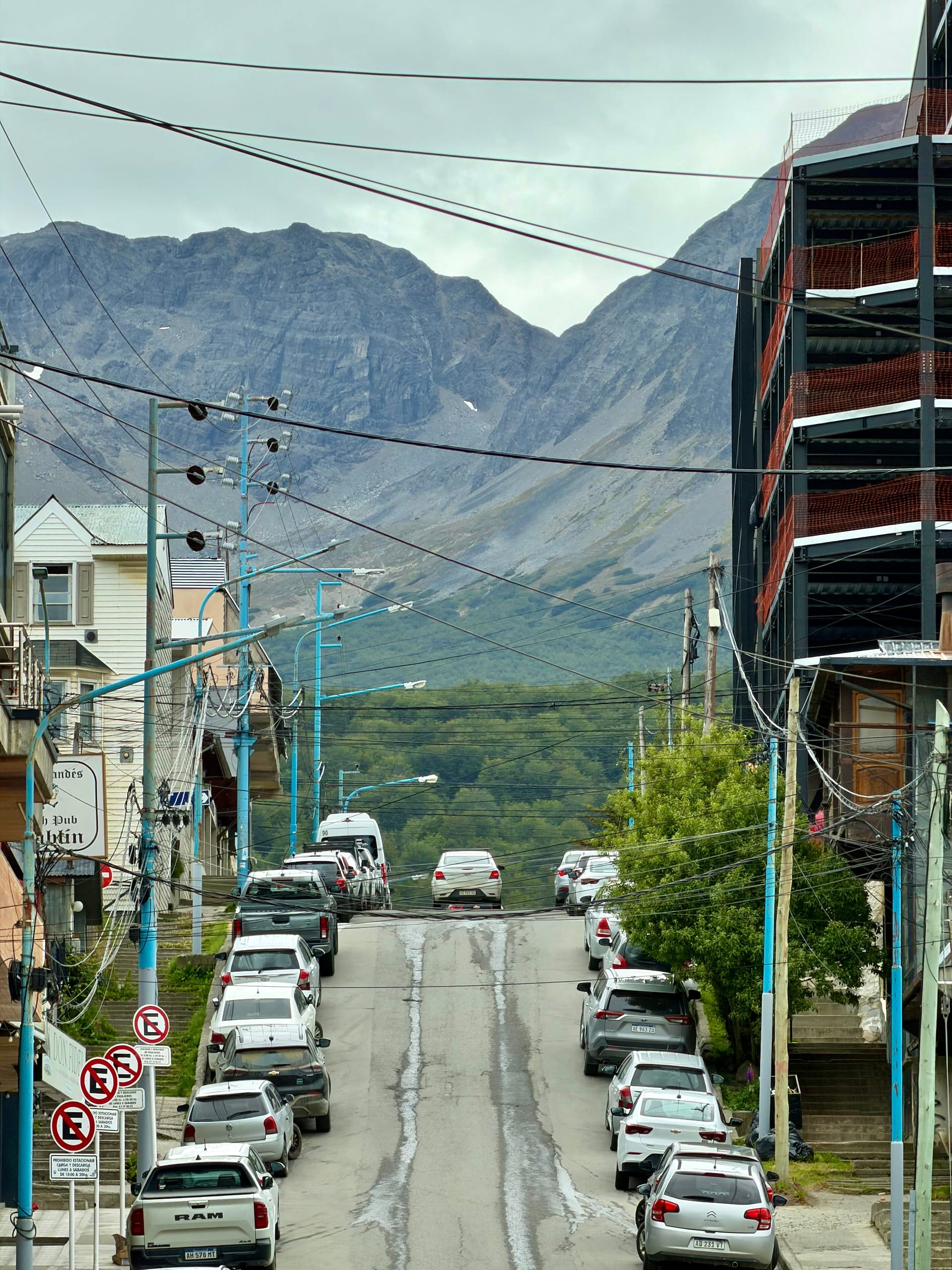
On the main street we found one shop still open, bought some packaged food and local beer, and ate it on the guesthouse’s outdoor terrace. Then bed.
Embarkation Day: Things to Do in Ushuaia Before You Board
Dropping Off Your Luggage
On embarkation morning you hand your big bags in at a designated drop-off point, and they go to the ship separately. The time and place depend on your operator. Ours was at around 9 AM, so after a quick breakfast we headed there and handed over our main luggage, which for each of us was a Peak Design Travel Backpack 45L.
Boarding was in the afternoon. Buses take you to the ship, which makes little sense, since the port is about five minutes away. But that is how it works, and the departure point was given to us in advance. Our bus left shortly after 3 PM. What happened after that is in our Antarctica cruise day-by-day account and our review of the Ocean Albatros.
Once you hand in your big bag in the morning, you won’t see it again until you are on board, so pack your daypack for a full day in town: your passport (you need it at boarding), a warm layer and a rain shell, since Ushuaia’s weather changes fast, plus any medication. Keep the seasickness tablets in there too. The Drake Passage is only a few hours away.
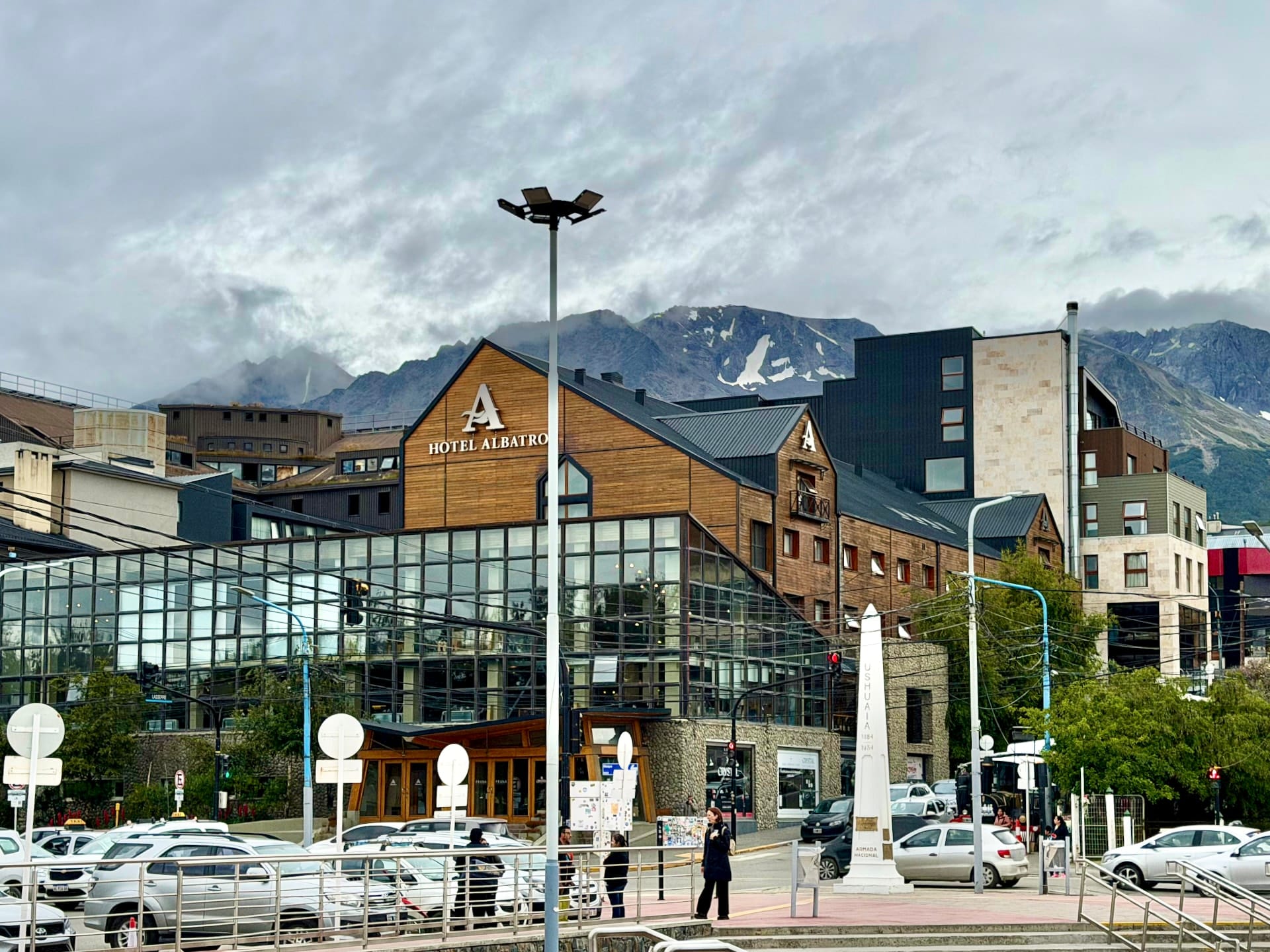
Walking the Waterfront, From One Ushuaia Sign to the Other
That leaves most of the day free. We had not organized anything. The plan was to wander around and get to know the town a bit better, and that is exactly what we did.
We went down to the port first, of course, where our ship, the Ocean Albatros, was already docked. We could only see it from a distance. There were warships in the port too, which I found interesting.
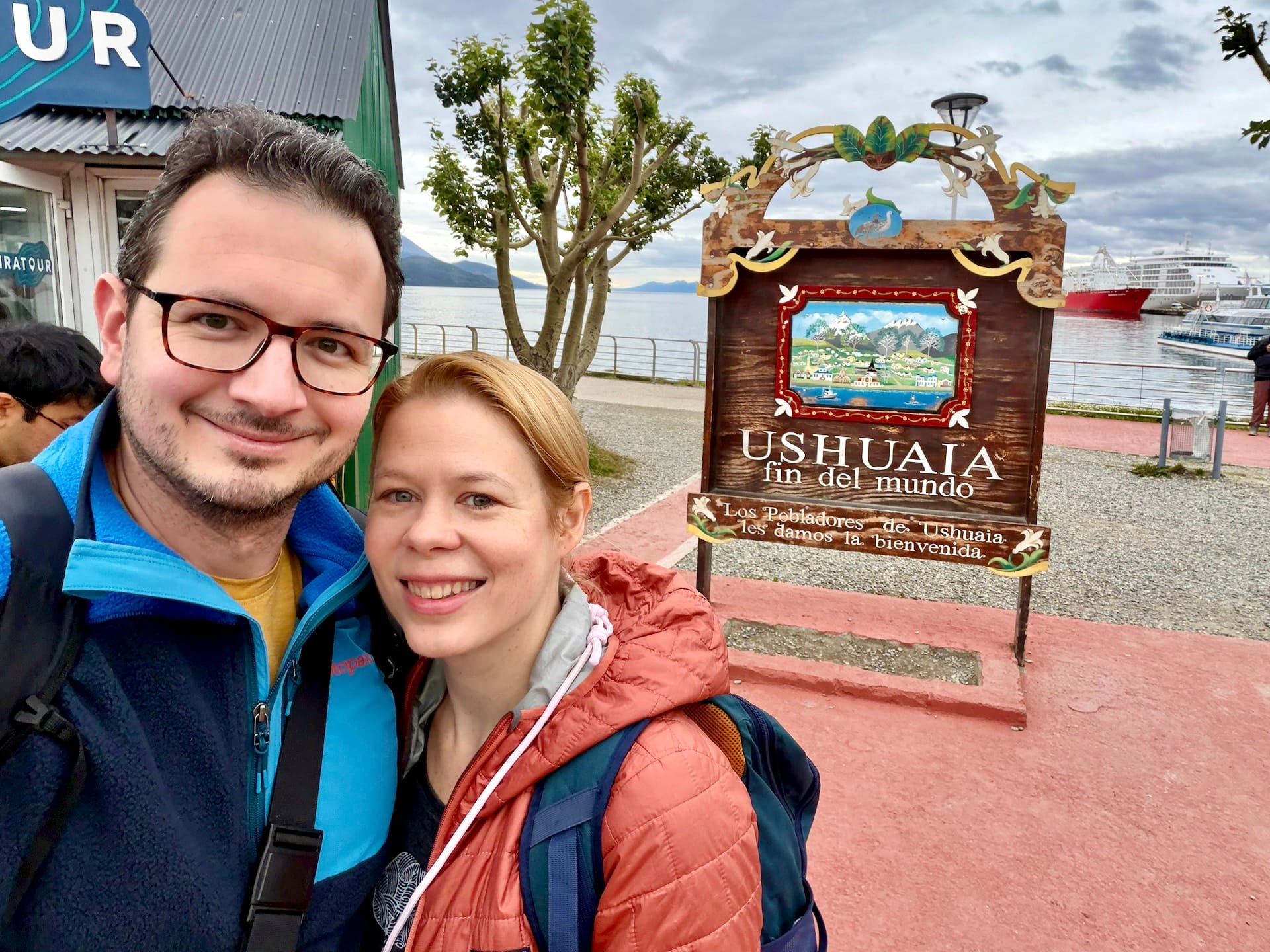
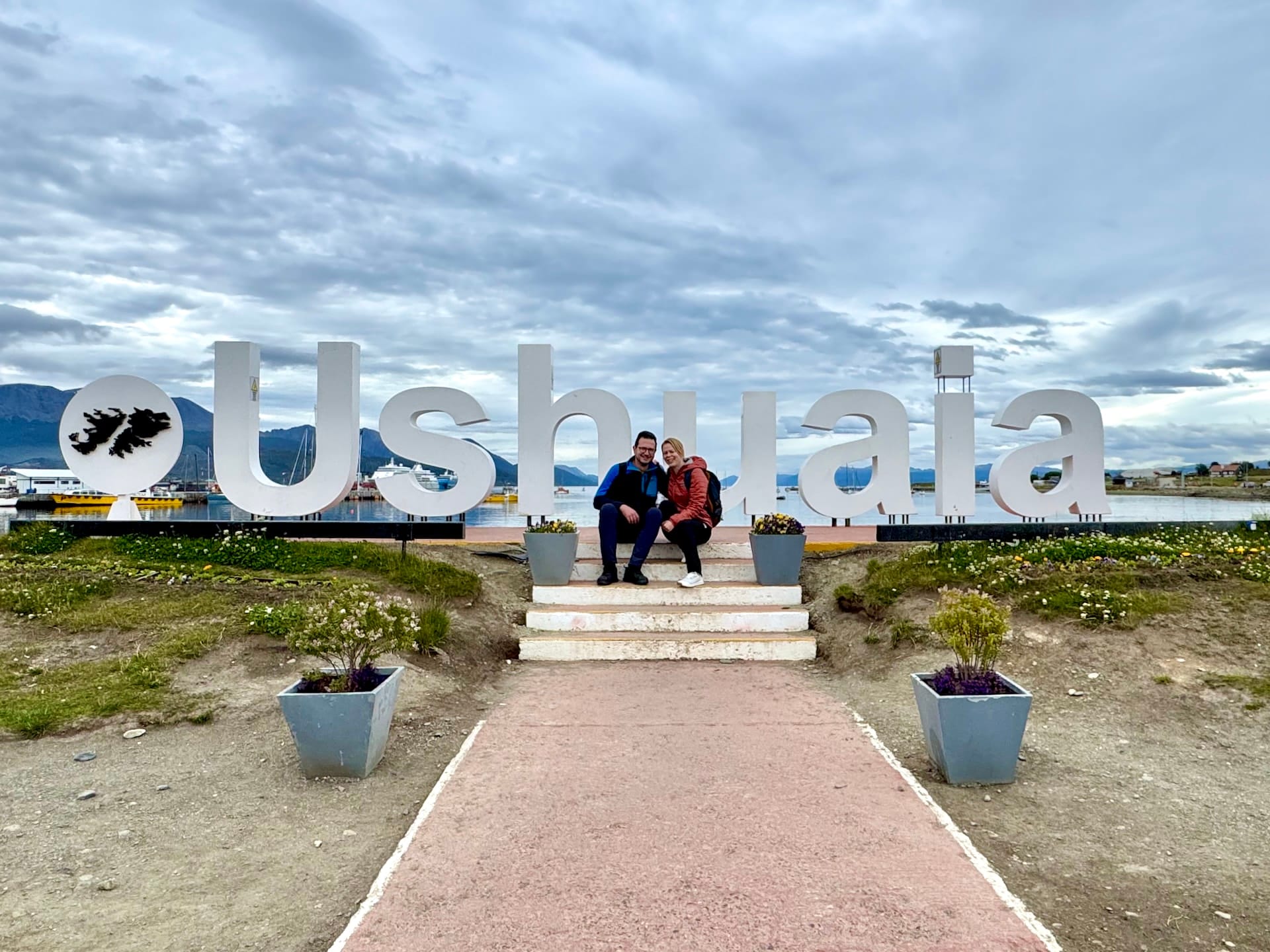
Next to the port is the tourist information center. It has free toilets and Wi-Fi, and, in very Argentine fashion, a hot water dispenser, which made me smile every time I saw one. If you want to refill your yerba mate, this is your chance. Around it are the small booths selling every organized tour in the area: boat trips on the Beagle Channel, excursions to the nearby national parks, and all sorts of things in Tierra del Fuego. There is also a small Ushuaia sign here for the obligatory photo.
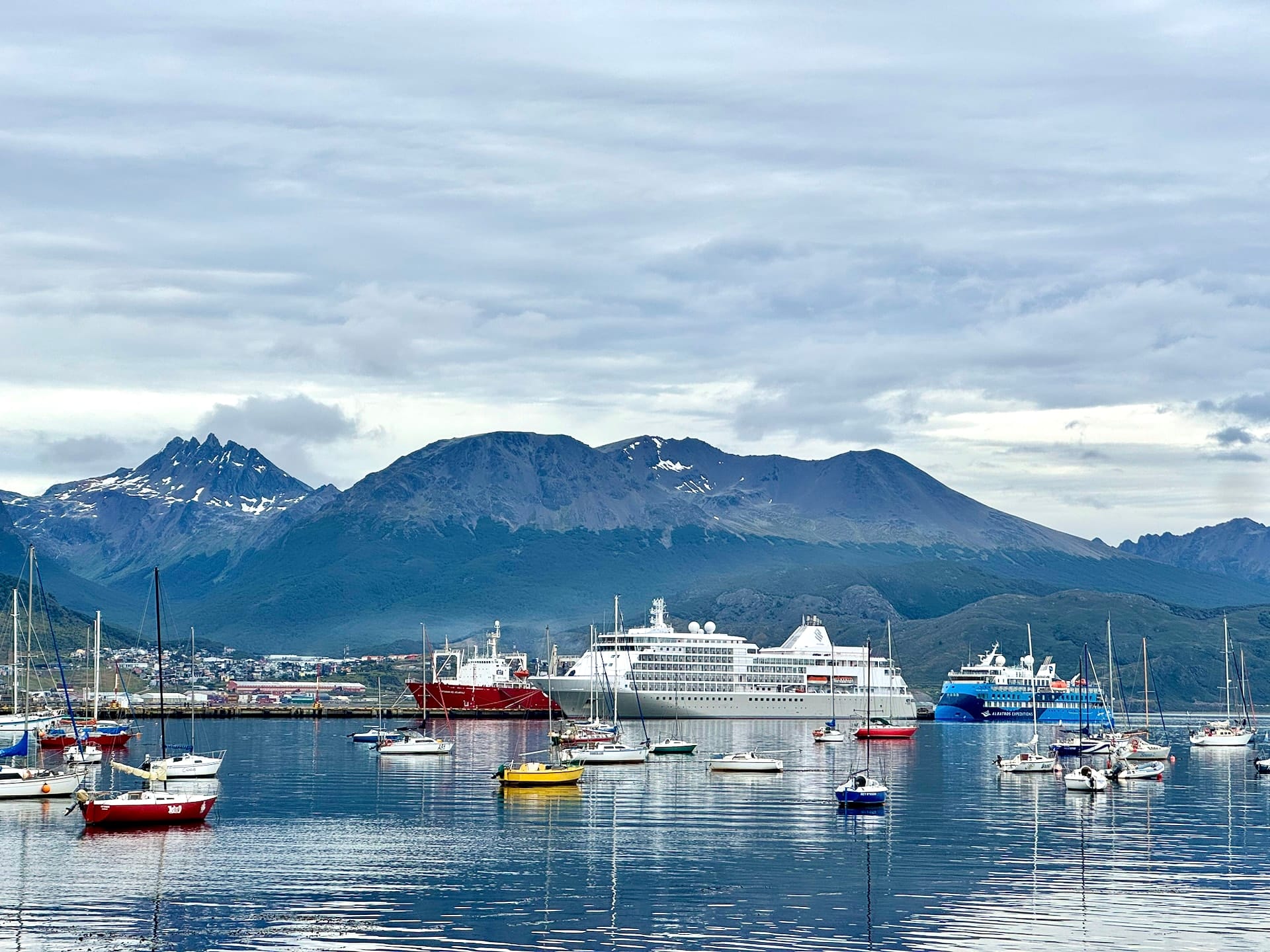
We spent the half day walking the town from end to end, from one part of the port to the waterfront on the far side. You could also say from one Ushuaia sign to the other. On the opposite side of town, closer to the airport, there is a big white USHUAIA lettering, the classic kind that every city seems to have now. As a bonus it comes with a small Islas Malvinas sign showing the outline of the Falkland Islands.
Nearby is the National Malvinas Monument, the memorial to those who died in the 1982 Falklands War. The inscription ends with the word “¡Volveremos!”: “We will return.” Interesting.
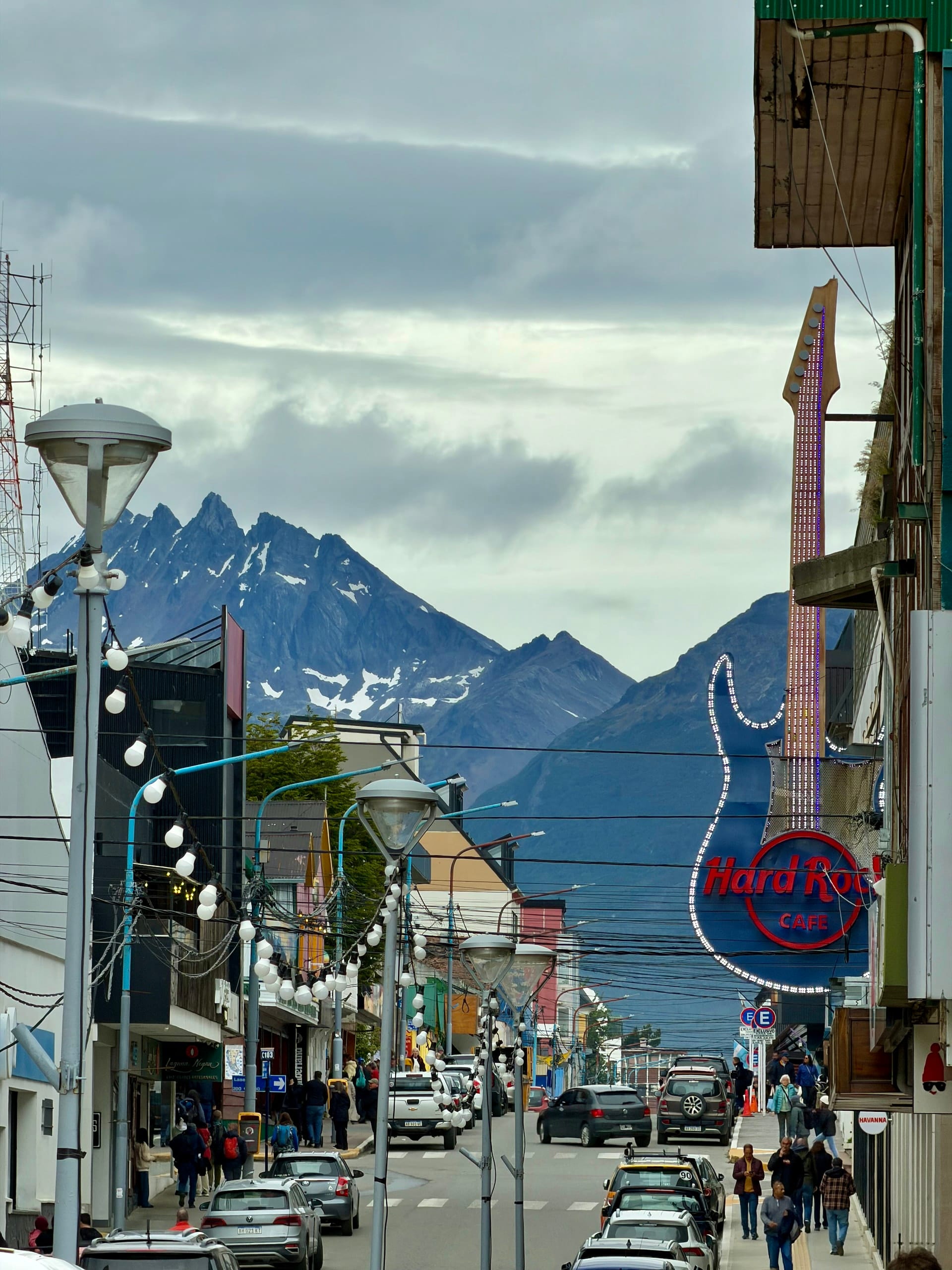
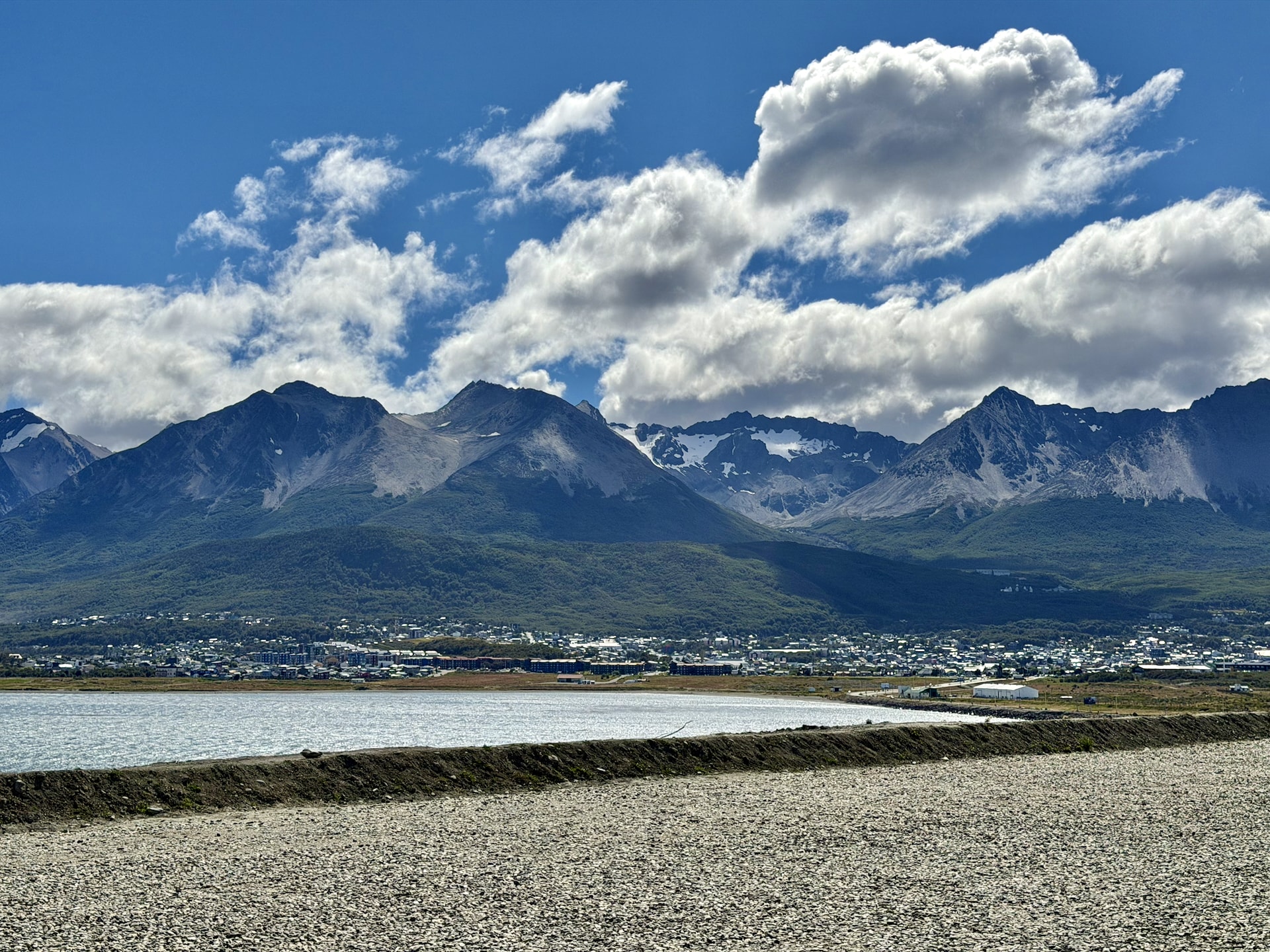
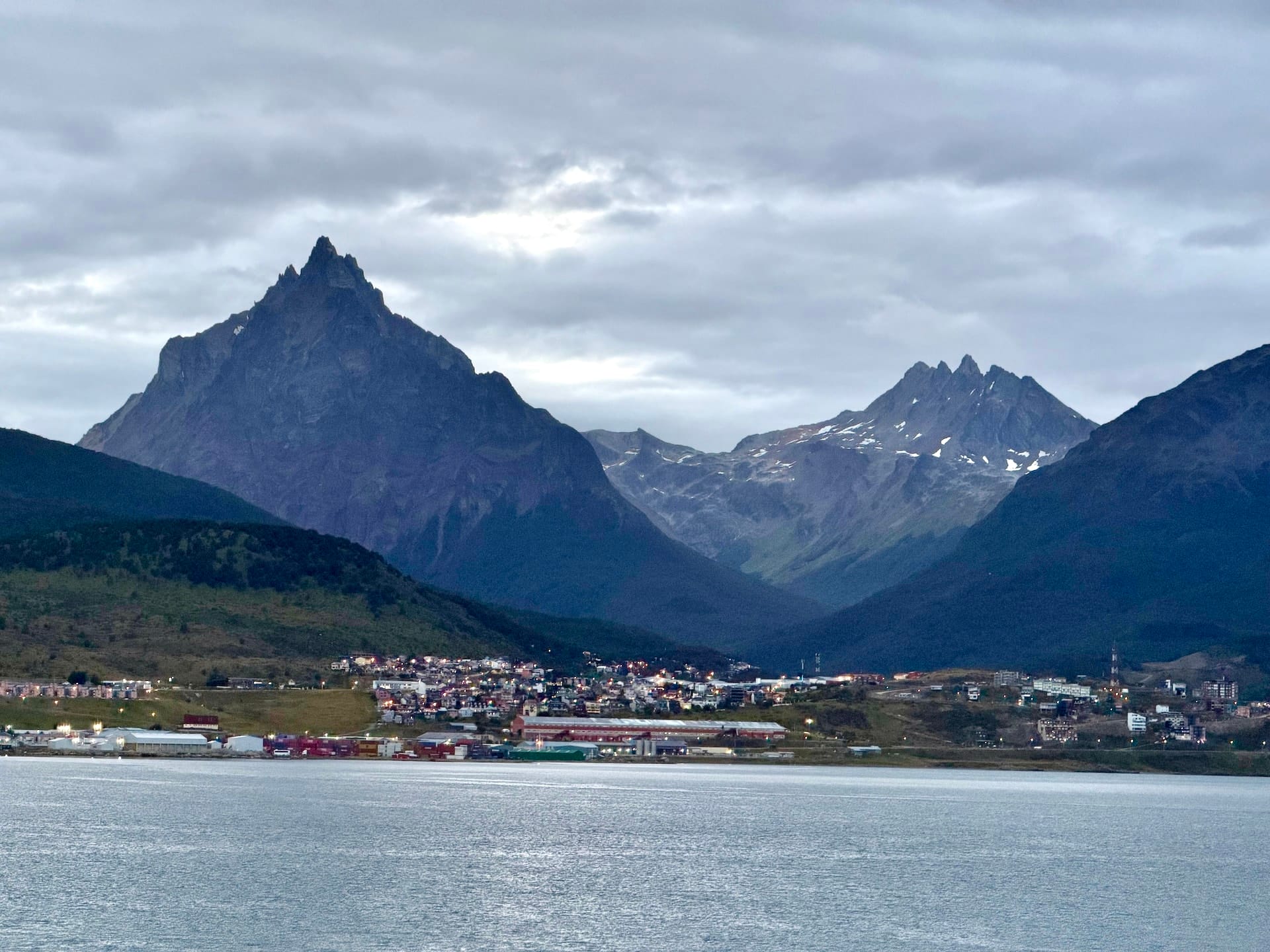
The town itself is small, but I found it very pleasant, mostly because of how it is built into the mountainside. Seen from the waterfront, there are big mountains rising behind every street. The weather was not great. I’m not sure Ushuaia does good weather at all, I thought. It was cloudy, though at least it didn’t rain. As it turned out, it does: by the time we got back from Antarctica, the sun was out.
Last-Minute Gear Shopping
One thing you notice immediately is how much of the town exists to sell you whatever you forgot to pack for your hike or your Antarctica trip. Outdoor shops are everywhere: backpacks, pants, jackets, sweaters, shoes, all of it. The prices are not that bad, and there are plenty of rental places too. So if something got left at home, you can still sort it out here before you sail.
Errands and Lunch on Avenida San Martín
Avenida San Martín is effectively the town’s main street, and it is where we did our last errands. We bought a bottle of wine to drink on the ship, plus a corkscrew to go with it. There are several supermarkets in town, and we did our final shopping round at La Anónima, down near the waterfront. We also stopped at a pharmacy to buy Andrea some nasal spray.
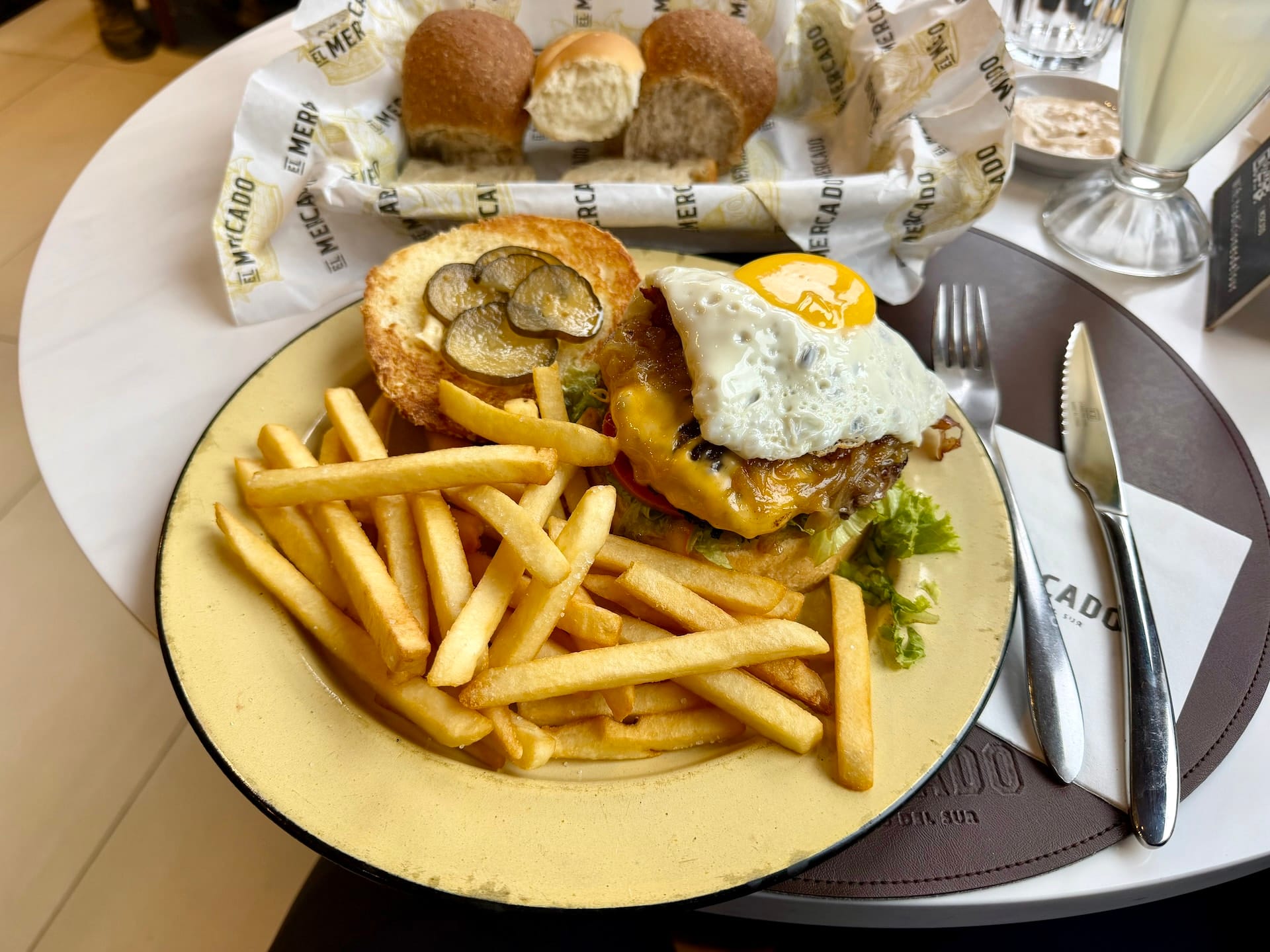
Lunch was at El Mercado Ushuaia, also on San Martín, and came to about $41 USD for the two of us. I had a burger, because after Buenos Aires I was suffering from a serious steak overdose. The beef in it was excellent, of course, as it is everywhere in Argentina. Andrea went for a lighter pasta. The restaurant everyone had told us about, the one that is supposedly great and very local, is Bodegón Fueguino. There was a huge queue outside every time we walked past, so we never ate there, that day or later.
After all that wandering we went to the meeting point, the buses took us to the ship, and we set off on ten unforgettable days. If you are wondering whether it lived up to the price, we wrote about that too: Was Antarctica Worth It?
After the Cruise: Things to Do in Ushuaia on Disembarkation Day
Before the cruise, you are so excited that you hardly notice what is going on around you. Coming back is different. There is plenty to see even if you only have one day, and there are a few practical things to sort out as well.
Getting Off the Ship
The most important thing is to find out well in advance exactly when your ship gets back. Ships usually dock in the early morning, because most of them leave on their next voyage that same afternoon. We were off by 8 AM.
Several buses were waiting at the pier. Anyone flying out that day could go straight to the airport. Everyone else was taken to the same luggage point where we had dropped our bags before departure, and the big bags could stay there until the afternoon. If you are staying the night, check-in is usually later in the day, so this lets you walk around town with just a daypack.
What made things harder for us was that we got back on a Sunday. A lot of places were closed, not just in the morning but all day. The funny part is that in the early hours, the only people on the streets of Ushuaia are the ones you just spent ten days with on the ship. Every free table in every open café that Sunday morning was taken by someone from our ship. So that’s where we started: with a coffee, among familiar faces, planning our day. Our Airbnb would be ready at around 2 PM.
Ushuaia Prison Museum (Museo Marítimo y del Presidio)
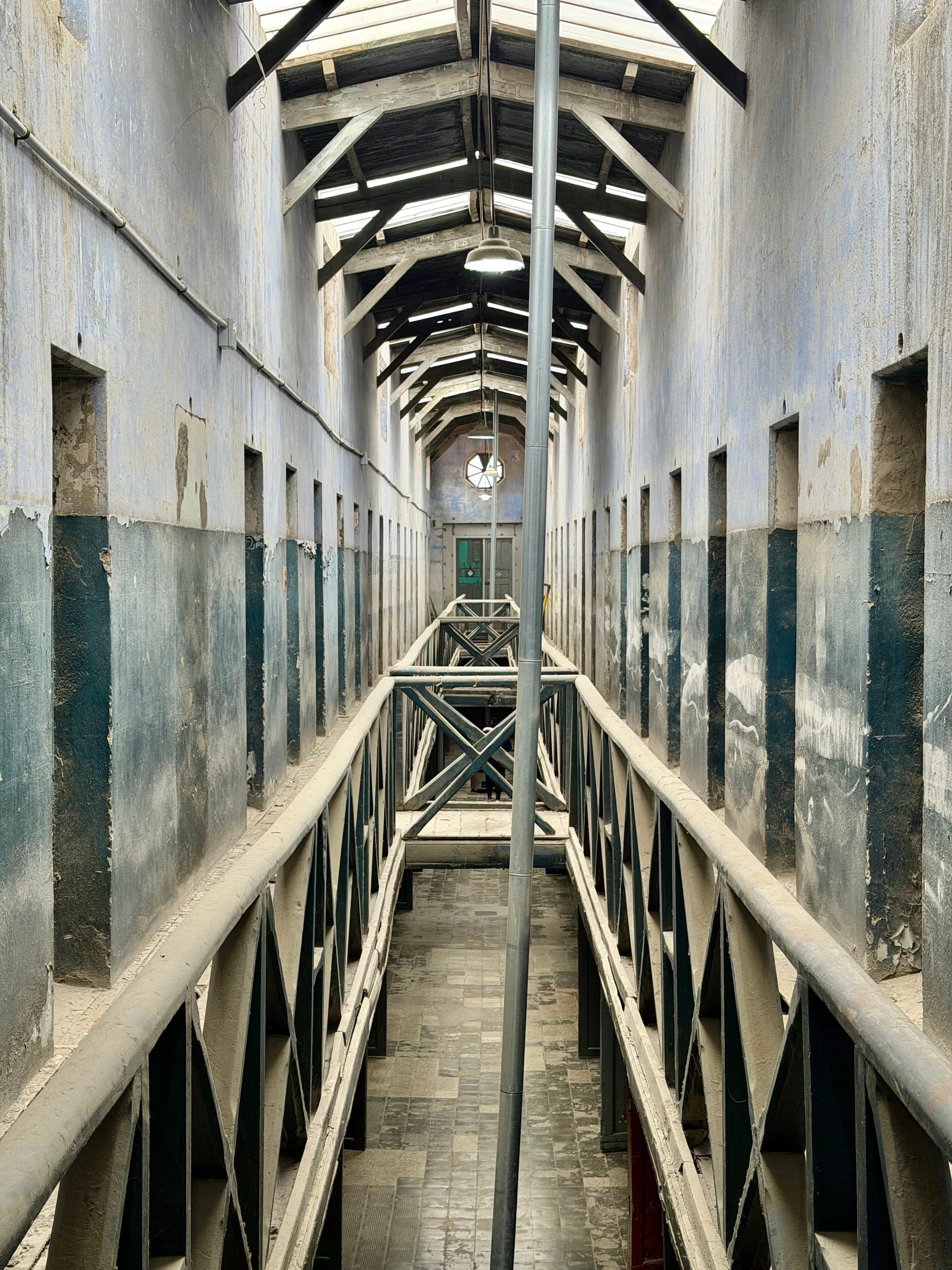
Our first stop was the old prison, now the Museo Marítimo y del Presidio. Inmates built it themselves between 1902 and 1920, and by the end it had five wings with 386 single cells. Argentina sent its worst offenders here, among them the serial killer known as “El Petiso Orejudo” and the anarchist Simón Radowitzky. The prison closed in 1947. Today the complex holds four museums under one ticket: the prison museum, a maritime museum, an Antarctic museum and a marine art museum. Wing 1 has been left largely as it was.
It cost us about 43,000 ARS (~$29.5 USD) each. Expensive, and to me it was definitely not worth the price. It wasn’t bad, though. It was reasonably interesting, especially the actual prison part. It tells the story of who was held here and how the place worked over the years, and you would probably get a lot more out of it on a guided tour. But I wouldn’t call it unmissable.
If you do go, the museum recommends at least an hour and two for the full visit. Tickets are valid on two consecutive days and are sold only on site, and guided tours run in Spanish, with English tours on request.
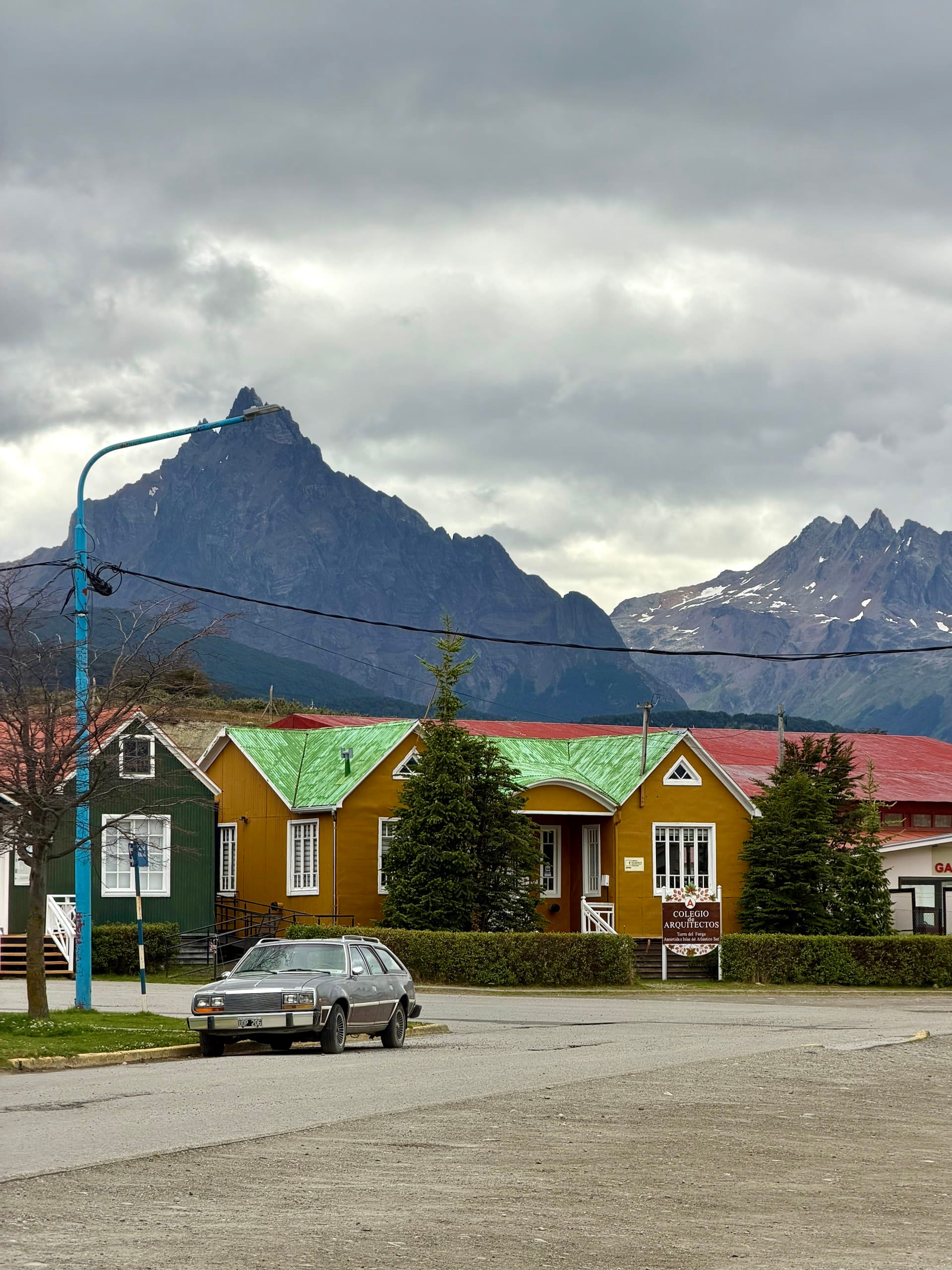
Finding a Laundry in Ushuaia on a Sunday
After ten days on a ship, clean clothes became our next challenge: finding a lavandería open on a Sunday. We asked basically every living person we met. Google was no help, and even the staff at the office of Freestyle Adventure Travel, the agency we had booked the cruise through, couldn’t point us anywhere.
In the end we found Pink Laundry Ushuaia, which is open on Sundays. It is not self-service: you drop your clothes off, and ours were ready in about an hour and a half to two hours. As far as we could tell, it was the only laundry open in the whole town that day, so we planned around it. Andrea repacked at the apartment while I took the laundry over.
If your ship gets back on a weekend, line up a laundry before you sail. Ask your accommodation or the agency in town which one will be open on your return day, and note its hours. On a Sunday morning in Ushuaia, that information is surprisingly hard to come by.
Food Trucks and the Artisan Market
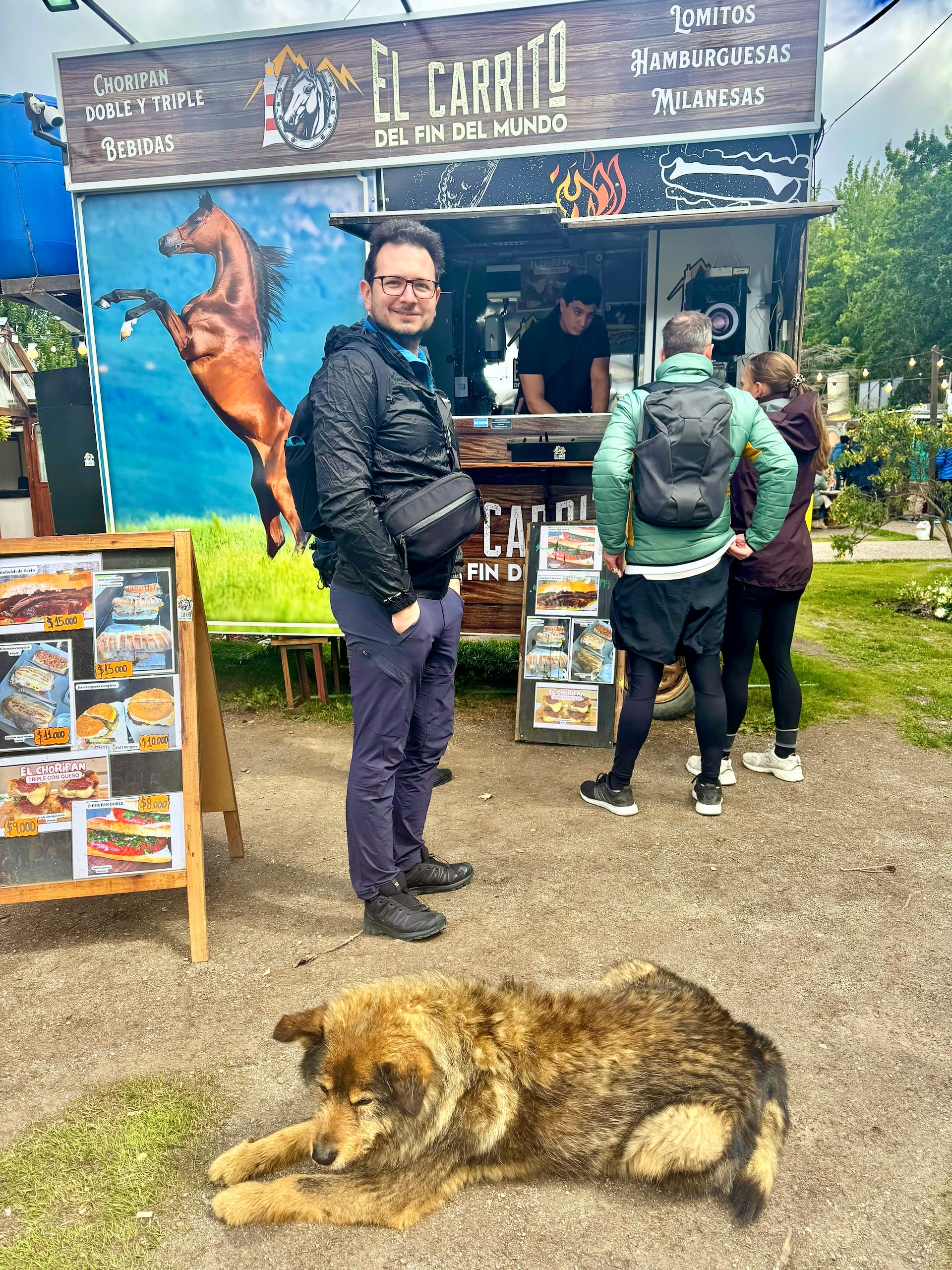
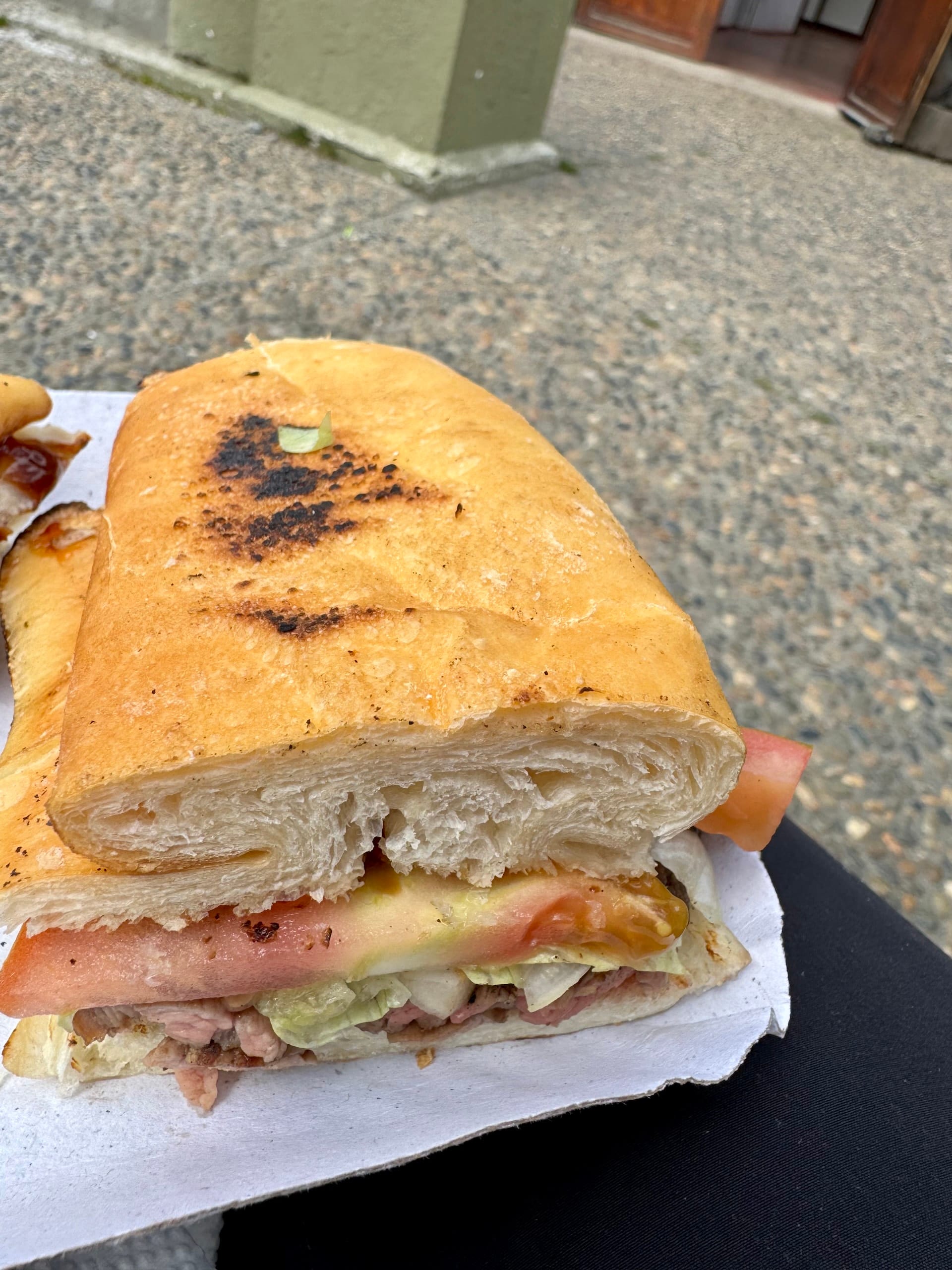
We had arranged to meet at the food truck area on the waterfront, near the tourist information office, and eat something while the laundry was being done. I had a choripán, which was very good. I was also complimented once again on how well I speak Spanish. That only ever happened to me in Ushuaia while we were in Argentina, which may mean something.
Since we were there anyway, we looked into the Feria de Artesanos, the artisan market, as well. It is a covered gallery of stalls selling handmade goods in leather, felt and wood. We are not big souvenir people, so we didn’t buy anything. There are souvenirs all over town, but most of them are the usual Chinese-made plush penguins and the like. If you do want to take something home, the Feria de Artesanos is where I would go.
Renting a Car in Ushuaia
The rental car was another errand for that day. We had considered the bus to the national park, but a car gave us far more freedom, especially with a flight to catch the next afternoon.
We went with Discover Rent a Car. Their online system would not let us book a car for just one day, but when we walked into the office, that was no problem at all. We had planned to pick it up the next morning. The guy behind the desk had a point, though: why not take it that afternoon? We would pay the same for one day either way and could see a bit more. So that is what we did. The car cost us about $94 USD for the day, plus about $8 in fuel.
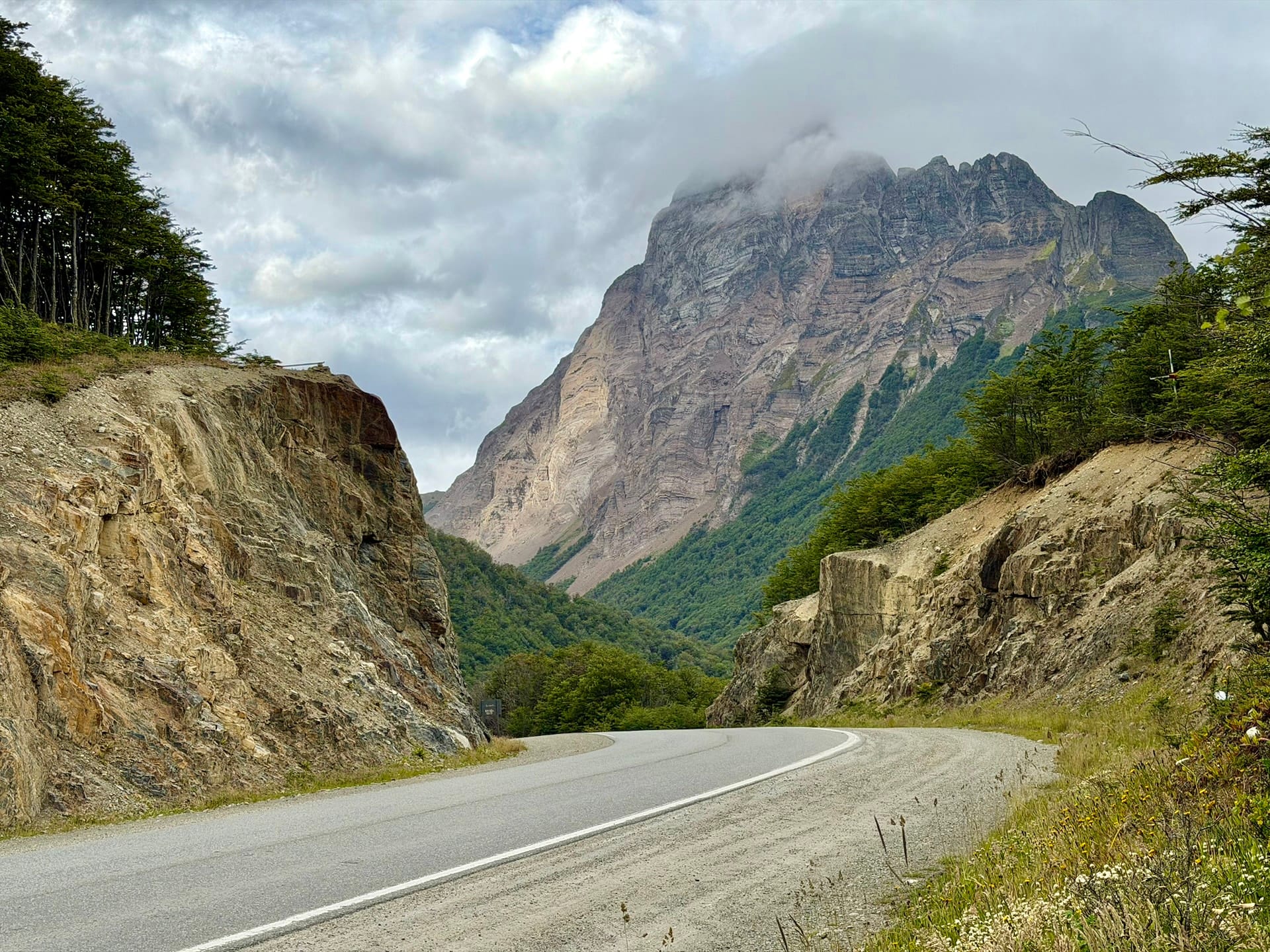
It isn’t cheap, but it isn’t outrageous either compared with the shuttle buses to the park, which cost 25,000 ARS (~$16 USD) per person for a round trip in February 2026. For two people the car still works out more expensive, but it is far more flexible, and that matters when you have a flight to catch. The shuttles also collect plenty of complaints in their reviews: packed full, not leaving when they are supposed to, and so on.
Pickup was easy. The office was a stone’s throw from our accommodation, though everything in Ushuaia is a stone’s throw away. We could park right in front of the building, and the company let us drop the car off at the airport the next day, which made everything very simple. We had tried to arrange a park trip with Alka, the British backpacker we met on the ship (the story of how she got her last-minute ticket is in our Antarctica planning guide), but she ended up going on our first day back, while we went the next morning. So it was just the two of us in the car.
Velo de Novia (Bridal Veil) Waterfall, Ushuaia
We picked up the car at around 4 PM and decided to spend the rest of the afternoon at Cascada Velo de Novia, the Bridal Veil waterfall, a short drive east of town.
On the way we stumbled on something unexpected: a shrine to Gauchito Gil. He is Argentina’s best-known folk saint. According to the legend, he was a gaucho who deserted the army and was executed in 1878, and he is especially popular with truck drivers, who helped spread his cult across the country. His shrines are always red, and they are not official. The Catholic Church has never recognized him. Ordinary people build these shrines, and you see them along roads all over Argentina.
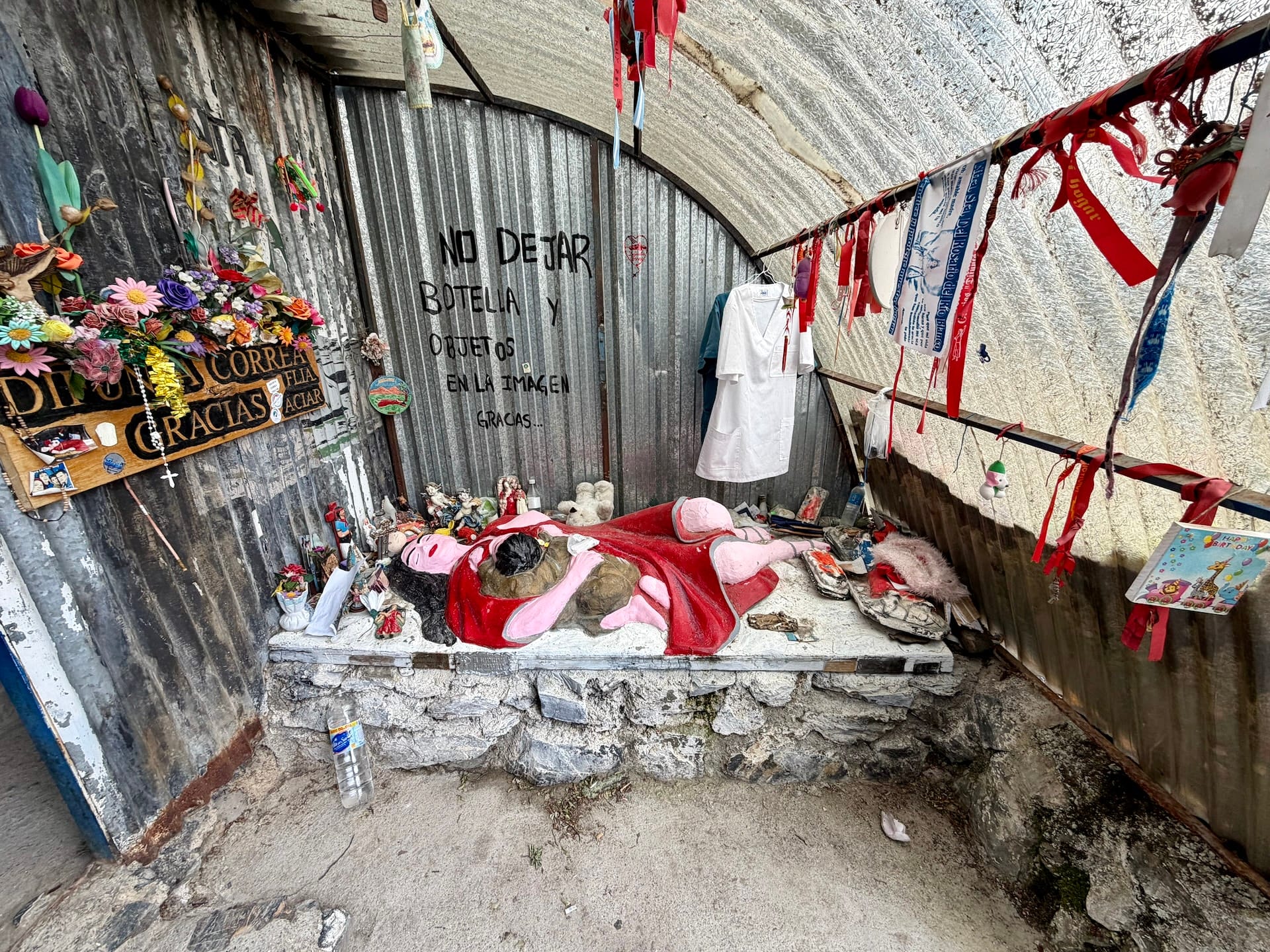
The one we actually went into, though, was a small shack nearby with a “Difunta Correa” sign on it. I had no idea what that meant at the time. She is another folk saint, just as unofficial. According to the legend, Deolinda Correa followed her conscripted husband across the desert of San Juan province around 1840 with her baby in her arms, and died of thirst. When herders found her days later, the baby was still alive, nursing. That was her first miracle. People leave bottles of water at her shrines so that she never goes thirsty again, and like Gauchito Gil, she has a big following among truck drivers. Nobody was around, so we went in and looked at the offerings and the figure of her. It was pretty creepy, if I’m honest.
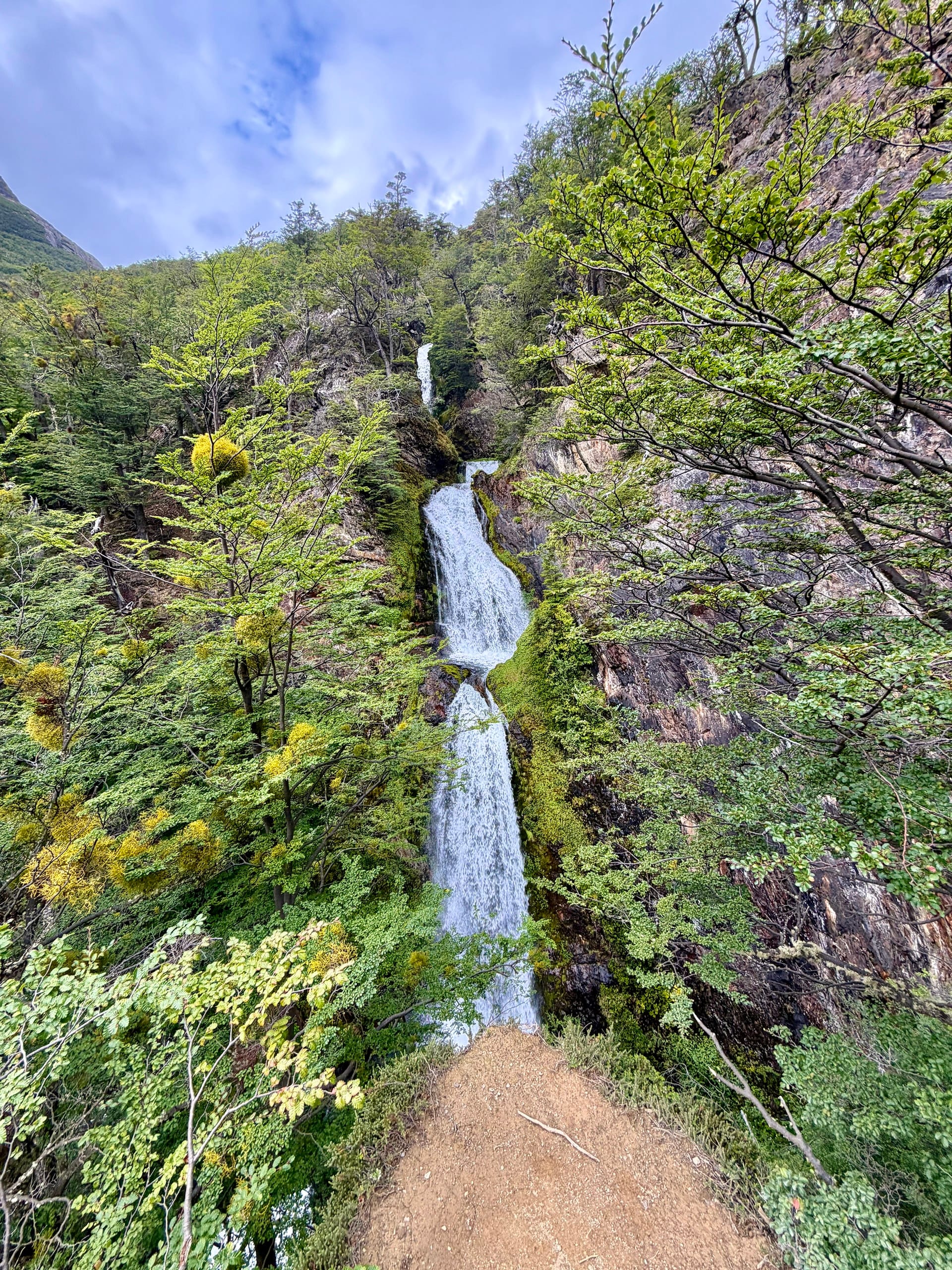
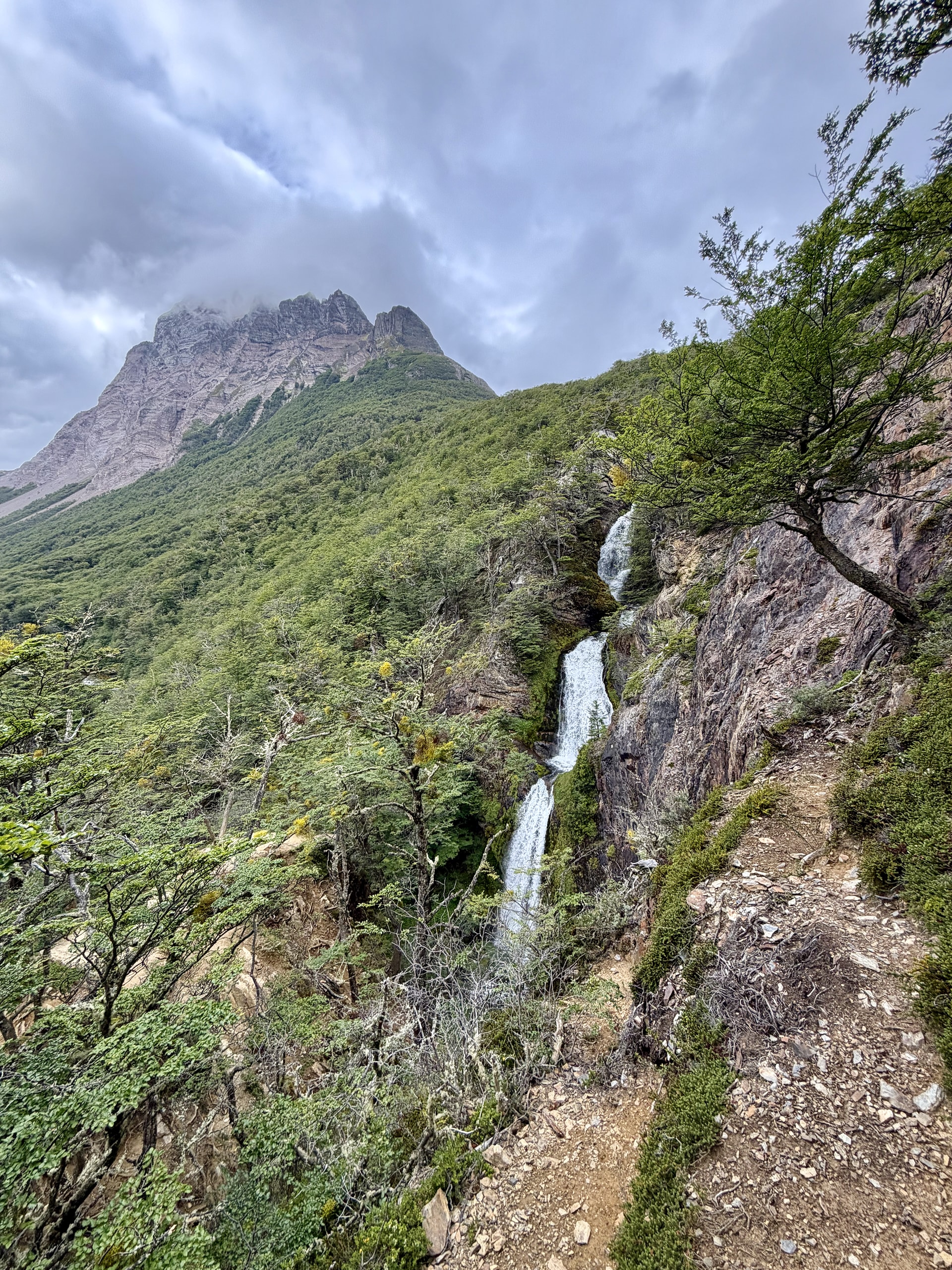
At the spot where Google Maps marks Velo de Novia, there is room to park. You cross a small wooden bridge, and the trail starts right after it. It is clearly signposted, so it is hard to get lost, and it takes at most about 20 minutes to reach the waterfall. Ushuaia’s tourism office lists the walk as 2 km (1.2 mi) round trip with 100 meters (330 ft) of climbing and some exposed tree roots, so watch your step.
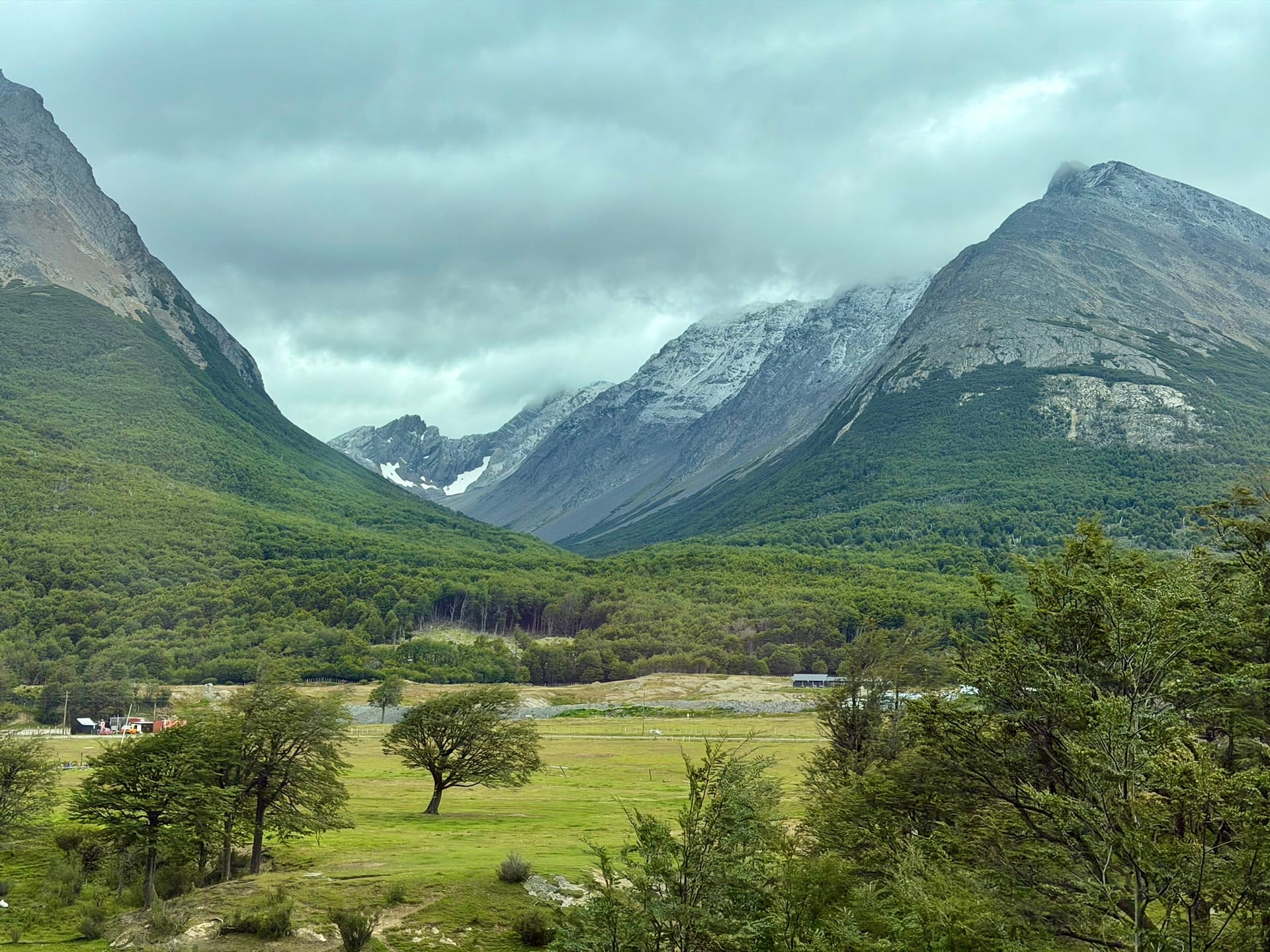
You can keep going from there, and there are longer hikes in the area. But it was already around 5:30 or 6 PM, so we turned back. We drove a bit farther instead, to the start of the Sendero del Fin del Mundo, another longer hiking trail. We didn’t set off on that one either. We just stopped the car there, because the view of the mountains east of Ushuaia was great.
Trails all over Argentina are very well signposted, by the way. The signs tell you the difficulty, the length, where the trail goes and more. You can trust them.
After that we headed back to the apartment, picked up groceries on the way, and cooked dinner in.
Half a Day in Tierra del Fuego National Park by Car
The next day was for Tierra del Fuego National Park, 11 km (6.8 mi) west of town. We were lazy and only set off at 10 AM after a quick breakfast in the café next door to our Airbnb. Our flight to El Calafate left at 5:30 PM and I wanted to be at the airport by 3:30 or 4, so we had five and a half hours, travel included. That left about three and a half to four hours actually inside the park, which is not much. We only saw a small slice of it.
Tierra del Fuego National Park Entrance Fee and Tickets
However you get to the park, the entrance fee is never included in the bus fare, and organized tours usually leave it out too. That confused us at first, but we got the hang of it, which came in handy later in Patagonia.
All of Argentina’s national parks share one official website, and buying online is by far the easiest option. At most park entrances the booth staff have people buy online on the spot anyway (or pay by card), so there is a lot of queuing while everyone fumbles with their phones. Buy in advance and you just show your ticket at the gate. The website is in Spanish, and I couldn’t find a way to switch it to English, but it is easy enough to follow. Ticket types, parks and the purchase page are all reachable from the official fees page.
We needed a one-day ticket for Tierra del Fuego National Park, which cost 30,000 ARS (~$20 USD) per person when we bought it in February 2026. Since June 1, 2026, a day pass for foreign visitors costs 40,000 ARS (~$26 USD), so prices are climbing fast. There is also a three-day pass for 80,000 ARS. If you are driving, the ticket type you want is “Portal de acceso a través de Ruta Nacional 3 (Ushuaia) – Parque Nacional Tierra del Fuego”.
Buy your park ticket the evening before, while you still have reliable Wi-Fi, and download it. A discount on a second visit day applies only to tickets bought online.
By car, getting there is simple. Google Maps navigates you straight to the park. The asphalt turns into a dirt road fairly quickly, but it is not a bad one. There is nothing to be afraid of, and you can drive it without trouble.
Bahía Lapataia and the End of the Pan-American Highway
From the entrance we headed straight for Bahía Lapataia. This is where Ruta Nacional 3 ends, which also makes it the very end of the Pan-American Highway, so of course we took photos with the sign. It gives the distances to the road’s two far ends: 3,079 km (1,913 mi) to Buenos Aires and 17,848 km (11,090 mi) to Alaska.
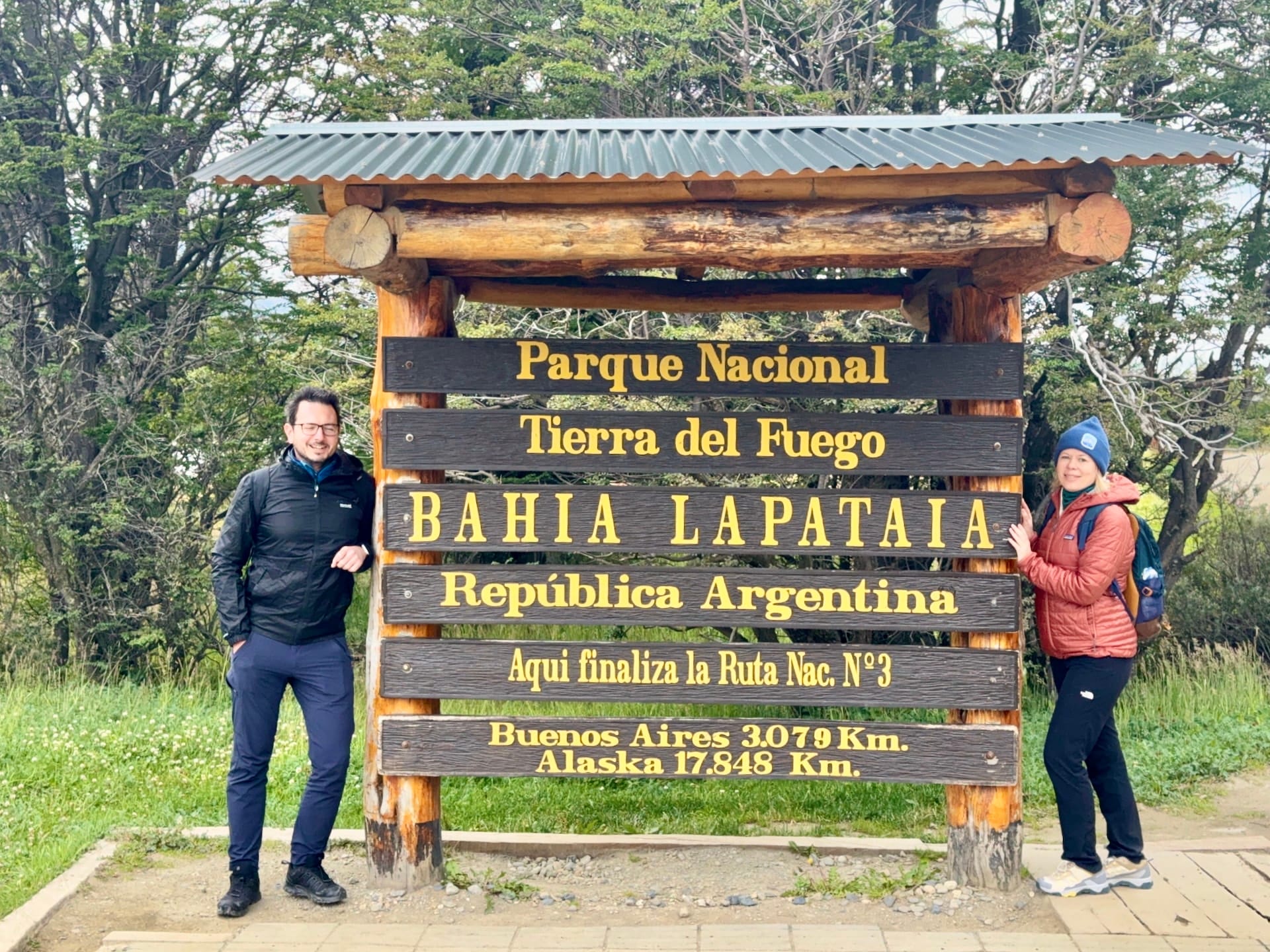
We had only driven a very short stretch of it here. I had covered a fair bit more of the Pan-American back in Peru. Driving the whole thing would be a big goal one day, though even then not quite all of it, since there is no road through the Darién Gap between Panama and Colombia. A good goal for later.
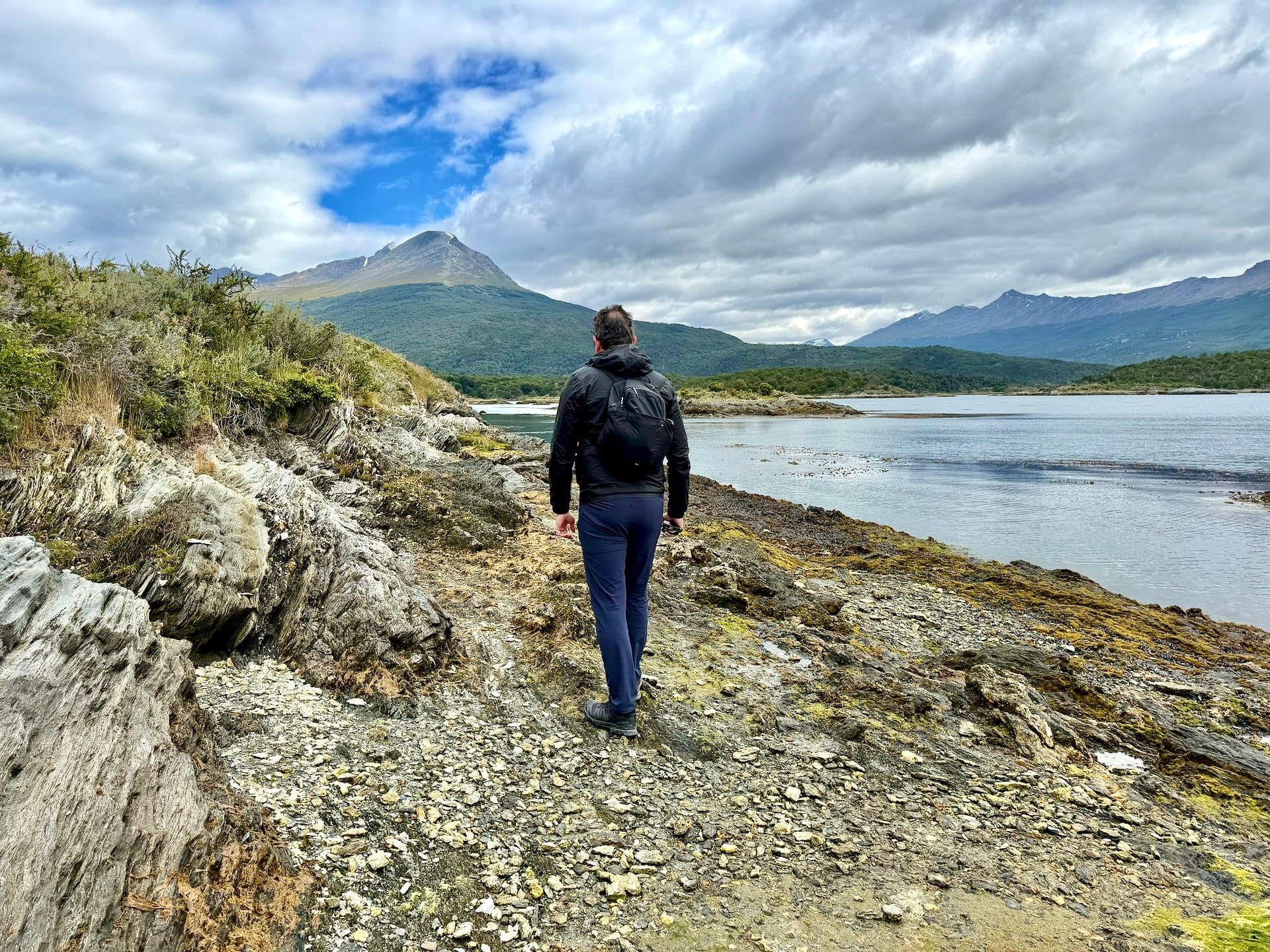
We also did a short hike here. If I’m not mistaken, it was the Senda La Baliza, which the park service lists as a 1,200-meter (0.75 mi) walk of about 30 minutes, starting from the boardwalks at the bay. We took about an hour and a quarter, probably longer than it deserved, but it is a lovely little route. There is no climbing at all. It takes you through a bit of forest and across a meadow, and the lakeshore is covered in nice stones, shells and ducklike birds.
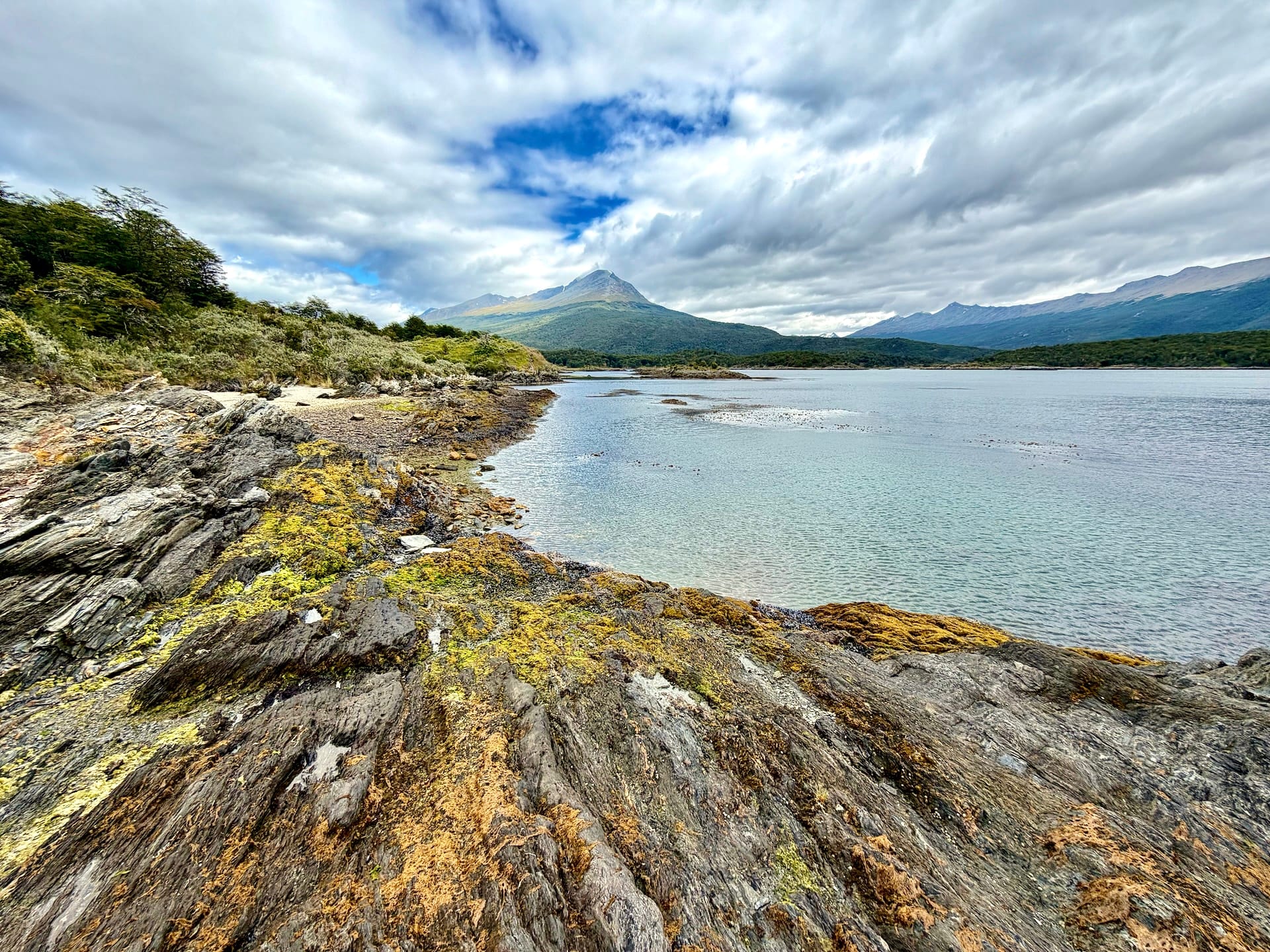
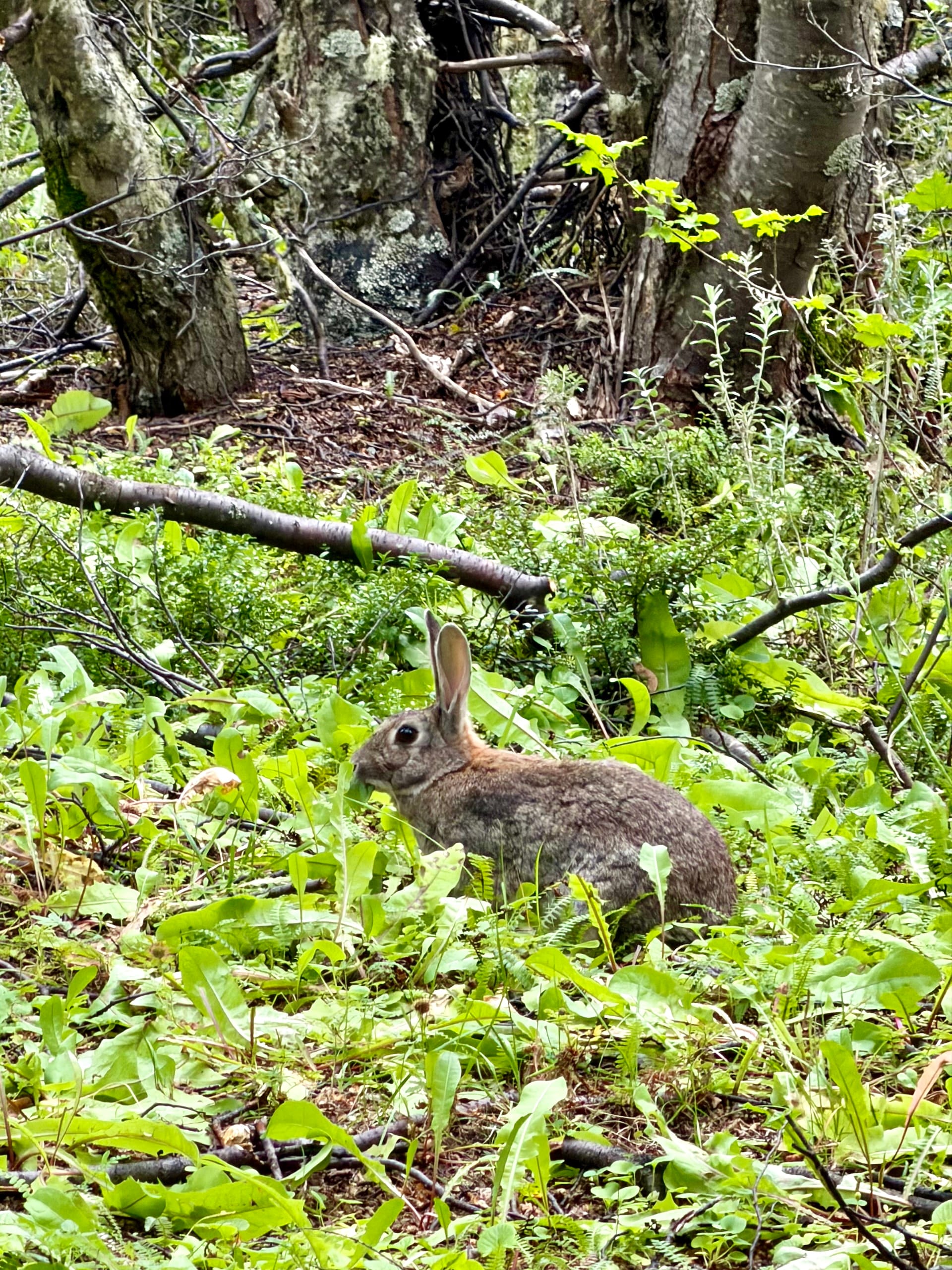
We saw loads of rabbits in the forest. We even got to watch a couple of them getting, let’s say, very well acquainted. Cute as they are, they are not supposed to be here: European rabbits were introduced to Tierra del Fuego and have caused real damage to the ecosystem, much like the North American beavers.
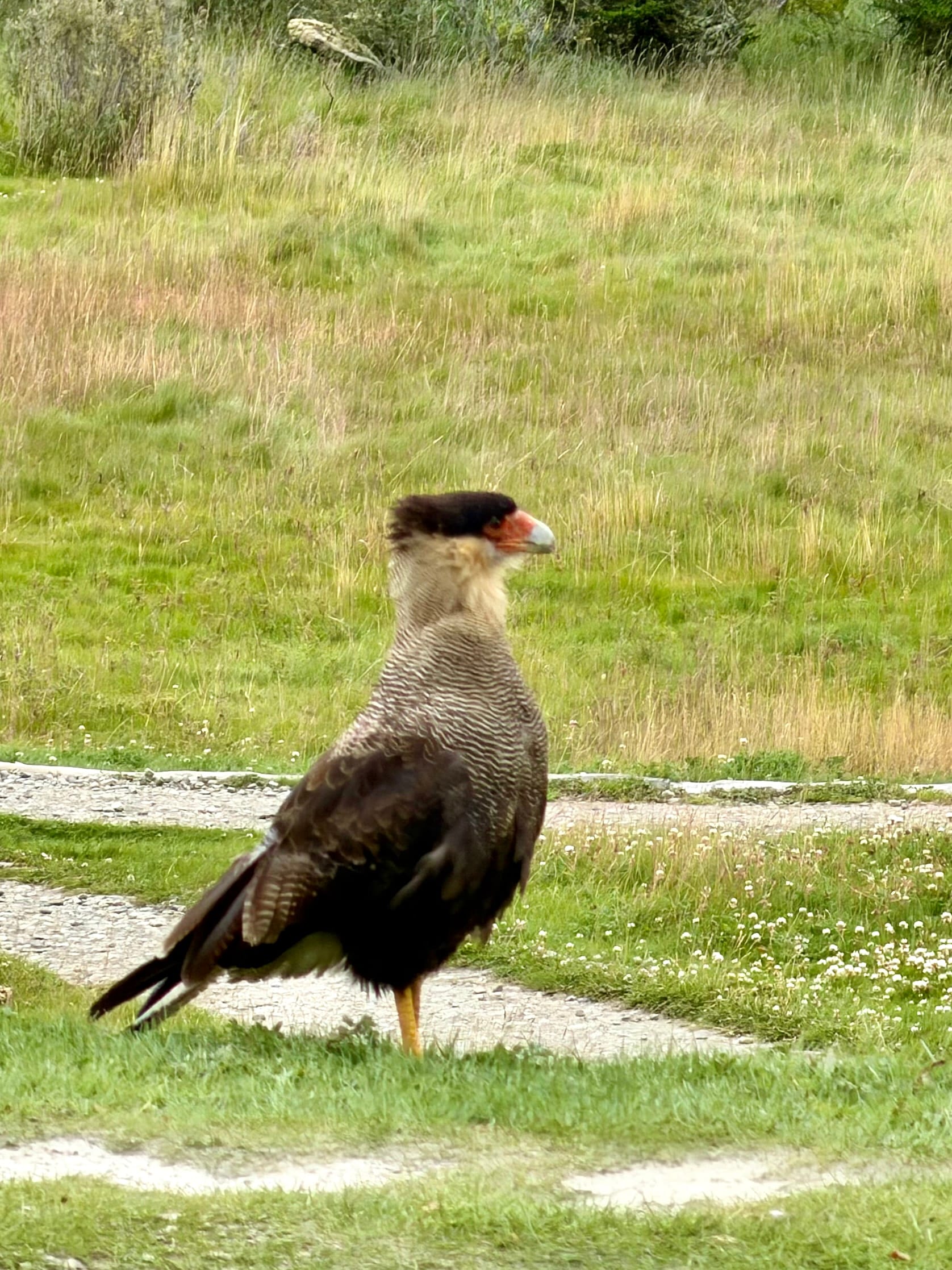
The views are wonderful from practically everywhere. On the way out we ran into some very exciting birds. I nicknamed them bin vultures, after the bin chickens of Australia, the ibises that raid every trash can there. I had no idea that the same day, in El Calafate, I would meet Argentina’s own bin chickens: black-faced ibises. They were southern crested caracaras, caranchos to Argentines: a big bird of prey with a black cap and a bare orange-red face, somewhere between an eagle and a vulture, that walks right up to people and doesn’t seem afraid of them at all. We met them in several more places later in Patagonia.
Lago Roca
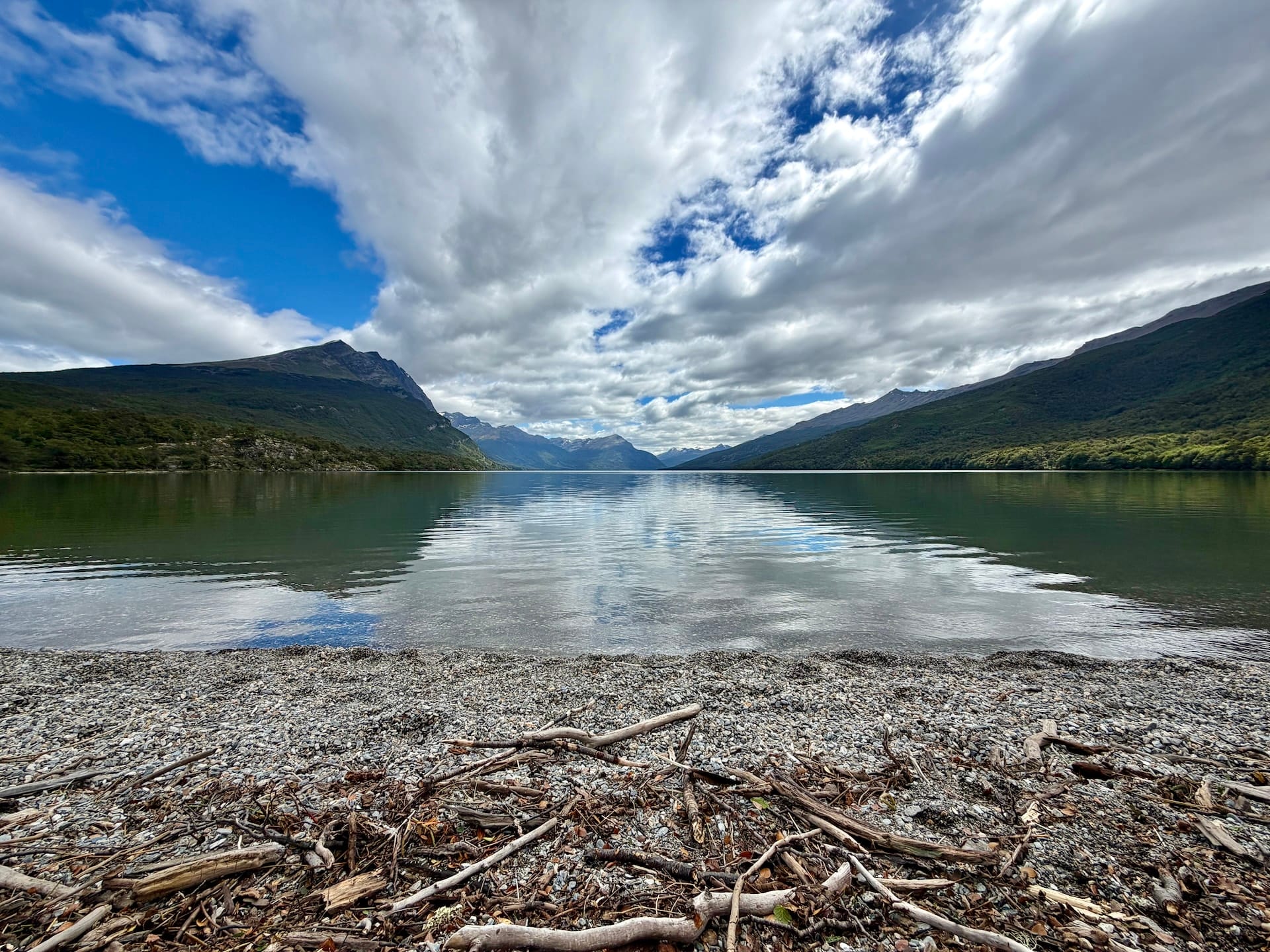
Heading back, we continued to the shore of Lago Roca, also called Acigami (its Chilean end is known as Lago Errázuriz). The road crosses the little island of Isla Entre los Ríos, and we stopped there at a viewpoint to get out and look at the river and its tiny waterfall. Then on to the lake. It is a fair-sized lake, surrounded by mountains, like almost everything in Patagonia. We didn’t stay long: we got out, looked at the lake, had what we will generously call a picnic, and walked a little way along the lakeside path. About 45 minutes in all. The Hito XXIV trail, which leads to a border marker on the Chilean frontier, starts from here if you have more time.
The End of the World Post Office
Our last stop was the End of the World Post Office. We were already leaving the park, since this was how we had strung the stops together, so we drove back along Ruta 3 and turned off south toward the coast at Bahía Ensenada Zaratiegui. The post office stands on the shore of the Beagle Channel.
It was once one of the most famous sights in the park. The little tin hut on a pier opened in December 1997 and billed itself as the southernmost post office in South America. For more than 30 years it was run by Carlos Delorenzo, the “postman of the end of the world”, who also invented a mock “Republic of Isla Redonda” and sold its stamps and passports to visitors. You could get your passport stamped and send a postcard home from the very end of the road.
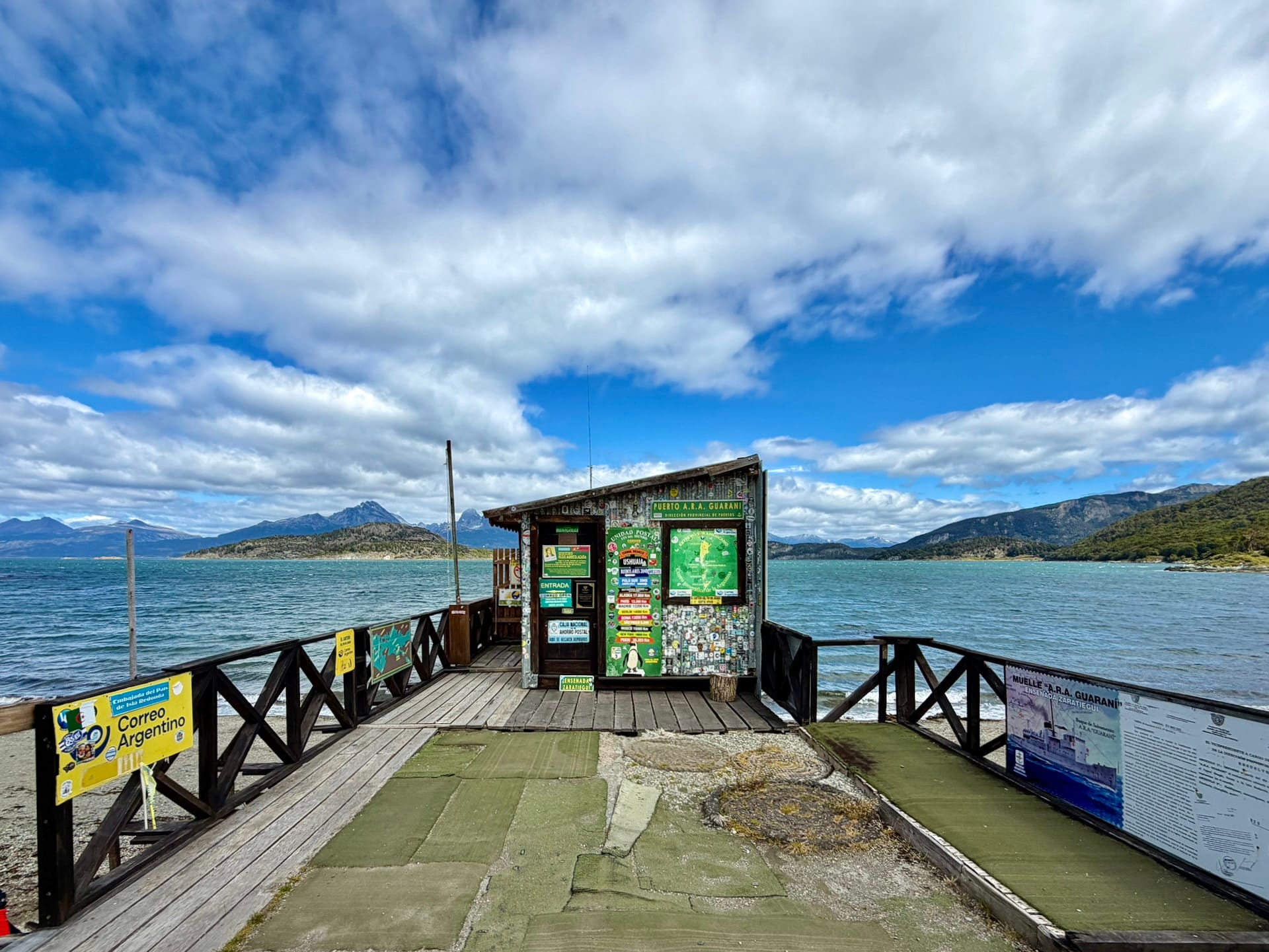
It is not open anymore. I knew it had closed a year or two earlier, and visitor reports from late 2025 describe it fenced off with “Clausurado” signs. It still looks good, and it is still worth the short detour for the photo and the view across the channel, but you can’t send anything from here anymore.
The wind was brutal at this point, so come prepared. Then again, in Patagonia brutal wind can turn up anytime, anywhere. We had mostly been spared until then.
Back to the Airport
From there we drove straight to the airport. We had spent a little over three hours in the park, reached the airport at around 3:30 PM, returned the car, and flew on to El Calafate, the next stop of our Patagonia trip.
Three-odd hours gave us Lapataia, one short trail, a lake and a closed post office. With a full day, the park’s longer trails come into play. The Senda Costera, for example, follows the Beagle Channel for 8 km (5 mi) each way between Ensenada and the Alakush visitor center, though the park opens it only seasonally.
Visiting the Park Without a Car
If you are not driving, the “Línea regular” shuttle runs to the park from a stand on the waterfront. The schedule posted there in February 2026 listed 25,000 ARS (~$16 USD) per person for the round trip, with departures roughly every hour from 9 AM and the last return at 7:30 PM, though some reviewers say they were charged 30,000. It sits at 3.5 stars on Google, and punctuality is the most common complaint. The park fee comes on top.
The other famous option is the Tren del Fin del Mundo, the End of the World Train. We didn’t take it, because it isn’t really our kind of thing. It is a heritage train running on the line the prisoners once used to haul timber, and the trip covers 7 km (4.3 mi) round trip in about an hour and 45 minutes, ending inside the national park. It is pricey: the foreign adult fare was already 69,000 ARS in 2025, and the park ticket is separate, so check current prices before you go. Organized tours to the park, usually with the train included, are easy to book in town or online.
Where to Stay in Ushuaia
We spent our first night at Hostería Foike, up the hill, and our second in an Airbnb in the building that also houses the Freestyle office. The main advice is the one above: the lower you stay, the less climbing you do, and if your cruise includes a hotel night before departure, it will most likely be on the waterfront.
Whatever you choose, book well in advance. The cruise season fills the town every summer, and the cheaper options tend to sell out early.
Ushuaia Practical Tips
- Luggage storage: our cruise company stored our bags before and after the voyage, so we didn’t look for anything else. If yours doesn’t, there is one Radical Storage location in town, not on the main street but on one of the streets higher up.
- Getting to the airport: from the airport side of town it is an easy 15 to 20 minutes. From the national park entrance it is about half an hour, so the park and an afternoon flight combine well.
- Prices: Ushuaia is not a cheap place, but it isn’t outrageously expensive either. Outdoor and trekking gear in the shops is reasonably priced.
- Weather: it is a lot colder than Buenos Aires. If you are heading to Antarctica you will be packed for the cold anyway, but even in January it was only in the low-to-mid teens Celsius (mid-50s °F) here, against 30-plus in Buenos Aires. This is Patagonia, so the weather is unpredictable. Bring a warm layer and a windproof shell whatever the forecast says.
- Mobile data: an eSIM saves you from hunting for Wi-Fi to buy park tickets or call an Uber. Saily plans for Argentina start at $5.29 USD, with 5 GB for 30 days at $16.99 USD. Manet starts at €3.1, with 5 GB for 30 days at €11.2 (prices at the time of writing). More on how eSIMs work in our eSIM guide.
What 2 Days in Ushuaia Cost Us
Peso amounts were converted at the official rate during our trip (roughly 1,450 ARS per dollar in January and February 2026). Flights are not included, since they depend entirely on where you are coming from, and neither is the cruise itself.
| Category | Total (2 people) | Per person | Per day | Per person/day | Notes |
|---|---|---|---|---|---|
| Accommodation | $206 | $103 | $103 | $52 | 1 night Hostería Foike, 1 night Airbnb |
| Activities | $99 | $49 | $49 | $25 | Prison museum, national park entrance |
| Food & Drink | $75 | $38 | $38 | $19 | Lunch on San Martín, food truck, breakfast, coffee |
| Groceries & Shopping | $45 | $22 | $22 | $11 | Wine for the ship, pharmacy, dinner groceries |
| Transportation | $108 | $54 | $54 | $27 | 1-day car rental, fuel, airport Uber |
| Other | $12 | $6 | $6 | $3 | Laundry |
| Total | $545 | $272 | $272 | $136 |
Frequently Asked Questions
How many days do you need in Ushuaia before an Antarctica cruise?
Arrive at least one day before your ship sails. Flights get cancelled, and the ship will not wait. One night and the morning of embarkation day are enough to see the town. After the cruise you can catch a flight the same day, since ships dock early, but an extra night gives you some time for Tierra del Fuego National Park.
Is the End of the World Post Office still open?
No. The post office at Bahía Ensenada Zaratiegui in Tierra del Fuego National Park was closed when we visited in February 2026, fenced off with “Clausurado” signs. The building is still there and worth a stop for the photo, but you can’t send mail from it.
Can you visit Tierra del Fuego National Park without a tour?
Yes. You can drive in with a rental car, take the shuttle bus from town, or take a taxi. In every case, buy your entrance ticket separately, ideally online in advance on the official Argentine national parks website.
Which side of the plane should you sit on when flying into Ushuaia?
Sit on the right side when flying from Buenos Aires. On the approach the plane passes very close to the mountains around the Beagle Channel, and the right-hand windows get the view.