Our third day in Tenerife was supposed to be Anaga. It rained in the morning, and after a slow start we only got going around 11:00, so we swapped: the north-west instead, which is still the north, just the other end of it. The plan was ambitious. Garachico, the bus out to Punta de Teno, the Masca road and its viewpoints, and the dragon tree in Icod somewhere along the way.
What actually happened: Garachico in drizzle, Punta de Teno under grey cloud, about fifteen minutes of the Masca road before the clouds swallowed it, and the dragon tree on a whim on the way home. Five days later we came at Masca from the south and finally got the view.
Punta de Teno, the island’s westernmost point, turned out to be the best place we saw all week. You can’t drive there, and that’s half of what this article is about.
The short version:
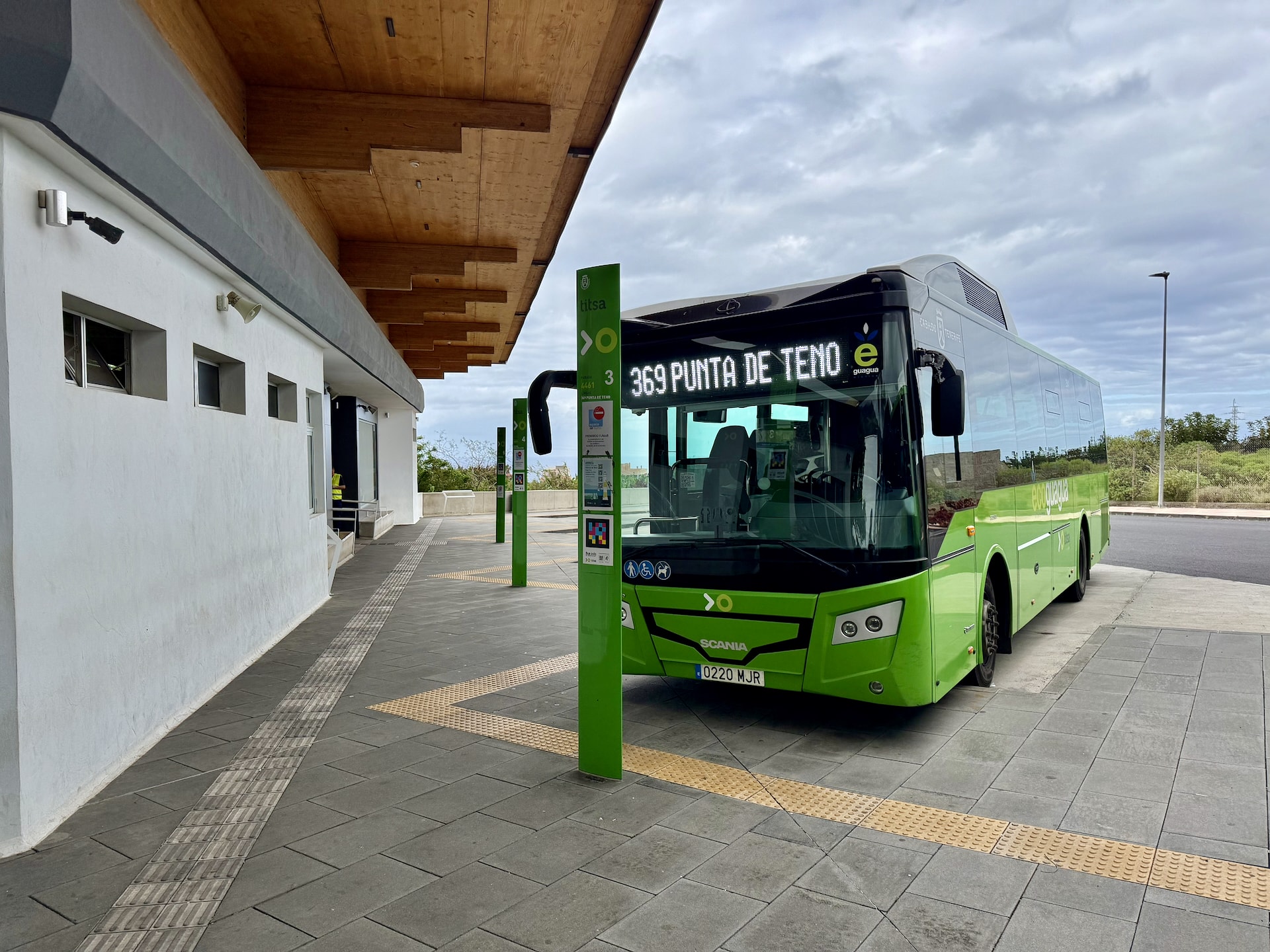
- Getting there: no private cars, bikes or walkers on the road to the point, any day of the week. You take TITSA bus 369 from the bus station in Buenavista del Norte: about 20 minutes, €1 (~$1.1 USD) each way, nine buses a day, the last one back at 18:25.
- Paying: cash always works. Cards are hit and miss: Apple Pay worked for us, a plastic card in front of us didn’t.
- At the point: the lighthouse is closed, so you’re there for the rocks, the crabs, the cacti and the sea. One hour goes fast, and two isn’t too much.
- The rest of the day: Garachico’s lava pools and a long lunch, the Masca road if the clouds allow, and the dragon tree in Icod de los Vinos, which you can see perfectly well without buying a ticket.
Can You Drive to Punta de Teno?
No. The last stretch of road to the point, the TF-445 beyond Buenavista del Norte, is closed to private cars. Under the 2026 rules published by the Buenavista del Norte tourist office, private cars, bicycles and pedestrians are banned every day of the week. Only the 369 bus and taxis get through. Older guides describe a closure on weekday daytimes and weekends only, with the road open in the evenings. That is out of date. The road also closes completely during storms and weather alerts.
So it’s the bus. Honestly, the bus is part of the fun.
Taking Bus 369 from Buenavista del Norte
Buenavista del Norte is a small town at the north-western end of the island with, as far as we could tell, no particular attraction apart from being where the bus leaves from. We parked on the street about a block from the bus station. Across the road there’s a supermarket with its own car park, or rather an underground garage, which is supposedly free as well, so that’s your backup.
The station itself is perfectly civilized: toilets, and a vending machine that refused my card. We got there about 20 minutes before departure, which was more than we needed, but don’t cut it fine either. The bus leaves on the dot.
Buses here are called guaguas. I thought that was a Dominican thing, since we rode plenty of guaguas in the Dominican Republic (see our Punta Cana to Las Terrenas bus guide), but no, the Canaries call them that too.
Tickets: bring coins, although cards (sometimes) work
The fare is €1 per person each way, paid to the driver. Going out, we paid cash. Despite everything you read online, you can also pay by card: on the way back Andrea paid with Apple Pay. A passenger ahead of her tried a plastic card and it didn’t go through. Whether it was Apple Pay that did the trick, or the reader simply likes some cards and not others, I can’t say. Bring a few euros in coins and you won’t have to find out.
The timetable
TITSA’s published timetable for line 369 has nine buses a day, the same Monday to Sunday:
| From Buenavista (Estación) | From Punta de Teno |
|---|---|
| 10:10 | 10:35 |
| 11:05 | 11:25 |
| 12:00 | 12:25 |
| 13:00 | 13:25 |
| 14:00 | 14:25 |
| 15:00 | 15:25 |
| 16:10 | 16:35 |
| 17:05 | 17:25 |
| 18:05 | 18:25 |
Buses leave the point at the times in the table. The ride is about 20 minutes on paper, but the drivers are fast, and I mean fast, so you usually arrive a few minutes early and get a bit more than an hour before the next bus back. We took the 15:00 out and stayed a little over an hour, and the bus back was fuller than the one out, because a few fishermen got on too. Google Maps shows some of these departures but not all of them, so go by TITSA’s own page for line 369, and check it again before you go, because times on this line have shifted before.
The ride
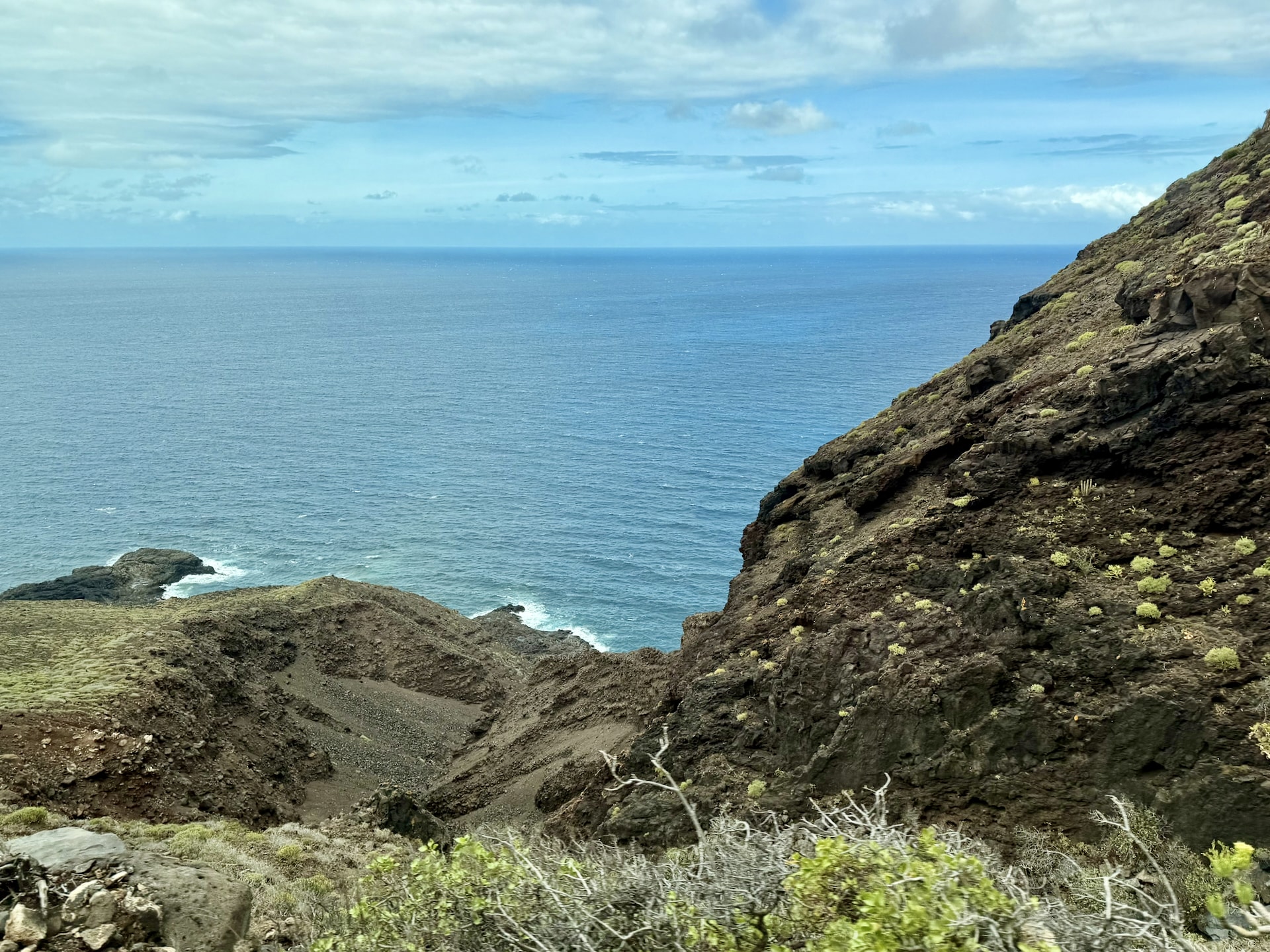
The road is cut into the mountainside above a very long drop, with tunnels and overhanging rock, and the driver takes it at a speed that suggests he has done this several thousand times. Sit on the right on the way out, the sea and cliff side. On the way back the view is on the left. The other side is just rock wall. It’s a seriously good bus ride. On the way out we passed a few people walking along the road towards the point, ban or no ban. With dark, narrow tunnels and buses coming through them at that speed, I wouldn’t.
What to Do at Punta de Teno
The lighthouse, from the outside
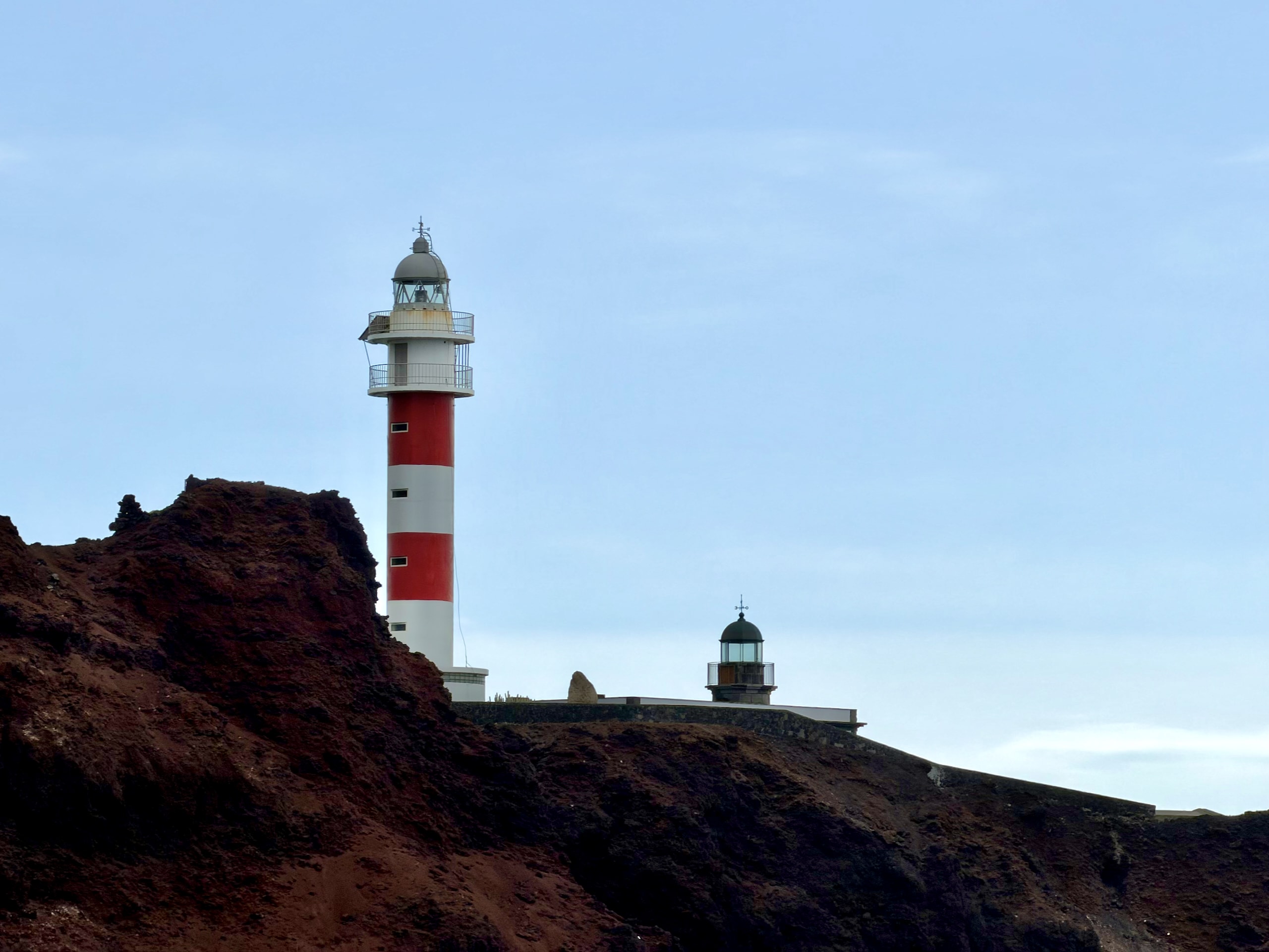
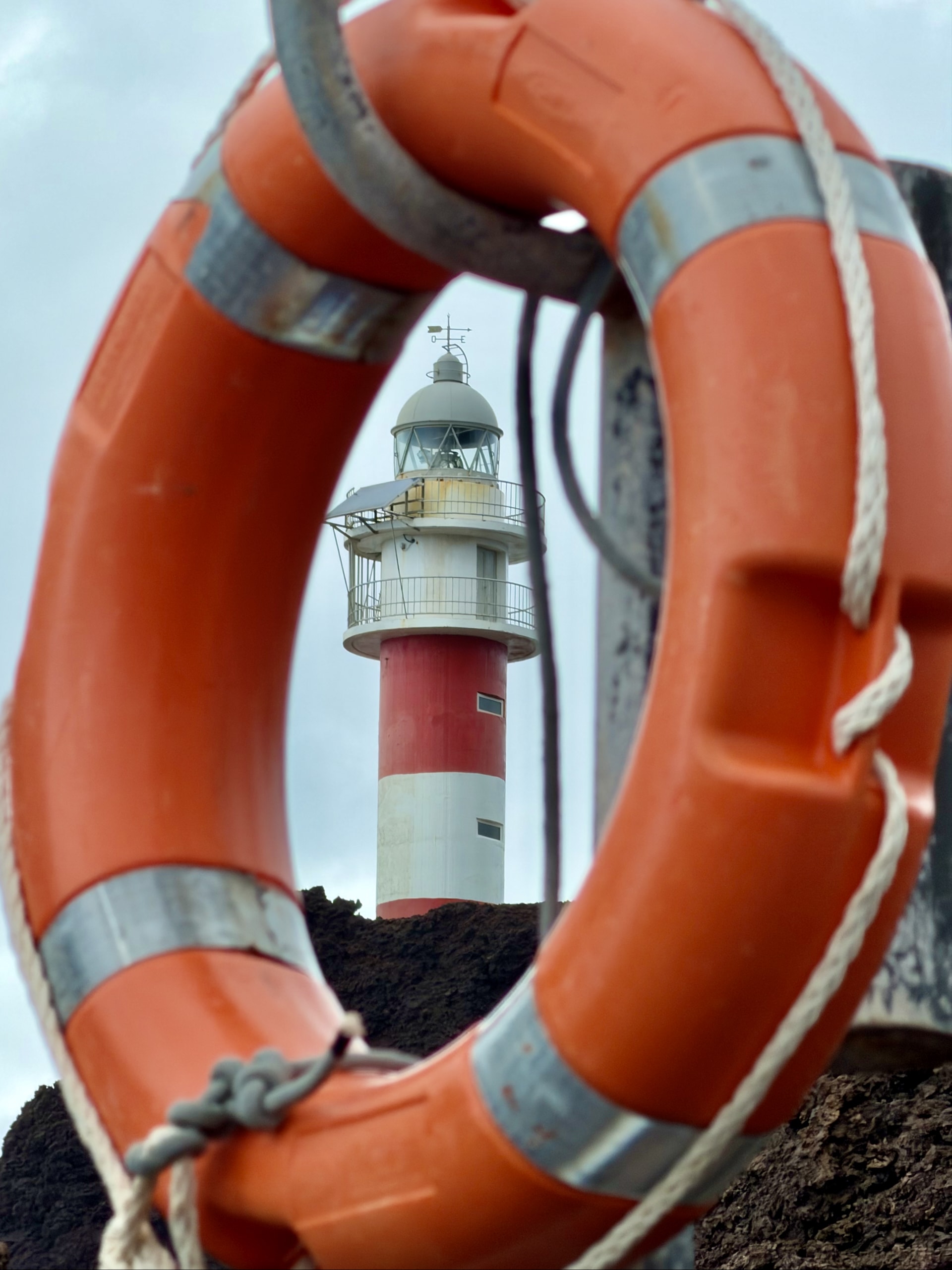
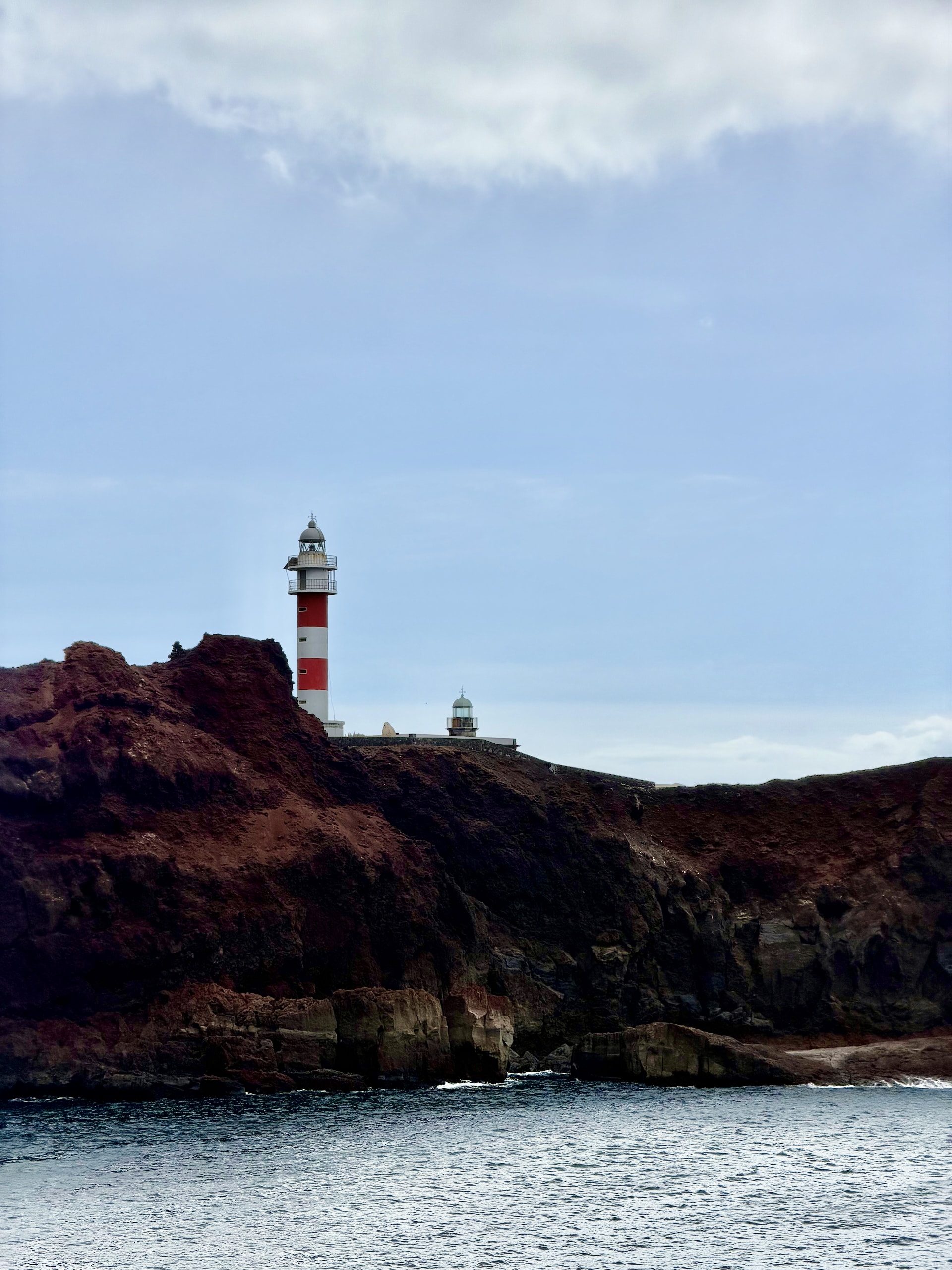
You can’t visit the Punta de Teno lighthouse. There’s a road and a wooden boardwalk leading towards it, and both were closed when we were there. The red-and-white tower is the newer lighthouse, 20 m (66 ft) tall and in service since the 1970s. Next to it is the original from 1897, a low whitewashed building with a short tower, which the island government announced in 2025 would be restored and given a café. Both belong to the port authority, so this is a view, not a visit.
An hour at a lighthouse you can’t go into sounds like a lot. It isn’t.
The rocks and the crabs
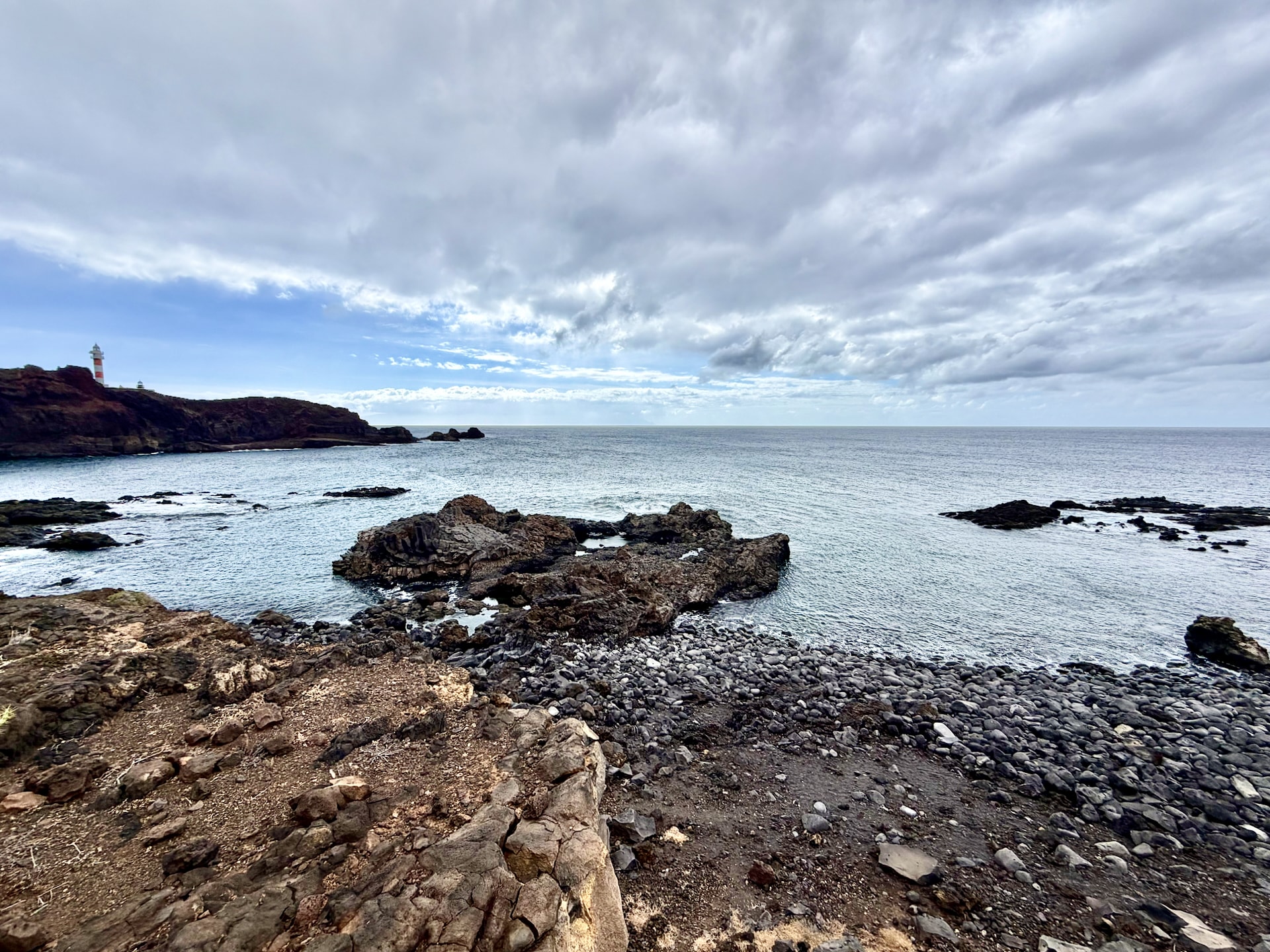
Everything around the point is volcanic: black, raw, pitted rock right down into the water. There’s a built viewing platform by the shore, but we went left from it and spent our time out on the rocks. Watch where you step, because the rocks are liberally decorated with what I can only assume the fishermen leave behind.
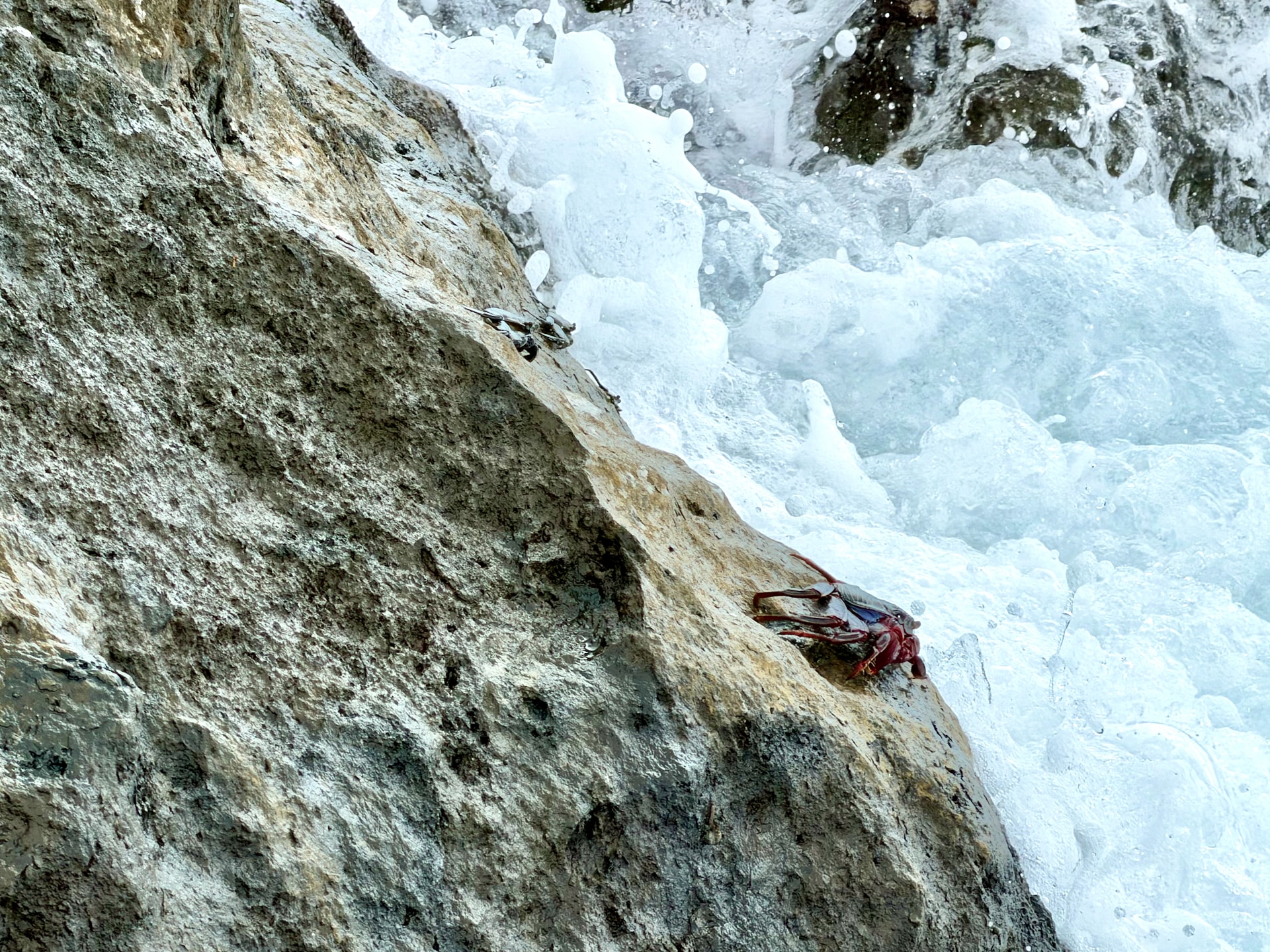
Out on the rocks there are crabs, fairly big ones, almost black, and hard to spot because they blend in perfectly. Every so often a big wave knocks a few of them back into the water. Between the rocks the sea churns in little whirlpools. We could have stayed there a lot longer.
The scrubland and the cacti
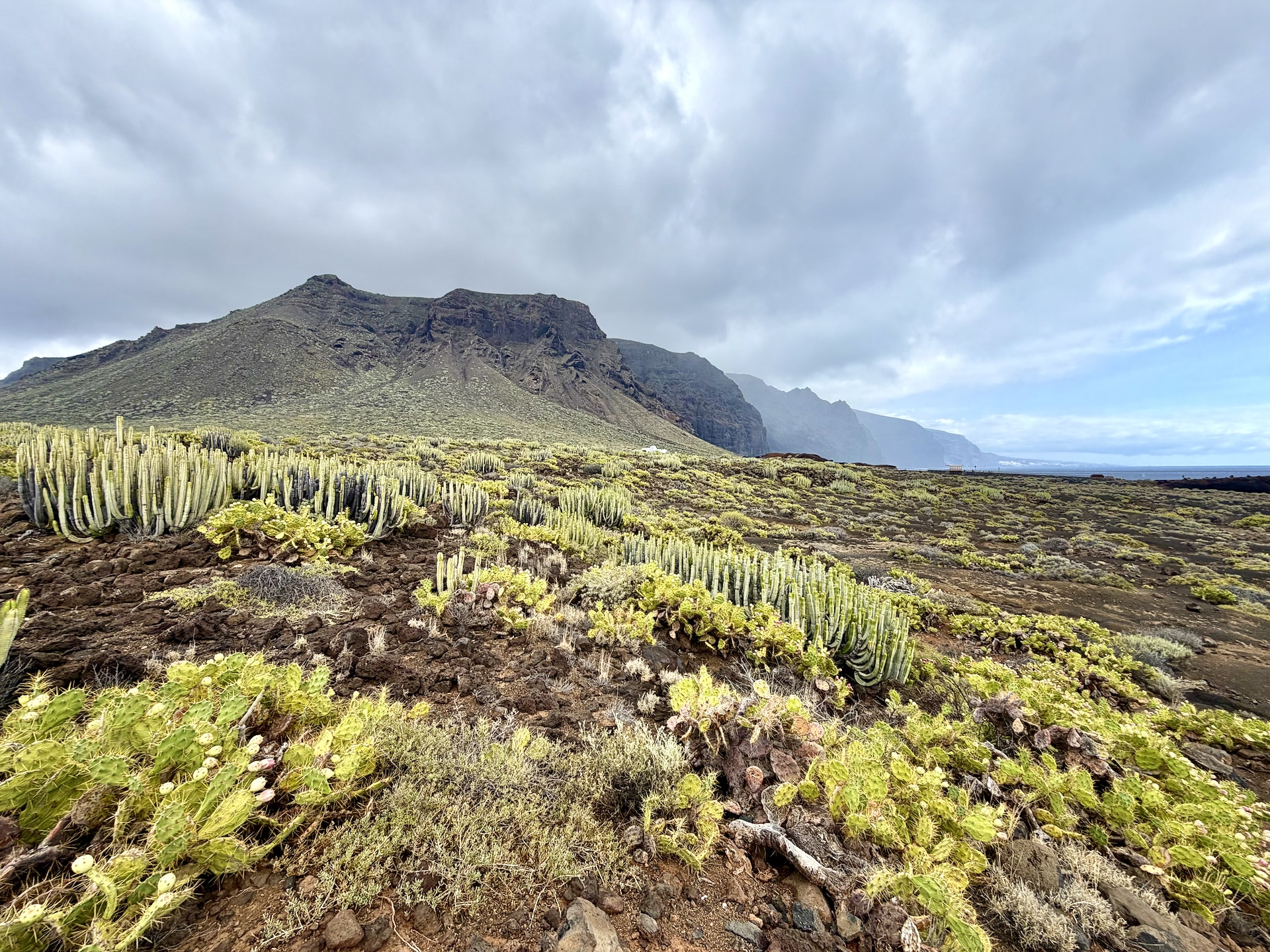
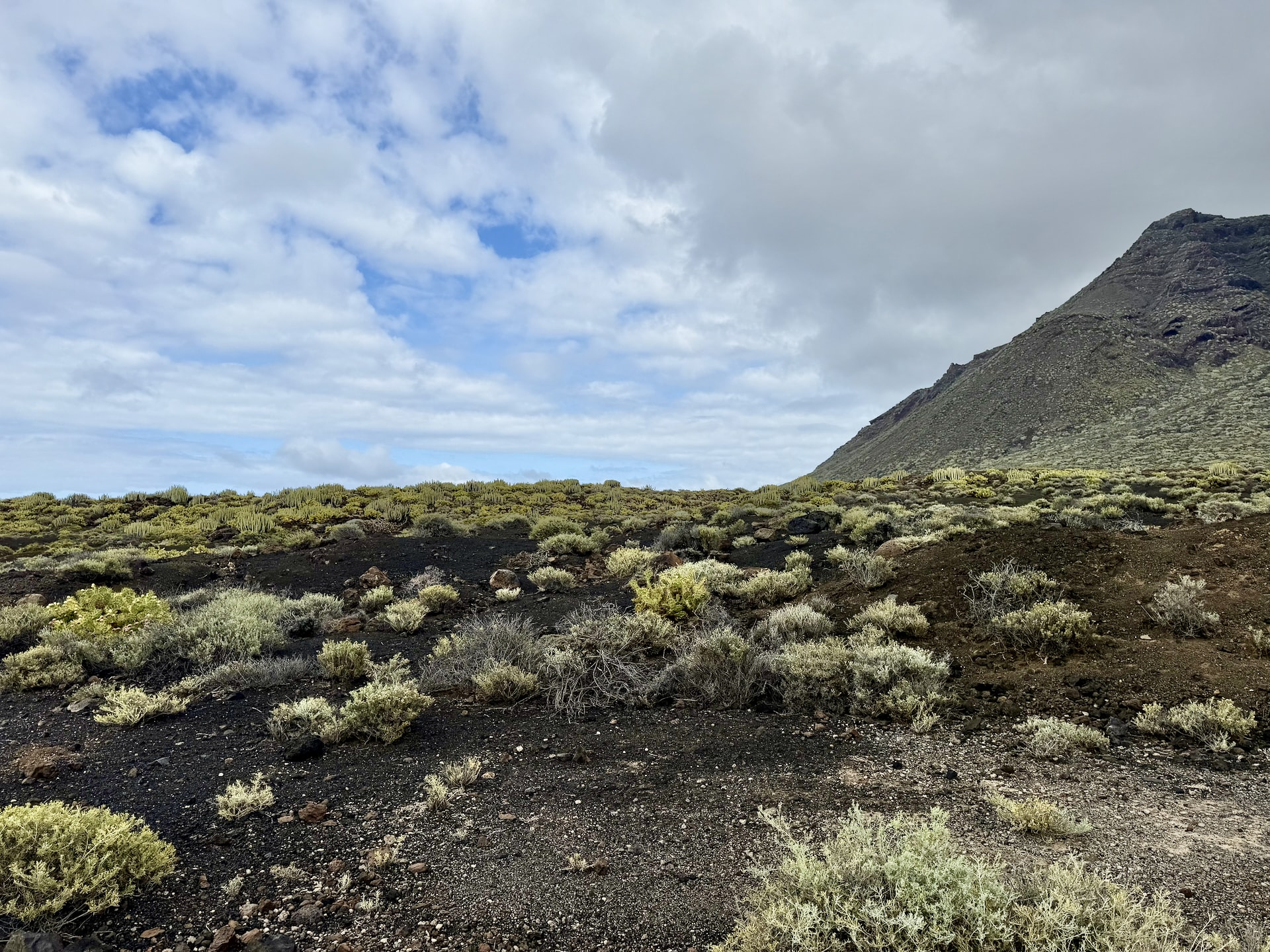
Then we went the other way, out from the bus stop into the scrub, to see the lighthouse from another angle. The plants are great: low, dry-country shrubs, prickly pears heavy with pink fruit, and taller, thinner upright plants that look exactly like cacti and aren’t. They’re cardón, the Canary spurge (Euphorbia canariensis), native to the islands. The prickly pear is the actual cactus here, and it’s the import, brought over from the Americas.
Out in the middle of all that emptiness stands one single house, white and rather smart-looking. It turns out to be a holiday rental, Villa Punta de Teno. I had no idea how anyone got permission to build it there, and judging by its Google reviews, neither do the locals: there’s a string of one-star ratings from people who seem to live nearby, saying it’s a shame it was ever allowed. Still, it is a very nice little house.
Swimming at Punta de Teno
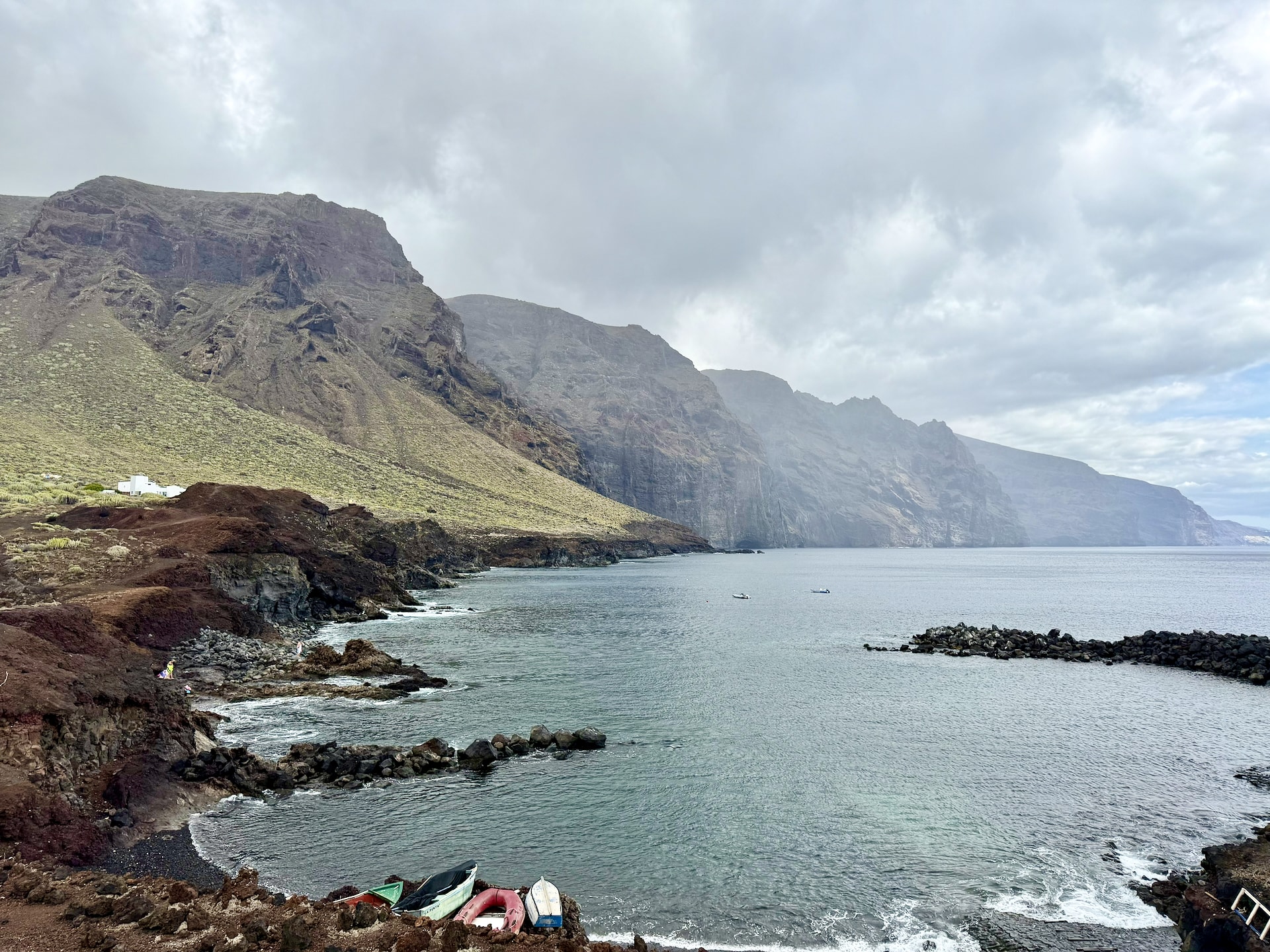
You can swim. Just past the bus stop there are fishing boats pulled up, and several people went into the water there, in a small cove of stones and coarse sand behind a breakwater. We’ve put it in our guide to Tenerife’s black sand beaches too, though “beach” is generous.
There’s no lifeguard at Punta de Teno and there is a current, so swim only when the sea is calm and only if you’re a confident swimmer. For an easier dip, the lava pools in Garachico are on your way back.
Why it was the best place we saw
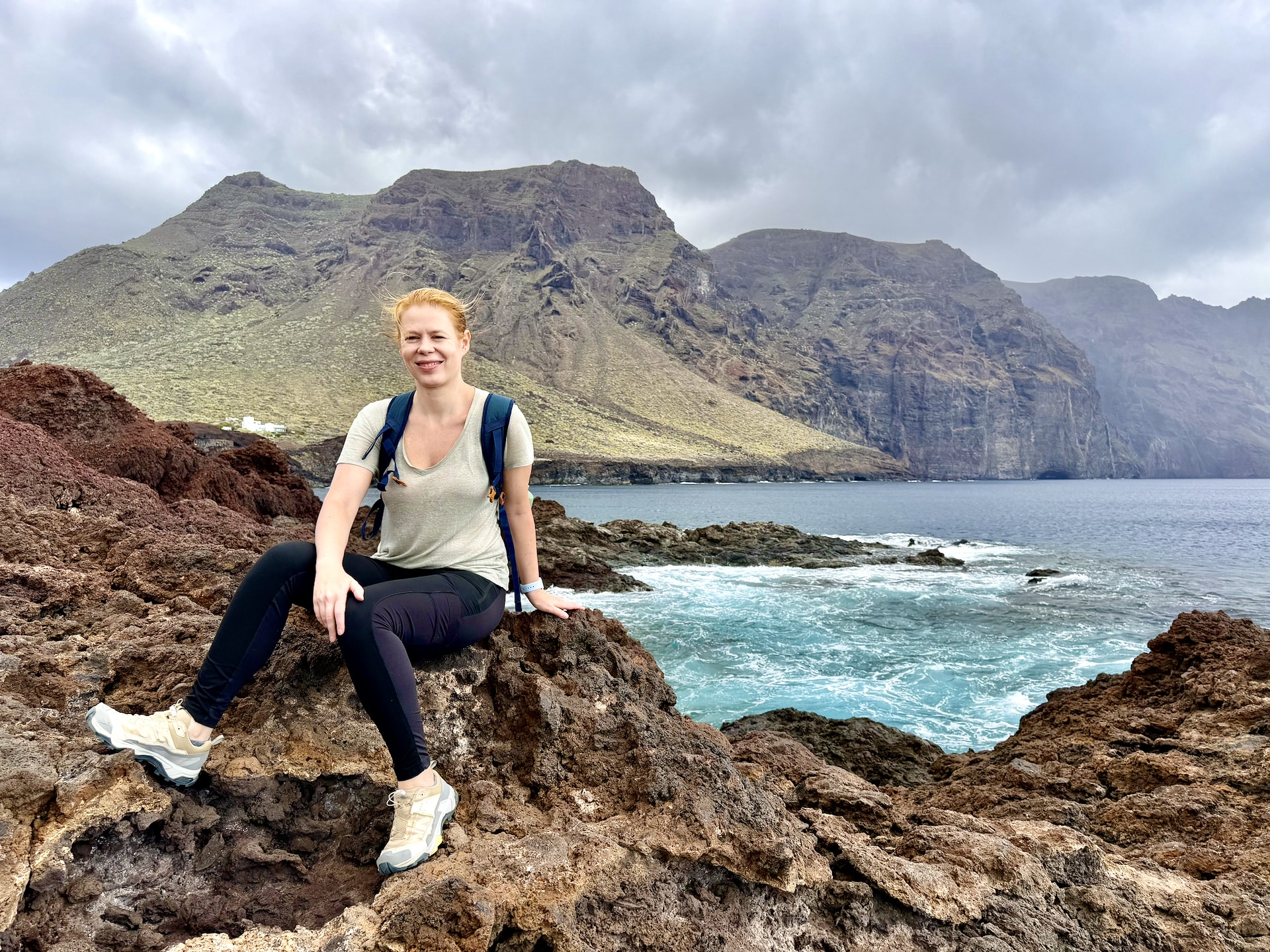
The landscape is enormous: huge rocks, cliffs, a sheer wall of mountain behind you, and to the south the coast carries on as the Los Gigantes cliffs. Our weather wasn’t great. It barely rained, a few drops at most, but it was cloudy and grey, and in the end that wasn’t so bad, because it suits the place. Maybe it’s even better in sunshine. We’ll never know.
It’s exactly the kind of place where you could drop me off and I’d be happy for hours. The plants are exactly the kind I like, the scenery is dramatic, and it wasn’t hot, at least not that day.
Garachico: Lava Pools and a Long Lunch
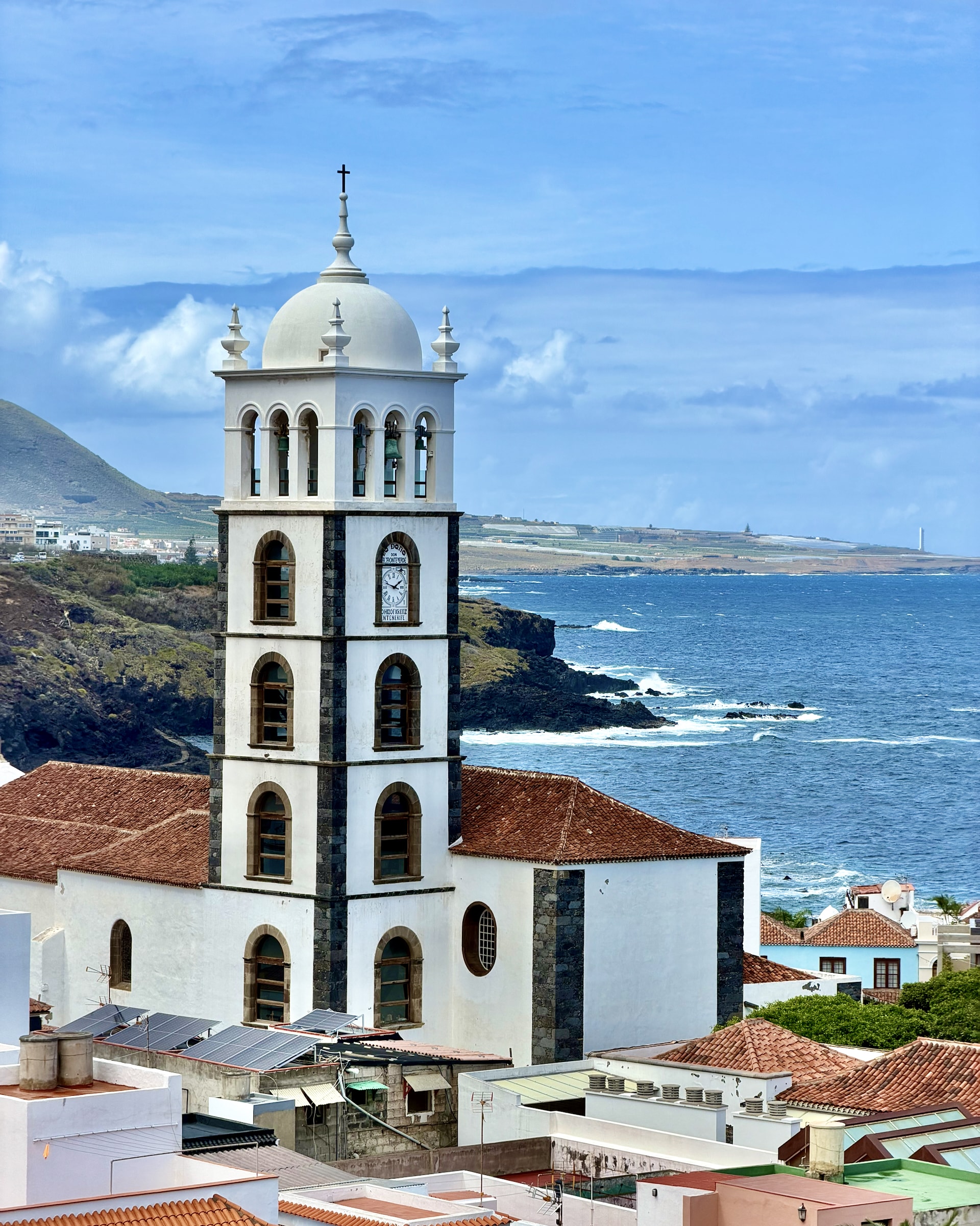
Garachico was our first stop that day, and since it’s on the way to Buenavista, it’s the natural pairing. It’s a small town spread up a hillside, with a bit of an old town. There’s a large free car park at the entrance to town, which had plenty of room when we arrived at 11:30. In high season it reportedly fills up by mid-morning.
The El Caletón natural pools
Garachico was the island’s main port until May 1706, when an eruption sent lava through the town and into the harbor. The trade moved to Puerto de la Cruz, which is the other half of the story we told in our Puerto de la Cruz guide. Where the lava met the sea, it cooled into the El Caletón pools. Some are deep, some shallow, all black volcanic rock, and the water inside moves far less than the open sea just outside. There were fish in them.
The moment we arrived it started to drizzle, of course, the fine, misty kind that soaks you instantly. One or two people were swimming anyway. Mostly Germans, naturally, in that weather.
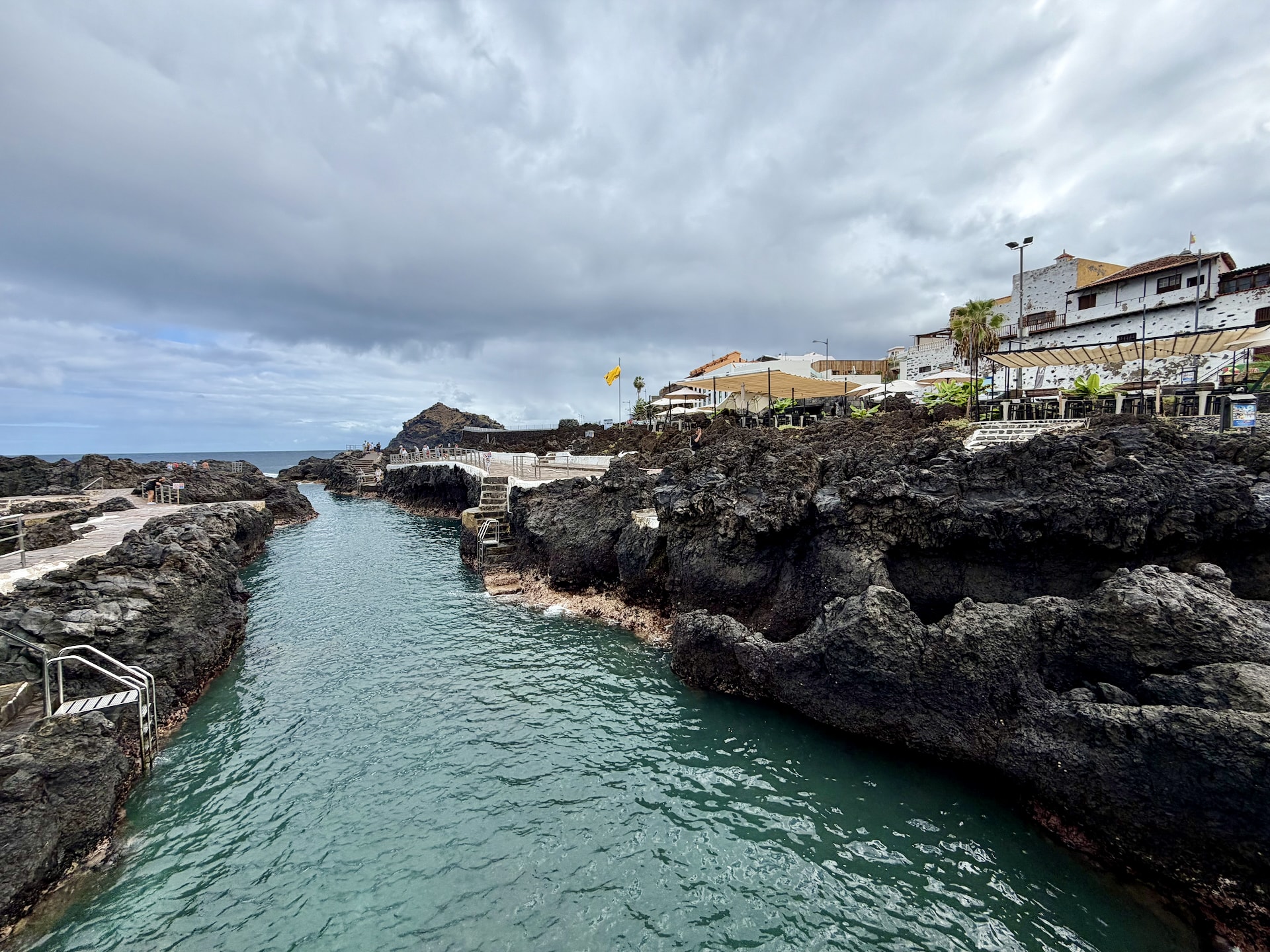
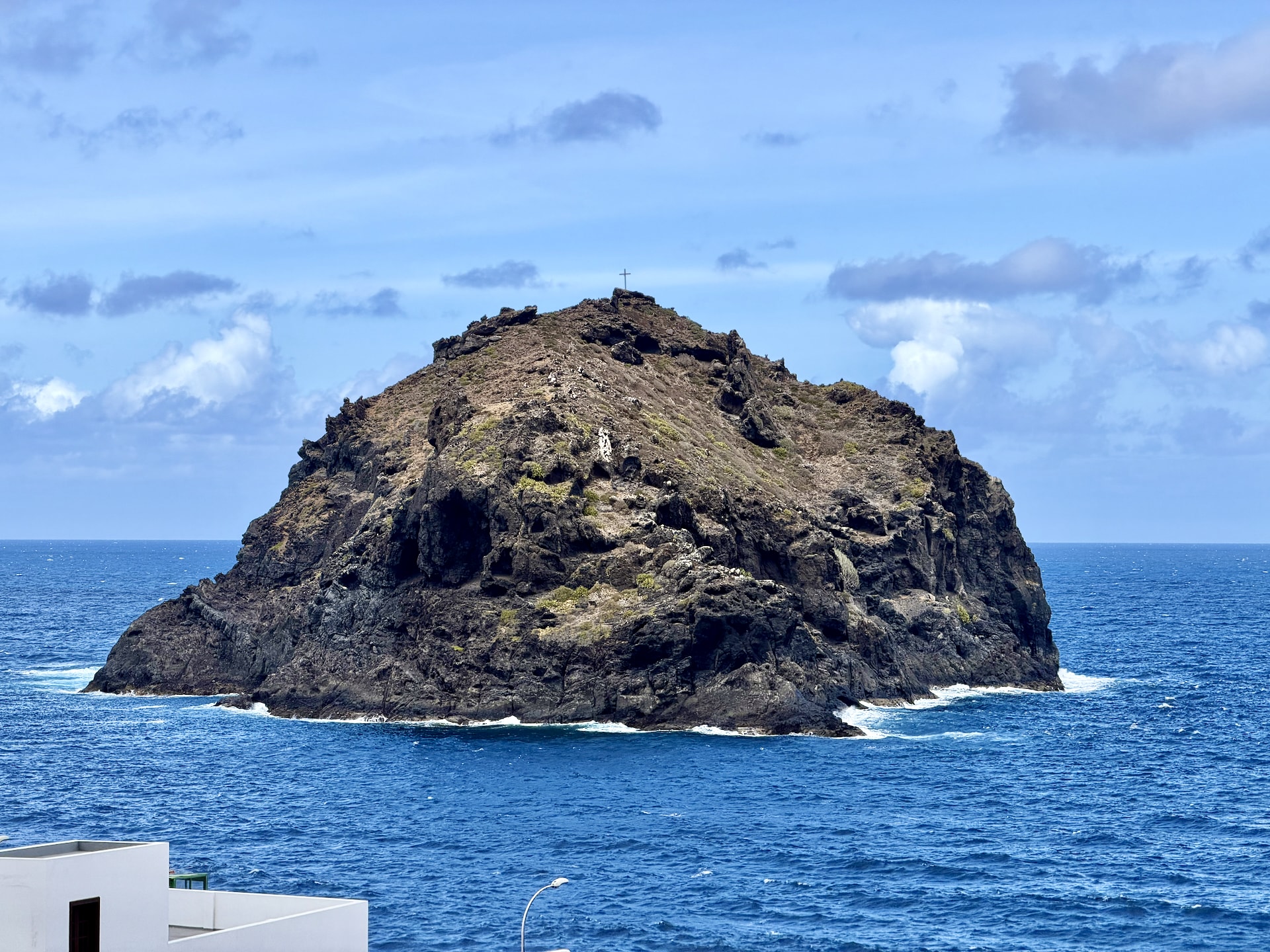
Just offshore stands a big rock, the Roque de Garachico, about 77 m (253 ft) high and a protected natural monument. I didn’t know its name at the time. It doesn’t need one to be impressive.
The pools are fed straight from the Atlantic, so they close when the red flag is up. If the sea looks rough, check the flag before you change.
Lunch at Candelaria La Cocinera
Around noon we walked up into town for lunch at Candelaria La Cocinera, a small restaurant in an old house that has supposedly been there a long time and cooks the old recipes. We ordered the traditional things. Papas arrugadas with mojo, the small local potatoes with green and red sauce. Croquetas: the bacon ones had run out, which is odd, since we were the first customers of the day, so we had plantain croquetas instead, and I thought they were great. Not sweet at all, more on the sour side, because they’re made with cooking bananas rather than the dessert kind. Andrea had garbanzas, a chickpea stew, another traditional dish. I had a tortilla with tuna and zucchini, which wasn’t bad. The zucchini wasn’t good, but I don’t like zucchini. The portion was enormous, as usual, and I couldn’t finish it.
Andrea read up on the place while we waited, and there’s a big poster on one of the terraces telling its story. As far as we pieced it together, Candelaria is the woman in the photos on the walls, the restaurant is still run by her family, now by a great-great-granddaughter, and they grow their own vegetables, zucchini included. The tuna, I’m fairly sure, they don’t grow themselves.
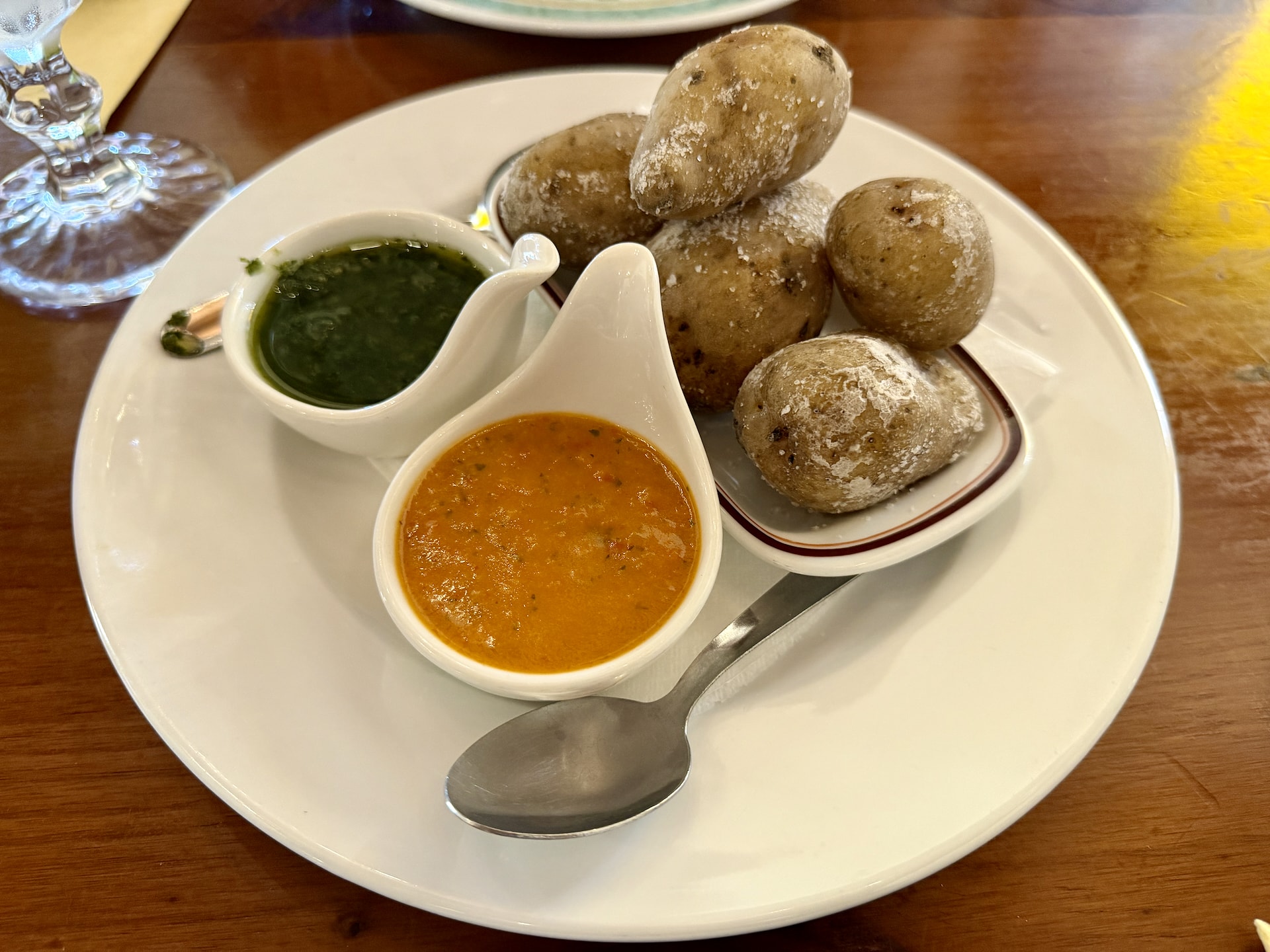
Two practical notes. A handwritten sign on the door says cash only, whatever the online listings claim, so we took money out at a CaixaBank, which charged €3.25 (~$3.6 USD) for the privilege. By Tenerife ATM standards that counts as reasonable. And the kitchen is slow, properly slow, so don’t plan anything tight after lunch. We paid €43.40 (~$48.6 USD) for two, €48 with the tip.
A walk up the hillside
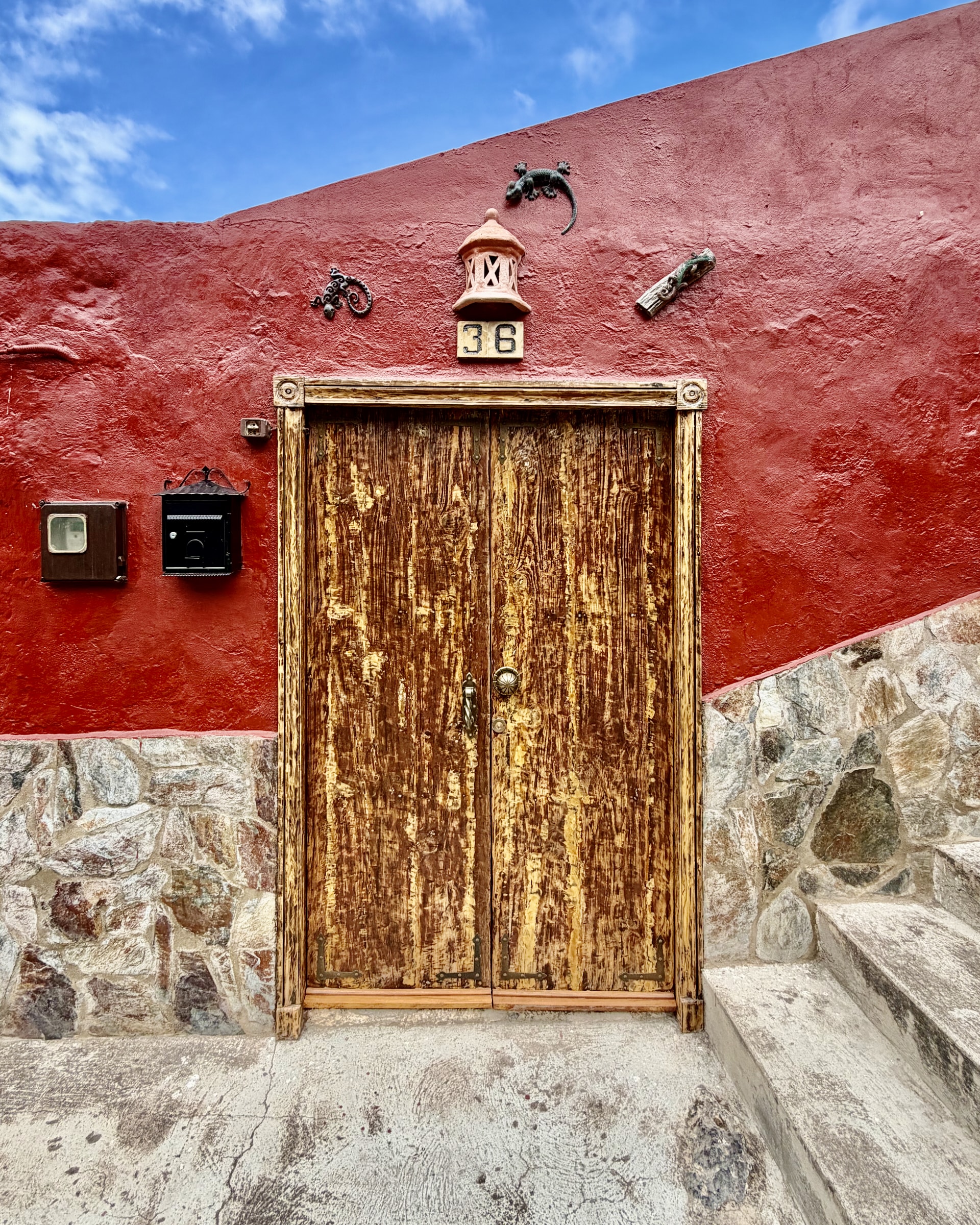
By the time we came out, the weather was almost nice, and the sun made a brief, half-hearted appearance. We wandered around for a while. Garachico is built on a slope, so we climbed a little way up for the view, into the small streets on the hill above the center, around Calle Juan de Regla. Up there we barely saw another tourist, only locals, and it felt like a part of town people actually live in. Then we went back down a few streets to the main square and on to the car park.
The Masca Road: Turned Back by Clouds, Then Mirador de Cherfe
By the time the bus brought us back to Buenavista and we’d made a quick supermarket stop, it was nearly 17:00. The plan was the Masca road, the TF-436, with its viewpoints. You could see the clouds sitting between the mountains in that direction, so the deal was simple: drive up and look. If the weather was fine, we’d carry on. If not, we’d turn back.
The road climbs in a serious serpentine, and the landscape looks great, right up to the point where we drove into the cloud, which meant heavy rain and wind. We turned around at El Palmar, the first village up the road. The next day, Anaga taught us the same lesson: when the ridges are in cloud, the viewpoints are too.
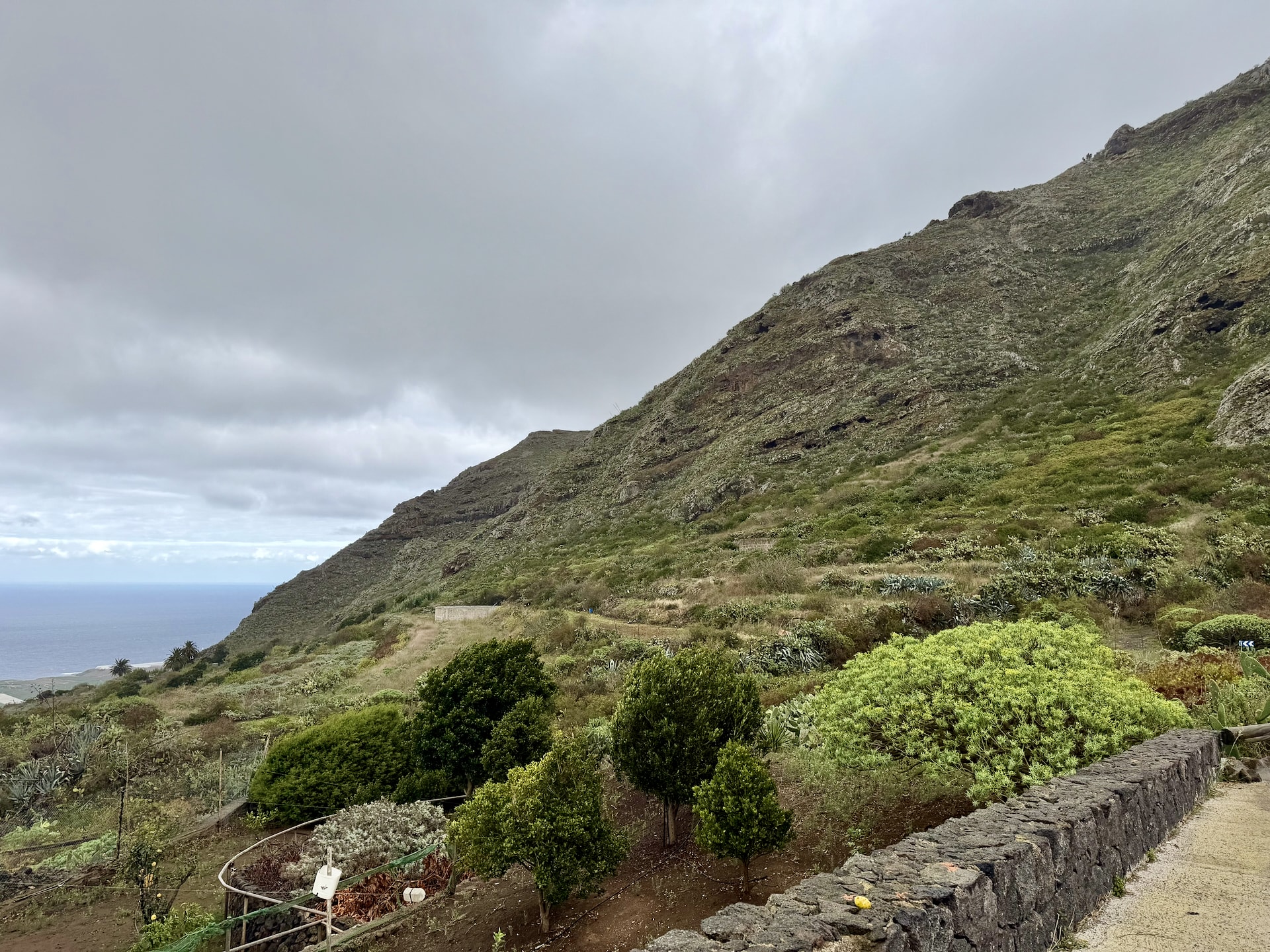
Five days later, on the way to the airport, we tried again from the other side. Mirador de Cherfe is a viewpoint on the TF-436 above Santiago del Teide, about a ten-minute detour from the road we were driving anyway. Getting there was an adventure of its own. A procession had closed the main street through one of the villages on the way, and the diversion sent us over an incredibly steep, narrow and twisting mountain road. We made it.
The road up to Cherfe is a death road in its own right, absurdly narrow and winding. At the bottom there’s a traffic light, which we took to mean one-way traffic. It doesn’t: it’s an automatic light for a quarry, telling the trucks when they can pull out. Pay attention on this road. It’s properly scary.
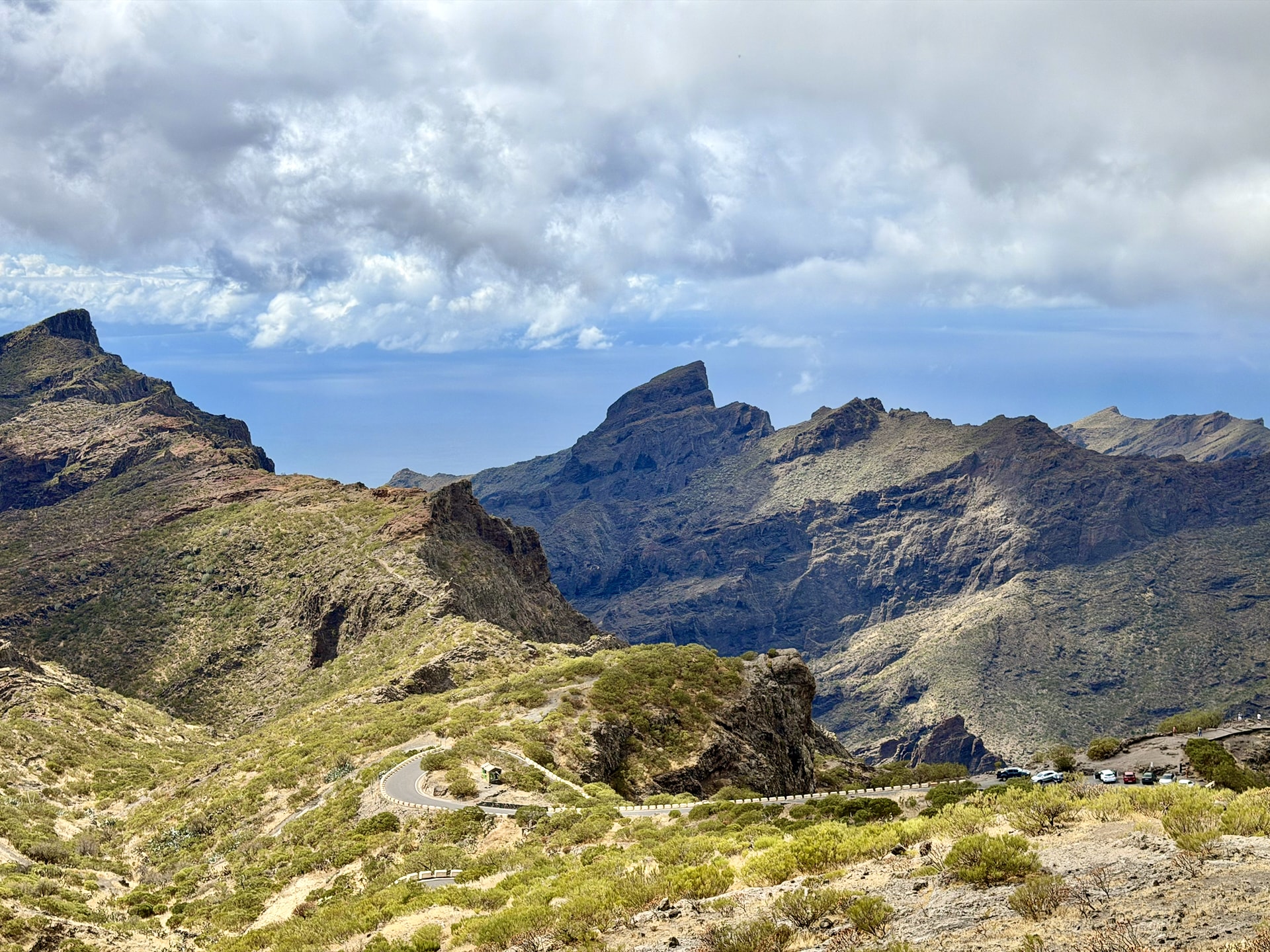
The weather came and went on the way up, but at the viewpoint it was clear. The mirador looks straight down into the Masca valley, and the valley really is beautiful, and it looks exciting.
Masca is best known for its gorge hike down to the sea, which is a full logistical production: car park, shuttle bus, the hike itself and a boat out at the bottom. Access is regulated, and you have to book in advance on the official site, caminobarrancodemasca.com. We didn’t do it. Maybe next time.
Icod de los Vinos: The Dragon Tree from the Church Square
Icod and its famous dragon tree were supposed to be the first stop of the day, and we skipped them on the way out. On the way home, on a sudden impulse, we stopped after all.
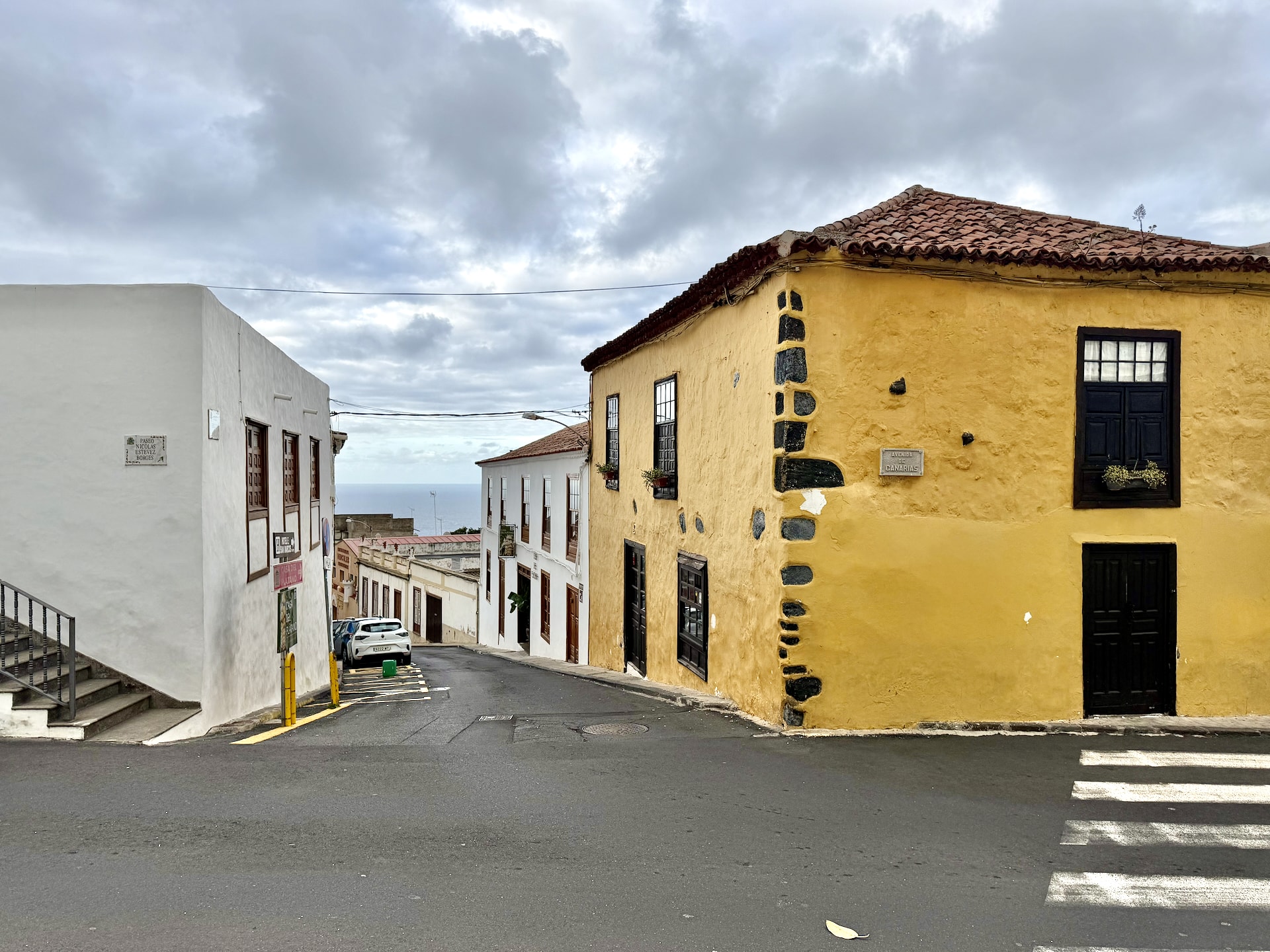
We parked in a big car park next to a shopping center and walked up to the tree: about 10 minutes, maybe less, up a brutally steep street. At first sight the town looked a little down at heel, and someone tried to cadge money off us on the church square.
The tree, the Drago Milenario, stands inside the Parque del Drago, which you can pay to enter (€5, ~$5.6 USD, for visitors). There’s really no point. From the square beside the Church of San Marcos you can see the whole tree perfectly well, and the garden wall has actually been cut away in front of it, so you see it from the roots to the crown. It is an impressive tree. I’ll give it that.
“Milenario” means thousand-year-old, but nobody knows its real age. The island government estimates 800 to 1,000 years, and one 1975 study put the upper limit at 350. It’s about 17 m (56 ft) tall and roughly 20 m (66 ft) around the base, and it has been a national monument since 1917.
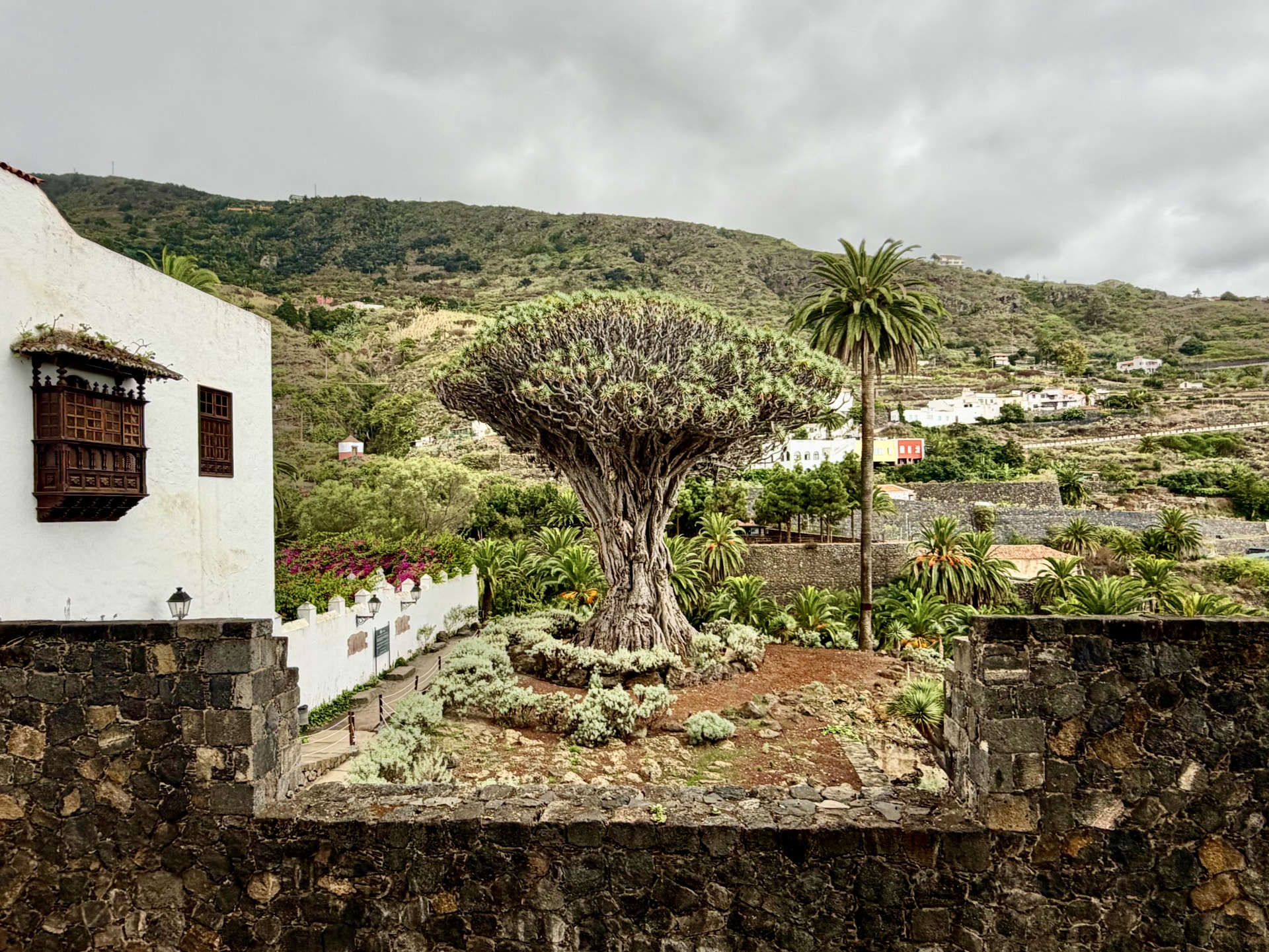
Is it worth coming to Icod just for the tree? Not really, and that’s exactly what we did. If you pay to go in, nothing in particular happens. Nice tree. Old tree. Big tree. Tree.
Planning a Day in North-West Tenerife
Here’s what our day actually looked like:
| Time | Where |
|---|---|
| 11:30-14:15 | Garachico: pools, lunch, walk |
| 14:40 | Buenavista del Norte bus station |
| 15:00 | Bus 369 out |
| 15:20-16:25 | Punta de Teno |
| 16:45 | Back in Buenavista, supermarket |
| 17:30 | Turned back on the Masca road at El Palmar |
| 18:10-18:40 | Icod de los Vinos, dragon tree |
Everything took far longer than our plan allowed. Not because we dawdled. We couldn’t really have gone faster, except perhaps at lunch, and that was the kitchen, not us.
If I did it again, I’d start earlier and catch a morning bus to the point, have lunch in Garachico, stop in Icod on the way home, and leave the Masca road for another day, ideally coming from Santiago del Teide in the south, the way we reached Cherfe. We were based in La Quinta, near Puerto de la Cruz, and Garachico was about 40 minutes away. If you’re still choosing a base, our guide to where to stay in Tenerife explains why we picked the north.
FAQ
Can you drive to Punta de Teno?
No. The TF-445 to the point is closed to private cars, bicycles and pedestrians every day. You take TITSA bus 369 from Buenavista del Norte, or a taxi.
How much is the bus to Punta de Teno?
€1 per person each way, paid on board. Cash works. Card payment is officially accepted but didn’t work for everyone on our bus. Apple Pay did.
How often does bus 369 run?
Nine times a day, every day. The first bus leaves Buenavista at 10:10 and the last one leaves the point at 18:25, according to TITSA’s published timetable. Google Maps doesn’t list every departure, so check TITSA’s own page.
Can you visit the Punta de Teno lighthouse?
No. Both lighthouses, the 1897 original and the 1970s tower, are closed to the public, and the access road and boardwalk were fenced off on our visit. You see them from outside.
Can you swim at Punta de Teno?
Yes, in a small cove by the fishing boats near the bus stop, but there’s no lifeguard and there is a current. Only in a calm sea.
How long do you need at Punta de Teno?
One bus cycle, about an hour, is enough to see it. Two hours isn’t too much if you like scrambling over rocks.
Is it worth paying to see the Icod dragon tree?
We didn’t think so. The church square next to the park gives you a full view of the tree for free.