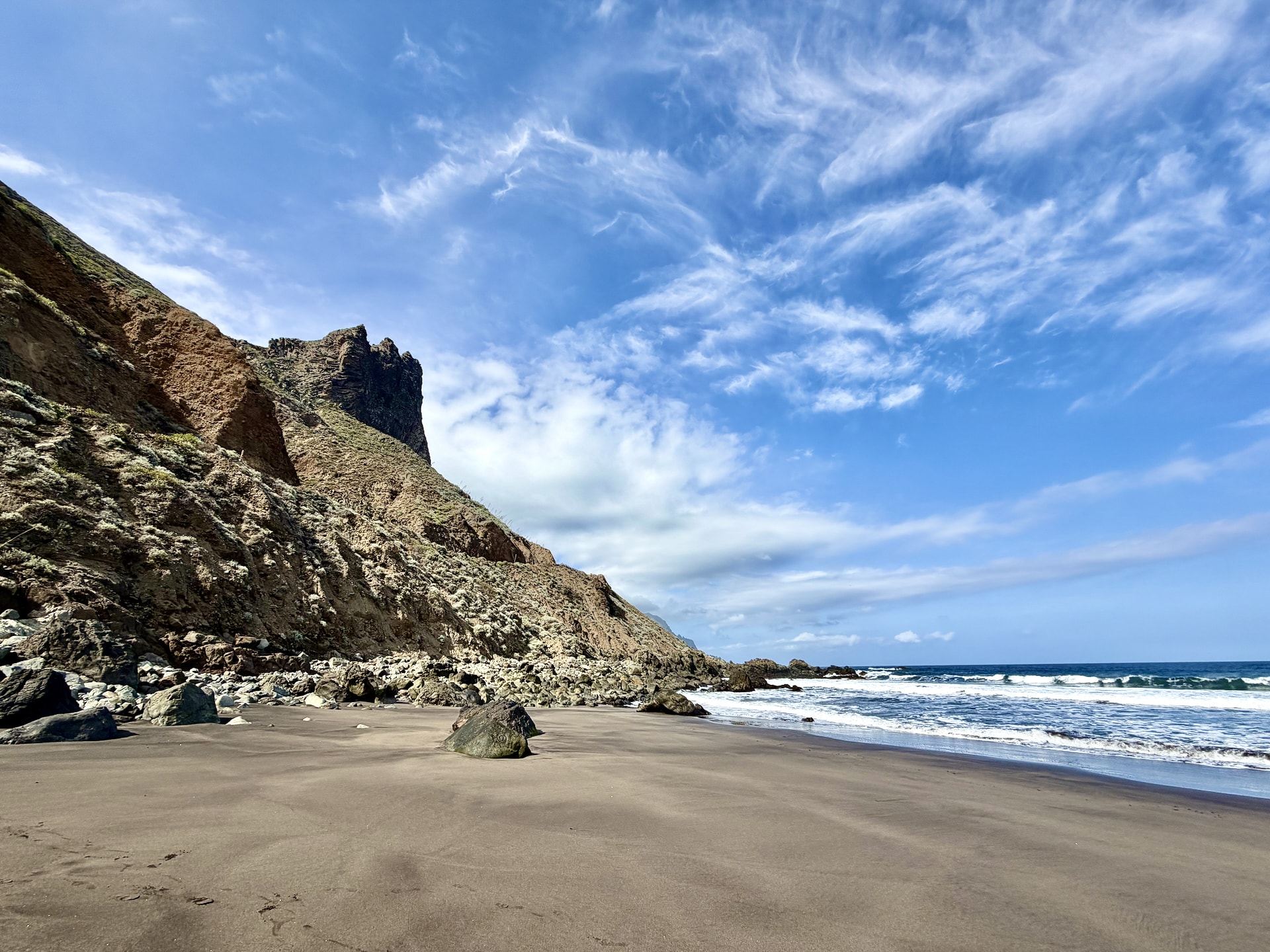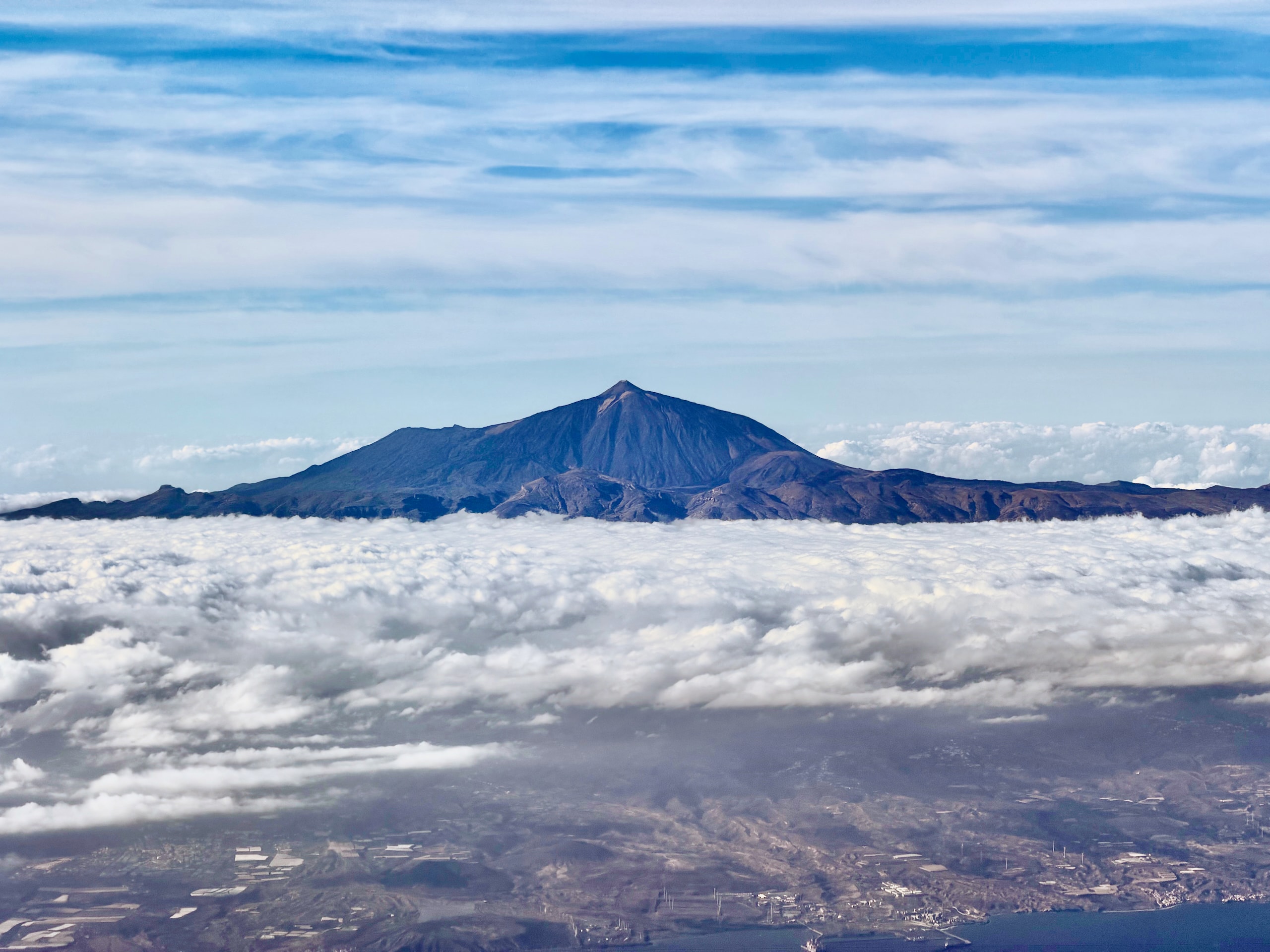
Tenerife is one island, but if you only ever stay in one place, it can feel like two different ones. Spend a week in Costa Adeje and another person spends theirs in Puerto de la Cruz, and you’ll come home describing two different holidays: one of sunshine, sheltered beaches and resort pools, the other of green hillsides, black sand, crashing waves and clouds that come and go every half hour.
We stayed in the north, in La Quinta, a small residential area of the municipality of Santa Úrsula, and drove pretty much everywhere else: the far north-west, the Anaga mountains, the south coast, and up to the top of Teide. So this isn’t an area-by-area accommodation guide. I’m honest about where my experience ends: the north I know first-hand, the south from day trips and from the plane window. What I can tell you is what each side felt like, and who I think each one suits.
North vs South Tenerife at a Glance
| North | South | |
|---|---|---|
| Landscape | Green, steep, banana plantations, cliffs | Dry, rocky, reddish desert |
| Weather | Warm on the coast, cloud on the slopes, short showers | Sunnier and drier |
| Sea and beaches | Black sand, big waves, strong currents | Calmer water, many sheltered and man-made beaches |
| Towns | Lived-in Canarian towns, old centers | Purpose-built resorts and apartment complexes |
| Crowd | Locals, hikers, a lot of Germans in Puerto de la Cruz | Mostly resort holidaymakers |
| Prices (our experience) | A big guachinche dinner for two with wine: €36 | An average Mexican lunch in Costa Adeje: €46 |
| Best for | Hiking, exploring, food, local life | Guaranteed sun, calm beaches, families, all-inclusive |
Why We Chose the North
The decision was simple, and made before we’d ever set foot on the island. Everything we wanted to do pointed north, from the hiking to Teide. And since we’d have a car anyway, we didn’t need to stay in the main town. We picked La Quinta, in the municipality of Santa Úrsula, which is quieter and cheaper than Puerto de la Cruz but only about 10 minutes’ drive from it.
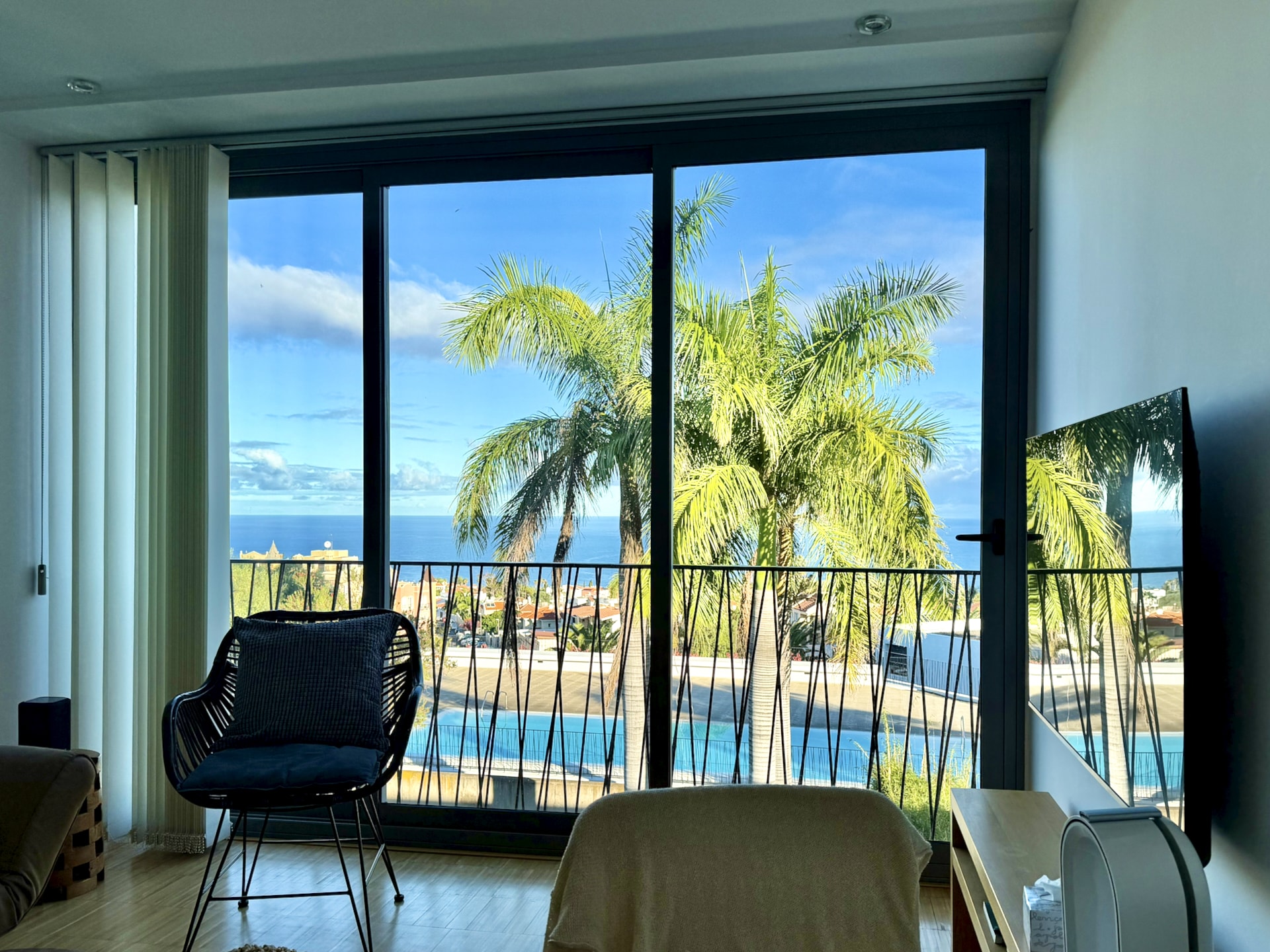
It worked out well. From the living room window we looked out over the pool, with the sea behind it. Teide was on the other side: you could see it from the pool, and from the bedroom window, just about. A couple of good restaurants were within walking distance, and so were two supermarkets, about 10 minutes on foot. That’s either a pleasant walk or too far to carry the groceries, depending on who you ask, so we often just stopped at one on the drive home. And the locals have a lovely habit we stumbled into on our second evening: a crowd of locals drives up to the Mirador de la Quinta viewpoint at sunset, with folding chairs, cans of Coke and bags of sunflower seeds, and watches the sun go down over the sea. We were lucky to find a parking spot.
If you’re still deciding where to base yourself, this map shows places to stay across the island, north and south, so you can compare locations and prices side by side.
What the North Is Really Like
The first thing you notice on the drive up from the south airport is the color change. The south is red-brown rock and scrub. Somewhere along the motorway it turns green, and by the north coast you’re among palm trees, gardens and banana plantations.
The second thing you notice is the clouds. The north faces the trade winds, which push clouds against the mountains, and the official tourism board describes the band between about 600 and 1,500 meters (2,000 and 4,900 ft) as cooler and more humid. In practice, if you live near the coast, it’s warm and changeable: cloudy in the morning, blazing sun half an hour later, another cloud 15 minutes after that. Drive up into the hills and you’re often inside the cloud, where it usually rains properly, and two kilometers further on it doesn’t. My impression after a week was that anyone living higher up spends a good part of the year inside a cloud.
Back home, out of curiosity, pedantry and a slightly unhealthy love of data, I looked up the official numbers. They back this up. During our week, the weather station of AEMET, Spain’s national weather agency, in Tacoronte, at about the same height as our apartment, recorded rain on four of the eight days, while Adeje on the south coast stayed completely dry and averaged about 3.5 °C (6 °F) warmer. The airport in the south logged around 45% more sunshine than the one in the north.
In the north, check the altitude of your accommodation on the map before you book. A place a few hundred meters up the hillside can mean waking up inside a cloud while the coast below is sunny.
That doesn’t mean cold. On our first full day in Puerto de la Cruz, the forecast said 22 to 24 °C (72 to 75 °F), the car thermometer said 36 °C (97 °F), and I got badly sunburned because I’d left the sunscreen at home. Up in La Quinta the same afternoon it was closer to 22 °C (72 °F), and the pool was properly cold. There were rainbows over the sea almost every day.
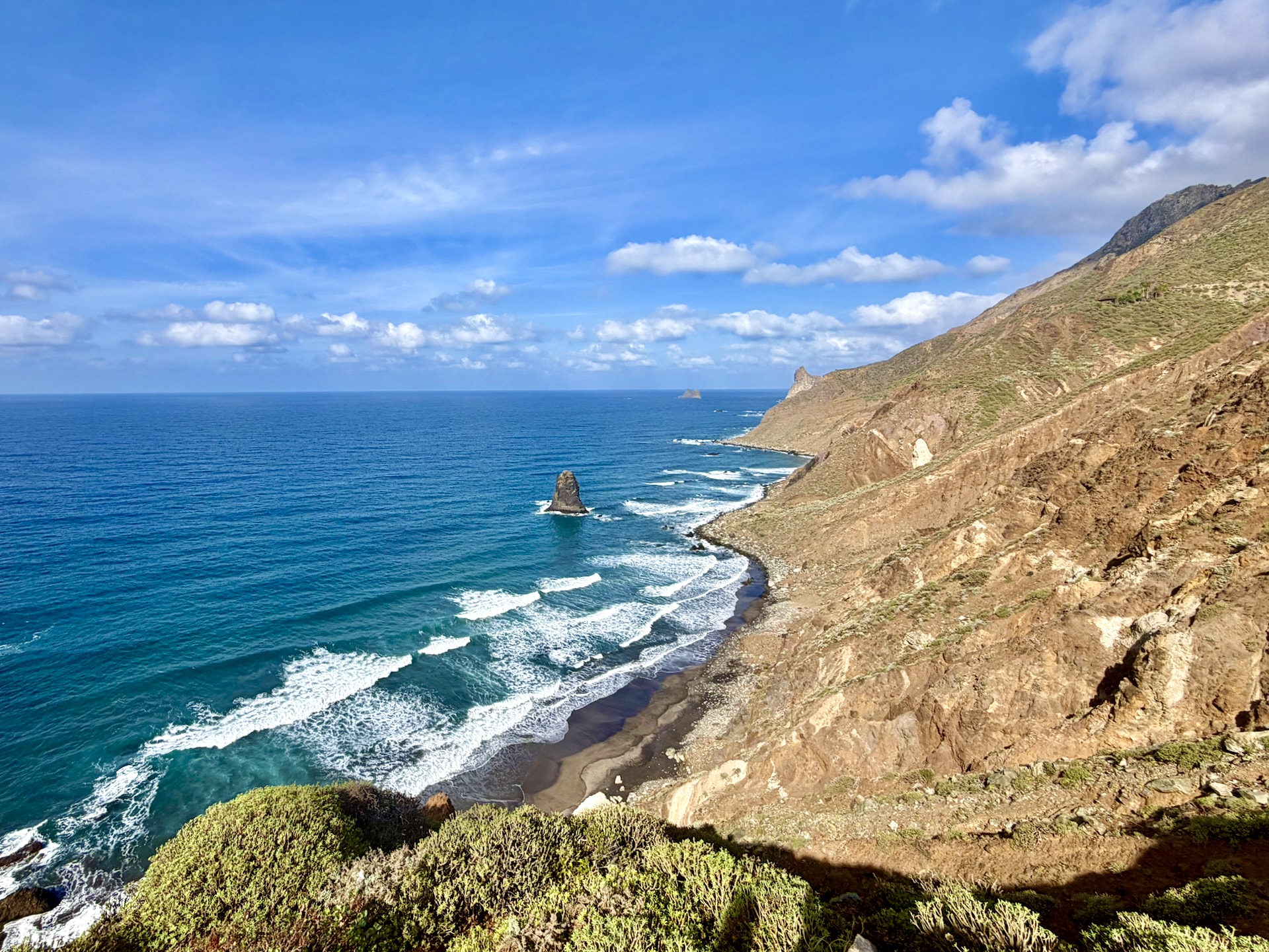
The sea is the north’s real drawback. The black sand beaches are often dramatic, often small coves between cliffs, and the waves are huge. At El Bollullo we couldn’t go in deeper than our knees, there were rip currents, and a lifeguard blew the whistle more than once. Beautiful to watch, not for children to splash around in. The main calm, man-made option in the north is Las Teresitas, near Santa Cruz, with golden sand and a breakwater. We weren’t fans, partly because of the LNG tanker parked just offshore.
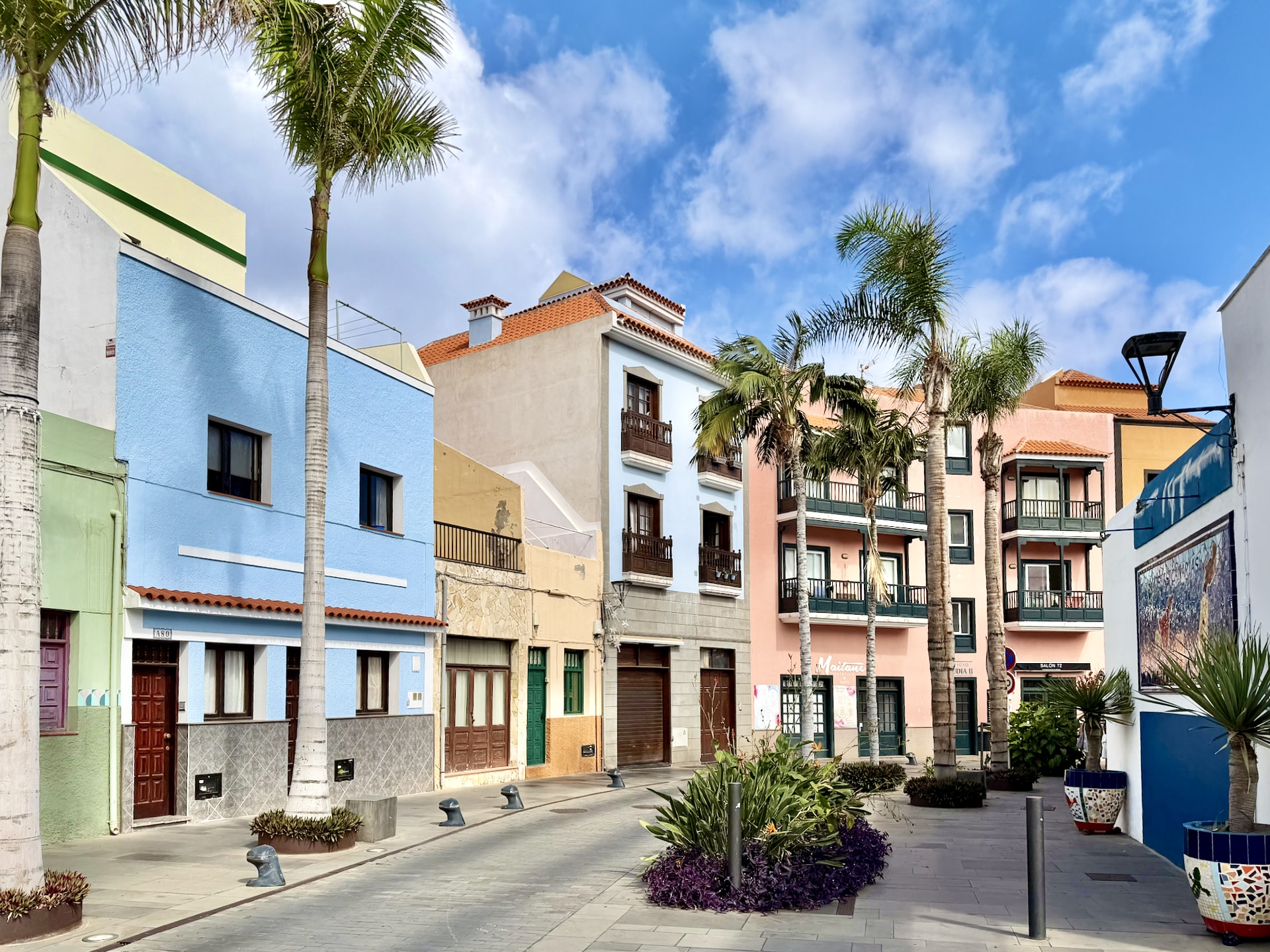
What the north does better than anywhere is everything else: the hiking in Anaga and Teno, towns like La Orotava and Garachico with their old centers and wooden balconies, small family restaurants and guachinches, and people who are genuinely friendly and don’t immediately switch to English when they hear my caveman Spanish.
What the South Is Really Like
My first impression of the south came from the plane, before we’d even landed. The coast near the airport is lined with huge holiday complexes, row after row of near-identical buildings, and resorts that look large enough to have their own postcode. Out of curiosity, we later browsed the listings on Idealista: the south had a huge number of apartments for sale, with more clearly still being built, while the north had far fewer. Later in the week we saw the same thing up close near El Médano: from the top of Montaña Roja you can watch new housing going up around the shopping center, in the same cookie-cutter style, and down at street level the rows of identical houses are packed tightly together.
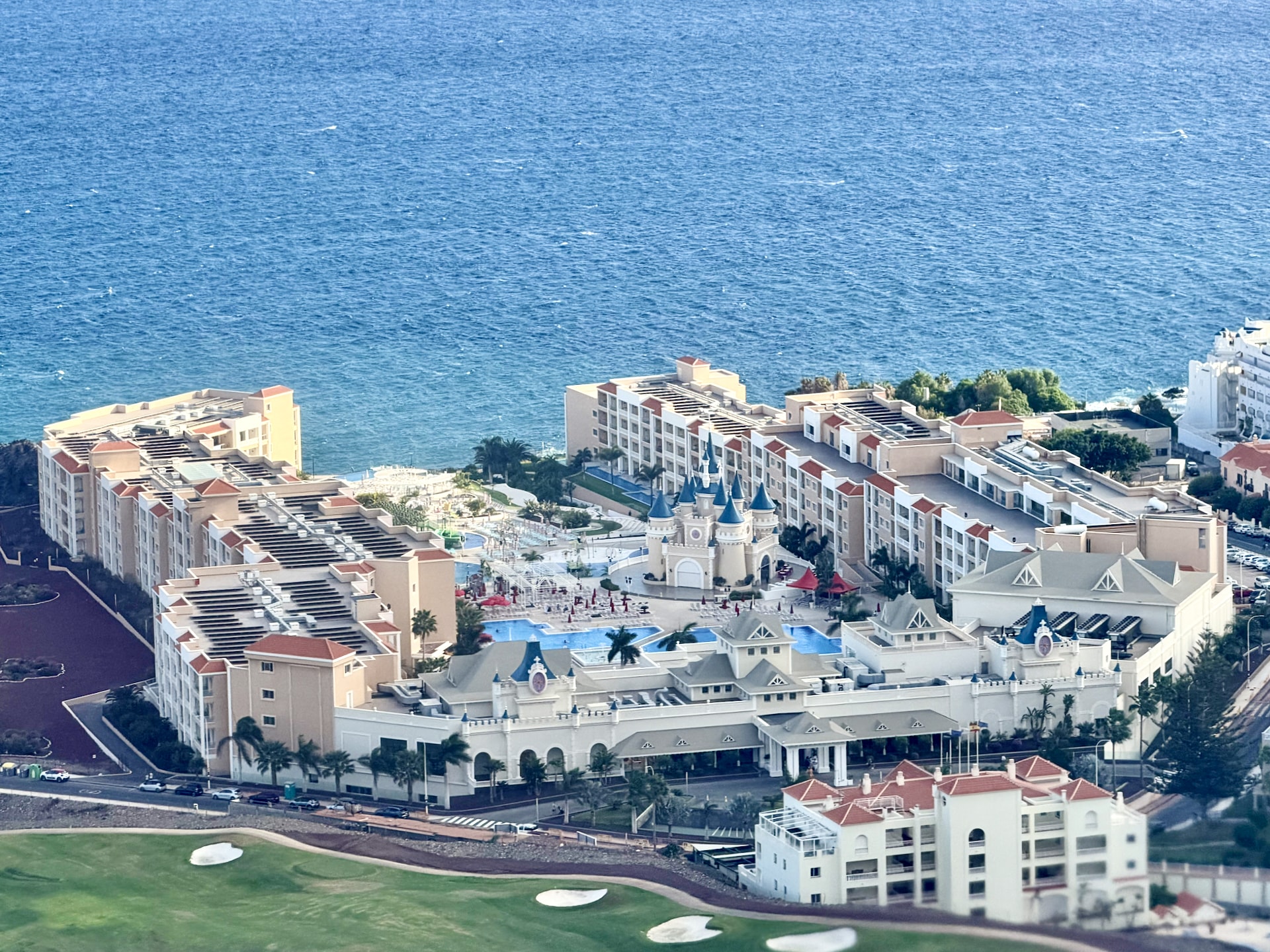
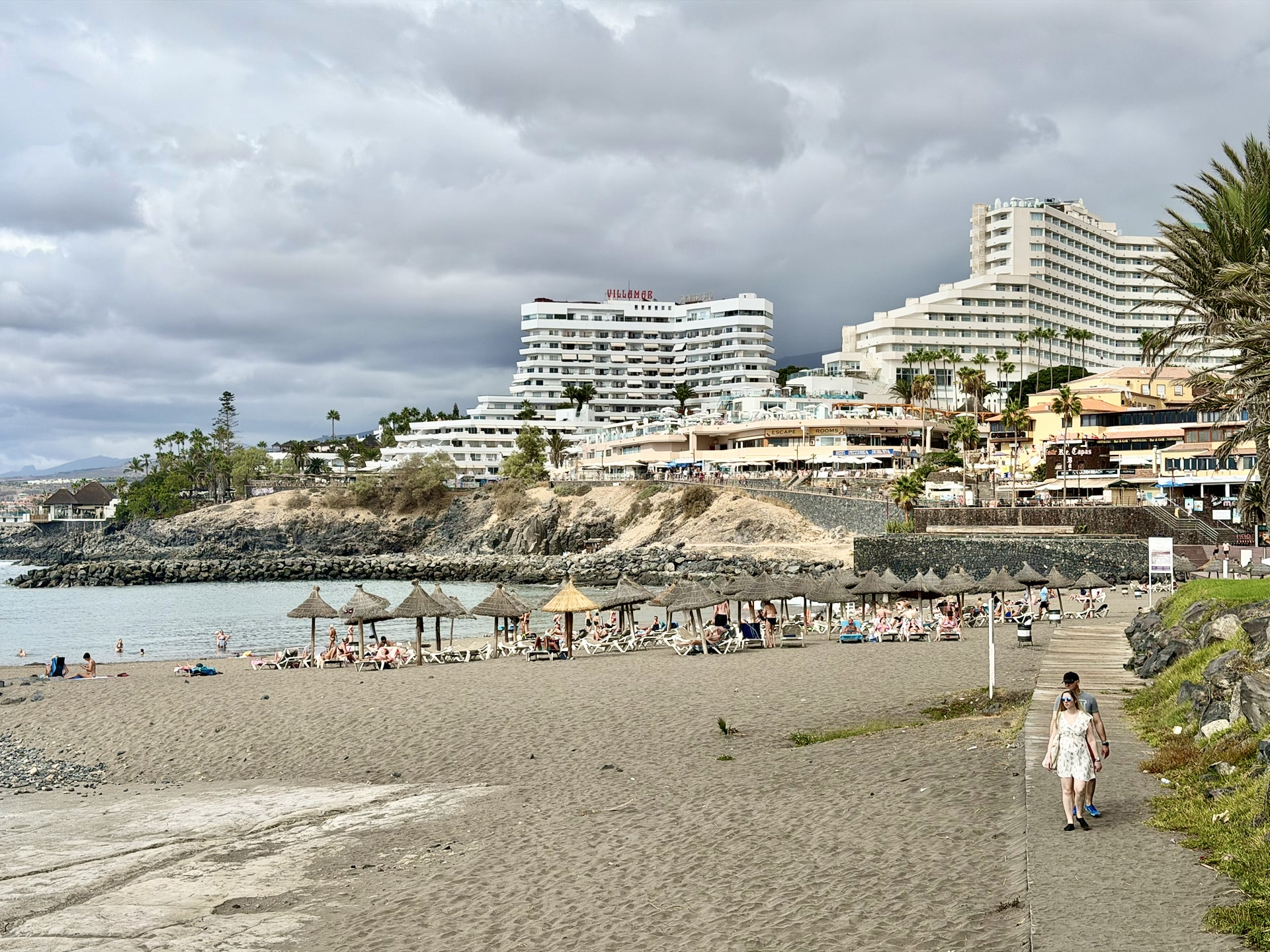
We spent an afternoon in Costa Adeje on our last day, on the way to the airport. It’s a classic resort town of apartment blocks, and the crowd was mostly British resort holidaymakers, the pub-and-pool end of the market rather than the hikers we’d been sharing trails with all week. Not our scene, which probably says as much about us as about them. Lunch at a Mexican restaurant was noticeably pricier than anywhere else we’d eaten on the island and, while not bad, not memorable either. After that afternoon I was very glad we hadn’t booked the south as our base. It would have been a big disappointment for us.
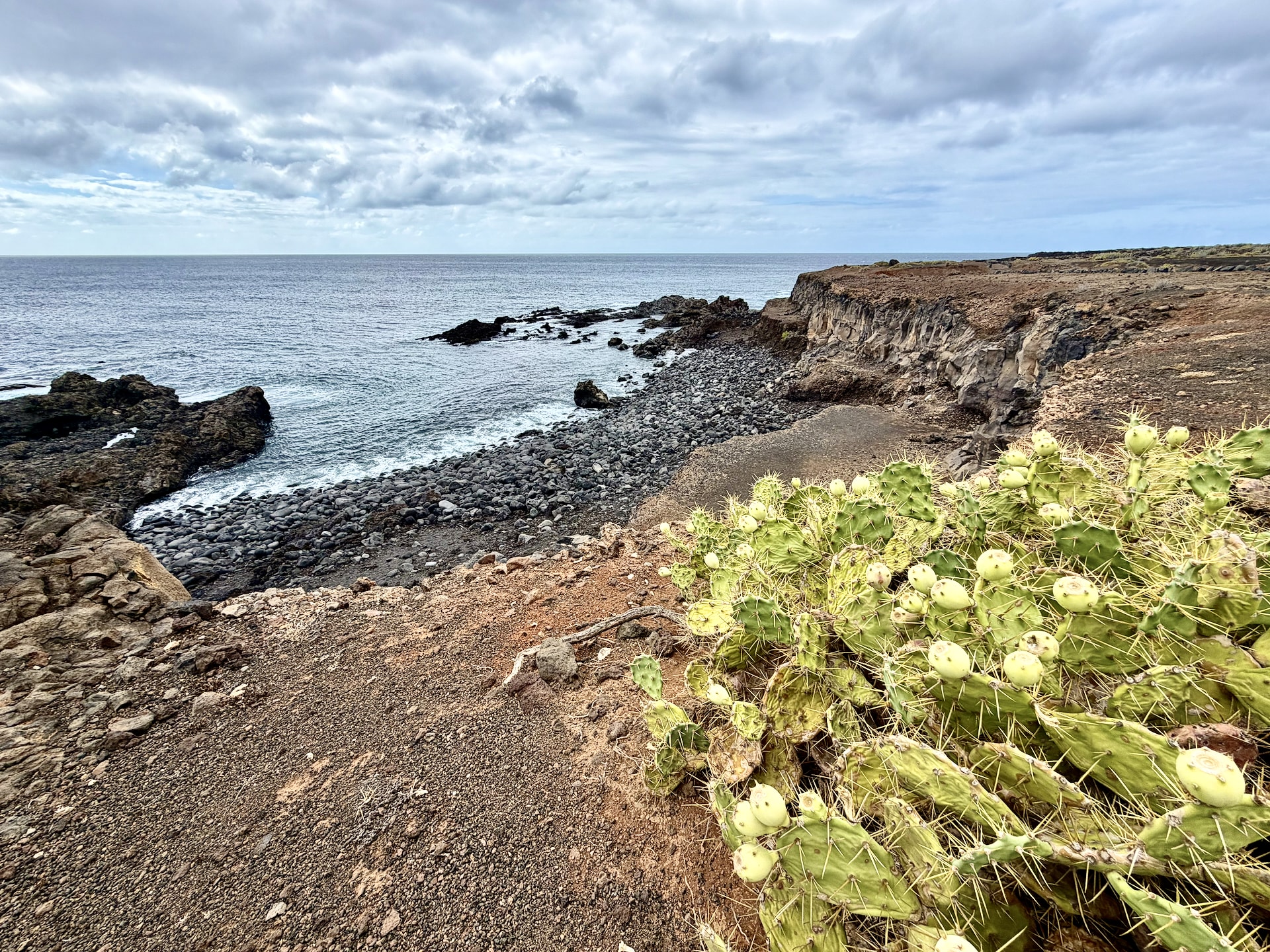
But that’s us. The south has things the north simply can’t offer. The water is calmer, the beaches more sheltered, and you’re far more likely to get sun. From the summit of Teide we could see it clearly: clouds piled up over the north, clear skies over the south. If you want to put the kids on a beach without watching every wave, or lie by a pool for two weeks with an all-inclusive wristband, the south is the obvious choice. And it isn’t all resorts. The area around Montaña Roja and El Médano, on the south-east coast, has a completely different, almost Martian landscape and a beach full of kitesurfers.
So Which Side Should You Choose?
Pick the side first, based on what you want to do. Then pick the town, based on whether you’ll have a car.
Choose the north if you want to hike, explore, eat well and see a Tenerife where people actually live. Accept that you’ll get clouds and the odd shower, and that the sea is for looking at more than swimming in.
Choose the south if sunshine is the priority, you’re traveling with young children, or you want a resort holiday where everything is within walking distance. It’s also closer to the south airport, where most international flights land.
Then the town:
- With a car, you don’t need to stay in the main town. A smaller place near Puerto de la Cruz, like La Quinta, gets you quiet, lower prices and a 10-minute drive to everything in town.
- Without a car, stay where the buses and restaurants are: Puerto de la Cruz in the north, or one of the big resorts in the south. TITSA buses cover the island, but you’ll plan your days around the timetable.
Book somewhere with its own parking. Northern towns are steep, narrow and full, and outside your accommodation, finding a parking spot can easily become the most time-consuming part of the day.
Whichever side you choose, see the other one. The island is small enough for day trips, and either half on its own gives you only part of the picture.
If, like us, you’d rather have a car, you can compare rental prices for pickup at the south airport here. We rented from Cicar, a local Canarian company that came out best in our research, and the only surprise was a far bigger car than we’d expected for those narrow northern roads.
FAQ
Is the north or south of Tenerife better?
Neither, overall. The north is greener, more local and better for hiking. The south is sunnier, with calmer beaches and more resorts. We preferred the north, but families after a beach holiday will likely prefer the south.
Is the north of Tenerife always cloudy?
No, but it’s cloudier than the south. In October we had plenty of sun on the north coast, with clouds coming and going and short showers. The hills above the coast were in cloud much more often.
Where should you stay in Tenerife without a car?
In Puerto de la Cruz if you want the north, or in one of the southern resort towns like Costa Adeje. Both are walkable, with restaurants and bus connections.
Which airport should you fly into?
Most international flights land at Tenerife South. It’s about an hour’s drive from there to the Puerto de la Cruz area. Tenerife North, near La Laguna, is closer to the north coast, but has fewer international connections.