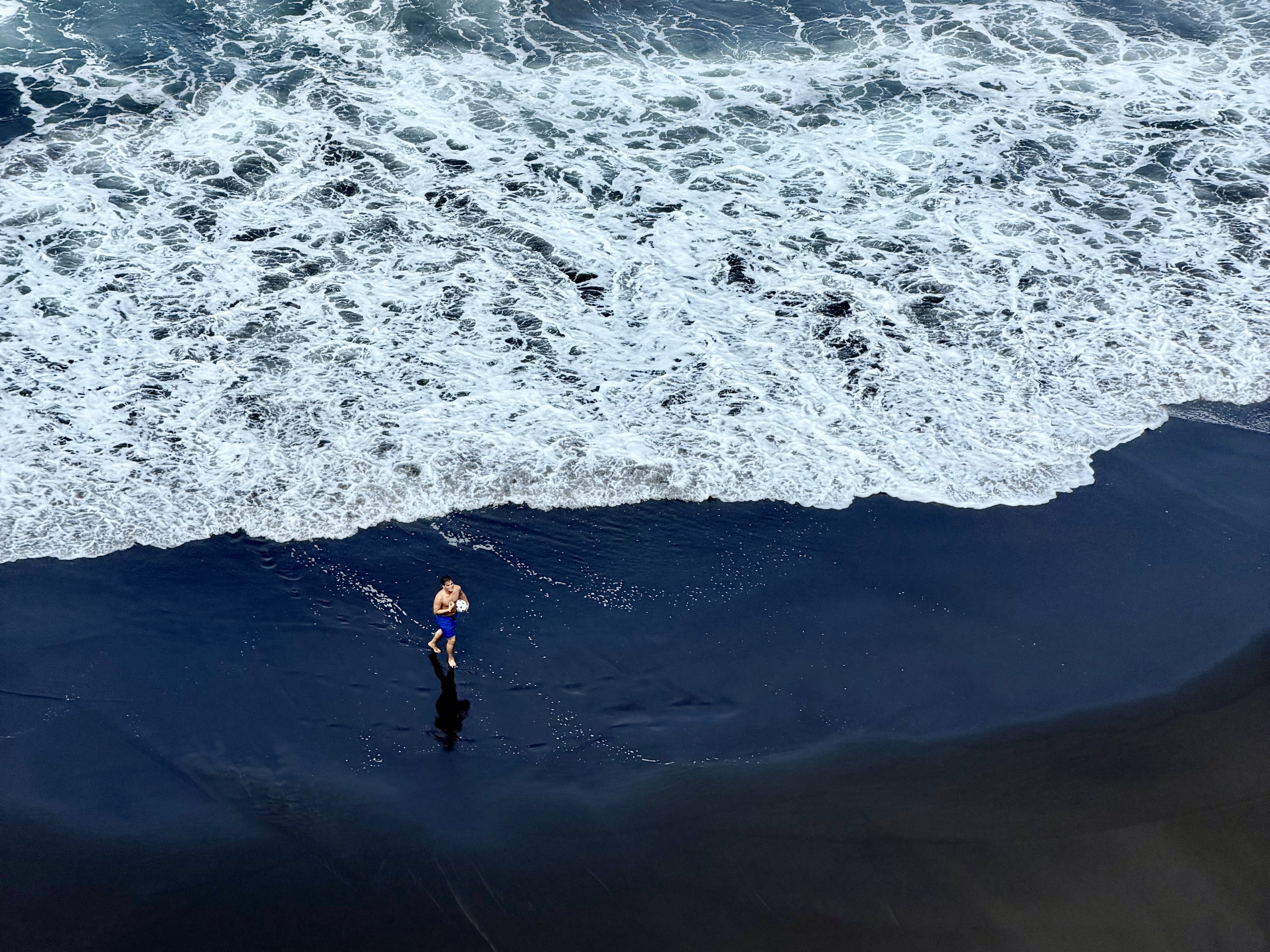
Most of Tenerife’s natural beaches are black, and on the north coast almost all of them are. It’s volcanic sand, and against white surf it looks spectacular. What the photos don’t show you is how big that surf usually is, or how much of the sand comes home with you.
In one October week we visited seven beaches and a few natural rock pools, mostly on the north coast where we were based, plus a couple in the south. So this isn’t a list of every black sand beach on the island. These are the ones we actually went to, with what the sea was doing that day, how we got there, and whether I’d go back.
The short version:
- Easiest black sand beach: Playa Jardín and Punta Brava in Puerto de la Cruz. Breakwaters, facilities and car parks nearby.
- Blackest sand and wildest sea: El Bollullo, a 30-minute walk down from the road.
- Most dramatic setting: Roque de las Bodegas in Anaga.
- Calm water in the north: the natural rock pools of Garachico, or the golden, breakwater-protected Las Teresitas.
| Beach | Area | Sand | The sea on our visit | Getting there |
|---|---|---|---|---|
| Playa Jardín and Punta Brava | Puerto de la Cruz, north | Soft, fully black | Big waves, breakwaters | Easy, several car parks |
| El Bollullo | La Orotava, north | The blackest we saw | Knee-deep at most, rip current | Park on the road, 1.8 km walk |
| Roque de las Bodegas | Anaga, north-east | Black with shingle, brownish | Big waves, surfers | Small car park by the road |
| Benijo | Anaga, north-east | Dark sand and gravel | Big waves (seen from the road), no lifeguard | Closed since July 2024 (rockfalls) |
| La Tejita | Granadilla, south | Volcanic sand | Calm, sailboats at anchor | Two car parks, 1-2 minutes on foot |
| Las Teresitas (contrast) | Santa Cruz, north-east | Golden, imported | Tiny waves, very shallow | Plenty of parking |
| Costa Adeje (contrast) | South-west | Resort beach | Calmer | Resort promenade |
Why Tenerife’s Sand Is Black
Tenerife is a volcanic island, and a young one. Its sand is volcanic rock, mostly basalt, ground down by the Atlantic, which is why it comes out black or dark gray. You can see the island’s youth along the whole coast, too: it hasn’t had time to wear smooth, so it’s all sharp rock, cliffs dropping straight into the sea, and small black coves wherever there’s room for one.
The pale golden beaches in the resort brochures are mostly made rather than found. The best-known, Las Teresitas near Santa Cruz, was filled in 1973 with sand shipped from the Western Sahara.
The Black Sand Beaches We Tried
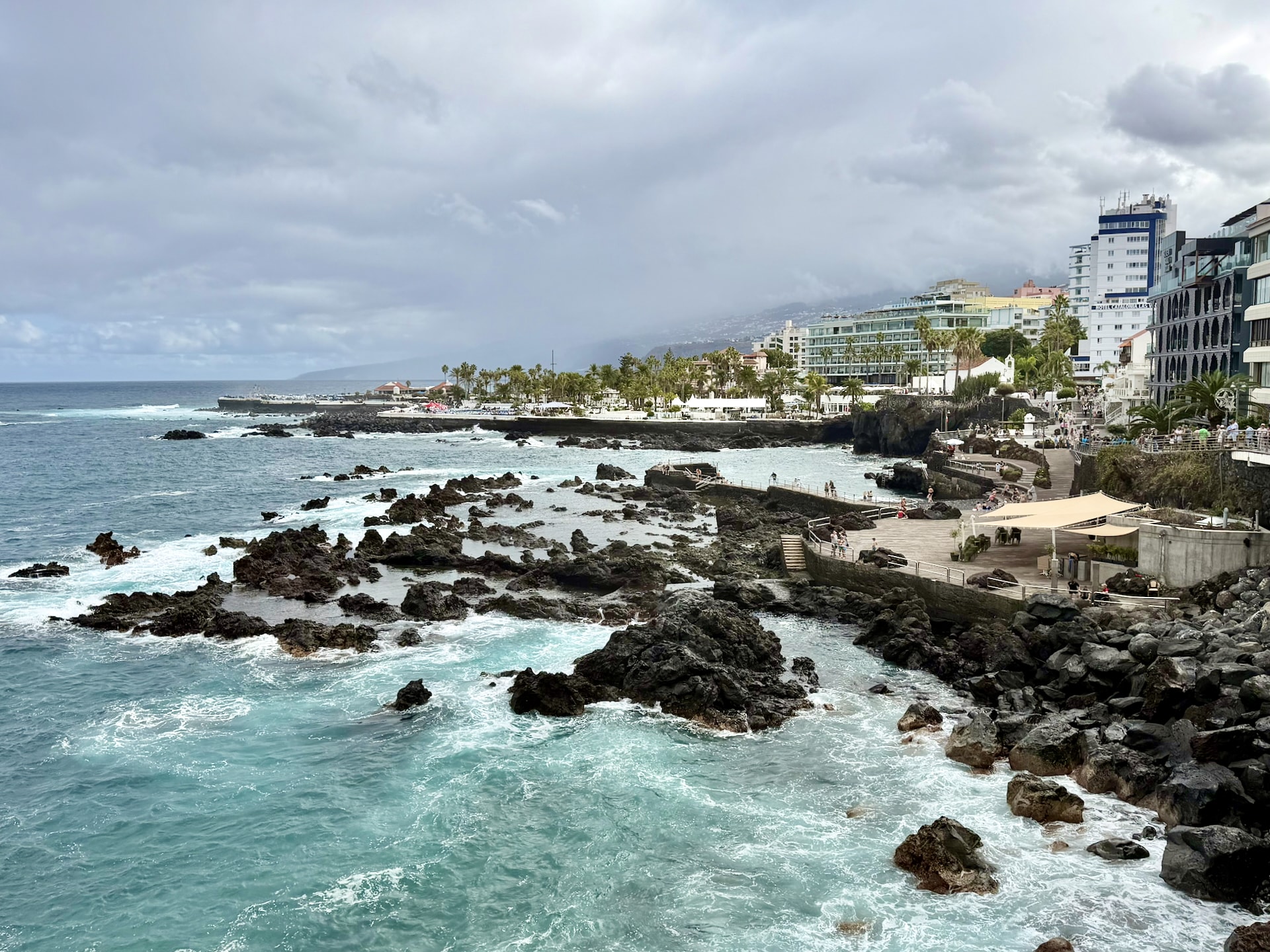
Playa Jardín and Punta Brava, Puerto de la Cruz
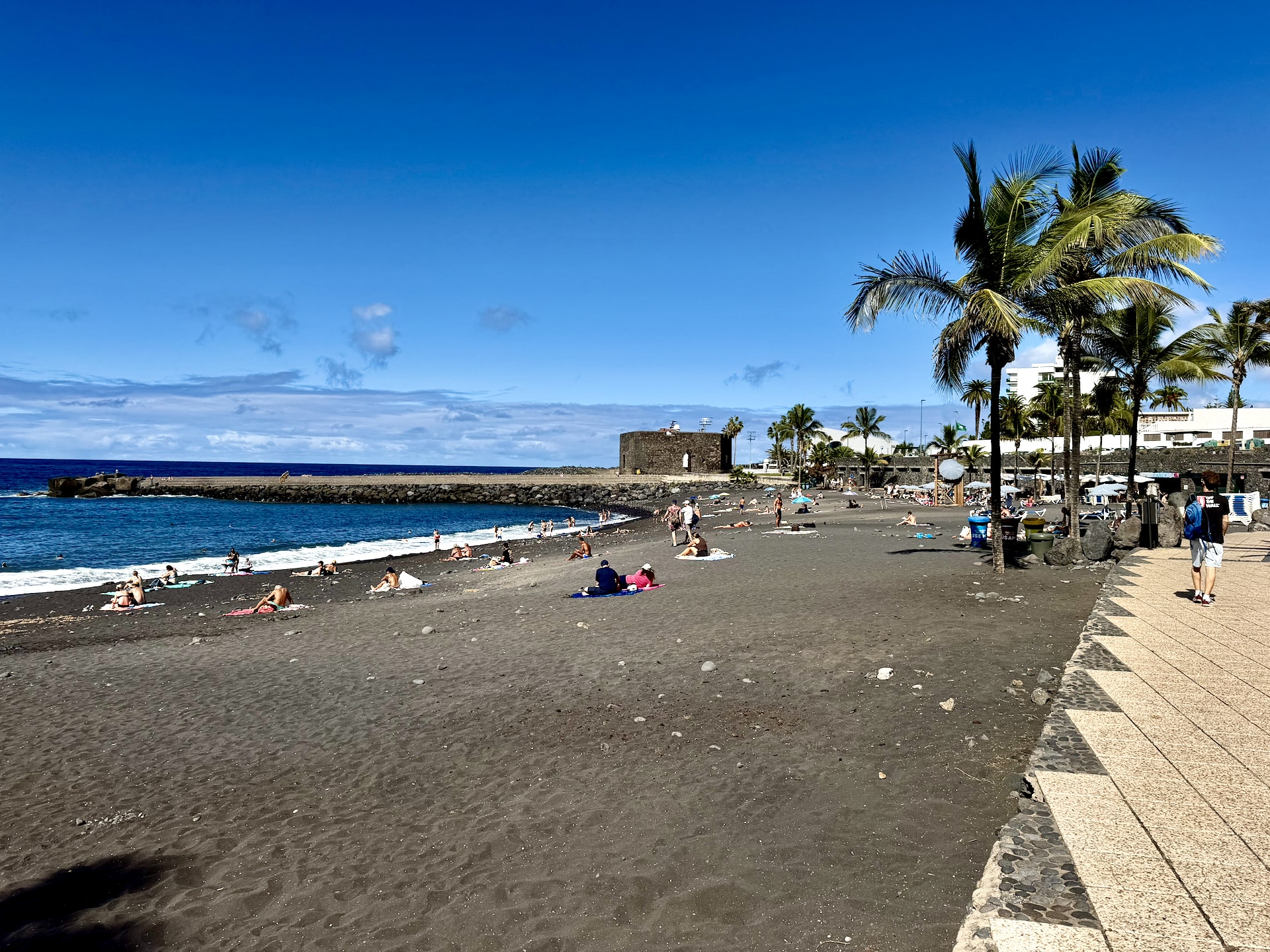
Playa Jardín is not one beach but three in a row along the western seafront of Puerto de la Cruz: Punta Brava, Playa Chica and Playa Jardín itself, landscaped in the 1990s by the Canarian artist César Manrique. You can walk from one to the next, and all three are black sand with big waves.
We ended up here by accident. It was October 12, Spain’s national holiday, the road to the main seafront car park was closed, and the old town was gridlocked. We gave up, drove to the other side of town and paid €7 (~$7.8 USD) at the Loro Parque car park, which isn’t cheap, but which turned out to be worth it. From there we wandered the small streets of Punta Brava, a little headland, and walked out to the sea wherever a lane looked like it led to the coast. Black volcanic rock, fishermen everywhere, rustic little walkways, colorful houses, and almost no other tourists.
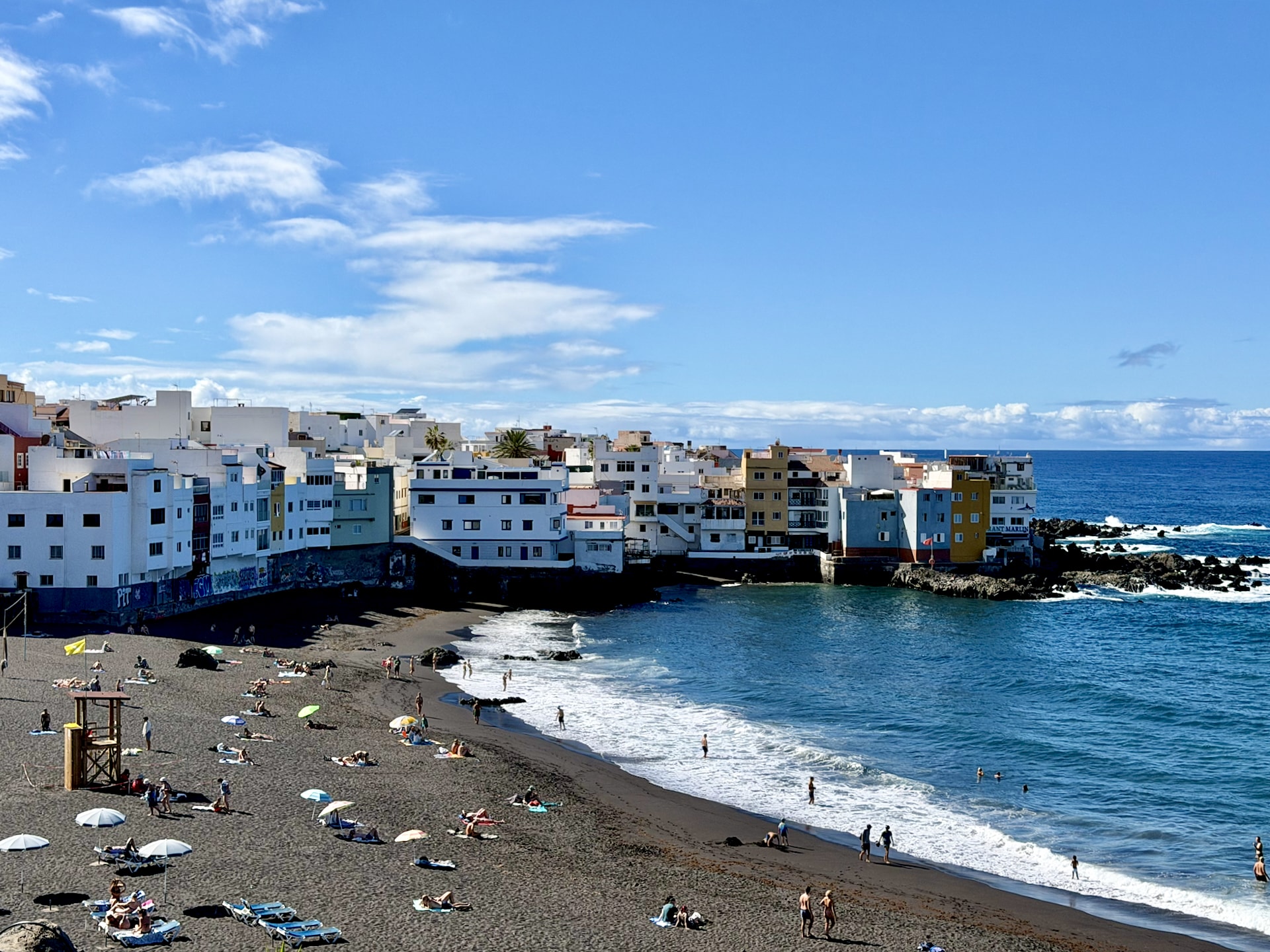
Then we came down onto Playa Punta Brava, the western end of the complex. It turned out to be the best of the three: relatively few people, huge waves (though those were everywhere), and the softest, blackest sand of the three. We walked the whole length barefoot along the waterline to Playa Jardín and back. We hadn’t brought swimwear, which I regretted, because the water wasn’t cold at all.
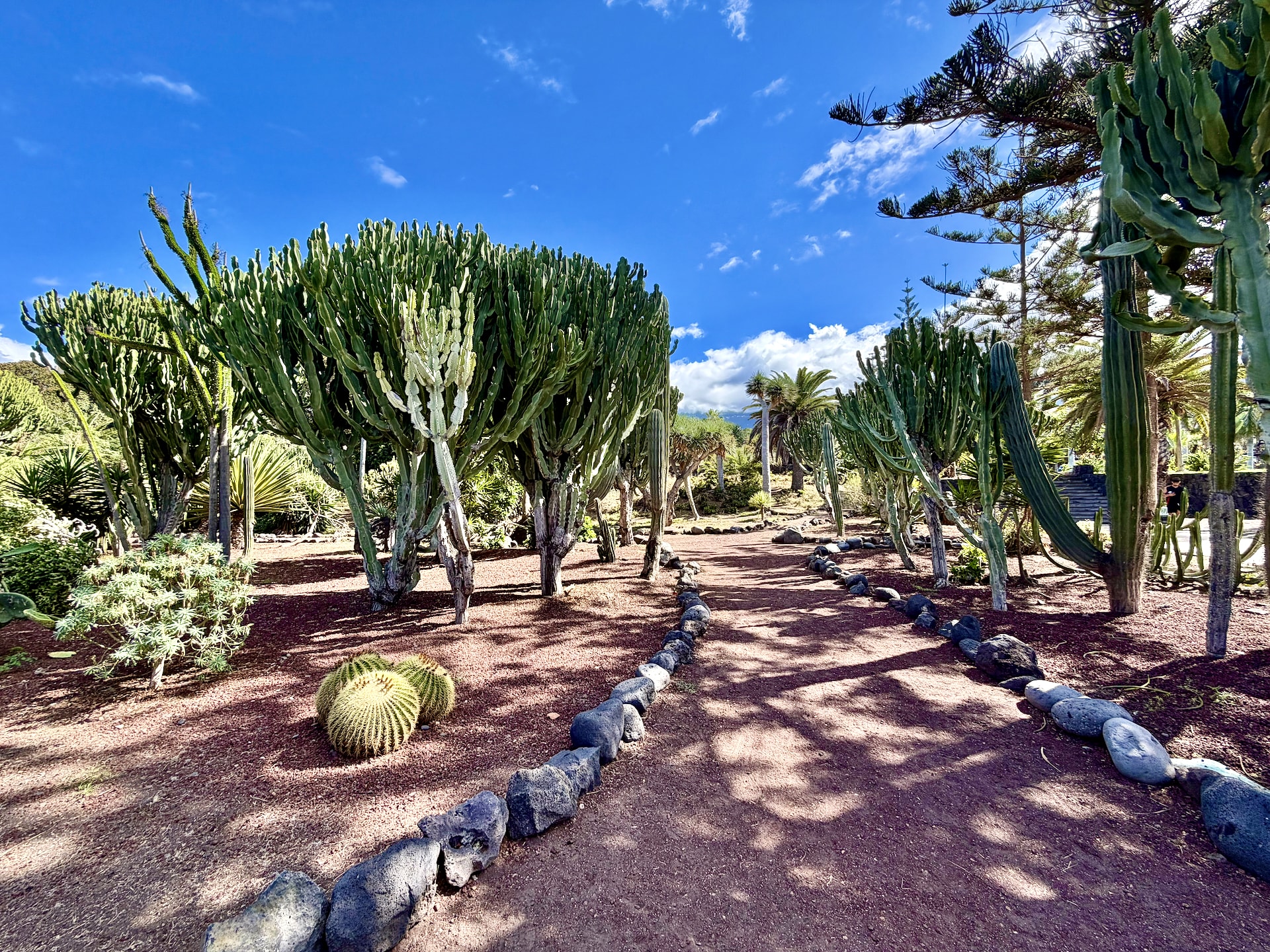
Behind the beaches there’s a cactus garden that’s worth the detour, and small parks with palm trees and proper green lawns. According to the island’s tourism board, breakwaters shelter the swimming areas here, but the waves beyond them can be strong.
El Bollullo, La Orotava
If you want the black sand beach from the photos, this is it. El Bollullo is a small cove between two cliffs, about 200 meters (660 ft) long, below the banana plantations east of Puerto de la Cruz. The sand was the blackest we saw all week, and when the sun is on it, properly warm.
Getting there takes a little effort. You used to be able to drive down to the beach, but since late 2025 the council has closed the access road to visitors’ cars and shut the beach restaurant’s private car parks, after an ecologist group complained that they broke the 1992 law protecting this stretch of coast. Only residents, workers and deliveries can drive down now. Reading the notice at the beach with my caveman Spanish, I’d concluded it was about erosion. It wasn’t. Not that the drive would have been fun: the road is barely wide enough for one car.
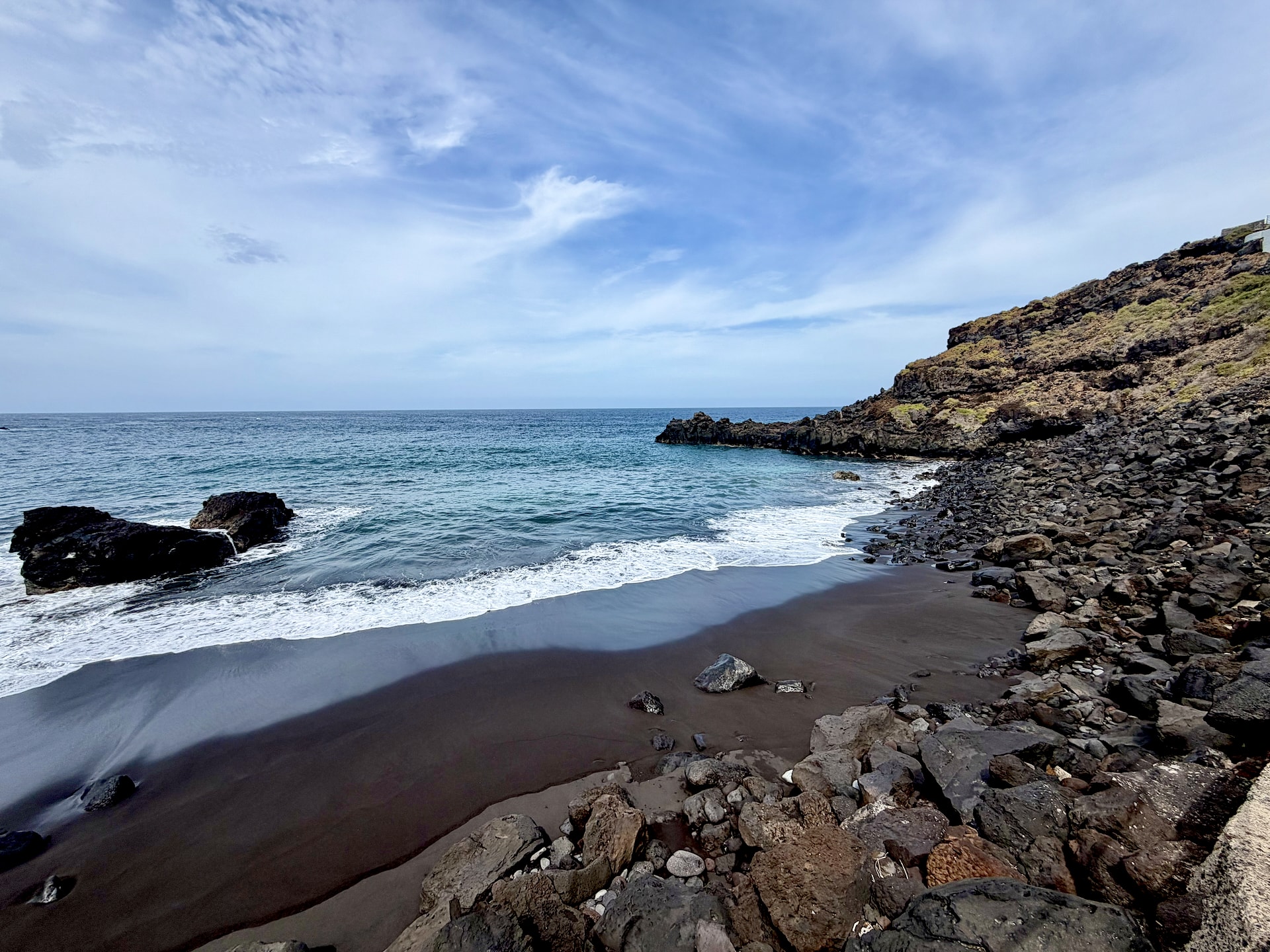
We’d spent the morning on a banana plantation tour nearby, so we left the car at the end of the plantation’s street, where there were free spots by the roadside (fewer when we came back), and walked down to the sea. It’s about 1.8 km (1.1 miles), and you should allow about 30 minutes. Downhill all the way, which means uphill all the way back.
The whole area here is called El Rincón, and the restaurant at the Anaga trailhead a day earlier had been El Frontón. Both are also the names of two beaches we visited in the Dominican Republic. Spanish speakers, it seems, are not especially inventive when naming things.
At the bottom there’s a bar-café and a lifeguard, who blew the whistle at least once while we were there. Swimming is not really on the menu. You can go in to about knee depth, meaning water that comes up to your knees between waves, because when a wave arrives, it comes up a lot higher. There was a rock about 5 meters (16 ft) high that the waves regularly broke over, with a loud, heavy crash. Every so often they got noticeably stronger for a while, then eased off again. There’s a sign warning about rip currents, and one of them was clearly visible. This is the kind of sea that drags you off in seconds.
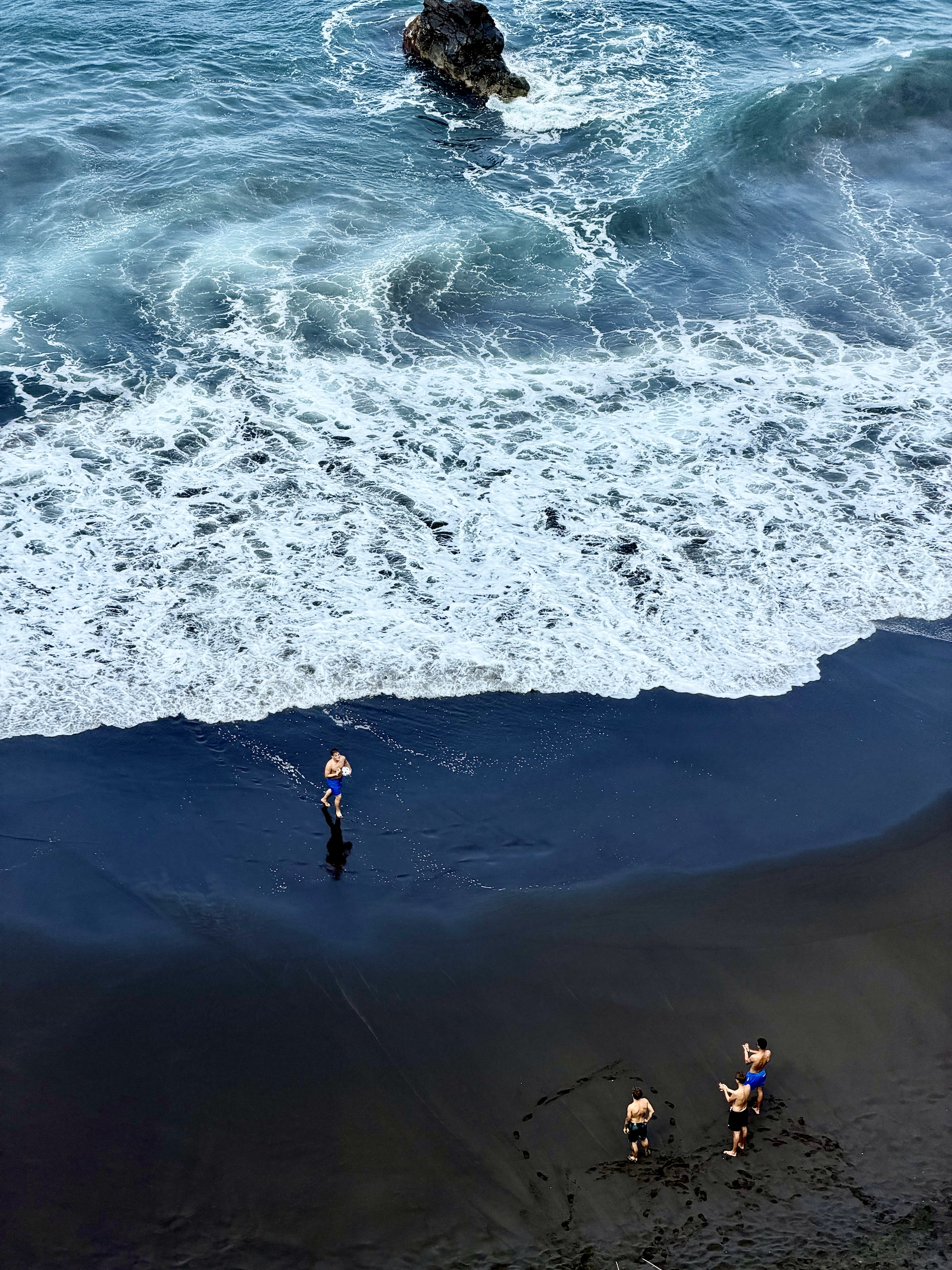
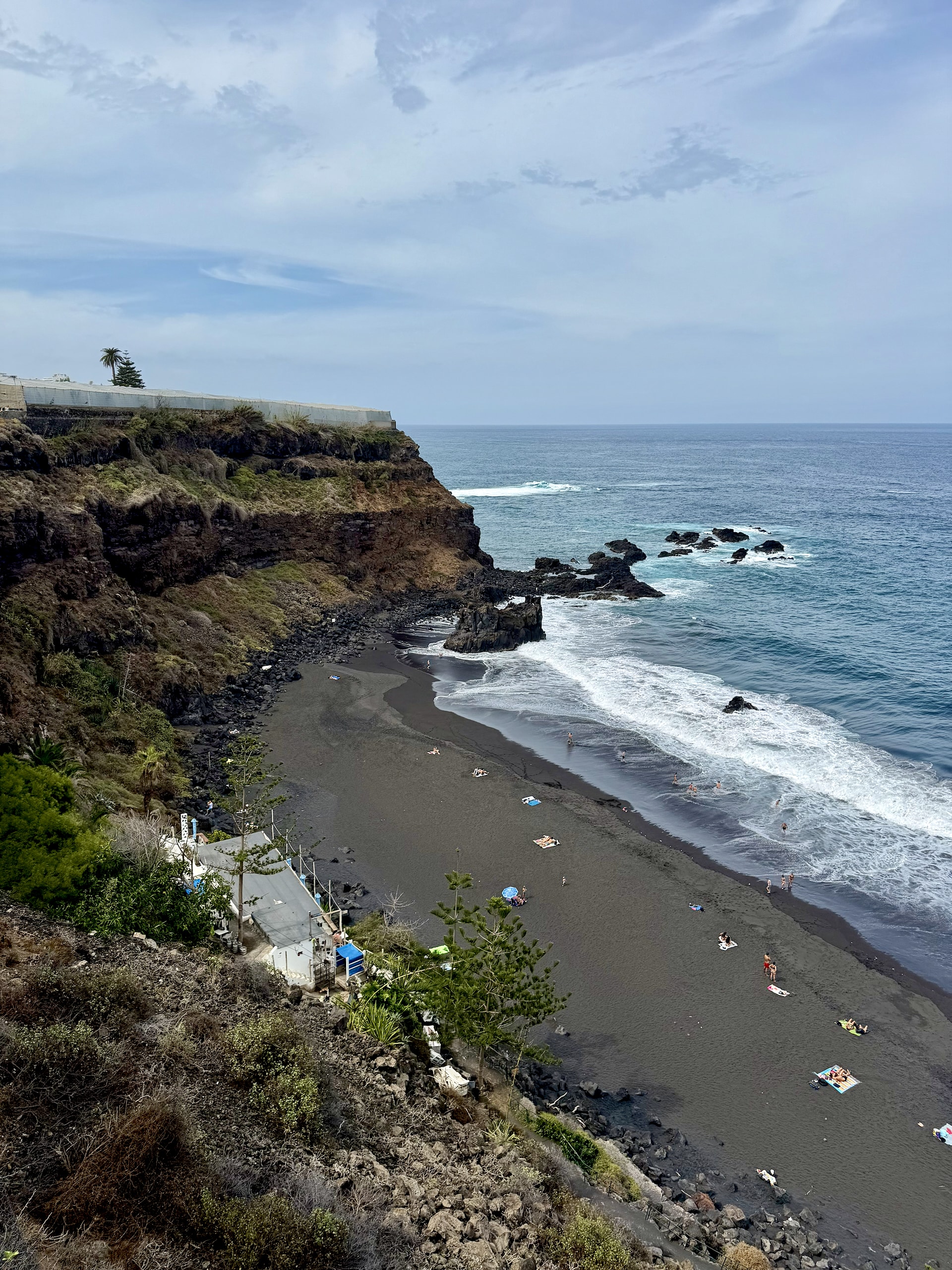
At one point we lost sight of a man in a cap and were convinced the sea had taken him. For long minutes we couldn’t see where he’d gone. The people standing around him didn’t seem concerned, which I took as a good sign, and later he reappeared. The sea had not taken him.
We spent two hours there, which is about right. There may be a changing room somewhere. The café has a couple of doors with the lifeguard sitting in front of them, and up some stairs on the rocks behind it there’s a small hut that could be a toilet, a changing room or something else entirely. We never saw anyone go in or out of either, and everyone, us included, changed under a towel.
Roque de las Bodegas, Anaga
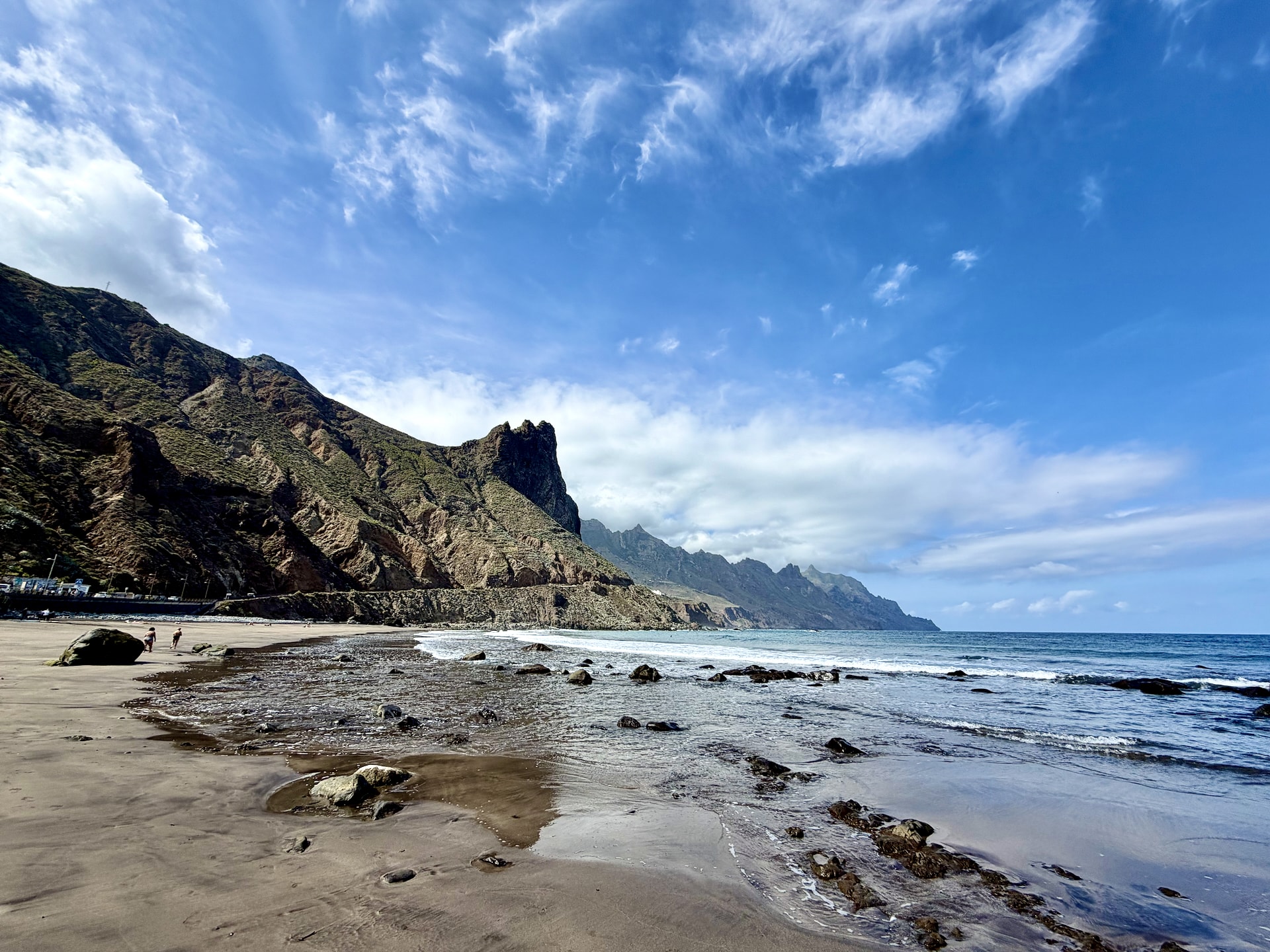
We drove to Anaga, in the island’s north-east corner, for the mountain roads and viewpoints. The ridge was in cloud, which meant we were driving inside it and saw nothing from any of the viewpoints, so we kept going down to the coast. It was the right call.
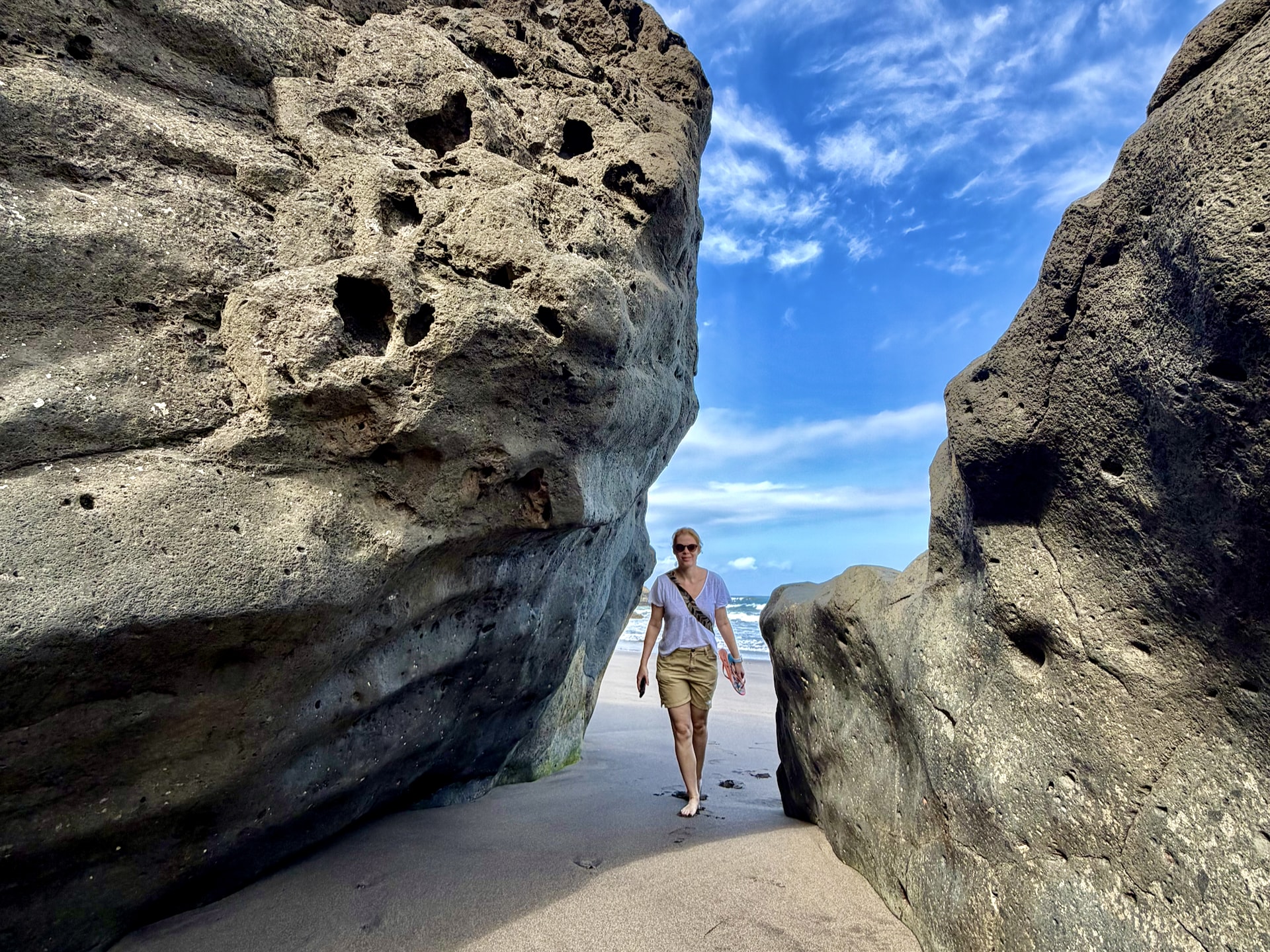
Roque de las Bodegas is named after the large rock standing in the sea at one end, with a huge cliff at the other. The sand is a mix of black sand and shingle that reads as brownish rather than black. The waves were big and there were surfers, so not a swimming beach on that morning, even though the tourism board calls it the gentlest of the three beaches here. We walked up and down for a while and went out onto the roque itself, which has a proper walkway, then had a coffee at Casa África, a restaurant right by the beach.
Playa de Benijo, Anaga
A few minutes further along the same road is Playa de Benijo, which for some reason is the more famous of the two. We only looked down on it from the road, and from up there Roque de las Bodegas looked much more dramatic. What we didn’t know at the time: access to Benijo has been closed since July 2024, after rocks fell on the slope above its only staircase. The local police report people who go down anyway, and there were more of them on the beach when we passed again on the way back. Stabilization works are funded but still waiting on permits, with no reopening date. For when it reopens, here’s what to expect, according to the tourism board and other guides: Benijo is known for its sunsets and its views of the Roques de Anaga, the sea stacks offshore, and it’s also a well-known nudist beach. It’s dark sand and gravel, reached by a long, steep staircase path from the road, with no lifeguard and dangerous currents.
Rockfall closures in Anaga change often. Check the alerts on TenerifeON and the Santa Cruz council’s beach page before you drive out.
La Tejita, South Tenerife
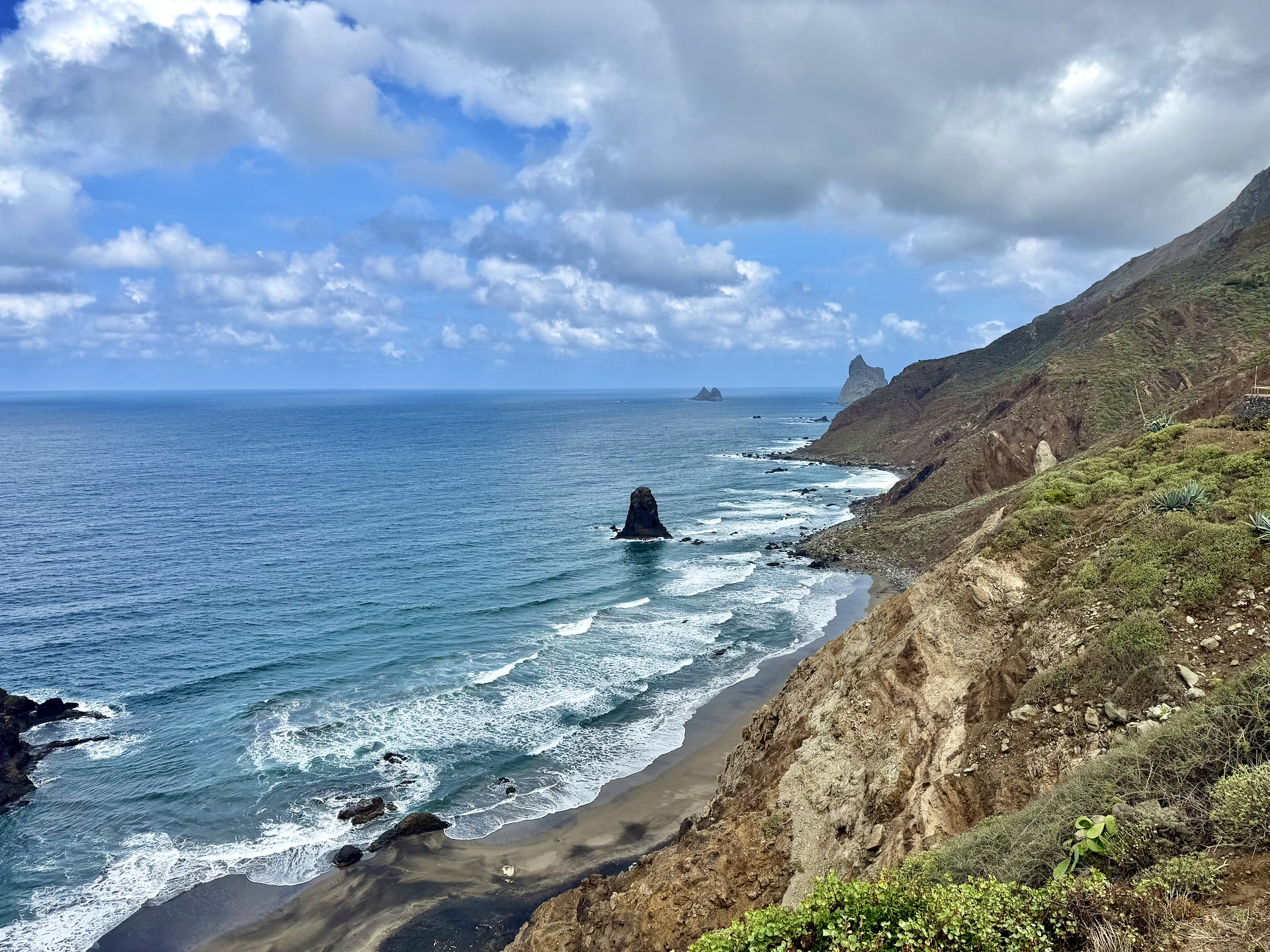
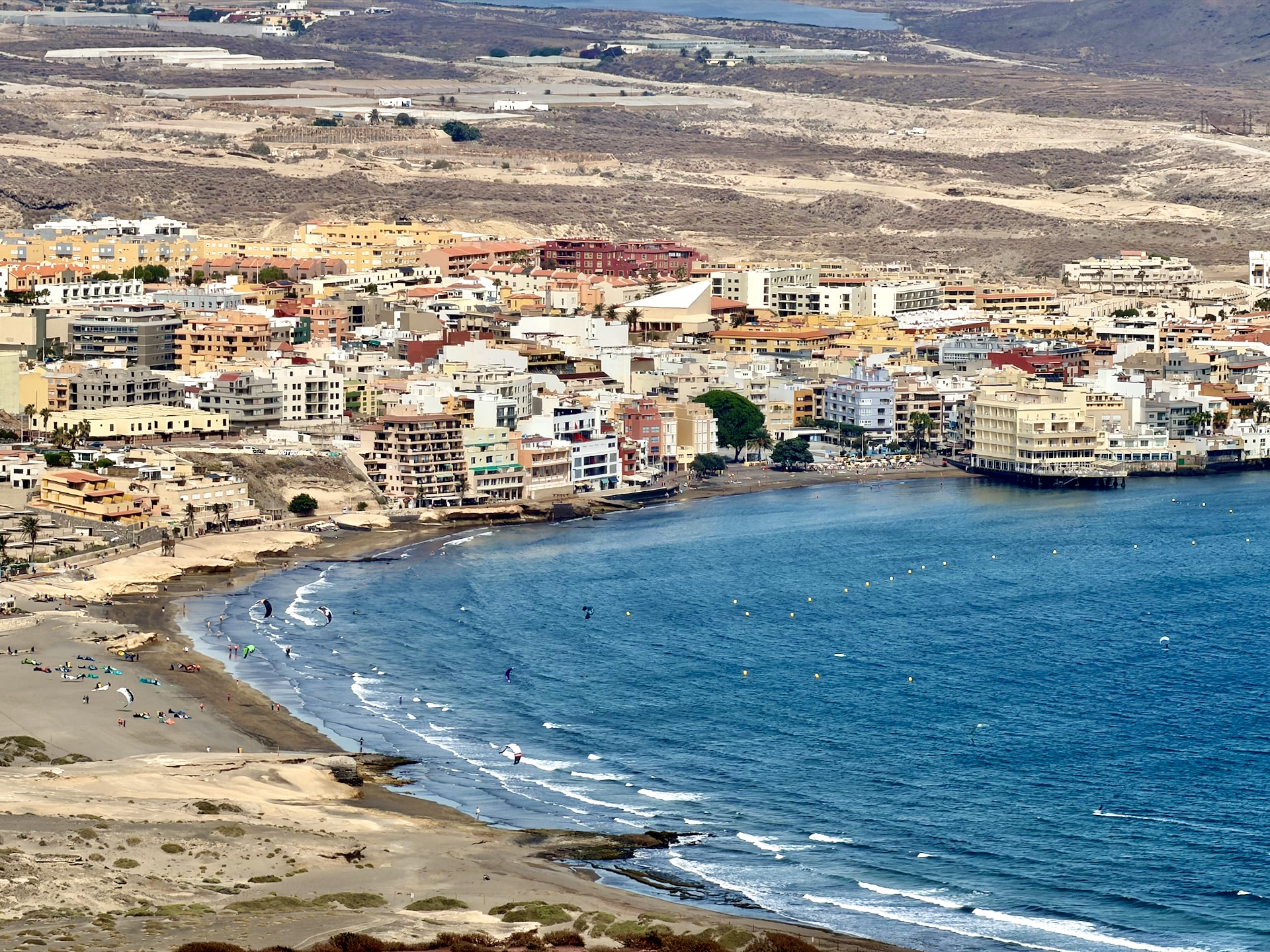
The south has black sand too, but it’s a different world. La Tejita runs for about a kilometer under Montaña Roja, the red volcanic cone near El Médano, in a dry, almost Martian landscape. We saw it mostly from above, while hiking up the volcano. The kitesurfers were on the other side, in El Médano’s bay, which from the top looked full of them. Afterwards we parked at car park number 2 and walked down to the beach just to look back at the volcano from the sand.
There are no cars on the sand here, as the area is a protected natural space. There are two dedicated car parks, and from either one it’s only a minute or two on foot to the beach. The tourism board notes that nudists are welcome.
Natural Rock Pools: Where the North Coast Lets You Swim
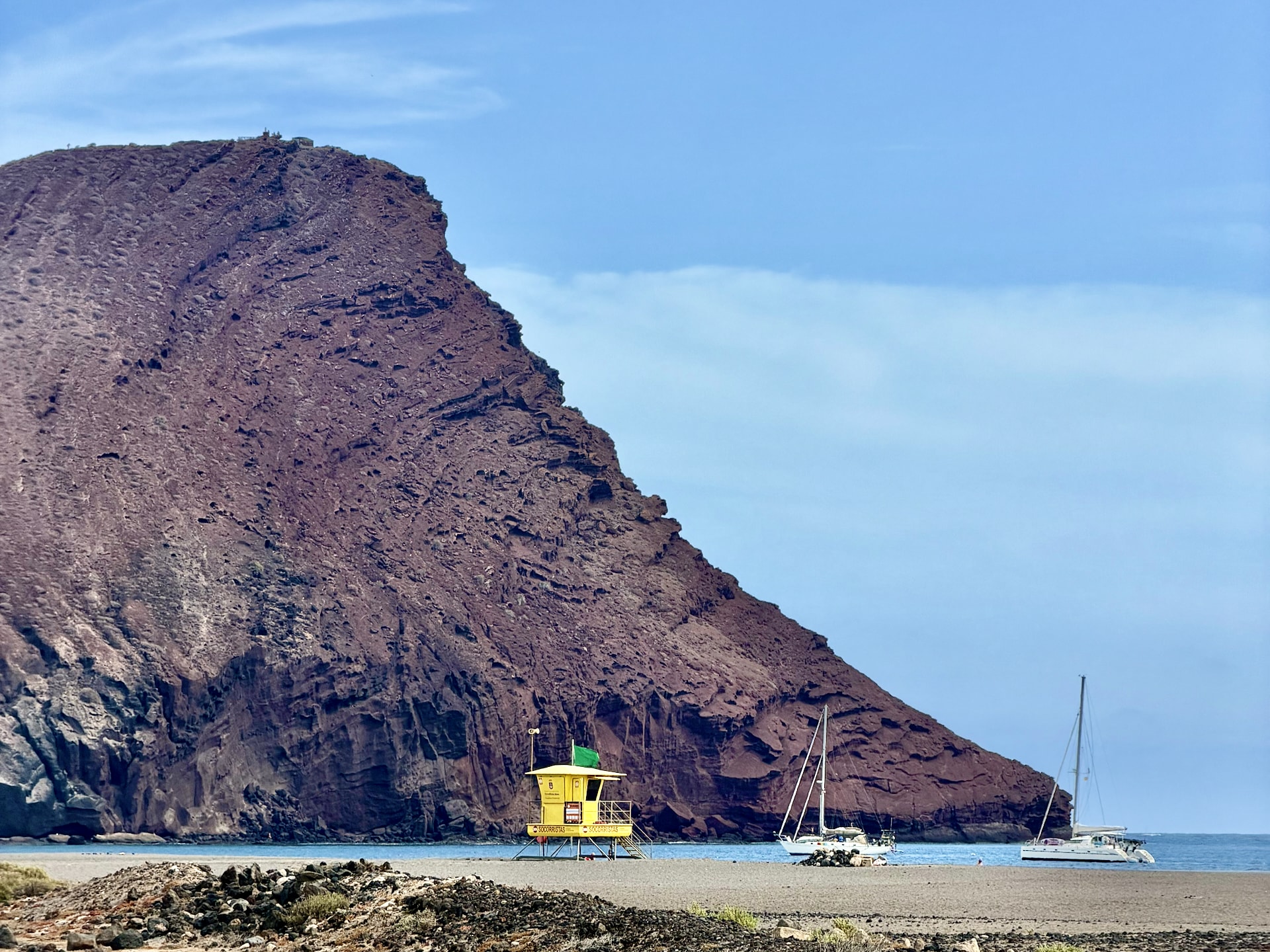
If the beaches are for looking at, the rock pools are where you actually get in. Lava reaching the sea left sheltered basins along the coast, and they’re the north’s answer to calm water.
El Caletón, Garachico. In 1706 an eruption buried much of Garachico, and where the lava met the sea, it formed these pools. Some are deep, some shallow, all black volcanic rock, and the water inside moves far less than the open sea just outside. It started to drizzle the moment we arrived, the fine, misty kind that soaks you instantly, and one or two people were swimming anyway, mostly Germans, naturally, in that weather. There were fish in the pools. The free car park at the entrance to the village had plenty of room.
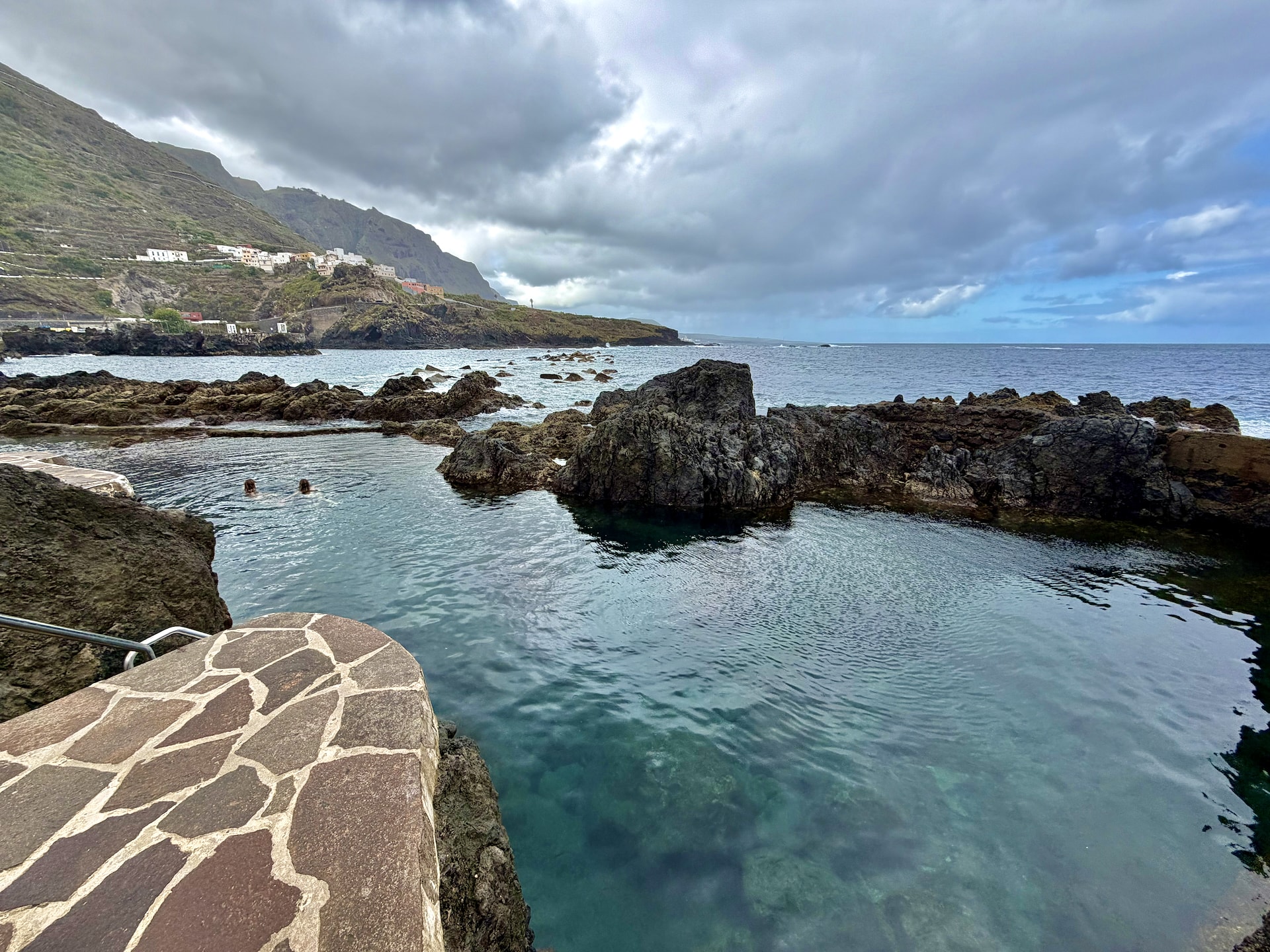
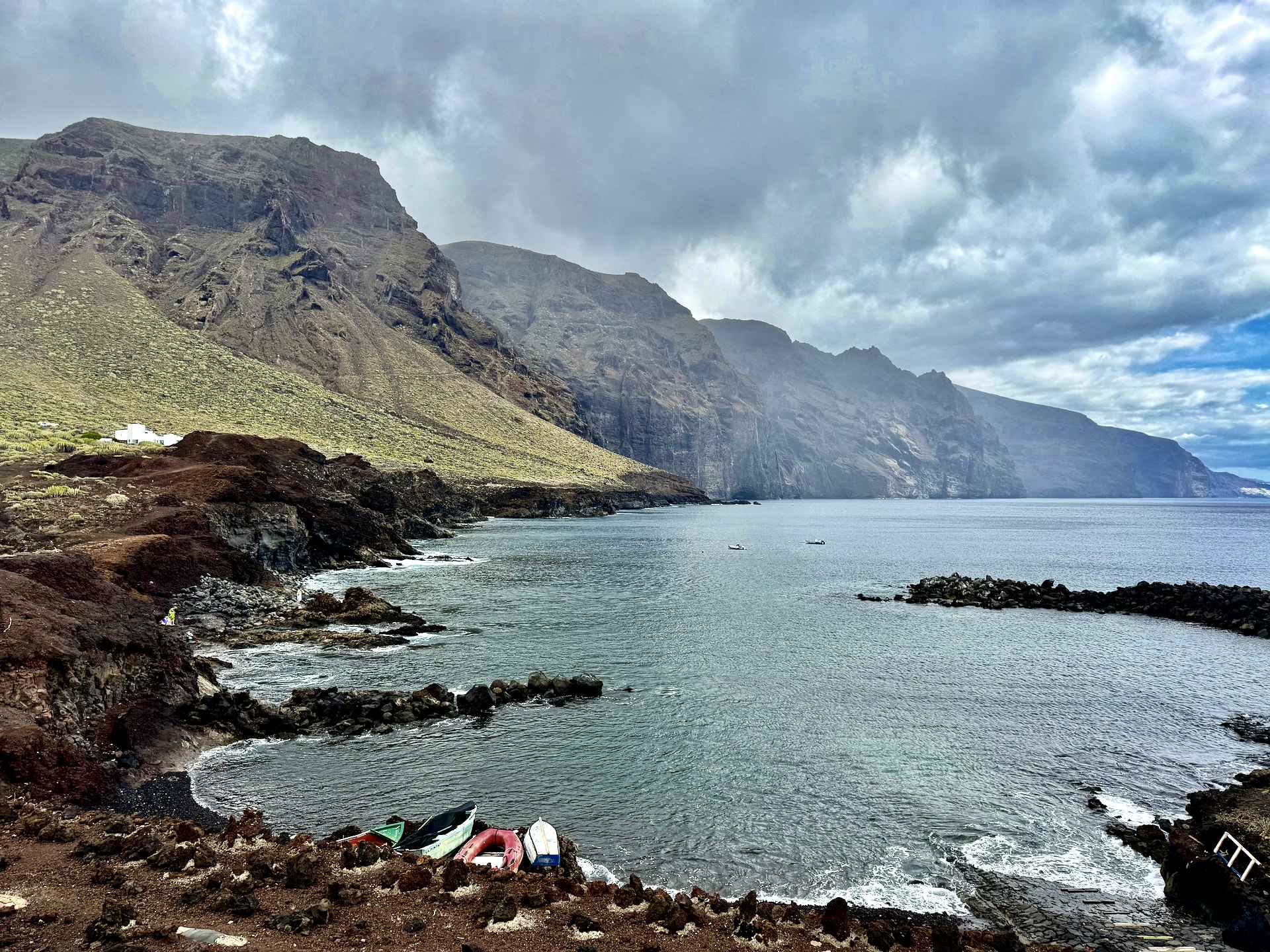
Punta de Teno. The road to the island’s western tip is closed to private cars during the day, so you come on the TITSA 369 bus from Buenavista del Norte (€1 each way). Just past the bus stop at the end, by the fishermen’s boats, there’s a spot where several people were swimming. The rest is raw black rock, crabs and crashing waves, and it was the best place we saw all week. It gets its own article.
Puerto de la Cruz old town. On the seafront near the old town there are more small natural pools where the waves are gentler and people go down to swim.
Volcanic rock is sharp and often slippery. Cheap water shoes make getting in and out of the rock pools far more pleasant, and they pack flat in a carry-on.
The Golden Exceptions: Las Teresitas and Costa Adeje
For contrast, we also visited two beaches that aren’t black.
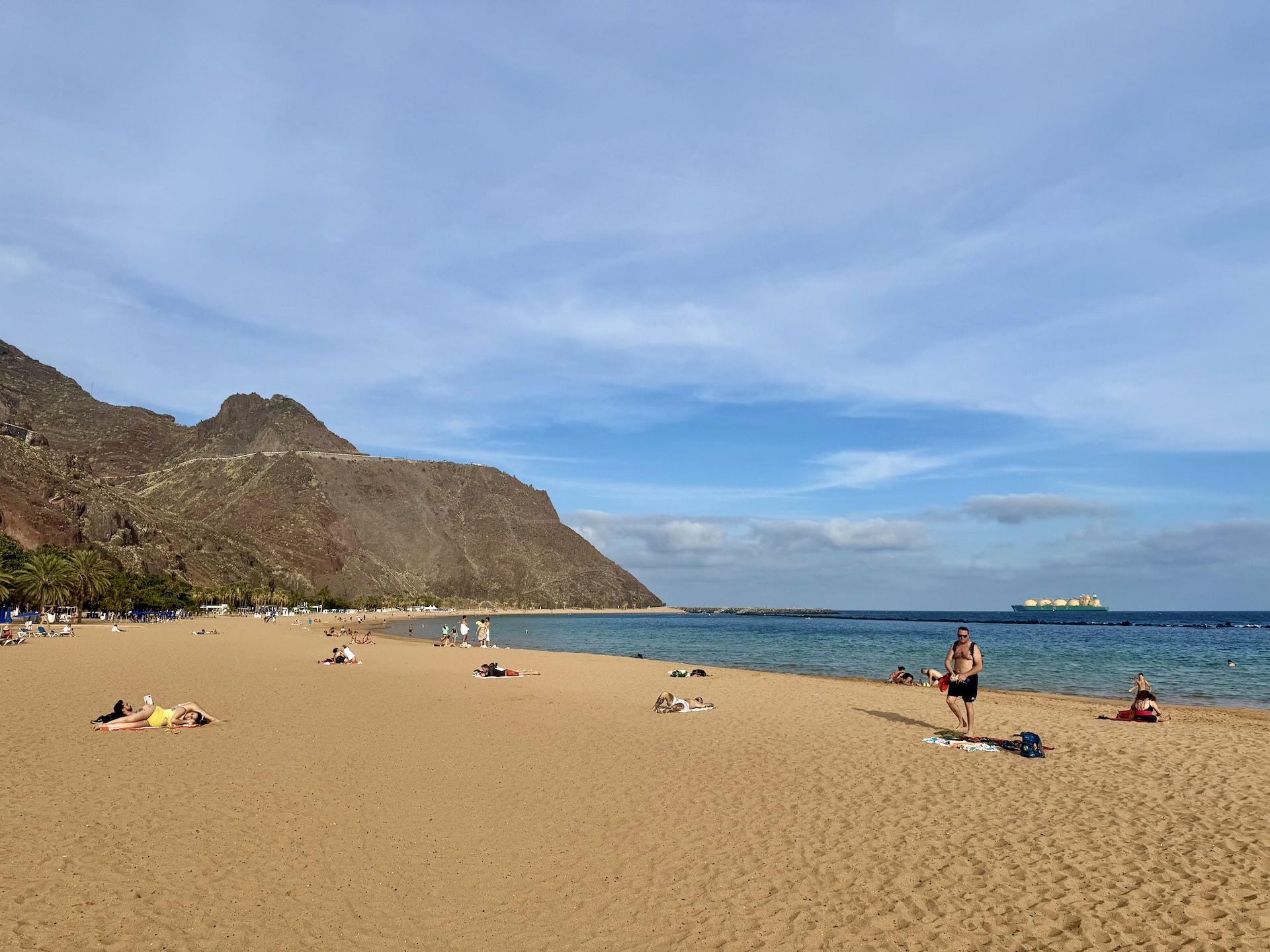
Playa de Las Teresitas, near San Andrés just east of Santa Cruz, is the island’s big golden beach, built with Saharan sand and protected by a stone breakwater about 150 meters (490 ft) offshore. As a result, the waves are tiny and the water very shallow. There’s plenty of parking. It’s a built beach, and it didn’t do much for me, partly because an LNG tanker was anchored just offshore, which rather killed the atmosphere. We stayed about ten minutes. For families who want calm water in the north, though, it’s the obvious choice.
In Costa Adeje, on our last afternoon, we had a coffee at Playa del Bobo and walked a little along the coast south of it. The water looked calmer, as it does across the south, and the setting is pure resort. If you’re weighing the two sides of the island, I wrote about the difference in north or south Tenerife.
Swimming Safety on Tenerife’s Black Sand Beaches
Nobody does much real swimming off the north coast’s beaches. The waves are huge and there are rip currents, so the realistic plan is to swim in a pool and jump the waves at the beach. Most accommodation seems to have a pool, especially hotels, and our apartment did too, although that was cold enough to keep the swims short.
A few rules we picked up:
- Lifeguards are not a given. El Bollullo has one. Benijo doesn’t. Where there’s no lifeguard, there’s nobody to tell you the sea is too rough.
- Respect the signs. El Bollullo has a rip current warning for a reason, and we could see the current clearly from the top of the cliff on the way down.
- Knee-deep is plenty. The waves come in much higher than the water you’re standing in.
- Small children belong at Las Teresitas, the rock pools or the south. On the open northern beaches I wouldn’t let them near the water. At El Bollullo we watched a father take three small children, maybe five to eight years old, into the waves, and to both of us it looked a bit dicey.
At lifeguarded beaches, the flag on the tower tells you the day’s conditions: green means swimming is allowed, yellow means take care, red means no swimming. A rip current often shows up as a calmer, darker channel between breaking waves, which is exactly where it looks safest to go in.
What Nobody Tells You About Black Sand
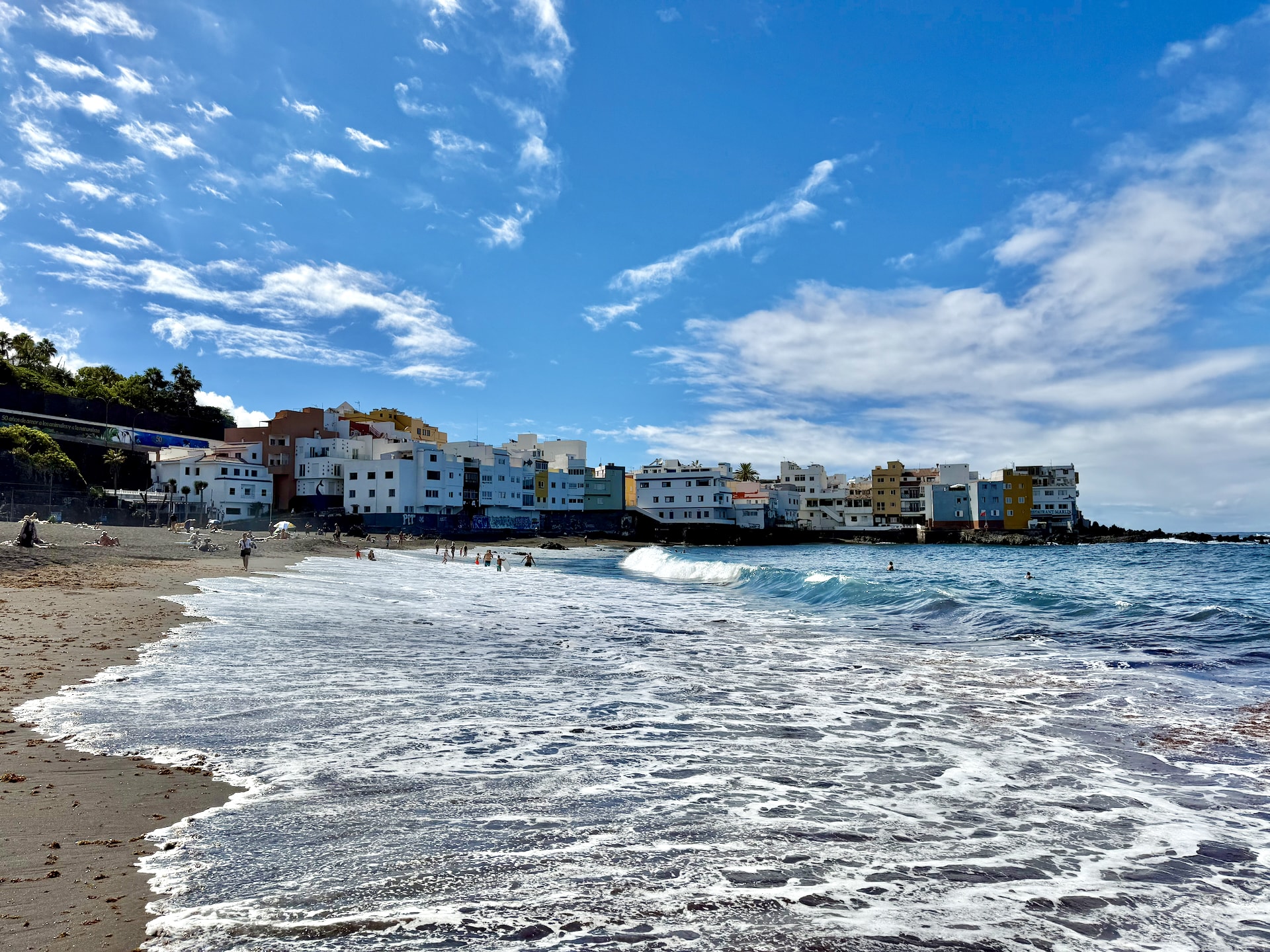
It gets everywhere. The strong waves churn it up, and if you sit down at the waterline, that’s it. After El Bollullo, the back pocket of my swim shorts was so full of sand that it felt, let’s say, as if something had gone badly wrong back there. It sticks to you in a way I’ve never seen sand stick anywhere else. I showered for half an hour and was still covered in it. We’d planned to visit La Orotava after the beach, and we had to drop it, because we were in no state to walk around a town.
It also gets hot in the sun, so the barefoot walk across the beach can be quicker than planned.
FAQ
Does Tenerife have black sand beaches?
Yes, most of the island’s natural beaches are black or dark volcanic sand, especially on the north coast. The golden beaches, like Las Teresitas, are largely made with imported sand.
What is the best black sand beach in Tenerife?
For an easy visit with facilities, Playa Jardín and Punta Brava in Puerto de la Cruz. For the blackest sand and the most dramatic cove, El Bollullo. For scenery, Roque de las Bodegas in Anaga.
Can you swim at Tenerife’s black sand beaches?
On the north coast, usually not in any real sense. The waves are big and rip currents are common. Wading is fine with care, and for actual swimming, the natural rock pools in places like Garachico are a far better bet.
Why is the sand in Tenerife black?
It’s eroded volcanic rock, mostly basalt. Tenerife is a young volcanic island, and its coast is still mostly sharp rock and small black coves.
Can you drive to El Bollullo beach?
Not anymore, unless you live or work there. Since late 2025 the access road is closed to visitors’ cars, so you park up on the road by the banana plantations and walk about 1.8 km (1.1 miles), roughly 30 minutes, down to the beach.
Before You Go
- Bring swimwear even if you don’t plan to swim. I didn’t, and regretted it.
- Leave the old town to the locals on public holidays and use a car park on the edge of town.
- Allow 30 minutes down to El Bollullo and more for the climb back.
- Pack a towel big enough to change under. Don’t count on changing rooms at the wild beaches.
- Don’t sit down at the waterline unless you’ve made peace with the sand.