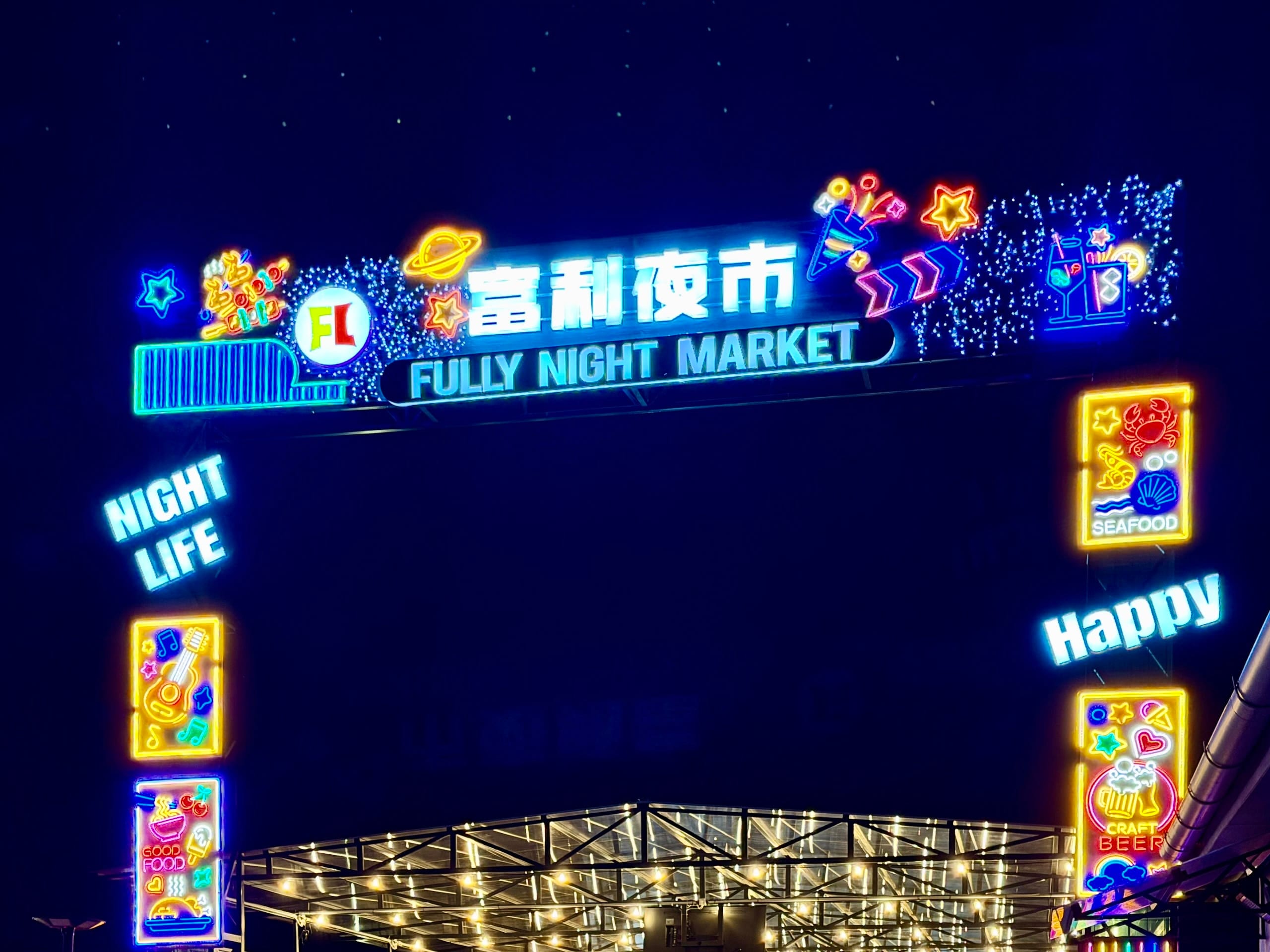
For years now, one summer evening at Budapest’s Chinese night market has been a fixed point in our calendar. Our friend Peter times his visits home from Southeast Asia around it, and the article we wrote about that market is still one of the most-read things on this site.
Then 2026 arrived and the Chinatown Terasz didn’t open. Officially it’s redevelopment work on the site. Unofficially, I have my suspicions that there will never be a night market there again.
I say that because of where the search for a replacement took us. After Bian Garden, the next stop was the Fully Night Market, and this is the one that looks like the real heir to the Chinatown Terasz. Everything about the place suggests they are settling in for the long term.
Andrea’s back was giving her trouble that evening, so Peter and I went out to Kőbánya without her.
What Is the Fully Night Market?
It’s an Asian night market, which is to say a courtyard of food stalls where you eat outdoors off plastic stools until late. It opened on May 1, 2026, run by Fully Plaza, the large Chinese-led shopping center next door. The Chinese name on the signage is 富利夜市.
Compared to the original Chinatown Terasz, the range of countries represented here is wider. The Chinese influence is just as strong, but there were a lot of Vietnamese stalls, plus Japanese and Korean ones on the night we visited. The operators advertised Chinese, Vietnamese, Japanese and Korean street food when they launched, and that is roughly what’s on the ground.
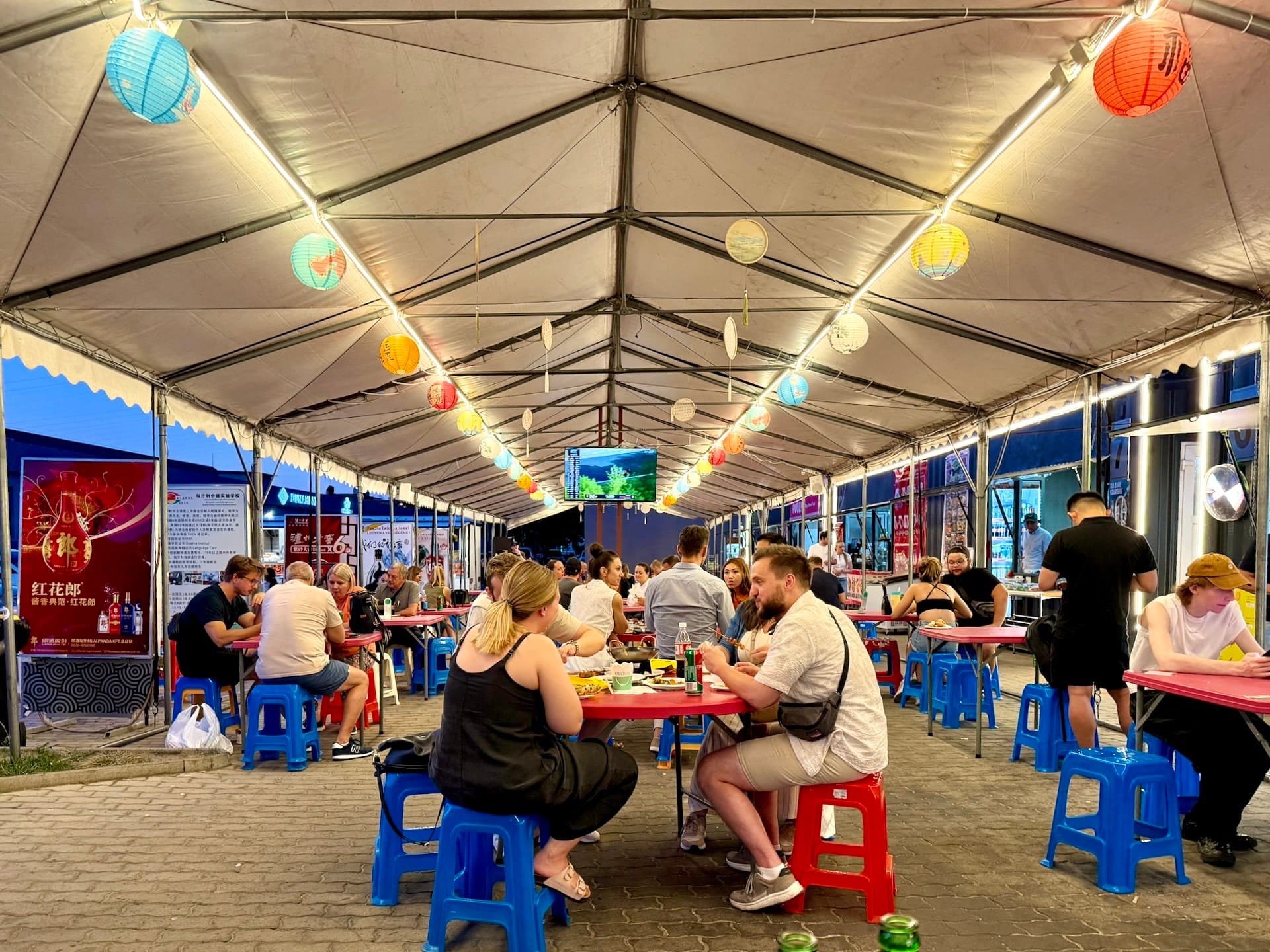
What the wider range doesn’t quite buy you is more adventure. The Chinatown Terasz felt more exotic to me. We didn’t find a single hot pot stall, and the big communal hot pot was one of the things that made the old market what it was.
Fully Night Market Opening Hours and the Best Time to Go
The posted hours are 5 pm to 11:30 pm Monday through Thursday, and 3 pm to 11:30 pm Friday through Sunday.
We arrived at 6:30 pm on a weekday, which is an hour and a half after opening, and the place was close to empty. People started showing up in numbers around 8 pm and it filled out from there. So go later than you think you need to. Weekends, with the earlier 3 pm start and a bigger crowd, are probably a different animal entirely.
One thing that made me laugh: at 10 pm the Asian kids were still tearing around between the tables in high spirits, at an hour when Hungarian children have long since been put to bed. A small cultural difference, noted without judgment, mostly envy.
Aim for 8 pm on a weekday. You get the stalls at full strength and the tables filling up, but you skip the weekend queues. If you arrive at opening time you will be eating alone in a mostly shuttered market, which I can confirm from experience.
The Layout: Three Tents and an Indoor Hall
I got there a little before our agreed time and had a chance to walk around. My first impression, despite the warm summer evening, was a cold flush of dread: 90% of the stalls were closed, right under the big ornamental Fully Night Market sign.
It took me a few minutes to work out that this market has layers. Three of them, or four depending on how you count.
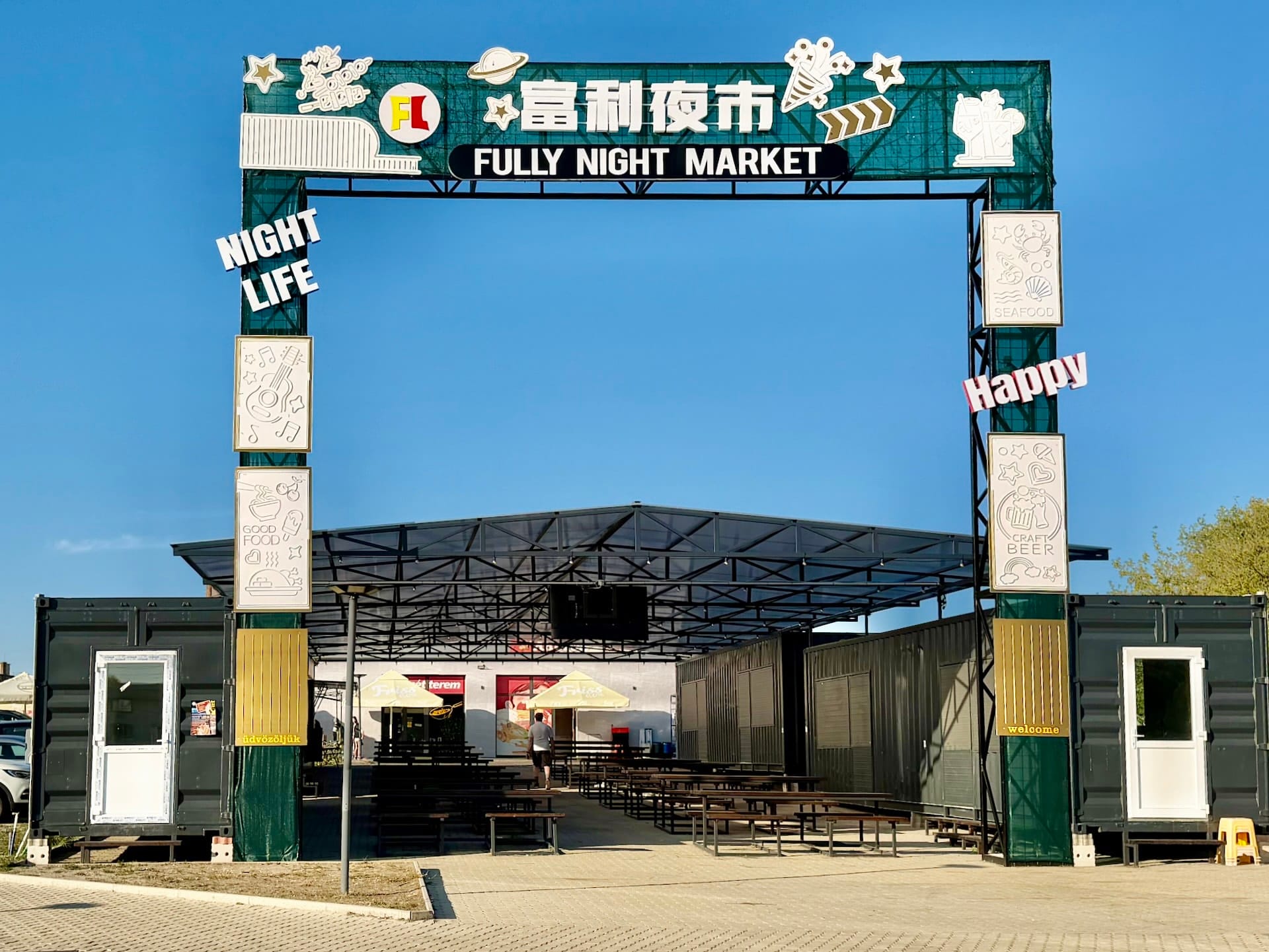
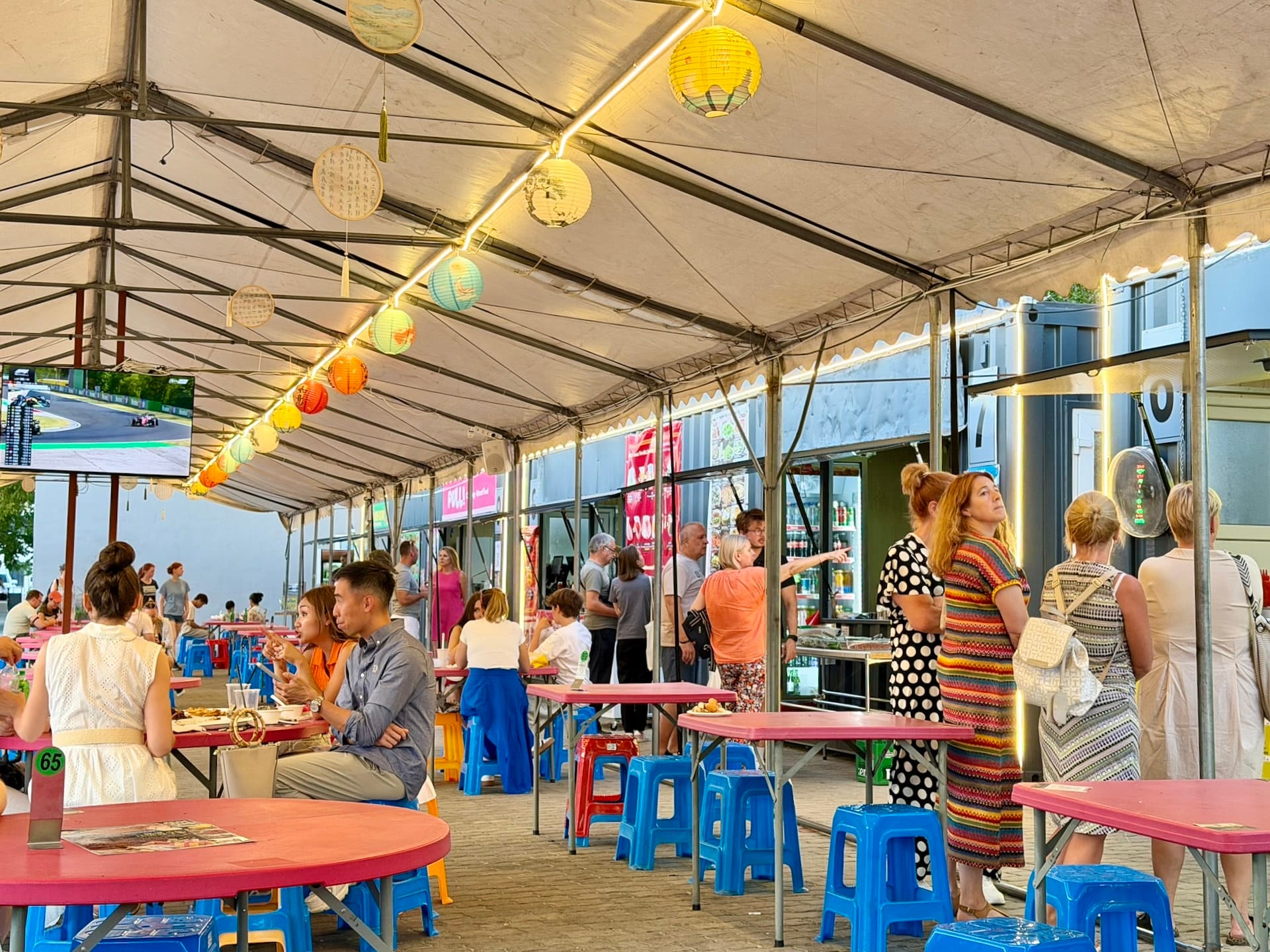
There are three staggered sections, each with a tent over the tables and stalls along the side, in the usual arrangement. Under the tents are the tables with the small plastic stools, a notch taller than the ones you hunch over in Asia. The first block, the one directly under the sign, is built from shipping containers on both sides. On our visit exactly one of those was open, which is what caused the panic. The middle tent has stalls down one side and the building down the other. The back tent, with one side fully open so at least some air moves through, is where the life is.
The fourth layer is the reason I think this place is permanent. There’s a fairly large indoor hall attached, and while only two food units were operating in it when we were there, the space is clearly built to be filled. An indoor hall means you can run a night market here in bad weather, and in winter, on a smaller footprint. The Chinatown Terasz never had that option. The properly maintained restrooms are in there too.
All in, about ten to fifteen stalls were open, indoor units included. The site is built for a great deal more than that. Double at the very least, and realistically well beyond it once the container block fills in and the indoor hall gets its remaining units. The empty capacity is the most interesting thing about the place.
Every tent has TVs, which on our visit were showing a Formula 1 race from several days earlier. I have no explanation. Meanwhile one of the Vietnamese stalls had the obligatory enormous speaker blasting Vietnamese pop, and that, more than the TVs, is what set the mood.
As for the crowd, my impression was slightly fewer Asian guests than at Bian Garden or at the old Chinatown Terasz, though there were plenty. That may just have been the weeknight. The distribution across the site was lopsided: most people under the back tent, noticeably fewer in the middle one, and essentially nobody in the front block, where with one stall open there was no reason to sit.
What to Eat at the Fully Night Market
There’s plenty of choice, though as I said, it’s a shade tamer than the old market. No worms anywhere, at least none we walked into, which is honestly a bit of a letdown after the grilled silkworms of previous years. Frog, on the other hand, is well represented. One stall had ten different frog dishes, along with grilled pork and intestines and similar. So the extreme end exists, it’s just narrower than at the Chinatown Terasz or at Bian Garden.
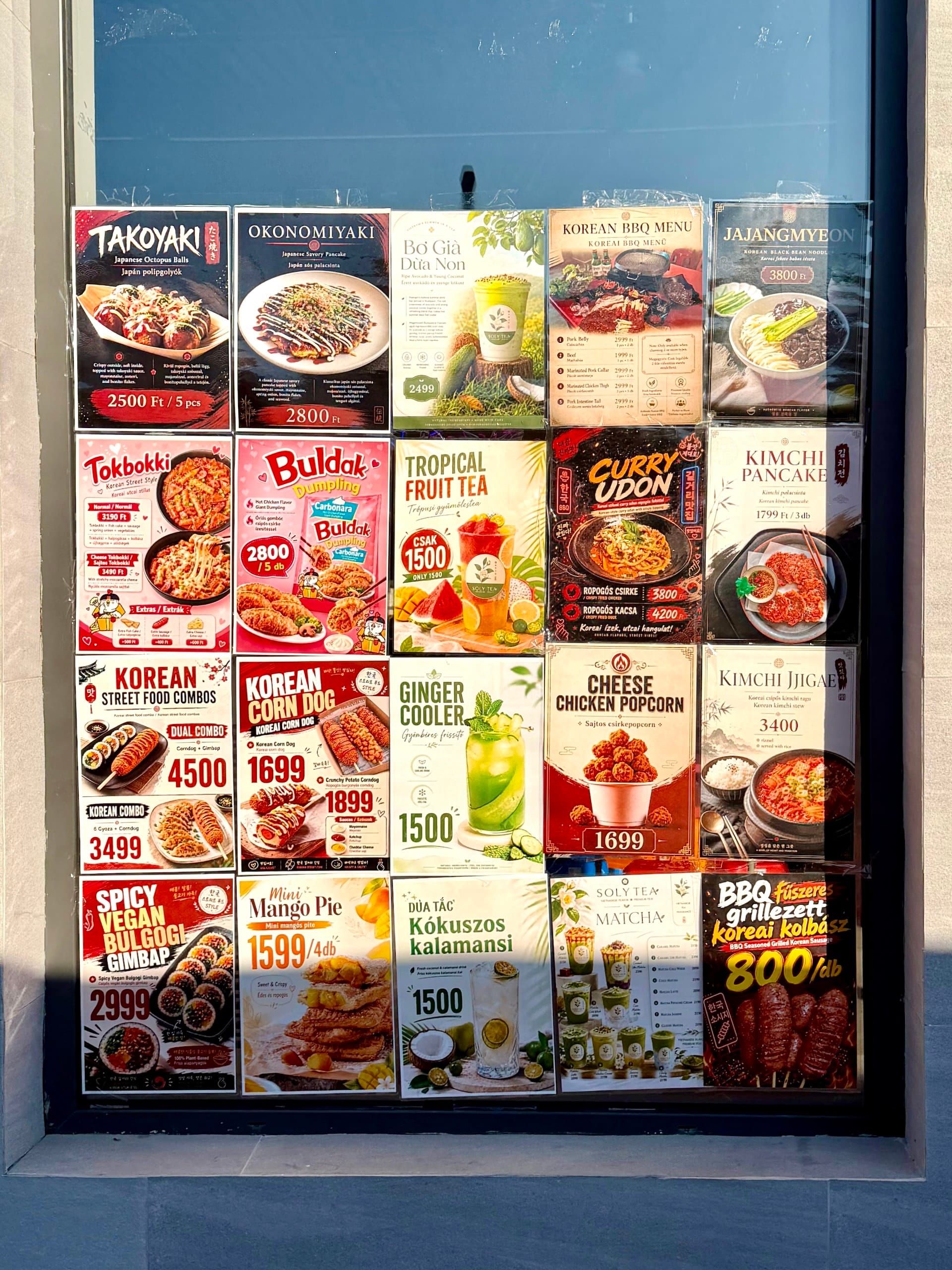
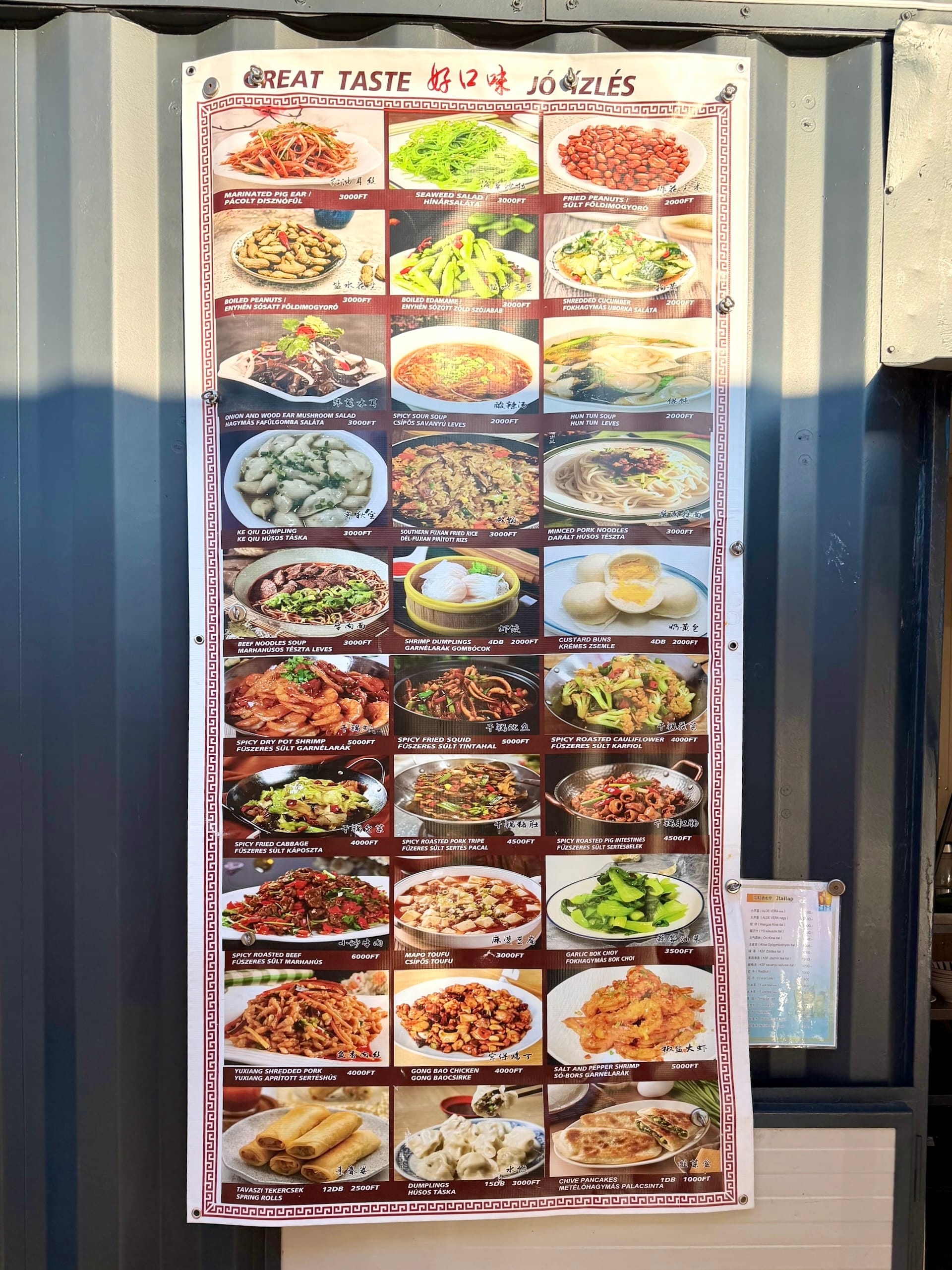
There were only two of us, so we managed three dishes between us.
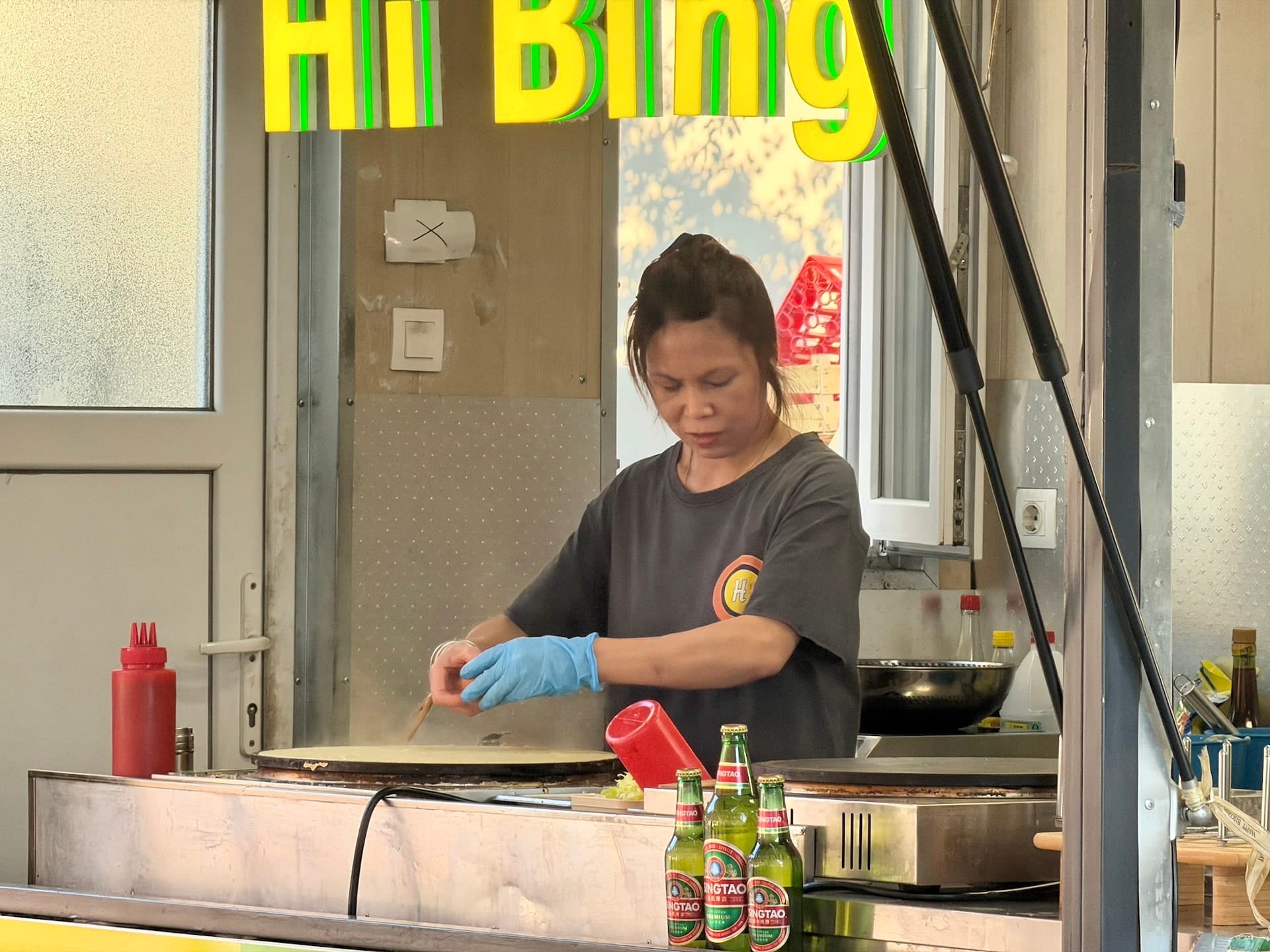
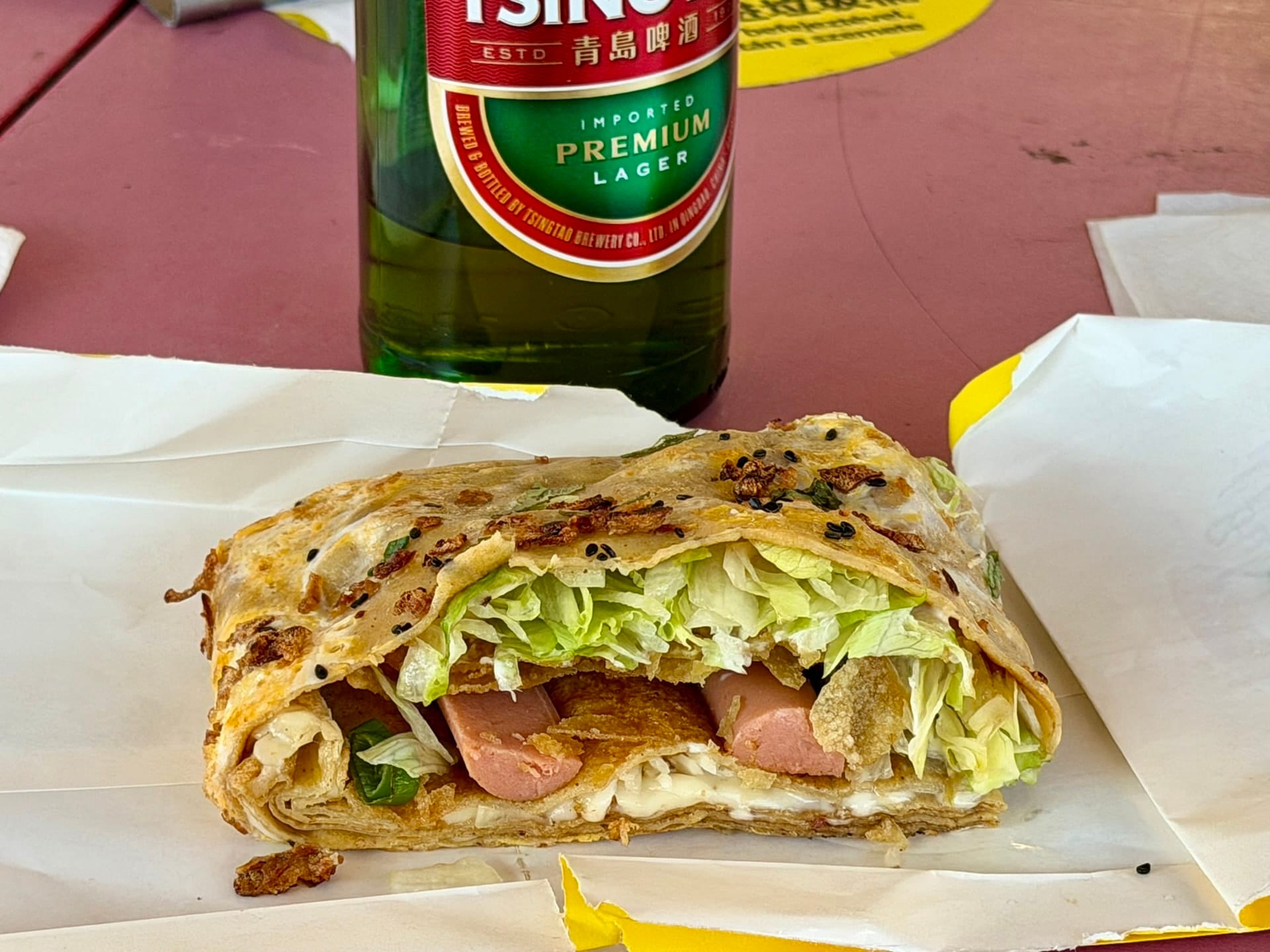
First, the familiar Chinese pancake, bing, which the stall here was willing to cut in half. At the Chinatown Terasz they famously refused. It works by picking your base and then adding toppings. We didn’t push into the exotic and went with cheese and Chinese sausage, and asked for it properly spicy. It arrived barely spicy at all. Curiously, the Taiwanese sausage costs twice what the Chinese one does as an extra topping. I still don’t know why.
Then a beef udon, which was very good. Amusingly, it’s made from the same brand of udon noodles I’ve cooked with at home. Whether that means I’m doing well or they’re not trying, everyone can decide for themselves.
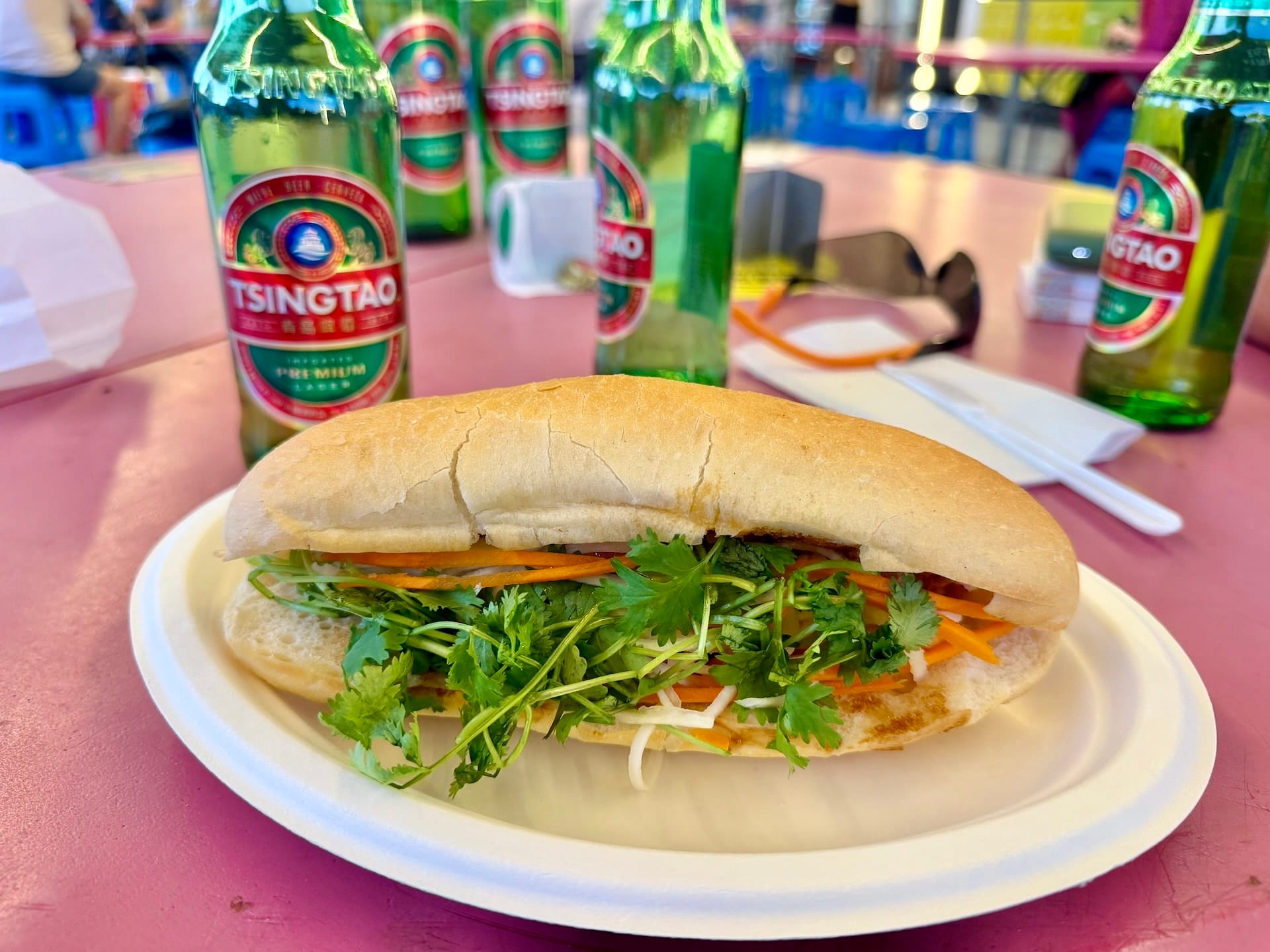
We finished with an egg bánh mì, on the grounds that something ought to be meat-free. I had designs on a corn dog from the Korean stall (1,699 to 1,899 HUF, ~$5.4 to $6 USD), or a dessert, but a dish and a half each turned out to be more than enough. Along with a few Tsingtaos.
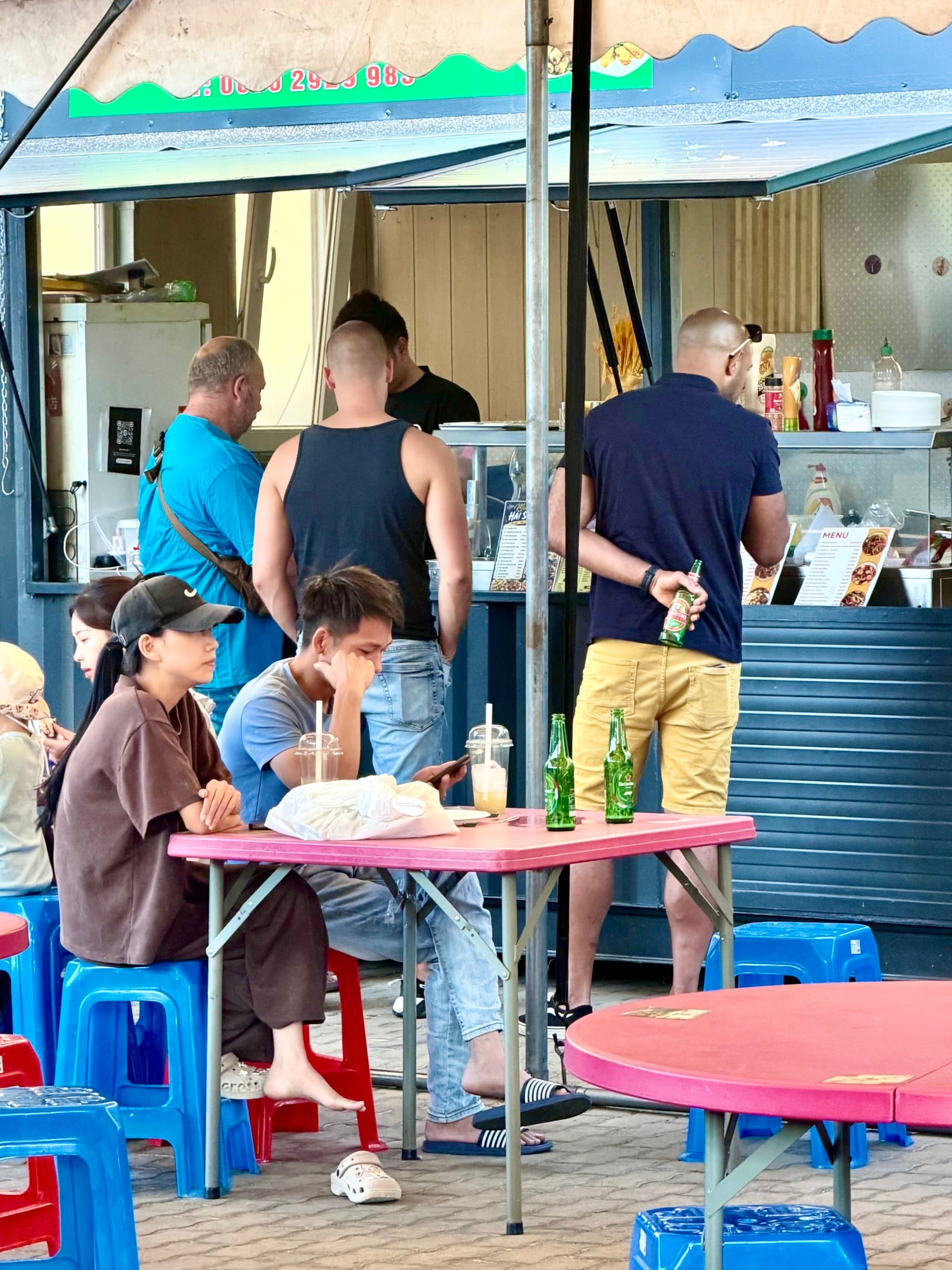
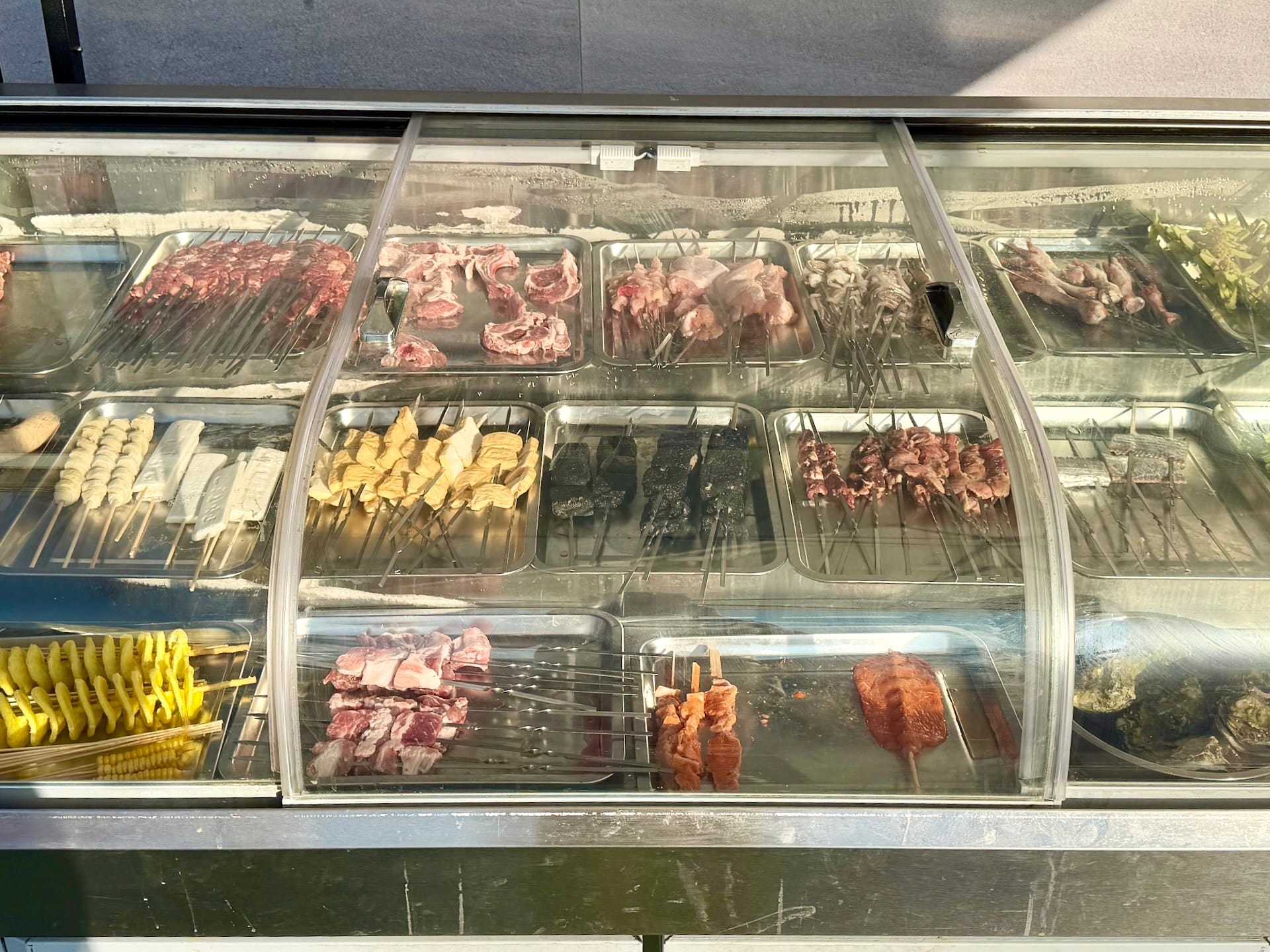
One stall I couldn’t crack: the skewer place. There’s a chilled counter of raw skewers, and out in front there are small Asian charcoal grills that look communal, where as far as we could tell people were grilling their own. Or possibly grilling skewers they’d brought from somewhere else. We never worked out who to ask or how the system runs, and it very much looked like it was set up for the regulars rather than for us. We didn’t try it. We should have.
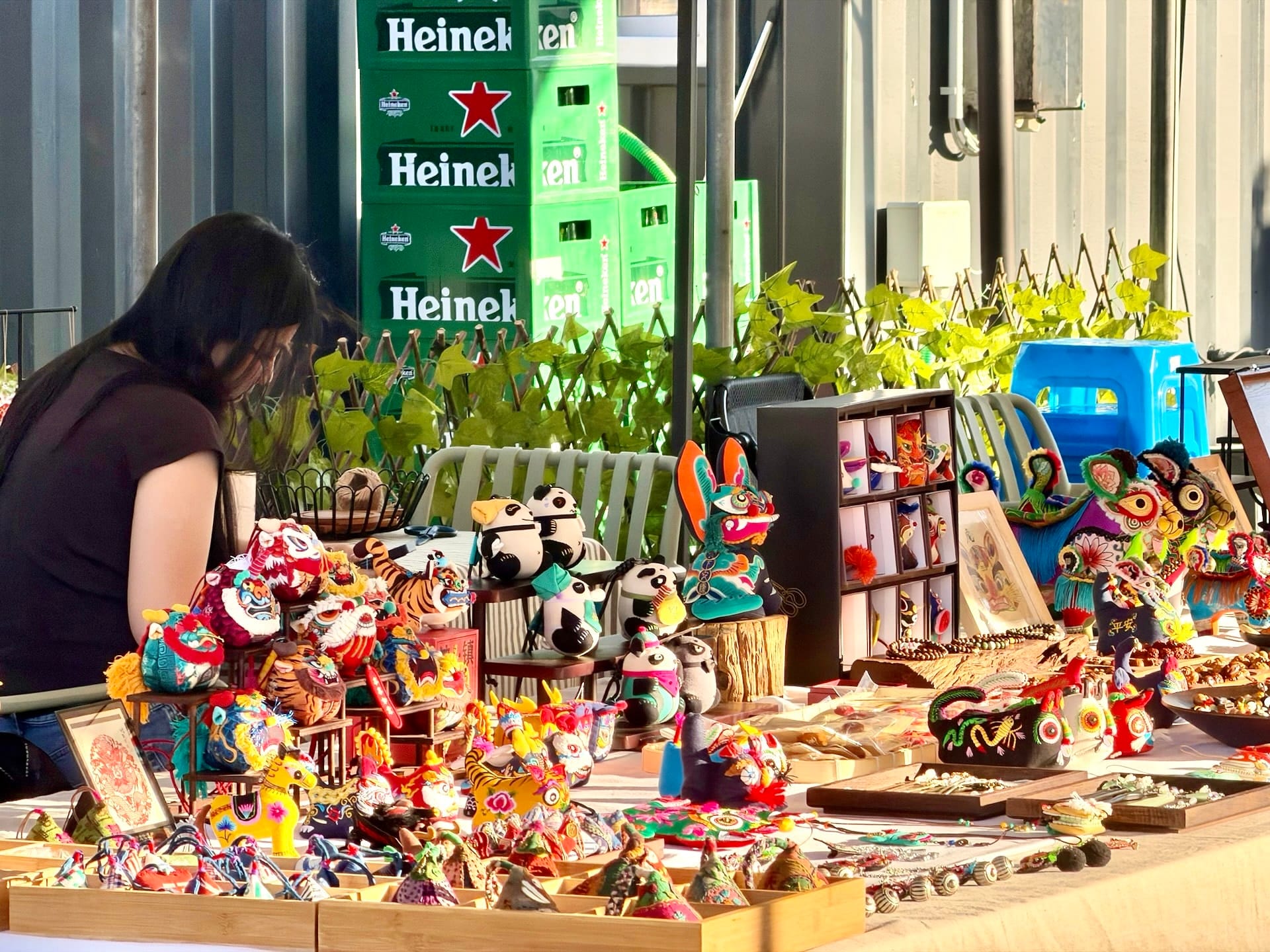
There’s also a smaller tent alongside the three big ones selling souvenirs, mostly assorted Asian merchandise. Squid Game plushies in remarkable quantity.
Fully Night Market Prices in 2026
Prices sit in the usual Budapest night market bracket, which is to say not cheap.
Broadly it’s level with Bian Garden. Some things cost less here, some more. The Korean dishes were noticeably pricier, but a main runs about 3,000 to 4,000 HUF (~$9.5 to $12.6 USD). A bing comes to around 2,500 HUF (~$7.9 USD) depending on toppings. The meat-free bánh mì was 2,000 HUF (~$6.3 USD).
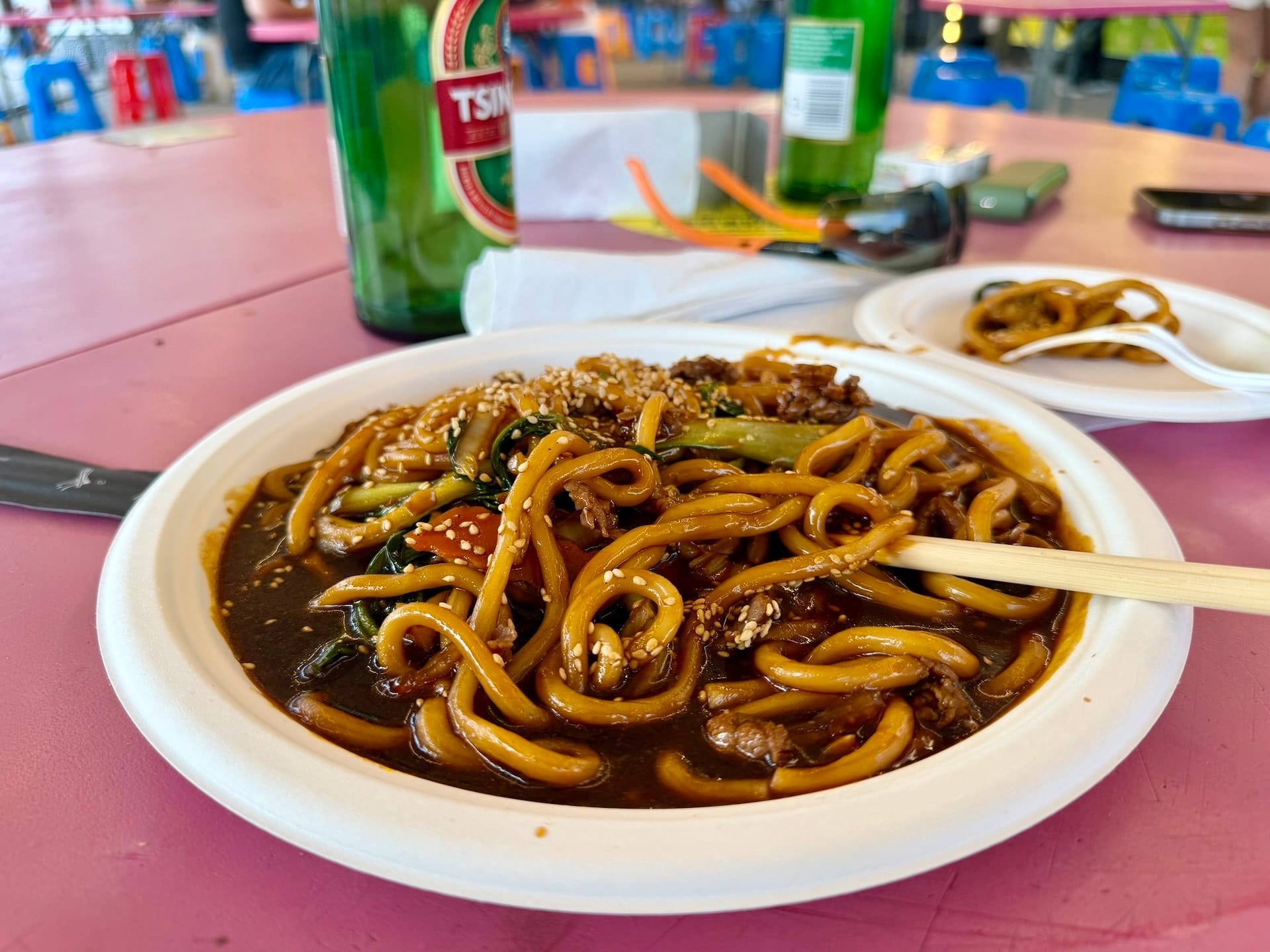
Beer is where this place wins. A small Tsingtao is 1,000 HUF (~$3.2 USD) and a large one 1,600 HUF (~$5 USD), which undercuts Bian Garden. Boba and the various teas are also markedly cheaper here: you can get a large one for 2,000 HUF (~$6.3 USD) or under. We didn’t try any, keeping up a long family tradition.
There were posters advertising various exotic Chinese spirits again, but we never found where to actually buy them. In fairness, we didn’t look very hard.
How Ordering Works at the Fully Night Market
Three systems, and which one you get depends entirely on the stall.
The classic is the pager: you order, you get a buzzer, it goes off, you go back. The second is table service, so it’s worth noting the number on the little metal plate on your table. And if you forget it, as I did, it’s not a disaster, because they’ll simply tell you roughly when to come back.
The third and worst is the stall where you stand and wait for the food to be made. Not what you want on a warm evening with a beer going flat at the table. The QR-code table ordering we found at Bian Garden doesn’t exist here.
The unwritten night market rule applies as always: claim a table first. There were plenty free when we arrived, but the big back tent did start filling up later. Walk a lap, note the stalls you like, then everyone goes off for food and you split the portions so you taste as much as possible. That part works best with more than two people, which we can also confirm from experience.
Do your reconnaissance lap before you sit down, not after. There are three separate tented sections plus the indoor hall, and the stall you actually want may well be two tents away from the one you happened to walk into first.
Drinks and the “Bia Hoi” Trap
At one of the Vietnamese stalls there was a sign reading bia hoi, the fresh, cheap draft beer you drink on plastic stools all over Hanoi, with “csapolt sör” (draft beer) written underneath it in Hungarian.
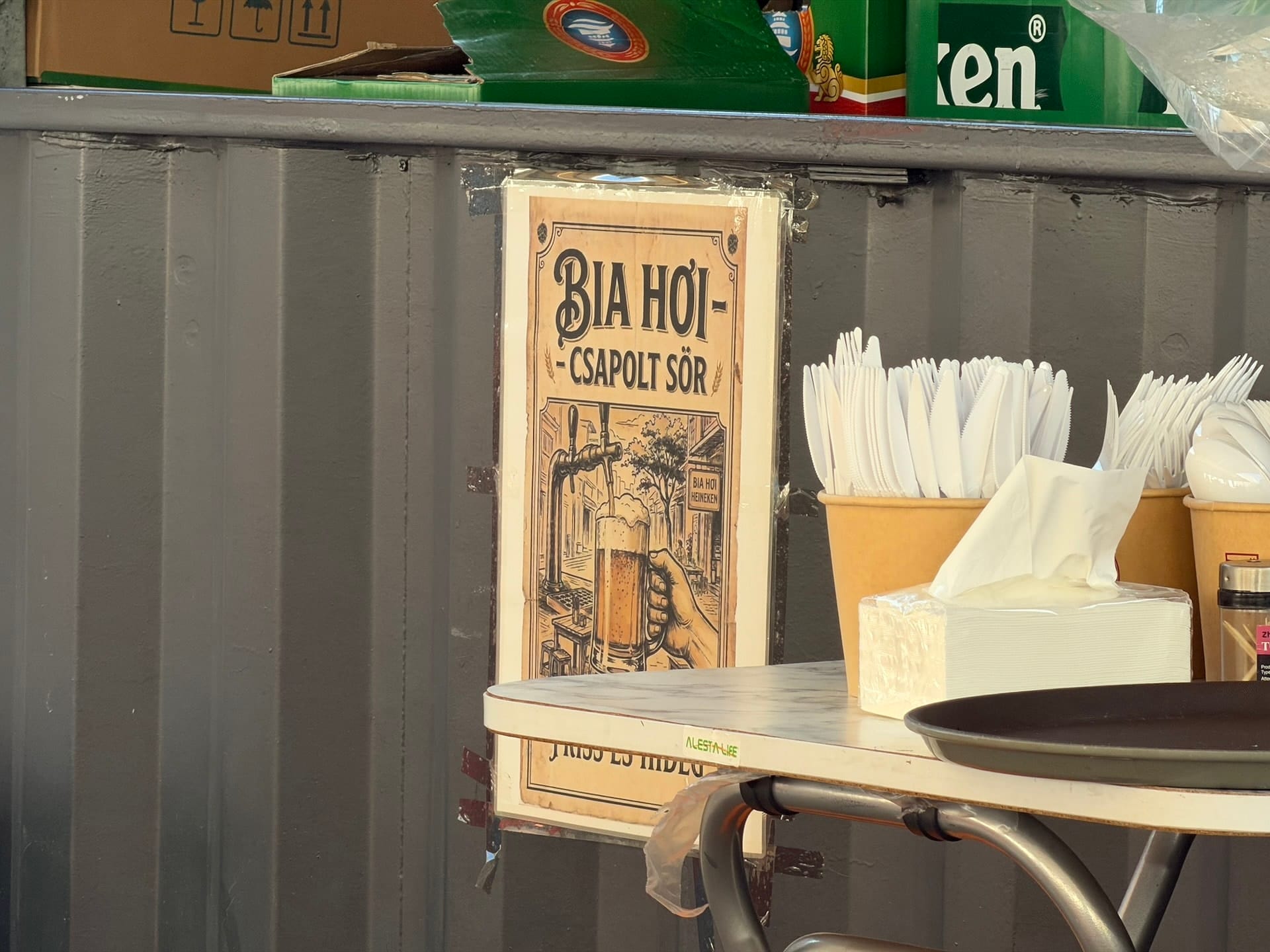
We were delighted and ordered one. Fortunately Peter thought to ask, at the last possible moment, what beer this actually was.
Heineken. So we didn’t order one after all.
To be fair to them, it does say so on the sign, in microscopic lettering. Don’t be taken in by the bia hoi: it’s plain Heineken on tap.
How to Get to the Fully Night Market
This is the market’s real weakness. Bian Garden is close to the old Chinatown Terasz, and that was already out of the way. This is considerably further.
Like the others, it’s in District 10, Kőbánya, the part of Budapest with the largest Asian community. The address to put in your phone is Vaspálya utca 25. Fully Plaza itself lists its official address as Cserkesz utca 41-43, 1105 Budapest, but the plaza occupies the whole block between Kőér, Cserkesz and Vaspálya, and the market is on the Vaspálya side. Navigate to the plaza address and you’ll be walking the long way around. The nearest bus stop is Gyógyszergyár, about a three-minute walk away, and the market sits right beside the Richter Gedeon pharmaceutical works, which have occupied this block since 1907.
Public transport gets you there without much trouble. From Deák Ferenc tér in the city center it’s one transfer, either via metro line 3 or bus 9, and about 35 to 40 minutes door to door. As always in Budapest, plan it in the BudapestGO app. Our Budapest public transport guide covers tickets, passes and validation if you’re new to the city.
Two honest warnings. First, service out here thins out badly in the late evening, so check your return before you settle in. Second, this is not Budapest’s most polished neighborhood. Nothing about it felt unsafe and we had no problems whatsoever, but there is nothing around except the pharmaceutical plant and other industrial sites. It is the world’s end, and getting here means genuinely leaving the tourist map.
The whole evening runs on your phone out here. The route in, the map pin when you’re working out which side of a very large block you want, and the return connection once services thin out. If you’re coming from outside the EU and your roaming doesn’t cover Hungary, sort out an eSIM before you land rather than standing at an industrial-estate bus stop at 11 pm hunting for wifi. Our eSIM guide covers which providers are actually worth it and how to set one up.
Fully Night Market vs Bian Garden vs the Chinatown Terasz
If you’re only going to make one trip out to Kőbánya, here’s how the three compare.
| Fully Night Market | Bian Garden | Chinatown Terasz | |
|---|---|---|---|
| Status in 2026 | Open, launched May 1 | Open, launched 2025 | Closed, redevelopment |
| Cuisines | Chinese-led, plus Vietnamese, Japanese, Korean | Vietnamese-led, plus Korean, Chinese | Chinese-led, plus Vietnamese |
| Size | 3 tents plus indoor hall, 10-15 stalls open, built for far more | Single covered courtyard, 10-12 stalls | Large tent, 10-12 stalls plus food trucks |
| Ordering | Pagers, table numbers, counter waits | Pagers plus QR ordering to your table | Pagers and table numbers |
| Beer and drinks | Cheapest of the three | Priciest | Middle |
| Food prices | Level with Bian Garden | Level with Fully | Comparable, mains were 3,000-4,000 HUF |
| Getting there | Hardest, furthest out | Moderate | Easiest of the three |
| Year-round | Indoor hall suggests yes | Adjacent restaurant open all year | Was seasonal |
The short version: Fully has the most room to grow and the cheapest beer, Bian Garden has the smoothest experience and the best-looking setting, and the Chinatown Terasz had something neither of them has managed to reproduce.
Frequently Asked Questions
Where is the Fully Night Market in Budapest?
At Vaspálya utca 25 in District 10 (Kőbánya), on the Vaspálya side of Fully Plaza, which lists its own official address as Cserkesz utca 41-43, 1105 Budapest. It’s about 35 to 40 minutes from the city center by public transport with one transfer.
What are the Fully Night Market opening hours?
5 pm to 11:30 pm Monday through Thursday, and 3 pm to 11:30 pm Friday through Sunday. The stalls fill up gradually, so arriving before about 7 pm on a weekday means finding most of them still shuttered.
How much does food cost at the Fully Night Market?
Main dishes run about 3,000 to 4,000 HUF (~$9.5 to $12.6 USD), a bing around 2,500 HUF (~$7.9 USD), and a bánh mì 2,000 HUF (~$6.3 USD). A small Tsingtao is 1,000 HUF (~$3.2 USD), a large 1,600 HUF (~$5 USD). Card payment works at the stalls.
Is the Fully Night Market the same as the Chinatown Terasz?
No. The Chinatown Terasz did not open in 2026 because of redevelopment on its site. The Fully Night Market is a separate operation run by Fully Plaza, launched on May 1, 2026, a short distance away. It is the closest thing to a successor, but it is not a relocation of the same market.
Is the Budapest Chinese night market open in 2026?
The Chinatown Terasz is not. Two other Asian night markets in Kőbánya are: Bian Garden and the Fully Night Market. Between them they cover most of what the old market offered.
Is the Fully Night Market Worth the Trip?
Was it worth going all the way out there? For us, yes, and I expect I’ll go back. But if you’re visiting Budapest for a few days, there are more striking things to do with an evening.
As for whether it’s the true heir to the Chinatown Terasz, the atmosphere here isn’t the same. Peter and I talked about why while we ate, and the honest answer may be that the old market was simply our first, and nothing that comes after gets to be first. It’s hard to put into words, and I’m not going to pretend otherwise.
Between the two new markets I’d give Bian Garden a slight edge on atmosphere, and if you can only fit one in, that’s where I’d lean. But it really is close, and there are good reasons to come here instead: the beer and boba are cheaper, the Chinese side of the menu is stronger, and this is clearly the site with room to grow. If you’re interested in what Budapest’s Asian food scene is turning into rather than what it used to be, Fully is the more interesting place to stand.
Everything about the operation, the indoor hall, the half-empty container block, the scale of the site, says they’re building for years rather than for a season. My guess is that the Chinatown Terasz won’t reopen at its old address, and this is what replaces it. We’ll see what next summer brings.