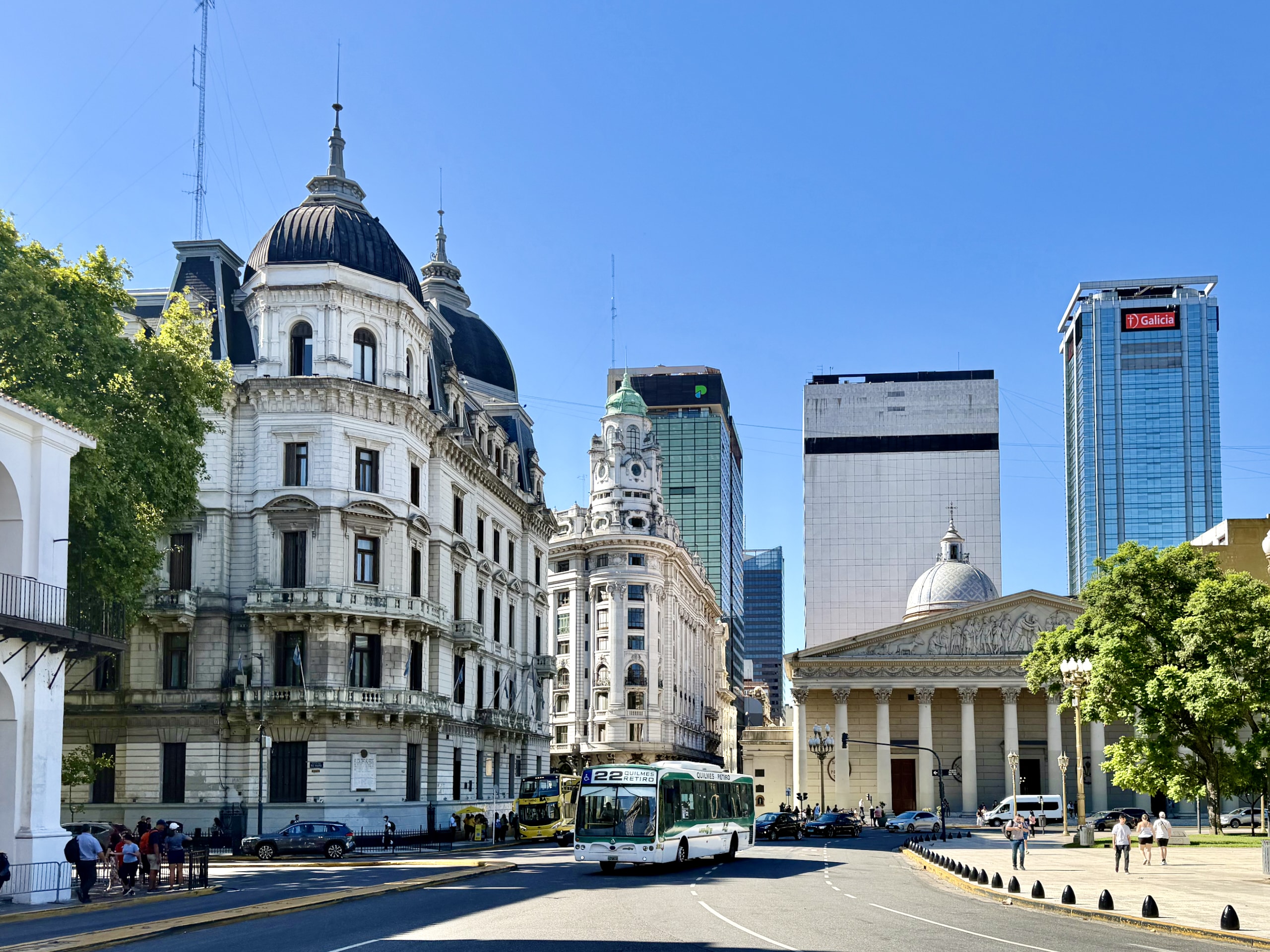
Honestly, I wasn’t expecting much from Buenos Aires.
I’d heard plenty of good things about the Argentine capital, but going in, this was the part of our trip I was least excited about – the rest of our Patagonia and Antarctica loop had all my attention. That changed more or less after our first day on the ground. Buenos Aires didn’t just win me over, it ended up being one of the best stops of the entire trip.
It’s architecturally fascinating and, culturally, more European than any South American city I’d set foot in before. It also felt much more South American than Latin American – an observation we get into in our full four-week Patagonia and Antarctica itinerary. Until this trip I’d only really traveled in the northern part of the continent and the Caribbean – places like Colombia – and Buenos Aires felt different in a way that’s hard to pin down: quieter, a little more orderly, more European in texture.
This article is the practical companion to all of that. It covers where we stayed and why we chose that neighborhood, what the other neighborhoods are like, how to get around, and – because in Argentina it’s genuinely more interesting than it has any right to be – the money question.
Buenos Aires at a Glance: Quick Facts
Buenos Aires is a big, comfortable, walkable capital that runs on a slightly later clock than you might be used to. The city proper (Capital Federal) has around 3 million residents, with roughly 15 million across the greater metropolitan area, which makes it one of the largest cities in the Southern Hemisphere. The language is Spanish, though the local Rioplatense dialect has its own music – listen for the soft “zh” sound where you’d expect a “y,” and vos instead of tú. I genuinely love that accent, the same way I love the paisa lilt in Colombia, where Medellín comes out as “Medezhín” and calle as “cazhe.”
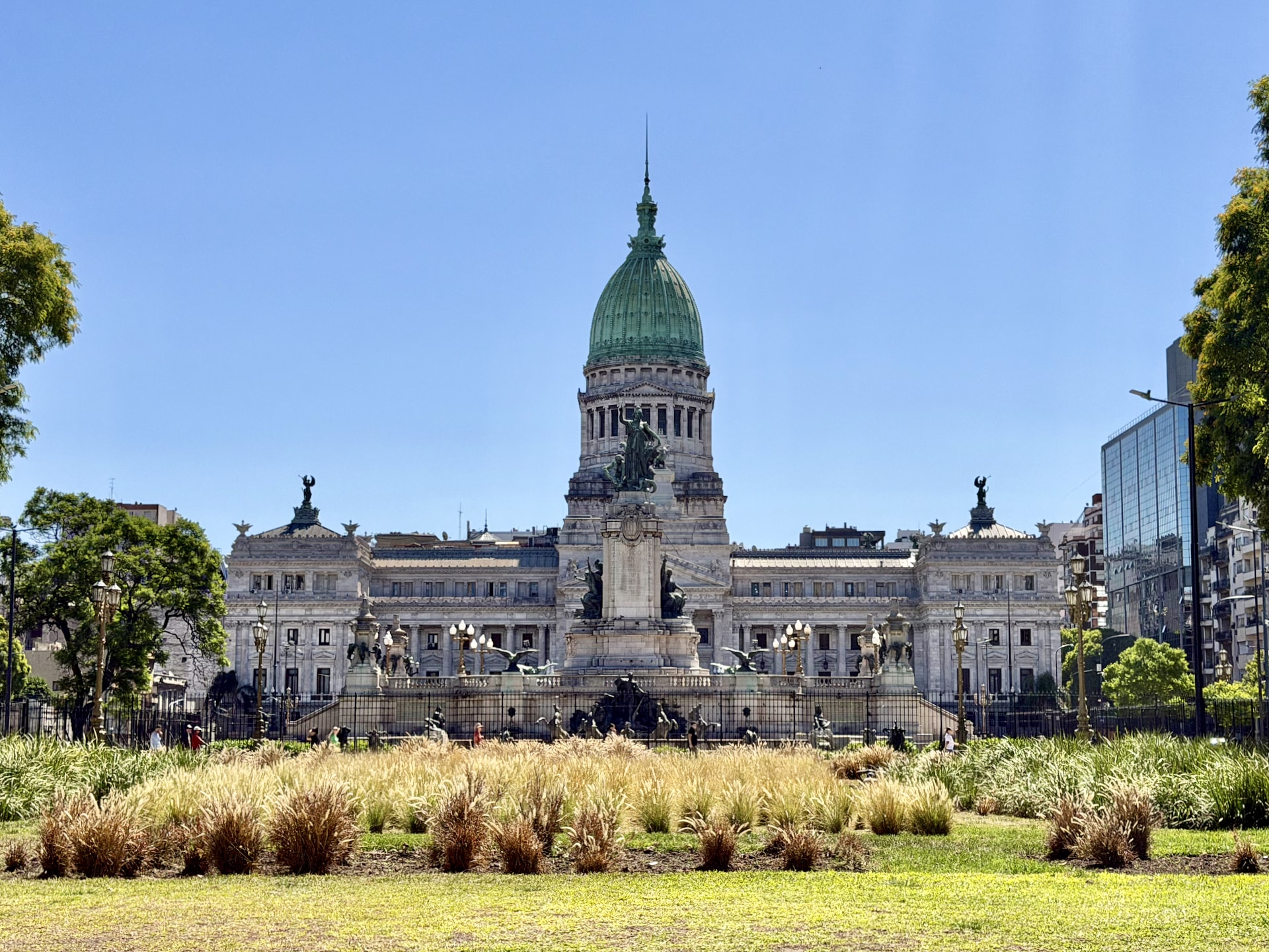
Buenos Aires is a place that rewards a relaxed pace: meals run late, café culture is taken seriously, and nobody is in a hurry to bring you the bill.
- Currency: Argentine peso (ARS). Cards are accepted almost everywhere. Keep a little cash for tips.
- Language: Spanish (Rioplatense)
- Time zone: Argentina Standard Time (UTC−3), no daylight saving
- Plugs: Type C and Type I, 220 V / 50 Hz
- Tap water: Safe to drink across the city
- Tipping: Around 10% in restaurants, usually in cash
- When to visit: Summer (December-February) is hot and humid, with 30 °C (86 °F) days normal. The shoulder seasons (October-November and March-April) are the sweet spot – warm but manageable. Winter (June-August) is mild but gray, around 10-16 °C (50-61 °F).
- Connectivity: We stayed online the whole time with a Nomad eSIM. More on that further down.
Getting from the Airport to the City
When we were first booking flights – figuring out both how to get from home to Buenos Aires and how to move around Argentina afterward – one thing jumped out immediately: the city has two airports.
The first is Ezeiza (EZE), officially Ministro Pistarini International Airport, which sits about 35 km (22 mi) southwest of the center and handles the vast majority of international flights. From there it’s roughly 45 to 60 minutes into town by car. The second is Aeroparque Jorge Newbery (AEP), which is practically inside the city – most domestic flights, including those to Ushuaia and Patagonia, leave from here, and it’s an easy 15 to 25 minutes from Palermo or Recoleta. Check which one your ticket uses, because the difference in transfer time is significant.
From Ezeiza (EZE) to the City
We landed at Ezeiza in the small hours of the morning, after clawing our way through a delay so long it earned its own article and eventually €1,200 in compensation. That timing meant our options for reaching our Airbnb in Palermo were limited, so we played it safe and ordered a Cabify.
Cabify is a ride-hailing app much like Uber, and I’d already used it in several places across South America. You download the app, and it works exactly the way you’d expect. Uber technically operates in Buenos Aires too, but we’d read that drivers aren’t especially welcome around the airport, whereas Cabify has no such problem – so we went with the sure thing. Our ride took under 40 minutes and came to 30,195 ARS (~$20.8 USD) all in, which included a 2,000 ARS (~$1.4 USD) tip and a 4,000 ARS (~$2.8 USD) “high demand fee” – the latter a little surprising at 5 a.m. Pricing between Cabify and Uber is broadly the same.
Download your ride-hailing app and set up a payment method before you fly, not in the arrivals hall. After a long-haul flight at 5 a.m., the last thing you want is to be registering a card and verifying a phone number.
The other option we looked at was Tienda León, a shuttle-bus company that runs from both airports into the city. It wasn’t entirely clear where exactly their Terminal Pellegrini stop was – and, having now been, I can report it didn’t get much clearer – but it’s downtown, a block or two north of the Obelisco, with plenty of buses and a Subte station not far off. It’s a solid choice. One way from Ezeiza runs 15,500 ARS (~$10.7 USD).
There’s also public transport: the number 8 bus goes into the city, leaving from the front of the terminal. It takes around two hours to reach downtown depending on where you’re headed, and the fare is hard to pin down but probably works out to 4,000-6,000 ARS (~$2.8-4.1 USD). It’s by far the cheapest way in, and also by far the slowest and least comfortable from the airport. I wouldn’t pick it as a first impression of the city.
From Aeroparque Jorge Newbery (AEP) to the City
You’re less likely to arrive here on an international flight, and getting into town is much simpler in any case, since the airport is close to everything – especially Palermo.
Uber and Cabify are options here too. When we flew on to Ushuaia, we took a Cabify to AEP from the La Boca neighborhood, purely because we’d come from far across the city and wanted to squeeze out every last minute of sightseeing. The same Tienda León service runs from here as well, at 7,500 ARS (~$5.2 USD) per person one way to Terminal Pellegrini.
The airport is also well connected by city buses. Our place in Palermo would have been reachable in about 25 minutes by bus, and downtown is easy too – it’s roughly half an hour to the Obelisco on the number 45. Fares here remain a mystery to me, but they probably land somewhere around 2,000-3,000 ARS (~$1.4-2.1 USD).
Where to Stay in Buenos Aires: The Neighborhoods That Matter
The next big question, once you’ve figured out how you’re getting to Buenos Aires, is where to base yourself. We went back and forth on this, and in the end the decision came down to a tip from one of Andrea’s friends, who has an Argentine wife and spent a few years living just outside Buenos Aires. His advice shaped where we ended up. How long you’re staying and what you want to see should steer your choice too – the neighborhoods are fairly spread out, though the public transport between them is genuinely decent.
Palermo Soho and Palermo Hollywood
On that friend’s recommendation, we picked Palermo Soho, and stayed in an Airbnb toward its outer edge, on Uriarte street. It was an excellent call, so: thank you. We had a great time here.
Palermo is split into several parts. Soho, as the name suggests, is the section a little closer to downtown, and it’s full of restaurants and bars with a bit of nightlife. Just to the northwest is Palermo Hollywood, which is more residential – more people actually living there, fewer sights. The two are divided by Avenida Juan B. Justo. Palermo also has more far-flung sections like Palermo Chico, which I wouldn’t recommend as a base – they’re simply too far out.
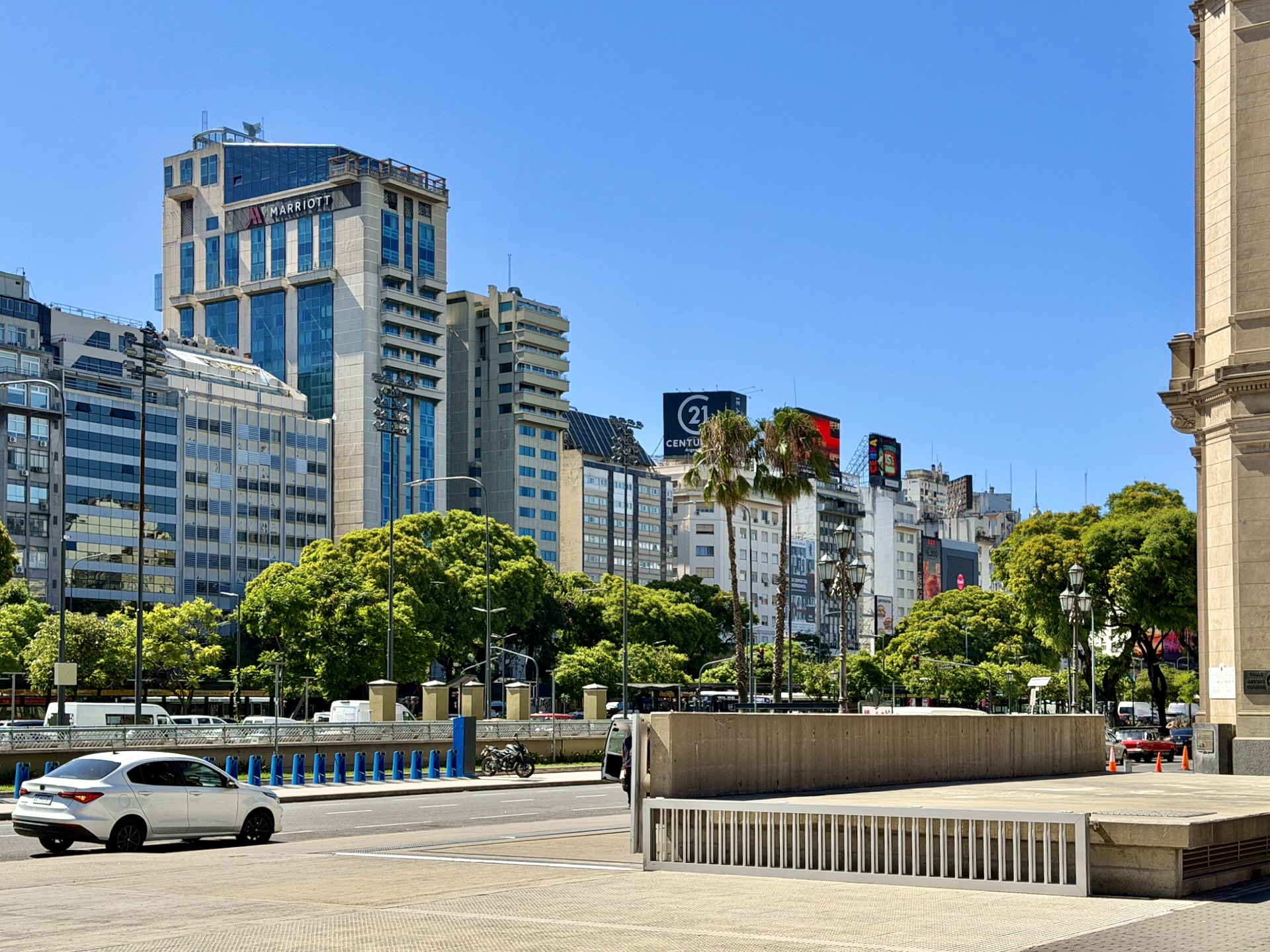
Our place was quiet, despite sitting in Soho among the restaurants and bars. Our balcony faced an internal courtyard rather than the street, but even setting that aside, noise was never an issue. And the location was perfect: a good coffee and a fresh pastry were two minutes away in the morning, and a good parrilla was just as close for dinner. Transport into the center is straightforward too, though it’s worth being clear that Palermo is not close to downtown. The Congress building is about half an hour away by bus – we mostly used the 39, which drops you onto the great Avenida 9 de Julio, from where you can get pretty much anywhere.
San Nicolás and Montserrat: The Historic Center
We didn’t stay in any of the other neighborhoods, so what follows is a mix of our own observations and that friend’s advice rather than firsthand experience of living there.
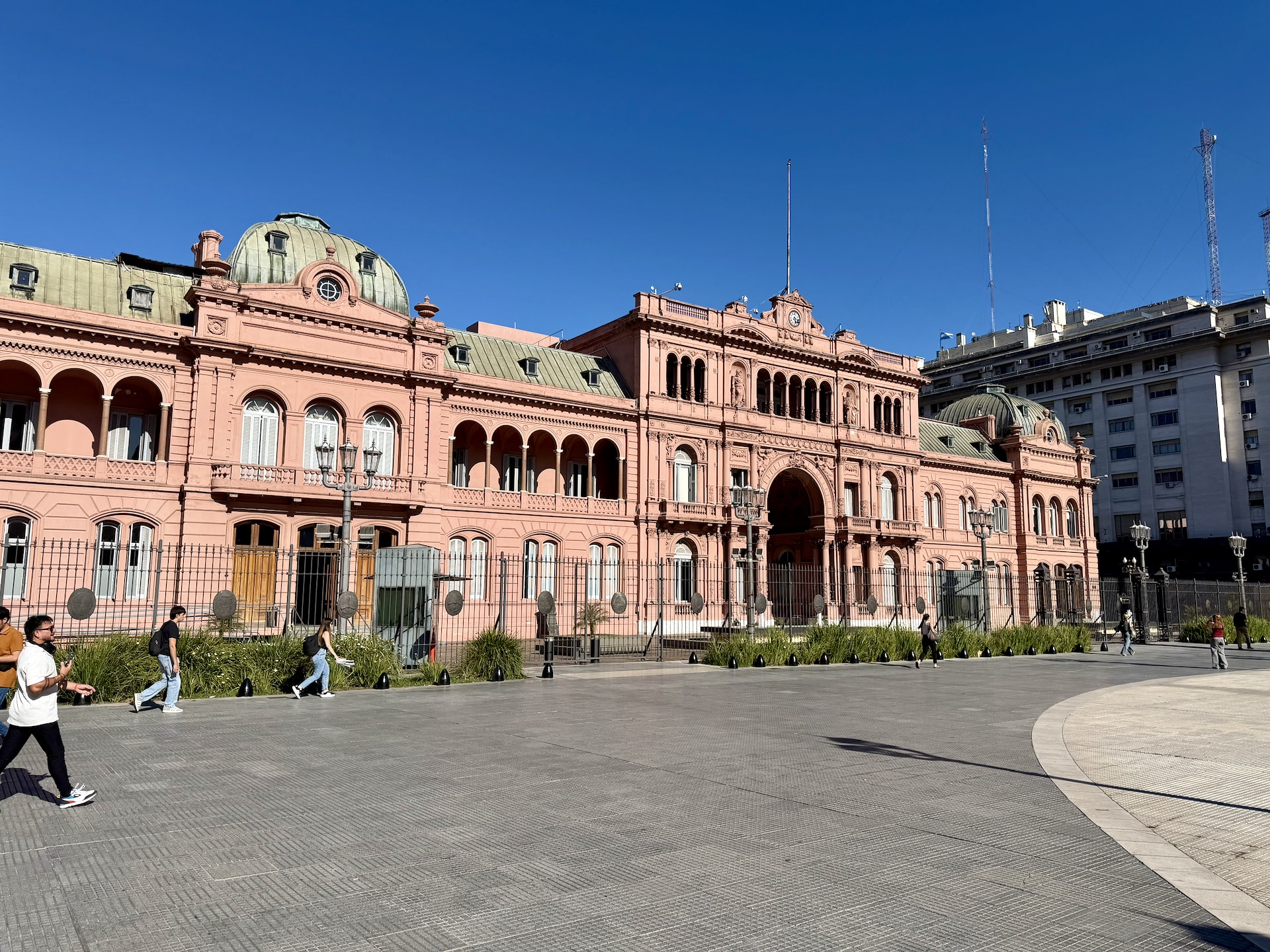
If it’s the most downtown of downtowns you’re after, that’s San Nicolás and Montserrat. This is the city’s governmental core, home to the Congress, Plaza de Mayo, the Casa Rosada, the Metropolitan Cathedral, the Obelisco, and the Teatro Colón – the headline sights, in other words. Basing yourself here makes sense if you have very little time and want to tick off the most famous landmarks efficiently, because they’re all close together.
That said, walking through it, we didn’t find the kind of pleasant pockets that Palermo Soho has, and the area reportedly gets a bit edgier toward nightfall. We were never there very late and saw no problems ourselves – it’s busier, with bigger avenues, very much the central-business feel of the city.
Recoleta and Retiro
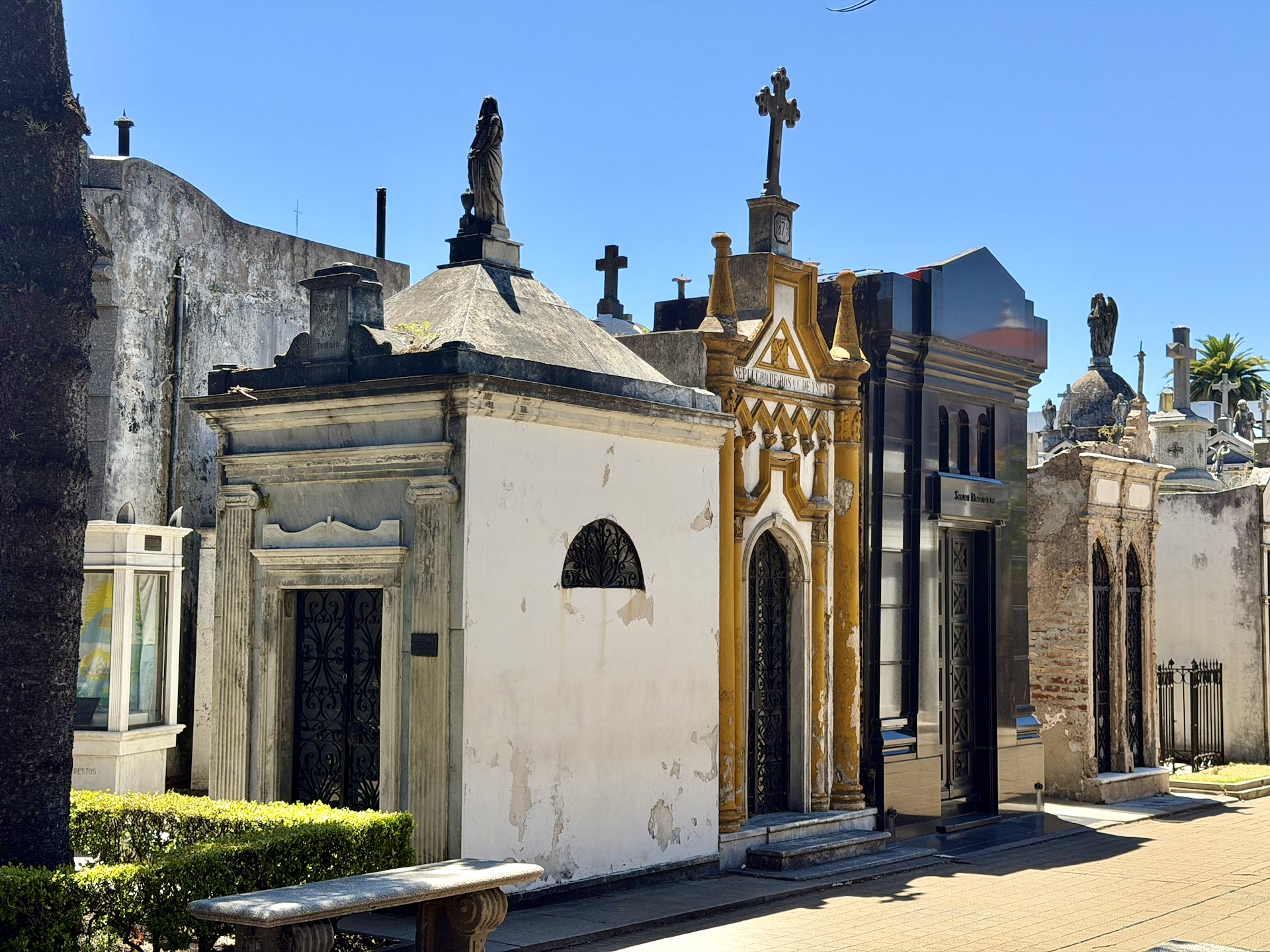
These are the historic neighborhoods to the north: Retiro and Recoleta. Both came across, from the outside, as wealthier and pricier, full of handsome buildings, and this is where the embassies cluster. It’s also home to the famous Recoleta Cemetery, the Cementerio de la Recoleta, one of the most genuinely interesting sights in Buenos Aires.
It’s not far from the central core we just covered – in fact much closer than Palermo – but it has a different, calmer character. We didn’t check prices closely, but it felt higher-end than even Palermo. I’d point older travelers and families here, along with anyone who rates a quiet, good-looking neighborhood over a fashionable one.
San Telmo
San Telmo is the birthplace of tango, and that’s probably what it’s best known for. It’s another historic neighborhood, just south of Montserrat and closely tied to it. If you go to a tango show during your stay – and I do think it’s worth it – you’ll likely find yourself in San Telmo, which has the highest concentration of venues, certainly the ones most popular with visitors.
We only came here in the evening, for a single tango show, so our read isn’t deep. The Sunday market is held here too. We were driven through the neighborhood in a minibus as part of the tango show’s transfer, and while San Telmo has real character, we did notice some rougher edges along the way – worth keeping in mind, though nothing that struck us as remotely dangerous, so don’t picture anything dramatic.
Puerto Madero
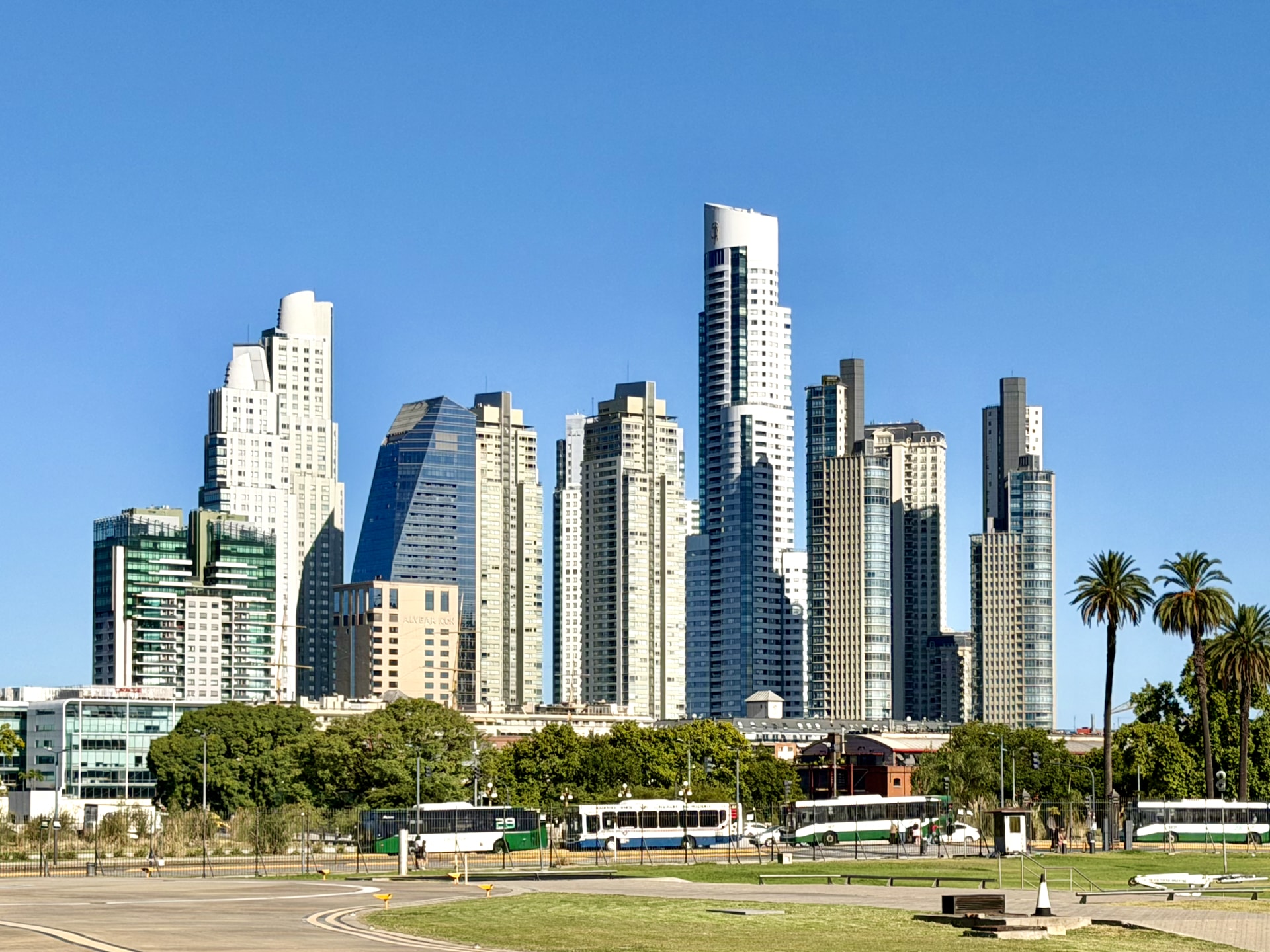
A brief mention for the modern waterfront district. It’s safe and expensive, but it sits well outside the city’s main flow, and to my mind it isn’t the Buenos Aires you’ve come to see on a short visit. I wouldn’t stay here – but if you’re after the more polished, upscale kind of Airbnb or hotel, go for it.
La Boca
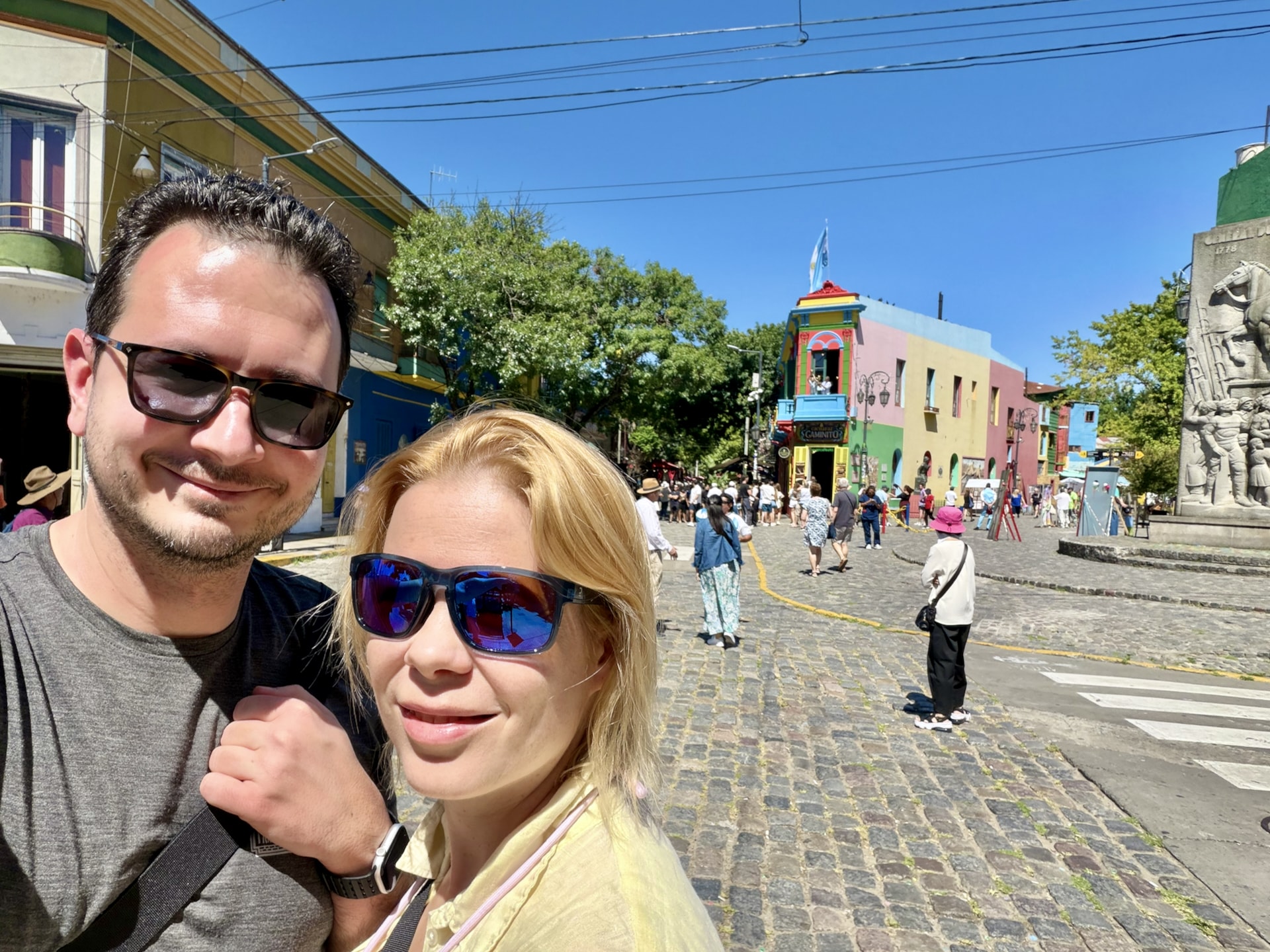
And finally La Boca, the famous old port district in the south. It’s a little out of the way as well, but no farther from the central core than Palermo is. This is where we saw the most tourists during the day: it’s intensely colorful and, these days, built largely around tourism. It also hasn’t historically had the best reputation.
There aren’t many hotels here; you’d more likely find an Airbnb nearby. Either way, La Boca is well worth seeing – give it at least half a day – but I probably wouldn’t choose to stay here on a visit to Buenos Aires.
Getting Around Buenos Aires: Subte, Buses, and Walking
Getting around Buenos Aires is, of all things, a genuine highlight.
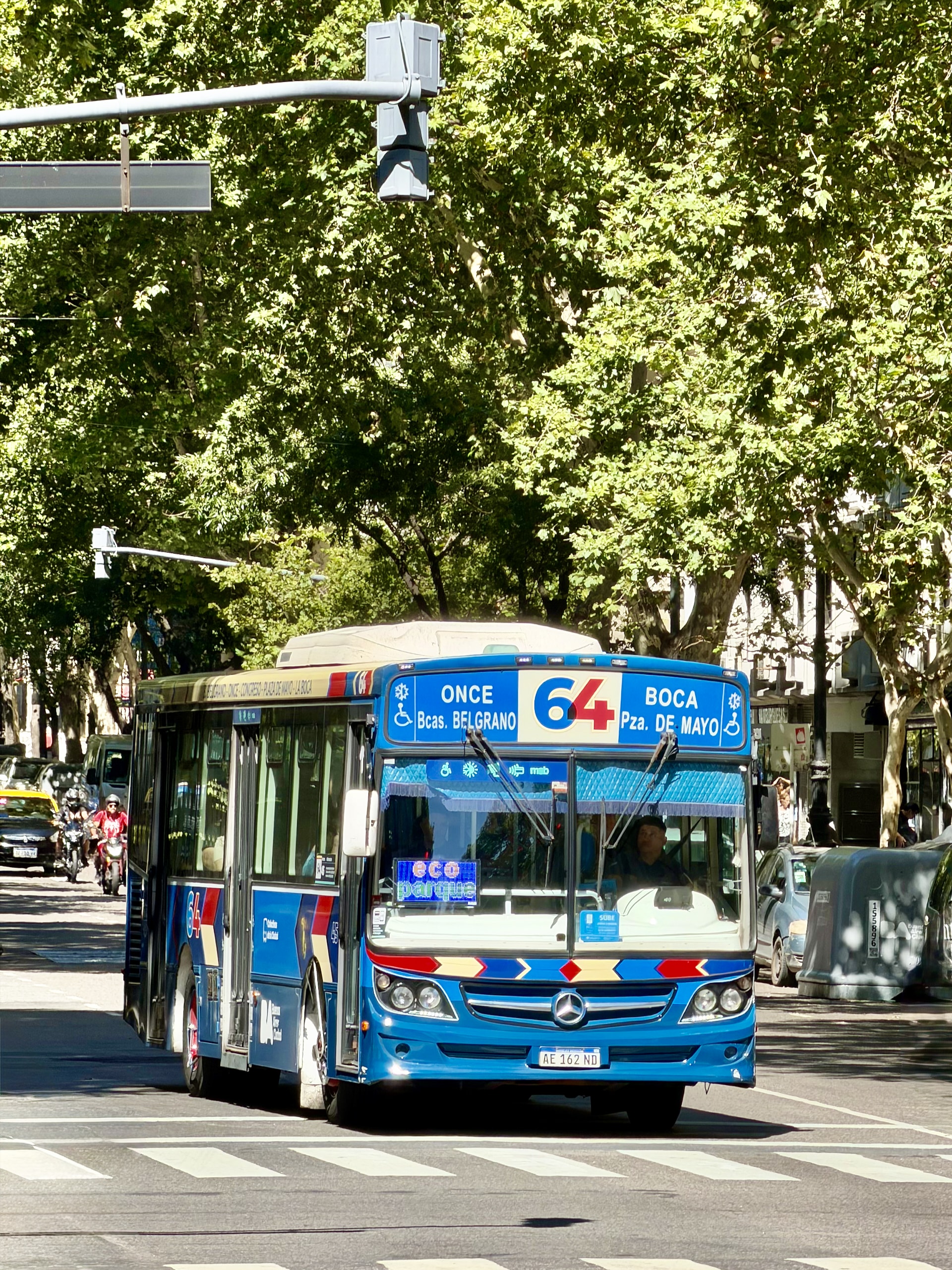
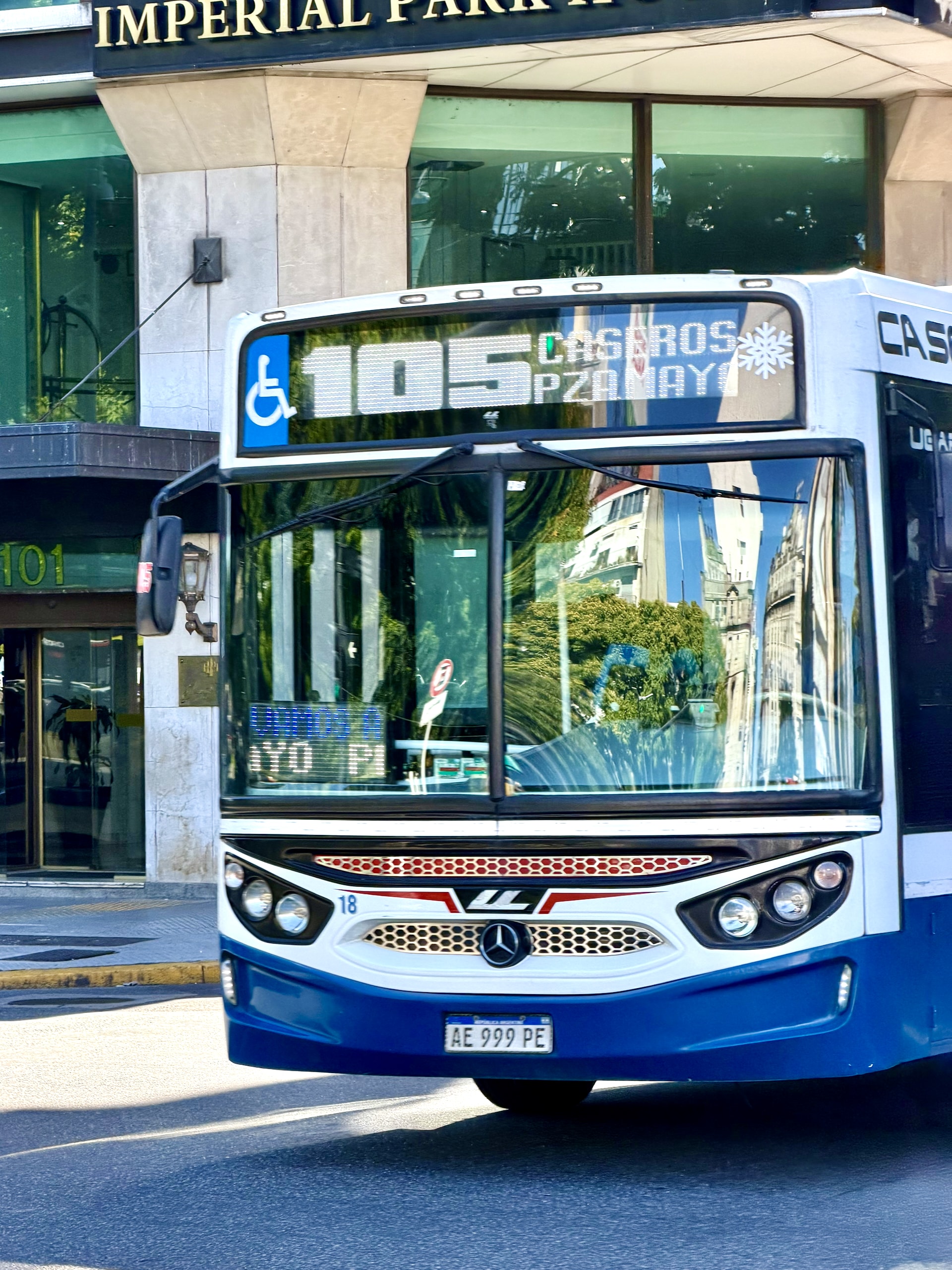
Andrea’s friend had advised us to skip public transport entirely and take Ubers or Cabifys everywhere, since they’re so cheap. The fares really are relatively low, but the city also has serious traffic, so a taxi isn’t necessarily the fastest way to move. And then there was the other thing: the moment I saw my first Buenos Aires bus, it stole my heart – and so did every bus after it, because they look fantastic. We ended up using public transport quite a lot.
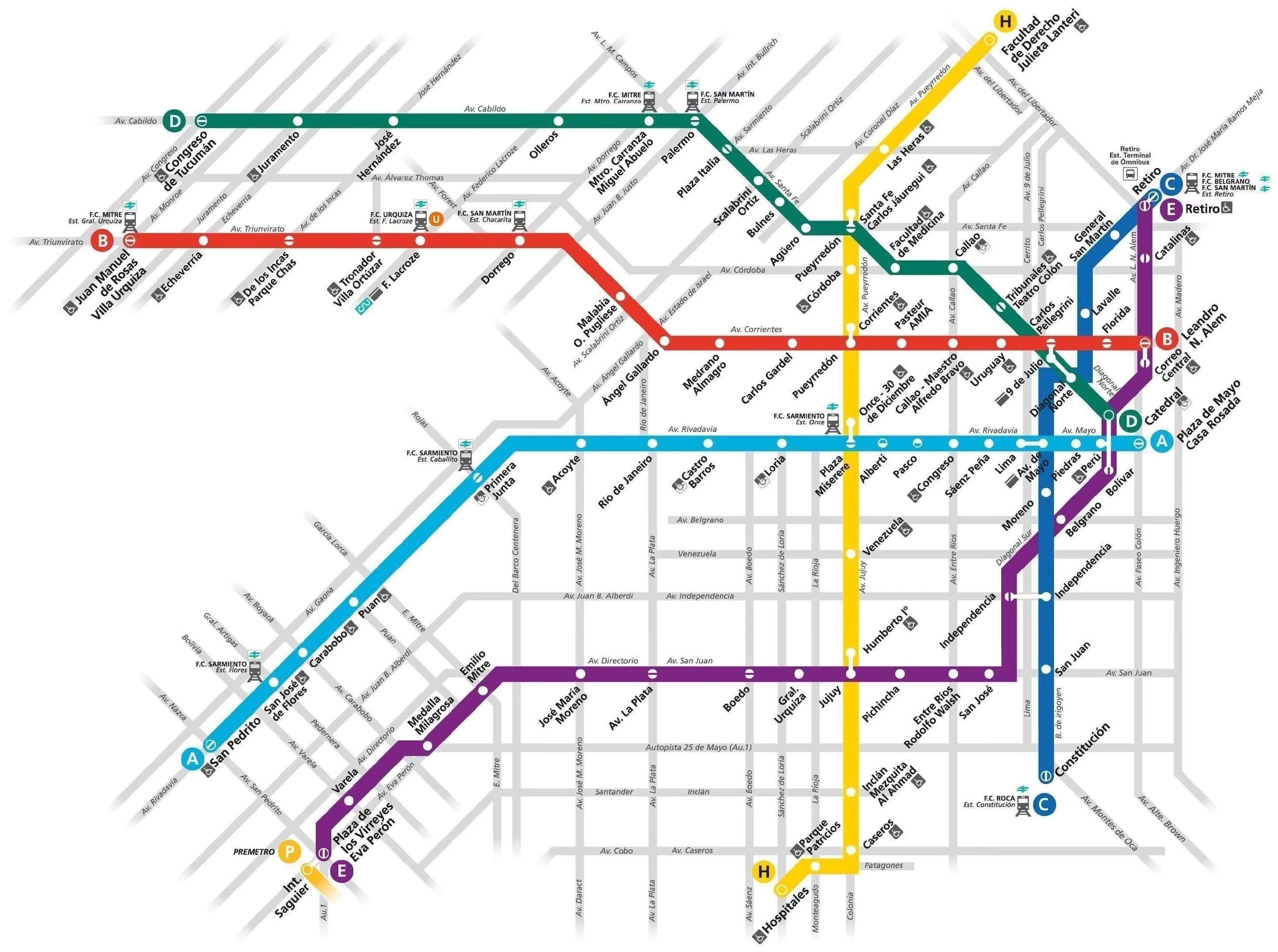
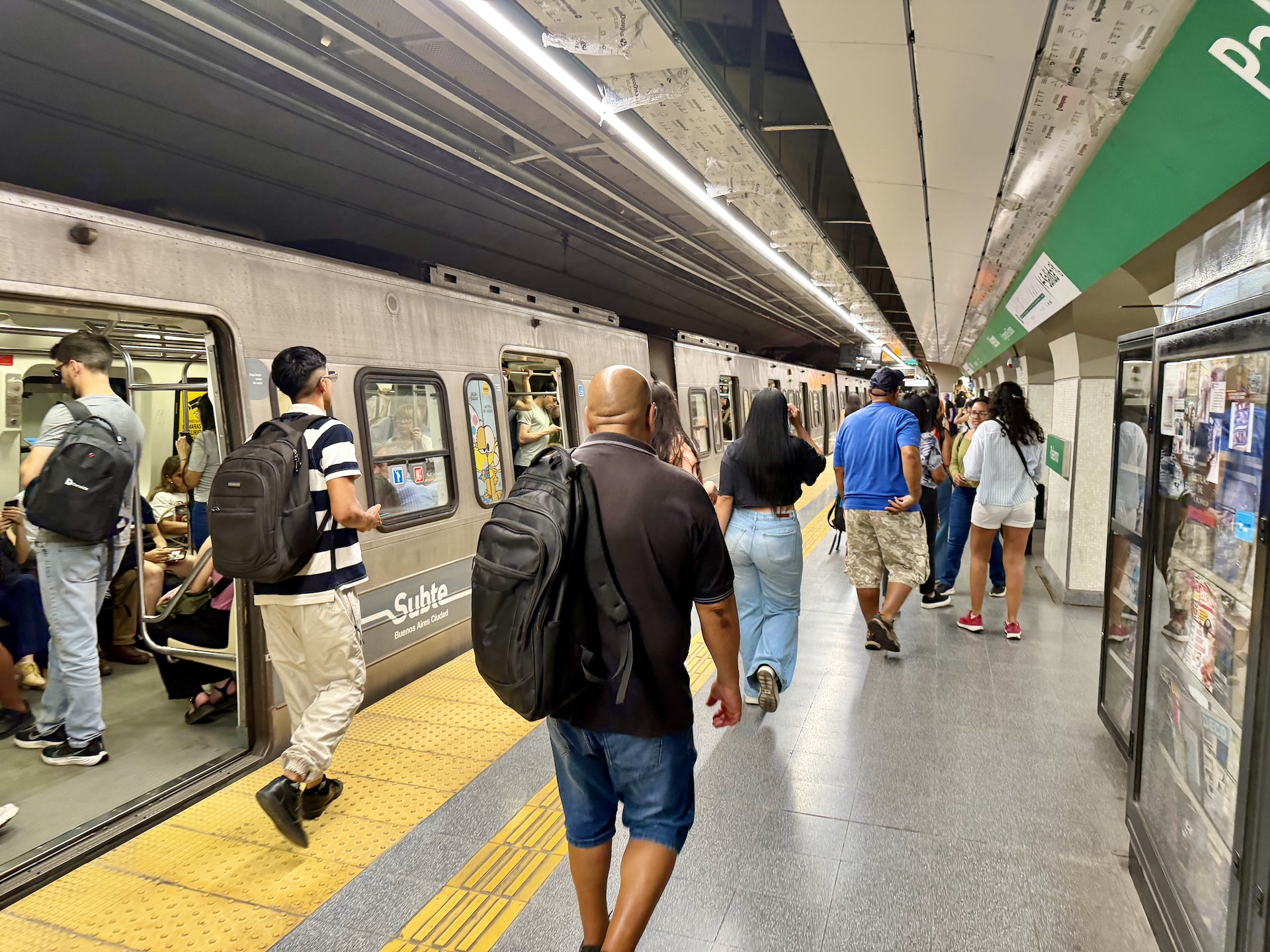
The city has an extensive metro network, the Subte, with six lines that meet and cross in the center before fanning out toward the suburbs. For longer hops, the metro is a good bet – getting from Retiro into the Avenida de Mayo area, for instance, is probably most comfortable underground. On top of that there are countless bus lines, the colectivos. I had a hunch early on that these buses belonged to different companies, because every line has its own distinct design and livery – different vehicles, different signage. After we got home, a look at Moovit confirmed it: a whole range of operators run the buses here. I’d estimate a good third of the photos I took in the city are of the buses themselves – I just couldn’t stop photographing them.
Payment is where things have changed recently. It used to be that you could only pay with the famous (and infamous) SUBE card – not to be confused with the Subte, the metro, whose name comes from subterráneo. We’d read that the SUBE was notoriously hard to get hold of: sold in plenty of places, but never actually in stock. You’re meant to be able to buy one at kiosks and metro stations, but we never did.
That’s because when we visited in 2026, we could pay by bank card on both the metro and the buses. Curiously, our physical cards didn’t work – but Apple Pay was completely fine on the buses, and our regular Revolut card worked on the metro. (This shift is fairly new: contactless payment arrived on the Subte at the end of 2024 and rolled out across the city’s bus lines through 2025, so the SUBE card is no longer essential for a short visit.)
On the buses, fares are distance-based. In principle you tell the driver which stop you’re getting off at, and the system knows what to charge and bills your card accordingly. This is where it gets interesting, because a lot of stops have almost identical names – my guess is they’re named after intersections and street numbers. So good luck saying the name of your stop out loud, especially one with a long building number in it, and especially if, like me, you go to pieces trying to rattle off long numbers in Spanish on the spot. The easiest move is to show the driver on Google Maps where you want to go.
Even if you plan to pay by phone, it’s worth keeping a SUBE card with a small balance as a backup. Foreign contactless cards aren’t accepted equally reliably on every reader, and a topped-up SUBE saves you the awkwardness if a tap gets rejected as the bus pulls away.
There’s one detail here that I’ve never encountered anywhere else in the world, and wish I had: people queue at bus stops in the order they arrived, in neat, orderly lines. Boarding happens calmly – no jostling, no scrum. It’s remarkably civilized. You do need to flag your bus down, or at least we found it wise to, since a single stop serves a number of different lines. When the one you need appears, signal to the driver.
Google Maps works perfectly well for planning journeys – it shows you how to get from A to B, when the bus is coming, and which line to take. Moovit is the other good option, and it also has the route maps for the various bus lines, so you can see exactly where each one goes.
Oh, and one more thing I almost forgot: the buses move like the devil. They pull away hard, they brake even harder, and they do it everywhere, so hold on tight or grab a seat if there’s one going – though honestly it just adds to the experience. And if you’re on foot, watch out for them, because they will come barreling toward you – they don’t stop for nobody.
Speaking of being on foot: Buenos Aires, as a European-style city, is wonderful to explore on foot. The sidewalks are good everywhere, and on our first day we walked from our place in Palermo all the way to the Congress building – a pleasant hour and a quarter, with plenty to see along the way – not the headline sights, but the regular, day-to-day Buenos Aires that locals actually live in. So if you’re up for it, shorter distances are easily done on foot.
What I would not do is rent a car for getting around the city. The traffic jams are enormous, and while the infrastructure is fine, driving yourself around Buenos Aires feels completely pointless.
Money in Buenos Aires: The Blue Dollar Explained
We don’t usually devote a whole section to money in our city guides, but in Buenos Aires – and Argentina generally – the money question is even more interesting than the buses.
A few years ago, the term to know was the “blue dollar.” During the era of hyperinflation, an informal currency market sprang up, and you could get Argentine pesos at a far better rate than the official one if you brought in hard foreign currency. On top of that there was a third rate, the “tourist dollar,” which came along later. It was an official rate, and it applied only to transactions made with foreign cards.
By the time of our trip, all of that had faded. The gap between the official and unofficial rates was minimal, and now, in mid-2026, the two are essentially the same – the result of the currency controls being lifted back in April 2025. You no longer need to think about which dollar rate you’re getting. Everywhere offers more or less the same number of pesos for your foreign currency. For what it’s worth, locals pointed us to a cambio at Florida 860, in shop 113 of the Galería del Sol arcade, though in the end we never changed cash there at all.
What is still very much a problem is withdrawing cash with a bank card. Not that we particularly needed cash, since cards are accepted everywhere and most businesses are legally required to take them. But there are situations where paper money is necessary – tips, mainly – and outside Buenos Aires you can run into services that are cash-only, like a laundromat or a transfer.
So how do you get hold of Argentine pesos in cash if all you have is a bank card? This is the part that isn’t obvious. The problem is that ATM withdrawal fees are eye-watering, and the per-withdrawal limit is low, which means you can end up paying as much as 10% of the amount in fees alone. That’s obviously nonsense, and never worth it.
This is where the globally familiar Western Union comes in – something we’d never once used in our lives. Argentina was the only place we’ve ever actually needed it, precisely because of those ATM fees. I won’t go into a long explanation of how Western Union works: the short version is that you send money to yourself, it gets converted from your home currency into pesos at a very good rate, and you collect the local cash at any Western Union branch with your passport and a code. Supposedly you can run into the problem of a given office being out of cash, but we didn’t.
We went right at opening to a Western Union branch in Palermo, very close to our accommodation – specifically the one at Gorriti 5045. No queue, they handed over the money, and we were done in five minutes. We sent ourselves $400, collected it in pesos, and it was more than enough for our entire time in Argentina – honestly, half would have done. (That wasn’t just the three days in Buenos Aires, either: it covered Ushuaia and Patagonia as well, with the Antarctic cruise in the middle, which you settle onboard in US dollars anyway.)
Carry small peso notes for tipping. A roughly 10% propina is customary in restaurants, and it often can’t be added to a card payment – so a card-only wallet leaves you stuck when the bill arrives.
Staying Connected: eSIM and Mobile Data in Argentina
As we always do when we travel, we used an eSIM to stay connected in Buenos Aires. We went with Nomad, but every major eSIM provider has an Argentine plan. (For the full rundown on how eSIMs work and how to pick one, we have a complete guide to staying connected abroad.)
Buenos Aires is a big city, so it’s thoroughly covered – the signal is good, and there’s 5G almost everywhere. (Worth noting: the Nomad eSIM isn’t 5G; Manet is.) If you head into the countryside, though, bear in mind that rural coverage is patchy. The farther you get from a town, the thinner it becomes – you might pick something up along the main roads and highways, but out in genuinely open country there’s often nothing at all.
The best coverage in the country belongs to Claro, but as far as I could find, no eSIM uses the Claro network. Movistar is the most widespread, and it’s the one both Nomad and Manet run on – and their coverage isn’t much worse than Claro’s.
At the moment, here’s roughly what a 5 GB eSIM costs with the more popular providers:
- Nomad – $16
- Manet – €11.4
- Airalo – $17 (15% off your first purchase with this link; 10% off for returning customers with this link)
- Saily – $17
- Yesim – $11.3 on sale
Is Buenos Aires Safe?
When we were planning the trip, we ran into a surprising number of questions online and on social media about whether Argentina, and Buenos Aires specifically, was safe. It caught me off guard.
It’s true that the economic picture hasn’t been bright in recent years – decades, even – and poverty has risen sharply in Argentina. But despite that, we ran into no problems whatsoever in Buenos Aires. There was never a moment when we felt unsafe or had anything to fear. I honestly don’t understand where the city’s bad reputation comes from.
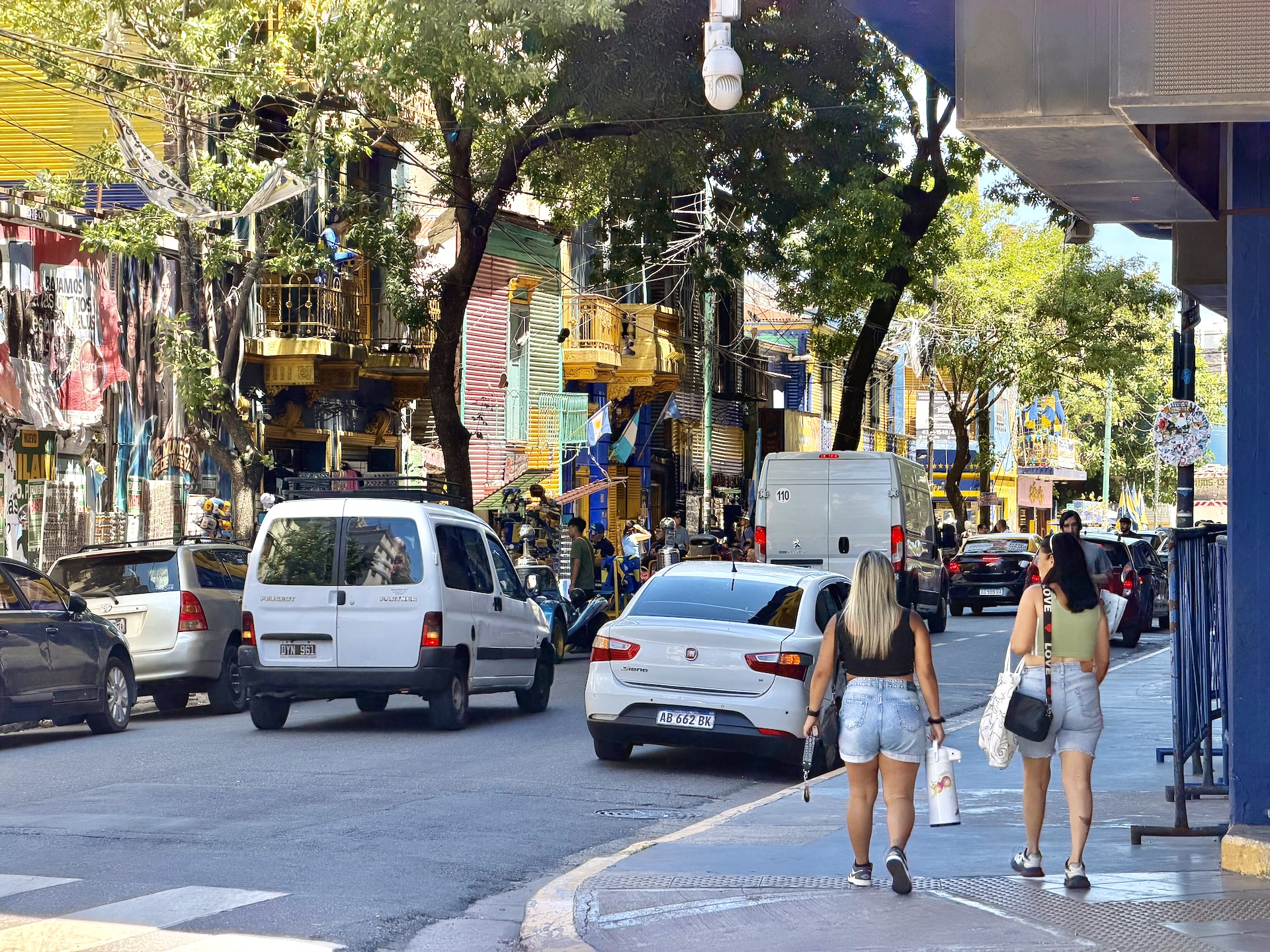
As in any big city, it pays to stay aware, but we saw no difference compared to any other major city. The one area that felt a touch sketchier was La Boca – and only the streets that fall outside the usual tourist route. On the tourist-facing parts there’s no issue at all. We wandered a couple of streets off the main drag, in daylight, and still had no trouble. The commonly repeated cautions are that the area around the Constitución and Once train stations gets dicier after dark, as does the city center late at night.
After dark we were only ever in Palermo, where we felt completely safe on the street even at night, and we had no problems in the center during the day either. The realistic risk is the usual one: pickpocketing, a phone snatched out of your hand, a bag lifted off a café table. Take the normal, sensible precautions and you’re very unlikely to have a problem.
What to Eat in Buenos Aires
We cover where and what we actually ate in more detail in our day-by-day account of three days in Buenos Aires, so here I’ll just run through the dishes worth seeking out when you reach the Argentine capital.
- Asado / parrilla – Steak. You’re in the homeland of it. Argentina is right at the top of the world’s beef regions, so eat as much steak here as you can, particularly since it’s very reasonably priced. Two distinctive local cuts to try are the bife de chorizo and the ojo de bife – though really, order anything.
- Empanadas – Another classic, available essentially everywhere in the city. Perfect for when hunger strikes: one or two empanadas will tide you over to the next proper meal. Wherever you see locals lining up for them, you can buy with confidence.
- Pizza and pasta – There’s a strong Italian influence in Argentina historically, so Italian food is everywhere. Pizza is a little different from the Italian version; there’s even a local style called muzza, which is essentially a heavily mozzarella’d pizza.
- Choripán – The classic street food, and the name says it all: a sausage (chorizo) in bread (pan). It’s usually grilled, which makes it delicious. La Boca, around the stadium and the surrounding streets, is a good place to grab one.
- Mate – Mate is everywhere in Argentina. You’ll spot people preparing and drinking it in genuinely unexpected places – on buses, and we even saw flight attendants topping up someone’s mate with hot water on a plane. For some reason we never actually tried it ourselves. There are dedicated mate experiences that introduce travelers to the whole ritual, if you want to do it properly.
- Coffee – Maybe this is the Italian influence again, but the coffee culture, especially in Buenos Aires, is excellent. Our corner of Palermo had a steady supply of very good new-wave cafés, and the coffee was reliably good almost everywhere.
- Tap water – The tap water in Buenos Aires is drinkable, so go ahead. One thing that struck us was how hooked the city is on sugary soft drinks, despite the enormous exceso en azúcares and exceso en calorías warning labels stamped across them.
One more thing worth flagging: dinner here starts later than you might be used to in Europe or the Northern Hemisphere – in true Latin fashion, more like eight, nine, or even ten o’clock.
If you’re jet-lagged or simply hungry before the city sits down to dinner, bridge the gap with a merienda – the late-afternoon coffee-and-pastry break, around 5 or 6 p.m. A couple of medialunas will hold you until a properly Argentine dinner hour.

How Long to Spend in Buenos Aires
Honestly, the more the better. We had three days, which is enough to see the absolute headline sights – though we didn’t make it to a single museum, for instance. If Buenos Aires is one stop on a longer trip, four or five days is probably the sweet spot: less rushing, more to see. And you could very comfortably spend more than a week here. The city offers weeks’ worth of things to do – it’s varied and consistently interesting. I genuinely regret that we couldn’t stay longer. (For what three days on the ground actually looks like, we wrote up ours day by day.)
Final Thoughts: Why Buenos Aires Surprised Us
Buenos Aires completely exceeded my expectations.
For some reason, early in the trip I’d assumed I’d prefer Santiago de Chile, and that three days in Buenos Aires might even be too many. I was spectacularly wrong.
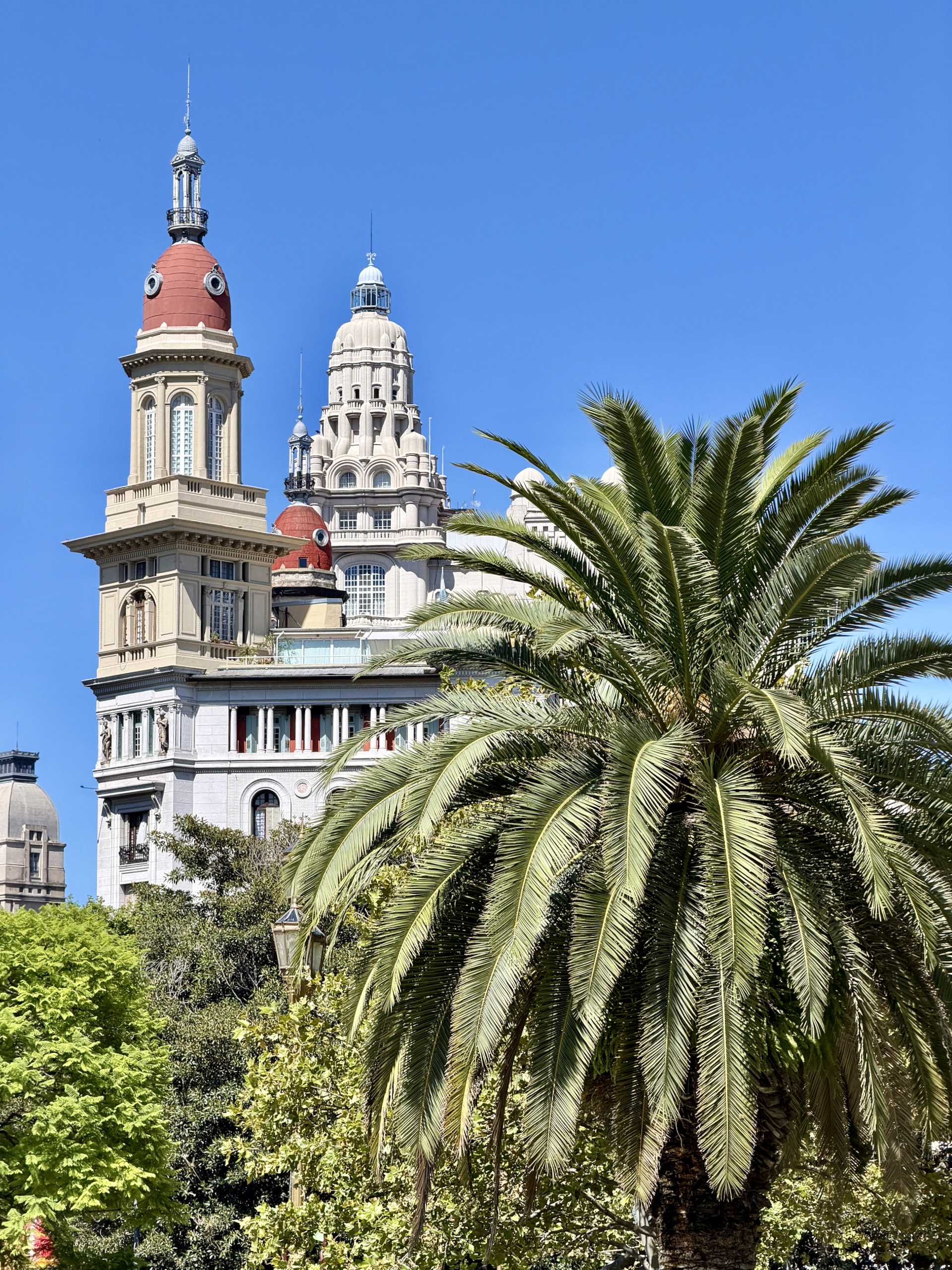
The architecture is striking. There aren’t many genuinely old buildings, but the 19th-century cityscape is a real spectacle all the same. The city feels deeply European – just at a slightly larger scale – and it reminded us constantly of Budapest, where we live. Again and again, we caught ourselves thinking we could just as easily have been somewhere back home, only bigger. It’s no coincidence that much of the film Evita was shot in Budapest: the director chose it specifically because it could stand in for the European architecture of 1940s Buenos Aires. We’d come all this way only to feel, in the best sense, like we hadn’t quite left.
The people are kind. As we said in the itinerary article, this is far less Latin America than the northern part of the continent and much more South America – a quieter place, in other words. The food is excellent, we barely had a bad meal. And the whole city is eminently livable, with green spaces and good public transport.
Buenos Aires got under my skin, and I’d happily go back any time to dig a little deeper.