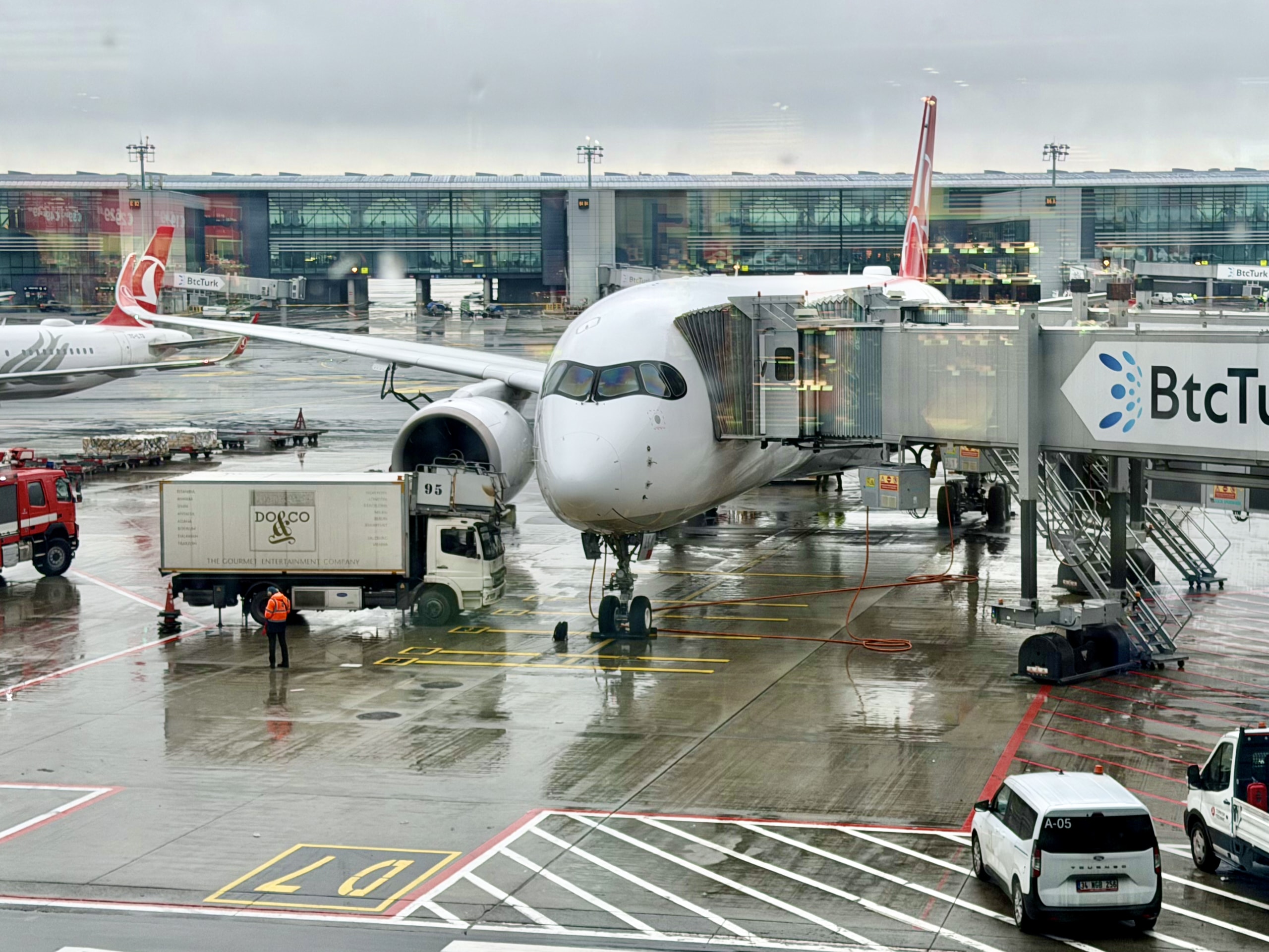
Andrea and I fly a lot – that much is obvious from the blog – but, knock on wood, we’ve rarely had anything more serious than a minor delay or the occasional canceled flight. Until our most recent big trip to Patagonia and Antarctica. On the way to Buenos Aires we ran straight into Turkish Airlines doing its worst, and ended up filing a flight delay compensation claim that paid out €600 per passenger – €1,200 total – with no lawyer, no claim agency, and not a euro skimmed off the top.
This article is about exactly how we did it. The relevant rules in Europe, in Turkey, and (briefly) in the US, what we wrote to Turkish Airlines, what we did when they stalled, and roughly how long it all took. The framework applies to any airline operating delayed flights to or from the EU or Turkey, but the personal play-by-play is specific to Turkish Airlines, who turned out to be exactly as obstinate as their reputation suggests.
What happened to us
I’d flown Turkish Airlines a few times before and, if I’m honest, I’m not sure they’ve ever landed me on schedule. But the delays were always minor – not the kind that triggers compensation. So I was reasonably fine with them. That changed in January 2026.
Our itinerary started in Budapest, connected through Istanbul, and continued via São Paulo to Buenos Aires – the whole thing on one Turkish Airlines booking. Our outbound flight from Budapest on January 18 left more than an hour late but caught up most of it in the air, so we arrived in Istanbul only about 45 minutes behind schedule. We’d built in a deliberate overnight stopover there – good food, comfortable hotel, fresh start in the morning. The plan was a 10:00 a.m. departure to Buenos Aires.
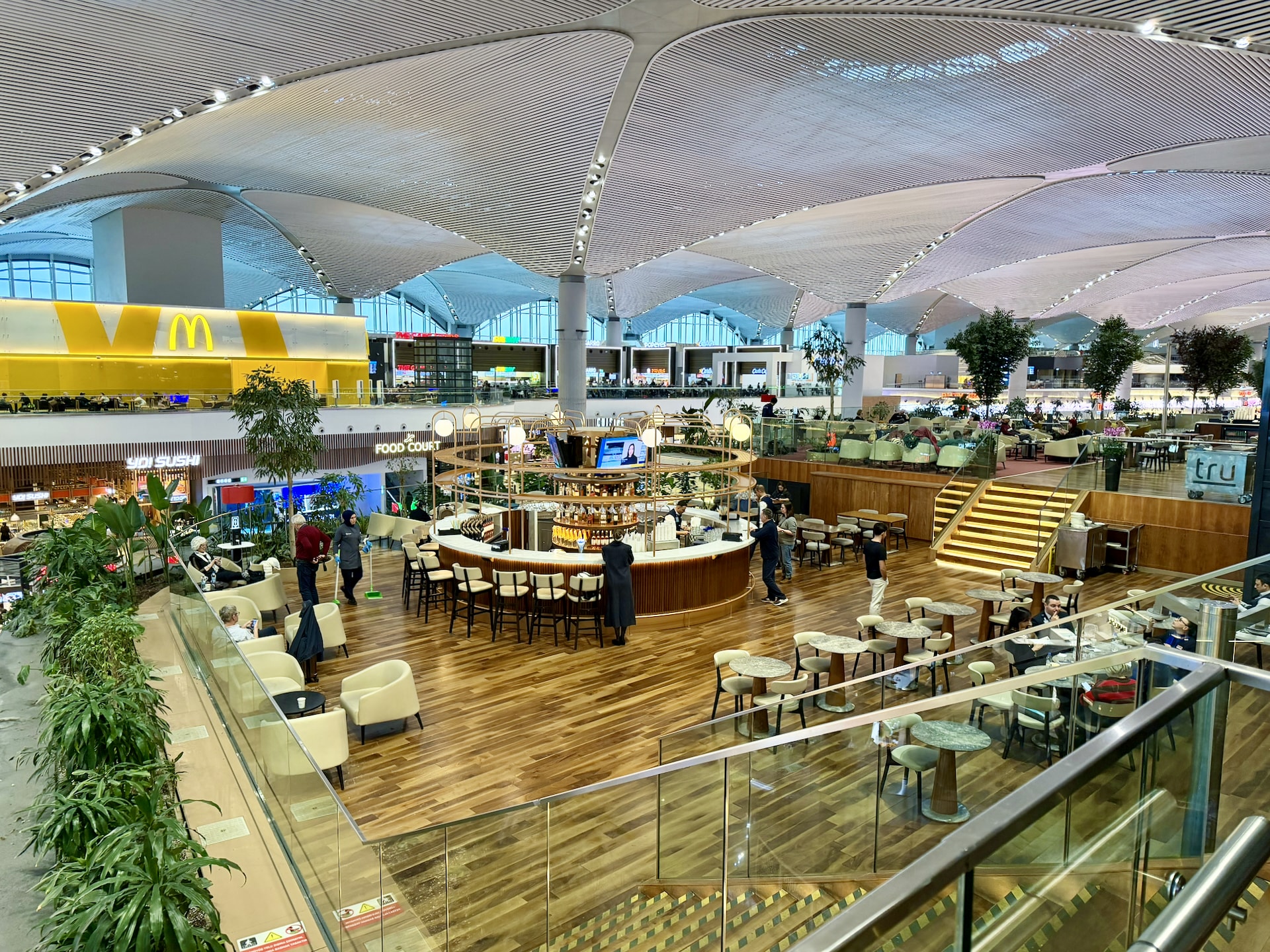
At 3:30 a.m., long before our alarms went off, the first email landed: a 90-minute delay. Over the next few hours it crept up in two more revisions to 2 hours and 40 minutes. The actual delay turned out to be longer than that.
We finally pushed back from Istanbul at 12:48 p.m, but the problems weren’t over. At the São Paulo fuel stop and passenger exchange, something went wrong on the ground – the crew walked the aisle multiple times with passenger lists, asked to see boarding passes and passports, and looked progressively less relaxed. No announcements, no explanation. The pattern was unmistakable: either someone had boarded who shouldn’t have, or someone hadn’t who should have. We sat on the plane for nearly three hours with no information, no water offered, the toilets reluctantly opened, and the general atmosphere of a long-haul flight that has stopped being fun.
Original take-off from São Paulo: 7:20 p.m. Actual take-off: 12:21 a.m. We finally touched down at Ministro Pistarini in Buenos Aires at 3:24 a.m. – 4 hours and 59 minutes after the original 10:25 p.m. scheduled arrival. We were almost five hours late at our final destination, on a flight Turkish Airlines never gave a coherent explanation for, and the bones of a textbook compensation case were already in place. (We did still get our three days in the city, delay and all.)
The moment a delay is announced, screenshot every notification you receive from the airline, take a photo of the departure board, and note exact times. Airlines often try to argue the delay was shorter than it actually was, and these timestamps become your evidence. A flight-tracking app (more on those below) is another way to capture the same data automatically.
When are you eligible for compensation?
Two separate legal frameworks applied to our case, and either one would have been enough to win. Working out which framework covers your flight is the single most useful thing you can do before contacting the airline.
The first one was the famous EU 261 regulation. Because our trip departed from Budapest – an EU airport – the whole journey to Buenos Aires fell under EU 261, including the leg that actually caused the delay. The fact that we had an overnight stopover in Istanbul didn’t matter: it was all one booking, so legally it counted as a single journey. Even though we flew home from Santiago de Chile on the same multi-city ticket, the outbound delay alone was enough to trigger compensation.
The second framework was Turkey’s own passenger rights regulation, SHY-Passenger, which applies to Turkish Airlines on practically any of its international flights. So as a Turkish carrier on an international route, they were on the hook either way.
The first thing to check, then, is where your flight actually started.
The EU 261 regulation
The full name of the law is Regulation (EC) No 261/2004 of the European Parliament and of the Council, establishing common rules on compensation and assistance to passengers in the event of denied boarding and of cancellation or long delay of flights. It’s also written as EU 261, EC 261, or EU 261/2004 – same regulation. It’s been in force across the EU since 2005 and extends to Iceland, Norway, and Switzerland.
The amount of compensation depends on the flight distance and the length of the arrival delay:
| Flight distance | Arrival delay 3-4 hours | Arrival delay 4+ hours |
|---|---|---|
| Up to 1,500 km (930 mi) | €250 | €250 |
| 1,500–3,500 km (930–2,175 mi) | €400 | €400 |
| Over 3,500 km (2,175 mi), within EU | €400 | €400 |
| Over 3,500 km (2,175 mi), non-EU destination | €300 | €600 |
The 3,500 km threshold matters: Istanbul to Buenos Aires is roughly 12,000 km, well above it, with a delay over four hours, so we were clearly in the €600 tier per passenger.
Importantly, EU 261 is only triggered when the delay is the airline’s fault. Bad weather, air traffic control strikes, security alerts, bird strikes, and other genuine “extraordinary circumstances” exempt the airline – but the burden of proof sits with them, not with you. If they cite extraordinary circumstances, you have every right to ask for documentation.
The regulation applies to:
- Any airline departing from an EU airport (regardless of where the airline is based)
- EU-based airlines arriving at an EU airport from outside the EU
The asymmetry matters: a non-EU airline flying into the EU from outside is not covered. But any flight that leaves an EU airport is covered, whichever carrier operates it.
If the airline refuses or stalls, you can escalate to the national enforcement body in any EU country relevant to your trip – typically the country where the disruption occurred or where you live. The European Commission maintains an official list of national enforcement bodies.
You don’t have to be an EU citizen for EU 261 to apply – the regulation protects every passenger on a covered flight, regardless of nationality.
If the airline cites “extraordinary circumstances,” demand to see the official documentation. They are legally required to prove the cause, not just assert it. In our case, Turkish Airlines tried bad weather and then bird strike, but couldn’t produce a single document for either – which is exactly why they eventually paid.
The Turkish SHY-Passenger regulation
Turkey has its own air passenger rights framework, formally the Regulation on Air Passenger Rights (Hava Yolu ile Seyahat Eden Yolcuların Haklarına Dair Yönetmelik), or SHY-Passenger / SHY-YOLCU. A December 2024 amendment introduced delay compensation that closely mirrors EU 261:
| Flight type | Distance | Compensation |
|---|---|---|
| Domestic | – | €100 |
| International | Up to 1,500 km (930 mi) | €250 |
| International | 1,500–3,500 km (930–2,175 mi) | €400 |
| International | Over 3,500 km (2,175 mi) | €600 |
The trigger is the same as EU 261: a delay of three hours or more at the final destination, caused by reasons within the airline’s control.
SHY-Passenger covers:
- Any flight departing from Turkey, on any airline
- Any international flight operated by a Turkish airline, regardless of where it departs
That second point is the one that bites Turkish Airlines hard. Even on flights that don’t touch Turkey, if Turkish Airlines is the operating carrier, SHY-Passenger applies.
Complaints go to the Directorate General of Civil Aviation (Sivil Havacılık Genel Müdürlüğü), known by the Turkish acronym SHGM. The rule is: complain to the airline first, and only escalate to the SHGM if you’re not satisfied with the response.
US rules: not really comparable
Our case doesn’t touch the US, but it’s worth a quick word for completeness, because the contrast is instructive. There is no US federal rule that requires airlines to pay cash compensation for delays the way EU 261 and SHY-Passenger do. On this specific point, Turkey and the EU are firmly ahead of the United States.
What the US does have is the DOT automatic refund rule, which took full effect in October 2024. It requires airlines to provide automatic cash refunds when:
- A domestic flight is delayed by 3 hours or more
- An international flight is delayed by 6 hours or more
and the passenger declines the rebooked alternative. That’s a refund of the ticket, not a compensation payment on top of it. Cash compensation only kicks in when an airline involuntarily denies boarding due to overbooking – in which case US airlines actually pay quite generously, often more than EU 261. But for plain old delays, you get your ticket money back and that’s it.
How to file your claim
So here’s how the process actually went for us. The first step in every case is to file a complaint directly with the airline, before escalating anywhere else. Most authorities won’t take your case until the airline has had a chance to respond. We had a fairly long window to file – Hungary’s statute of limitations for these claims is five years – but in general the advice is to file as soon as possible, ideally within a few months.
We didn’t want to file both claims on one form. Combining them would have required a written authorisation from Andrea to me (or vice versa), and we suspected that any tiny defect in that paperwork could become an excuse to reject. So we filed separately. I went first.
Turkish Airlines has a dedicated feedback portal, and that’s where the claim was lodged. Before submitting, get all your documentation ready:
- Boarding passes for every leg (screenshots of the digital wallet pass are fine)
- Booking confirmation email
- Exact times: scheduled and actual departure, scheduled and actual arrival
- A photo or scan of your passport
For a while I’ve been using Flighty on iOS to track every flight I take. I enter the flights in advance, the app captures the official scheduled and actual times, and it stays in my history. When something like this happens, the evidence is already on my phone – I don’t have to remember anything or hunt for it later. Free websites like FlightAware and Flightradar24 also keep flight history, but they typically limit how far back you can search without a paid subscription. Whatever tool you use, the principle is the same: don’t rely on memory.
I wrote the message in English – Turkish Airlines accepts English – and used AI to add a little legal jargon. The key elements were:
- The exact delay duration
- A direct reference to Regulation (EC) No 261/2004
- The flight numbers (we had multiple)
- The scheduled vs. actual arrival time at the final destination
- The booking reference
- An explicit request for €600 in compensation
- My bank account details (optimistically, but it speeds things up if they decide to pay)
The first reply came in within hours. It was a rejection. From there, the back-and-forth started.
When the airline doesn’t want to pay
What followed was a textbook game of cat and mouse. I made the decision early that I’d see this through on principle, however long it took.
The first stance was that the flight hadn’t actually been delayed by that much. Then they conceded the delay length, but argued it had been caused by “extraordinary circumstances” – the magic phrase under EU 261. When an airline invokes extraordinary circumstances, you have the right to ask for the official documentation that proves it. Turkish Airlines couldn’t produce any.
It was obvious nothing extraordinary had happened. Yes, it had been snowing lightly in Istanbul, but the airport hadn’t closed and other flights were taking off normally. The mysterious passenger problem in São Paulo is by definition not an extraordinary circumstance – it’s something the airline controls. They eventually pivoted to claiming a “bird strike,” which, if it had happened, no one on the aircraft seemed to know about.
The clincher was simple arithmetic. Even adding up the worst-case versions of every “extraordinary” cause they invented, the remaining delay caused by them alone still cleared the three-hour threshold. Once I pointed that out, the messages went from arriving within hours to arriving every few days, and eventually started just repeating themselves. They weren’t going to pay voluntarily.
Compensation pays a fixed lump sum but doesn’t reimburse the meals, hotels, or transport you paid for during a delay – travel insurance does. The two work together, not against each other. If your insurance includes flight delay cover, file both claims; they cover different things.
Escalating to the authorities
This was the next step, and it’s the part most people don’t realize is surprisingly straightforward.
I filed with both authorities in parallel:
- SHGM in Turkey – through their online complaint portal at kdmerp.shgm.gov.tr
- The Hungarian consumer protection authority, because Hungary is my country of residence (under EU 261 you can file with any relevant EU national body. The European Commission’s list has all of them)
The SHGM portal is in Turkish and the interface is a bit clunky, but you can switch the form to English, or just use your browser’s auto-translate. A quick registration, a longish form, and an upload of supporting documents – passport, boarding pass, screenshots of the Turkish Airlines correspondence, flight history. To hedge my bets, I wrote the complaint in English and also pasted in a Turkish translation produced by AI.
One small technical note: the phone number field on the SHGM portal expects a specific length. My Hungarian mobile number was one digit too short, so I added a leading zero to make it work. If yours doesn’t fit either, try a leading zero or an underscore at the end.
After that, I checked the portal every couple of days. Nothing happened for about two weeks. Then, with no warning, an email landed from Turkish Airlines saying my complaint had been upheld, that the compensation was due, and please submit my bank details, passport copy, and personal information on a form so they could transfer €600 within 15 days.
The same day, the Hungarian authority replied to say they’d just opened their investigation. I let them know Turkish Airlines had folded and money was on its way. They said they’d keep the case open until the payment actually arrived, and that if it didn’t they’d resume the process. Very professional, and reassuring.
On day 15, exactly, the €600 hit my account.
Andrea went through the same process, with one variation: even though her letter mentioned that I’d already been paid for the same booking – which should have settled the question – Turkish Airlines tried the same delaying tactics with her. Same arguments, same dance. She escalated to both authorities. The SHGM came back first, just like with me, and the payment landed on her account exactly as before. The grand total was €1,200.
What’s striking is that the Turkish civil aviation authority ruled against the Turkish national carrier in favour of a non-Turkish passenger before the Hungarian authority had really started looking at it. So much for any worry about home-country bias.
Should you use a claim company?
There’s an industry of companies that handle these claims on your behalf in exchange for a cut – typically 20–30%, plus VAT. They advertise heavily, they’re slick, and they exist because they add value for some people. The companies only get paid if they win, so if your claim is rejected on its merits, you generally owe them nothing.
Honestly, I don’t see a strong reason to use them for an EU 261 case. The process is straightforward, the authorities are responsive, and the airline either has a legal obligation to pay or it doesn’t – a claim company can’t change that. The Turkish route was a bit more bureaucratic, but as our case shows, it works too.
Where I’d consider one is in a few specific situations:
- You have no time or appetite for the paperwork. Some people simply don’t want to deal with it, and that’s a reasonable preference. Better to receive 70% of the money than 0% because you never filed.
- You feel out of your depth with the documentation. Particularly if English isn’t your strong suit.
- The authorities have already rejected your claim, and you want one more attempt before considering court. There’s nothing to lose – you only pay if they win.
Beyond claim companies, there’s a third route: a specialized lawyer who works on a contingency basis. Our friend Peter is currently in an active lawsuit with Wizz Air over a delay. He found a lawyer who takes nothing from the compensation itself – if the case is lost, the lawyer works for free; if it’s won, the lawyer keeps only the court costs awarded by the court, leaving the passenger with the full compensation amount. Worth checking whether such lawyers operate in your country before signing with a claim agency, because they often do, and the economics are better for the passenger.
Either way, court cases drag on. Months, often more than a year. If the airline really digs in, that’s where things go.
If you’d rather hand the whole thing off, these are the partners we work with:
- AirHelp – the biggest name in flight compensation, well known and reliable, handles both EU 261 and SHY-Passenger claims
- Compensair – another solid option, with a slightly different commission structure that’s worth comparing if you have a borderline case
Frequently asked questions
How long do I have to file a claim? It varies by country, between one and ten years. In Hungary, the limit is five years (two years for Wizz Air). In the UK it’s six years; in Germany, three; in Italy and the Netherlands, two. File as soon as you can – airlines sometimes drag out negotiations until your window closes.
Does claiming the compensation cost anything if I do it myself? No. The complaints process with the airline and the national authorities is free. Only court cases involve filing fees, and even those are often recoverable if you win.
What if the delay was caused by weather? Genuine extreme weather counts as an extraordinary circumstance and exempts the airline. But “weather” gets cited far more often than it actually applies. The airline must prove the weather genuinely caused the delay – if other flights were operating normally at the same airport, that’s a strong signal it wasn’t.
Can I claim if I missed my connecting flight because of an earlier delay? Yes, as long as all the flights are on a single booking. EU courts have confirmed that the total delay is measured at the final destination, not at the connection point.
Does the price of my ticket matter? No. EU 261 and SHY-Passenger pay flat amounts based on distance and delay length, not on what you paid for the seat. A passenger on a deeply discounted economy ticket gets the same compensation as a passenger in business class.
Do I have to be an EU citizen to claim under EU 261? No. EU 261 protects every passenger on a covered flight, regardless of nationality. The same applies in reverse to SHY-Passenger – nationality is irrelevant.
What if the airline just ignores my emails or keeps rejecting the claim? You don’t have to wait for a specific length of time. The official EU guidance is that you can escalate to a national enforcement body if the airline doesn’t reply within two months or if you’ve received a reply you’re not satisfied with. In practice, once the airline has clearly rejected your claim and is just repeating itself, that counts – you don’t have to give them weeks more to keep saying no. That’s exactly when we escalated.

The bottom line
The money is real. Both of our €600 payments landed on our accounts, exactly as the regulations say they should. The rules work – when the eligibility criteria are genuinely met, and when you’re willing to keep going past the airline’s first rejection.
It’s also worth saying out loud: the legal trigger isn’t just how long the flight was delayed, but where the flight was operating. For Turkish Airlines, that means SHY-Passenger applies to any flight departing Turkey or any of their international flights, and EU 261 applies to anything departing the EU. If the stars align – right route, right cause, right delay length – there’s a real claim to file. Most people leave the money on the table, either because they don’t know the rules apply to them, or because they assume the airline will never pay. Airlines, understandably, are in no hurry to correct either misconception.
Our experience was about a month from start to finish. Maybe seven or eight messages exchanged with Turkish Airlines in my case; fewer for Andrea, because we stopped engaging once it was clear they were stalling and went straight to the authorities. For a few hundred euros each, that’s a trade I’d make every time.
If you’ve been through something similar with any airline, drop us a line – we’d love to hear how it went.
Useful links