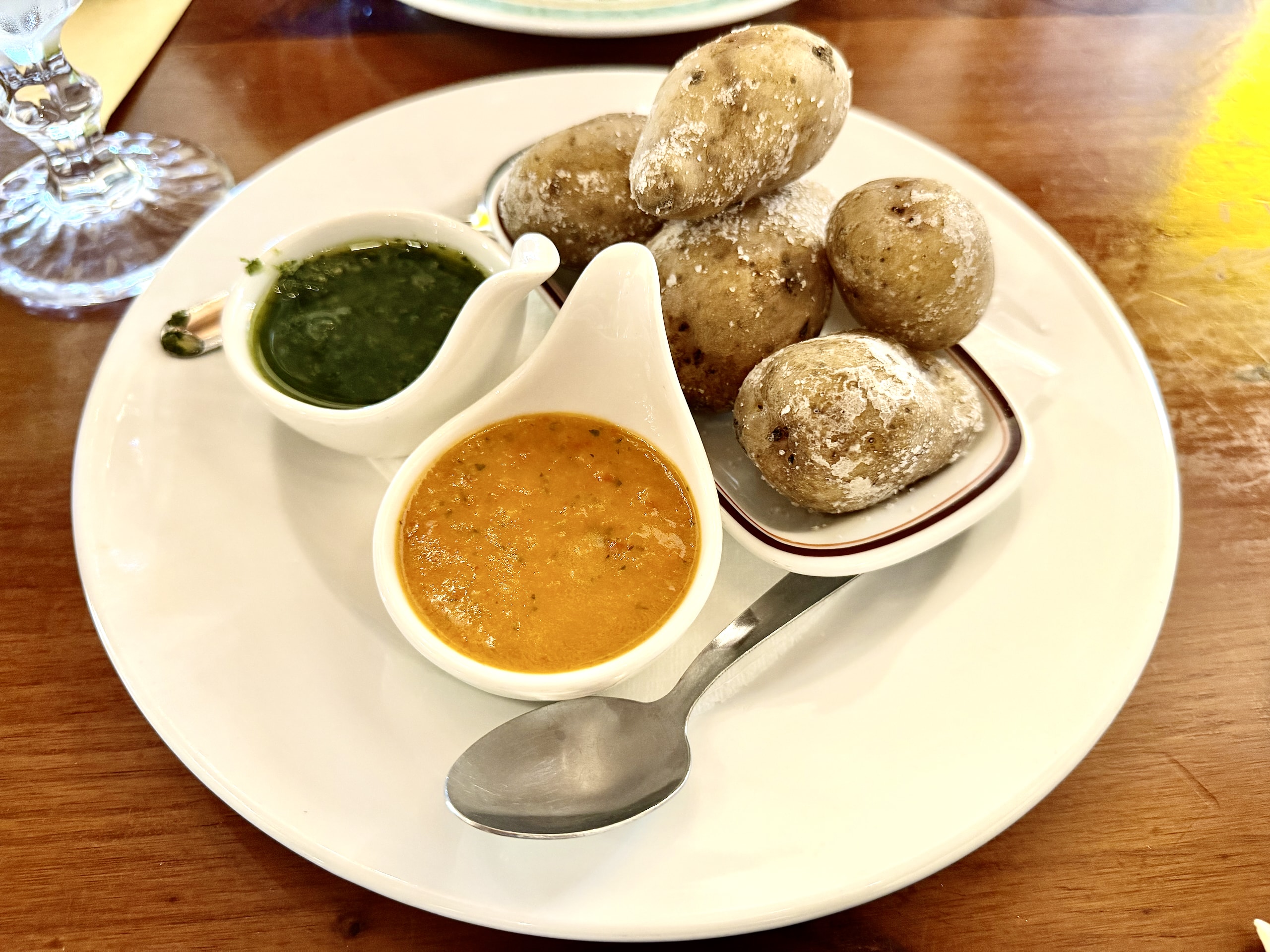
We’re not food bloggers. We spent a week in the north of Tenerife, ate wherever the day took us, and ordered whatever looked local. That turned out to be a good strategy, because Canarian food is real country cooking: potatoes, chickpeas, pork, cheese and sauces, in portions sized for someone who has just spent a day in the fields.
This is everything we ate, what it actually is, where we ate it and what each meal cost. Two honest caveats up front. We ate in one guachinche, and it wasn’t a traditional one. And we barely touched seafood, because neither of us is very keen on it, which on an island is admittedly a handicap.
The short version:
- The essentials: papas arrugadas with red and green mojo, croquetas, garbanzas, and almogrote on bread. All four are worth ordering.
- Coffee: the barraquito, a layered coffee with condensed milk and liqueur. Order it especial if you want the liqueur, sin licor if you’re driving.
- Portions: huge. One plate is a main course for one person, not a tapa.
- Prices: our cheapest dinner was €36 (~$40.3 USD) for two, with half a liter of wine. Over the whole week, restaurants and cafés came to €321 (~$359.5 USD) for the two of us, about €20 per person per day.
- Guachinches: the real ones serve only their own wine, a few dishes, and open a few months a year. Many places with “guachinche” on the sign are restaurants.
- Paying: cards work almost everywhere. Carry some cash for small family places and for tips, since adding a tip to a card payment doesn’t always work.
What Canarian Food Is Like
The best word for it is rustic. These are village dishes, and they taste like it: salty potatoes, slow-cooked chickpeas with pork, grilled cheese, chorizo, and a sauce on almost everything. Nothing we ate was refined. Nearly everything was good.
The other thing to know is the portion sizes. Back home in Hungary, the received wisdom about Spanish food is that tapas are tiny and expensive, and you need about five each to get full. In Tenerife, that’s nonsense. A plate here is a meal. At the guachinche we went to, the waitress stopped our order after the fourth dish and told us that would be plenty. She was right. We ate ourselves to death on four dishes and half a liter of wine, still took the leftovers home, and the bill came to €36.
The Canarian Dishes We Ate
Papas arrugadas: Canarian wrinkly potatoes
The dish everyone tells you to order, and the right one to start with. Papas arrugadas are small potatoes boiled in their skins in very salty water, then dried in the pot until the skins wrinkle and a fine crust of salt forms on them. Originally the water was seawater, because fresh water was scarce on the islands. Today it’s usually tap water with a lot of salt in it.
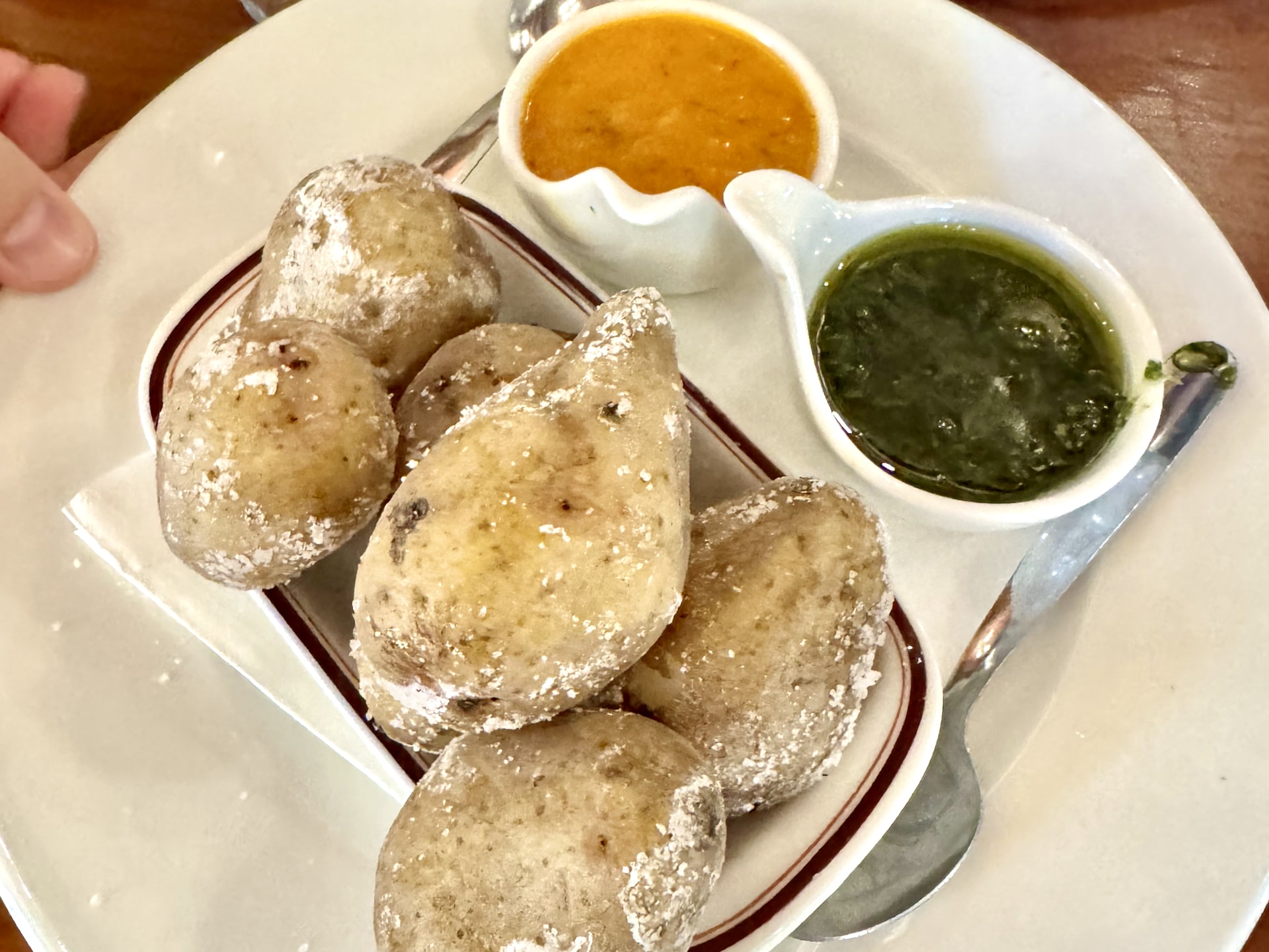
The potatoes themselves matter. The traditional ones are the papas antiguas, old varieties such as papa bonita and papa negra, which originally came from the Andes and now have a protected designation of origin in the Canaries. Their skins are thin, so you eat them skin and all.
We had them at Candelaria La Cocinera in Garachico, a small family-run place that cooks the old recipes, with both mojos on the side. The rest of that lunch is in our Punta de Teno and Garachico guide.
Mojo: the red and the green
Papas arrugadas never come alone. They come with mojo, the Canary Islands’ sauce, almost always in two colors. The green one, mojo verde, is fresh coriander, garlic, cumin and green peppers, crushed with oil and vinegar. The red one, mojo rojo, is built on red peppers, garlic and paprika in the same way.
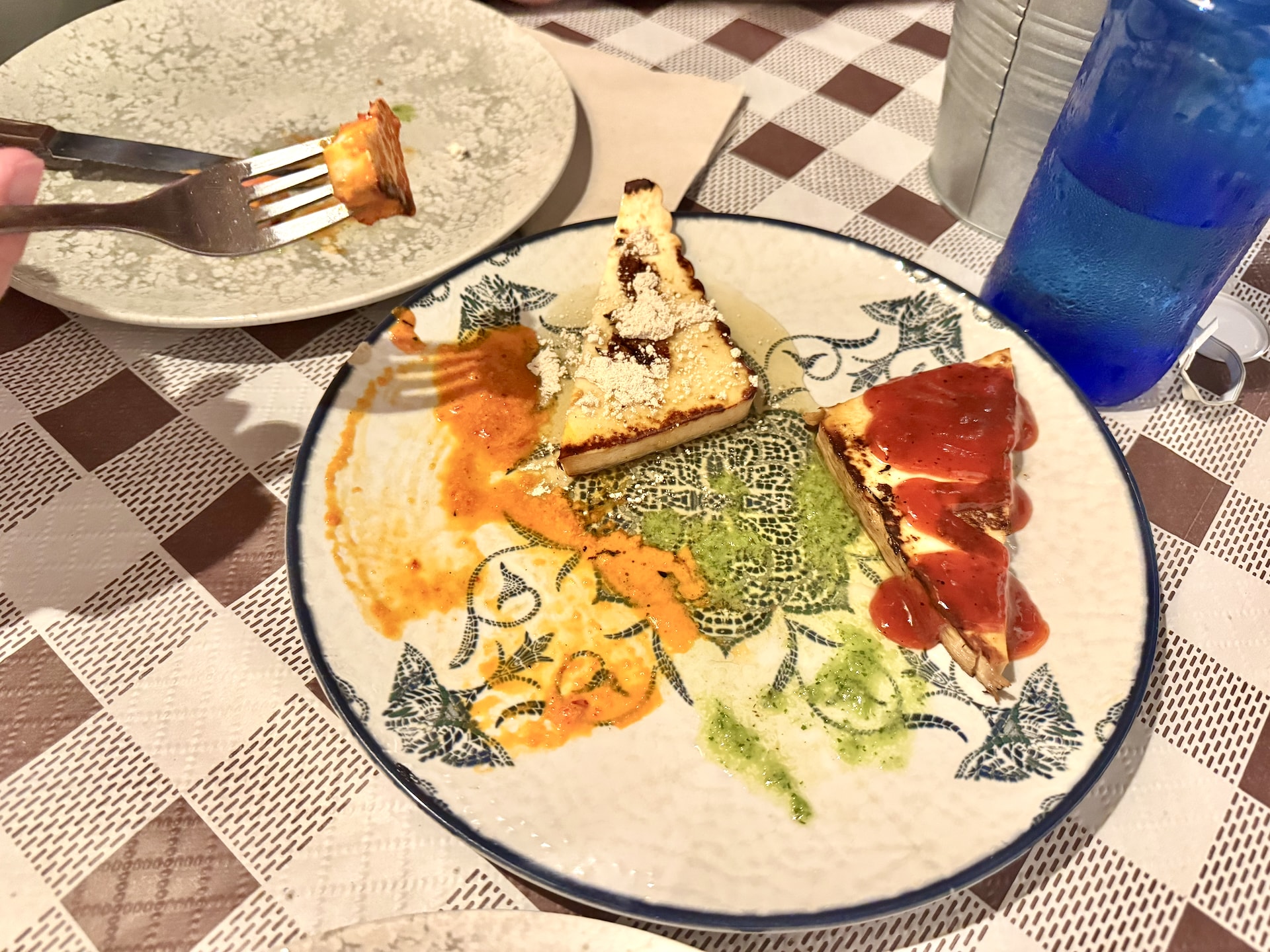
On our first evening, at La Doña in Santa Úrsula, the mojos came with grilled cheese, two of the four sauces on the plate. The next day in Garachico, the same red and green came with the potatoes. I’d been expecting something fiery. Neither was hot at all. They’re garlicky and a little sharp, and that’s it. If you want heat, the spicy red version goes by mojo picón, and it’s worth asking whether a place has it.
Croquetas
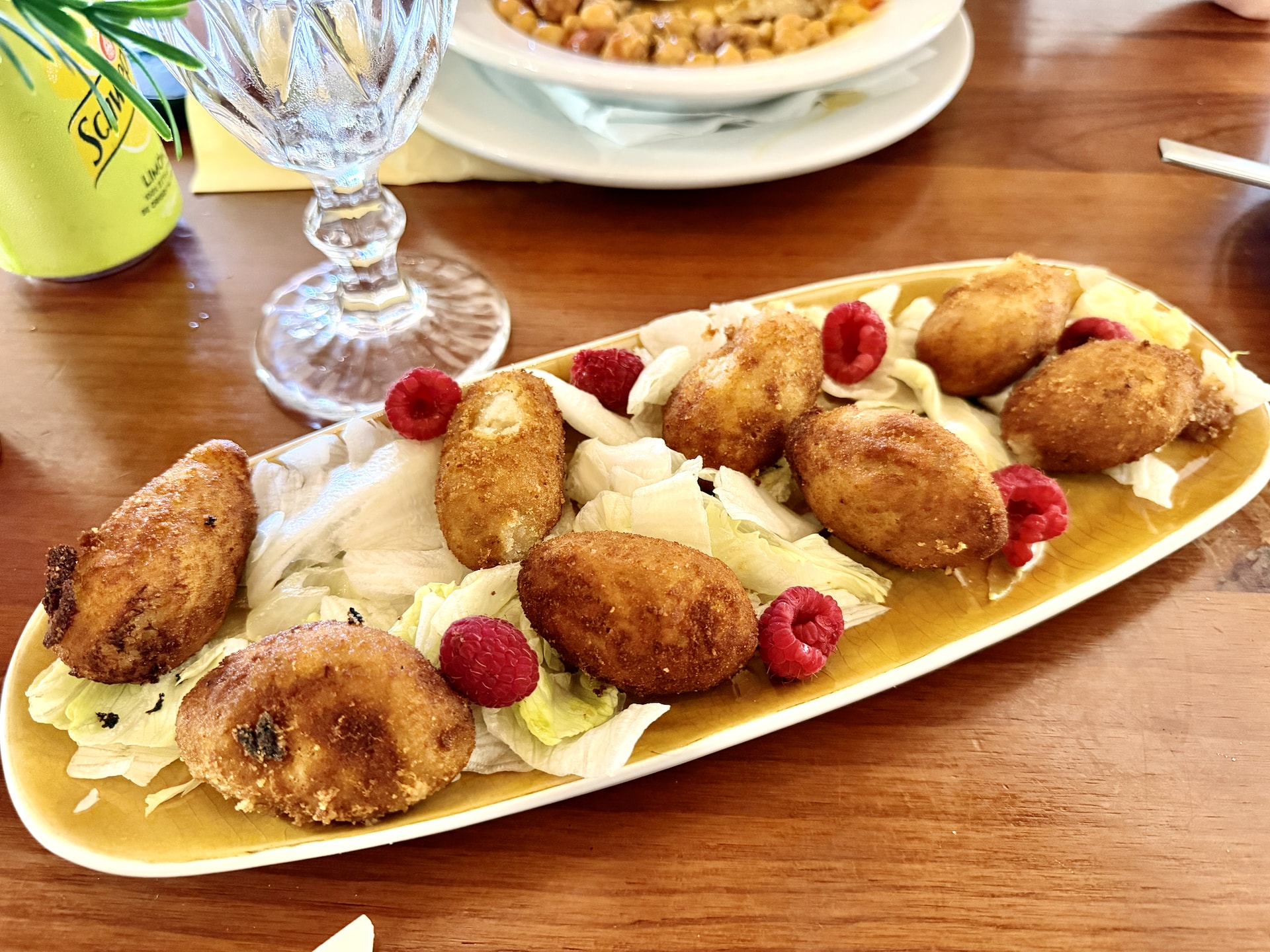
Croquetas were on every Canarian menu we saw, and we ordered them everywhere, so this is the one dish we can compare properly. Four places, four fillings:
- Ibérico ham at La Doña. The classic.
- Banana at Candelaria La Cocinera, because the bacon ones had run out. Odd, since we were the first customers of the day. I thought they were great. Not sweet at all, more on the sour side. Plátano was no surprise, since we know the word from South America. Which kind of banana went into them, cooking or ordinary, I still don’t know.
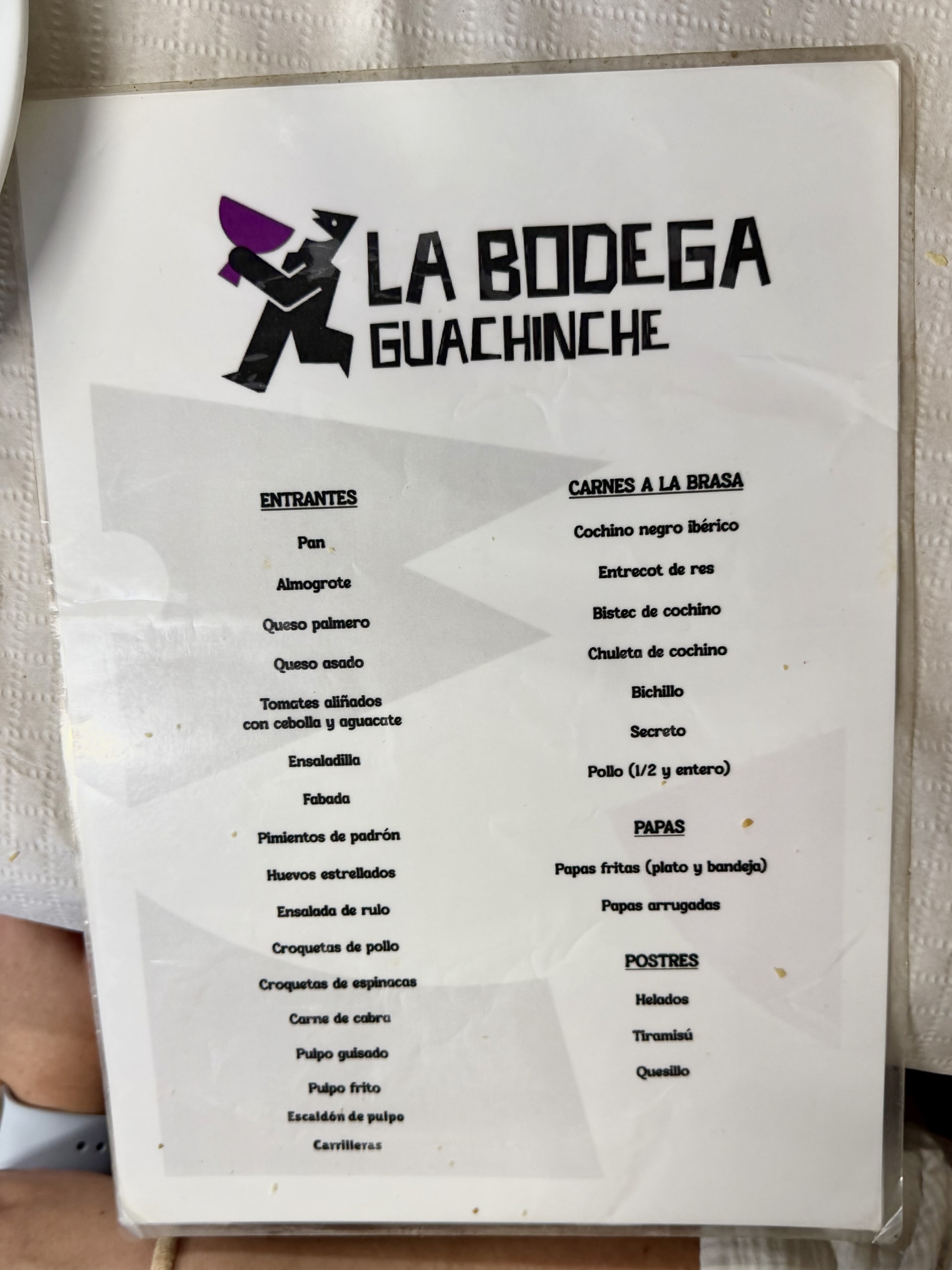
- Chicken at Guachinche La Bodega.
- Fish at Los Andes in Aguamansa. The menu didn’t mention that they were fish. Andrea wasn’t a fan. I loved them. She ate hers anyway.
Croquetas are, as far as I can tell, good everywhere on the island, the fish ones included. Canarian kitchens supposedly also put local dishes into them, such as almogrote and escaldón, but we didn’t find those..
Garbanzas: the chickpea stew
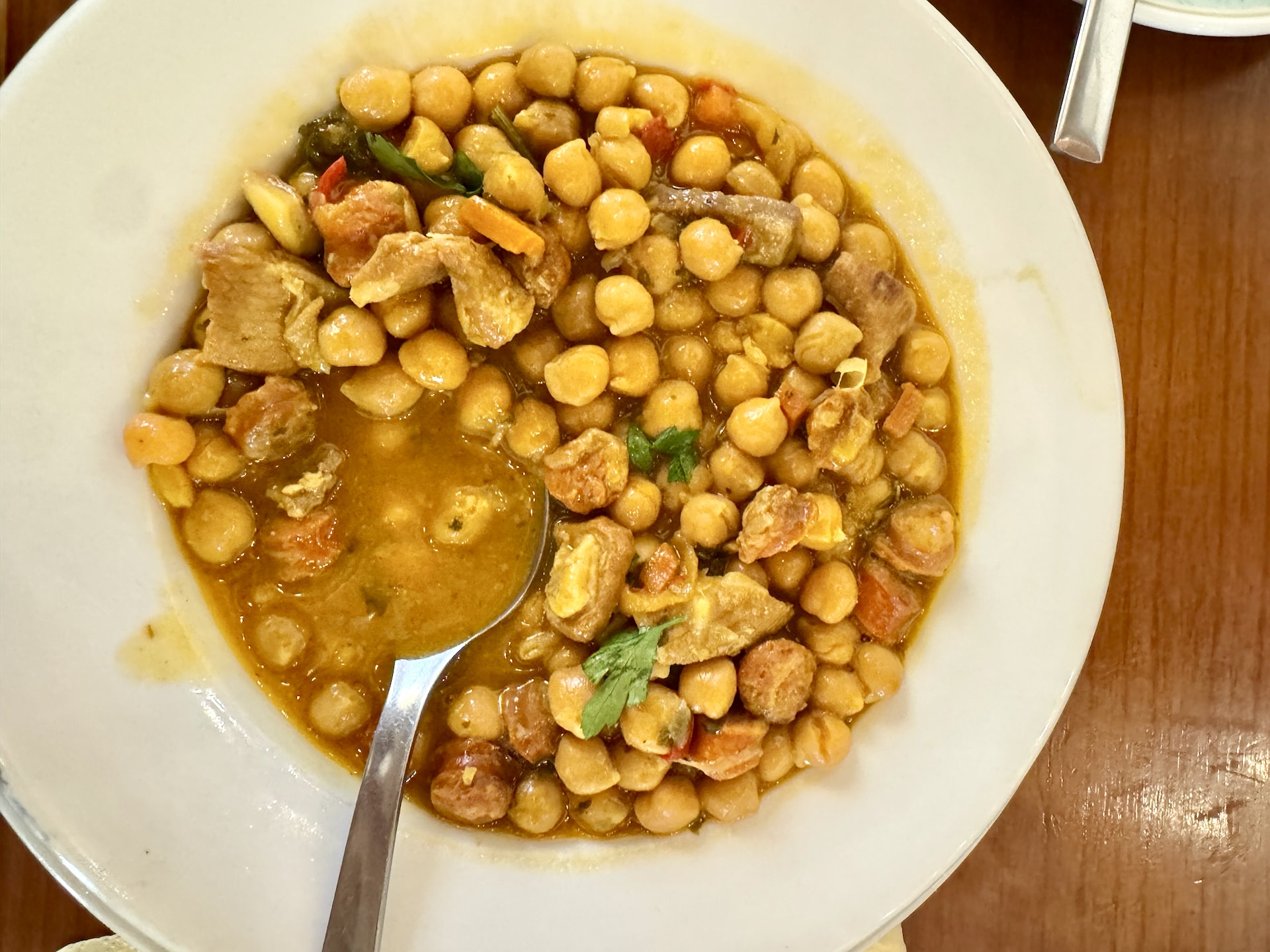
Andrea ordered garbanzas at Candelaria La Cocinera, and it was good. Garbanzas compuestas is Tenerife’s chickpea stew: chickpeas and potatoes slow-cooked with pork, typically pig’s trotters, salted ribs, a piece of pork fat and chorizo, seasoned with paprika, cumin and saffron. It’s a one-pot meal, thick and filling.
I had a tortilla with tuna and zucchini, which wasn’t bad. The zucchini wasn’t that good, but I don’t like zucchini, so that’s on me. The family grows its own vegetables, zucchini included. The tuna, I’m fairly sure, they don’t.
Almogrote: the cheese spread that tastes like körözött
At Guachinche La Bodega, we ordered bread, and with it came a cheese spread. It tastes exactly like Hungarian körözött, the paprika-spiced spread we make from sheep’s cheese. Not similar. Exactly like it.
It’s called almogrote, and the menu photo confirms the name. It’s originally from La Gomera, the next island west: hard, well-aged cheese pounded into a paste with garlic, peppers and olive oil, sometimes with tomato. You spread it on bread, and it goes with a glass of wine.
Ensaladilla
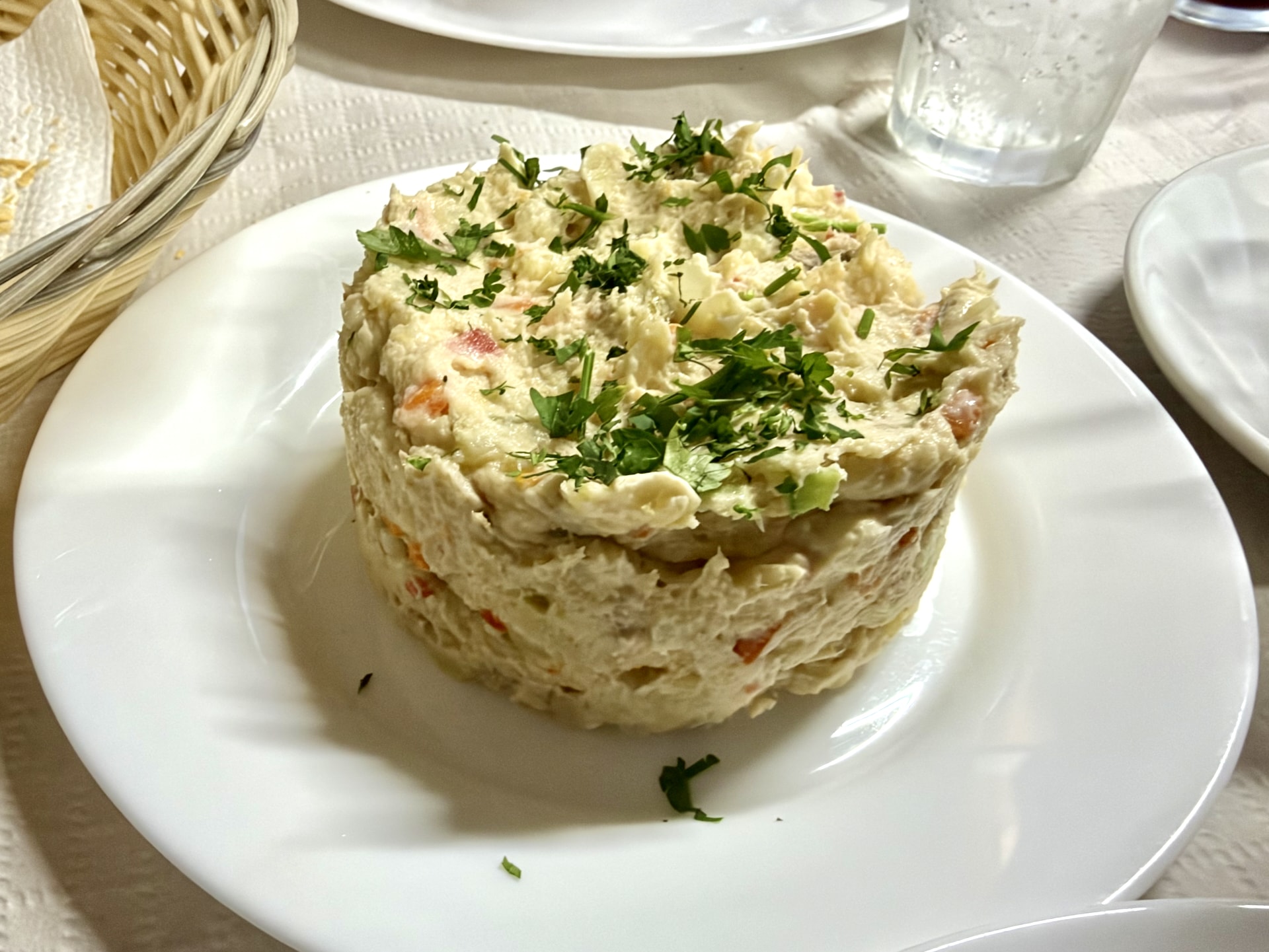
Also at La Bodega: ensaladilla, a potato salad with tuna and a generous amount of mayonnaise. My first thought was Peruvian causa, the layered potato dish with tuna. It isn’t really, since causa is made from mashed potato and this is diced. Ensaladilla is found all over Spain rather than being specifically Canarian, but it’s a staple of the guachinche table and a good one.
Huevos estrellados: potatoes, broken eggs and chorizo
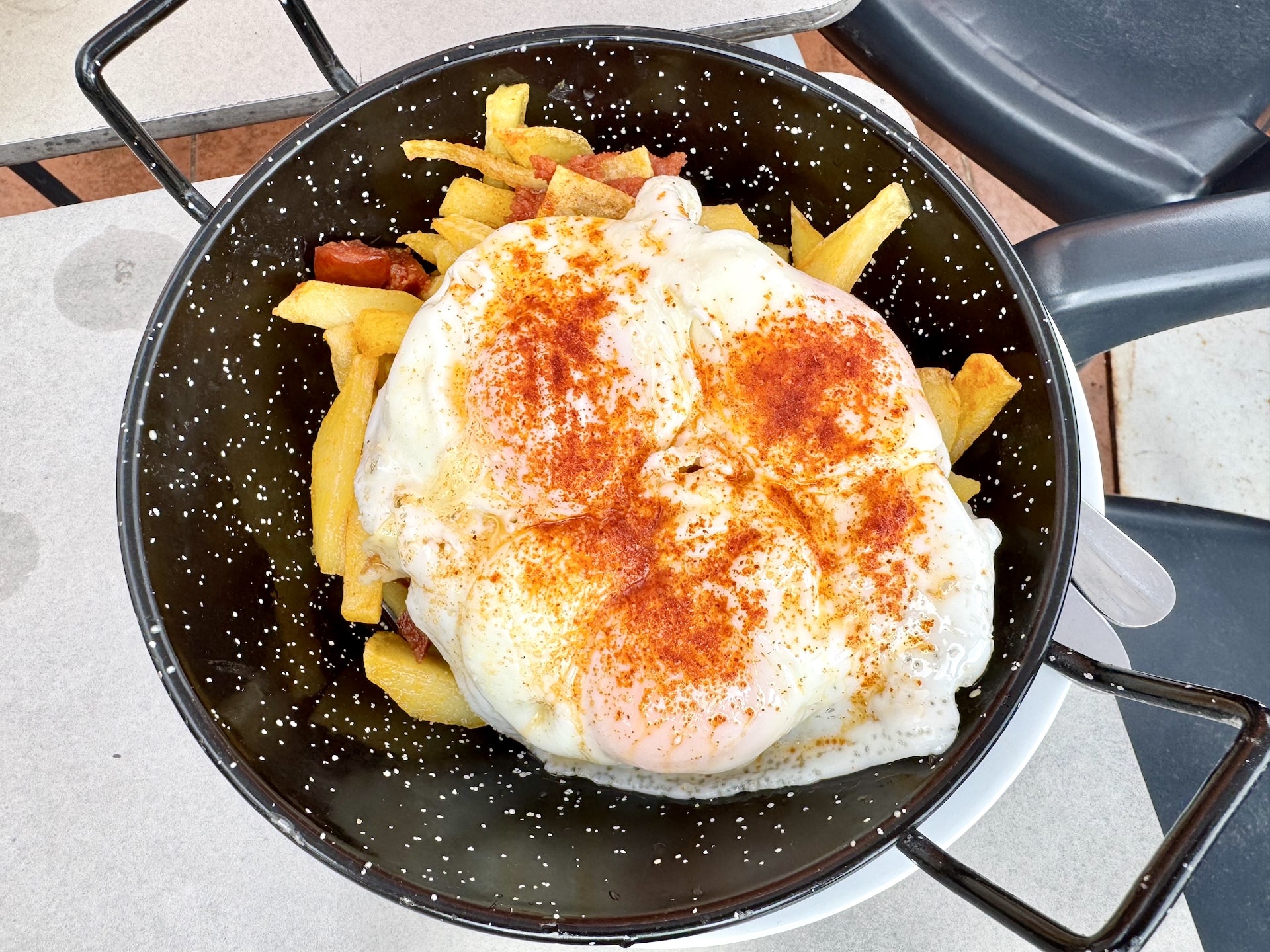
Fried potatoes with fried eggs broken over the top, and in our case chorizo. Strictly speaking it’s a mainland Spanish classic rather than a Canarian one, but apart from the croquetas, it was the only dish we ordered twice: first at La Bodega, then again at Los Andes on the way down from Teide. It was very good both times. It’s not complicated. It doesn’t need to be.
Flaming chorizo
The most theatrical dish of the week was at Restaurante Los Andes in Aguamansa. We ordered chorizo with bread. The lady of the house brought out a whole chorizo, set it on fire at the table, and as it burned, the casing split and soft chorizo filling started to ooze out from both sides. You scoop it onto the bread. Delicious, and good theater.
Soft, spreadable chorizo is a Canarian specialty. The best known is chorizo de Teror from Gran Canaria, a paste so soft it’s eaten spread on bread. I can’t tell you whether that’s what we had. I can tell you to order it.
Lágrimas de ibérico
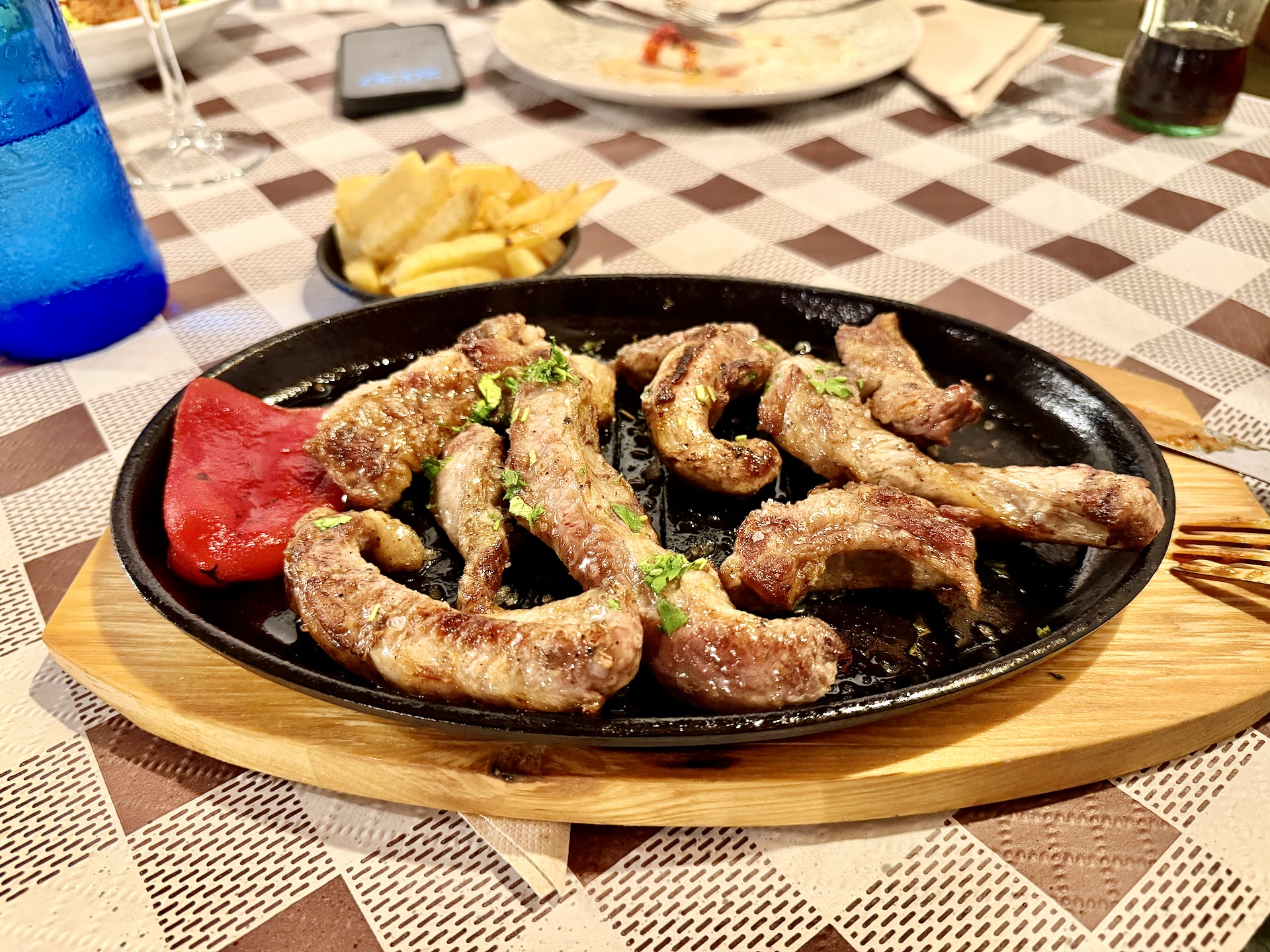
At La Doña I ordered lágrimas de ibérico, “Iberian tears”. The ibérico told me it would be pork, and I was hoping the tears meant some special local cut. It came out sizzling on an iron plate, so hot that I had to wait a while before I could start. I don’t know which part of the pig it was. It looked like belly: meaty, but quite fatty. It was very tasty with tiny fried potatoes, but there was an ungodly amount of meat, and I couldn’t finish it. Not a local specialty, then: it’s Iberian pork from the mainland rather than a Canarian dish.
Desserts: quesillo and polvito uruguayo
At Los Andes we finally ordered dessert, two of them.
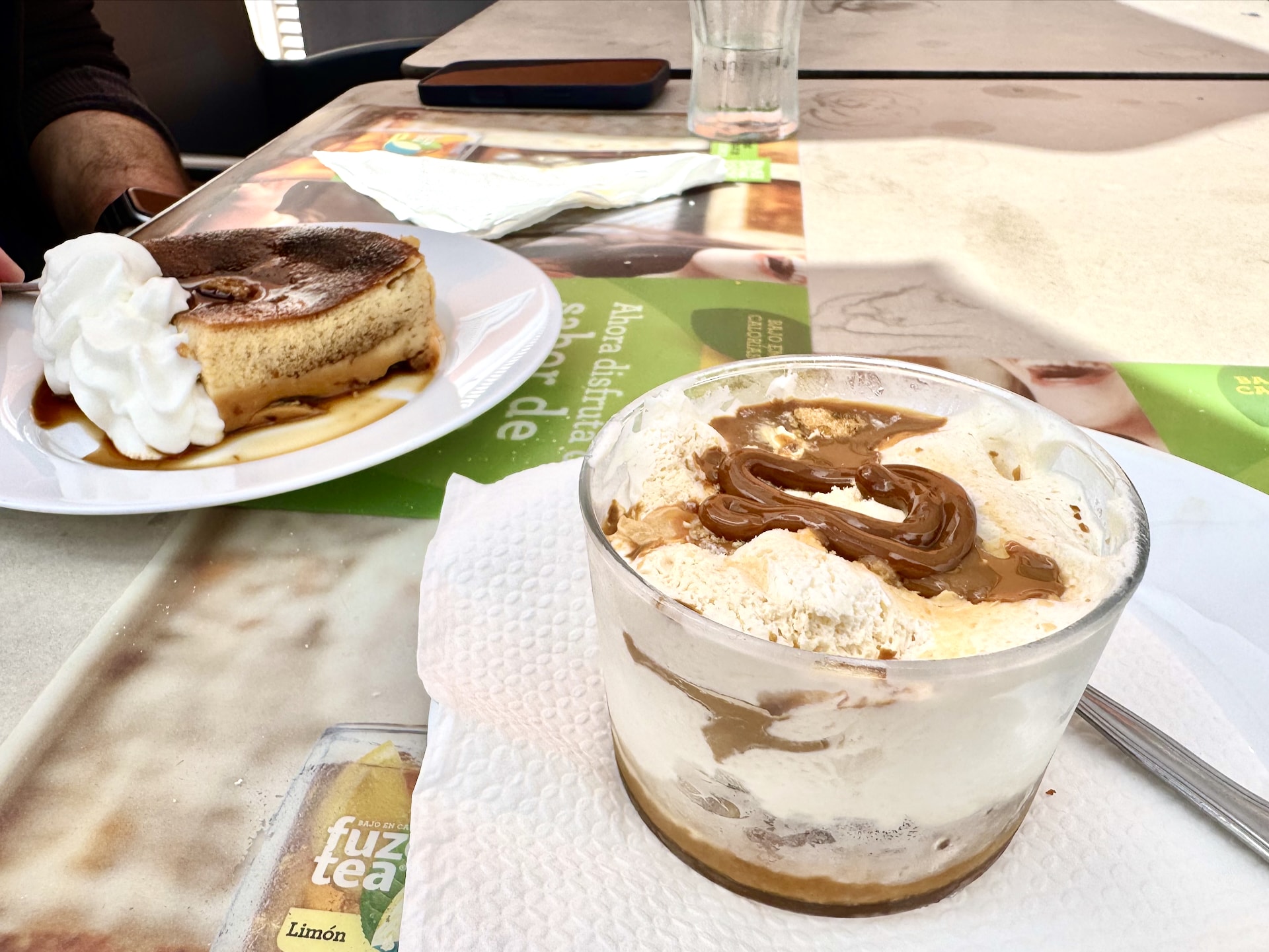
Quesillo, going by the name, I took for the local cheesecake. It contains no cheese whatsoever. It’s a Canarian flan made with condensed milk, eggs and milk under a caramel top. Air gets beaten into the mixture, so the finished flan is full of small holes, and baked in a large round mold, it looks like a cheese. Hence the name. It was very good.
Polvito uruguayo is a layered dessert of crushed María biscuits, dulce de leche and whipped cream, traditionally with crumbled meringue from Gran Canaria in the layers, which is probably where the polvito, “little powder”, comes from. Why it’s Uruguayan, nobody seems to know. The only obvious link is the dulce de leche. Despite the name, it’s about as Canarian as desserts get, and it was delicious.
Barraquito: Tenerife’s Layered Coffee
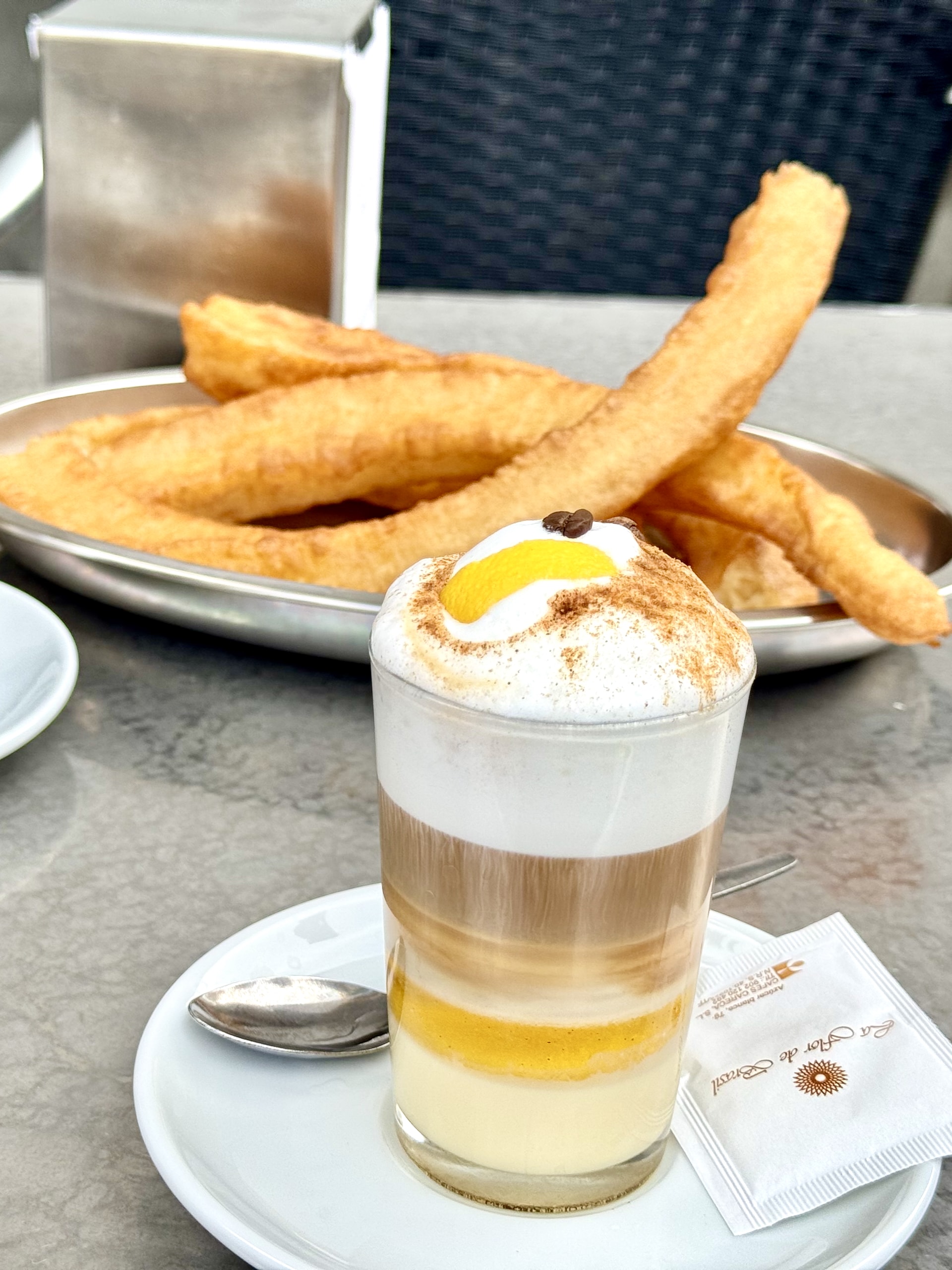
The barraquito is Tenerife’s own coffee, and you’ll see it on café menus all over the island. It’s served in a glass so you can see the layers. From the bottom up: sweetened condensed milk, Licor 43 (a Spanish liqueur with vanilla and citrus), espresso and frothed milk, with a dusting of cinnamon and a twist of lemon peel on top. It was invented in Santa Cruz de Tenerife and named after a regular at the bar that first served it, though which bar is still argued over.
Andrea had one at Churrería El Guanche in Candelaria, with churros at €1 for four (that stop is in our Montaña Roja and Candelaria guide). I had a cortado. I’d guessed Andrea’s had lemon liqueur in it. Half right: the citrus is in the Licor 43, and the lemon is the peel on top.
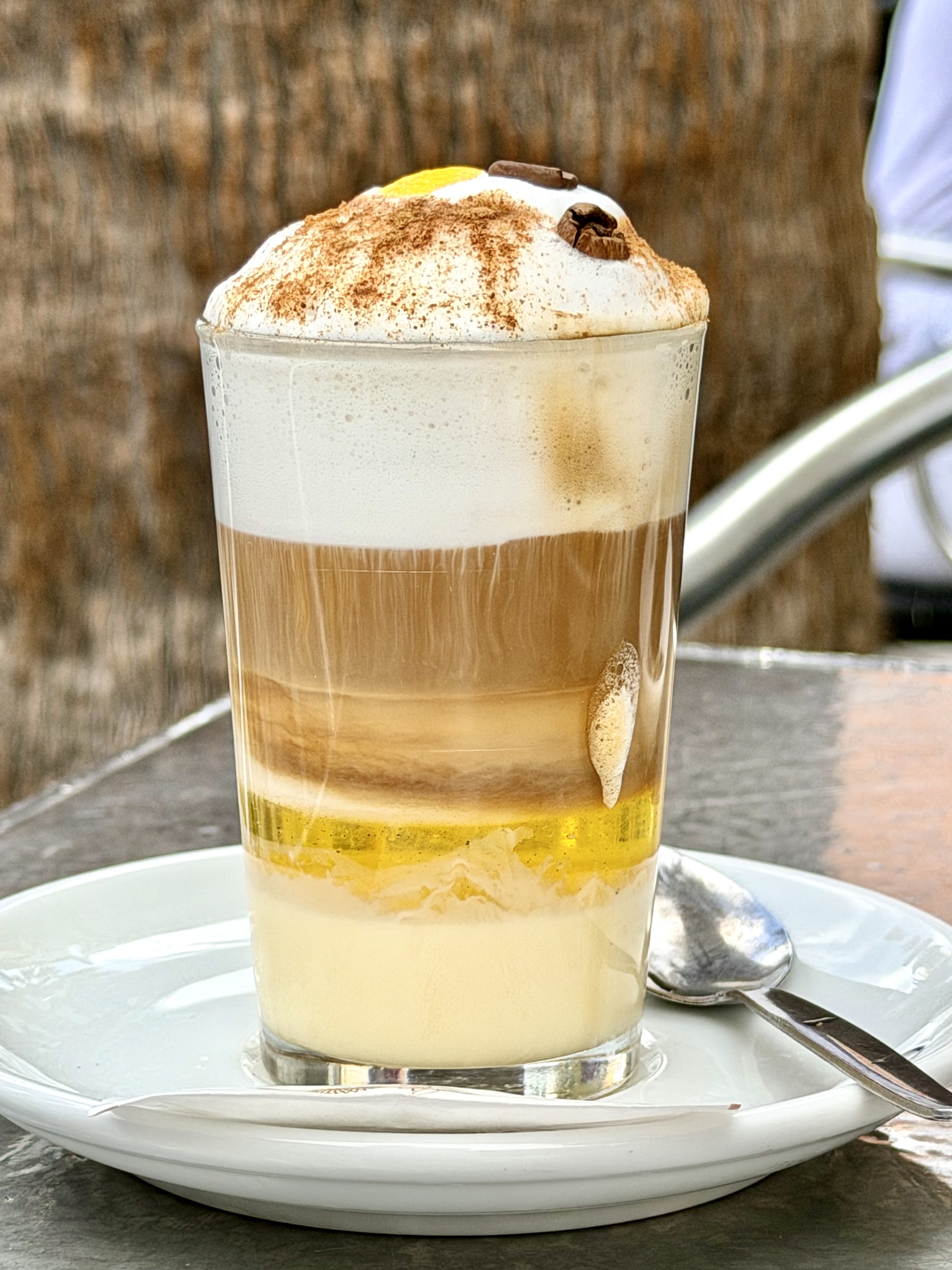
The name is not entirely fixed. Order a plain “barraquito” and in some places you get the version without alcohol, the barraquito vírgen, which is really just sweet coffee with milk, cinnamon and lemon. The full version with the liqueur is the barraquito especial. Around Puerto de la Cruz and Buenavista del Norte you’ll also see the zaperoco. Some say that’s the same drink under another name, others that it adds honey or other liqueurs.
If you’re driving, ask for a barraquito sin licor. If you want the real thing, say especial, and you won’t be left guessing which one the café makes by default.
Guachinches: Tenerife’s Wine-House Restaurants
A guachinche, in the original sense, is a farmer selling his own wine. The vineyard owner makes more wine than he can sell, opens a room of his house or a shed next to it, and serves the wine with a few simple dishes to go with it. It’s a Tenerife institution, most at home in the wine-growing north.
Somewhere along the way I’d picked up that the word came from the Guanches, the island’s original inhabitants. It doesn’t. The historical-etymological dictionary of Canarian Spanish derives it from bochinche, a poor tavern. There’s also a much better story, in which English-speaking visitors said “I’m watching you!” and the farmers heard “guachinche”. It’s the better story, and nobody can prove it.
Since 2013, the Canary government has regulated the real thing by decree. A legal guachinche may serve only wine from its own harvest, and water. It may offer at most three different cooked dishes, plus pickles, nuts and local fruit. It may open for no more than four months a year, and it has to close when its wine runs out. There’s even an official plaque by the door.
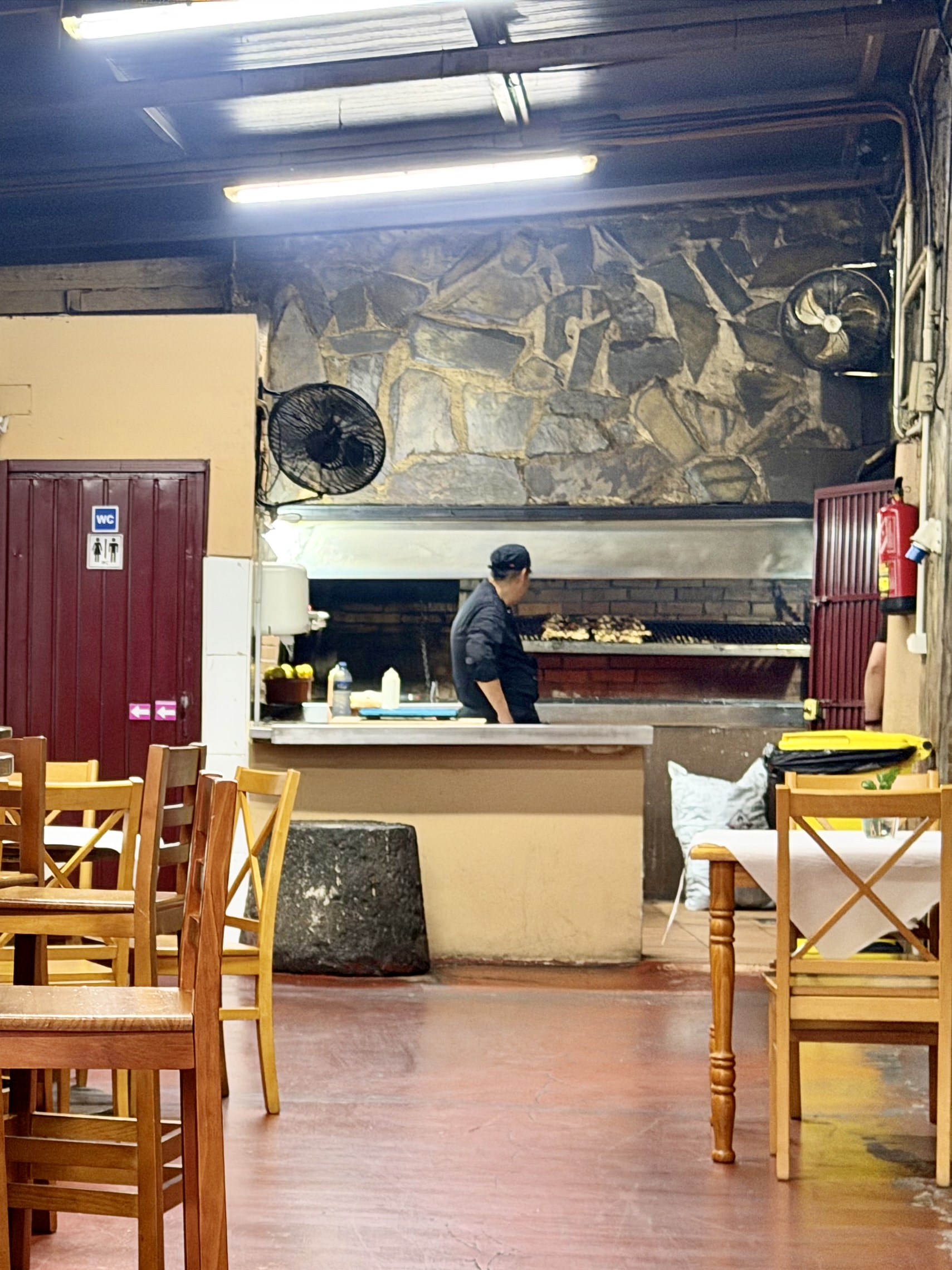
Now, by that definition, the place we went to was not a guachinche. Guachinche La Bodega in Santa Úrsula is a big restaurant with a long menu and an asador, a charcoal grill, going at the back of its covered terrace. We sat out there, and the smoke from the grill drifted over the tables. Plenty of “guachinches” on Google Maps work this way today: the name on the sign, the house wine and the home cooking, without the four-month rule.
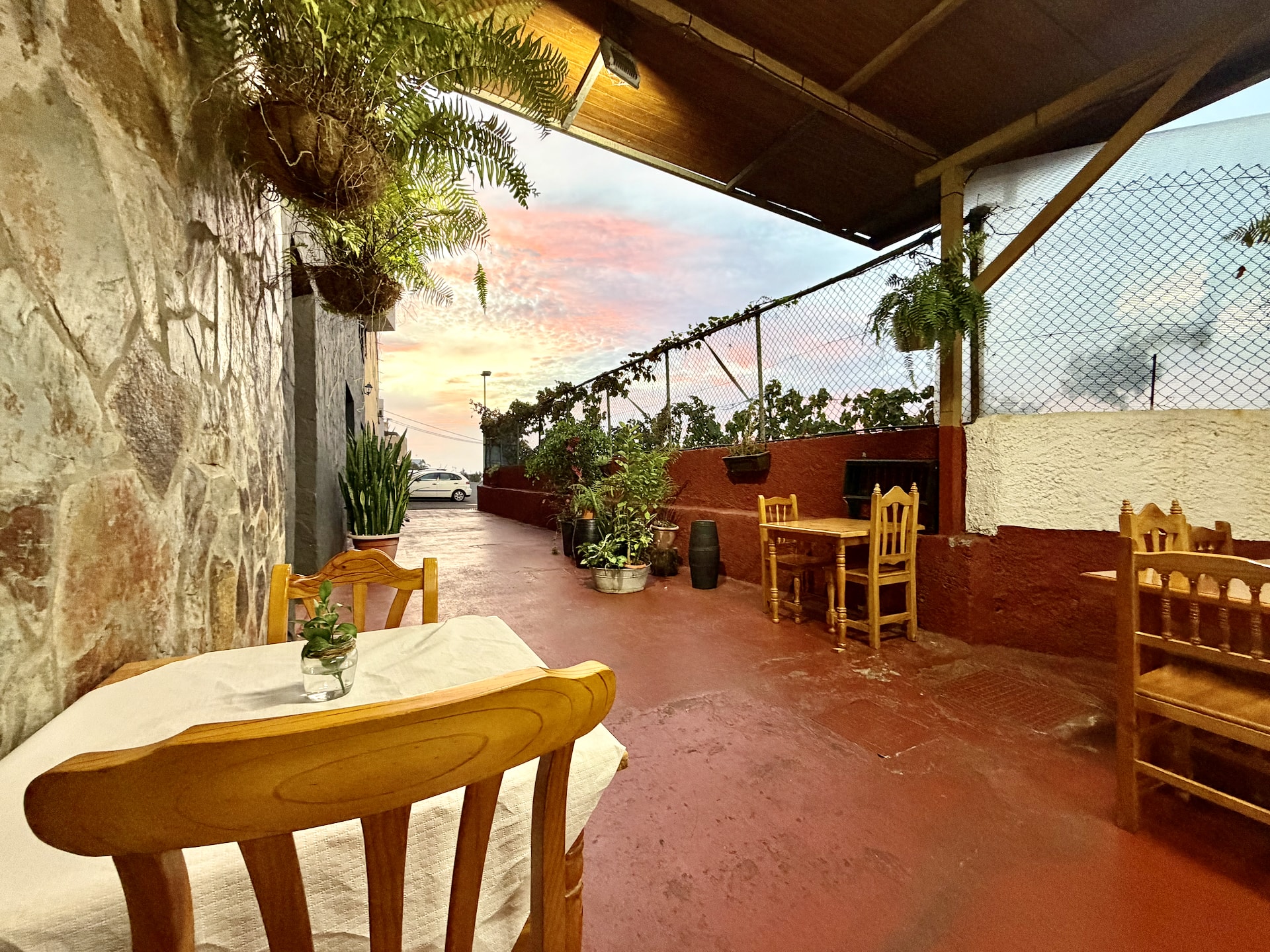
None of which made the evening any worse. The staff were lovely, and I was complimented on my Spanish, which is always nice, even when it isn’t true. The house red came by the half liter with small, sturdy everyday glasses, the kind you’d get in a village pub. There were no prices on the menu at all, which I found suspicious. I announced that it would come to €100, since we were obviously going to be ripped off. It came to €36.05 (~$40.4 USD) for four dishes, bread, the wine and two very full people. It was our cheapest dinner of the week.
To find a traditional guachinche, look for the official plaque beside the entrance: “Vino de cosecha propia”, own-harvest wine, with a bunch of grapes and a V on a wine-red background. No plaque means a restaurant using the name. And because the real ones open only part of the year, check that one is open before you drive up a hillside for it.
Where We Ate in Tenerife
Our base was La Quinta in Santa Úrsula, on the north coast, so most of these are in the north. Bills are for two people and include whatever we drank.
| Day | Restaurant | Where | What we had | Bill for two |
|---|---|---|---|---|
| Mon | La Doña (Casa Vidalina) | Santa Úrsula | Ibérico croquetas, grilled cheese with mojo, lágrimas de ibérico, chicken salad | €53 (~$59.4 USD) |
| Tue | Candelaria La Cocinera | Garachico | Papas arrugadas, banana croquetas, garbanzas, tuna tortilla | €43.40 (~$48.6 USD), €48 with the tip. Cash only |
| Wed | Roma Nuda Osteria Moderna | Santa Úrsula | Italian: an enormous cold cuts and cheese board with focaccia, carbonara, cacio e pepe, wine | about €61 (~$68.3 USD) |
| Thu | Guachinche La Bodega | Santa Úrsula | Ensaladilla, bread with almogrote, huevos estrellados, chicken croquetas, a salad, half a liter of house red | €36.05 (~$40.4 USD), plus €4 cash tip |
| Fri | Churrería El Guanche | Candelaria | Churros, a cortado, a barraquito | Churros €1 (~$1.1 USD) for four |
| Fri | Mándatela | Candelaria | Two empanadas and a Sprite | €6.90 (~$7.7 USD) |
| Sat | Los Andes | Aguamansa | Huevos estrellados, fish croquetas, flaming chorizo, quesillo, polvito uruguayo | €29.10 (~$32.6 USD) |
| Sun | El Rincón de Guadalupe | Costa Adeje | Mexican | €46 (~$51.5 USD) |
A few notes on the ones worth knowing more about.
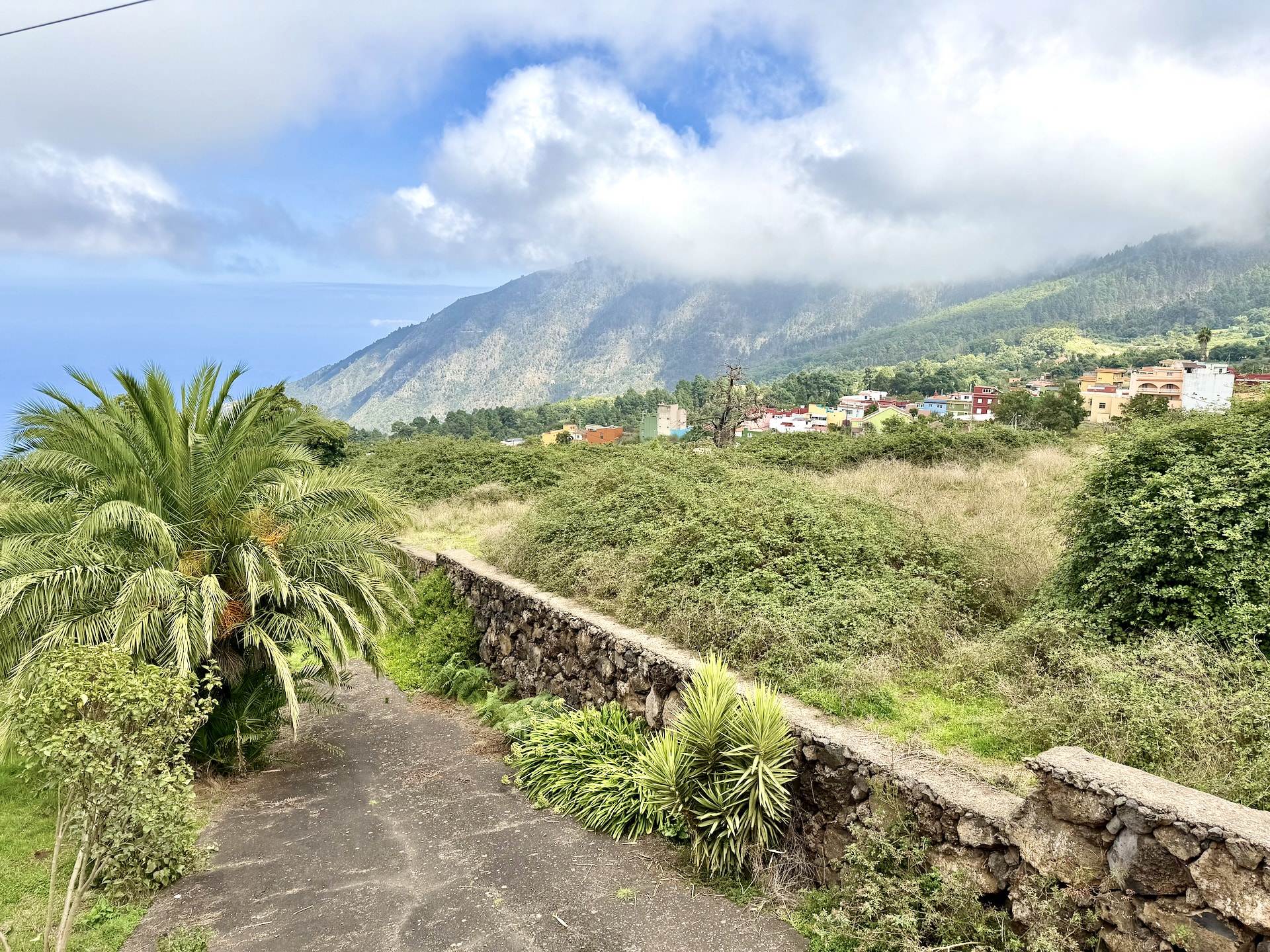
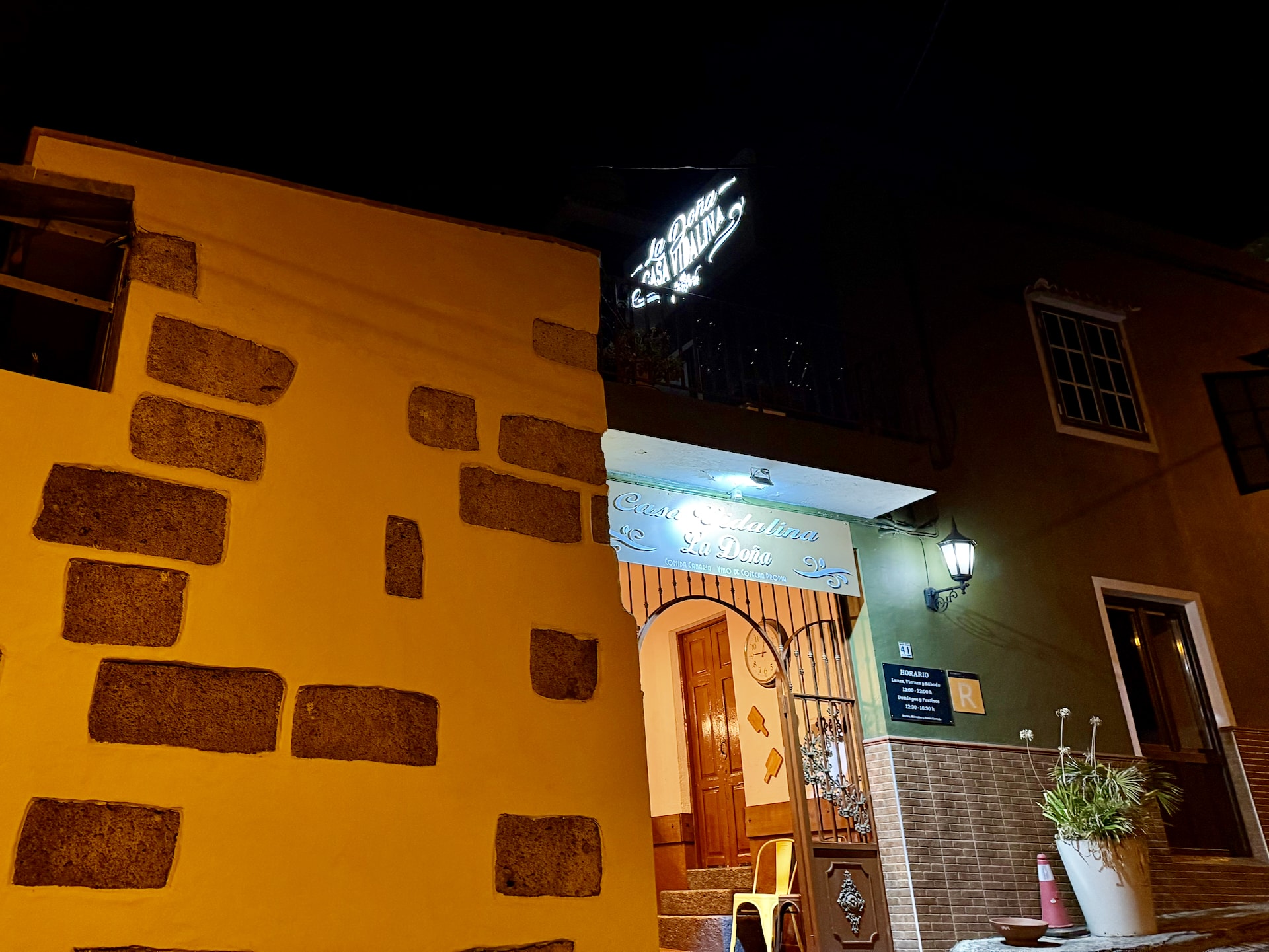
La Doña (Casa Vidalina), Santa Úrsula. A traditional-looking Canarian restaurant about ten minutes’ drive from our apartment. We didn’t need a booking on a holiday Monday, but listings recommend one. Google reviews warned that parking is a nightmare and the streets are steep and narrow, and they’re right on both counts. Andrea found a spot that I’ll describe as semi-legal. There was no phone signal inside. The staff spoke Spanish, one waitress in particular, though the waiter was easier to follow, and only later did it turn out there’s an English menu.
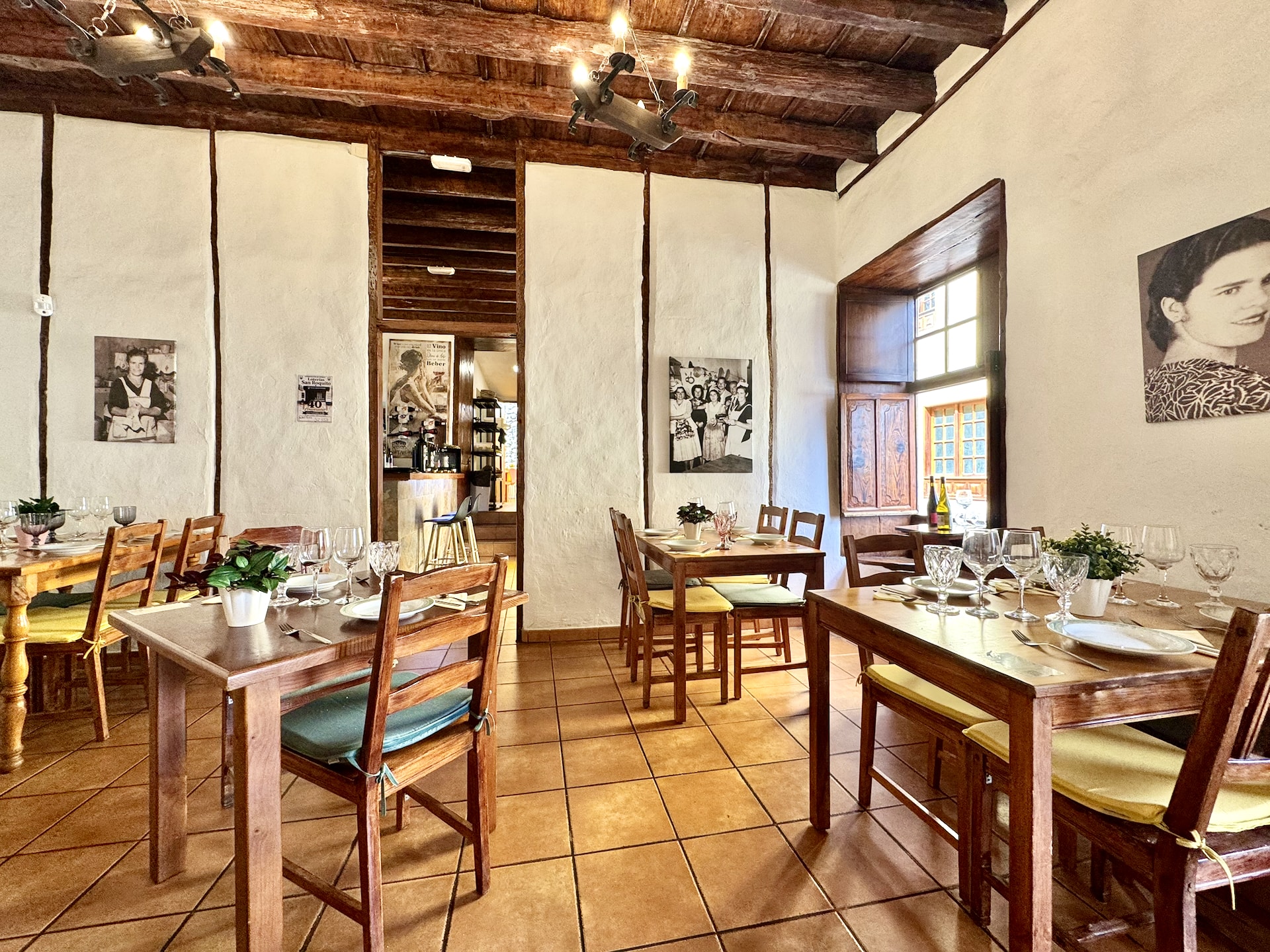
Candelaria La Cocinera, Garachico. The most traditional place we ate. The Candelaria of the name is the woman in the old photos on the walls, and her family still runs it. A handwritten sign on the door says cash only, whatever the online listings claim. The kitchen is slow, properly slow, so don’t plan anything tight after lunch.
Los Andes, Aguamansa. On the road down from Teide through the pine forest, run, as far as we could tell, by an older couple and their daughter. Lovely people, home cooking, the flaming chorizo, and a terrace with a view. With two desserts, it was our cheapest proper meal of the week at €29.10.
The other two. Roma Nuda, near our apartment, is an Italian place with an enormous cold cuts board and a gift of limoncello at the end. We got through the whole evening in Spanish without any major incidents. El Rincón de Guadalupe in Costa Adeje was the only meal we ate in the south, on the way to the airport. It wasn’t bad, it wasn’t especially good, and it was clearly pricier than anywhere else on the island. We compared the two halves of Tenerife properly in where to stay in Tenerife.
Order two or three dishes for two people to begin with. You can always ask for more, and in our experience the staff will tell you honestly when you’ve ordered enough.
Supermarket Food, Wine and Water
Every time I’m in Spain, I’m amazed all over again at how cheap and how good the cold cuts and cheese are, given that this is Western Europe. Tenerife is no exception. On our first night, the nearby restaurant had already closed, so we went to a small corner shop and bought cold cuts, bread and breakfast for the next day, including a microwaveable tortilla de patatas, the onion version. Even in a small shop, the quality was very good and the prices fair.
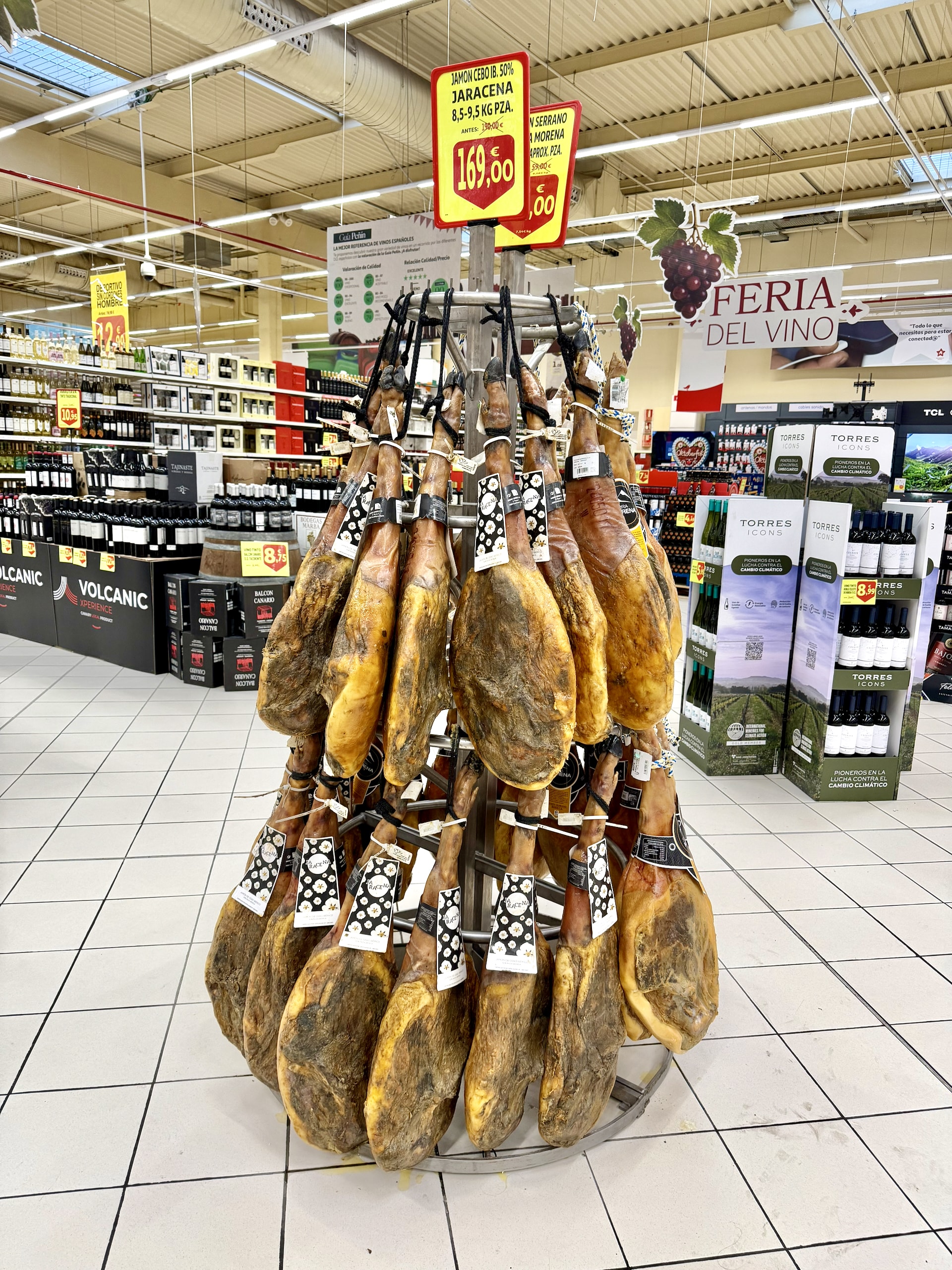
At Alcampo in La Orotava, whole hams stand on racks right in the middle of the store, not ibérico but something else, and local products are clearly labeled, so they’re easy to find. We bought ham, chorizo and local cheeses there, and had sandwich dinners more than once. The night after Teide it was the Lidl’s turn, and its cold cuts were just as good.
We also bought Canarian bananas, since they’re supposedly special. They’re the same Cavendish bananas as everywhere else, but grown here. The only ripe ones were small organic ones at about €2.40 (~$2.7 USD) a kilo. I thought they tasted like any other banana. Andrea thought the flavor was stronger. The texture really was a bit softer. We visited a banana farm, too, which explained a lot: see our banana plantation and El Bollullo guide.
To buy local bananas in a Spanish supermarket, look for “Plátano de Canarias” and the IGP seal on the box, bag or shelf sign. Imported ones are usually sold as banana, but the word plátano on its own proves nothing, since it’s also just the everyday Spanish word for banana.
Andrea bought a vermouth and a red wine, and we picked up a white wine in a blue bottle, a local variety. It was as acidic as anything and at the same time sweetish. Interesting. It will not become my favorite wine.
As for water: the tap water is drinkable, but it has a strong and, let’s say, unique flavor, and not in a good way. I drank it on the second night, when I’d forgotten to buy any. The rest of the time we bought big 5- and 8-liter (1.3 and 2.1 gal) bottles at the supermarket, and I’d only drink from the tap again if I had no other choice. I assumed it was desalinated seawater, since I hadn’t seen a single river. Tenerife indeed has no permanent rivers, but most of its water comes from underground: from galerías, tunnels dug horizontally into the mountains, and from wells. In the last breakdown I could find, from 2017, that was about 84% of the island’s supply, with only 16% from desalination and reuse.
Paying and Tipping in Tenerife Restaurants
Cards worked everywhere we ate except one place, Candelaria La Cocinera in Garachico, which is cash only. ATMs are the bigger problem. Fees ran from €2.70 to €7 (~$3 to $7.8 USD) for a €90 withdrawal, so take out cash once, and enough of it.
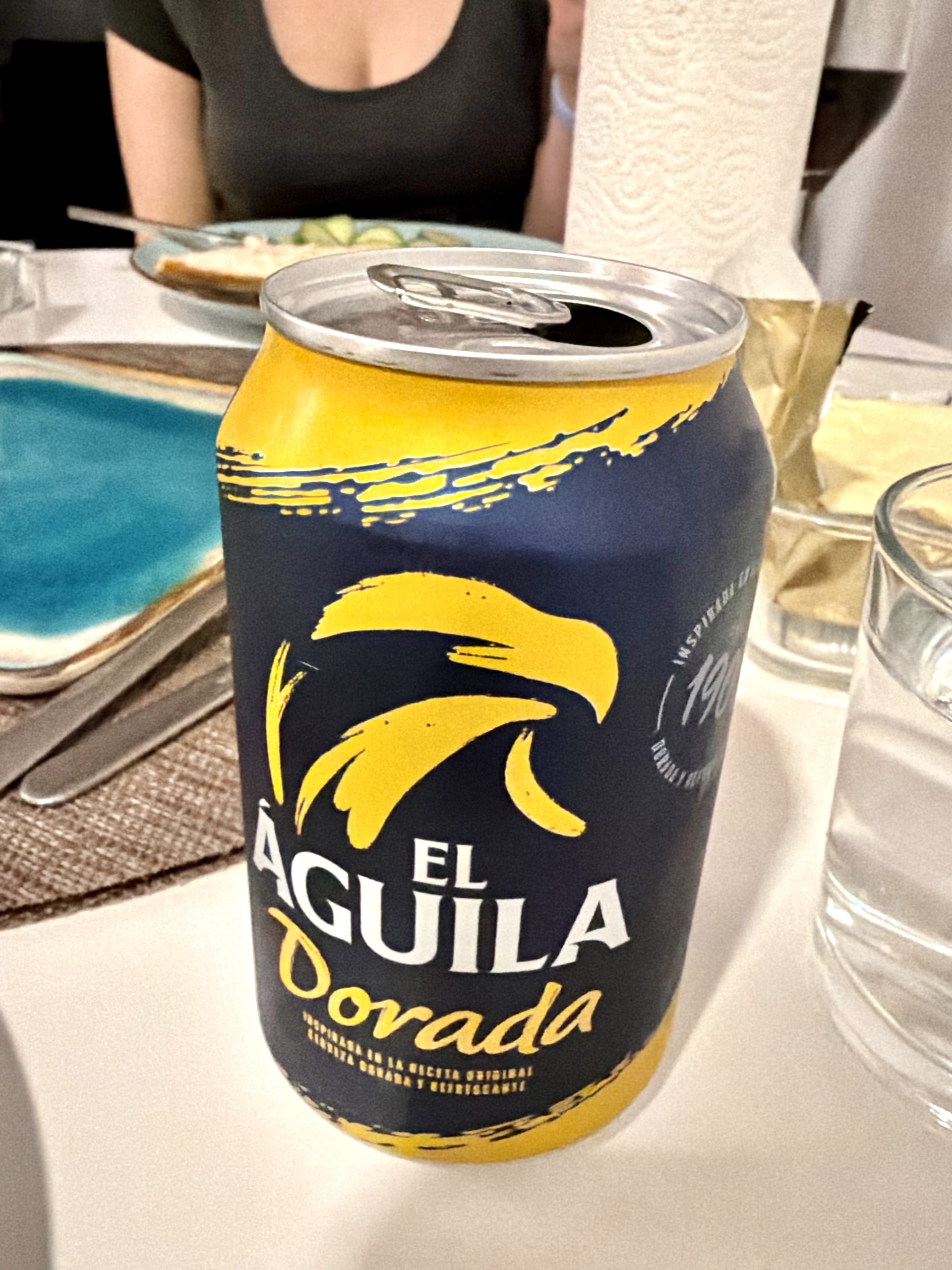
Tipping is not obligatory, and in the north of Tenerife it didn’t seem to be much expected. Where we felt it was deserved, we left around 10%, which is the usual figure if you tip at all. Paying by card can complicate it. At La Doña I tried to add a tip to the card payment and was told no. Whether the terminal couldn’t handle it or they simply don’t take tips, I’m still not sure. At Guachinche La Bodega we left €4 in cash. Keep a few coins for that.
Language. People in the north were kind and helpful everywhere, and they don’t switch to English the moment they hear an accent. They let you struggle if you want to. Everyone told us they didn’t speak English, and then everyone spoke English, certainly better than my caveman Spanish. You’ll be fine either way.
What We Didn’t Try
Every food article claims to cover everything. This one doesn’t, so here’s what’s missing.
Seafood. Octopus is big here, and there are fish of all kinds on every menu. We’re just not very keen on seafood, so we didn’t order any, and I’m not going to describe dishes I haven’t eaten.
From the guachinche menu. The menu at La Bodega, which Andrea photographed, also listed carne de cabra (goat), cochino negro (the native Canarian black pig), escaldón (gofio stirred into hot broth) and pulpo (octopus). All four are on the list for next time.
Gofio. Toasted grain flour, a Canary Islands staple since before the Spanish arrived, eaten in everything from escaldón to desserts. We may have had it once without asking: the grilled cheese at La Doña came with a flour sprinkled over it, and I’m fairly sure it was gofio, since grilled cheese with gofio and mojo is a common way to serve it. Beyond that, we didn’t knowingly eat any, which on Tenerife takes some doing.
FAQ
What is the most typical Canarian food?
Papas arrugadas with mojo: small potatoes boiled in very salty water until their skins wrinkle, served with red and green garlic sauces. After that, garbanzas (chickpea stew with pork), croquetas, almogrote (a cheese spread from La Gomera) and quesillo for dessert.
What are Canarian wrinkly potatoes?
Papas arrugadas. Small, thin-skinned potatoes, traditionally old Andean varieties grown in the islands, boiled unpeeled in heavily salted water and then dried in the pot until a salt crust forms. You eat them with the skin on, dipped in mojo.
Is mojo sauce spicy?
The ones we had weren’t spicy at all, just garlicky and slightly sharp. Mojo verde is made with coriander, mojo rojo with red peppers and paprika. The hot version is called mojo picón.
What is a guachinche in Tenerife?
Originally, a winegrower’s house restaurant serving his own wine with a few home-cooked dishes. Under Canary Islands law, a real one serves only its own wine and water, offers no more than three cooked dishes, and opens for up to four months a year. Look for the “Vino de cosecha propia” plaque by the door.
Does a barraquito have alcohol?
The full version, the barraquito especial, contains Licor 43. A barraquito vírgen or sin licor leaves it out. Plain “barraquito” can mean either, depending on the café, so ask.
Is food expensive in Tenerife?
Not in the north. Our cheapest dinner was €36 for two, with wine, and a lunch with two desserts was €29.10. Our week of restaurants and cafés came to €321 for two, about €20 per person per day. The south’s resort areas were clearly more expensive.
Do you tip in Tenerife?
It’s not obligatory. If you do tip, around 10% is the usual figure. Adding a tip to a card payment didn’t work for us, so leave it in cash.