Puerto de la Cruz was supposed to be our easy day. It was about 10 minutes from our apartment, it’s the main town on Tenerife’s north coast, and the plan was simple: the Botanical Garden in the morning, the old town and the seafront in the afternoon. The garden went exactly to plan. The old town did not. It was October 12, Spain’s national holiday, the road to the big seafront car park was closed, and the center was gridlocked. We circled the narrow, packed streets for a while, then gave up.
That turned out to be the best thing that happened to us all day. We drove to the other end of town, walked the coast at Punta Brava, and found the part of Puerto de la Cruz I liked most. We came back for the old town on our last morning, parked properly this time, and saw what we’d missed. Honestly, not that much.
So this guide comes from two visits six days apart, and it comes with a verdict: in Puerto de la Cruz, the coast beats the old town. There’s also a whole section on parking, because parking is what will make or break your day here.
The short version:
- Best thing to do: walk the coast at Punta Brava and on to Playa Jardín. Fishermen, black rock, and almost no tourists.
- Worth the €3: the Botanical Garden. Allow about an hour and a half.
- Skippable: the Agatha Christie steps, and, for us, the main square.
- Parking: use a proper car park. We paid €7 at Loro Parque and €3 in the C.C. Martiánez garage, and both beat circling.
- Nearby: La Orotava’s old town, and the sunset from Mirador de la Quinta.
Puerto de la Cruz in Brief
Puerto de la Cruz was a resort long before the south of the island was. It started out as the port of La Orotava, the wealthy town up the valley, and became Tenerife’s most important harbor after a volcanic eruption destroyed Garachico’s port in 1706. Health travelers came in the late 19th century, when the Grand Hotel Taoro was built, and the real tourism boom arrived in the 1950s. It’s also tiny. At 8.73 km² (3.4 sq mi), it’s the smallest municipality on the island, so everything below is within a few kilometers.
What surprised me was how German it is. There are so many Germans here that the town has a German bookshop and a German sausage place. Even Loro Parque, the animal park whose billboards follow you around the entire island, was founded in 1972 by a German, Wolfgang Kiessling. He first considered a safari park, until he worked out what the lions would cost. His father suggested birds instead, which, as Kiessling put it, “live for 100 years and eat just a handful of corn.”
Where to Stay in Puerto de la Cruz?
The Botanical Garden (Jardín Botánico)
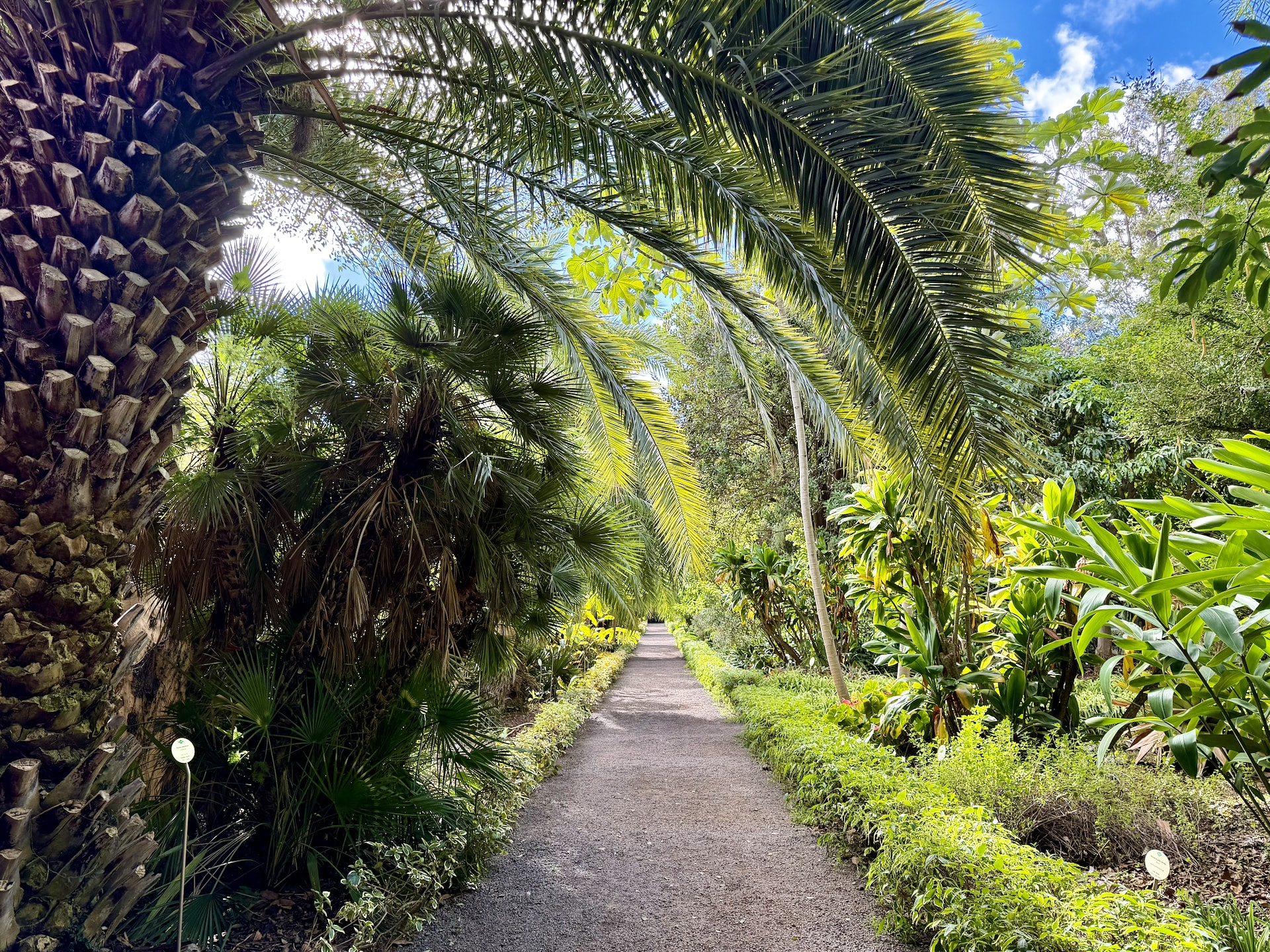
The Botanical Garden sits on the hill above town, on the border with La Orotava, which is why its official name is the Jardín de Aclimatación de La Orotava. It was founded by royal order of King Carlos III in 1788 as an acclimatization garden, a place where tropical plants could get used to a new climate before being sent on to Spain. Today the garden you visit covers about 2 hectares (5 acres) and holds more than 3,000 species, most of them exotic.
There’s a fairly large car park right next to it, and when we arrived a little before 11:00, we found a space without trying. Entry is €3 (~$3.4 USD), and the garden is open daily from 9:00 to 18:00.
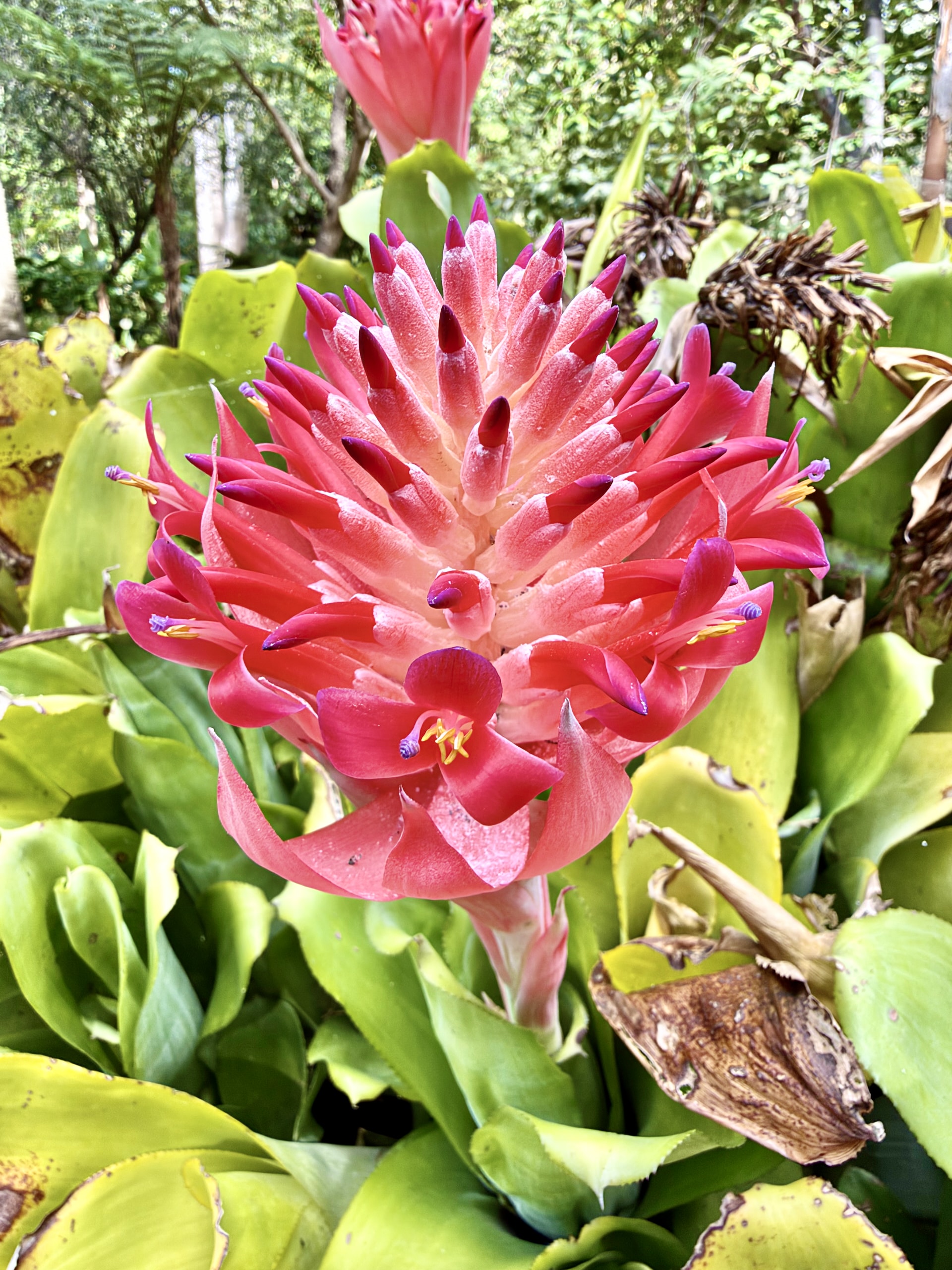
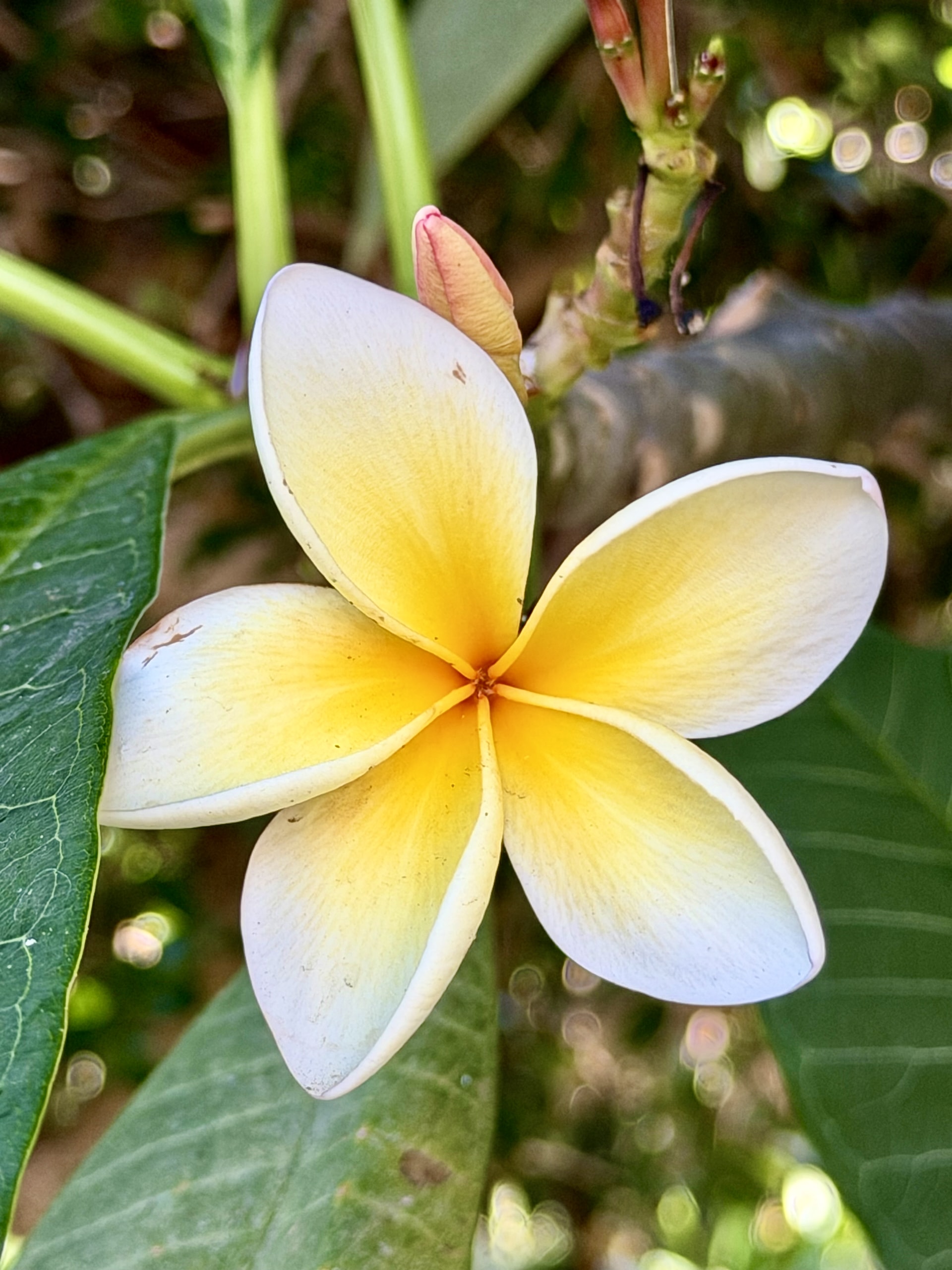
I’m not a big fan of botanical gardens, but I liked this one a lot. The Google reviews insisting you have to see it turned out to be right. There are trees from every corner of the world and flowers in every color, several kinds of banana, which I found exciting, and a lot of the plants you’d see in a flower shop back home, only here many, many times bigger. There are also endless palms, which I like. We stayed about an hour and a half.
The one problem: almost every plant has a small label, and there’s a QR code that’s supposed to open a guide to what you’re looking at. The website behind it had an expired security certificate, and my iPhone flatly refused to load it. So we got the names from the labels and nothing more. We made up for it the way we always do, by giving the plants our own names, based entirely on what they looked like.
If the QR guide still doesn’t load, photograph the labels and look up the Latin names later, or point Google Lens at a plant for a quick summary on the spot.
Things to Do in and Around Puerto de la Cruz
Mirador de La Paz and the Agatha Christie Steps
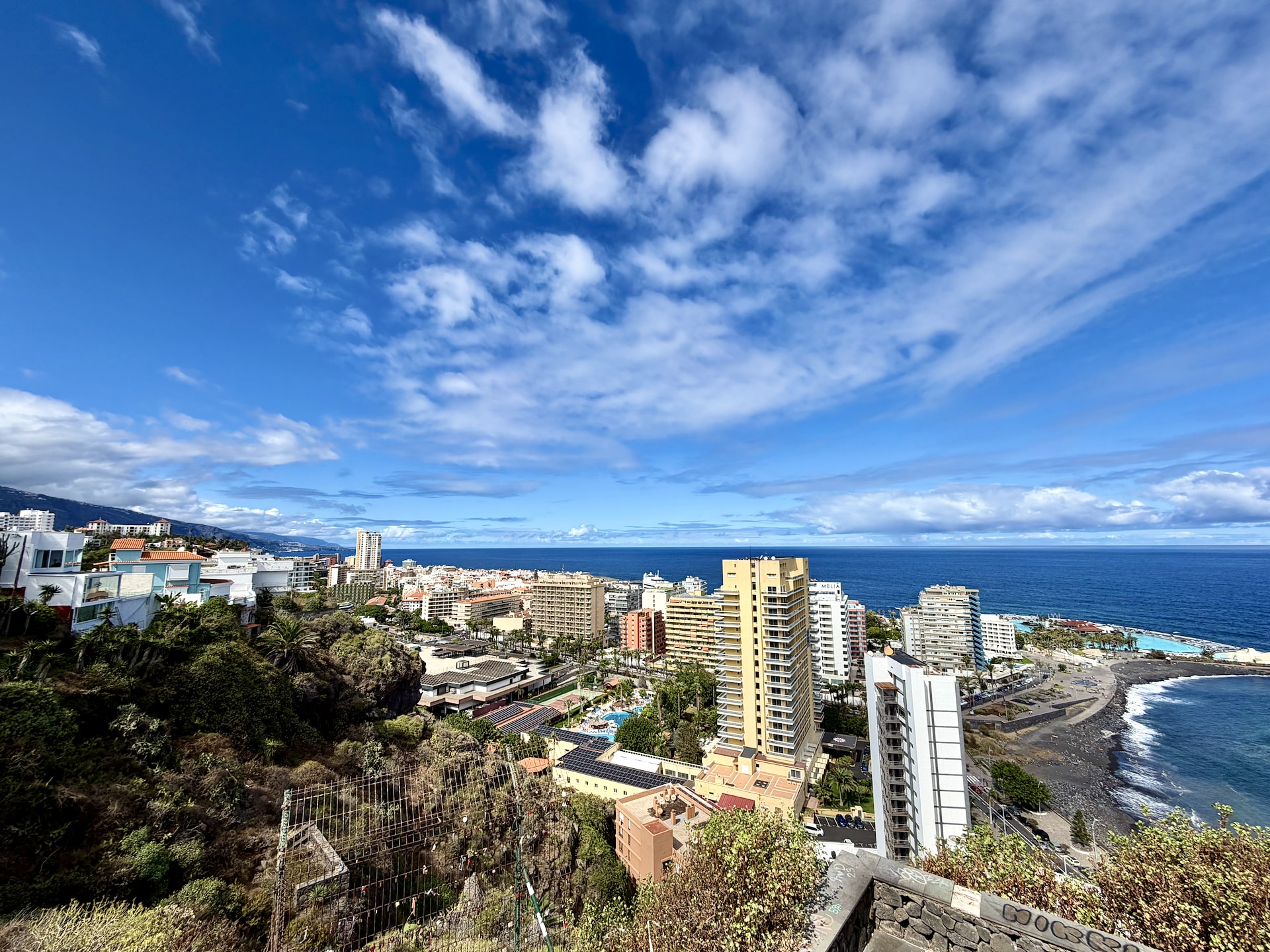
Since we had a parking space, we left the car where it was and walked down towards town to see what’s close to the garden. Mirador de La Paz is a viewpoint on top of the Martiánez cliffs, looking out over the sea and the Lago Martiánez pools below. It was relatively OK.
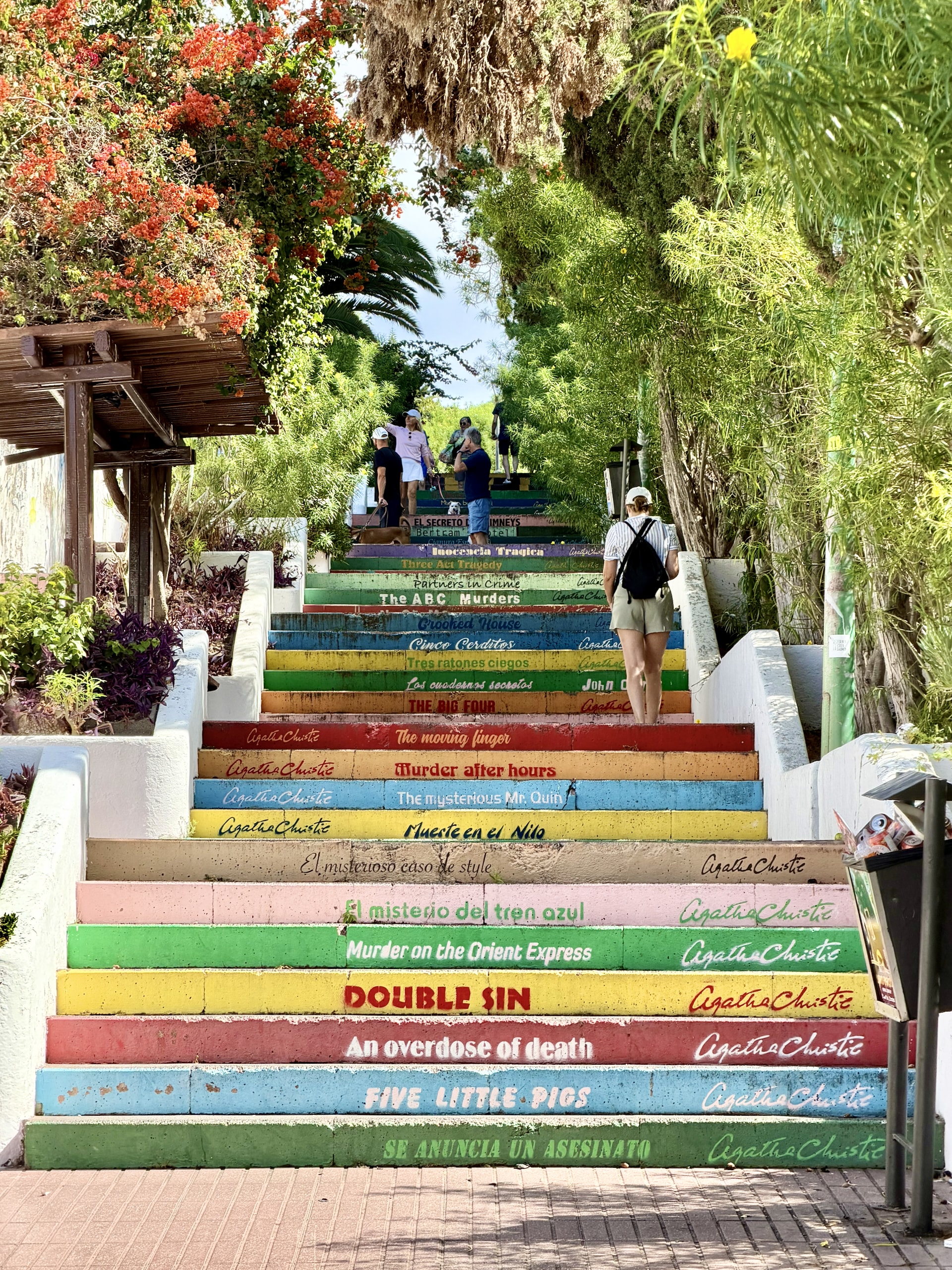
The Agatha Christie connection is real. She spent most of February 1927 at the Hotel Taoro with her daughter and her secretary, wrote the short story “The Man from the Sea” while she was here, and finished The Mystery of the Blue Train on the islands. There’s a statue of her at the viewpoint, and the staircase leading up to it is painted with the titles of her books.
The steps? Not much, honestly. At both the top and the bottom there are men with parrots, who’ll let you take a photo with the bird for a decent sum. I don’t think that’s something to support, so we didn’t.
On the way back we stopped at a place called Un Café for a coffee and a sandwich, and bought drinks at the supermarket next door. We were also looking for an ATM, but couldn’t find one that wouldn’t take a small fortune in fees, so we still had no cash. It barely mattered. Cards worked almost everywhere on the island.
Punta Brava and Playa Jardín: The Best Part of Puerto de la Cruz
After the old town defeated us (more on that under parking), we stopped at the Loro Parque car park, at the other, western end of town, by Punta Brava. It costs €7 (~$7.8 USD), which, let’s be honest, is not the most generous price. In the end it was well worth it.
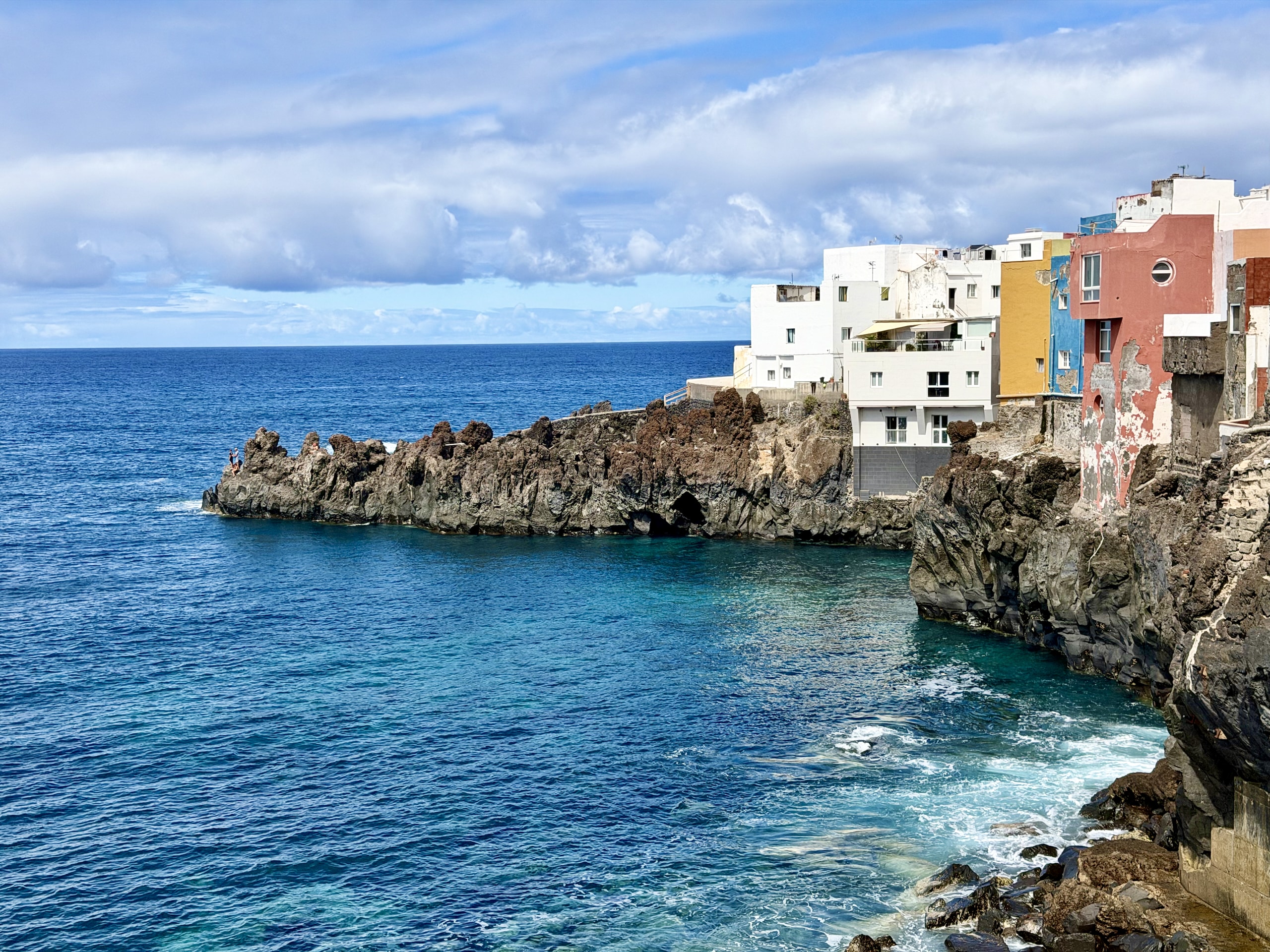
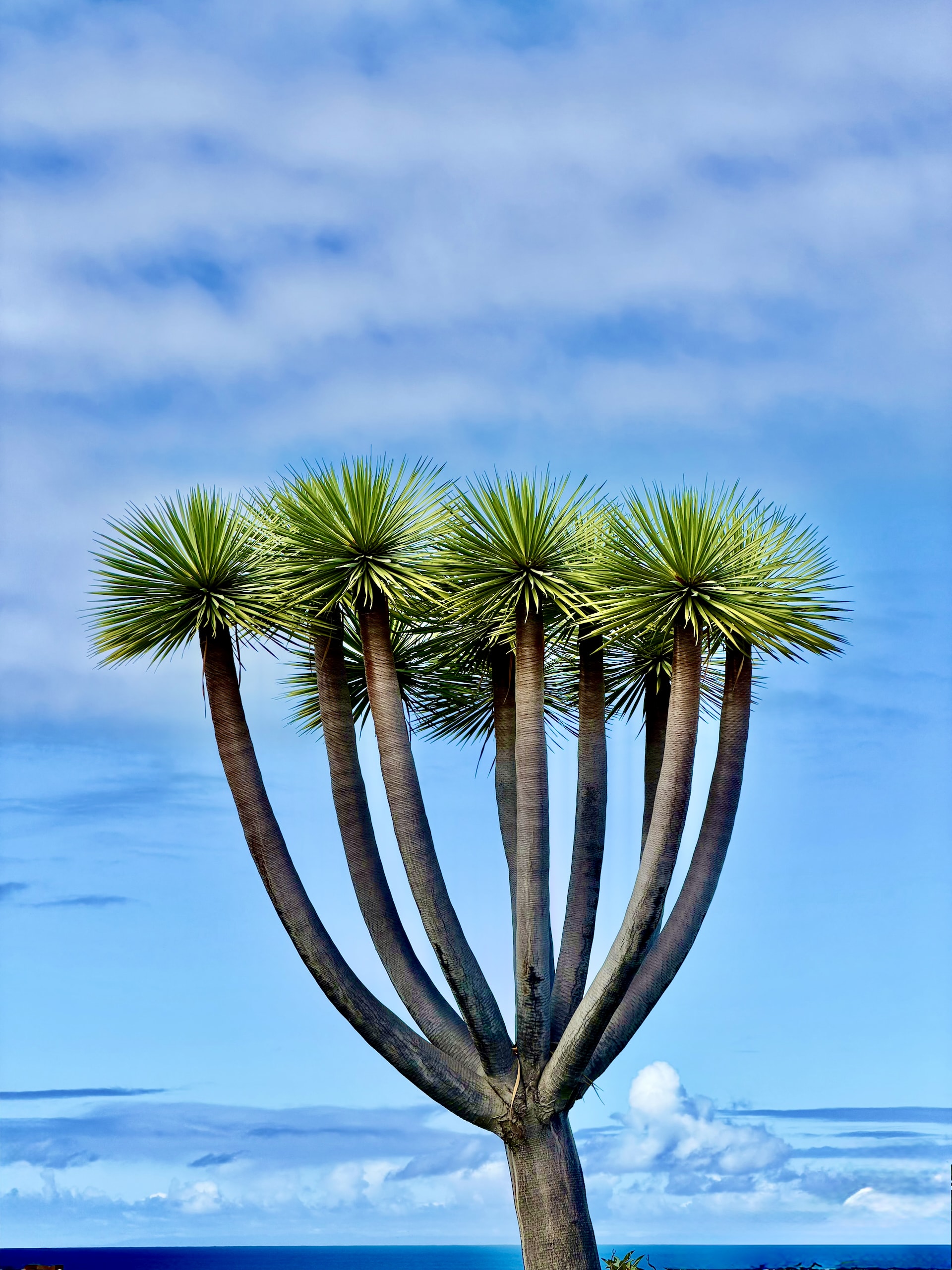
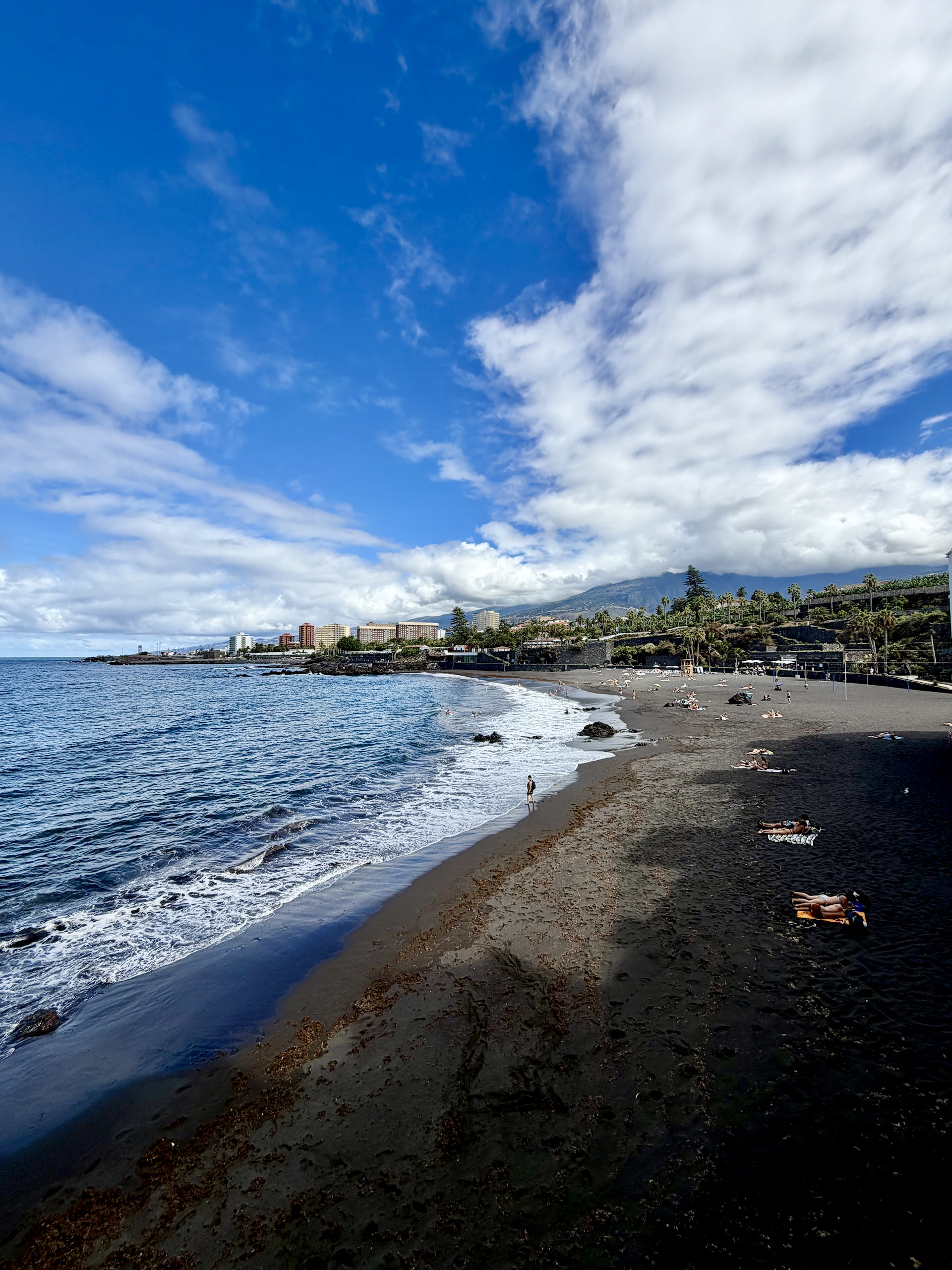
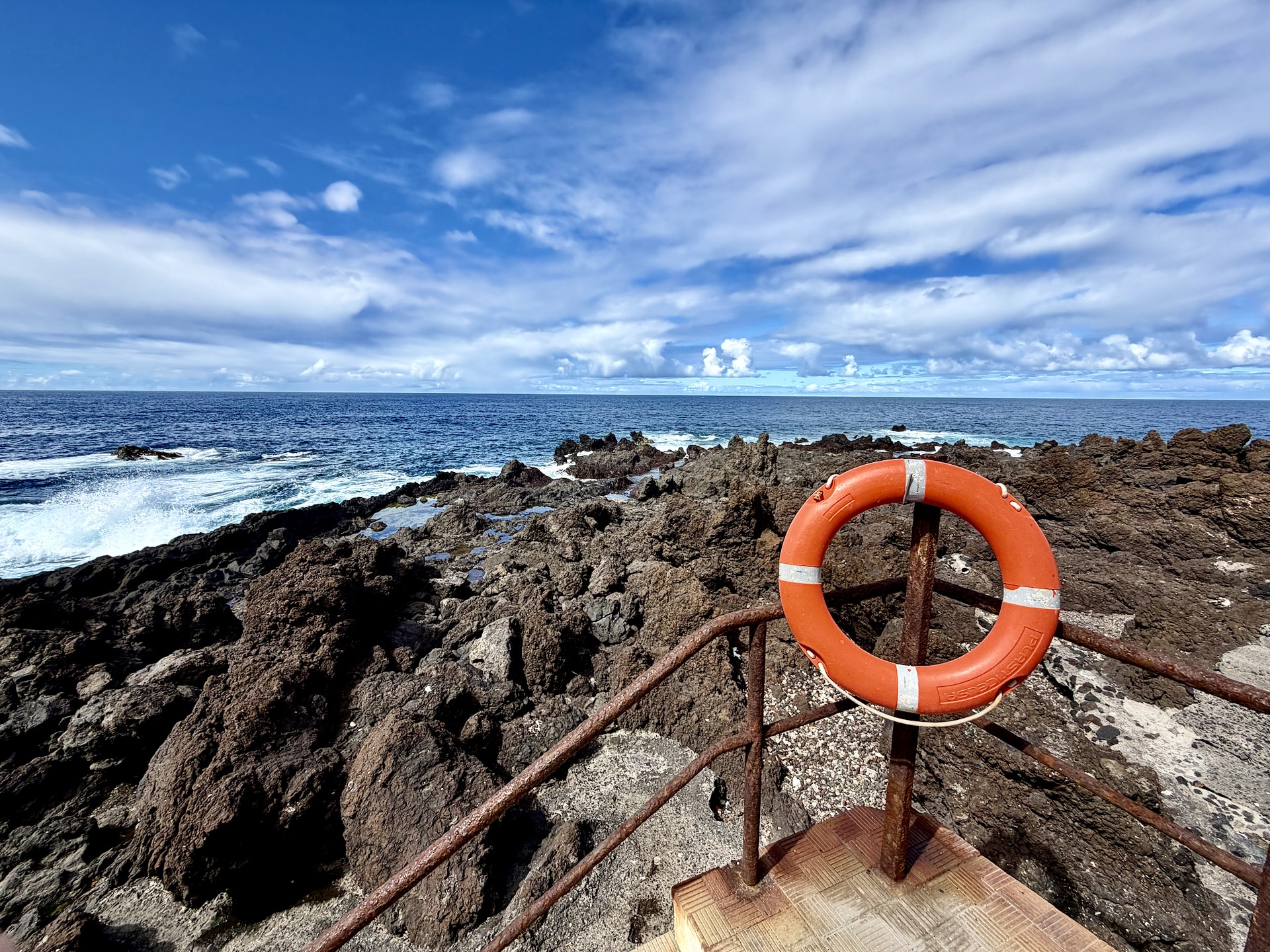
It was about 14:30 by then. Punta Brava is a small headland, and we did the simplest thing possible: we walked into its little streets and went out to the sea wherever we could see the coast at the end of one. Black volcanic rock everywhere, plenty of fishermen casting off the rocks, and rustic little walkways along the water. The streets and the small, colorful houses were lovely too. And along the coast here we met almost no other tourists, which was the best part. Fishermen and no crowds, in a resort town.
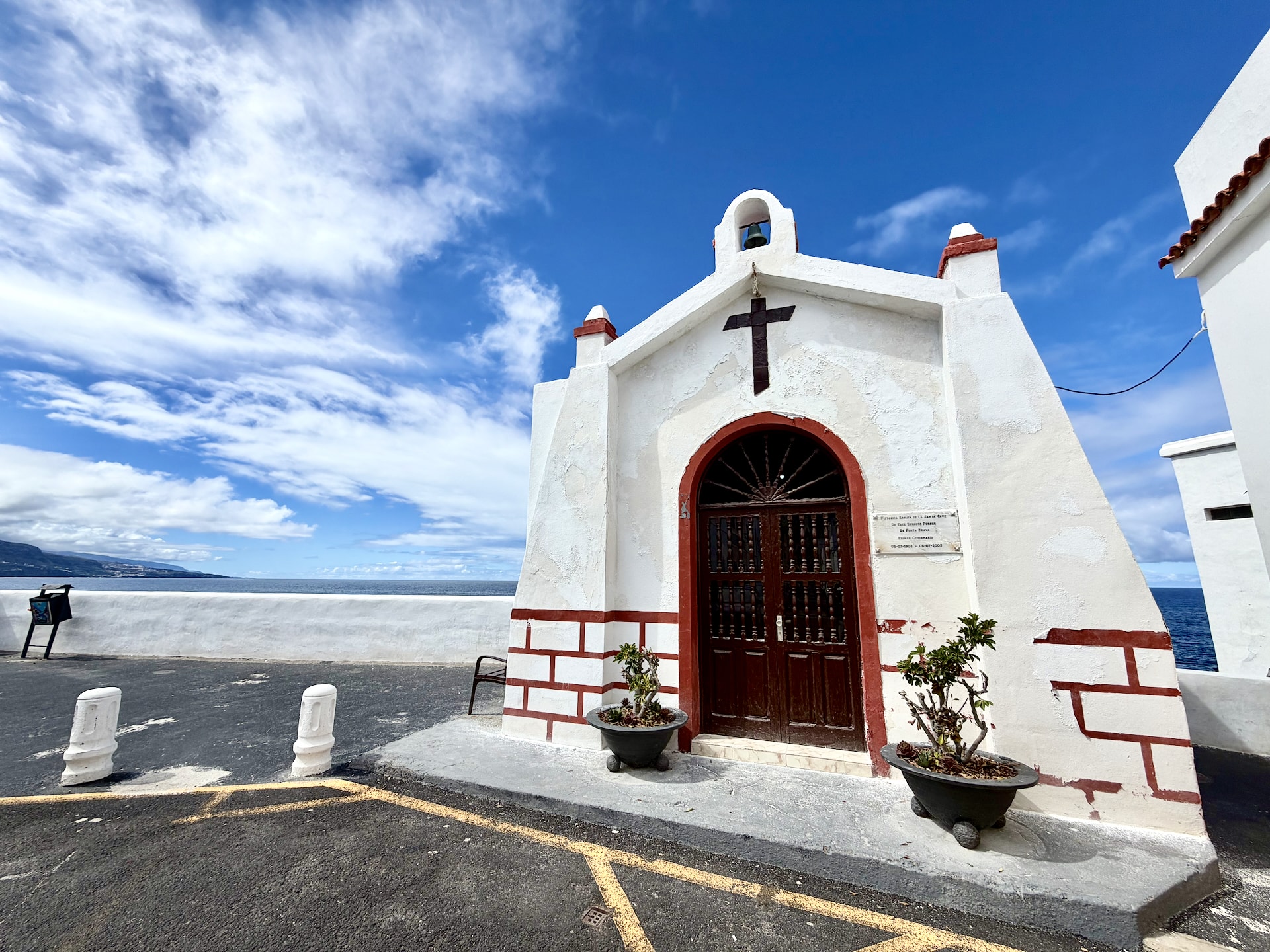
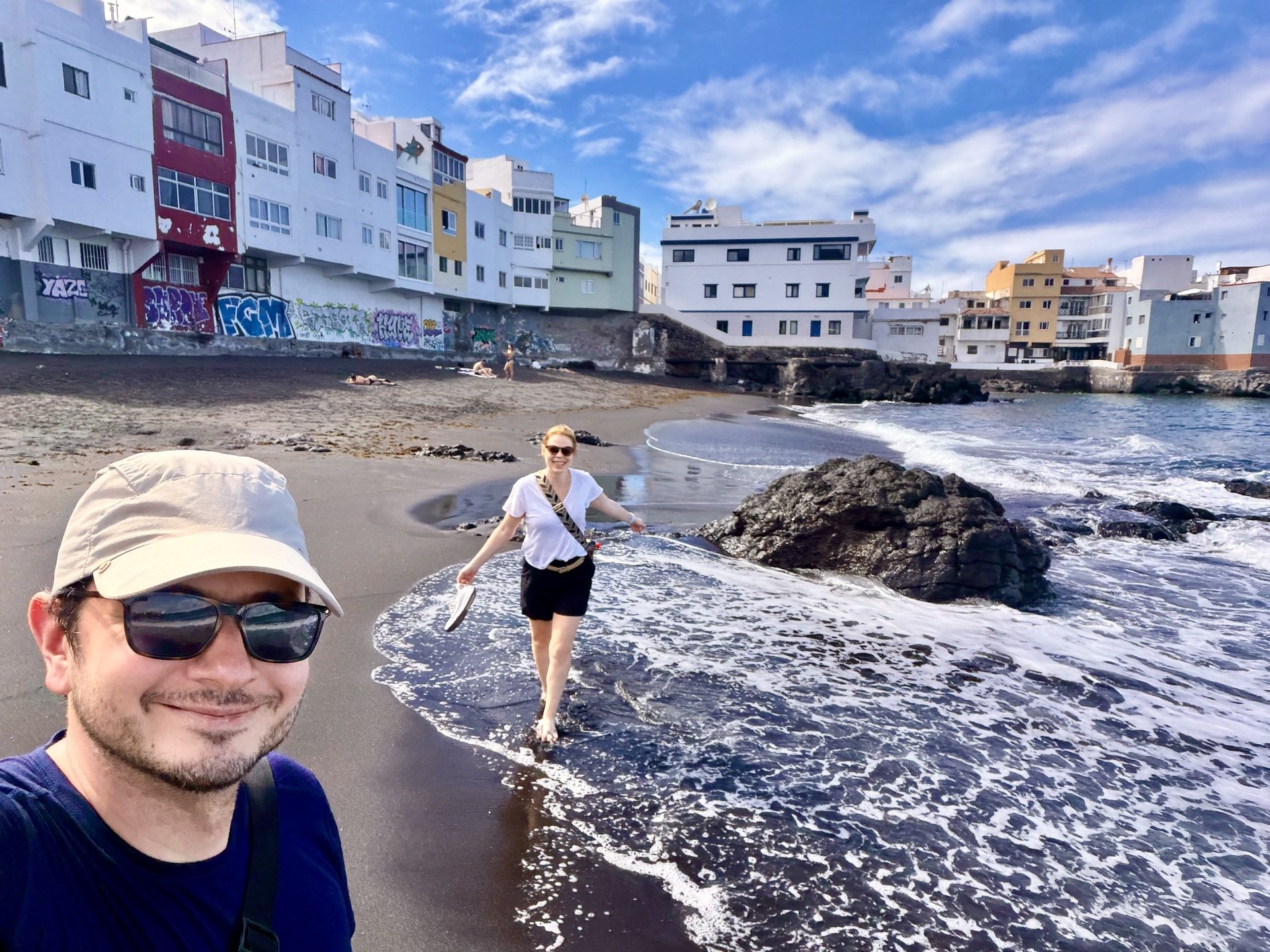
From there we finally reached Playa Punta Brava, which is really the western end of Playa Jardín. Playa Jardín is not one beach but a row of three, landscaped by the Canarian artist César Manrique, and you can walk from one to the next. All of them have black sand and big waves. The first one, where we came out, was the best: relatively few people, huge waves (although those were everywhere), and the softest, fully black sand. We walked the whole length barefoot along the waterline to Playa Jardín. We hadn’t brought swimwear, but the water wasn’t cold at all, so we could have. We came back along the road instead, which took a while: Andrea spotted some chickens, I went to look at a small park, and we stopped for ice cream.
Behind the beaches there’s a cactus garden that’s worth the detour, and a few smaller parks with palm trees and proper green lawns. We went back to the car a little after 16:00. We wrote more about these beaches, and the rest of the island’s, in our guide to Tenerife’s black sand beaches.
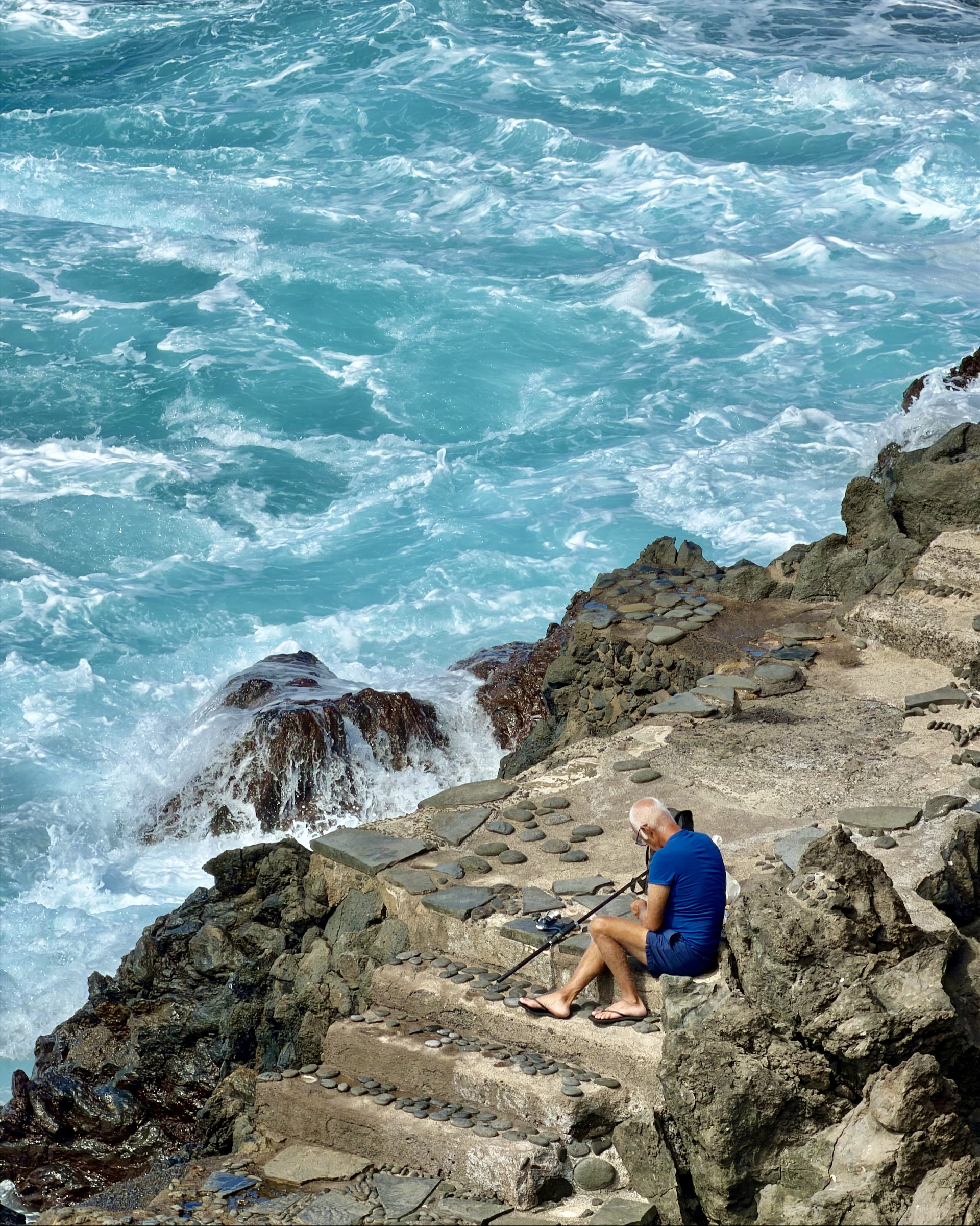
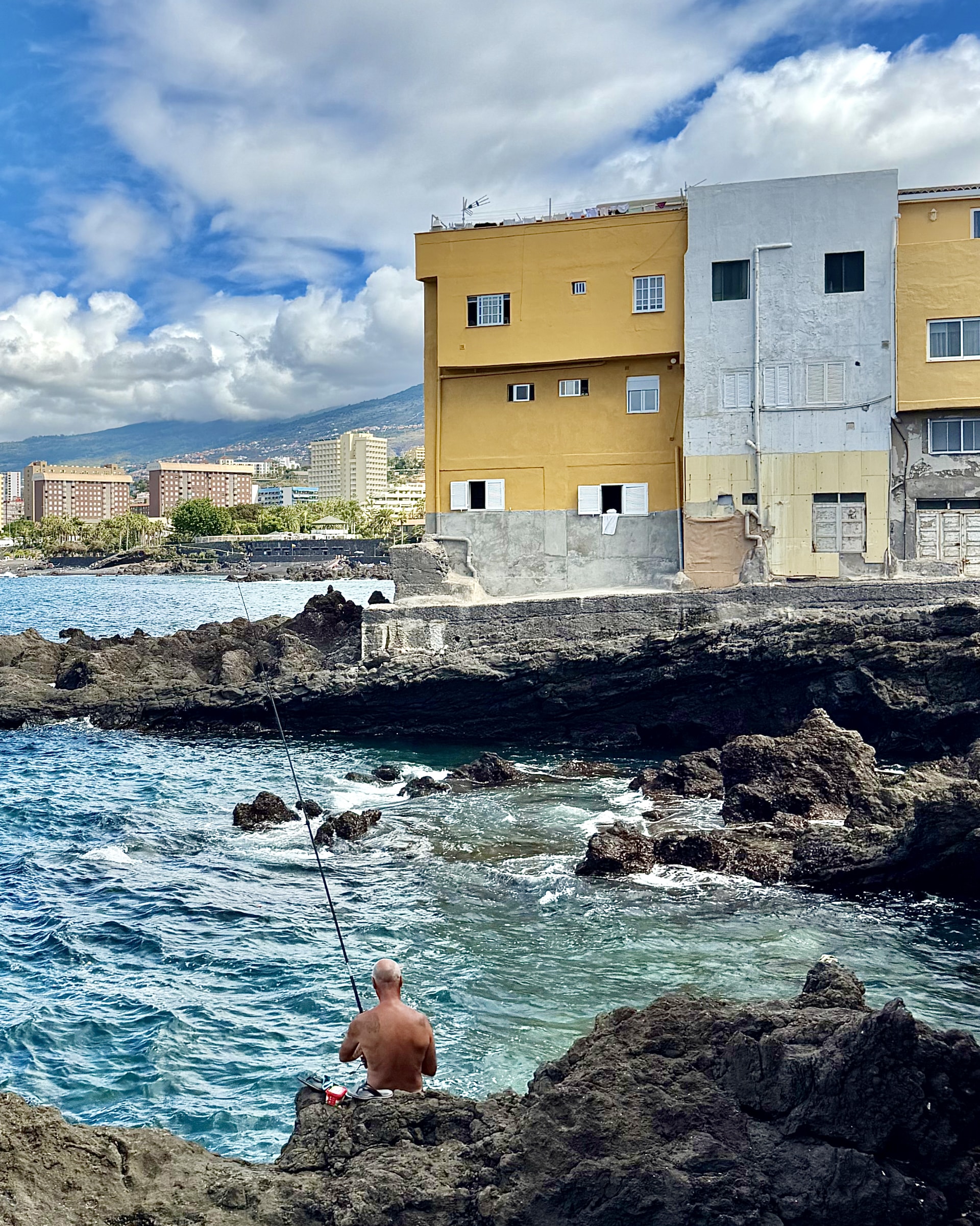
One warning about this coast. The forecast said 22 to 24 °C (72 to 75 °F). When we got back to the car, its thermometer read 36 °C (97 °F). That was mostly the car baking in the sun, as car thermometers do, but it was properly hot all the same, and I was thoroughly sunburned, because I’d left the sunscreen at home. Learn from me.
The rock shelves along Punta Brava and the old-town seafront are best explored at low tide, when the waves break further out and you can walk closer to the water. Look up the tide times before you go (search “mareas Puerto de la Cruz”), and stay well back from the edge on a big-wave day.
The Old Town: Plaza del Charco, La Ranilla and the Seafront
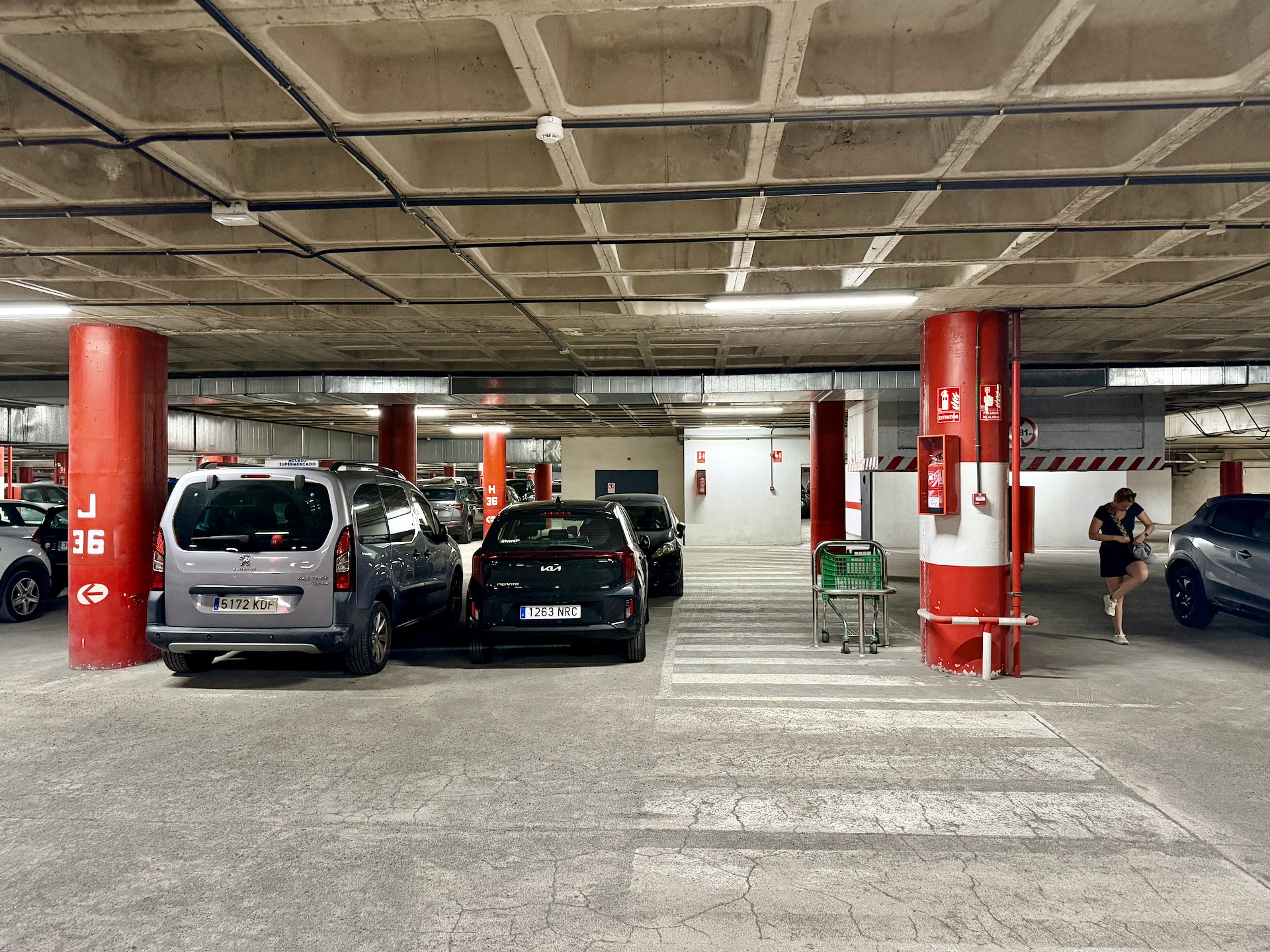
We got our second chance on our last day. Check-out was at 11:00 and our flight left in the evening, so we had time to see the parts of Puerto de la Cruz that parking had cost us the first time. Having learned our lesson, we didn’t even look for a space on the street or in an open car park. We went straight into the underground garage of the C.C. Martiánez shopping center, at the eastern end of town, and paid €3 (~$3.4 USD) for the whole visit.
From there we walked along the seafront at San Telmo to the old center. The first square we reached, Plaza de la Iglesia, in front of the church of Nuestra Señora de la Peña de Francia, was lovely: palm trees, benches and the church tower above them. The main square, Plaza del Charco, a few minutes further on, wasn’t much. Frankly, I found it rather depressing. We walked a few of the pedestrian streets and stopped at the windows of the estate agents, reading the listings to see what an apartment here costs and whether it would be worth looking. Then we walked on to the area we’d driven through on the first day while hunting for parking, where all the small colorful houses were.
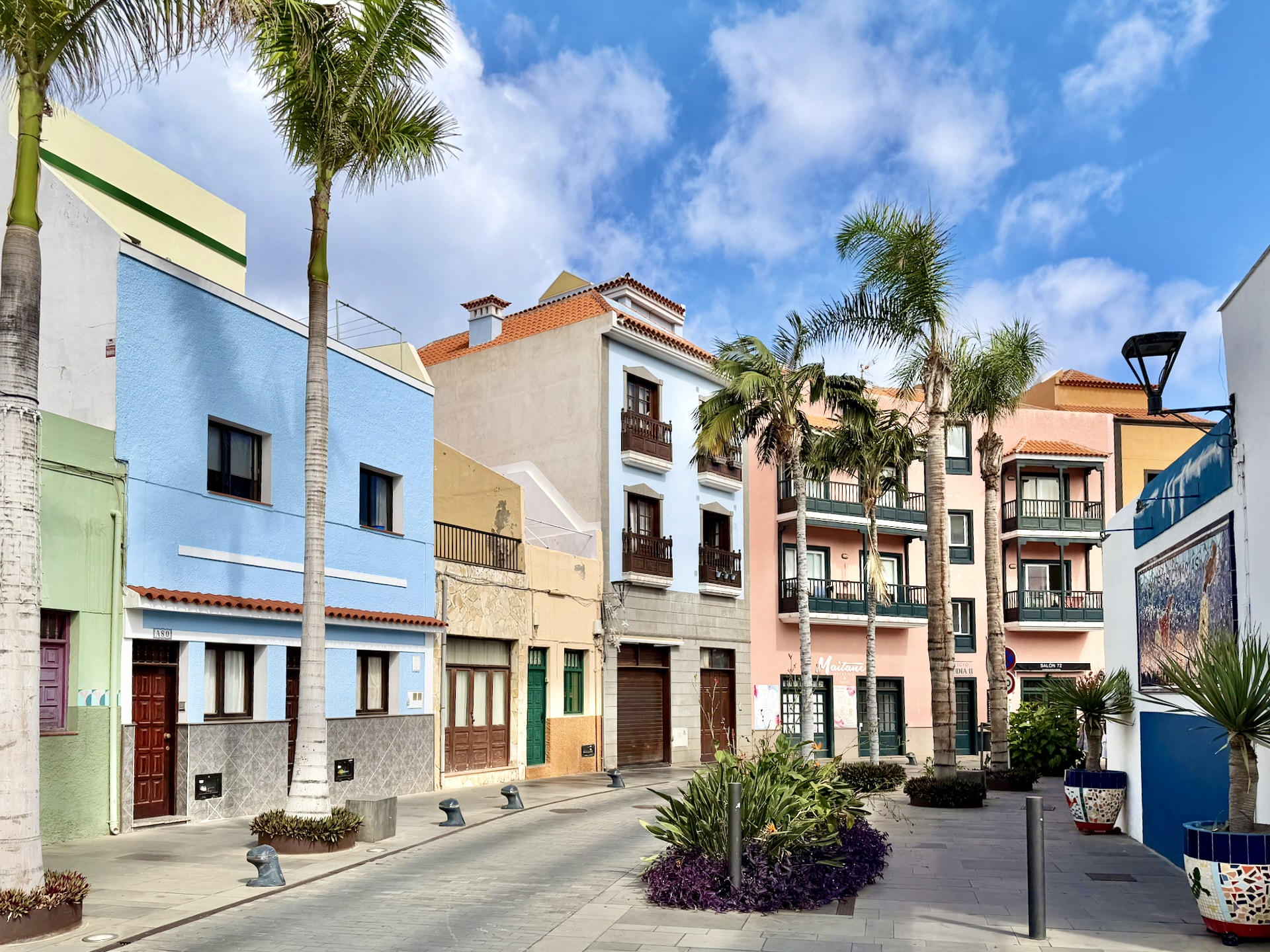
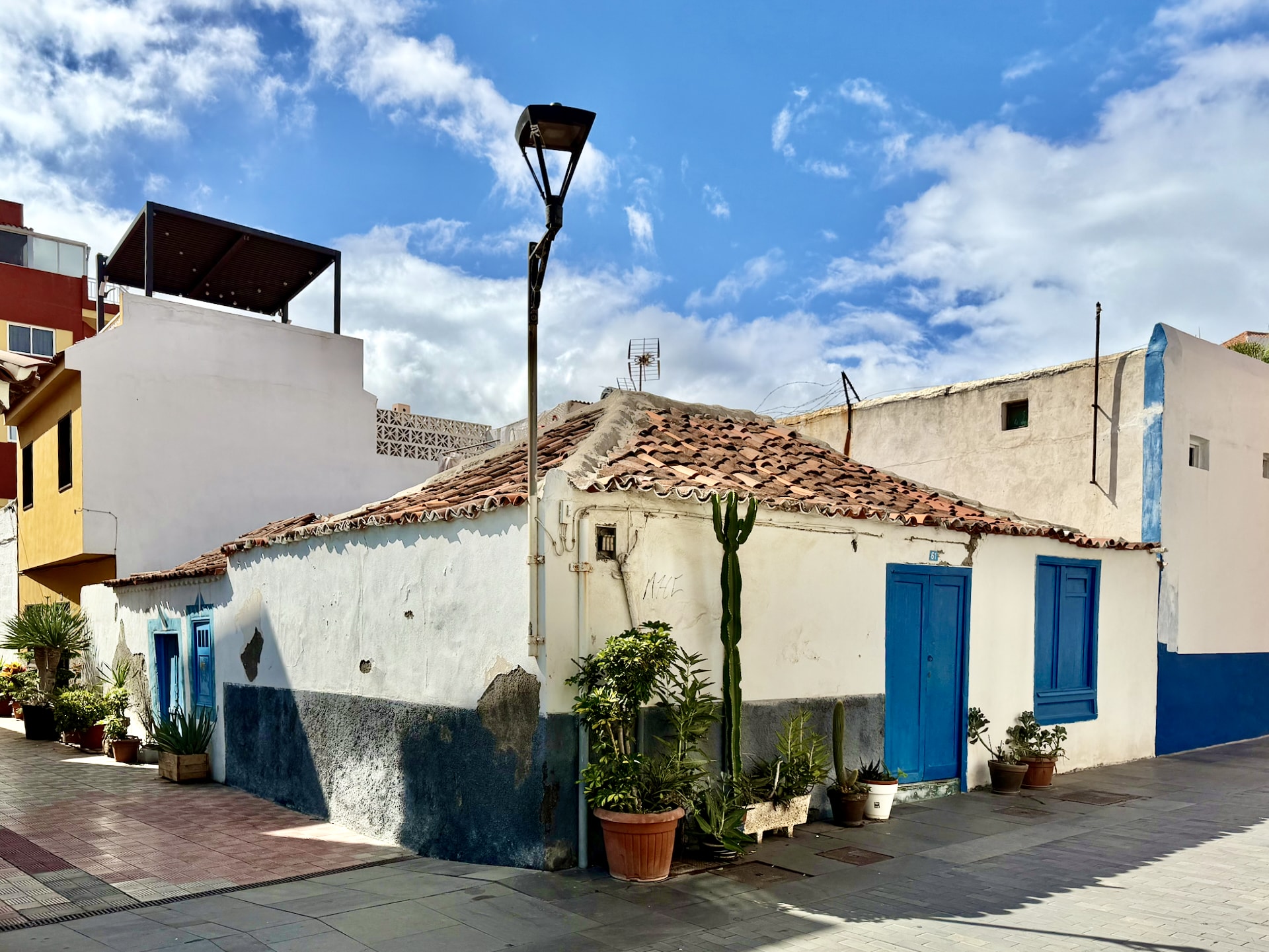
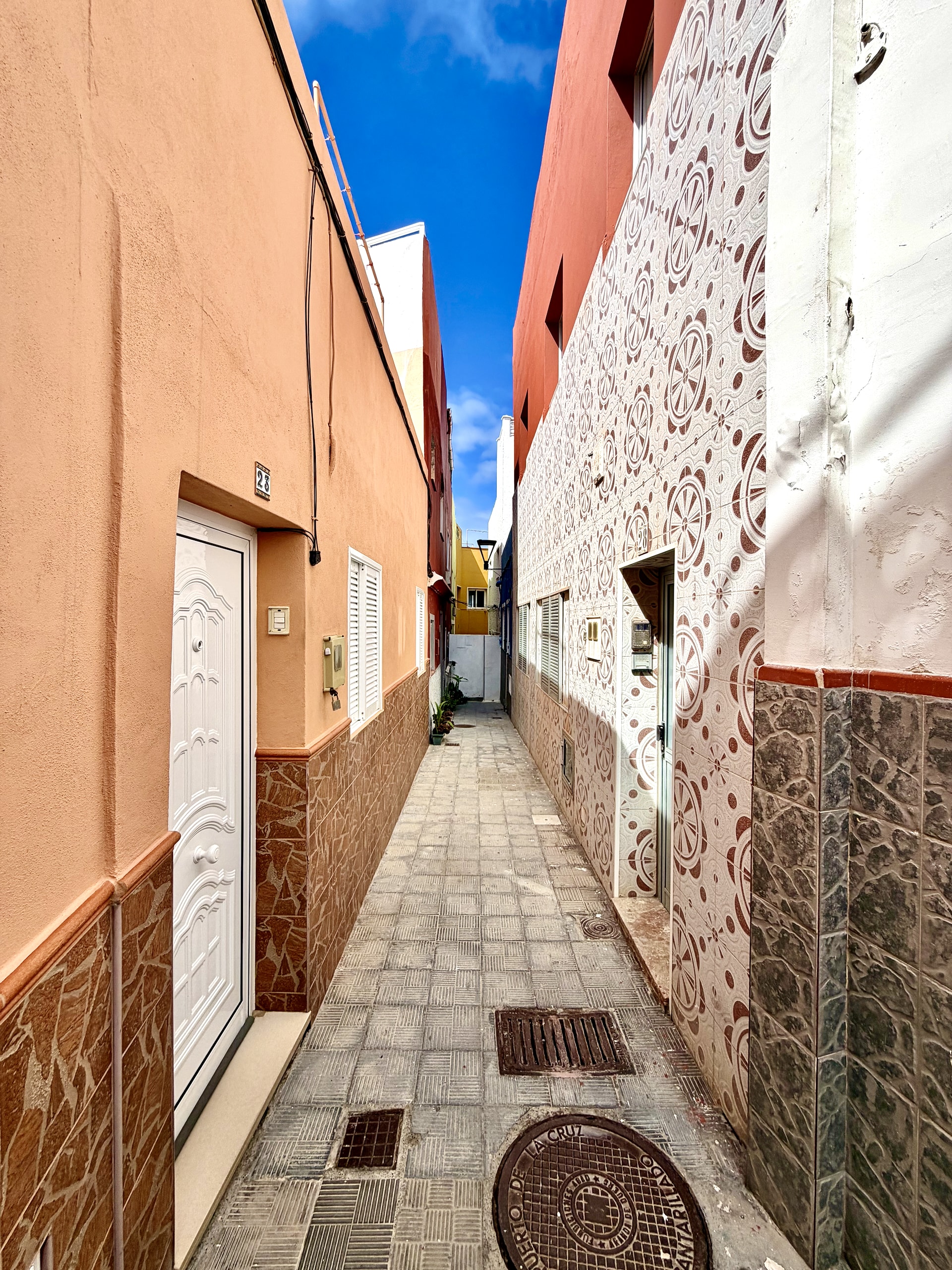
That’s La Ranilla, the old fishermen’s quarter, and it was the best part of the morning. The houses are low and brightly painted, especially along Calle Mequínez, and since 2014 the neighborhood has been turned into an open-air gallery of murals.
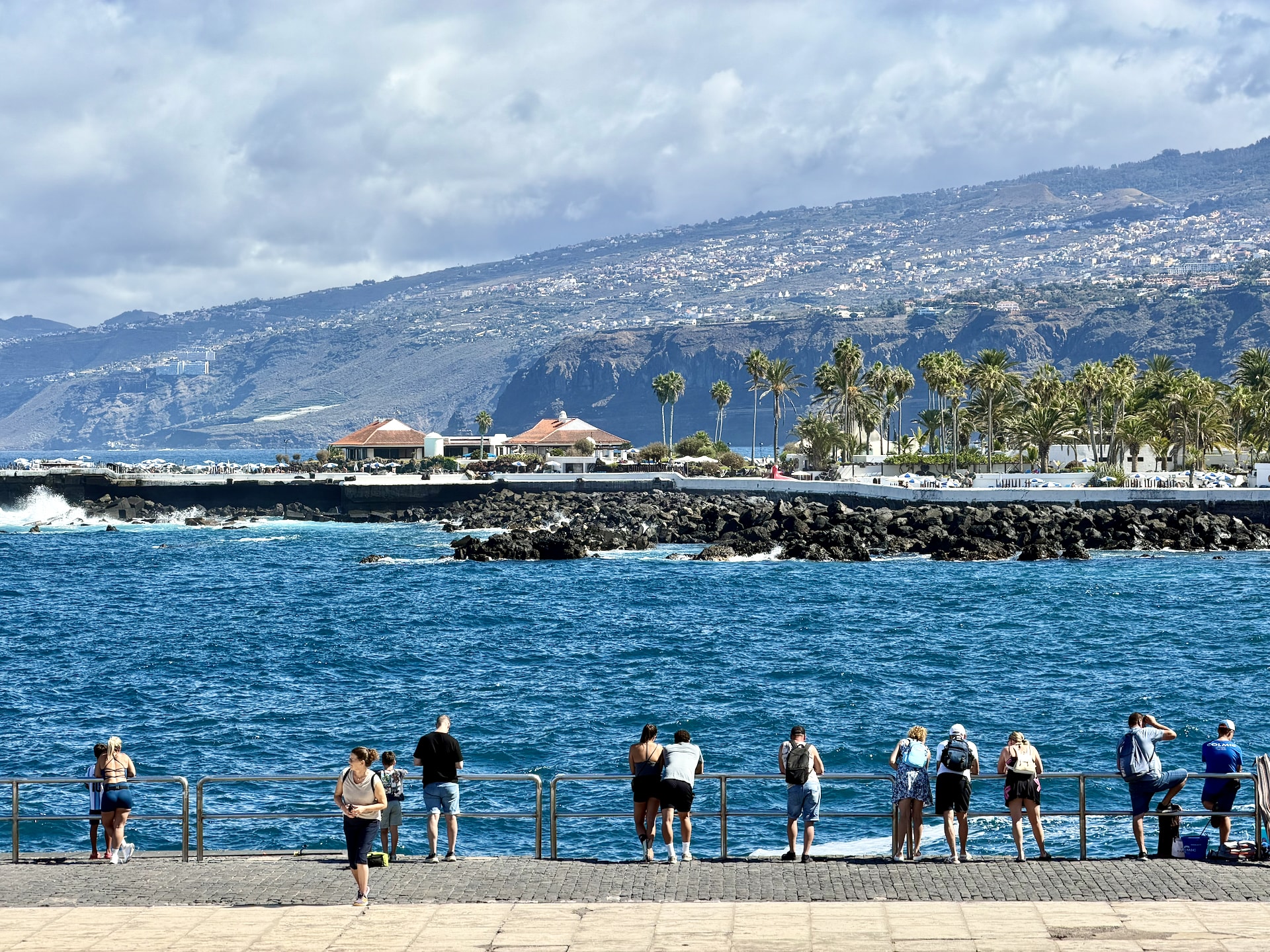
On the way back we passed the old harbor and the seafront again. Along this stretch the rocks form a few natural, pool-like basins where the waves are much smaller, and you can go down for a swim. When we arrived it was fairly cloudy. By the time we left, it was scorching again. The whole loop took a little over an hour and a half.
Parking in Puerto de la Cruz
This is the section I wish I’d read before our first visit.
What went wrong. On October 12 we planned to park on the Explanada del Muelle, the big free car park on the seafront by the harbor, a short walk from the old center. The road to it was closed, and the town was full of cars, possibly because of the holiday. We spent a while circling very narrow, very full streets before giving up.
What worked:
| Car park | Where | What we paid | Notes |
|---|---|---|---|
| Botanical Garden car park | Upper town, by the garden | Free | Easy a little before 11:00, and close enough to walk to Mirador de La Paz |
| Loro Parque car park | West end, Punta Brava | €7 (~$7.8 USD) | Pricey, but right by the coast walk and Playa Jardín |
| C.C. Martiánez garage | East end, near Lago Martiánez | €3 (~$3.4 USD) | About an hour and three quarters, walking distance to the old town |
Two things to know before you go. The underground car park under Plaza de Europa, in front of the town hall, is closed because of damage to its structure. The island government approved a €5 million (~$5.6 million USD) repair project on October 7, 2026, but there’s no reopening date, and some websites still list it as open. Near Lago Martiánez, the Pirámides de Martiánez shopping center garage is open around the clock at €1.49 (~$1.7 USD) an hour, according to Lago Martiánez’s own parking page.
Without a car, TITSA bus 103 runs from Santa Cruz and La Laguna to Puerto de la Cruz bus station, and the town itself is walkable, if hilly.
Spanish national holidays and local fiesta days fill Puerto de la Cruz with cars from all over the island. On those days, don’t bother with street parking or the free seafront lot. Go straight to a garage.
Near Puerto de la Cruz: La Orotava and Mirador de la Quinta
La Orotava
La Orotava, the old town just up the valley, kept falling off our plan, and we finally got there on a late afternoon on the way back from the south. It would have been a real shame to skip it. We parked in Parking Lercaro, a big two-level car park clearly meant for visitors, a little out of the way but only about 10 minutes on foot from the center, and walked to the Casa de los Balcones.
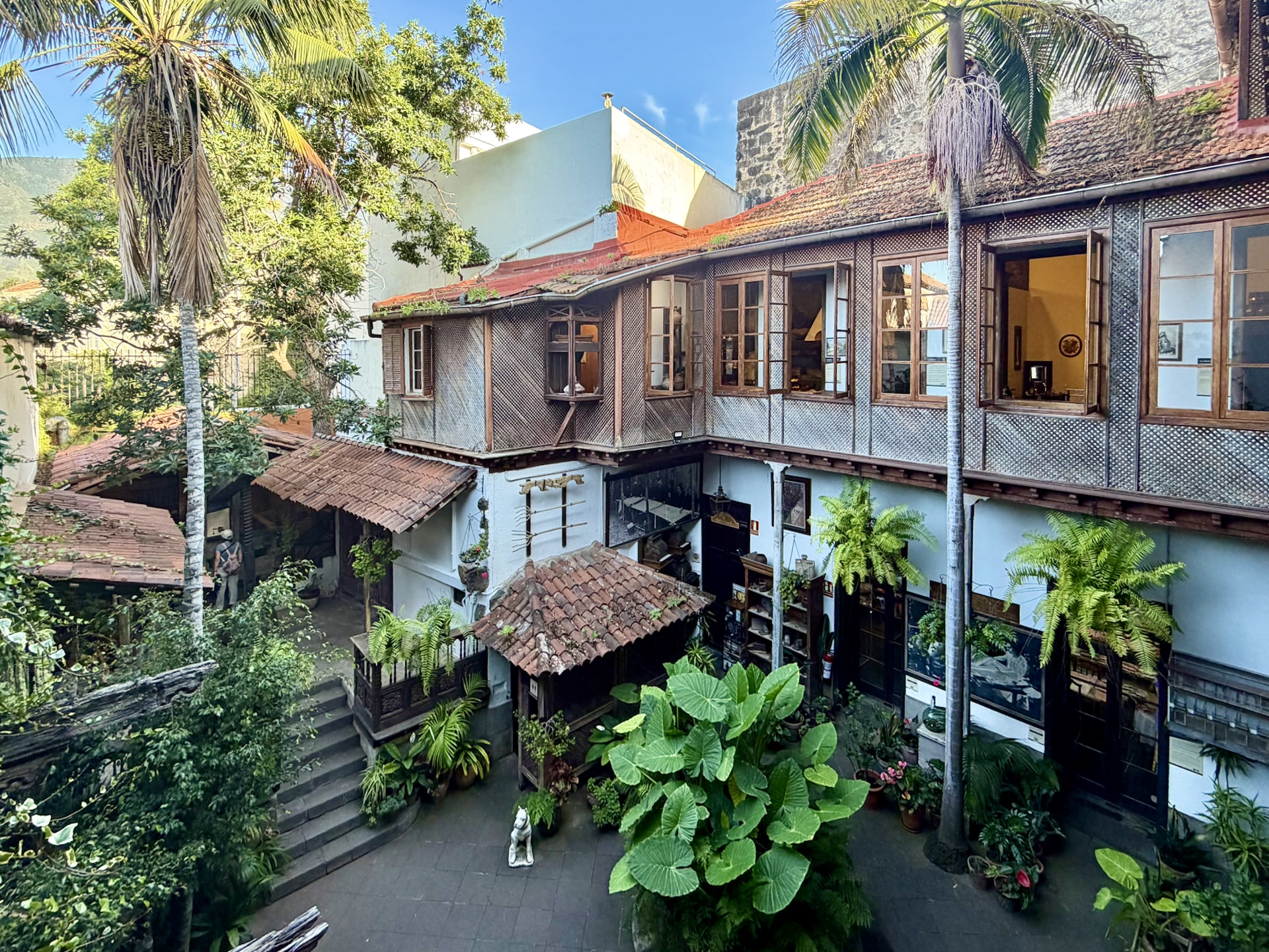
The Casa de los Balcones is a house museum, a mansion completed in 1632, so nearly 400 years old. You can see the living room, the dining room, the kitchen and a bedroom, the first three with their original furnishings. Not 400-year-old furnishings, admittedly, but a few hundred years old, or at least a hundred. It was genuinely interesting, but €7 (~$7.8 USD) feels a bit much to me: even if you read every letter and examine every object closely, I don’t think you can spend more than 45 minutes inside. We spent a little less.
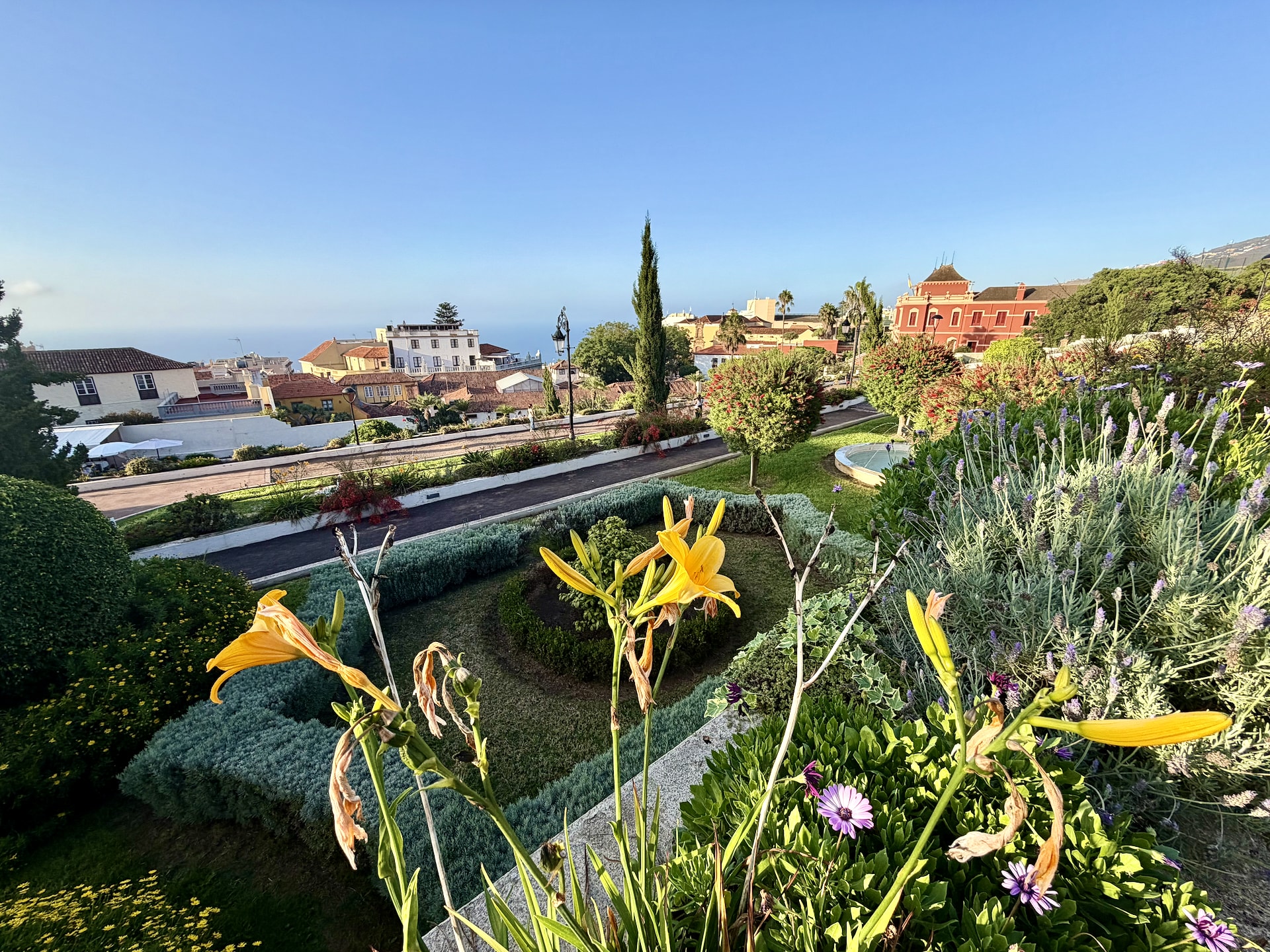
From there we walked to the Jardines del Marquesado de la Quinta Roja, also called the Victoria Gardens: terraced gardens with a fountain and a view over the town, free to enter. At the top stands a white marble mausoleum built for Diego Ponte del Castillo, a local aristocrat whom the Church refused to bury because he was a Freemason. He was never actually interred in it.
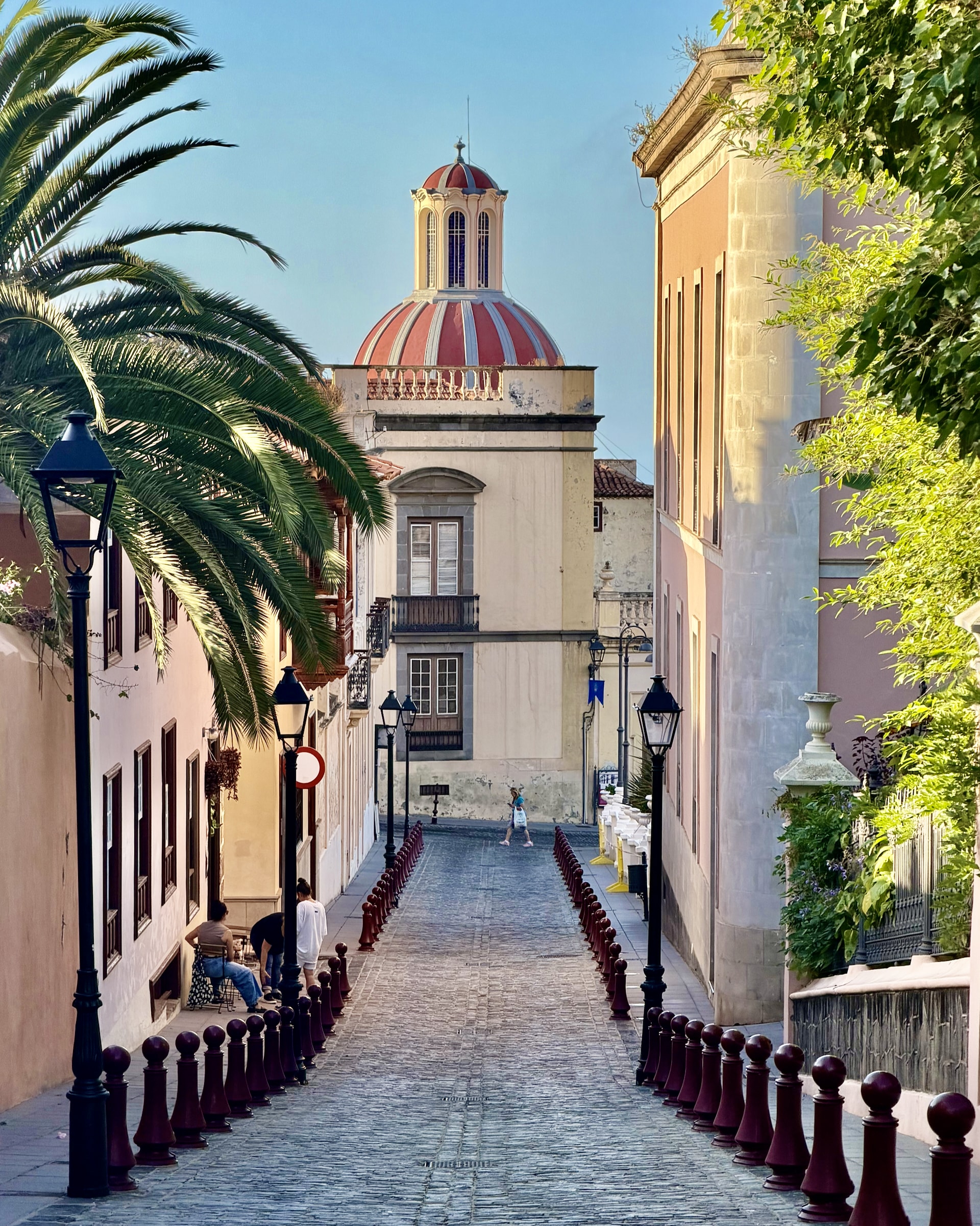
On the way we passed the town hall and wandered the side streets, and then the bells started ringing like crazy. We followed the sound to the church of La Concepción, where people were ringing the bells by hand, in rhythm, up in the open bell tower, where you can see them from the street.
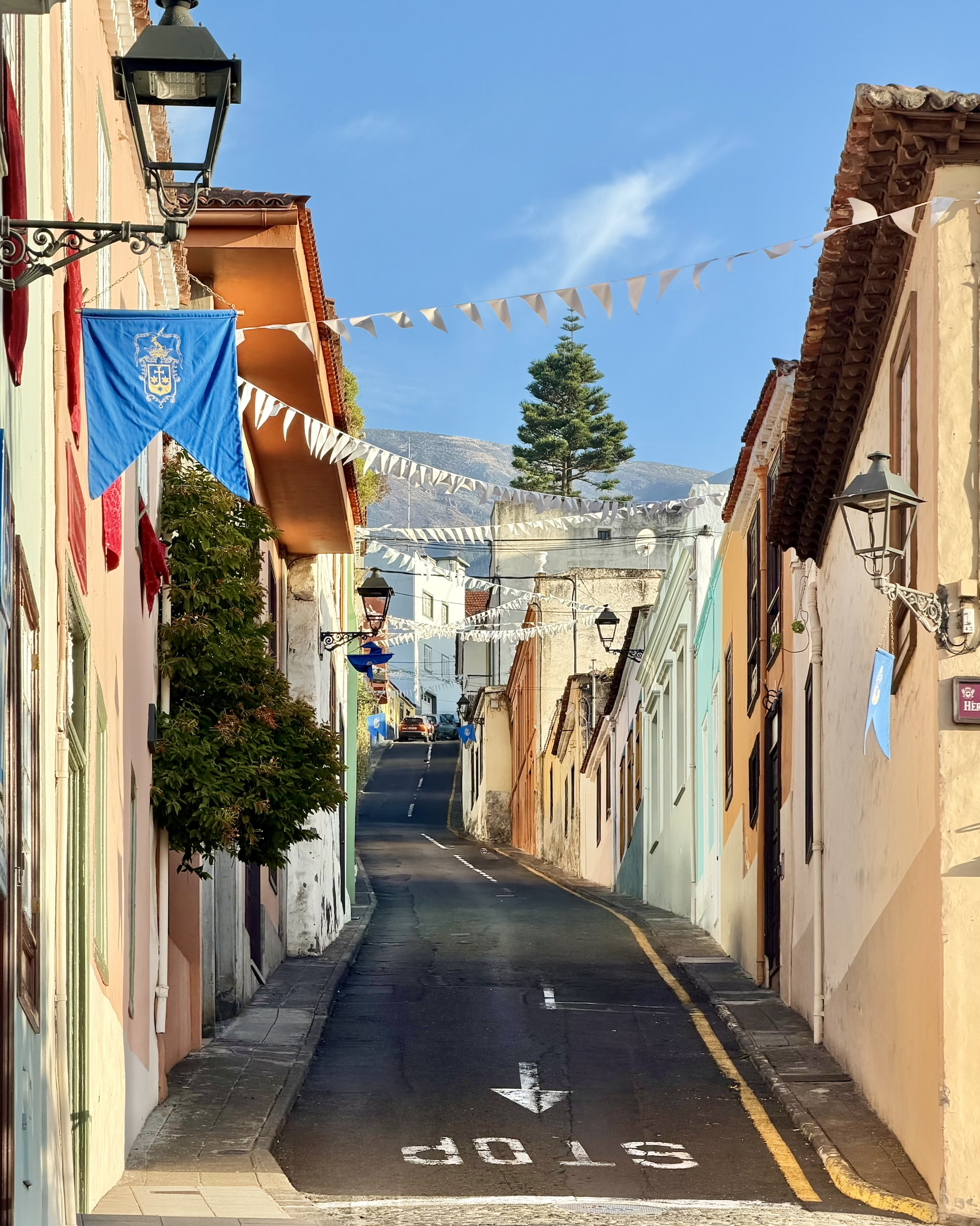
La Orotava’s old town is in very good condition: colorful buildings, beautiful wooden balconies, cobbled streets, and not too many people. Like everything else around here, it’s built on a slope, so be prepared to walk up and down constantly.
Mirador de la Quinta
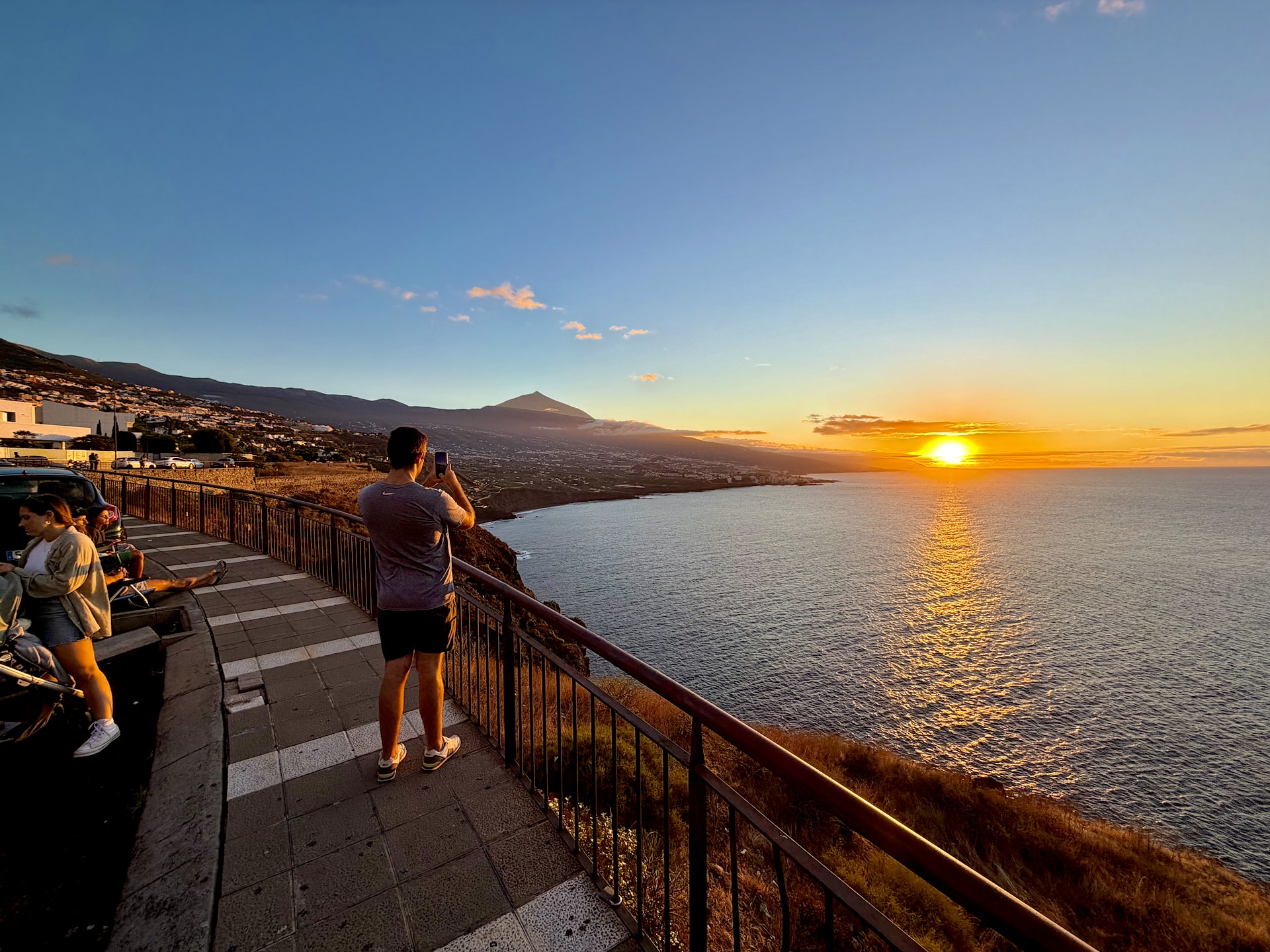
For the sunset, we drove to a viewpoint near our apartment that goes by the name Mirador de la Quinta on Google Maps, in Santa Úrsula, a few kilometers east of Puerto de la Cruz. We got there just before 19:30, with sunset around 19:40 in mid-October. The sunset itself wasn’t as good as the one the evening before, but the viewpoint is excellent. You can see all the way to Puerto de la Cruz, and Teide was clear of cloud for once.
Watching the sunset here is a community event. There were lots of cars, and we were lucky to park a little further away, because by the end there was no space left at all. People bring folding chairs, cola and sunflower seeds, and settle in. On top of the old bunker at the viewpoint, the local youth had taken up position. The bunker was built in 1941, on Franco’s orders, against a possible Allied landing on the beaches of Puerto de la Cruz. It’s covered in graffiti today, and in August 2026 the Canary Islands government gave Santa Úrsula €118,000 (~$132,200 USD) to start turning it into a small museum of the island’s military history.
What We Skipped
- Loro Parque. It’s advertised relentlessly all over the island. It keeps orcas and dolphins alongside the parrots and puts on shows with them, and animal welfare groups have criticized it for years. Animal shows are not exactly close to my heart, so we used its car park and nothing else.
- Lago Martiánez. César Manrique’s seawater pool complex below Mirador de La Paz was on our original plan and didn’t make the cut. It’s open, with a day ticket, and it’s the easiest way to actually swim in the sea water here without fighting the waves.
Is Puerto de la Cruz Worth Visiting?
Yes, for a day, as long as you go for the right part of it. Spend the morning in the Botanical Garden, the afternoon on the coast at Punta Brava and Playa Jardín, and give the old town whatever time is left, with La Ranilla first. If I had to pick one thing, it would be the coast, with the fishermen and the empty walkways.
It also makes a good base for the north, although we stayed in La Quinta instead, about 10 minutes away by car. We explained why in our guide to where to stay in Tenerife.
FAQ
Is Puerto de la Cruz worth visiting?
Yes. The Botanical Garden and the coast between Punta Brava and Playa Jardín are the highlights, and La Orotava is a short drive up the valley. A full day covers the essentials.
Where can you park in Puerto de la Cruz?
The big free car park on the Explanada del Muelle, by the harbor, is the obvious choice on a normal day. On busy days, use a garage: the C.C. Martiánez garage in the east (we paid €3), the Loro Parque car park in the west (€7), or the Pirámides de Martiánez garage. The Plaza de Europa underground car park is closed for repairs.
How much is the Botanical Garden in Puerto de la Cruz?
€3 per person. It’s open daily from 9:00 to 18:00, closed on January 1, Good Friday and December 25. Allow about an hour and a half.
Can you swim at Playa Jardín?
It’s a black sand beach with big waves. Breakwaters shelter parts of it, but it’s better for walking and wading than for real swimming. For calmer water, try the natural rock pools on the old-town seafront, or Lago Martiánez.
What is the Agatha Christie connection to Puerto de la Cruz?
Agatha Christie stayed at the Hotel Taoro in February 1927 and wrote the short story “The Man from the Sea” there. There’s a statue of her at Mirador de La Paz, and a staircase painted with her book titles.
Before You Go
- Bring sunscreen, whatever the forecast says.
- Get to the Botanical Garden early. Parking is easy before 11:00.
- On holidays and weekends, park in a garage and walk.
- Cards work almost everywhere, so don’t worry about finding an ATM.
- Do the coast first. If you run out of time, the old town is the part to cut.