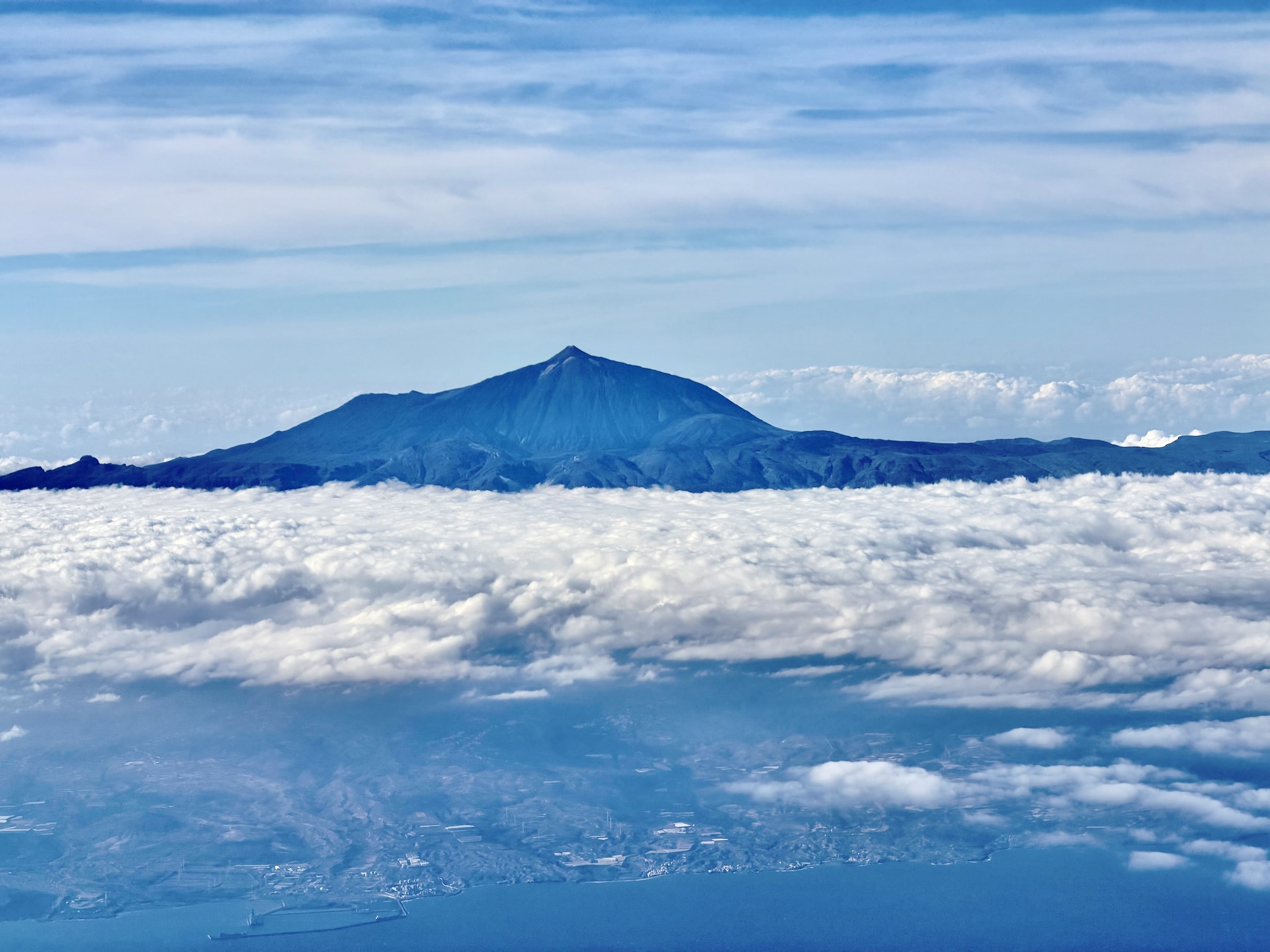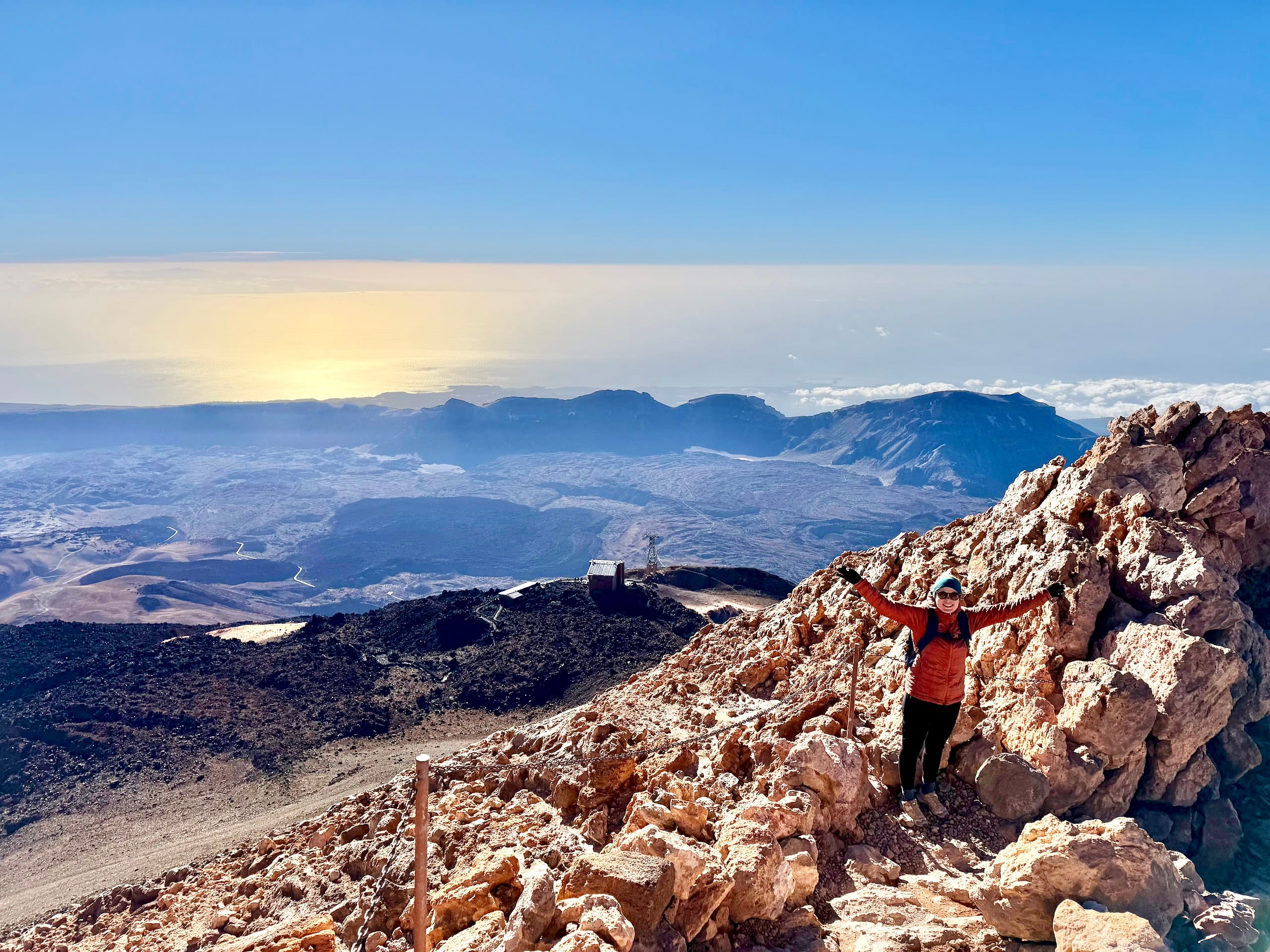
A week before our flight to Tenerife, I found out that standing on top of Mount Teide requires a permit. By then, of course, there wasn’t a single slot left that matched the cable car. We’d written the summit off and settled for the viewpoint trails at the top of the cable car.
Then, after a few days of refreshing the booking page like it owed me money, ten slots opened up for Saturday at 9:00. Saturday was our last full day on the island, so there was no backup day if it hadn’t worked out. We took two.
This guide covers how the Teide permit works in 2026, what to do when it looks sold out, and what the summit morning is actually like: the dress-code check at the cable car, the final 660-meter trail to the crater, with 180 meters of climbing, the altitude, and the smell. Spoiler: sulfur.
Do You Need a Permit to Climb Mount Teide?
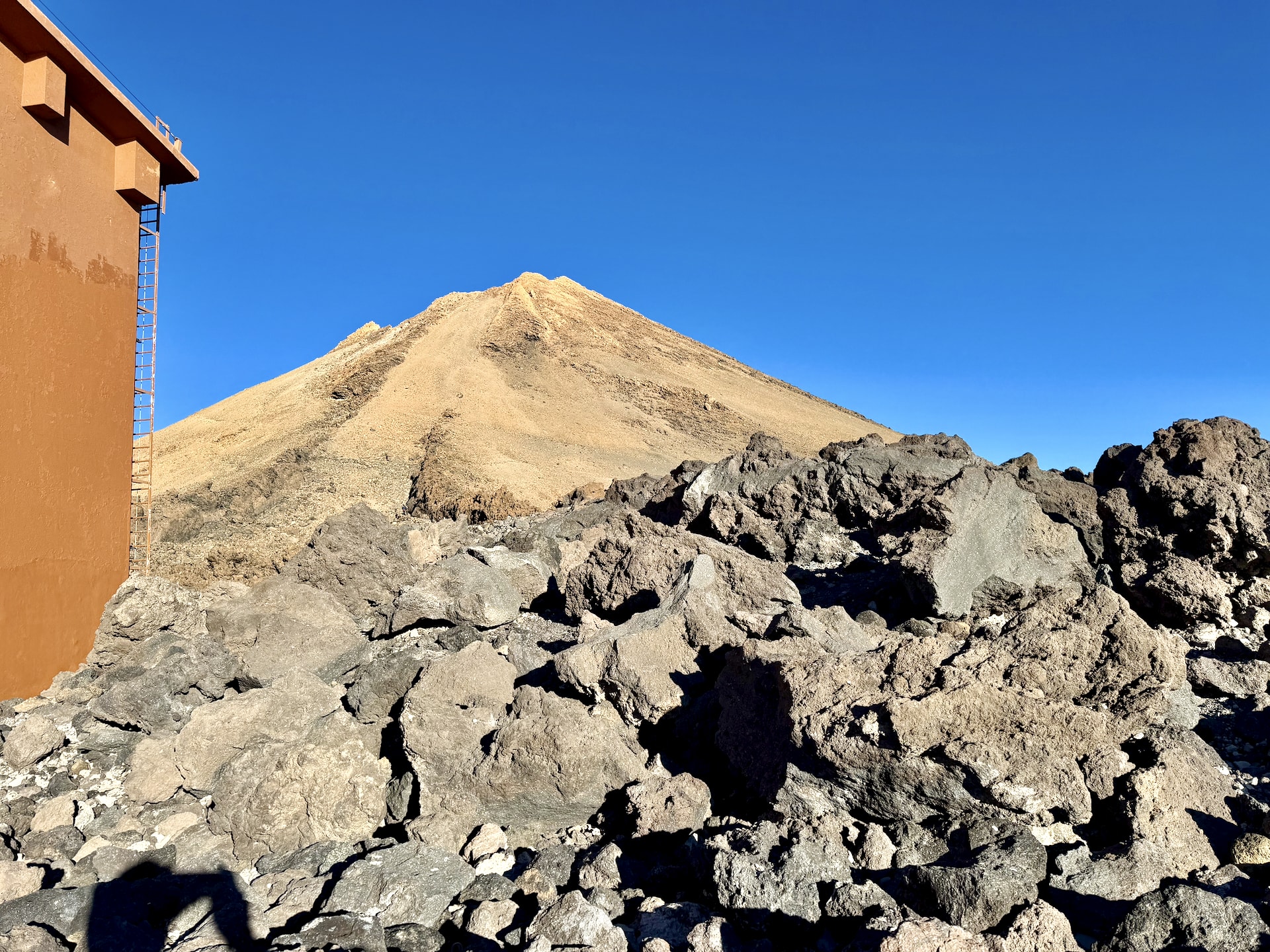
Only for the very top. The cable car takes you from the base station at 2,356 meters (7,730 ft) to La Rambleta at about 3,555 meters (11,663 ft), and that part only needs a cable car ticket. The permit covers the final stretch: trail PNT 10, Telesforo Bravo, 660 meters (0.4 mi) long with about 183 meters (600 ft) of climbing, up to the summit at 3,715 meters (12,188 ft). That’s the height Spain’s national mapping agency uses.
Two things trip people up:
- A cable car ticket is not a permit. They’re booked on different websites and checked by different people.
- The permit is for a specific date, time slot and named people. You can’t move it to another day or hand it to a friend.
If you’d rather hand the logistics to someone else, these are the tours worth a look: a guided hike to the summit with the permit included, the cable car with hotel transfers from the north and south of the island, and a sunset and stargazing tour of the national park. Only the guided hike includes the summit, so check what’s included before you book.
How the Teide Permit Works (2026 Rules)
The rules have changed several times in the last two years, twice in 2026 alone. As of October 2026:
| Teide summit permit (PNT 10) | |
|---|---|
| Where to book | Only on the official Tenerife ON website, on the PNT 10 Telesforo Bravo trail page (free account required) |
| Booking window | Up to 56 days ahead. A new week opens every Monday at 7:00 Canary time |
| Price | €15 (~$16.8 USD) per person for non-Canary residents, €6 (~$6.7 USD) for residents of the other Canary Islands, free for Tenerife residents and children under 14 |
| Slot length | 90 minutes (two hours until October 2026) |
| On the day | Permit plus a passport or ID card, checked at the trailhead |
| Refunds | By email request, if you cancel at least three days ahead, or if the trail or the cable car is closed |
| No-show | A three-month suspension from the permit system |
| Without a permit | A fine of up to €600 (~$672 USD) |
Our permit was for 9:00 to 11:00. In a resolution signed on October 6, 2026, the Cabildo de Tenerife cut the slots to 90 minutes, so ours was one of the last two-hour ones. Ninety minutes is still enough for the summit trail if you don’t linger, but it’s tighter than what we had.
The permit also comes with mandatory minimum equipment: mountain boots or closed trekking shoes with good grip, and a fleece or similar warm layer, even in summer. When there’s ice or snow, add crampons and an ice axe. The cable car operator also asks for long trousers. A booking doesn’t get you on the trail without the kit, and the fee isn’t refunded if you’re turned away.
What to Do When Teide Permits Are Sold Out
We didn’t know about the permit until a week before the trip, and since slots open 56 days ahead, every slot during the cable car’s operating hours was long gone, all day, every day of our trip.
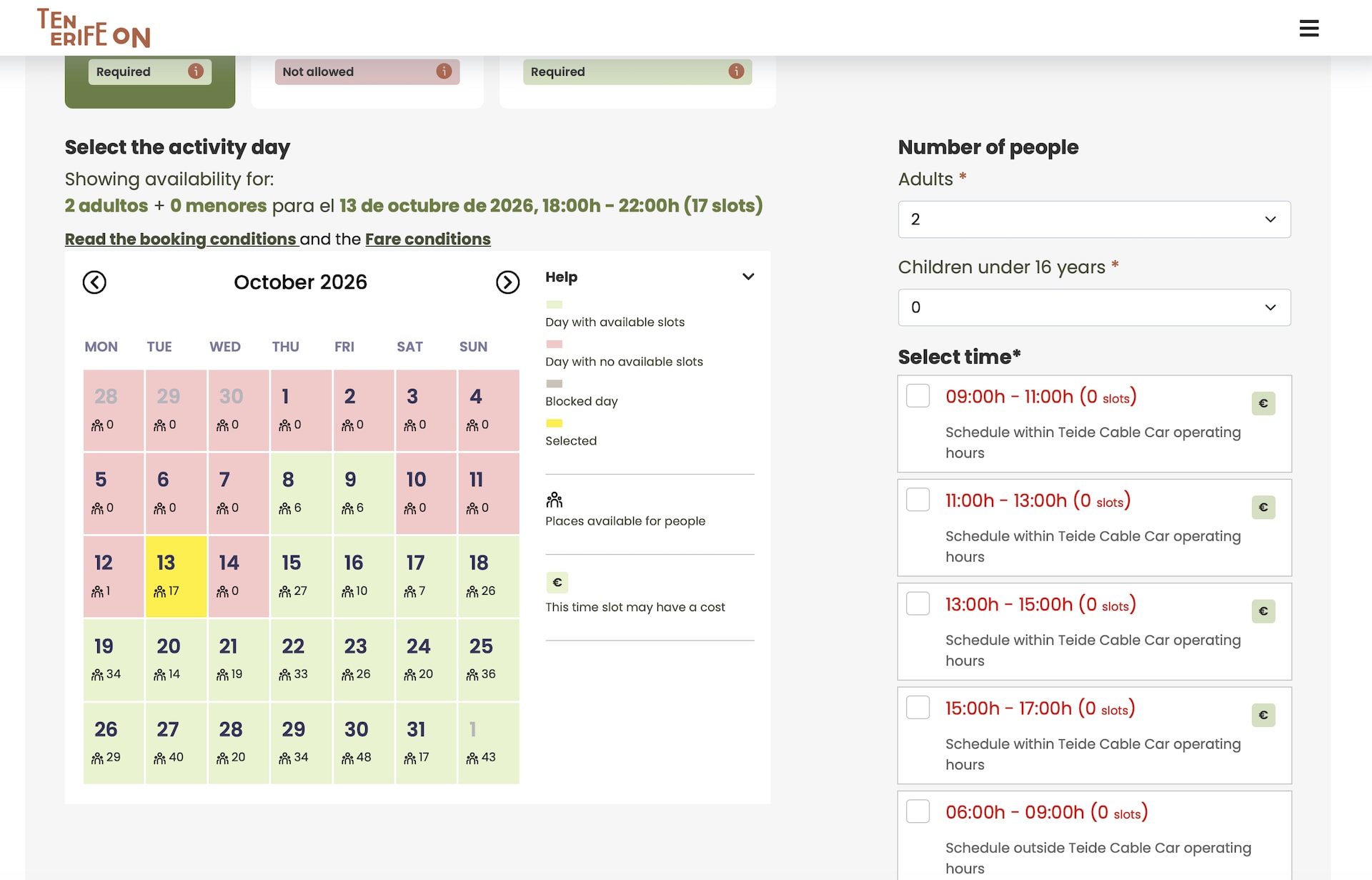
What saved us is that people cancel. Plans change, and the three-month ban for no-shows is a strong incentive to free up a slot you won’t use. So I checked the booking page every day.
The first thing to turn up was a single slot on a Wednesday. I booked it for €15, on the theory that one of us could go up while the other waited at La Rambleta. Not a great theory, but better than nothing.
A few days later, ten slots appeared for Saturday at 9:00, about as good as it gets, since it lines up with the first cable car of the day. The catch: the system wouldn’t let me book while the Wednesday permit was still active, so I had to cancel it first and hope the Saturday slots were still there a minute later. They were. The €15 for Wednesday never came back to us, because I assumed the refund would be automatic. It isn’t. You have to ask for it by email, and only if you cancel at least three days ahead. Consider that €15 my tuition fee.
If Tenerife ON shows nothing for your dates:
- Check every day, at different times. Cancellations appear at random and go fast.
- Be flexible on the day. One free slot on a Wednesday is easier to find than two on a Saturday.
- Cancel what you won’t use, and email for the refund. You have to cancel anyway before booking another slot, it keeps you clear of the ban, and the €15 only comes back if you request it.
New weeks are released on Mondays at 7:00 Canary time, the same as UK time and one hour behind Central Europe. If your dates are still more than 56 days away, set an alarm for the right Monday and you won’t need luck at all.
Teide Cable Car Tickets, Parking and Timing
The cable car is booked separately on the operator’s website, volcanoteide.com. A return ticket is €43 (~$48.2 USD), so we paid €86 for the two of us. A ticket alone gives you one hour at the top. With a summit permit, the operator allowed two hours when we went.
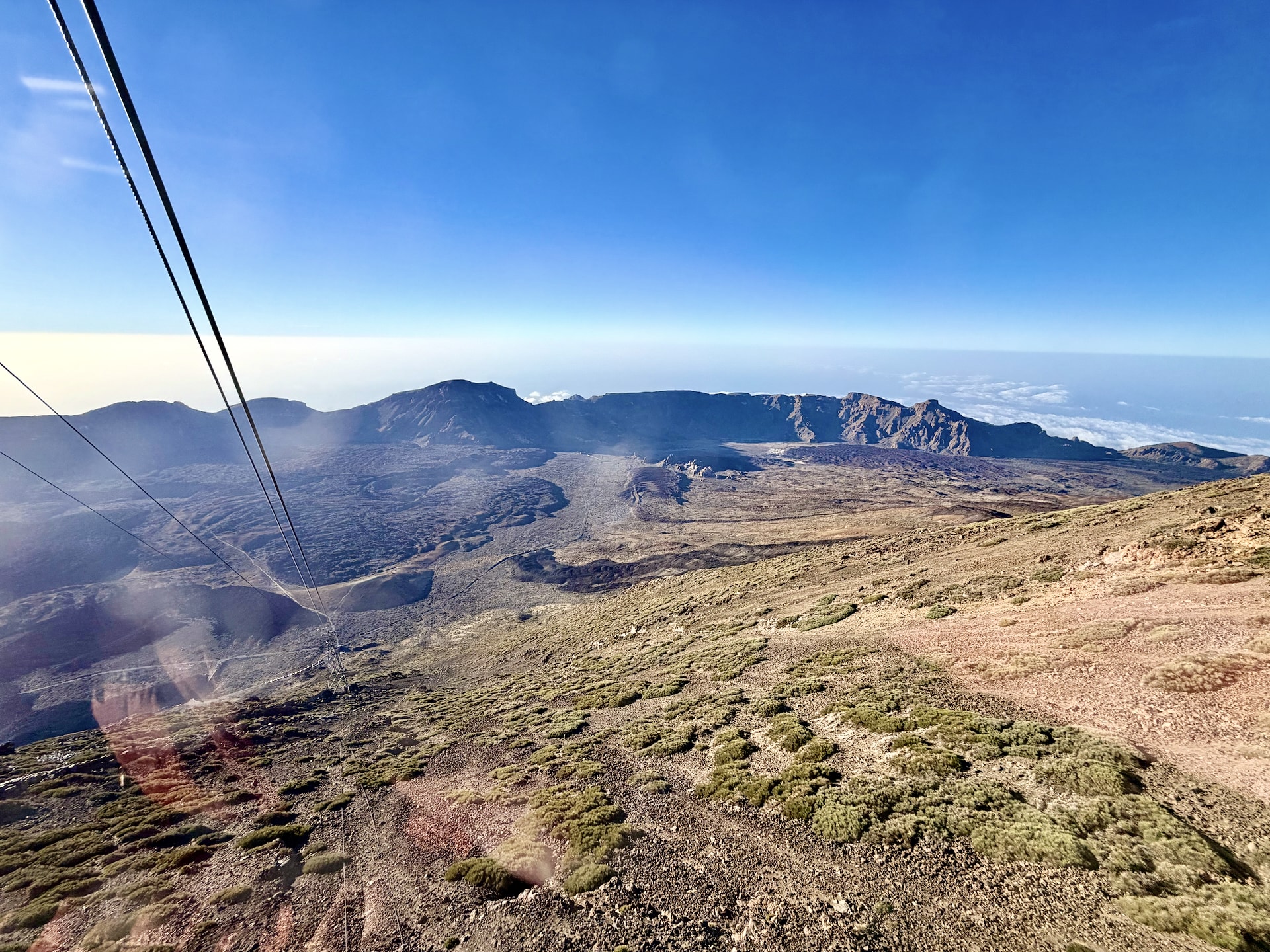
The operator asks you to be at the boarding area 20 minutes before your slot, and recommends booking the cable car about 30 minutes before your permit starts. We took the first car at 9:00 for our 9:00 permit, and it worked: the queue moves quickly and the trail starts right outside the upper station.
Getting There Early (But Not Too Early)
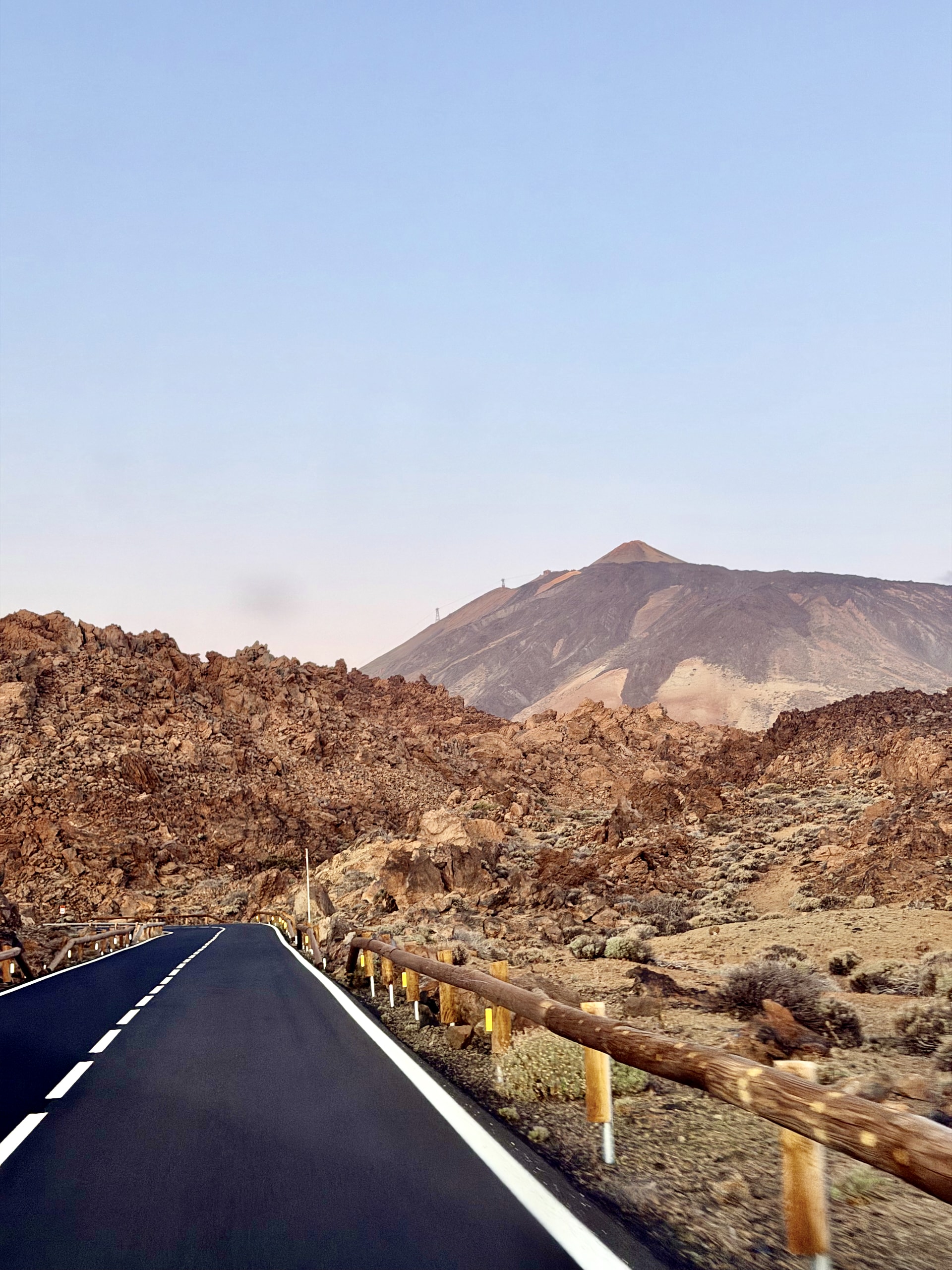
A 9:00 cable car means a dark start. We left our base in La Quinta, on the north coast, at 7:00, and the drive took a bit over an hour. In October the sun comes up around 8:00, so the last part of the drive, across the floor of an ancient volcanic crater, happens in the first light. That stretch alone is worth the alarm.
We’d read that you should arrive an hour before the first cable car, and got there around 8:00, when the car park at the base station opens. Twenty minutes before boarding would have been plenty, but early has its perks. At 8:00 we parked practically at the entrance. When we left, the car park was full and cars were lined up along the road below, which means a walk of several hundred meters uphill at 2,350 meters before you’ve even started.
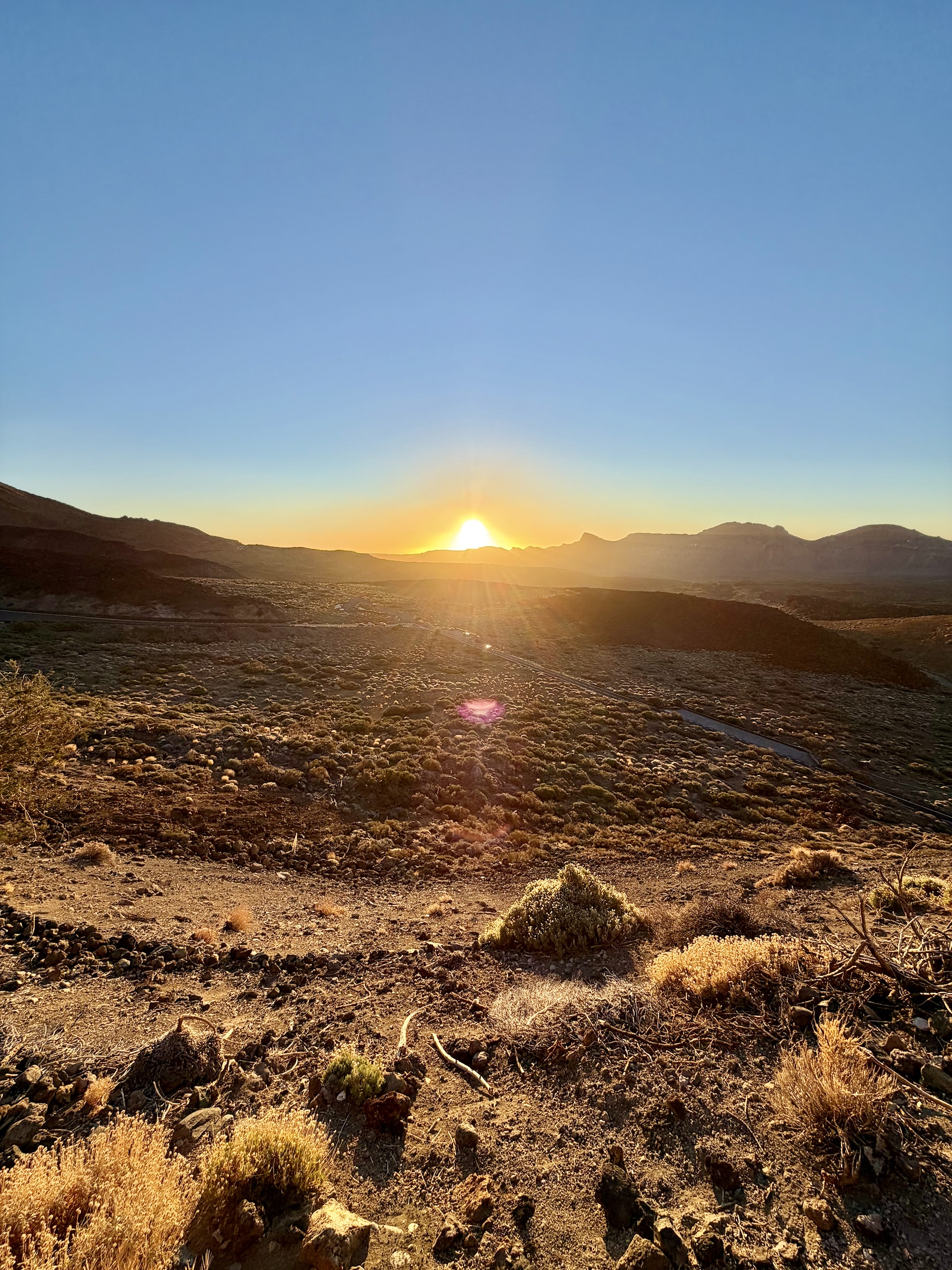
You can use the toilets while you wait. They open with the QR code on your cable car ticket. The shop and the café, strangely, stay closed until 9:00, just as the first cable car leaves. That strikes me as a missed business opportunity: the car park is full of people who got up before 6:00, and every one of them would buy a coffee. We certainly would have.
The Dress Code Is Actually Enforced
Before boarding, staff split everyone into two lines: cable car only, and permit holders. They also look at your feet. The operator requires closed hiking or sports shoes with grippy soles, and it isn’t a suggestion. While we waited, a young woman in flip-flops was turned away and didn’t get on the cable car at all.
They’re picky about the soles, too. Tenerife ON has published a one-page guide to acceptable footwear: the lugs on the sole should be deep, well spaced, pointing in different directions and visible from the side. Shallow, rounded tread doesn’t pass, so check your soles before you pack, not at the base station.
The gift shop at the base station has, inventively, a shelf of hiking shoes. We had a look after we came down. They looked rather flimsy, and none of them had a price on display, so I assume they come with a generous convenience surcharge for the unprepared. Still, if it’s those shoes or no summit, buy the shoes. Your permit is for one date and one slot, and if you’re only on the island for a week, there almost certainly won’t be another. We did see someone buying a pair.
Climbing Teide from the Cable Car: The Summit Trail
At La Rambleta you check in at the start of the summit trail, where staff look at your permit and ID again, and you check out on the way back. Beyond that, I’m not sure how they police the time limit. I assume nobody gets marched off the mountain in handcuffs for being ten minutes late, but I wouldn’t test it.
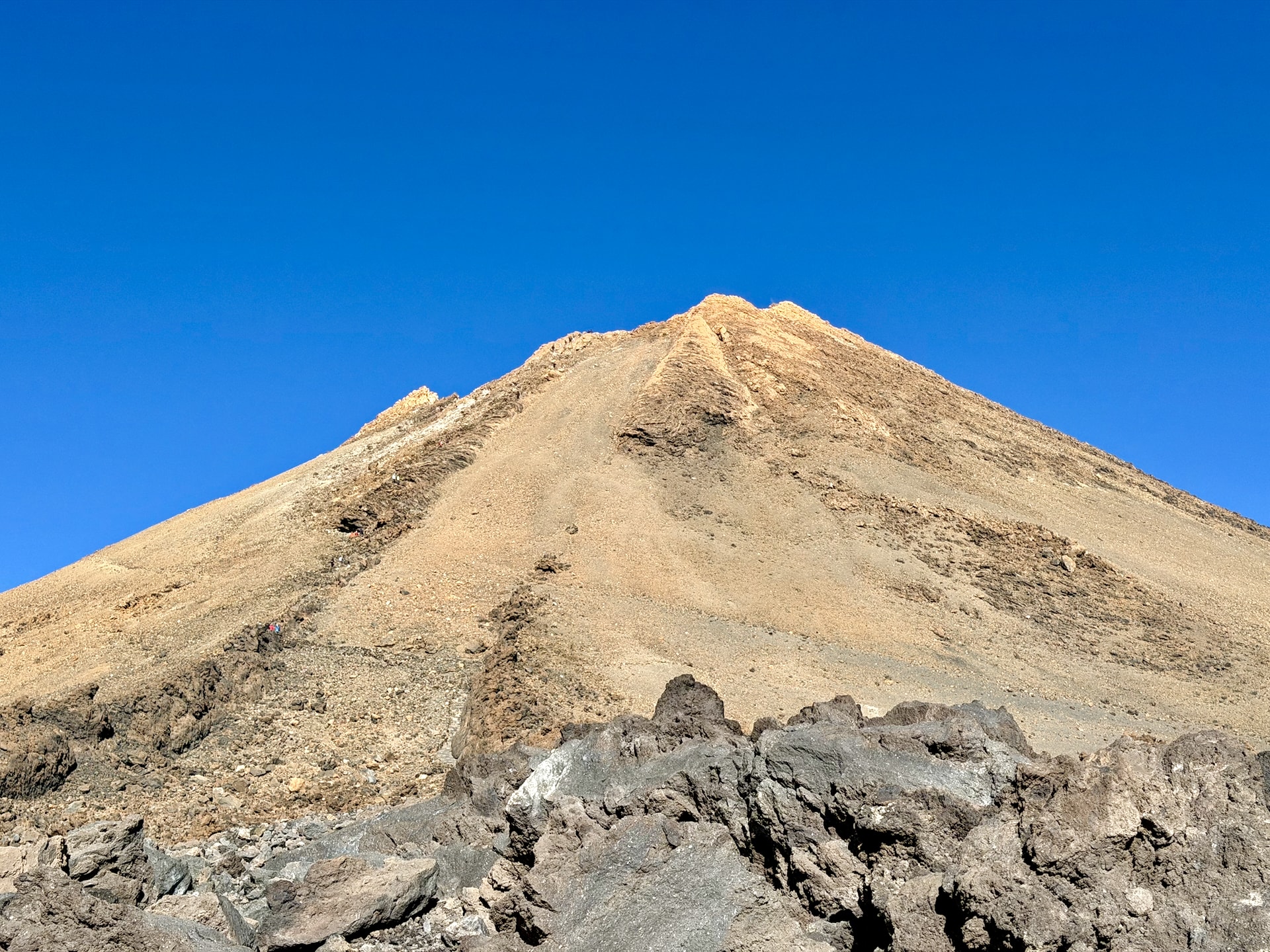
The trail is short and well built, with gradients of up to 60% in places. No balancing on boulders, but it’s steep, loose in parts, and a bad step can still mean a nasty fall. We took about half an hour to the top, walking slowly, and a little over an hour for the round trip including the summit.
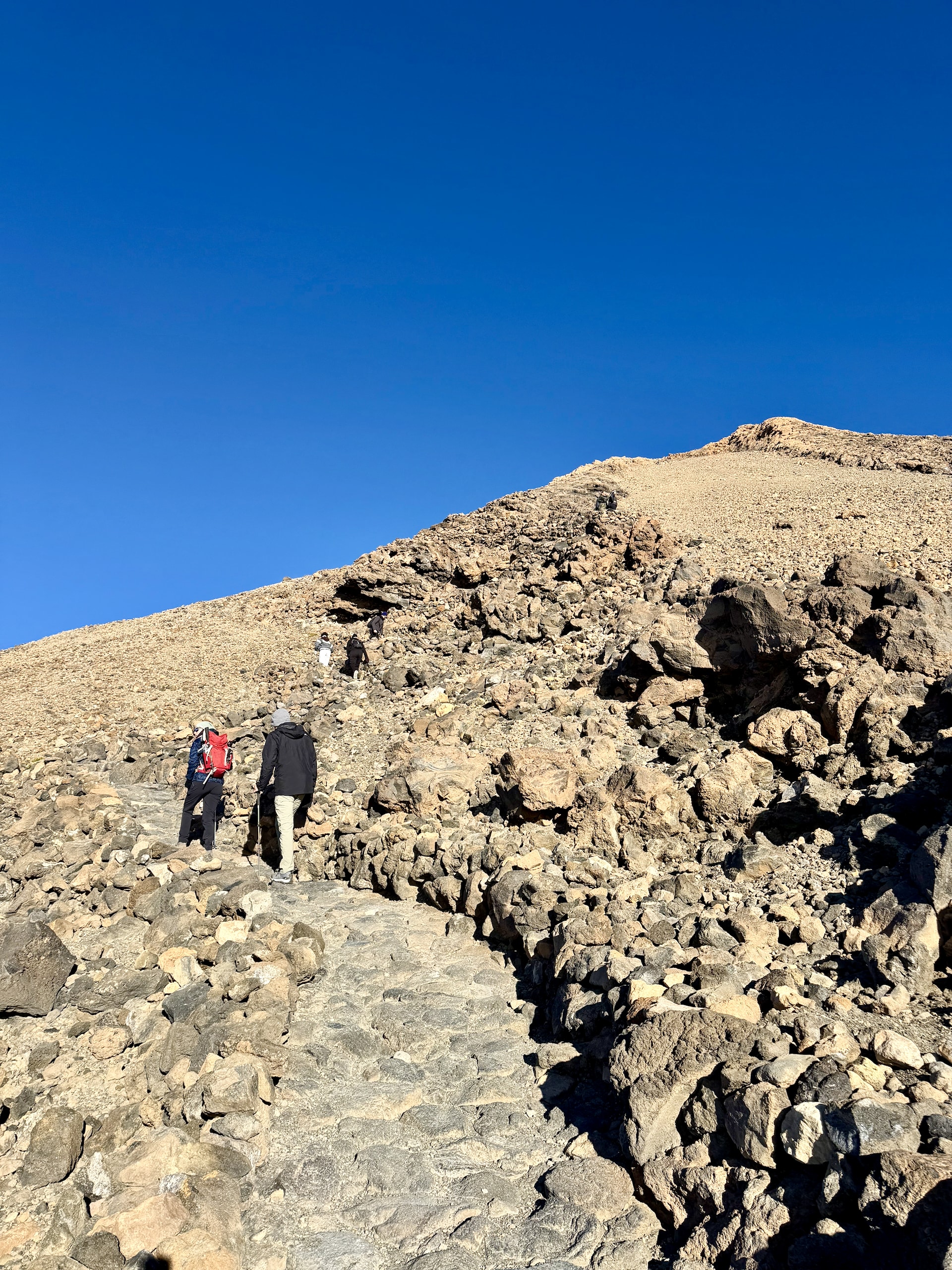
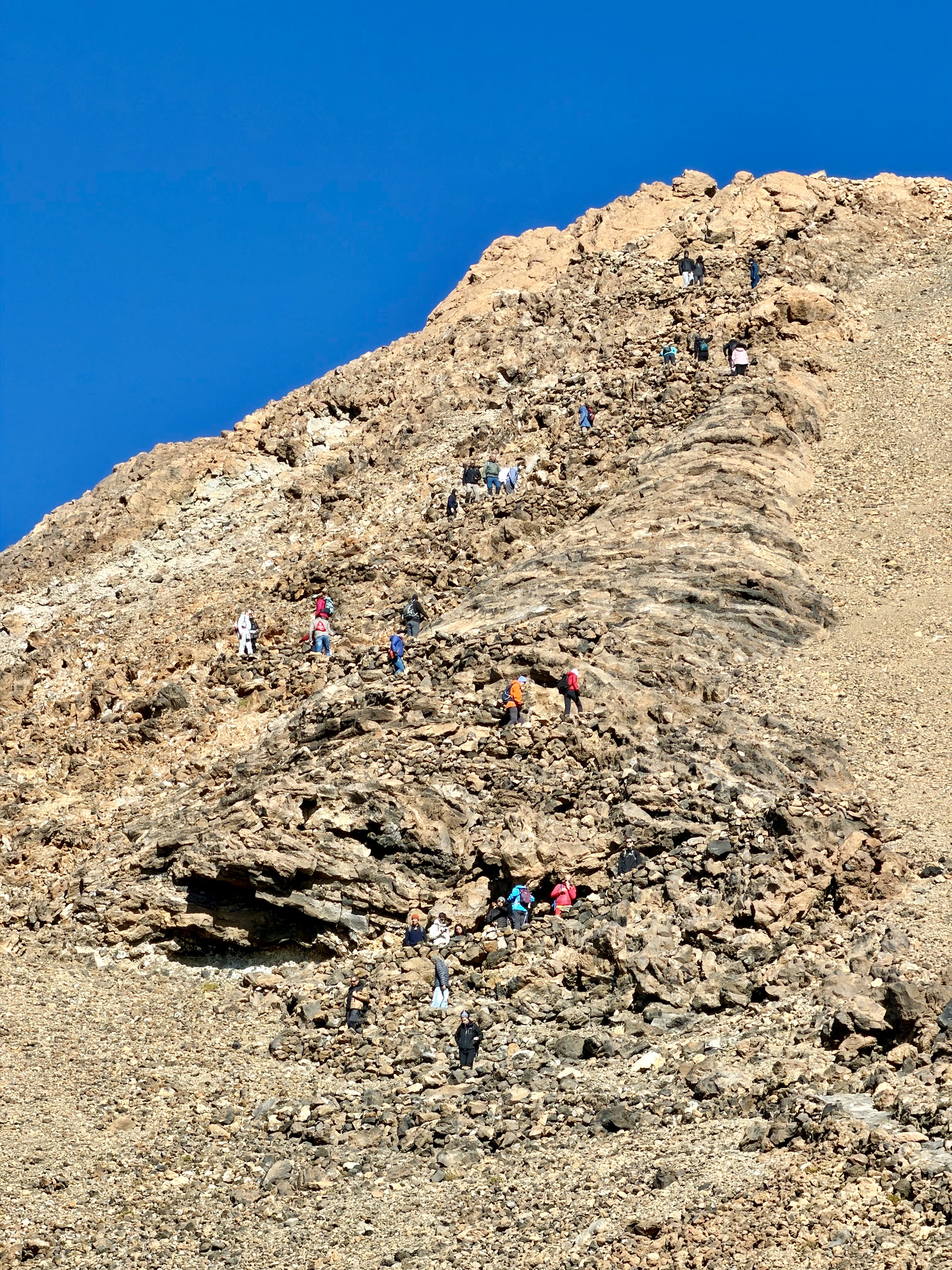
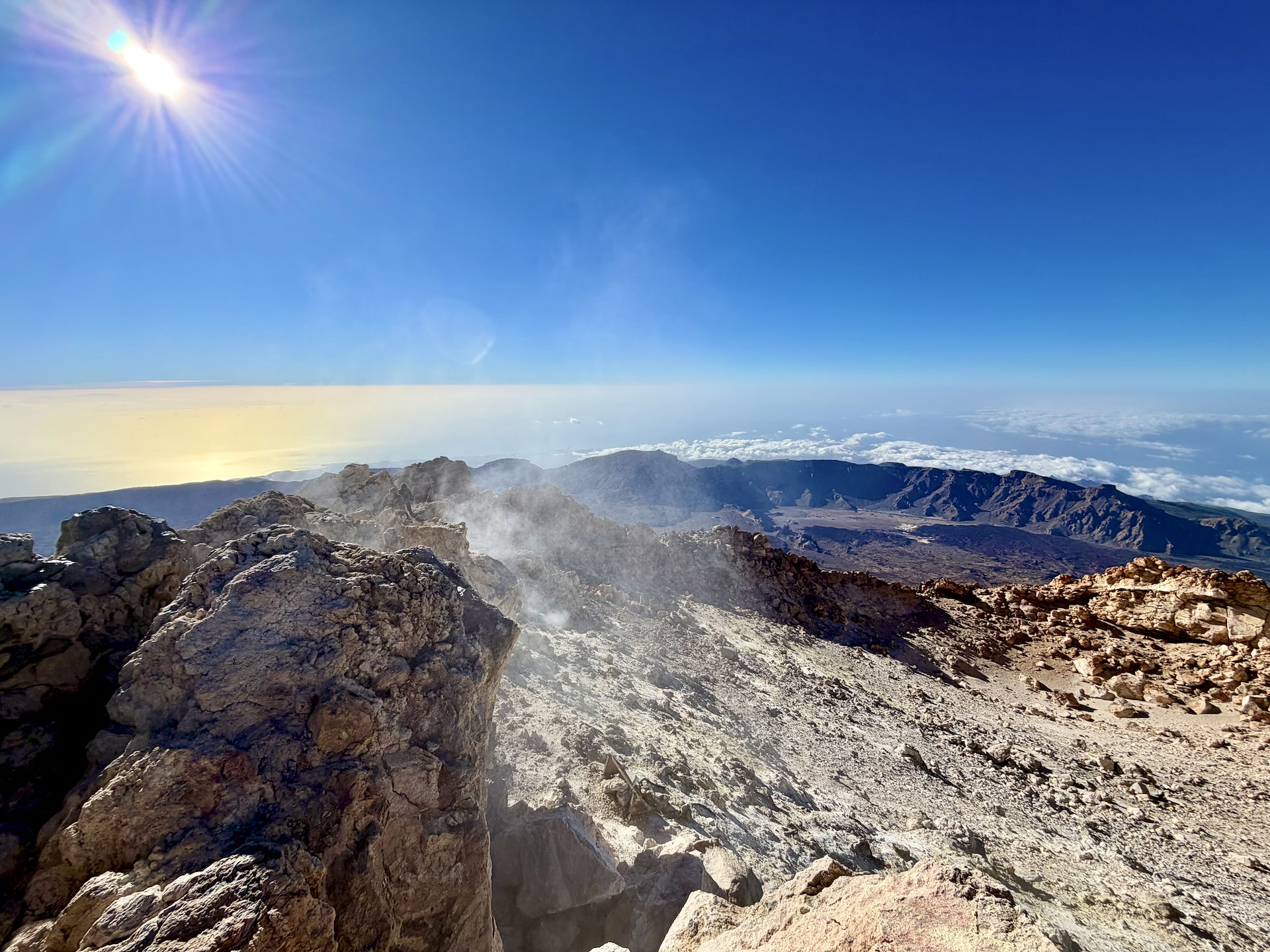
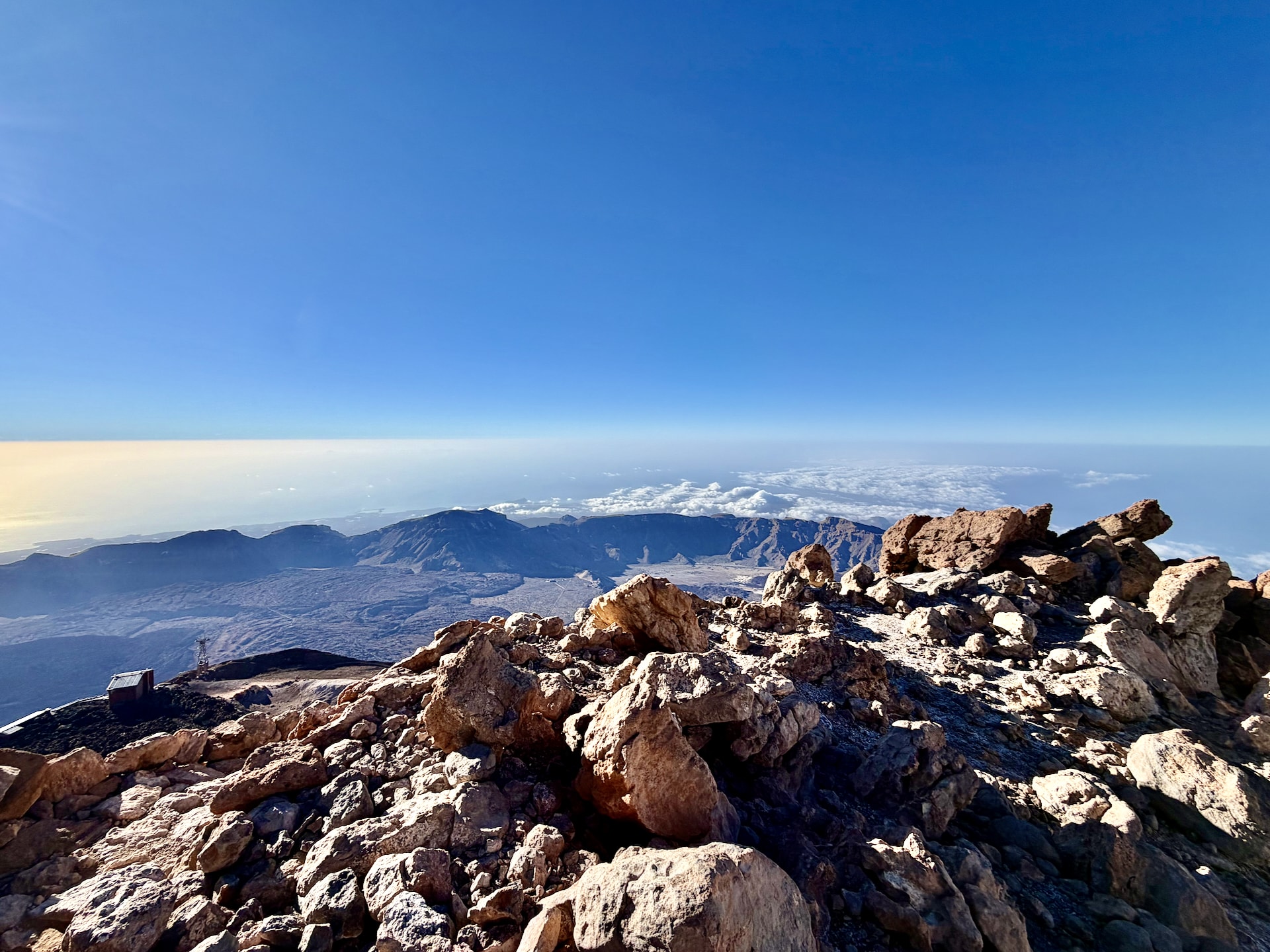
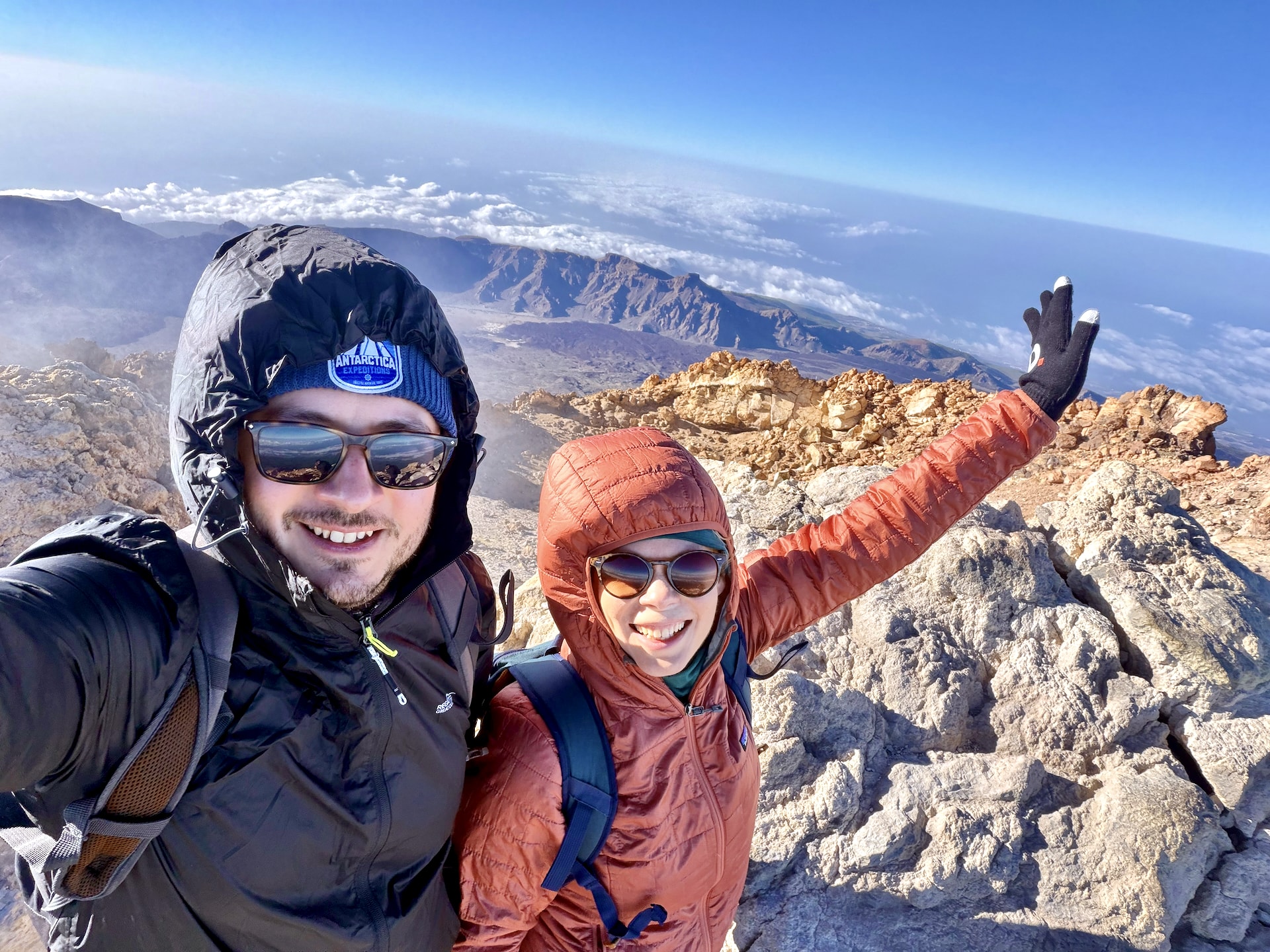
We’d been noticing a faintly rotten smell for a while. Near the crater rim we found the source: the mountain was steaming, with sulfur-smelling vapor coming out of the ground. Some of the vents are properly warm, which is a slightly unsettling thing to discover on top of a volcano. You can’t walk all the way around the crater, but the trail takes you to the highest point.
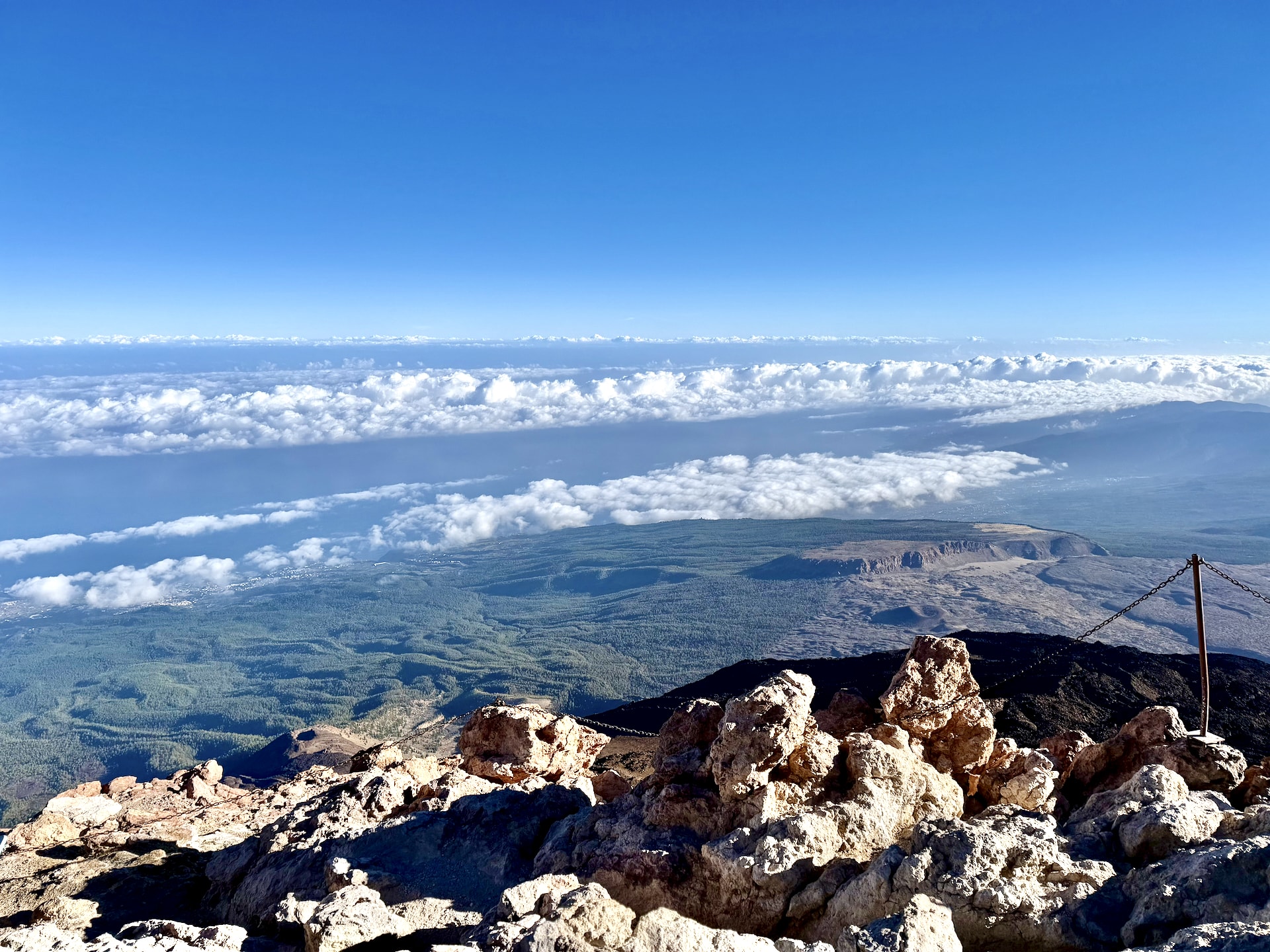
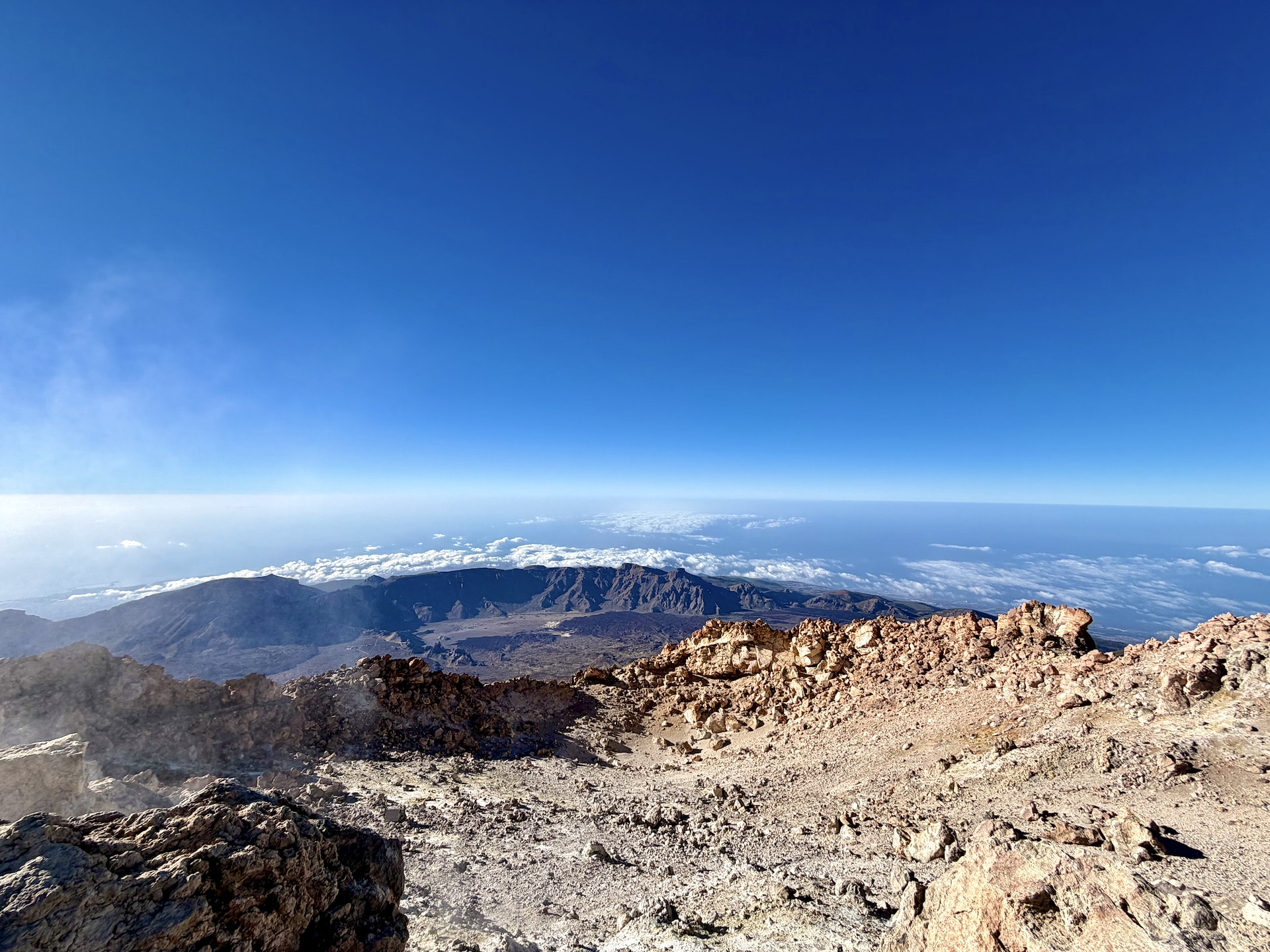
We were very lucky with the weather. Most of the week Teide had been hiding in clouds, and from the coast we rarely saw the top. On Saturday the only clouds were to the north, over the sea, and we were well above them. The wind, which can be brutal up here, was surprisingly mild at the summit, and there are sheltered spots along the trail.
Altitude: What It Felt Like
The summit trail starts above 3,500 meters, high enough for altitude sickness to show up, even if you’re only there for an hour.
My history with altitude is mixed. In Puno, Peru, at around 3,800 meters (12,470 ft), I felt terrible, as if my whole body was being pricked with tiny needles, and I struggled up a short, not particularly steep climb to a viewpoint. Yet I had no trouble at all at Rainbow Mountain, above 5,000 meters (16,400 ft). Admittedly, Peter and I were using the method the local Quechua have relied on for centuries. That trip is in our two-week Peru itinerary.
On Teide it wasn’t serious for either of us. We both felt dizzy now and then, and breathing takes more effort. Go slowly, in small steps. Hold on to the rocks on the steeper parts. When you feel dizzy, stop for a moment until it passes. Everyone we saw was moving slowly, and nobody seemed to be in trouble. Our travel health guide has more on altitude sickness and when to take it seriously.
Trekking poles don’t hurt, but you can manage without. We did the Fitz Roy hike in our Patagonia and Antarctica itinerary without poles too, and they’d have been more useful there than here.
What to Wear for the Teide Summit
All week we were sweating on the coast at 25 to 30 °C (77 to 86 °F). At the summit it was more like 5 to 10 °C (41 to 50 °F), before the wind. Nobody went through our bags, but we were wearing most of this anyway:
- Proper shoes. Not boots, in our case: Salomon trail runners, the same ones we wore in Patagonia (mine are the XA Pro 3D V9 Wide Gore-Tex). Their deep-lugged soles are exactly what the footwear rules ask for, and they passed the check without a second look.
- Long hiking trousers and layers. I had a windbreaker on top, Andrea her packable Patagonia puffer.
- Gloves. Our thin gloves from Antarctica, waterproof in theory and not in practice. One of the best decisions of the day: you grab the rocks a lot, and that’s far more comfortable with gloves.
- Hat and scarf, for the wind.
- Sunglasses and sunscreen. The sun at 3,700 meters doesn’t care that it’s cold.
Most of it came straight from our Antarctica and Patagonia packing list, which is a nice way to get a second life out of gear that otherwise sits in a closet.
Summit weather has little to do with the coastal forecast. Check AEMET’s high-mountain forecast for the national park the evening before, and the cable car’s status in the morning, since strong wind closes it. If the cable car doesn’t run on your permit day, you can claim back the permit fee.
No Permit? What You Can Still Do at the Top
Without a permit, don’t cancel the day. A cable car ticket still gets you to 3,555 meters, and two short viewpoint trails start at the upper station with no permit needed:
- PNT 11, Mirador de La Fortaleza, towards the north side of the mountain.
- PNT 12, Mirador de Pico Viejo, about 720 meters each way.
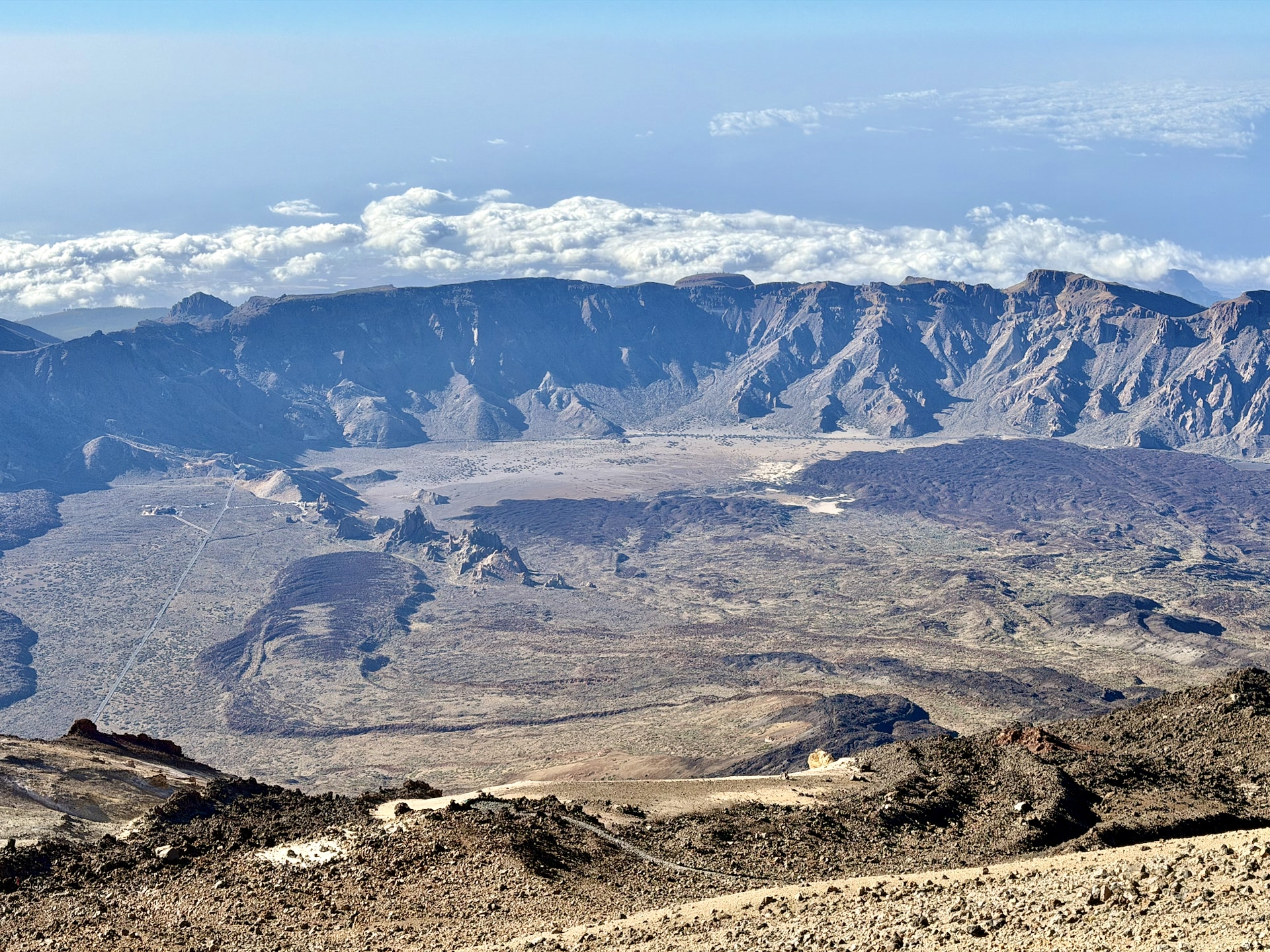
After the summit we still had some time, so we walked part of PNT 12. The trail ends at a viewpoint over the crater of Pico Viejo, Teide’s older neighbor. We turned back before the end, but even from partway along, honestly, the view isn’t much different from the top. The operator also sells a return ticket bundled with a guided walk to this viewpoint, from €55.50 (~$62.2 USD) instead of €43. The trail is short and needs no permit, so you can easily do it on your own at no extra cost.
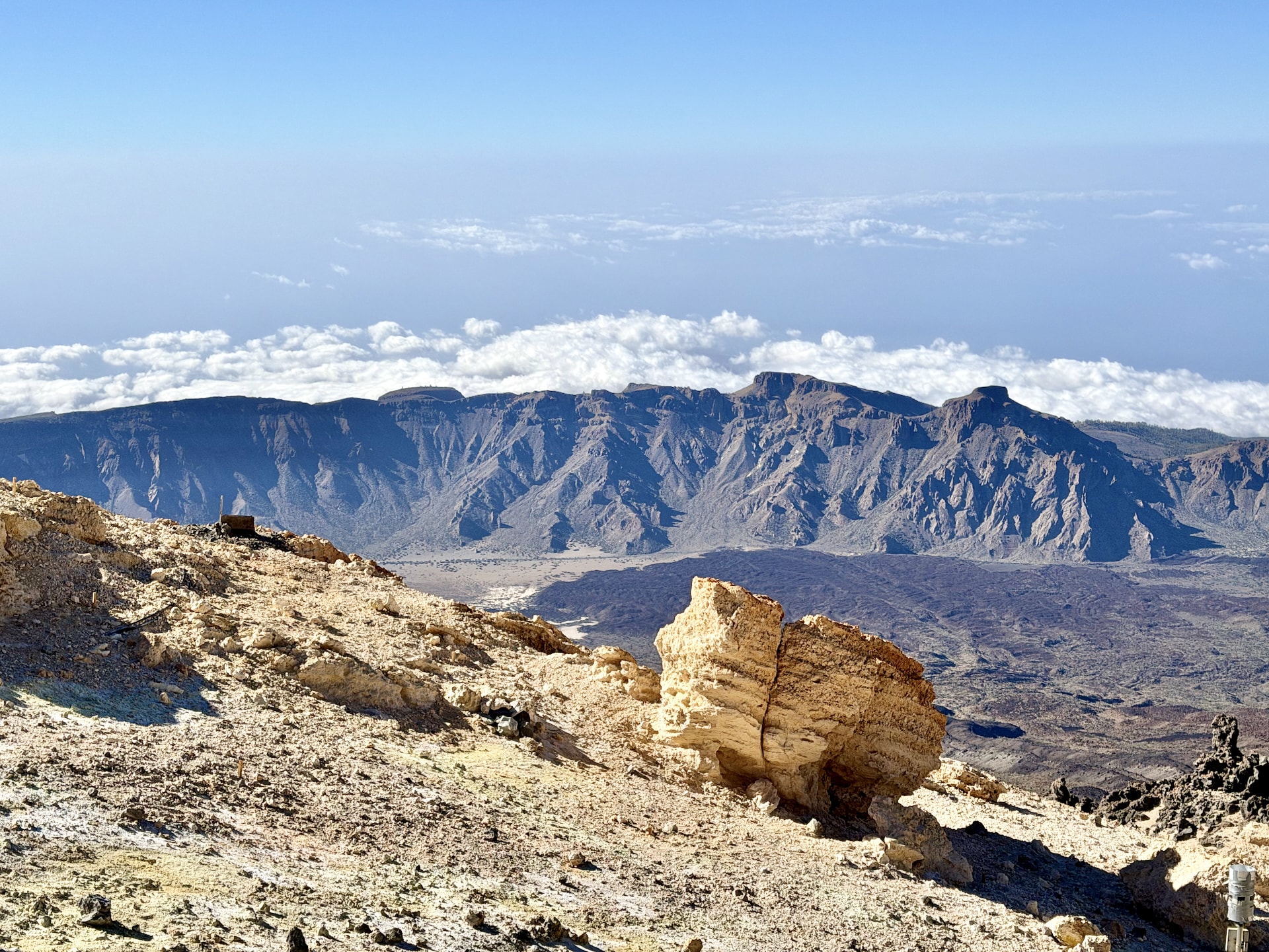
The road up is half the experience anyway. It runs straight across the Las Cañadas caldera, the floor of a collapsed volcano about 16 by 9 kilometers (10 by 5.6 mi) across, and Teide is the younger volcano that grew inside it. Its summit last erupted around the year 850.
The Guanches, the island’s original inhabitants, had their own explanation for the eruptions, and a small exhibition at the base station tells it in superhero-comic style. Guayota, a demon who lived inside the mountain, kidnapped Magec, the god of the sun, and hid him in the volcano, plunging the world into darkness. The Guanches begged their supreme god, Achamán, for help. He defeated Guayota, freed the sun and sealed the demon inside the crater with a plug: according to the legend, the pale cone at the very top of Teide.
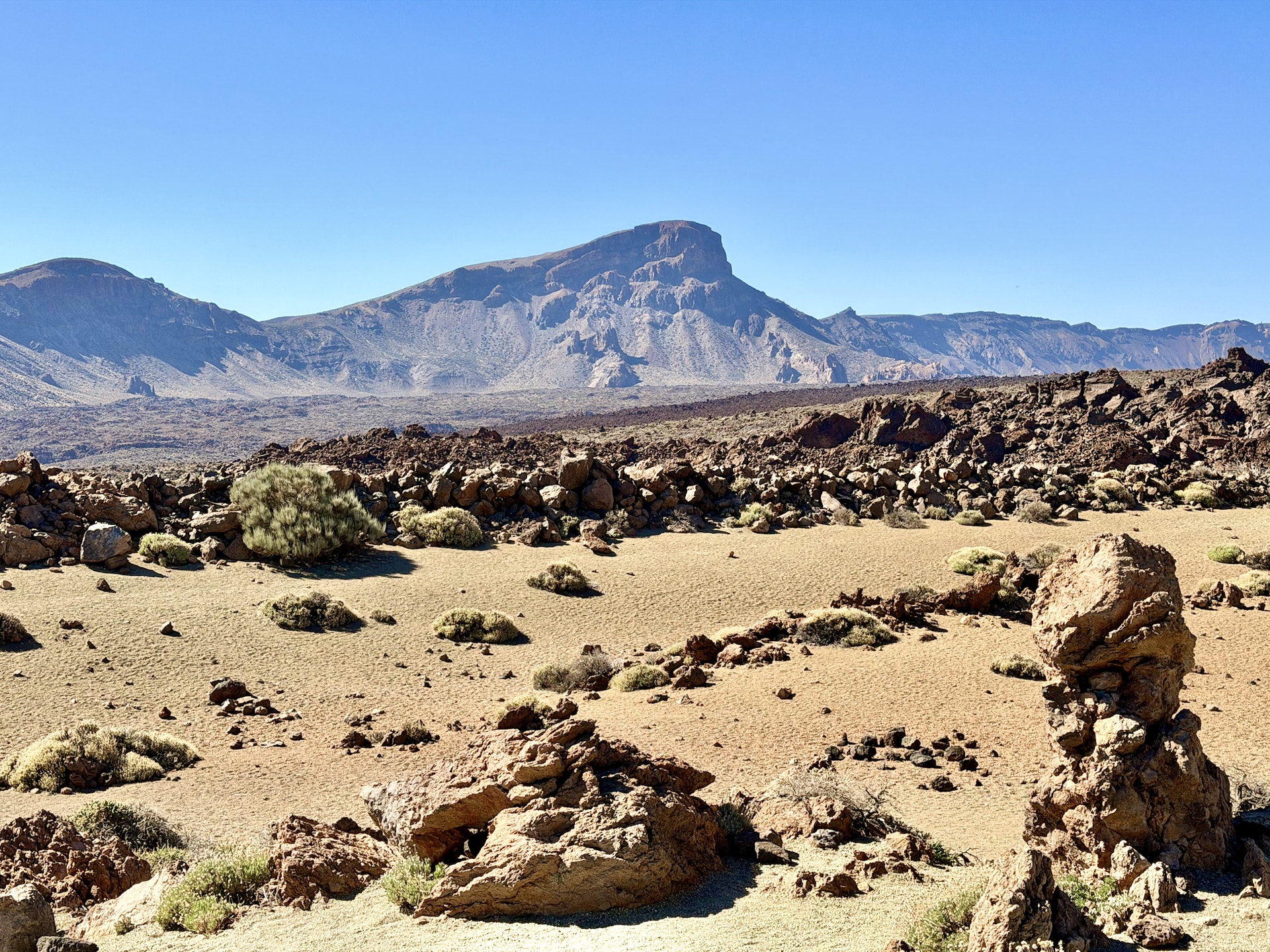
On the way back we stopped at the Mirador de Minas de San José, one of the few viewpoints along the road with a big car park, where you can walk out onto the volcanic sand into a landscape that looks like a Mars rover should be parked somewhere nearby.
There are two more ambitious options, both well beyond what we did. You can hike up from the bottom via Montaña Blanca, which needs its own permit for the upper section. And the truly committed stay up to watch Teide’s shadow fall across the island at sunset, cloud cover permitting (rarely, in our experience in October). The cable car doesn’t help much here. The operator does run a sunset cable car on selected days, from €72 (~$80.6 USD), but it only takes you to the upper station and the Pico Viejo viewpoint trail, not the summit. Watching the sunset from the very top means walking down in the dark: a much longer and harder hike than anything in this article.
Without a car, guided Teide tours from the coastal resorts include transport and cable car tickets, which saves you the early drive. Check whether the summit permit is included before you book, because a cable car ticket alone stops at the upper station.
Is Climbing Teide Worth It?
Yes. Standing on the highest point in Spain, above the clouds, with a steaming crater beside you, is a great experience, and the effort is modest: a cable car and a short, steep walk. We celebrated with lunch at Restaurante Los Andes in Aguamansa on the way down, where the lady of the house brought out a chorizo and set it on fire, and then slept away the afternoon by the pool.
If you can’t get a permit, don’t be too disappointed. The cable car and the viewpoint trails give you almost the same view, and the drive through the crater is one of the best things you can do on the island.
One last thing: if you book a permit and your plans change, cancel it. A no-show costs you three months of access, and someone like me is probably refreshing the page, hoping for your slot.
Teide Permit FAQ
Do you need a permit for the Teide cable car?
No. The cable car only needs a ticket. The permit is for the PNT 10 trail from the upper station to the summit.
How much does the Teide permit cost?
€15 for visitors from outside the Canary Islands, €6 for residents of the other islands, free for Tenerife residents and children under 14.
How far ahead can you book a Teide permit?
Up to 56 days, on Tenerife ON. A new week opens every Monday at 7:00 Canary time.
How long can you stay at the summit?
Summit slots are 90 minutes since the October 2026 rule change. With a cable car ticket alone, you can stay at the upper station for one hour.
Can you climb Teide without a permit?
Not the last section. Without one, take the cable car and walk the PNT 11 or PNT 12 viewpoint trails. Entering the summit trail without a permit can be fined up to €600.