Thursday was supposed to be our easy day. After two days of chasing the weather around the island, the plan was gentle: a farm visit at noon, a few hours on a black sand beach, and La Orotava’s old town in the late afternoon. Two out of three happened. The third was defeated by sand, which I’ll come to.
Before the trip, the farm was going to be a winery. Andrea was driving, though, so a wine tasting wasn’t really an option. Bananas, on the other hand, were literally everywhere: there were plantations along almost every road we drove. I’d also heard that Canary bananas are something special, so I got curious, and a banana plantation tour it was.
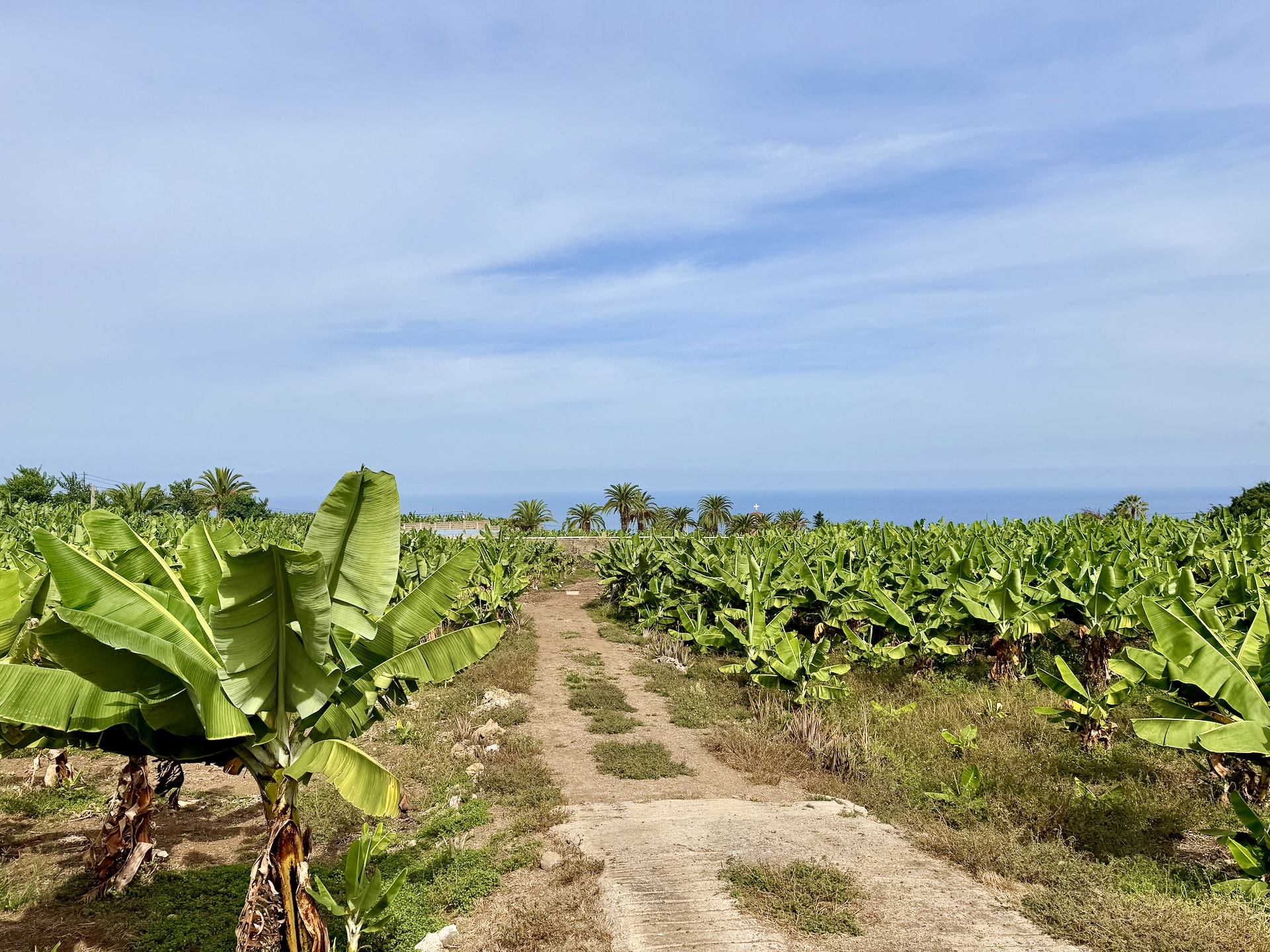
The two halves fit together better than they sound. The plantation sits on the road down to El Bollullo, one of the best-known black sand beaches on the north coast, and since you can no longer drive to the beach, the plantation’s street is roughly where you leave the car anyway.
The short version:
- The tour: bananaECOplantation in La Orotava, €20 (~$22.4 USD) per person, about an hour, in English and Spanish, with a tasting at the end. Walk-ins got in on our day, but booking ahead is safer.
- The beach: El Bollullo, about 1.8 km (1.1 miles) on foot from the end of the plantation’s street. Allow 30 minutes down and longer back up.
- Swimming: not really. Big waves, a visible rip current, and a lifeguard who uses his whistle.
- Time needed: half a day. We spent an hour at the plantation and two hours on the beach.
The Banana Plantation Tour at bananaECOplantation
bananaECOplantation is a small organic banana farm on the Carretera El Rincón in La Orotava, just east of Puerto de la Cruz. The name gives the organic part away rather efficiently. Tours start at 10:30 and 12:00, take about an hour and cost €20 per person, which isn’t cheap. We booked ahead and took the noon slot, though strictly speaking we didn’t have to: some people on our tour had simply turned up. There was space for them that day, but I wouldn’t count on it in a busier week.
Our guide was Iván, a local, and the tour ran in English and Spanish. The default is English first, then Spanish, but most of the questions came from the Spanish visitors, so the order kept flipping. As language practice goes, it isn’t bad: you hear everything twice.
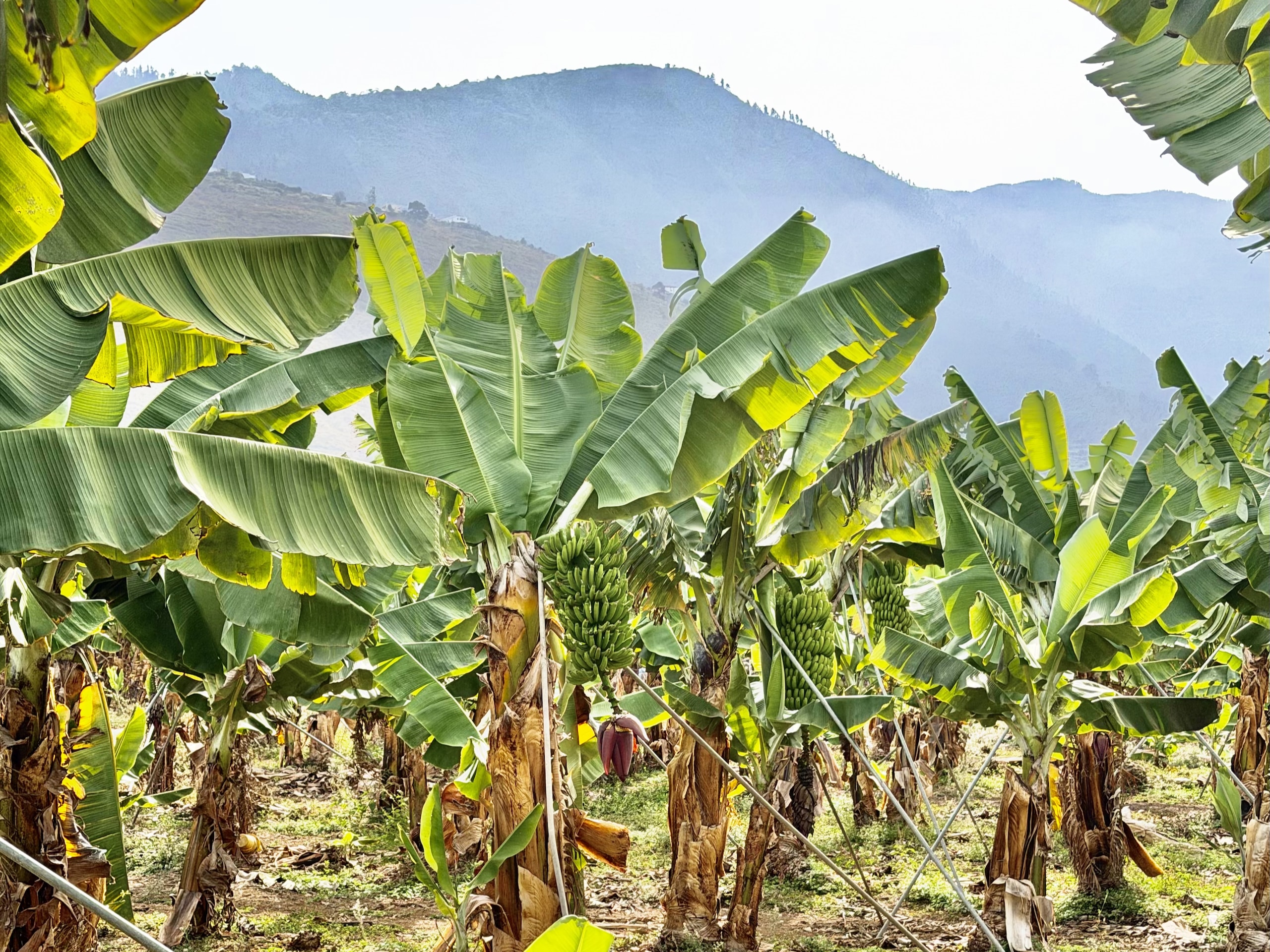
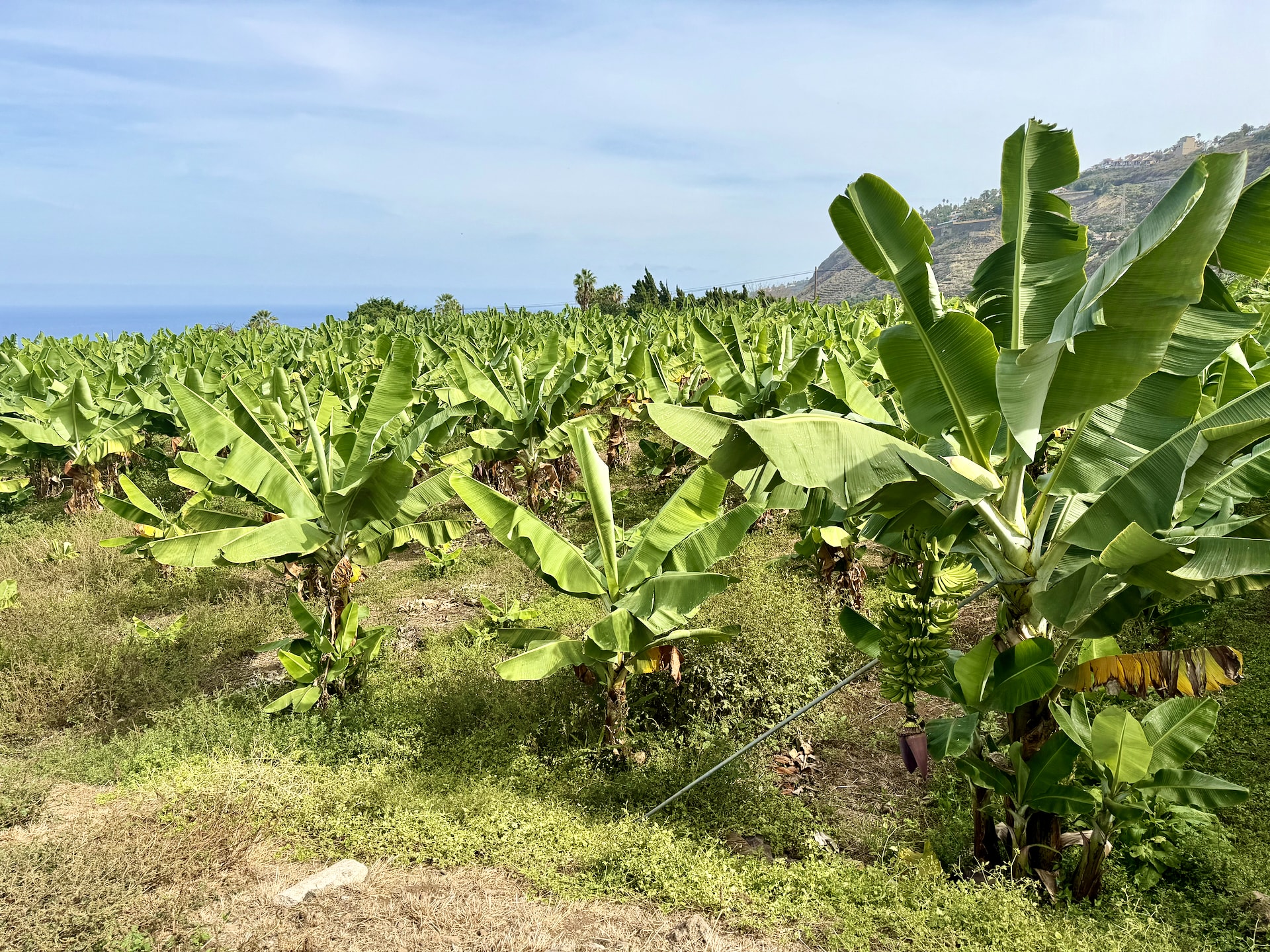
The farm is small, 3 hectares (7.4 acres) with about 5,000 banana plants, and the company runs two more plantations. Each plant needs about 20 liters (5.3 gallons) of water a day, Iván said, and one worker can look after a whole hectare, because once a banana plant is in the ground, the job is mostly watching it grow.
The whole plantation smelled strongly of manure. It’s an organic farm, so presumably this was organic manure. The farm has its own animals: two pigs, according to Iván, plus chickens and cats roaming between the plants. A hen with a few tiny chicks squared up to one of the cats at one point, and the cat backed off, visibly ashamed of itself.
What We Learned About Bananas
Each plant fruits once, then gets replaced
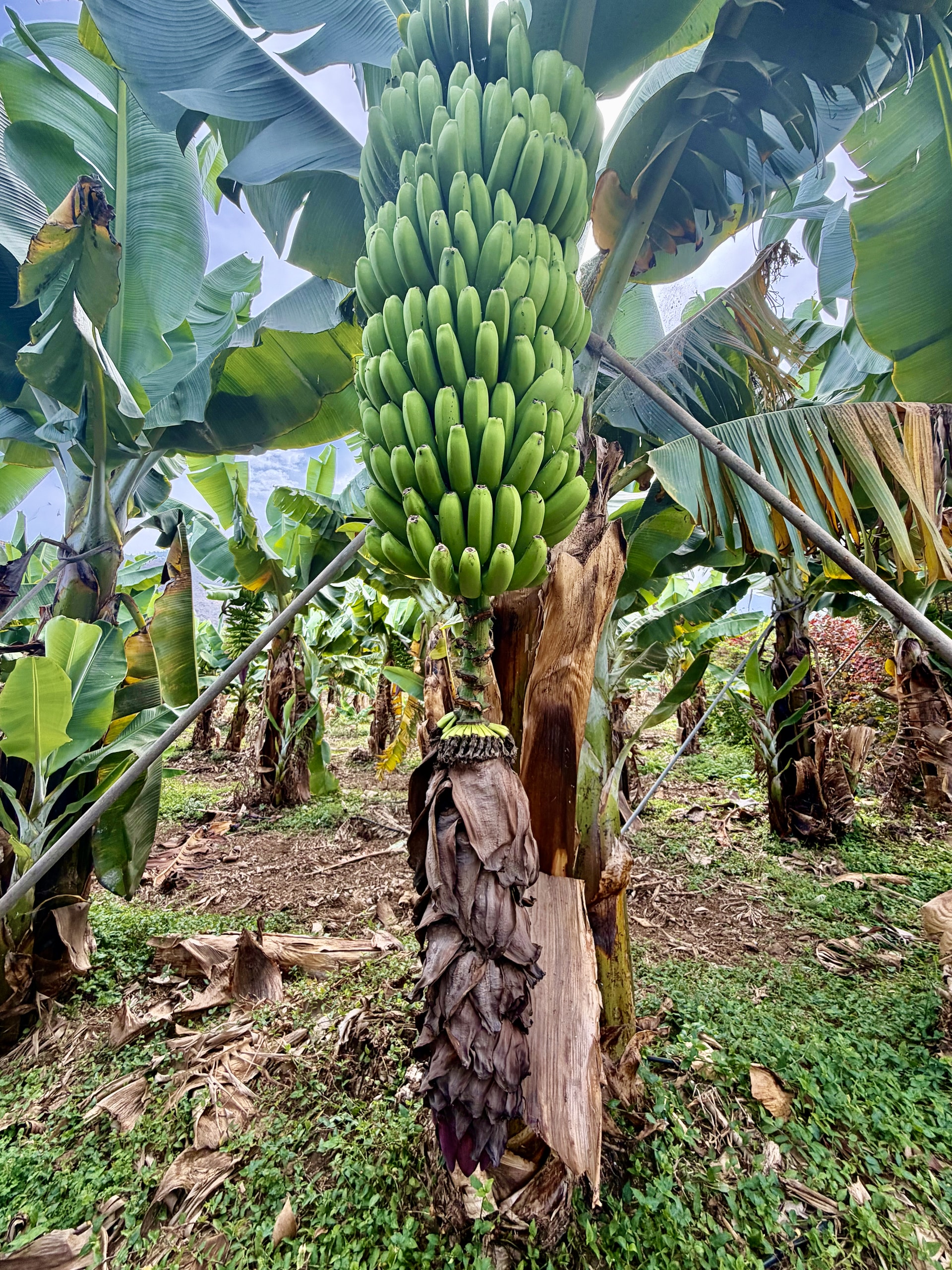
We already knew a banana plant isn’t a tree. The “trunk” is just leaf bases rolled tightly together, which makes it a giant herb. What we didn’t know is that each plant produces a single bunch in its whole life. Once it has done its job, it’s cut down with a machete, and a new shoot that has been growing beside it takes over as the next plant.
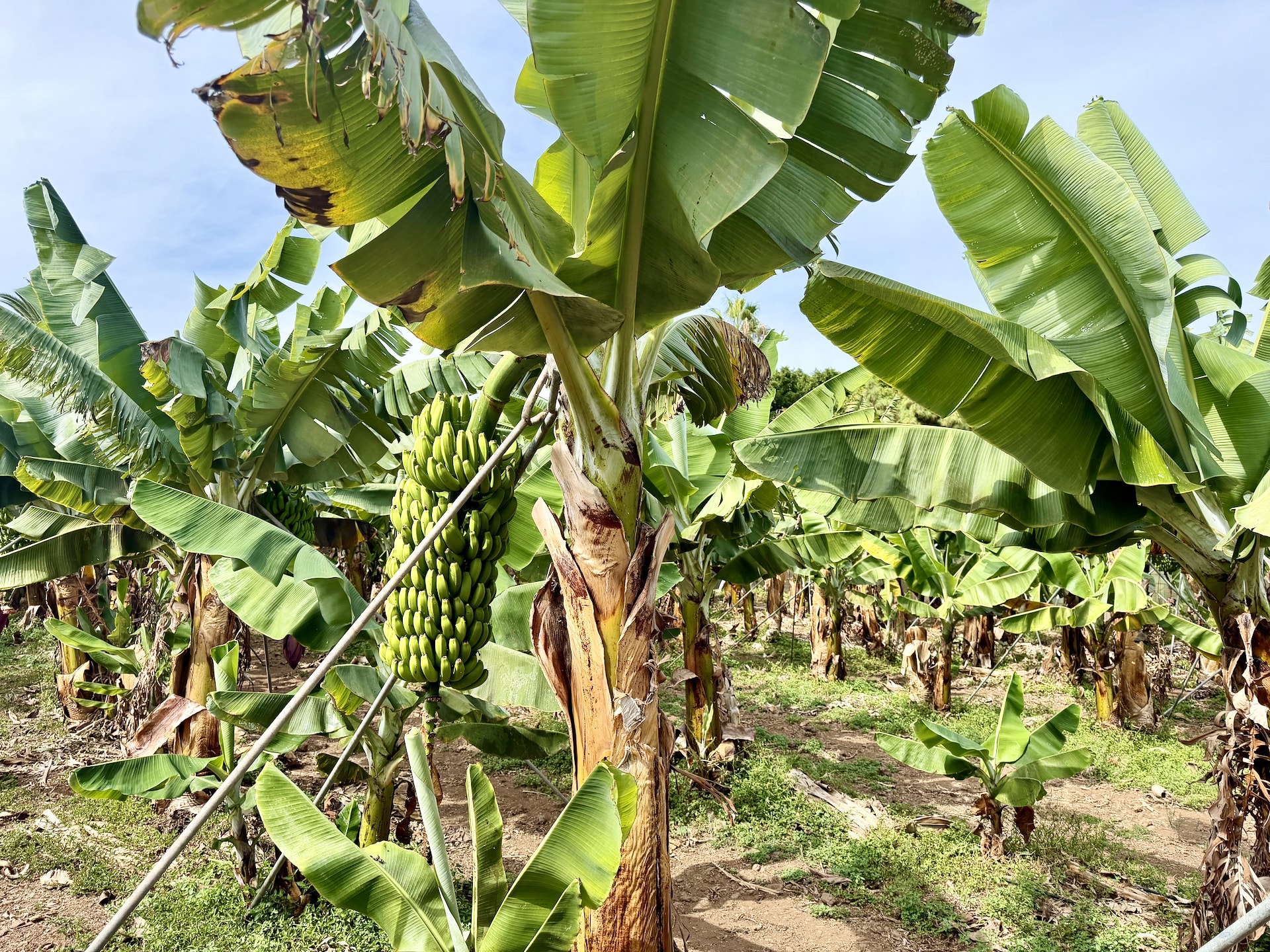
A plant fruits about once a year, but the plantation never fruits all at once. The plants weren’t all put in at the same time, and when a storm knocks a few over, new ones go in where they fell, so there’s always something ready somewhere. The plants we walked between were a good 3 meters (10 ft) tall, by my estimate.
The red “heart” isn’t the flower
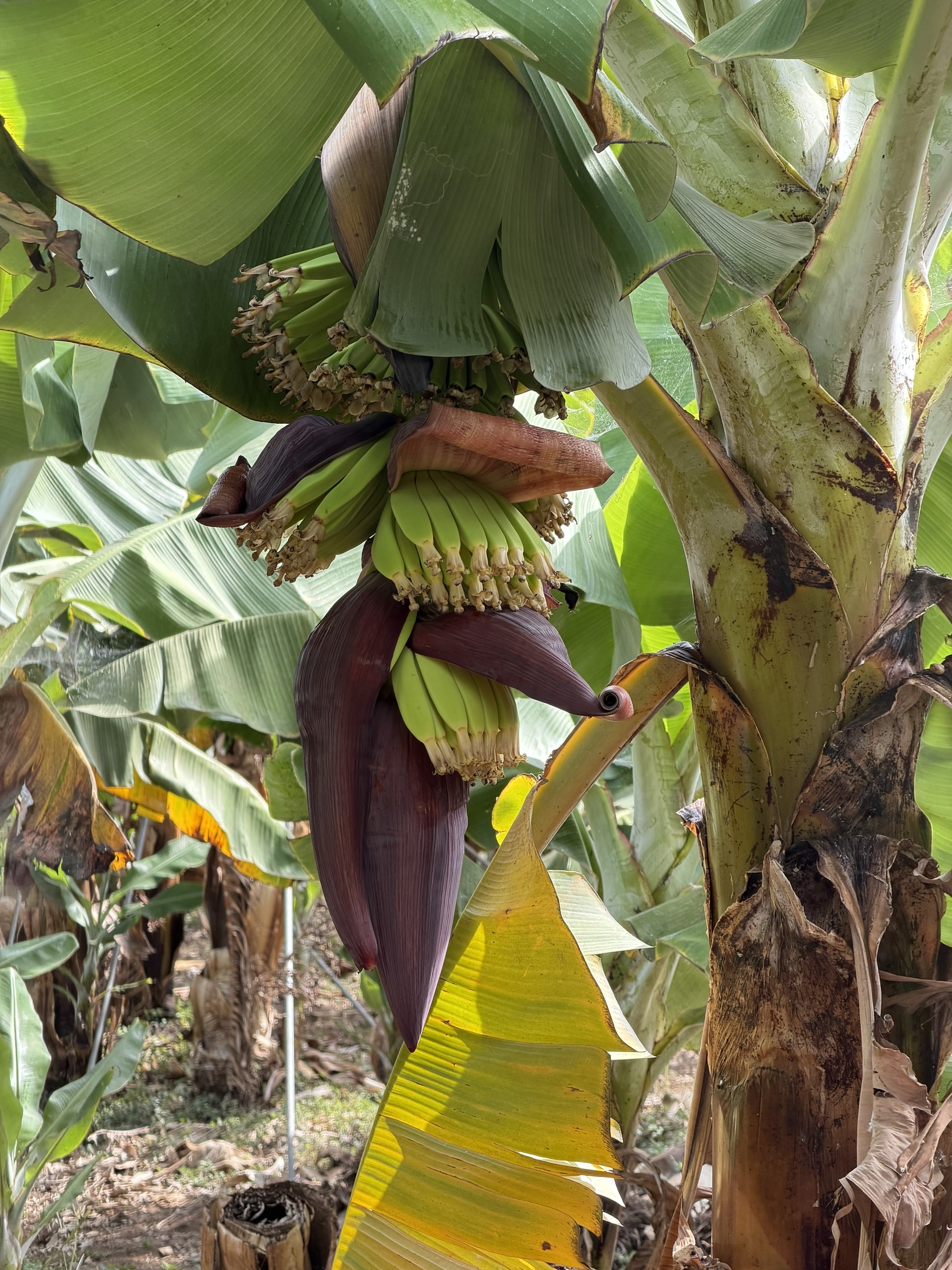
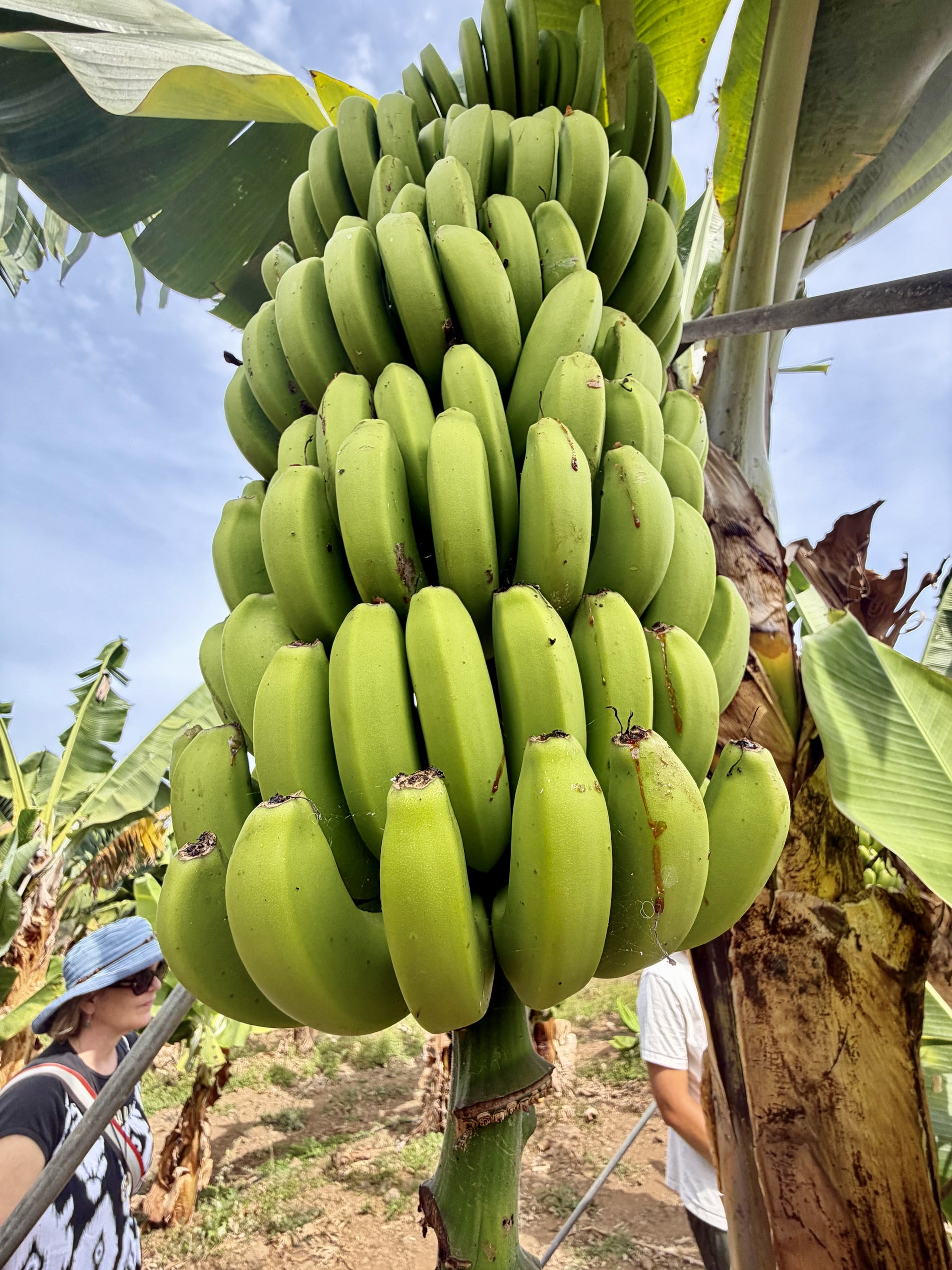
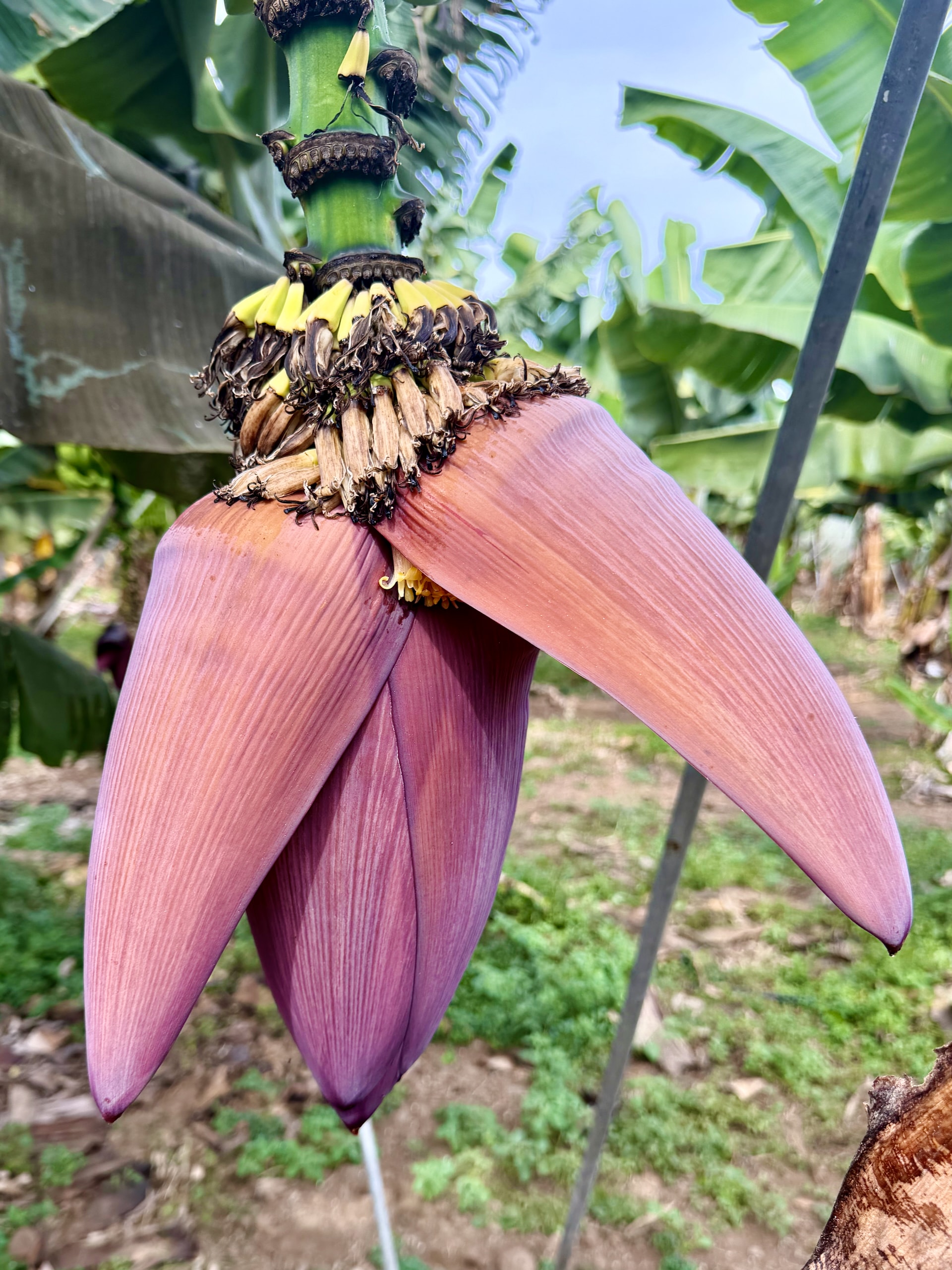
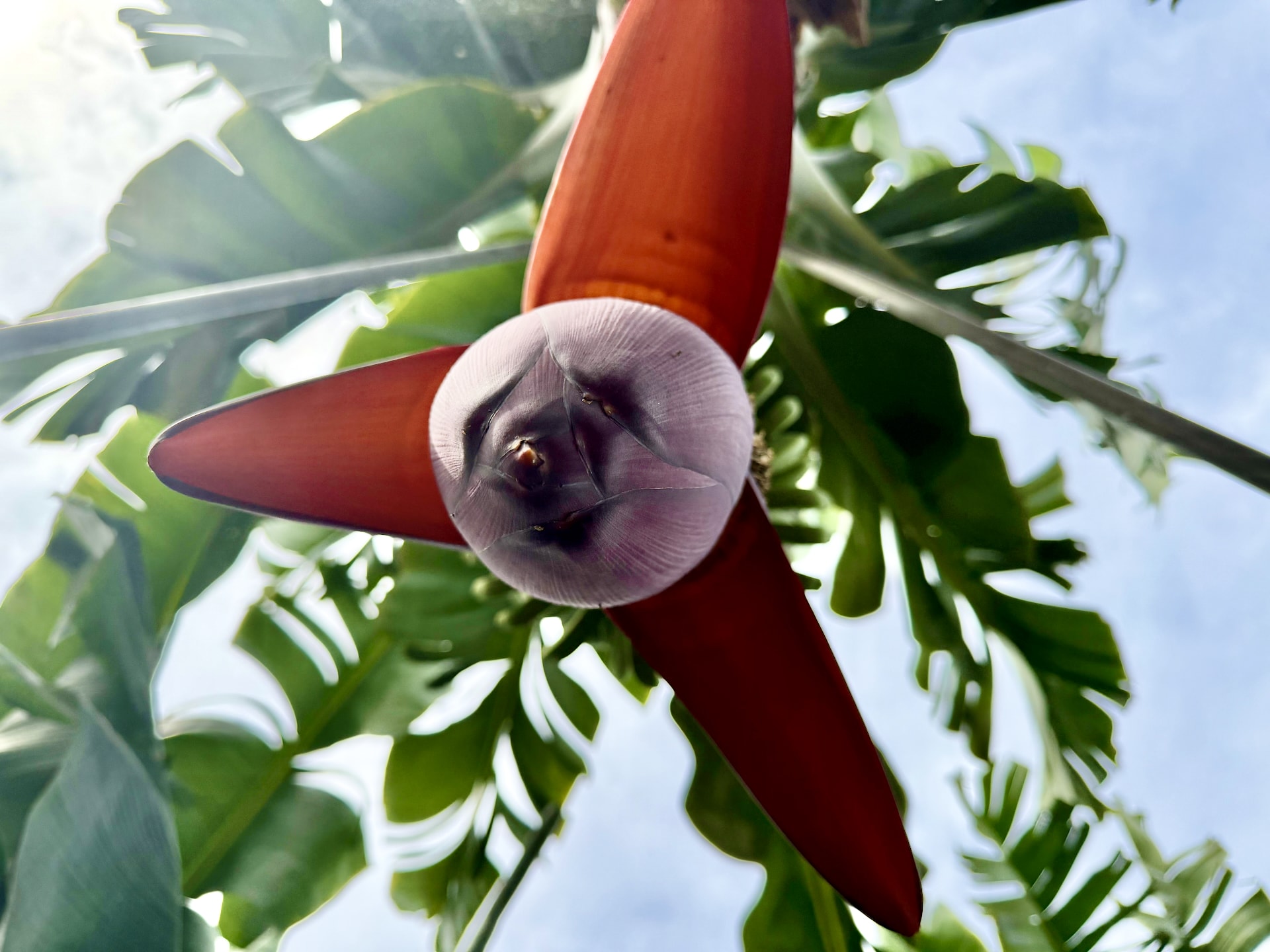
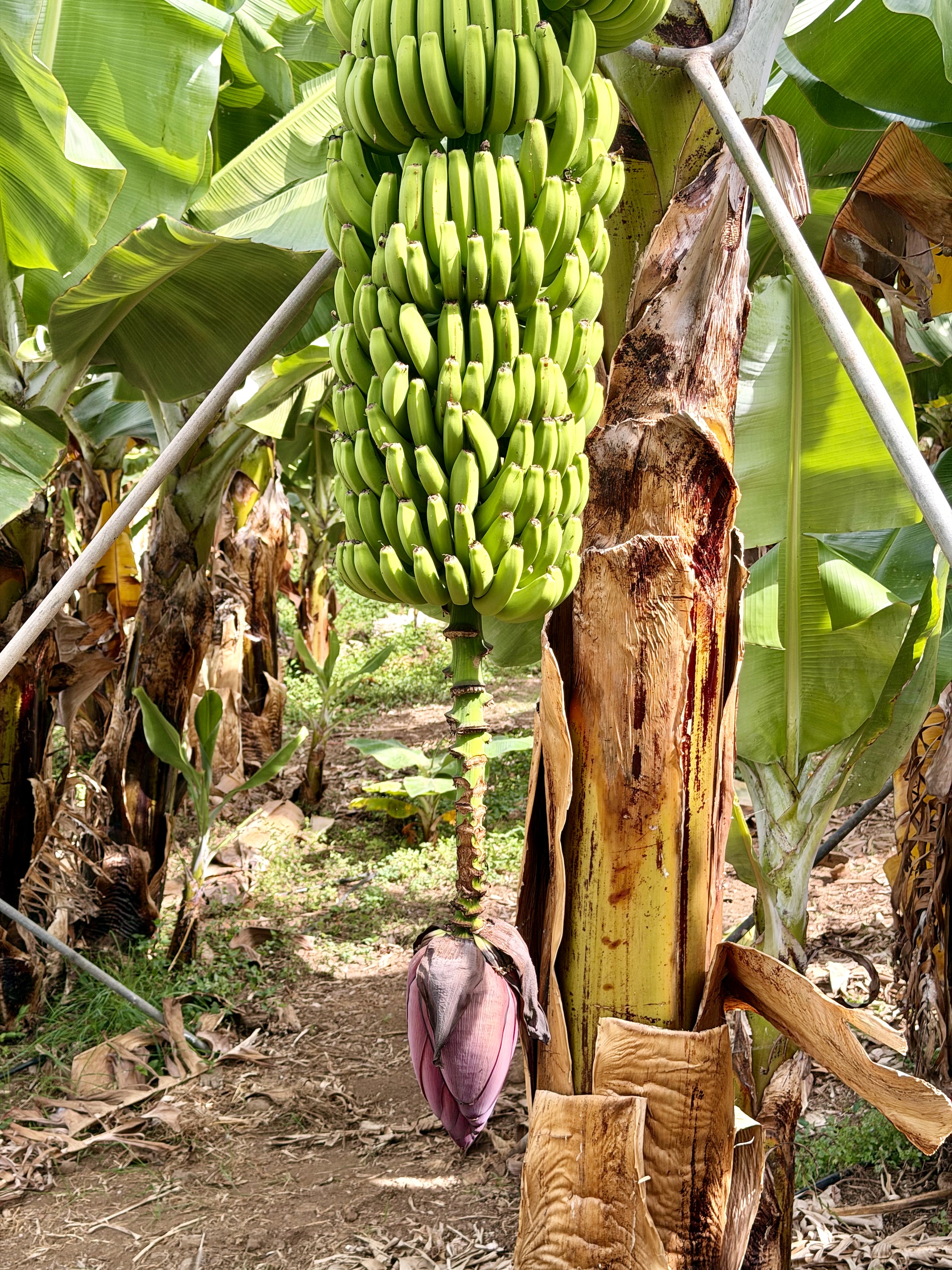
When a plant starts to fruit, a big red, flower-like thing appears at the end of a thick, vine-like stalk. They call it the corazón, the heart. I assumed it was the flower. It isn’t. The red parts are leaves, and the small bananas grow out from under them, each with its own little flower at the tip. The bananas then curl upward along the stalk, and you can clearly see where each cluster joins it.
The flowers wilt, and this is the part I’d never have guessed: someone has to take the dead flowers off by hand, or the whole bunch rots. The small bananas at the end that will never grow big are cut off and thrown away, or more likely fed to the pigs and chickens.
Nobody mentioned pollination, and I didn’t ask. I looked it up afterwards. Cultivated bananas don’t need it: the fruit develops without pollination, which is also why there are no seeds inside.
How they know a banana is ready
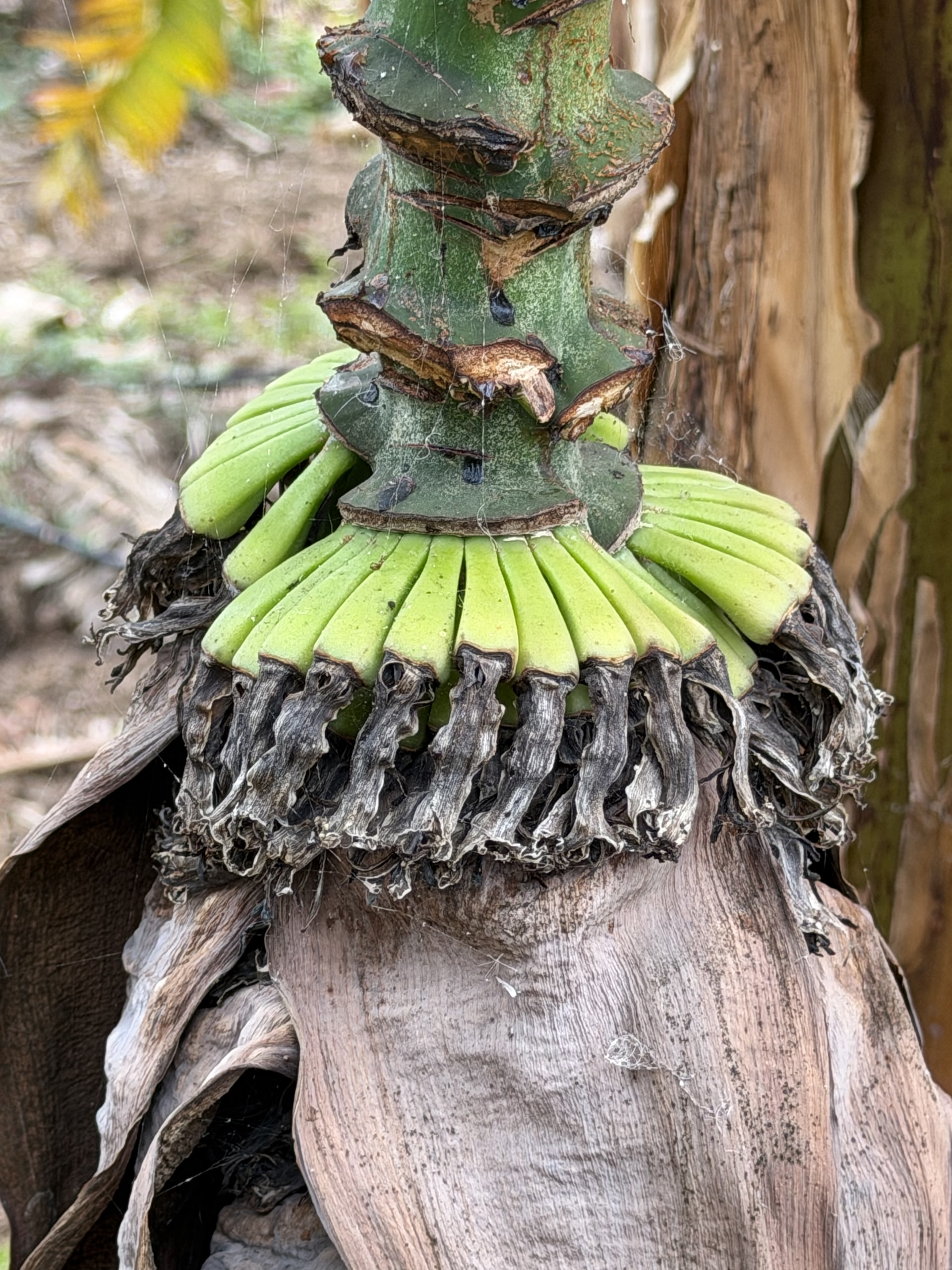
Bananas are cut green, and the sign is the flower tip: the end of each banana opposite the stalk, where the flower was. When that tip is about as wide as the banana itself, it’s ready. That’s hard to explain in words and surprisingly obvious in front of a real bunch. At that point the corazón is cut off the bottom, which tells the workers the bunch can come down.
The plantation also times its harvest for the school year. When school is in, Spain eats a lot more bananas than when it isn’t, and the farm plans for it. I can’t vouch for that one beyond Iván, but it’s my favorite fact of the day.
Small bananas, big rules
The organic bananas here are small, about 14 to 17 cm (5.5 to 6.7 in). According to Iván, they’re too short for the EU’s minimum length for bananas, so they’re sold only in Spain and never exported to the rest of Europe. The EU’s marketing standard does set a minimum length for bananas: 14 cm (5.5 in).
I didn’t measure Iván’s bananas. But the organic Canary bananas we’d bought at Alcampo two days earlier were much smaller than the ones I buy at home, and smaller even than the ones we tasted at the plantation, so I can easily believe some of them come up short.
If you’re doing the beach afterwards, wear your swimwear under your clothes. There’s no obvious changing room at El Bollullo, and changing under a towel on a windy beach is a skill nobody needs to practice.
A Short History of Canary Bananas
Iván’s version: this was the first banana plantation on the island, opened in 1880 if I remember right, with bananas the British had brought over from South Africa. The bananas stayed when the Spanish took over the business, and as the land passed down through the family, it was split up again and again, until only this part still grows bananas.
I couldn’t find a source that confirms “first” or the date, so take that as the farm’s own story. The wider picture is well documented. Bananas had been growing in the Canaries since the 15th century, but the export trade only started in 1878, and it was run largely by British firms. Alfred Lewis Jones, whose Elder Dempster ships carried the fruit, is credited with the first banana imports into England in 1884, and Fyffes was importing Canary bananas by 1888. The trade even left its name on London: Canary Wharf is named after a 1936 warehouse for the Canary Islands fruit trade.
The Tasting, and Whether Canary Bananas Taste Different
The tour ends with a tasting: bananas from the plantation and a shot of banana liqueur, or banana brandy, or something in that family. Afterwards they collected our banana peels, which go to the two pigs, who apparently love them. There’s also a shop with every banana product you can think of. We bought a bag of banana chips for €3 (~$3.4 USD), which kept us going on the drives for the rest of the week.
So, are Canary bananas special? In one way, yes. A bunch here stays on the plant for about six months, against 90 to 100 days in hotter growing regions, according to the growers’ association. But they’re the same Cavendish type you buy everywhere else.
About those Alcampo bananas. We only bought the organic ones because they were the only ripe ones on the shelf, and I didn’t want to risk the others not ripening before we flew home. That, incidentally, contradicts something Iván told us on the tour: that unripe bananas are hard to find in the supermarkets here. We took a 1 kg bag, the smallest they had. Andrea thought they tasted stronger. The texture was a little softer, I’ll give them that. But it wasn’t an “oh my god, this is a different fruit” moment. And the plantation’s own bananas, the “special” organic Canarian ones, tasted more like the bananas we get at home than the supermarket ones did.
The Alcampo bananas didn’t last, either. After three or four days they went moldy, and we had to throw the last ones away. At least that suggested they really were organic: conventional bananas are often treated with fungicide after harvest to stop them rotting, and organic farming restricts that, which may well be the reason.
Is the Banana Plantation Tour Worth It?
For €20 and an hour, yes, if you’re even slightly curious about how food actually gets grown. It was genuinely interesting, Iván knew his subject, and I left knowing far more about bananas than I expected to want to know. It isn’t cheap for what it is, and if farm tours don’t interest you at all, it won’t convert you. But as half of an easy day in the north, it works well, especially since the beach is right below it.
Walking Down to El Bollullo
We’d planned to leave the car at the plantation, but Iván told us we could park further down. You used to be able to drive all the way to the beach car park. Since late 2025 that’s over: the council closed the last stretch of road to visitors’ cars and shut the beach restaurant’s private car parks, citing the 1992 law that protects this stretch of coast. We covered the background in our guide to Tenerife’s black sand beaches. Only residents and workers can drive down now, and given that two cars can’t pass each other on that road, I’m not sure the rest of us are missing much.
So we parked at the end of the plantation’s street, on the corner, where there were free spaces along the road. When we came back there were fewer, but still a few. From there it’s about 1.8 km (1.1 miles) down to the beach. Allow about 30 minutes, a bit less if you walk fast. The plantation sits at about 180 meters (590 ft) above sea level and the beach is at sea level, so the way down is pleasant. The way back is the same distance, all uphill.
Save some water and some energy for the climb back to the car. It’s the same 1.8 km, all uphill, and it usually comes in the afternoon heat.
El Bollullo Beach: What to Expect
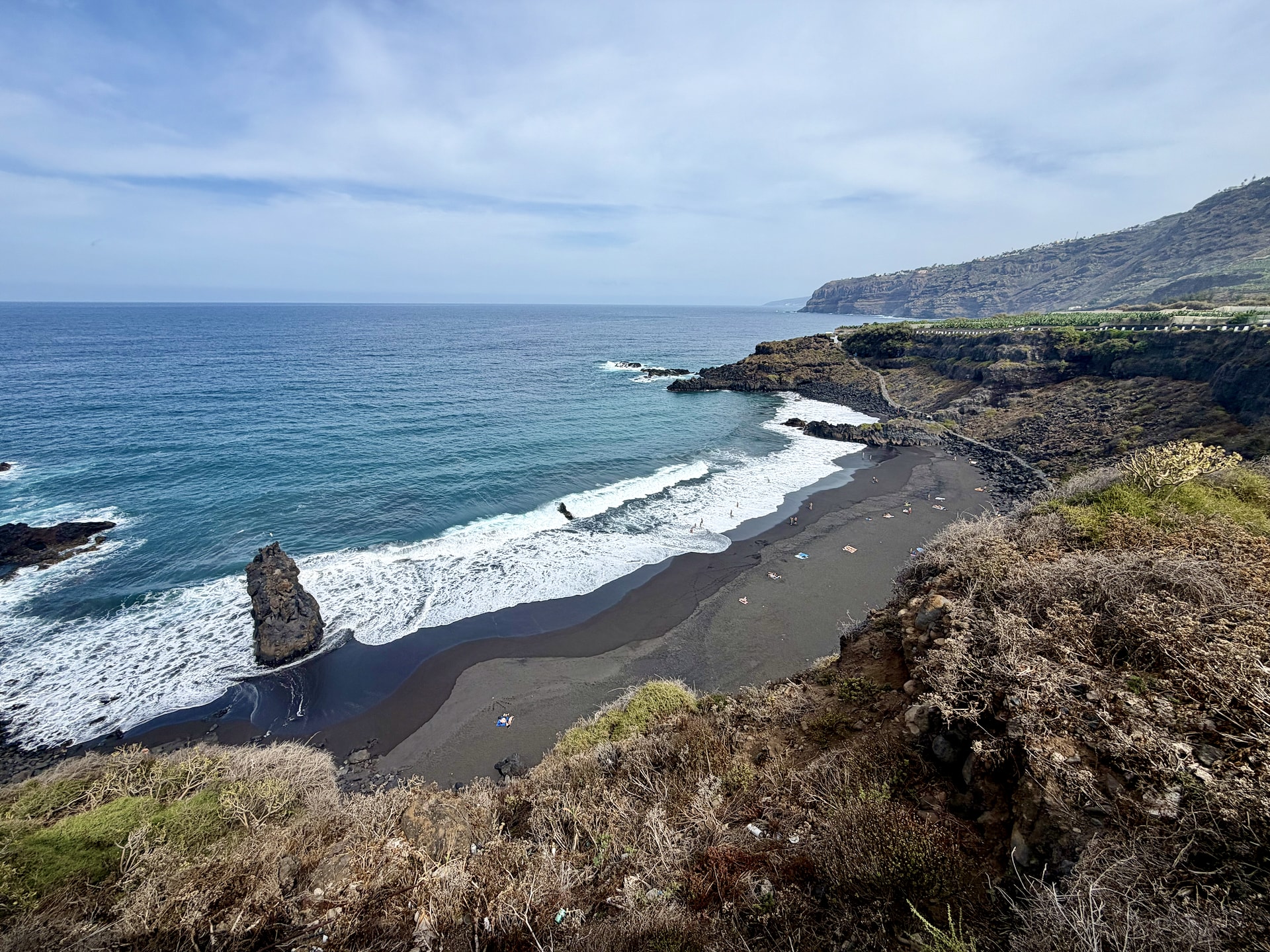
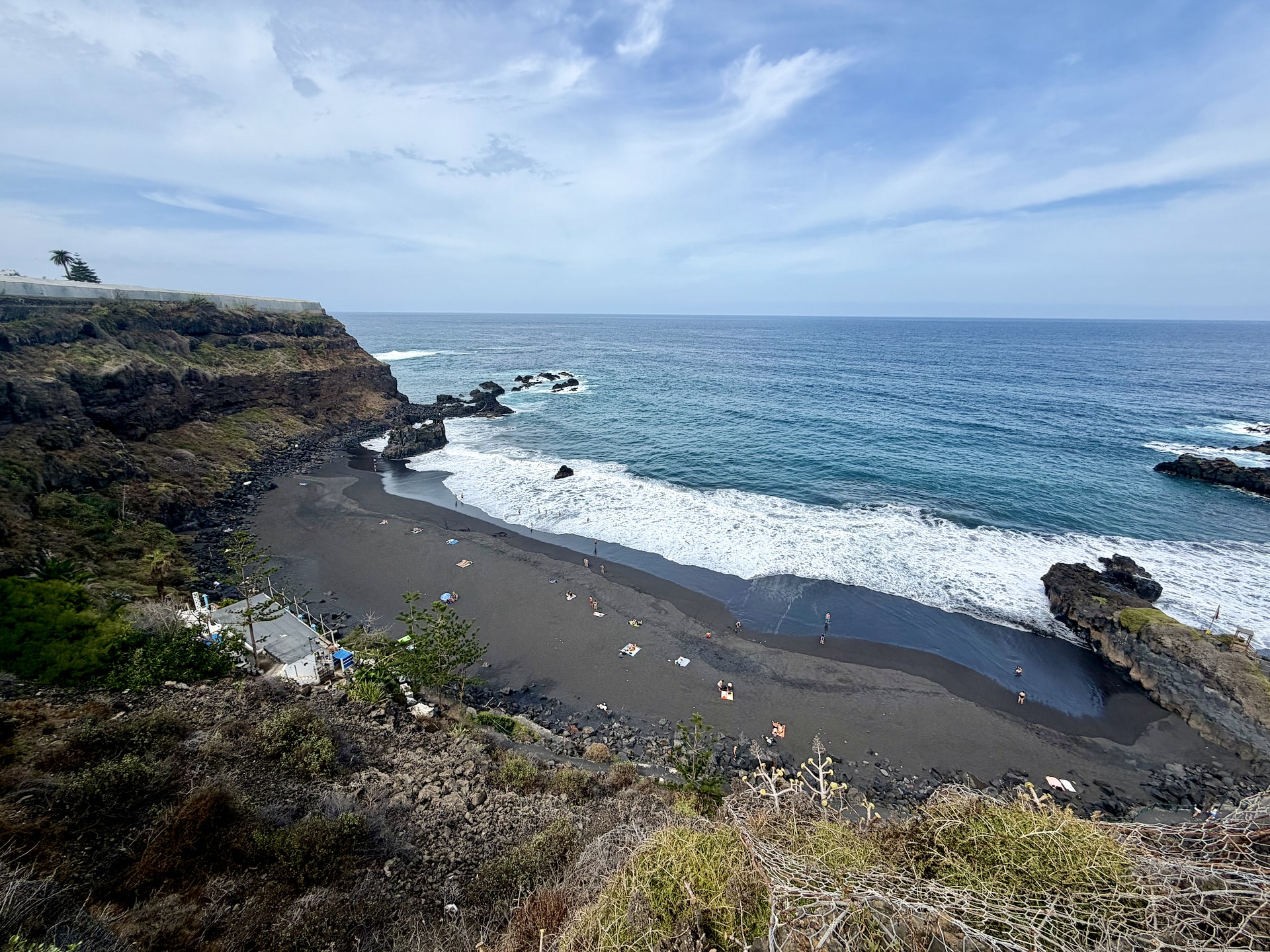
El Bollullo is a small cove between two cliffs, about 200 meters (660 ft) long, and its sand was the blackest we saw all week. When the sun is on it, it gets properly warm. At the bottom there’s a bar-café and a lifeguard, who blew his whistle at least once while we were there. There may be a toilet or a changing room somewhere: a hut up some stairs behind the café could be either. We never saw anyone go in, and everyone, us included, changed under a towel. Next to the main beach is a smaller cove, the prettiest part of the whole place, and it was completely closed to visitors.
You don’t really swim at El Bollullo. You go in to about knee depth, meaning water that reaches your knees between waves, because when a wave arrives, it comes up a lot higher. There was a rock about 5 meters (16 ft) high that the waves regularly broke over, with a heavy, loud crash. The sea came in phases: for a while the waves got noticeably rougher, then they eased off again. A sign warns about rip currents, and we’d clearly seen one from the top of the cliff on the way down. This is a sea that can drag you off in seconds, and it does happen: in February 2024 a man died here after lifeguards pulled him from the water.
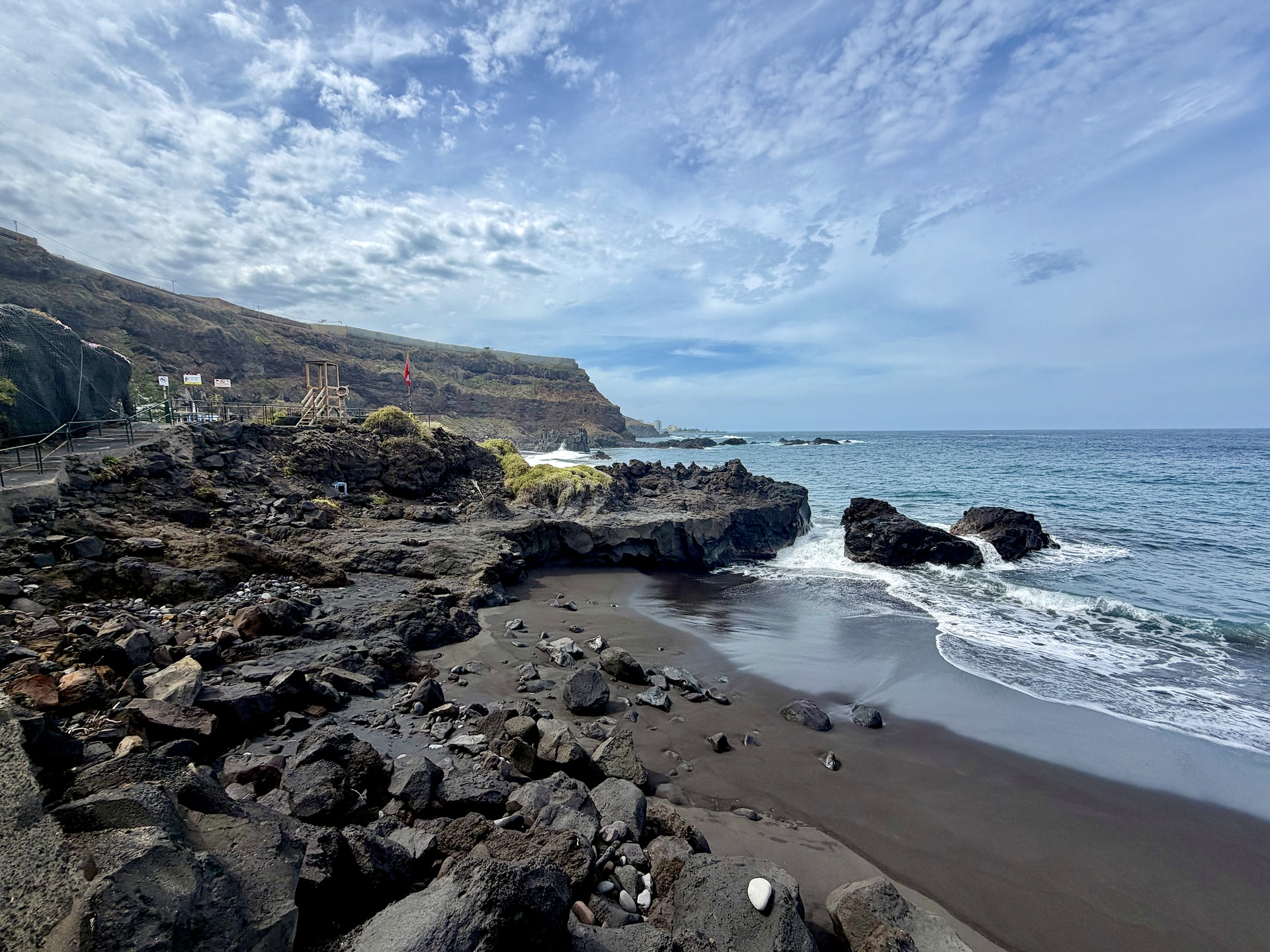
We had a scare of our own when a man in a cap disappeared from view for long minutes. The people standing around him looked unconcerned, which I took as a good sign, and he did eventually reappear. We stayed two hours, which felt about right.
The Sand That Won’t Let Go
What nobody tells you about El Bollullo’s sand is that it gets into everything. The waves churn it up, and if you sit down near the water, that’s the end of it. The back pocket of my swim shorts filled up so completely that it felt, let’s say, as if something had gone badly wrong back there. It sticks to you like no sand I’ve ever met: I showered for half an hour afterwards and was still covered in it.
That’s how the day lost its third part. We’d planned to walk around La Orotava’s old town after the beach, and there was no way we were doing that in the state we were in. We went the next evening instead. It’s in our Puerto de la Cruz guide, along with the other places nearby.
Pack a small bottle of baby powder. Dusted onto dry, sandy skin, it gets volcanic sand off far more easily than rinsing does, and it saves your car’s upholstery on the drive home.
Planning the Day
| What | Details |
|---|---|
| Tour | bananaECOplantation, Carretera El Rincón 71, La Orotava. 10:30 or 12:00, about 1 hour, €20 per person, booking ahead recommended |
| Parking | Free spaces along the road at the end of the plantation’s street. No visitor cars beyond that |
| Walk to the beach | About 1.8 km (1.1 miles), 30 minutes down, longer back up |
| At the beach | Bar-café, lifeguard, no obvious changing room |
| Our timing | Tour 12:00-13:00, on the beach about 13:30-15:45, back at our apartment in Santa Úrsula by 16:30 |
If you’re still deciding where to base yourself, the plantation and the beach are an easy morning from anywhere on the north coast. We explain why we chose the north in our guide to where to stay in Tenerife.
FAQ
Can you visit a banana plantation in Tenerife?
Yes. Several farms in the north run tours. We did the one-hour guided tour at bananaECOplantation in La Orotava: €20 per person, in English and Spanish, with a tasting at the end.
How long is the banana plantation tour?
About an hour, including the tasting.
Can you drive to El Bollullo beach?
Not since late 2025. The last stretch of road is closed to visitors’ cars and the beach car parks are shut. Park further up, at the end of the plantation’s street, and walk about 1.8 km, roughly 30 minutes downhill.
Can you swim at El Bollullo?
Not really. The waves are big and there are rip currents. There’s a lifeguard, and most people stay at about knee depth.
Do Canary bananas taste different?
They’re the same Cavendish type as most bananas, but they spend longer on the plant, about six months. Andrea found the supermarket ones stronger in flavor. I didn’t notice much of a difference.