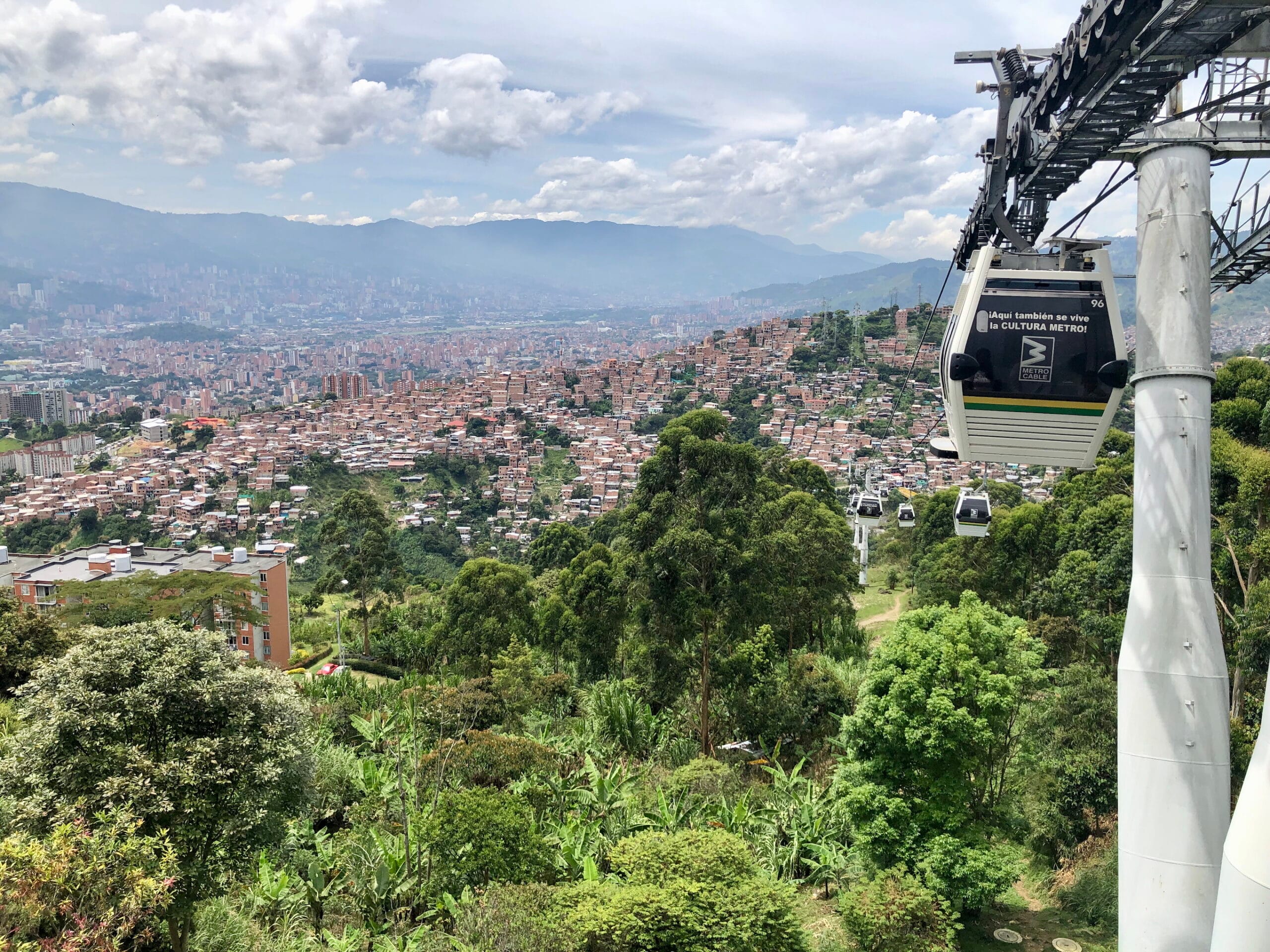
Medellín, with approximately 3 million residents, is Colombia’s second-largest city, the capital of Antioquia department, and nestled in the picturesque Aburrá Valley of the Andes Mountains. However, its current reputation isn’t simply due to its geography. During the ’80s and ’90s, Medellín’s name didn’t evoke positive associations, especially for those who followed international news, and the famous Netflix series Narcos certainly didn’t paint the picture of the city that visitors experience today. It would be unfair to Medellín and its residents to judge the city solely on this aspect and its admittedly dark past.
Medellín represents a symbol of rebirth—rising like a phoenix from its challenging and harrowing past over the last few decades to become one of Colombia’s, and perhaps the entire South American continent’s, most innovative and progressive cities—despite once being known as the murder capital of the world. The people of Medellín repeatedly demonstrate their perseverance, their refusal to give up, and their collective ability to build a better future—something they’re rightfully very proud of.
We won’t delve deeply into the city’s Pablo Escobar era history here; anyone interested in the topic has likely already watched numerous documentaries and series about it. It’s crucial to understand that locals particularly resent those who consider it “fun” to visit attractions linked to the infamous drug lord or who identify the city solely with him. It’s worth noting, however, that like many controversial historical figures, Escobar still divides Colombian society, and while the vast majority condemn his actions, some view him with a certain nostalgia. It’s not our place to explore this topic in depth in this blog, but here’s a tip for anyone wanting to experience this firsthand: read the Google Maps reviews of the memorial park built where Escobar’s last residence stood.
In this post, we’ll cover the essential information about the city, while in another article, we’ll write about what we did in and around Medellín during our six-day stay. Everything below comes from those six days in September, plus what has changed in fares and rules since. Where a price has moved, we say so rather than quietly updating it.
Arriving in Medellín
We’ll focus on arrival by air since that’s how you’ll most likely reach the city, especially if you’re coming from outside Colombia or following our Colombian itinerary. If you arrive on an international flight, you’ll definitely land at José María Córdova Airport (MDE), and most domestic flights arrive here too. This airport is relatively far from the city—our accommodation was 26 km (16 miles) away. Medellín’s other airport, the much closer Olaya Herrera (EOH), serves only a few domestic flights.
The easiest way to travel is by taxi or rideshare (Uber, Cabify, DiDi, etc.). We chose the latter; in 2022, a Cabify ride to the city cost around 75,000 COP (~18 USD), and back to the airport about 85,000 COP (~20 USD) (depending on traffic). By 2025, this has increased to approximately 120,000 COP (28 USD). Official taxis, known as taxis raya azul (blue-striped taxis), charge a fixed rate to the city, currently 98,000 COP (~23.50 USD). Importantly, this fare always includes the tunnel toll (which constitutes a significant portion of the fare), so drivers should not request additional payment for this. A few years ago, the Túnel de Oriente opened, connecting the airport to Medellín by cutting through the mountain and significantly shortening the journey to the city (to about 25 minutes).
If you’re looking for a cheaper option, there are the colectivos (shared minibuses and shared taxis, found all over Colombia) and ordinary buses. The colectivo costs about 25,000 COP (~6 USD) per person, a bus ticket 14,000 COP (~3.35 USD). Two things to know before you commit. First, neither uses the tunnel – they take the old mountain road, so budget up to an hour rather than 25 minutes. Second, colectivos are shared in the literal sense: they wait at the airport until four passengers are heading the same way, so at a quiet hour the wait can be longer than the ride. If you get to the car first, claim the front seat, because the back is three across. Both colectivos and buses terminate at San Diego Mall, so you’ll likely need a taxi or the metro from there to your accommodation. (Those fares are what we paid; independent 2025 reports put the colectivo closer to 32,000 COP and the bus at 20,000 COP, so check before you budget.)
One local quirk about the rideshare apps: ridesharing sits in a legal gray area in Colombia, and drivers would rather not look like unlicensed taxis. Our Cabify driver collected us from the ordinary arrivals curb and asked one of us to ride up front. That is normal here, not a scam. Sit in the front seat and nobody has a problem.
City Layout and Neighborhoods — Where to Stay?
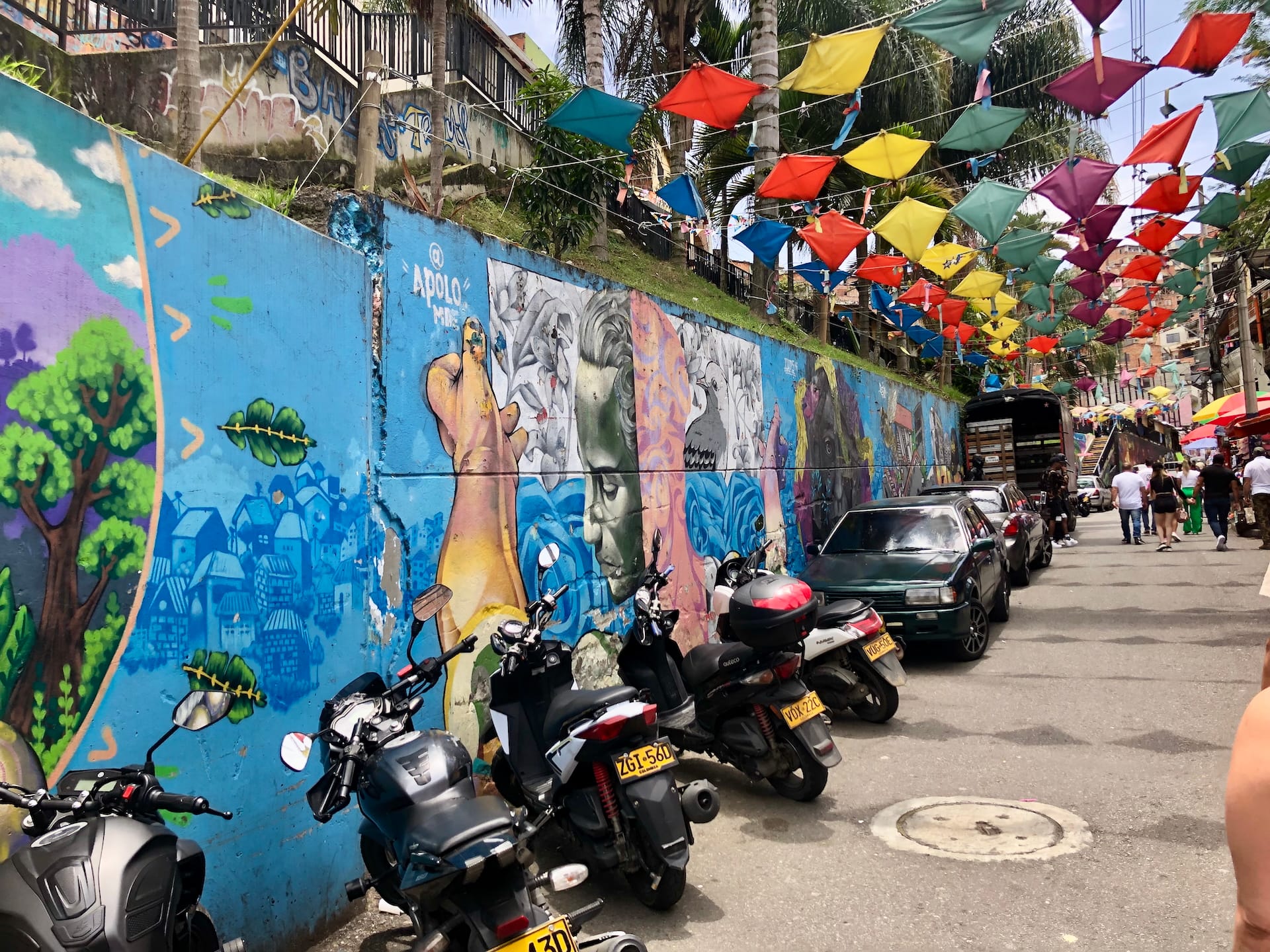
As mentioned in the introduction, the city lies in a valley, quite similar to Bogotá. The Rio Medellín river—not particularly interesting in its current state—runs through the city, with urban development spreading along both banks. Then, as elsewhere in Colombia, incoming migrants began expanding toward the hillsides due to space constraints—creating those famous neighborhoods (comunas) you’ve surely seen in photos if you’ve been planning a visit to the country.
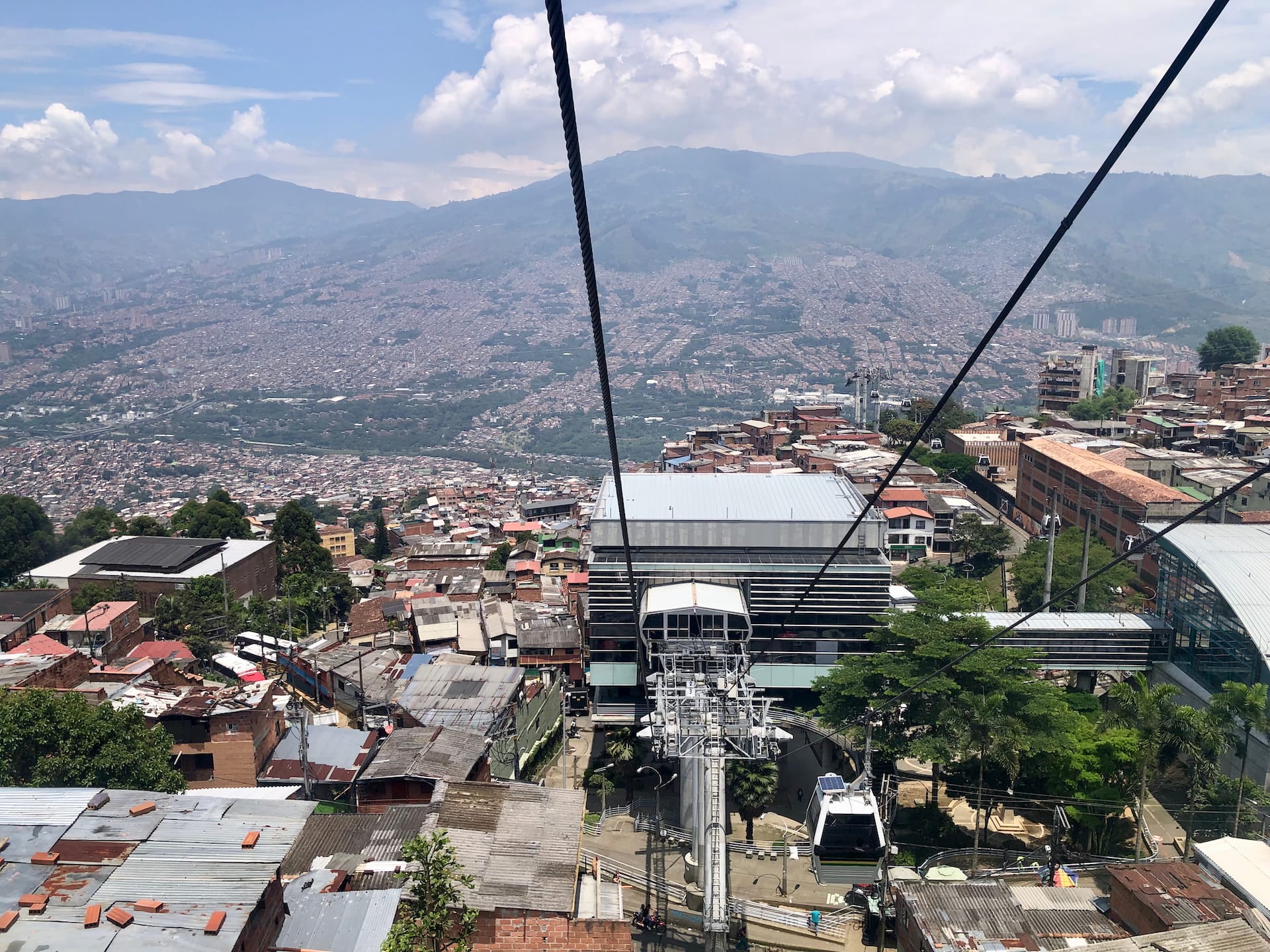
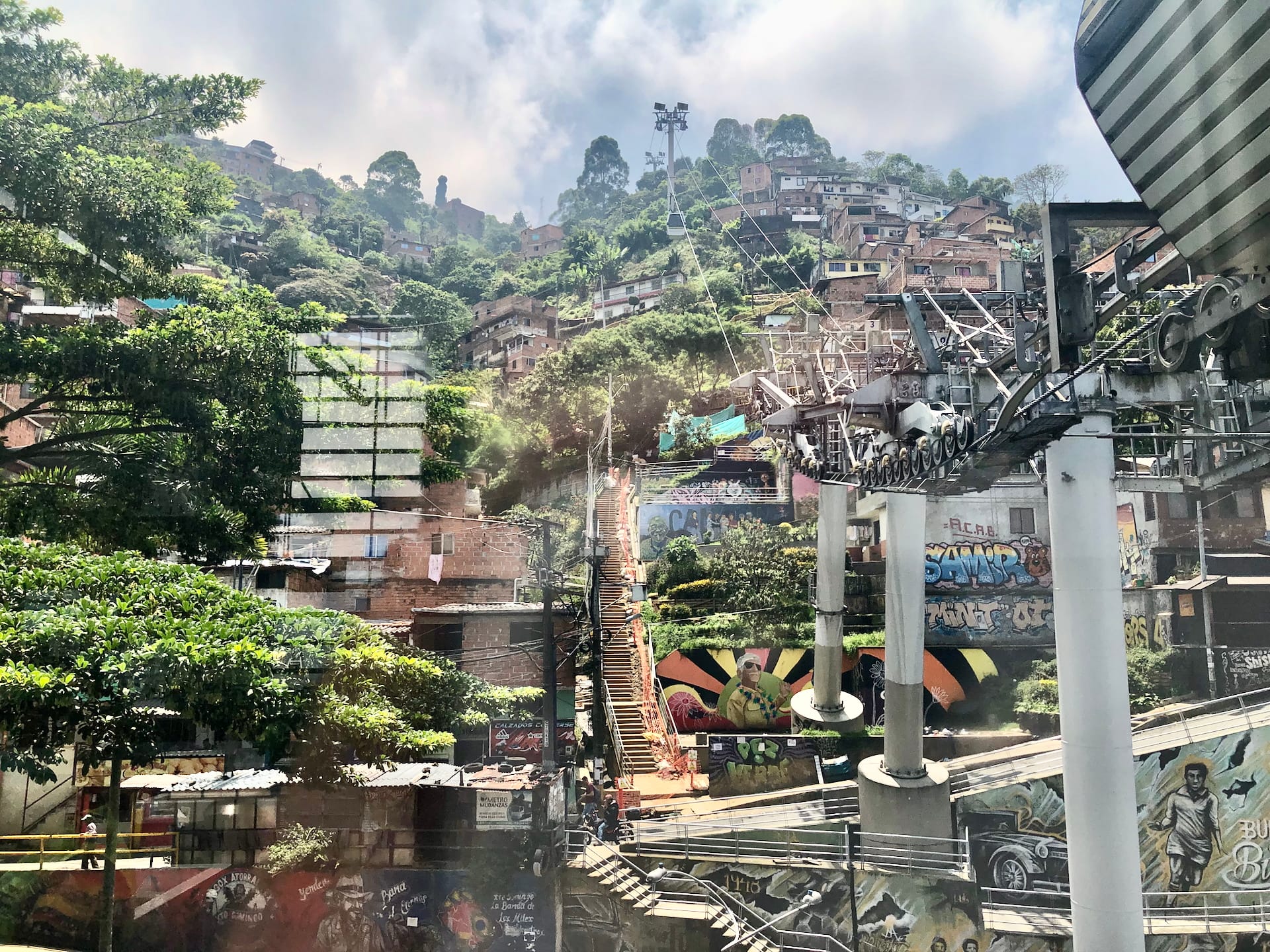
In Colombia—and much of South America—the situation is reversed from what we’re accustomed to in European cities. The hillsides don’t host expensive, fancy neighborhoods; on the contrary, they’re the city’s poorest districts. Most migrants built their modest homes unofficially, the city didn’t provide utilities in these areas, and transportation wasn’t straightforward. Just imagine having to climb up and down hundreds of steps on the hillside every day.
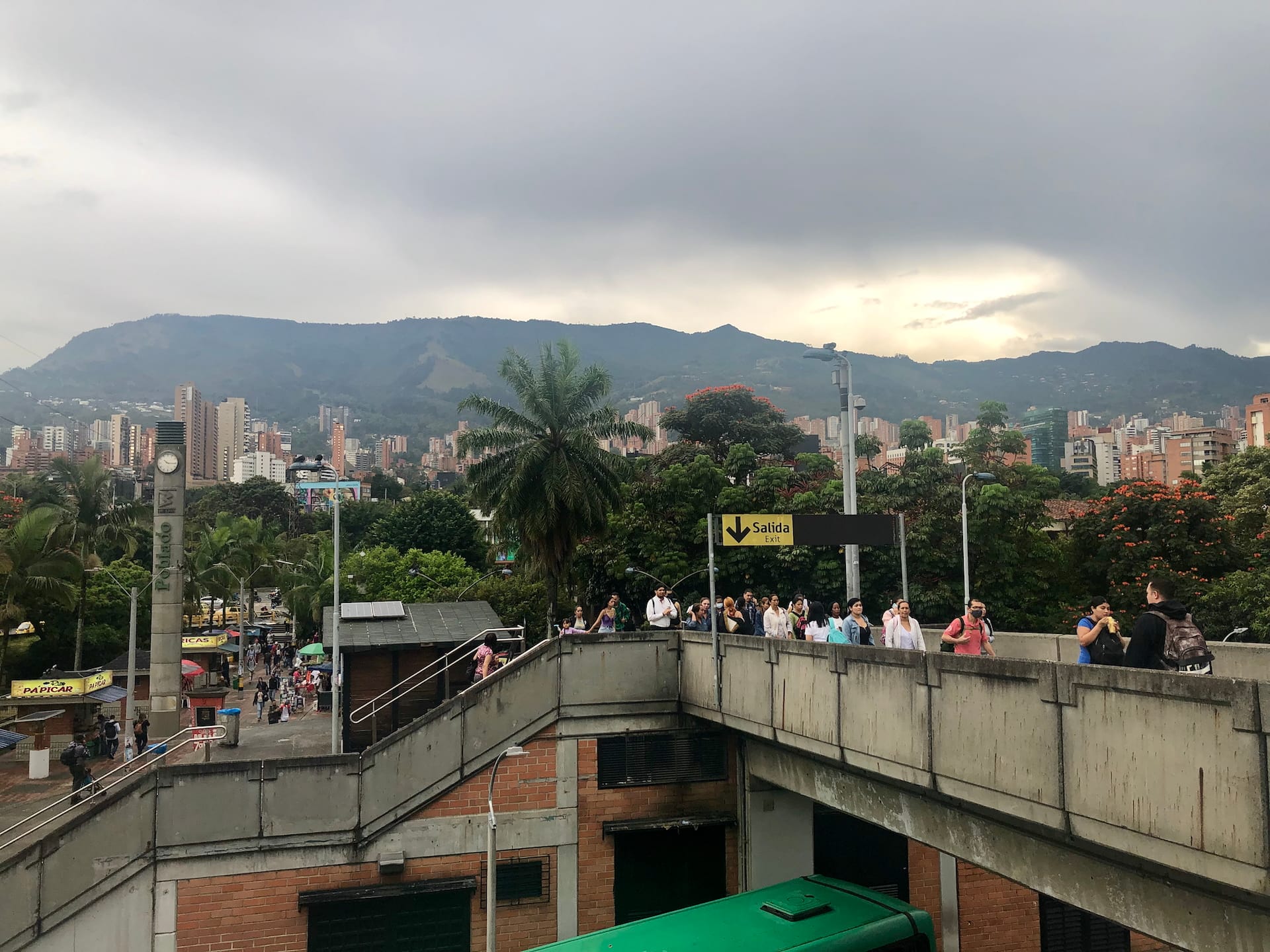
So where should you stay? While we generally support the approach that you can best get to know a city by not staying exclusively in its most touristy, popular areas, Medellín is worth making an exception for—as we did. This narrowed our options down to two neighborhoods: Laureles, south of the stadium and dotted with university buildings, or El Poblado, the city’s absolute tourist and expat center. We chose the most popular option, Poblado, and honestly, if you’re visiting the city for a short time, it doesn’t make much sense to look elsewhere—this will be the most practical solution.
We did cheat a little, and I absolutely recommend it: rather than Poblado’s most popular, loudest section, we stayed a few streets north of its center in a pocket called Manila. It is the same neighborhood on paper and a different one in practice. Parque Lleras is a ten-minute walk away when you want it, and far enough away that you can sleep. The streets are low-rise and residential, with restaurants and cafés in converted houses rather than towers.
Two places sold us on it, both within a block of our Airbnb. Hija Mía Nómada is the café we ended up having breakfast at every single morning. It is unapologetically set up for tourists and digital nomads rather than locals, and the food and the house-roasted coffee are good enough that we stopped pretending to mind. Brunch runs a little under 40,000 COP (~10 USD) a plate, which is not cheap for Colombia; it was our one daily luxury. Next door is Foxey Pub, a craft beer hall spread over several floors where small breweries each run their own counter, with a rooftop terrace looking down on the street. It opens at 4pm and runs to 1 or 2am depending on the day, which is either convenient or dangerous when you live next door. Dinner mostly happened in the neighborhood too, at Restaurante Malevo and Barbacoa Burger & Beer, both a few doors along.
Here are some highly-rated accommodations in the area:
- 304 Poblado Remodeled Loft (We stayed in this Airbnb.)
- Los Patios Hostel (One of the most popular hostels in Poblado, also has private rooms.)
- Viajero Medellín Hostel (Another very popular hostel.)
- EcoHub Hotel (If you prefer to stay a bit away from the hustle and bustle.)
- Hotel San Fernando Plaza (If you’re looking for five-star comfort.)
- Marriott Hotel (If you prefer staying in a major chain hotel.)
If you want the other answer: Laureles is flatter, more residential, cheaper to eat in, and much more Colombian. It is the right choice if you are staying two weeks rather than four days, and the wrong one if you want to walk home from a bar at 1am.
Another advantage of Poblado is the easy access to most attractions via public transportation, and if you book any day trips, they’ll likely have their meeting points somewhere in this area.
Transportation
During the city’s “resurrection”, a strong emphasis was placed on public transportation, which fortunately remains evident in everyday life. Medellín opened Colombia’s first (and still only) metro network, which is part of an integrated transportation system. Locals are very proud of the metro network, which forms an important part of their identity, reflected in the clean and well-maintained vehicles. Currently, the city has two metro lines: Line A runs north-south, while Line B runs from the center (San Antonio station) westward. The other branch of Line B is the T-line, a fascinating rubber-wheeled tram that runs east from the center.
I’ll pause here because I think the development of public transportation tells a compelling story about Medellín. As I mentioned earlier when discussing the city’s layout, the poor neighborhoods are located on hillsides and difficult to access. The metro was the forerunner of what the city leadership discovered in the early 2000s: difficult transportation results in social exclusion, which can lead to crime, among other issues. Therefore, connecting these areas to the city’s circulation and facilitating access to various institutions and workplaces for residents became a primary goal.
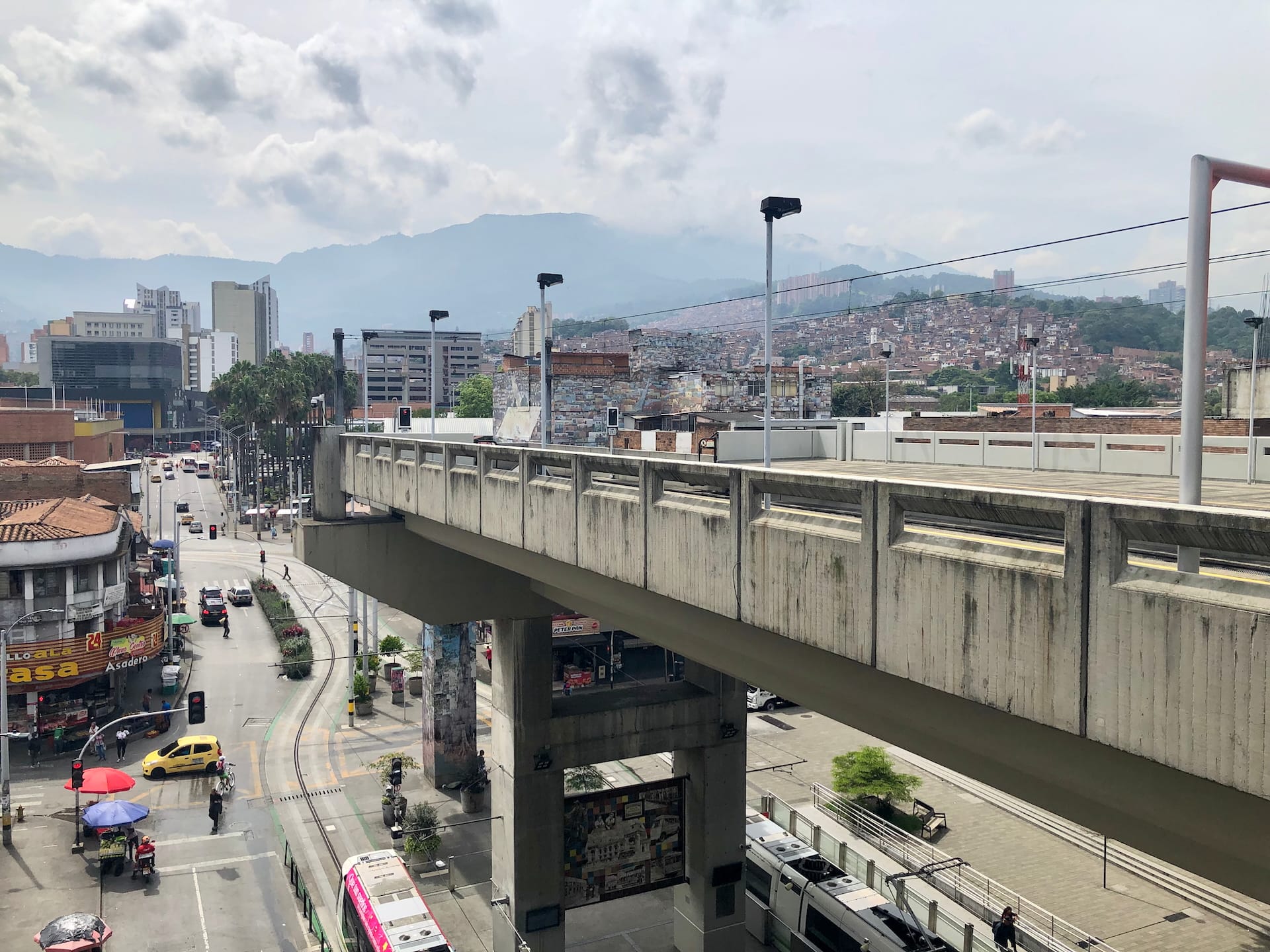
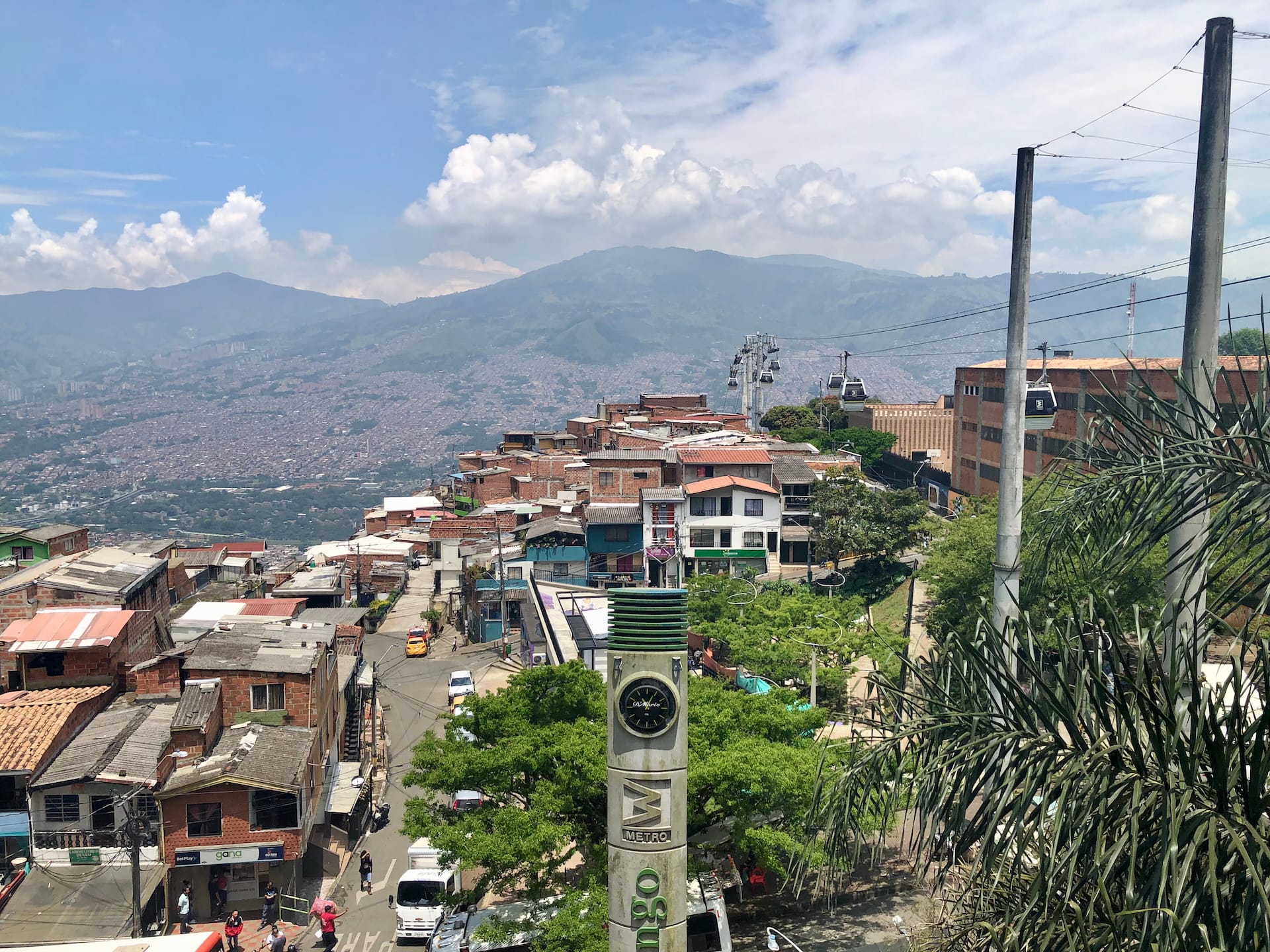
This resulted in, for example, the Metrocable system launched in 2004, the world’s first gondola lift-type public transportation system. The network now consists of 6 lines, 20 stations, and 500 vehicles. The Metrocable gondolas carry commuters from the hillsides to the metro lines and major hubs, and public institutions like libraries and schools are located along the Metrocable lines. This allows easy access to the city and important locations for those who previously found it nearly impossible. The gondola lift is also advantageous because it’s very cheap to build compared to other transportation methods, uses ready-made vehicles (like those used at ski resorts), and navigates hilly terrain without issue. Today, over 22 million people use the gondolas annually in Medellín.
The metro and Metrocable are complemented by smaller local bus routes and three BRT lines (similar to what you see in Bogotá), as well as additional “feeder” bus routes. There’s even an escalator system in Comuna 13, which counts as public transportation in Medellín!
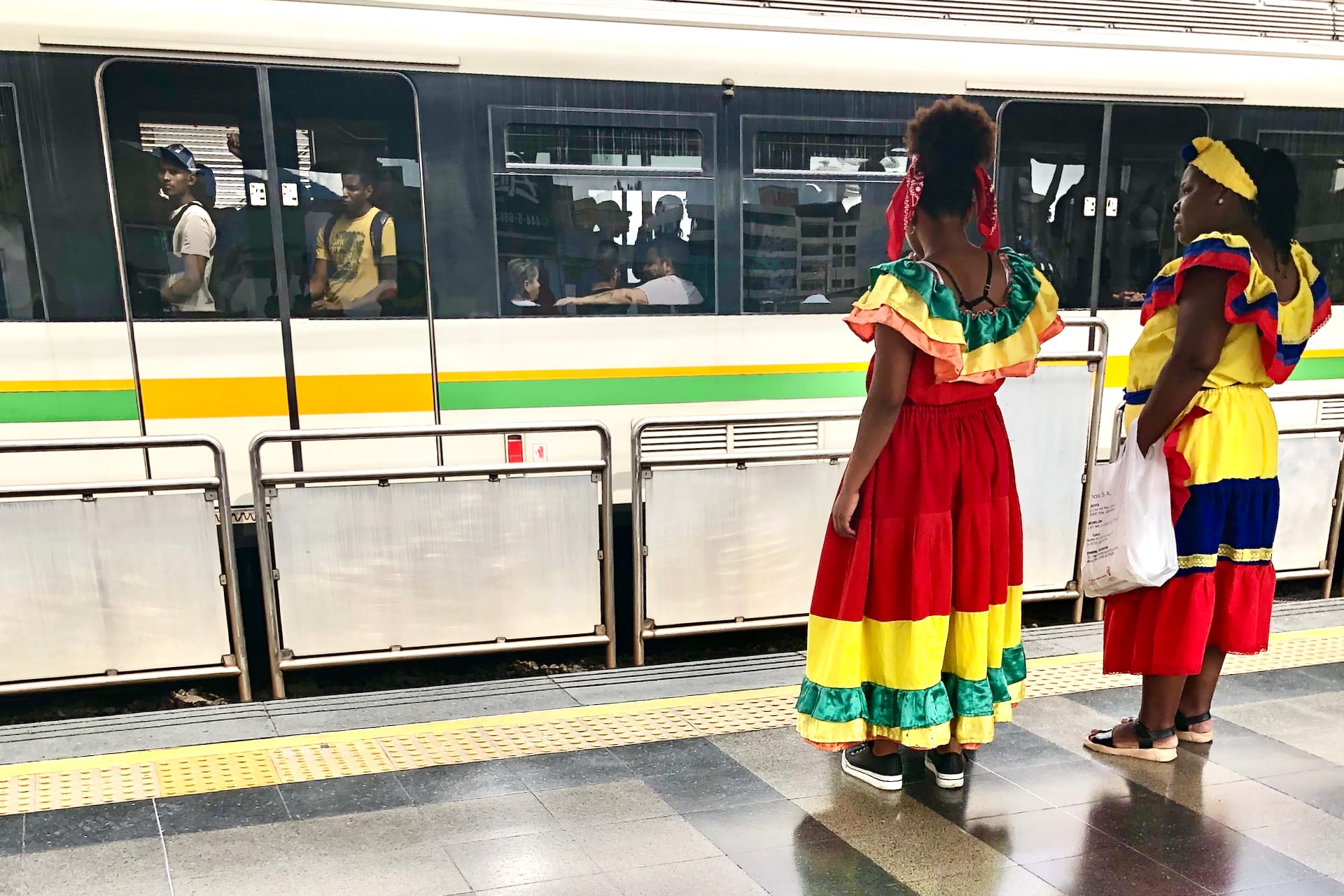
The entire system is designed for transfers, and the ticket types follow this principle. As a tourist, the simplest approach is a Cívica card of the Eventual type, which is the anonymous, buy-and-go version. That distinction matters: the other kind, the personal Cívica that locals carry, requires registering your details and is not something you can walk up and buy. For the Eventual card you need no ID, no passport, no registration and no local address. Ask for it at the ticket window of a metro station; you pay 10,000 COP (~2.40 USD) once, the card is yours to keep, and you then load money onto it at station ticket offices, machines, over 1,000 small shops, or using the mobile app. Load more than you think you need on day one, because the queues at the windows are worst exactly when you want to travel. Fares range from 2,880 COP (~0.7 USD) to 5,050 COP (~1.2 USD) depending on the number of transfers. (The Parque Arví Metrocable is more expensive, costing tourists 12,500 COP (~3 USD) one way. Wondering what Parque Arví is? Read our other post about Medellín!)
During our stay, we used public transportation exclusively and were able to reach everywhere we wanted to go—sometimes with a bit of additional walking. The city naturally has taxis and rideshare services too, but we only used these to get to the airport.
Weather
Medellín’s well-earned nickname is “the city of eternal spring” (ciudad de la eterna primavera)—and for good reason. Although it’s relatively high up (1,500 meters or 4,900 ft above sea level), it’s still lower than Bogotá, so you don’t have to deal with mountain weather. However, it’s high enough not to exhibit the characteristics of the region’s tropical rainforest climate. The average annual temperature is 23°C (73°F), and since we’re close to the equator, there’s virtually no seasonal variation.
In practice, this means that whenever you arrive during the year, the daily temperature will fluctuate between approximately 18-28°C (64-82°F), which indeed represents practically perfect weather and is very pleasant. As for rain, there is variation throughout the year: the rainy season runs from March to May and October to December, with July and August being the driest months. However, rain can fall at any time, and since the city is large, it’s entirely possible to leave a place in brilliant sunshine only to arrive at your destination in pouring rain. We got seriously soaked perhaps once during our six-day stay in mid-September, but it did drizzle several times.
Safety
When I mentioned to family and friends before our trip that we were heading to Colombia, I usually saw frightened and worried looks on their faces, most often accompanied by questions like “and won’t there be any problems there, is it a safe place?” If this didn’t happen, then the previously smiling faces would darken at the latest when I mentioned that we would indeed be visiting Medellín too.
Obviously, the (then) popularity of Narcos didn’t help, but basically, the image of the city that persists in the world to this day is that it’s terribly dangerous, and that ladrones (thieves), or God forbid, members of the cartels lurk around every corner for the unwary traveler.
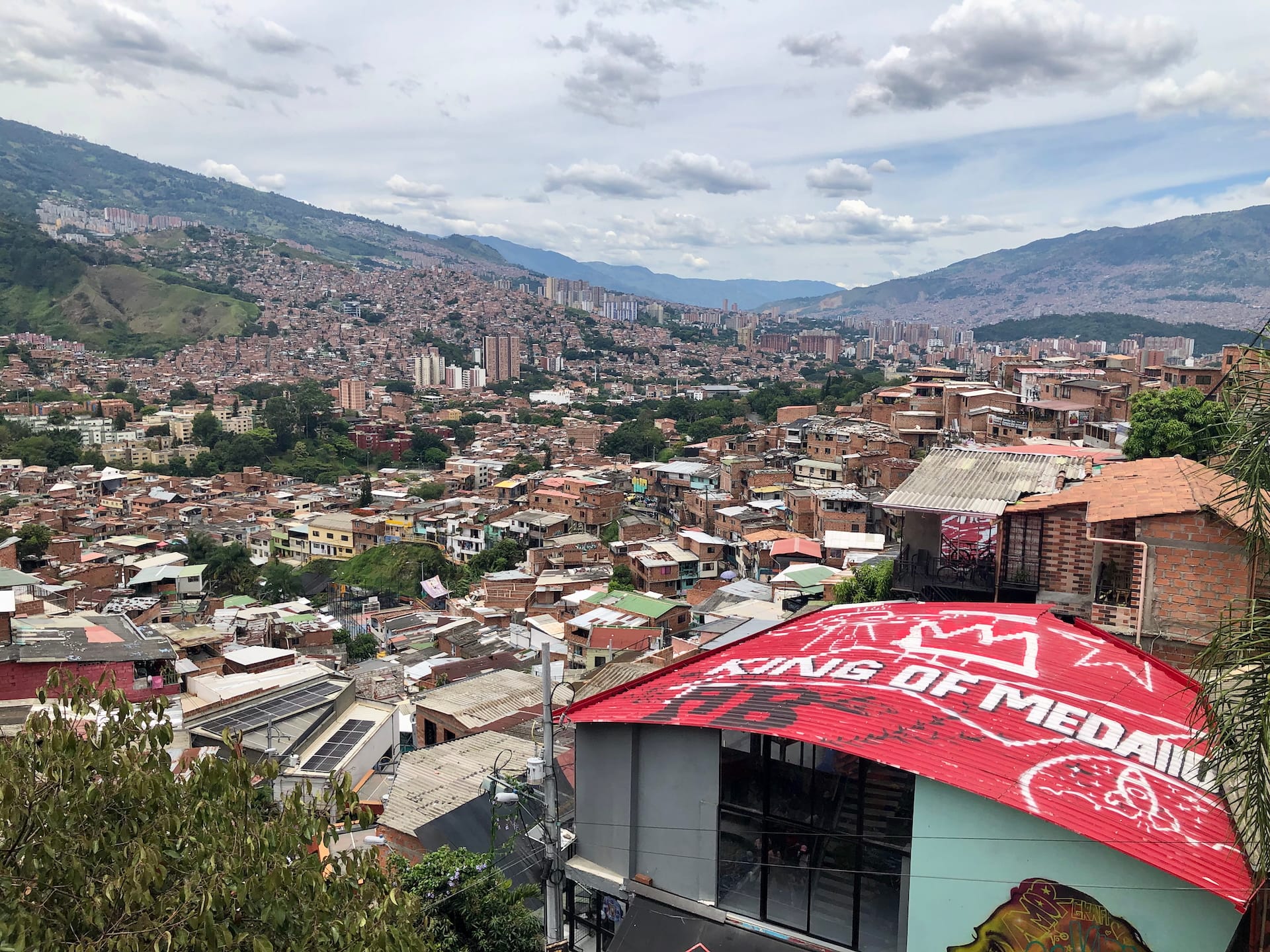
Fortunately, the reality is quite different. Of course, Medellín is not the world’s safest major city, but you really don’t need to prepare for anything that wouldn’t occur in any other major city. The Colombian golden rule, no dar papaya, applies here too—meaning don’t walk around the darkest neighborhoods showing off your most expensive jewelry, and don’t appear to be a clueless tourist. But with common sense and general caution, paying attention to your surroundings, you won’t run into any problems.
That said, the city has safer and less safe areas. It’s not advisable to visit the hillside neighborhoods after dark, but you really won’t have any reason to be there anyway. The downtown area is safe, but don’t wander alone through alleyways at night. And if you stay in Poblado (and why wouldn’t you?), you’re essentially in the safest part of the city.
It’s important to mention that since Poblado attracts the most tourists, this neighborhood also attracts the most “businessmen” who want to sell Colombia’s famous export product to these tourists on the streets, quite shamelessly. Naturally, if you do business with such characters, anything can happen, so we definitely don’t recommend it. Not least because this is precisely what plunged this country into chaos and ruins for many years.
The one risk that is specific to Medellín
Everything above is ordinary big-city caution. There is one thing that is not, and it is worth naming plainly: drugging.
The substance usually involved is scopolamine, known locally as burundanga. It has no taste and no smell, it works within minutes, and it leaves the victim conscious, compliant and unable to remember much afterwards, which is exactly the point, because the aim is almost always robbery. Bank accounts get emptied, phones unlocked, apartments cleared out. Occasionally it kills, because the dose is guesswork.
This is not a rumor. In January 2024 the U.S. Embassy in Bogotá issued a security alert after eight American citizens died in Medellín in the space of two months, in a run of cases that appeared to begin on dating apps, and formally advised travelers against using dating apps in the city. The pattern repeats: a match, a drink, an invitation back to the traveler’s apartment, and then nothing until the next morning.
What that means in practice, and none of it is complicated:
- Don’t take a drink you didn’t watch being poured, and don’t leave one on the table while you dance.
- Don’t bring someone you met that evening back to where you are staying. This is the single common thread in the serious cases.
- If you do meet someone from an app, meet in a busy public place, stay there, and tell someone where you are.
- Be equally wary of an unusually friendly stranger offering you a cigarette, a piece of gum or a flyer. Scopolamine also turns up as a powder.
Written down it sounds paranoid. It isn’t. El Poblado is fine to walk around at night, and we did, constantly. This is one specific scam with one specific entry point, and avoiding it costs you nothing.
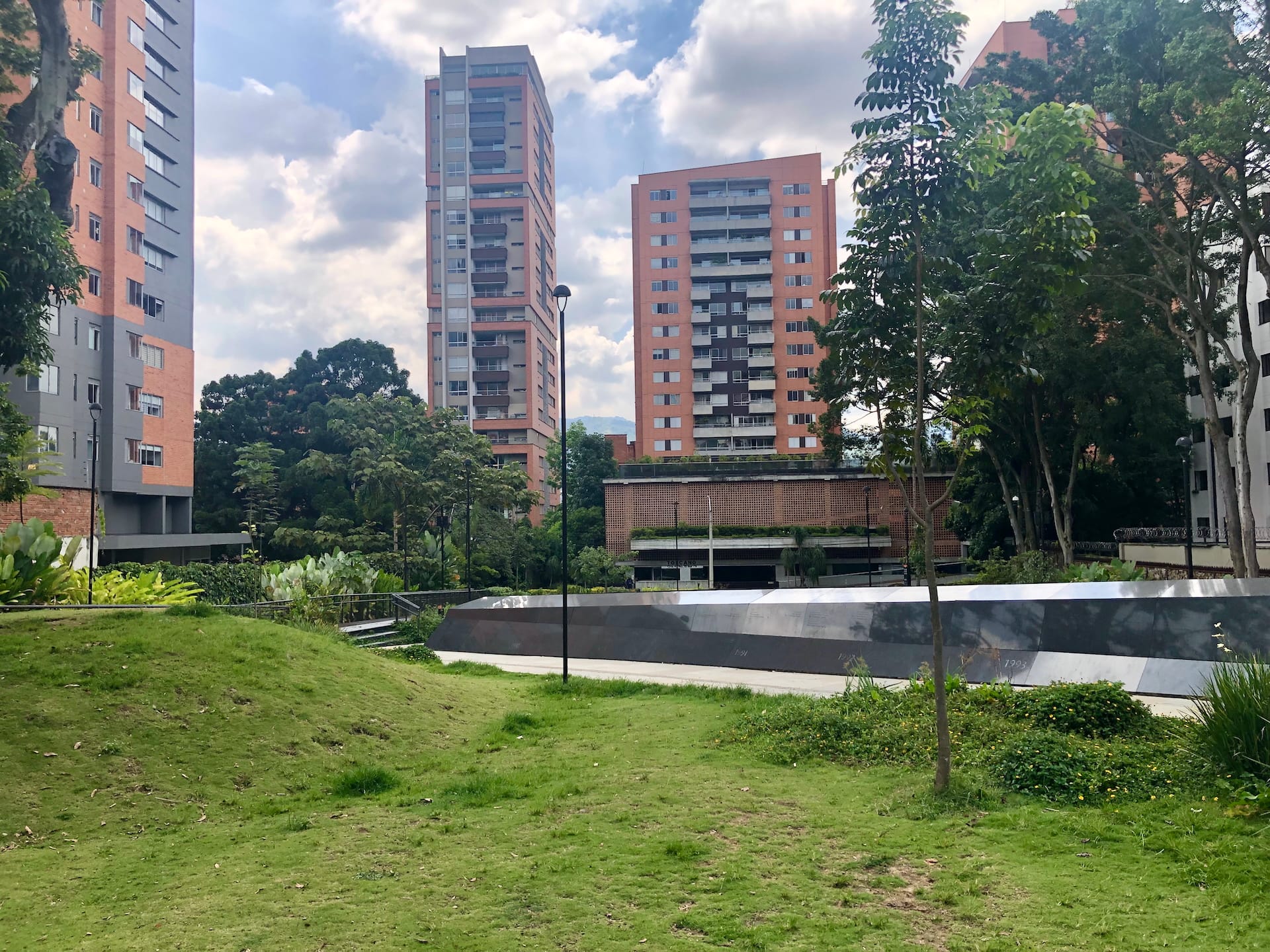
So a few simple tips:
- Don’t draw attention to yourself. No dar papaya is less about jewelry than about your phone: on the street, keep it in your pocket, not in your hand. On a crowded Line A carriage at rush hour, wear your backpack on your front, the way everyone around you is doing.
- The most common robbery here is a passenger on the back of a motorcycle taking a phone out of your hand at a red light or a sidewalk café. If you need to check a map, step into a doorway to do it.
- Don’t resist. A phone costs less than a hospital visit and considerably less than the alternative.
- Don’t buy drugs. Beyond the obvious, the street sellers in Poblado are also the front end of a robbery, and “let’s go somewhere else” is how it starts. And it is worth remembering what this particular trade did to this particular country.
- After dark, stay off the hillside neighborhoods and out of empty downtown side streets. You have no reason to be in either.
Conclusion
These were the most important things to know about Colombia’s second-largest city, which unfortunately isn’t famous for all the right reasons. If you’re interested in what we saw in and around the city during our six-day stay, read that post too!