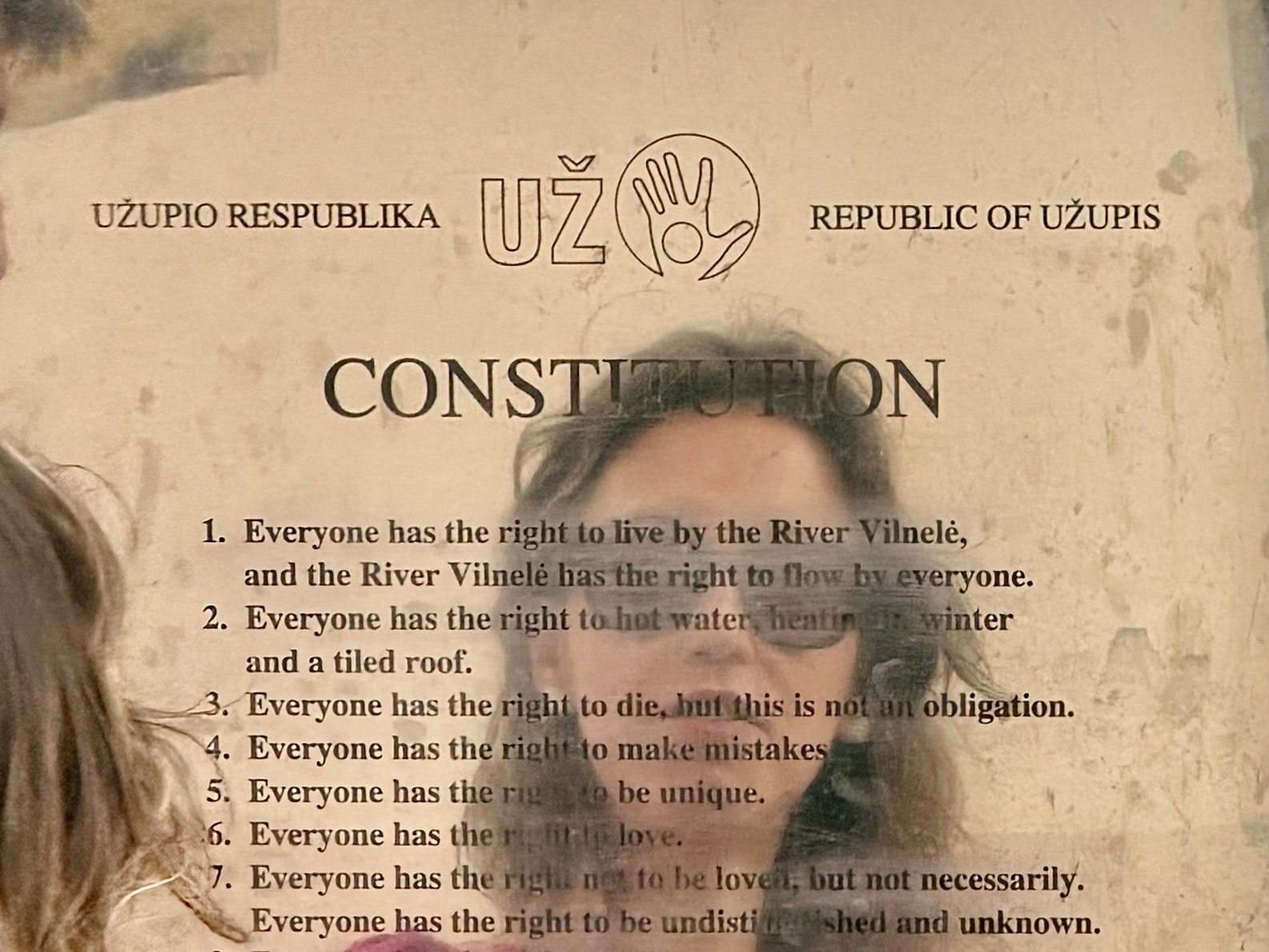
“Everyone has the right to hot water, heating in winter and a tiled roof.”
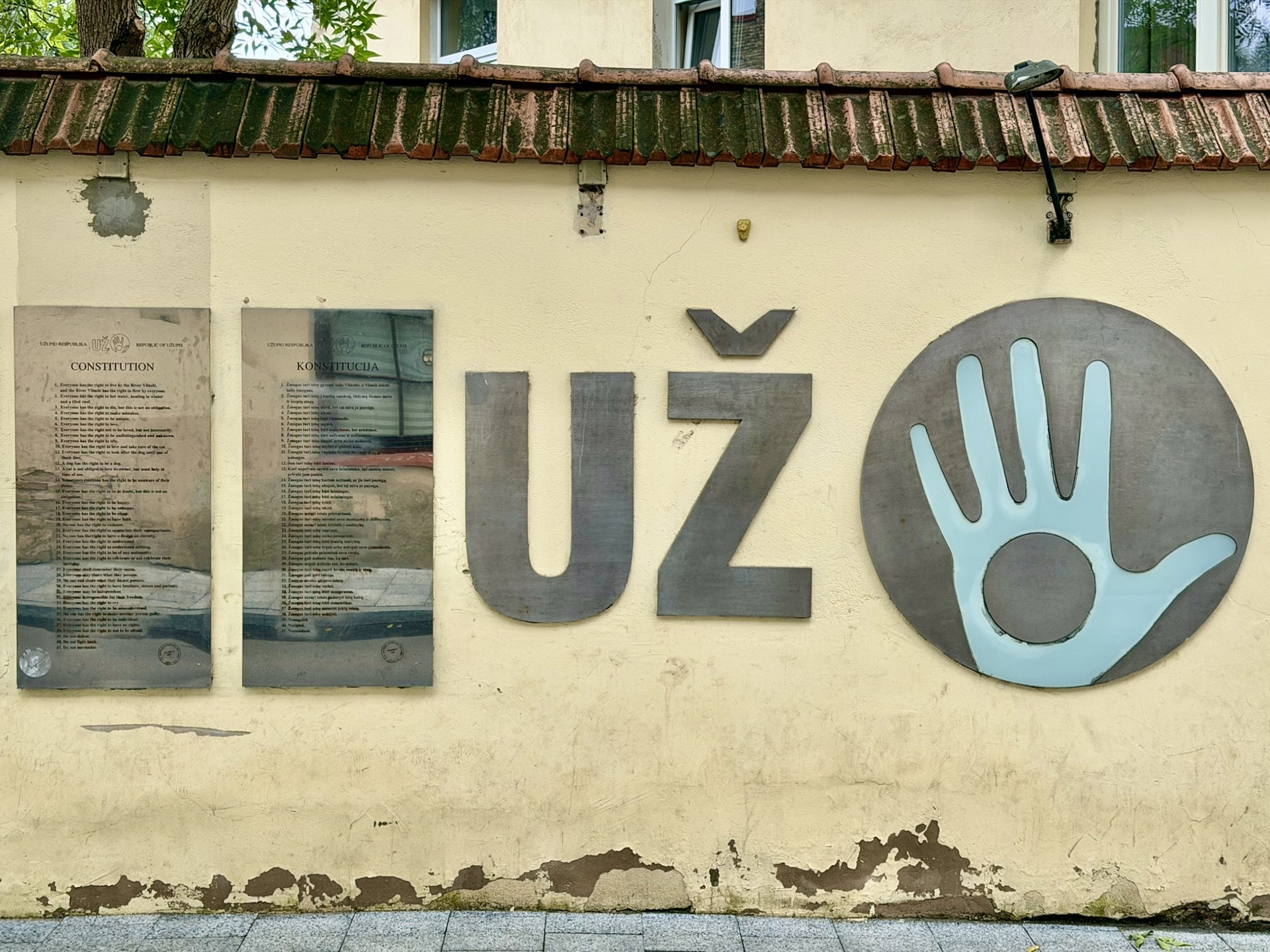
That is Article 2 of the Constitution of the Republic of Užupis, engraved on a metal plaque on Paupio street along with the other forty, in one of the dozens of languages the wall now carries. Every article about Užupis quotes the constitution. Almost all of them quote the funny ones, the dog’s right to be a dog, the cat’s right not to love its owner.
Article 2 is the one worth standing in front of, because in 1997 it was not a joke. It was a housing complaint. And the district it was written about now has some of the highest asking prices in Vilnius.
We spent about two hours in Užupis on a Saturday afternoon in August, in a wind strong enough to make photography annoying, having already seen the entrance on a walking tour the evening before. I came away unconvinced, which is not what the internet had prepared me for. So I went and looked up what actually happened here, and the history turned out to be more interesting than the enchantment.
The short answer
Užupis is a small district of Vilnius, about 0.6 km² (0.23 sq mi), across a bridge from the Old Town on the far bank of the Vilnelė. In 1997 a group of local artists declared it an independent republic as an April Fool’s joke, wrote it a constitution, and the joke stuck.
It is worth 45 minutes to an hour on foot if you are already in the Old Town, which you will be, because it starts a few minutes’ walk from St Anne’s Church. It is not a bohemian enclave, it is not Christiania, and nobody living there is dropping out of anything. It is the smart end of a small city.
How the republic started, and who started it
The Republic of Užupis was declared on April 1, 1997. The date is the whole tone of the thing.
Two men are credited with it: Romas Lileikis, a poet, musician and film director who has been the republic’s president ever since, and Tomas Čepaitis, still its foreign minister. Between them they wrote the 41-article constitution in about three hours. That figure gets repeated by Vilnius’s own tourism board, and having read all 41 articles off the wall, I believe it.
The apparatus grew from there and is deliberately silly. There is a flag, an anthem, a currency, more than three hundred ambassadors accredited to countries, cities and, in some cases, to abstract subjects. There was an army of ten and a navy of four boats, both long since disbanded. The parliament is called the Barlament, it consists of everyone who lives in Užupis, it meets in the bar by the bridge, and it decides things by common agreement rather than by vote. Our guide the previous evening had described it as the place where anyone can turn up with a stupid idea, which he clearly meant fondly and which appears to be roughly accurate. We walked past it and did not go in, which in hindsight was the mistake of the afternoon.
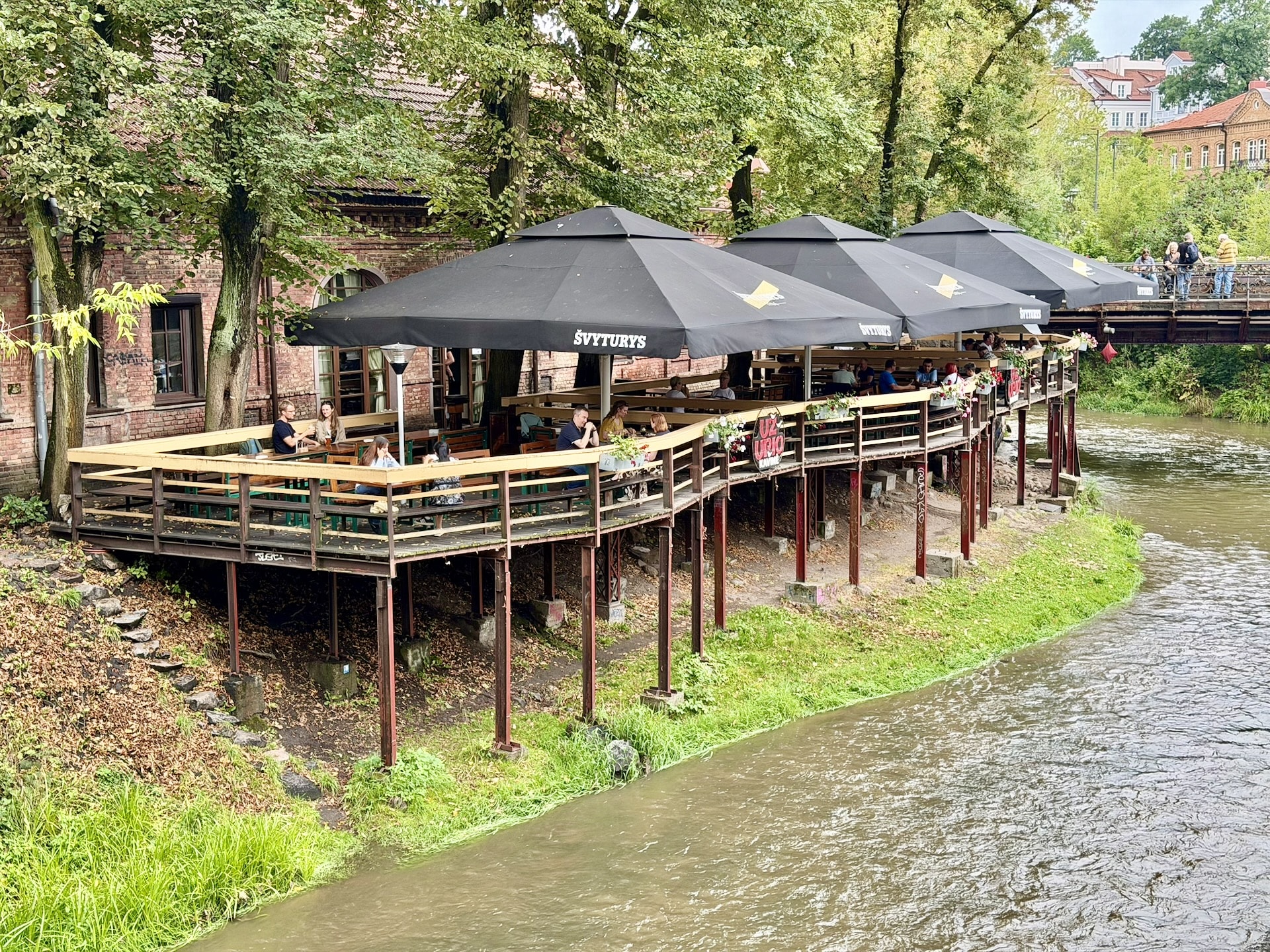
Once a year, on April 1, they staff the bridge and stamp passports. We were there in August, so I have no stamp and no opinion about the party.
The constitution wall is on Paupio street, a couple of minutes from the bridge, and it is the one thing in Užupis you should not skip. Find the panel in a language you read, then find the same article in a language you do not. Forty-one articles takes a few minutes to read properly, and reading it properly is the entire visit.
Why Article 2 was not funny in 1997
Užupis means “beyond the river”. Before the Second World War it was largely a Jewish district, and its population was murdered in the Holocaust. What the Soviet decades then did with the empty housing was nothing. The buildings were left to rot, and by the 1990s the district had a reputation as one of the worst-kept corners of the city, occupied by squatters and by people with nowhere else to go.
That is who was living there when the constitution was written. Students from the Vilnius Academy of Arts, which sits directly across the river, had started a community in the derelict buildings in 1996, and it was that crowd who declared the republic a year later. In 2002 the city went in with them and turned one of the buildings into the Užupis Art Incubator.
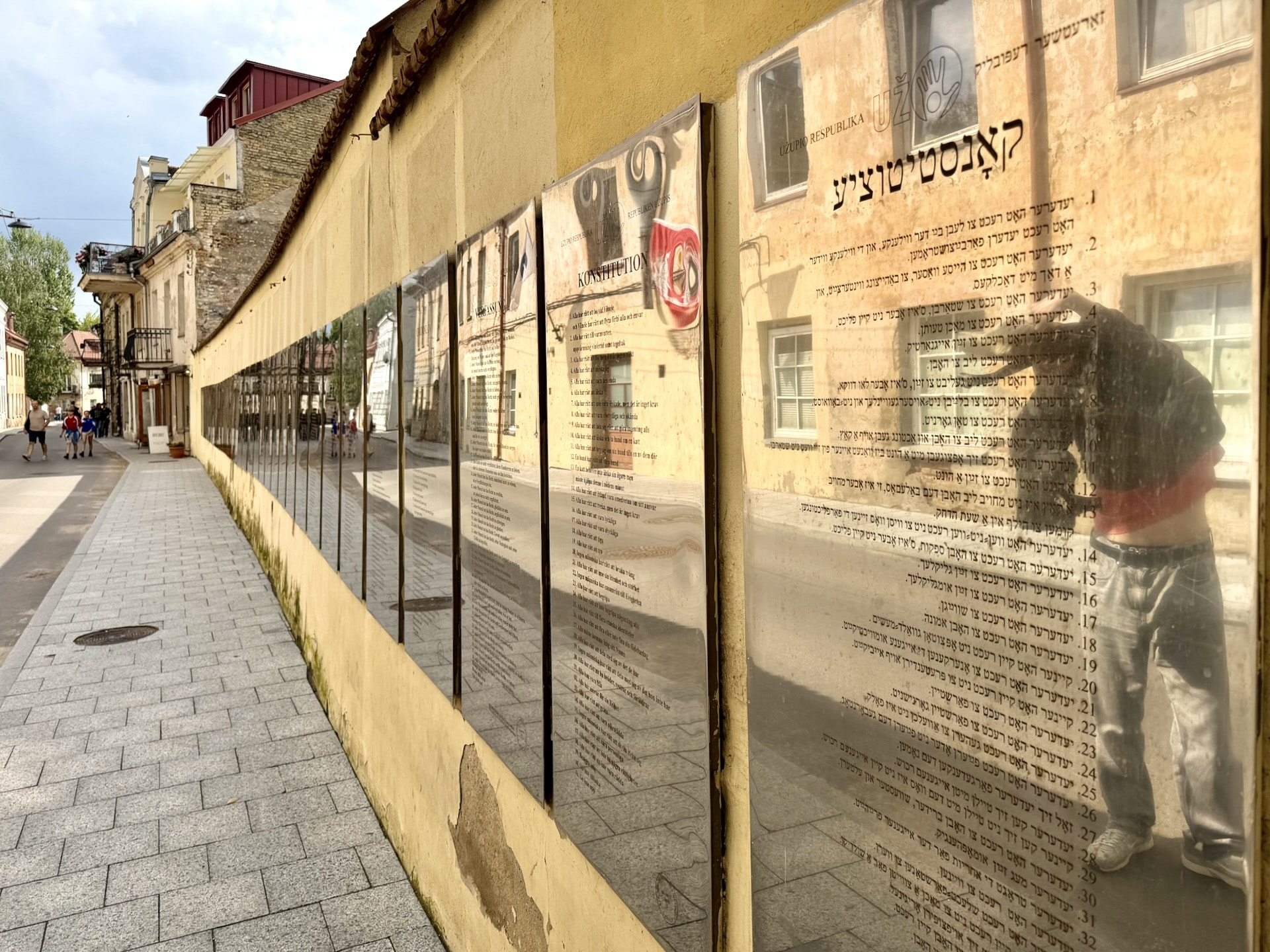
So read Article 2 again. Hot water, heating in winter, a tiled roof. In a district where the roofs leaked and the heating did not work, a constitution demanding hot water is not whimsy. It is a list of what was missing, filed as a joke because filing it seriously would not have worked.
The three lines the document ends on carry the same double reading, and they are the only part of it without a gag in them:
Do not defeat. Do not fight back. Do not surrender.
Written seven years after the first Soviet republic to declare independence did exactly that.
What Užupis is now
Here is what two hours on foot in August 2026 actually produced.
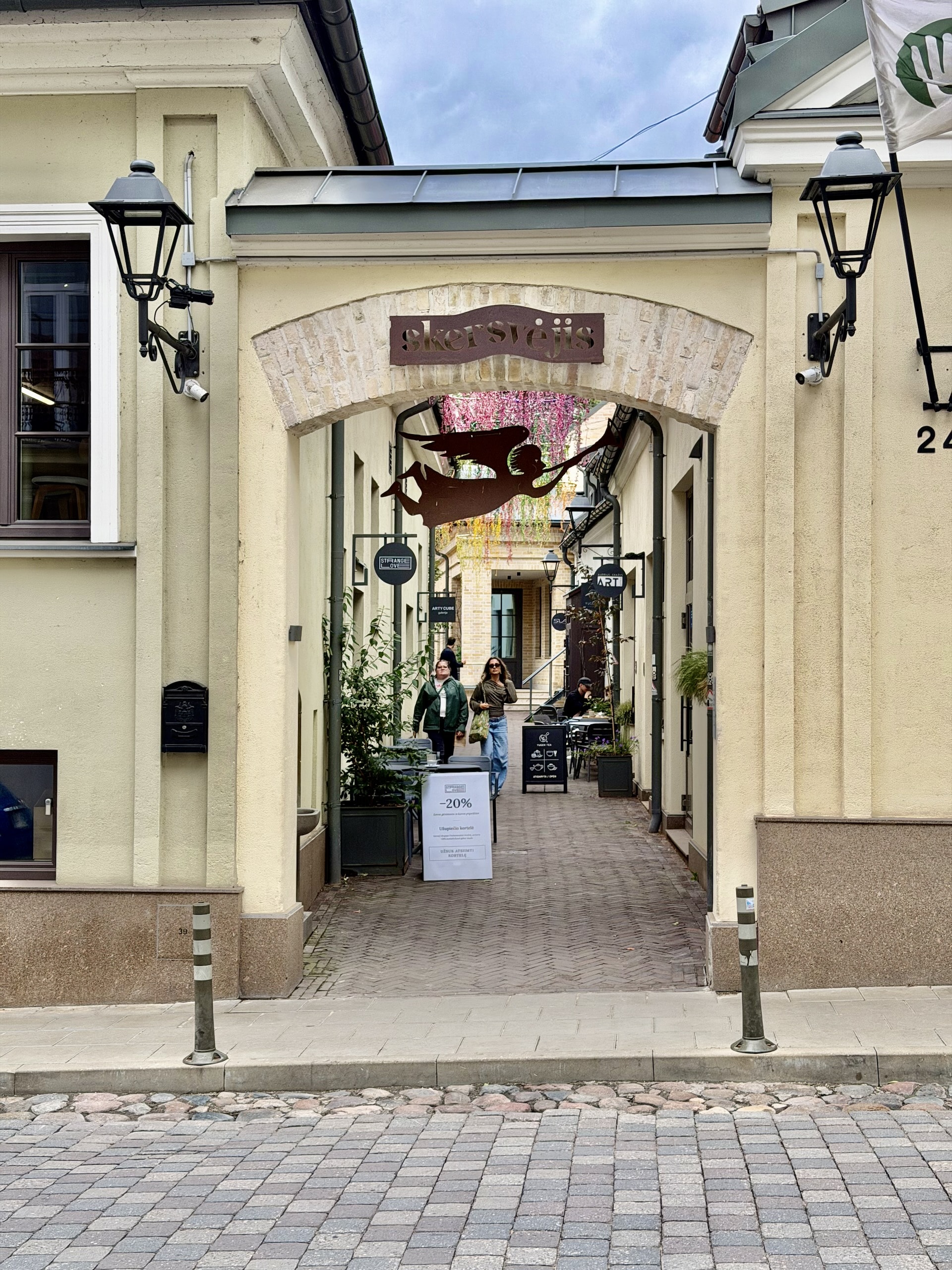
Expensive cars, parked casually on residential streets. A Maserati, Porsches, Land Rovers, a Ducati outside a doorway. A very smart Japanese tea house, Yugen Tea, where two pots of the good stuff came to €12.40 (~$14.4 USD) and where the tea list read like a wine list. An Italian restaurant that looked like it knew what it was worth.
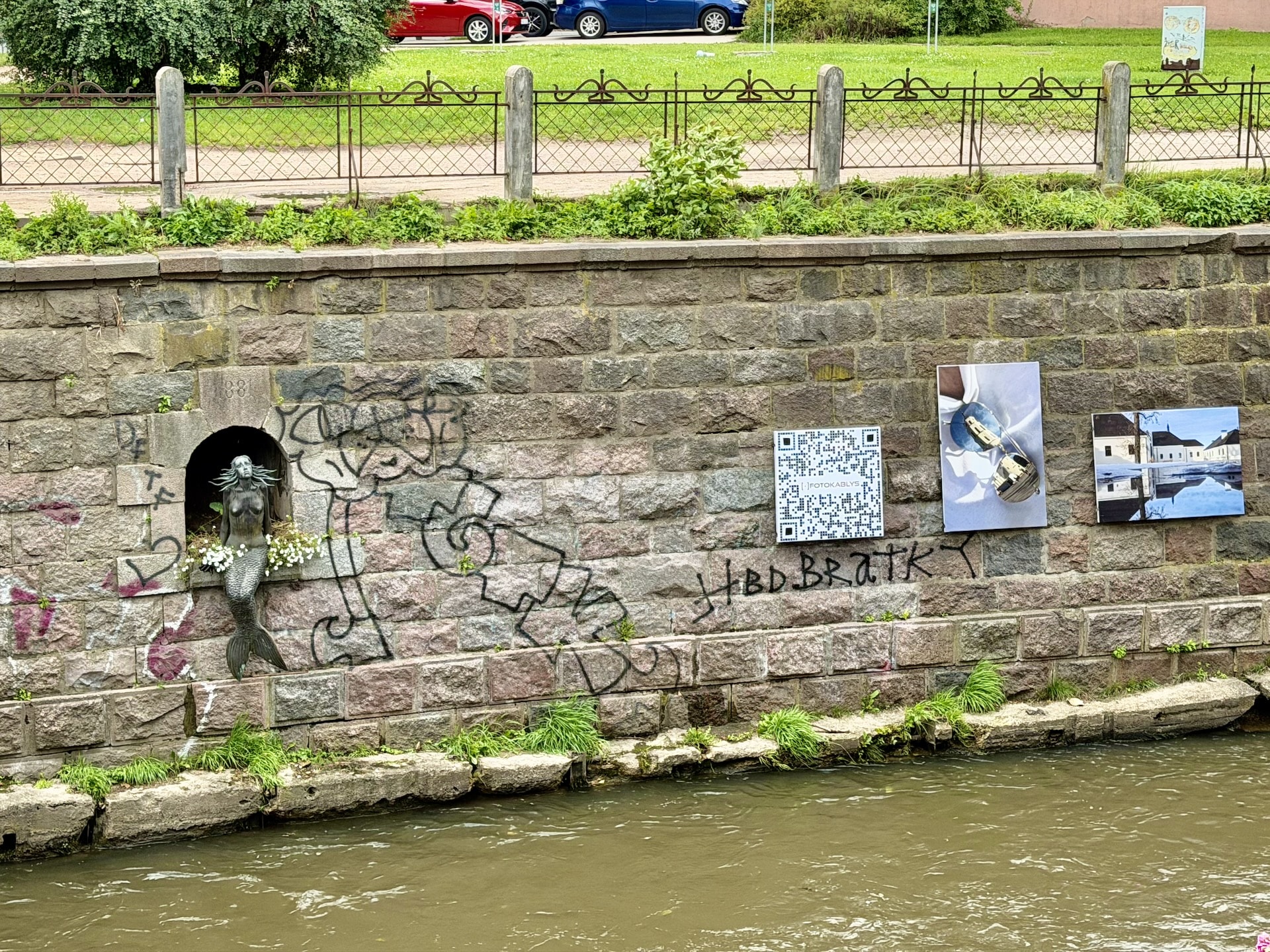
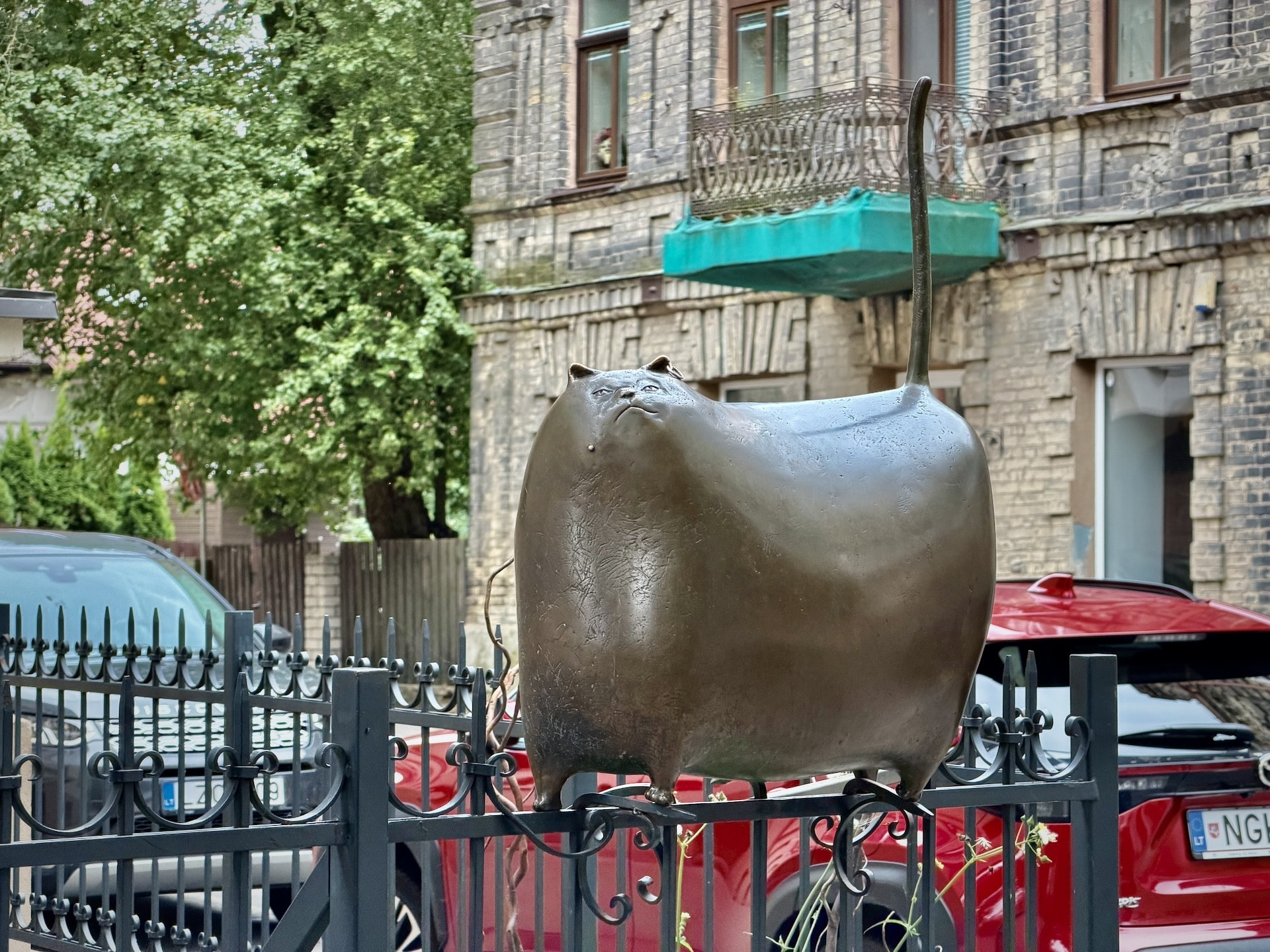
None of that makes it a smart-looking district. Užupis is patchy, and the patchiness is the most honest thing about it: a repainted ochre terrace runs straight into a building with the render coming off in sheets and moss at the foot of the wall. The wall the constitution is bolted to is itself blown and damp-stained below the plaques. The bronze cat everyone photographs sits on railings in front of bare unrendered brick and a rusting balcony. There is a swing over the river at the entrance, graffiti under the bridge, a bronze mermaid in a niche in the embankment wall with tags sprayed across the stone around her, and a Maserati parked in the middle of it.
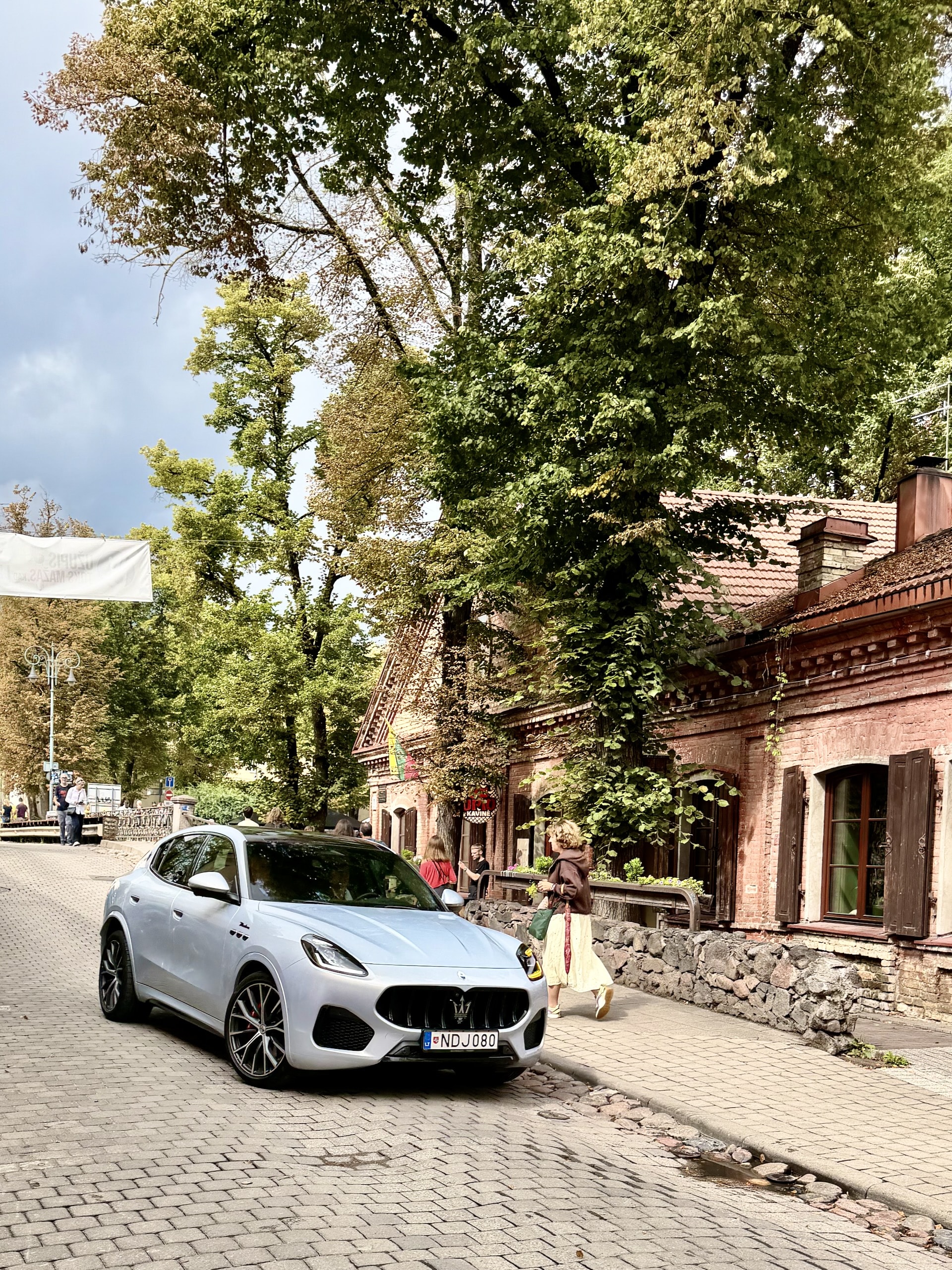
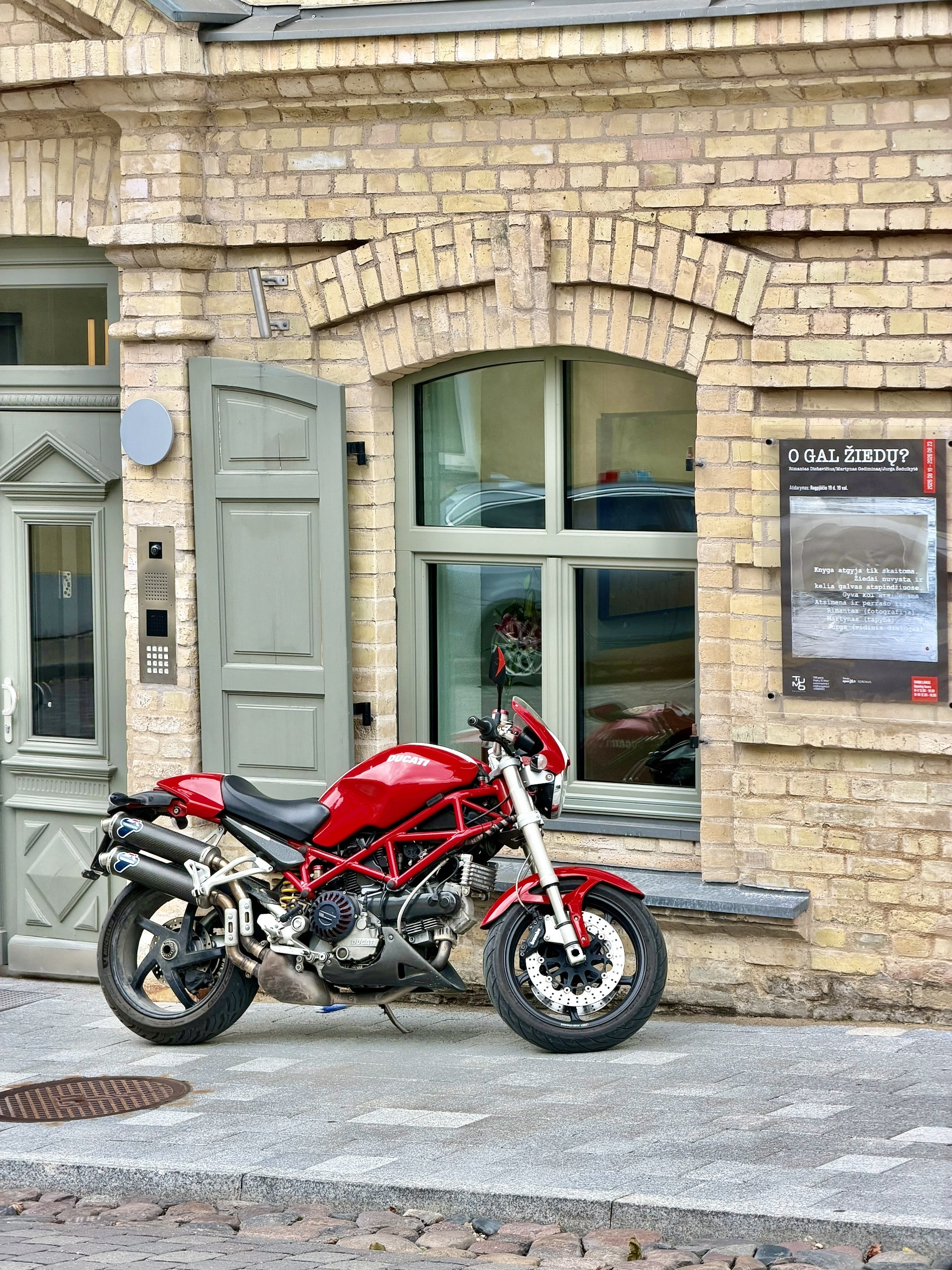
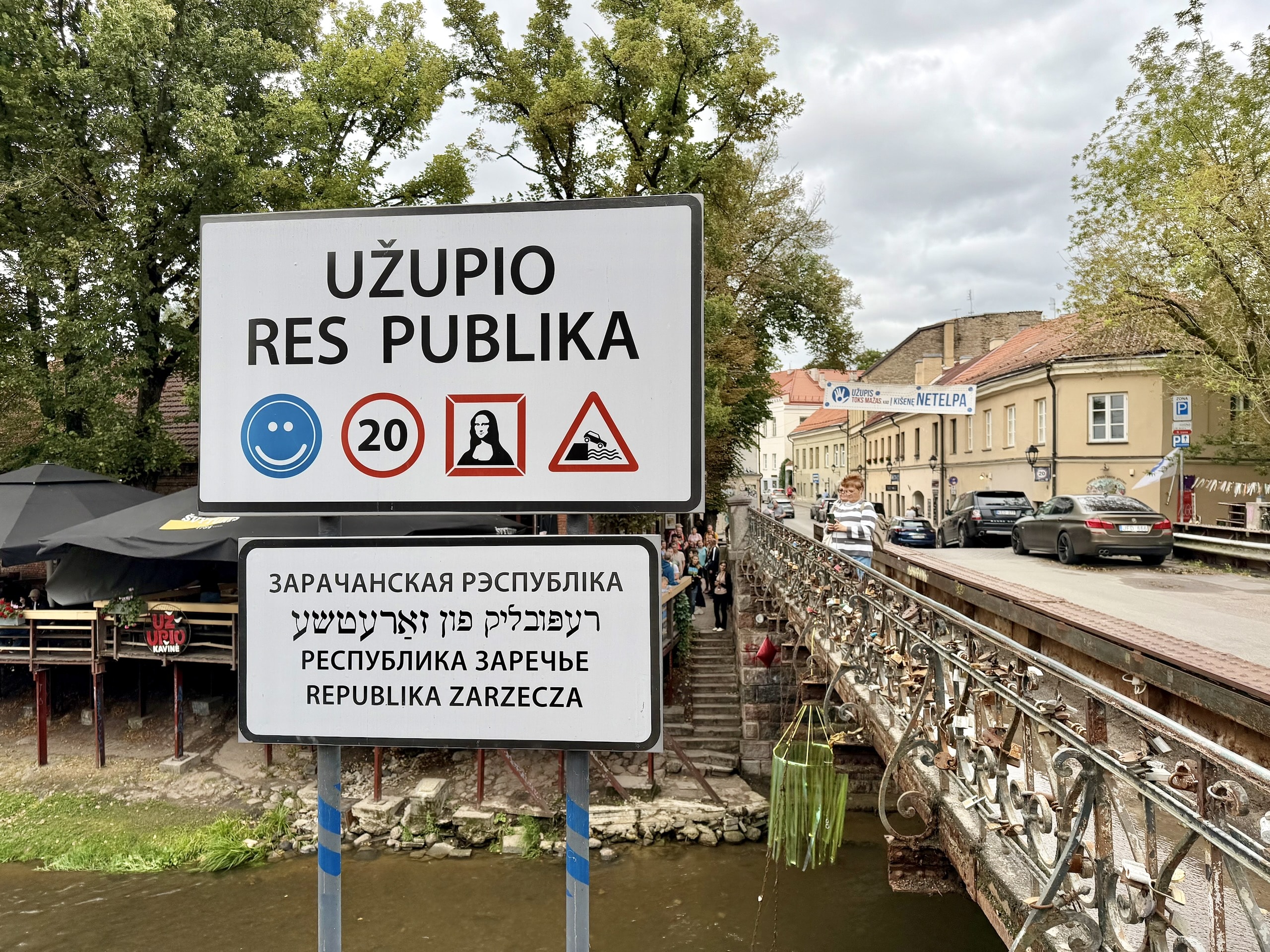
And the detail I keep coming back to. The signs at the border say 20 km/h (12 mph). In three days in Vilnius, nobody drove faster anywhere in the city than people drove inside the self-declared republic of artists. I stood there in the wind watching cars come off the bridge and accelerate.
Our guide, Arminas, had got there before me. He is a local, he is a journalist on the side, and when someone on the tour asked whether Užupis was like Christiania in Copenhagen he said no, plainly: the people here pay their taxes and obey the laws, and the apartments are the most expensive in the city. Then he moved us along. It was the least reverent thing anybody said about Užupis all weekend, and it was said by the only Vilnius resident in the group.
The numbers, and where the guide was slightly wrong
Arminas put Užupis at around €10,000 per square meter against about €5,000 elsewhere. I liked that line enough to check it, and it does not hold up.
Two Lithuanian listings sources, both asking prices rather than completed transactions:
| Source | Date | Užupis | Old Town | Vilnius median |
|---|---|---|---|---|
| Aruodas, via tv3.lt | January 2026 | ~€5,914/m² | ~€5,766/m² | not given |
| NT Alert | June 2026 | €6,089/m² | €5,154/m² | €3,851/m² |
So call it about €6,000 per square meter (~$7,000/m², or roughly $650 per square foot) against a city median of €3,851 (~$4,472). That is a premium of about 1.6 times over the city as a whole, and more than double the cheapest districts. It is not €10,000 and it is not double the Old Town, because the Old Town is the expensive bit he was comparing against.
“The most expensive address in Vilnius” is also contested. Aruodas ranks Užupis first. NT Alert puts Paupys ahead at €6,499/m² (~$7,545), which is the new-build quarter immediately across the Vilnelė. So the artists’ republic is currently being out-priced by the property development next door, which is either funny or bleak depending on the day.
What the numbers do confirm is the direction. In January 2022 LRT, the national broadcaster, quoted a real estate analyst calling Užupis “the second most expensive part of Vilnius, after Old Town”, and reported that developers had built homes for around 2,000 new residents there over the previous fifteen years. Four years later it is level with the Old Town or ahead of it. About 7,000 people live in Užupis, and LRT put roughly one in seven of them as an artist, which is a remarkable number and also a much smaller one than the mythology implies.
So he overstated it by nearly double. He was still right about the part that matters, which is that the artists’ republic is now one of the most expensive places to buy in Vilnius.
If you want the honest version of a place, take a free walking tour and then ask the guide a direct question at the end. Ours cost us €10 (~$11.6 USD) each in tips and produced the two most useful things we learned all weekend, this verdict being one of them. The other is in our one day in Vilnius guide.
The part that is real, and it is hanging on the walls
I do not want to leave it there, because that would be its own kind of dishonesty.
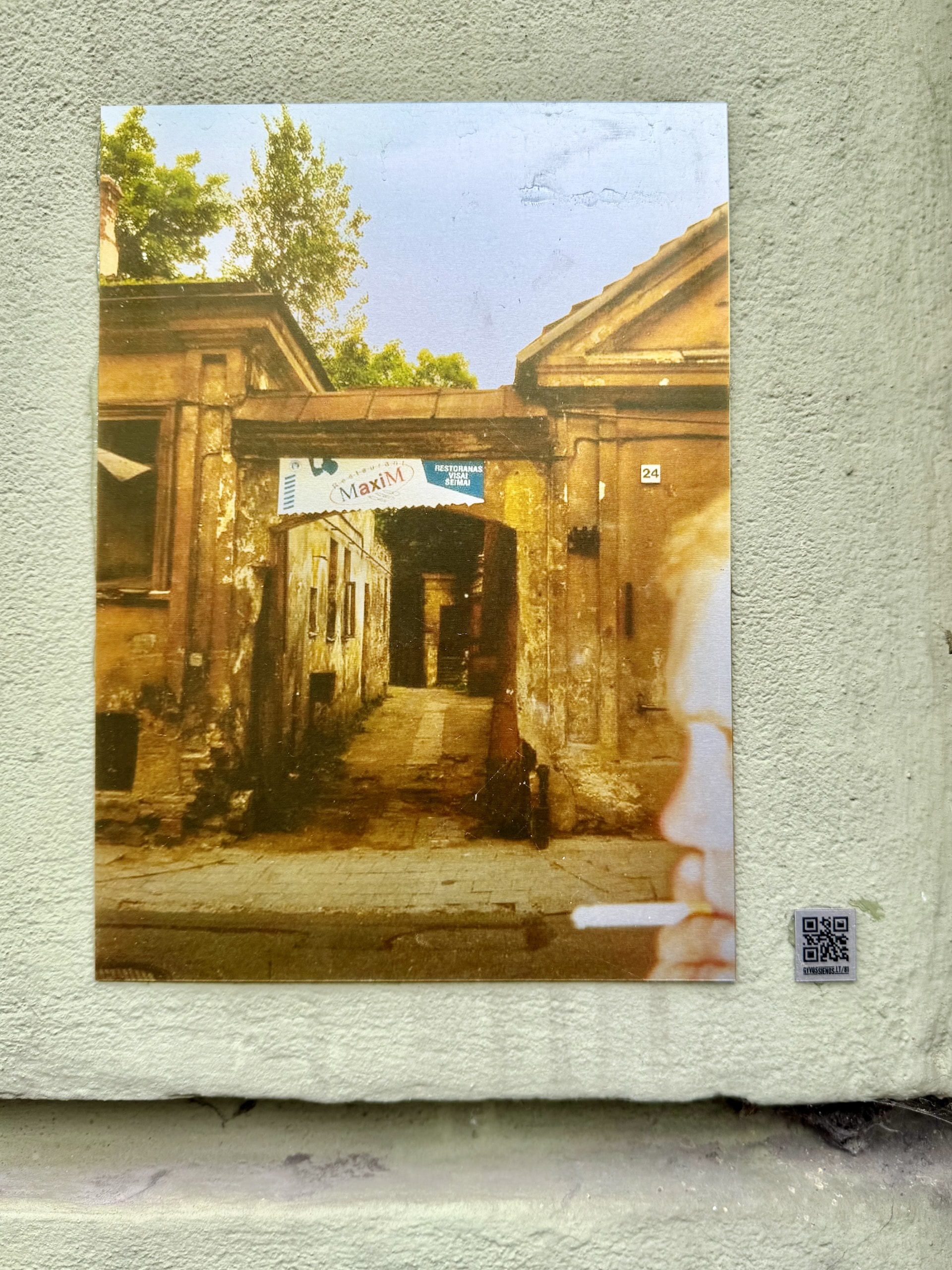
Walk along the embankment and there are photographs mounted on the wall, with QR codes beside them. More of them turn up inland, single frames fixed to the sides of buildings, several of them pinned to bare patches where the plaster has come off. They are pictures of this neighborhood in the years around the declaration: the people, the buildings, the state of the place.
The project is called Gyvos sienos, Living Walls, run by VšĮ “Užantis” with support from the city. And it is not decoration. The project says in its own words that it exists because Užupis is gentrifying, and that its job is to hold the memory of the artistic past against the present. So the sharpest thing said about what has happened here is not said by a guide, or by a foreign visitor with a camera and a bad mood. It is bolted to the walls by the neighborhood itself, in the form of photographs of what it used to be.
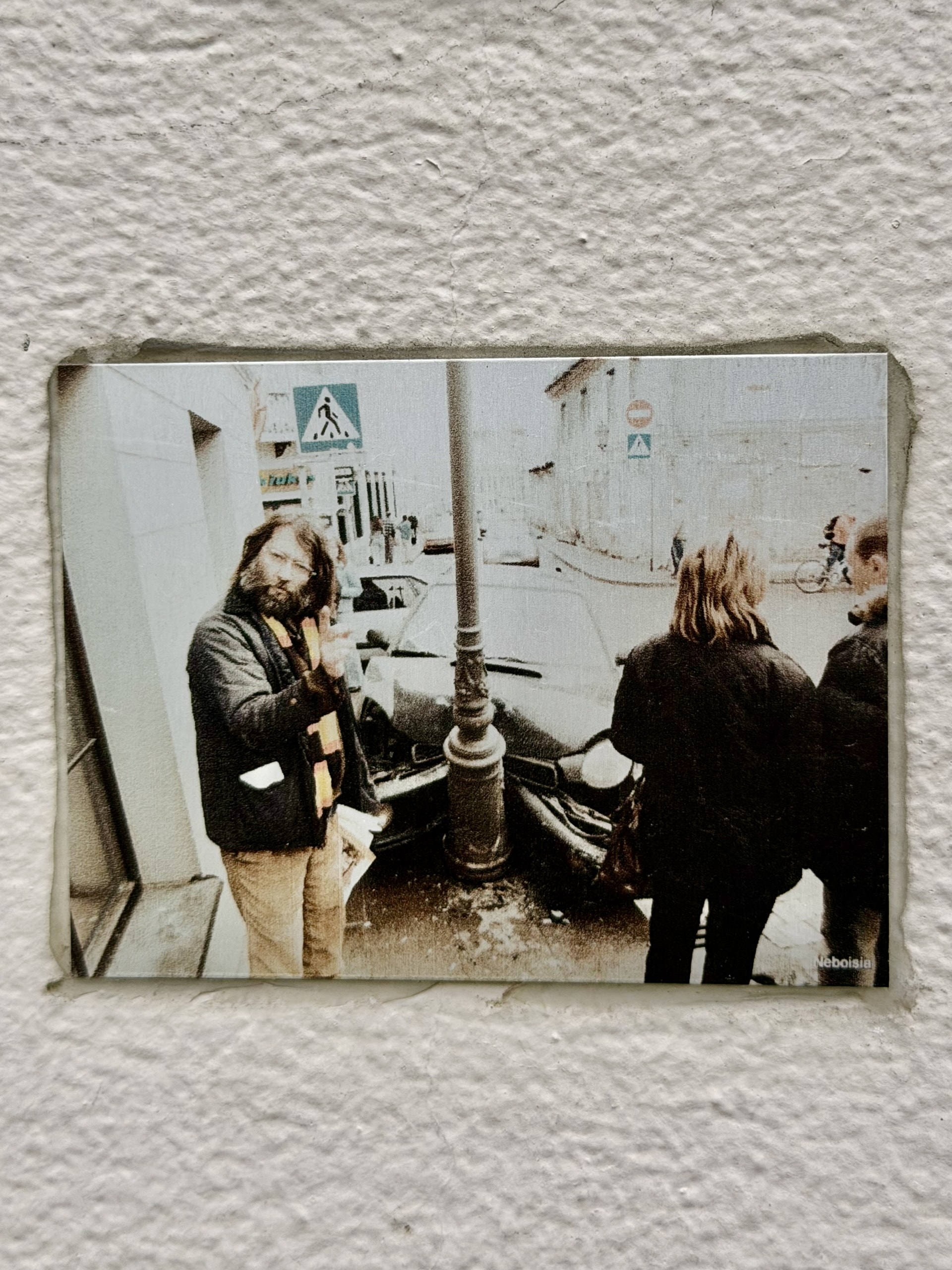
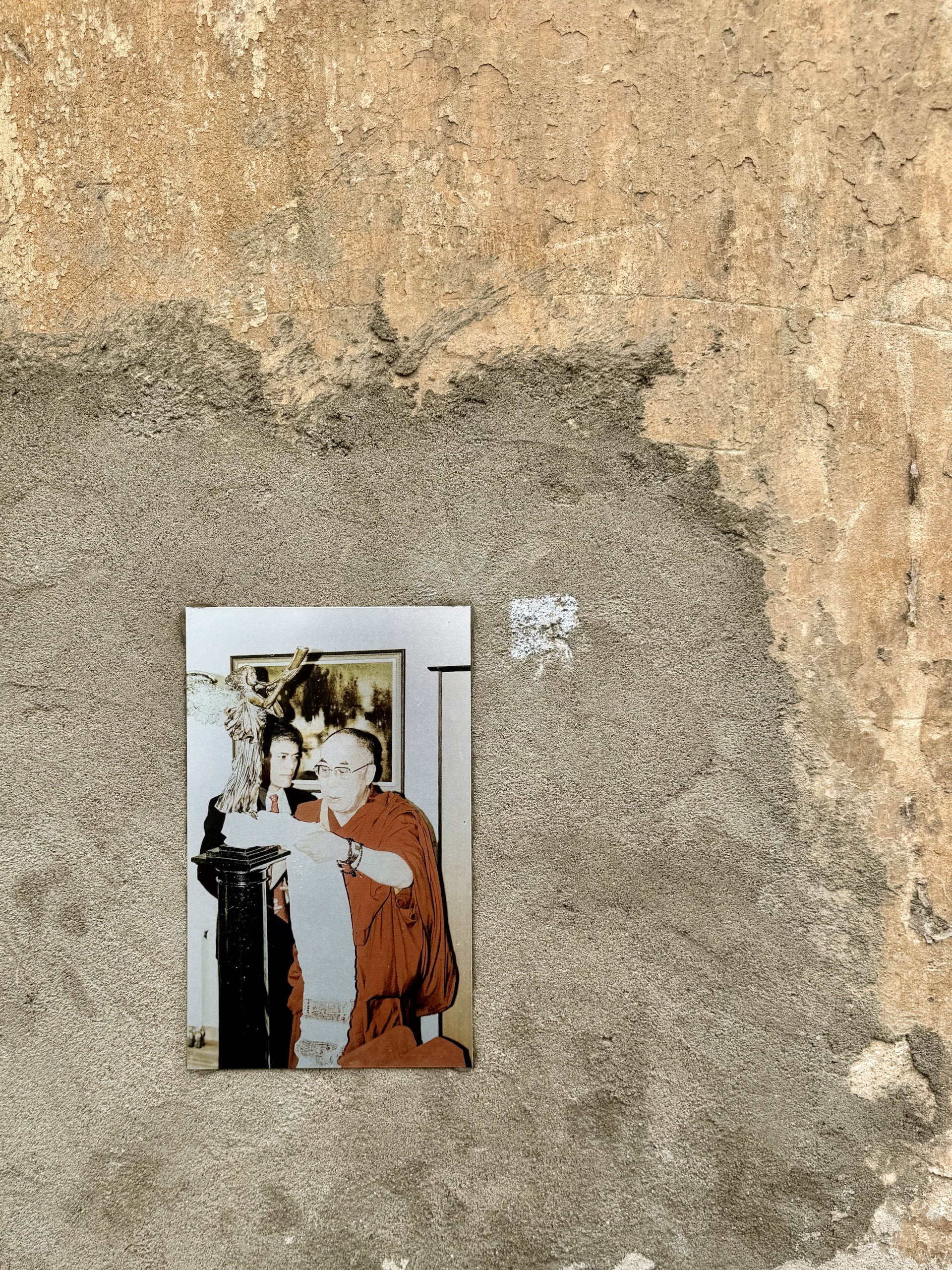
Standing in front of those, the case makes itself. It genuinely was an artists’ quarter. People genuinely did move into ruined buildings and make something out of them, and they did it well enough that the city eventually joined in and the property market eventually noticed.
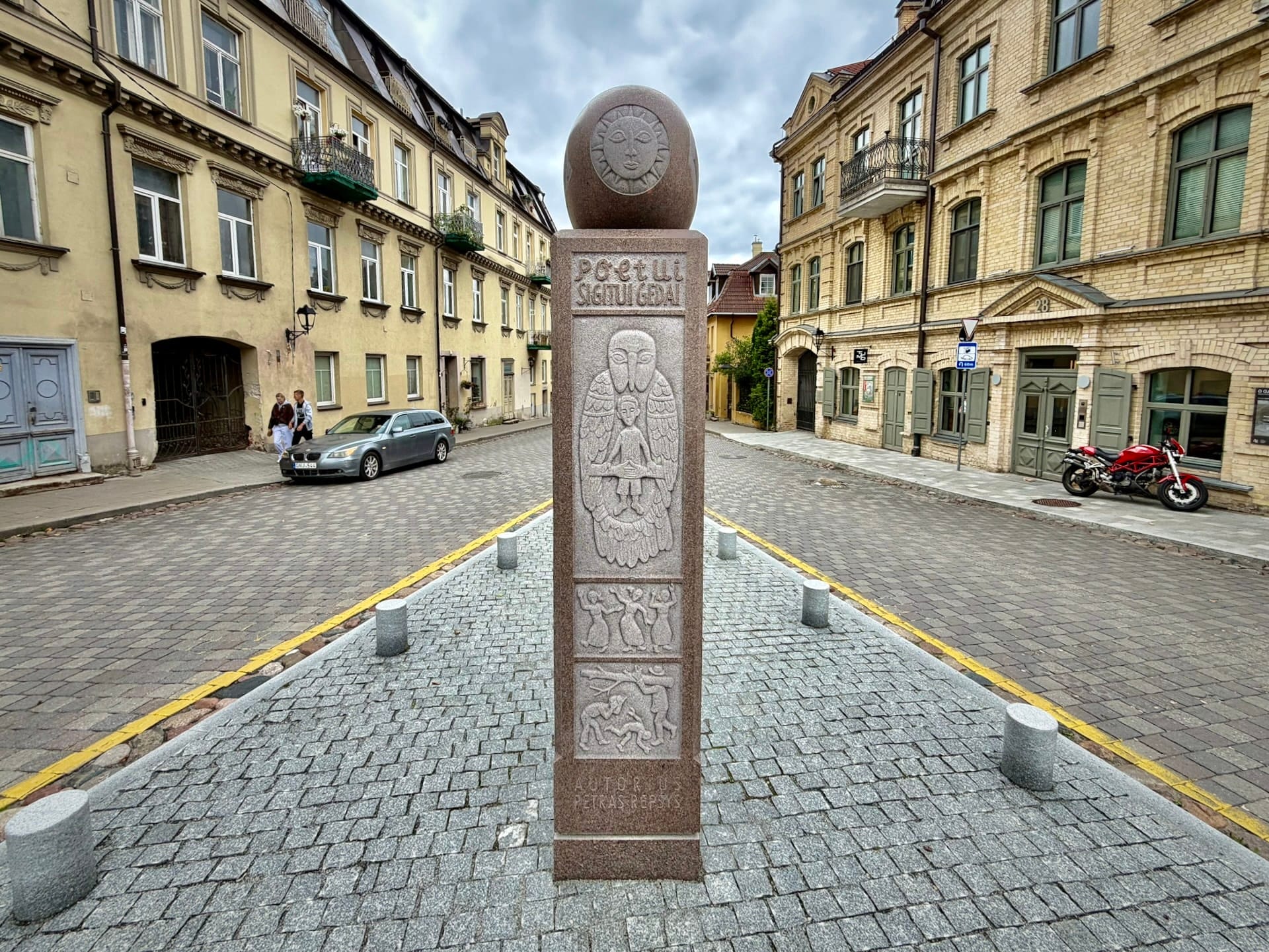
The Angel of Užupis, on the small square in the middle, belongs to the same story. It went up in 2002 for the republic’s fifth birthday, by the sculptor Romas Vilčiauskas, and it commemorates a local artist called Zenonas Šteinys who did a great deal of the work of dragging the district back. Before the angel was ready they put an egg on the plinth and told everyone the angel would hatch out of it. That is the Užupis I would have wanted to visit.
Is Užupis worth visiting?
Yes, for an hour, and no, not as the reason you came to Vilnius.
Go for the constitution wall, the Living Walls photographs and the angel, and go knowing what you are looking at. The regeneration here is in the price, not in the render. The joke worked. It worked so well that it raised the rent.
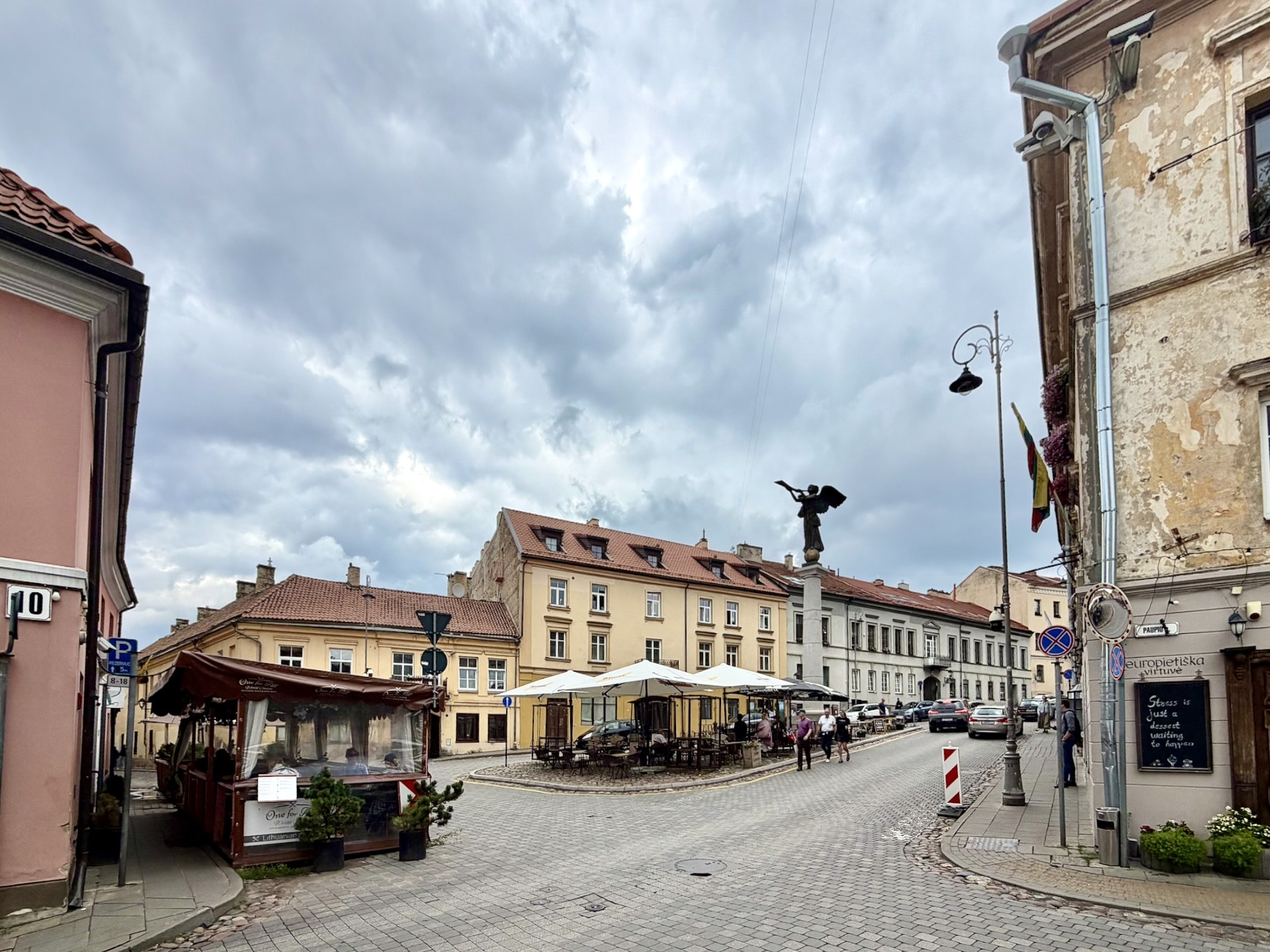
What it is not is a scruffy free-spirited enclave where the rules do not apply, and every article promising you one is describing a district that closed some time in the last decade. If you have read a dozen of those and arrive expecting Christiania, you will do what I did, which is walk around for two hours looking for the bit everyone else saw.
The tea, for the record, was excellent.
Užupis FAQ
Is Užupis a real country? No. It is a district of Vilnius, inside Lithuania, subject to Lithuanian law and Lithuanian taxes. The republic is a long-running artistic joke with a constitution, a flag, an anthem and several hundred honorary ambassadors, and everyone involved is clear about that.
How long do you need in Užupis? Forty-five minutes to an hour on foot covers the constitution wall, the angel, the riverbank and the main streets. It is not a half-day destination and it does not need to be booked.
How do you get to Užupis? Walk. It is a few minutes on foot from St Anne’s Church in the Old Town, across the bridge over the Vilnelė. There is no admission and no border formality, except on April 1, when they stamp passports on the bridge.
When is Užupis Independence Day? April 1. That is the day the republic was declared in 1997, and the one day of the year the whole apparatus is put on properly.
For the rest of the city, including how many days you actually need, getting in from the airport and what a weekend there costs, see our one day in Vilnius guide.