If you’re visiting the Dominican Republic between mid-January and late March, there’s one experience you absolutely cannot miss: whale watching in Samaná Bay. I’m probably not exaggerating when I say this is one of the region’s most famous natural attractions, which is why tour operators run excursions from popular tourist hubs all over the country – Punta Cana, Santo Domingo, you name it. We were beyond excited since neither of us had ever seen these majestic creatures in their natural habitat before.
We spent most of our time in the Dominican Republic on the Samaná Peninsula, specifically in the town of Las Terrenas, so naturally we wanted to organize our trip from there. Needless to say, dozens of companies offer day tours like this, so choosing wasn’t easy. Before leaving home, I’d read about Kim Beddall and her organization Whale Samaná – based on everything I found, they seemed like the best choice. However, like almost every other operator, their vessels depart from Samaná town. While it’s not far from Las Terrenas and easily reachable by guagua (local minibus), we weren’t yet familiar with how things worked around here and didn’t want to risk anything with the excursion we were most looking forward to.
That’s why we were thrilled to discover that Arena Tours, located right in the center of Las Terrenas, offers Kim Beddall’s experience every Tuesday and Friday – complete with round-trip transportation. We booked in person at their office for $100 USD per person (you can also pay in Dominican pesos – 6,200 DOP). Sure, this is considerably more than the $65 USD you’d pay booking directly with Whale Samaná, but the price includes transfers, lunch, a visit to the whale museum in Samaná, and a guide – in our case Isabel, one half of the couple who owns Arena Tours.
Of course, if you don’t want to take the risk and book your whale watching trip with transfer well in advance, you can do so on all the major platforms (Viator, GetYourGuide, etc.). Here are a few examples, although the reviews put us off:
Understanding Humpback Whales
Before I dive into our personal experience, let me give you a quick overview of what you might encounter in these waters. Humpback whales inhabit virtually every ocean on Earth, but the ones visitors see here spend most of their lives in the North Atlantic. Every winter, however, thousands of them make the epic journey across the ocean to mate and give birth in the warm Caribbean. The sheltered, pleasant waters of Samaná Bay provide an ideal sanctuary for this.
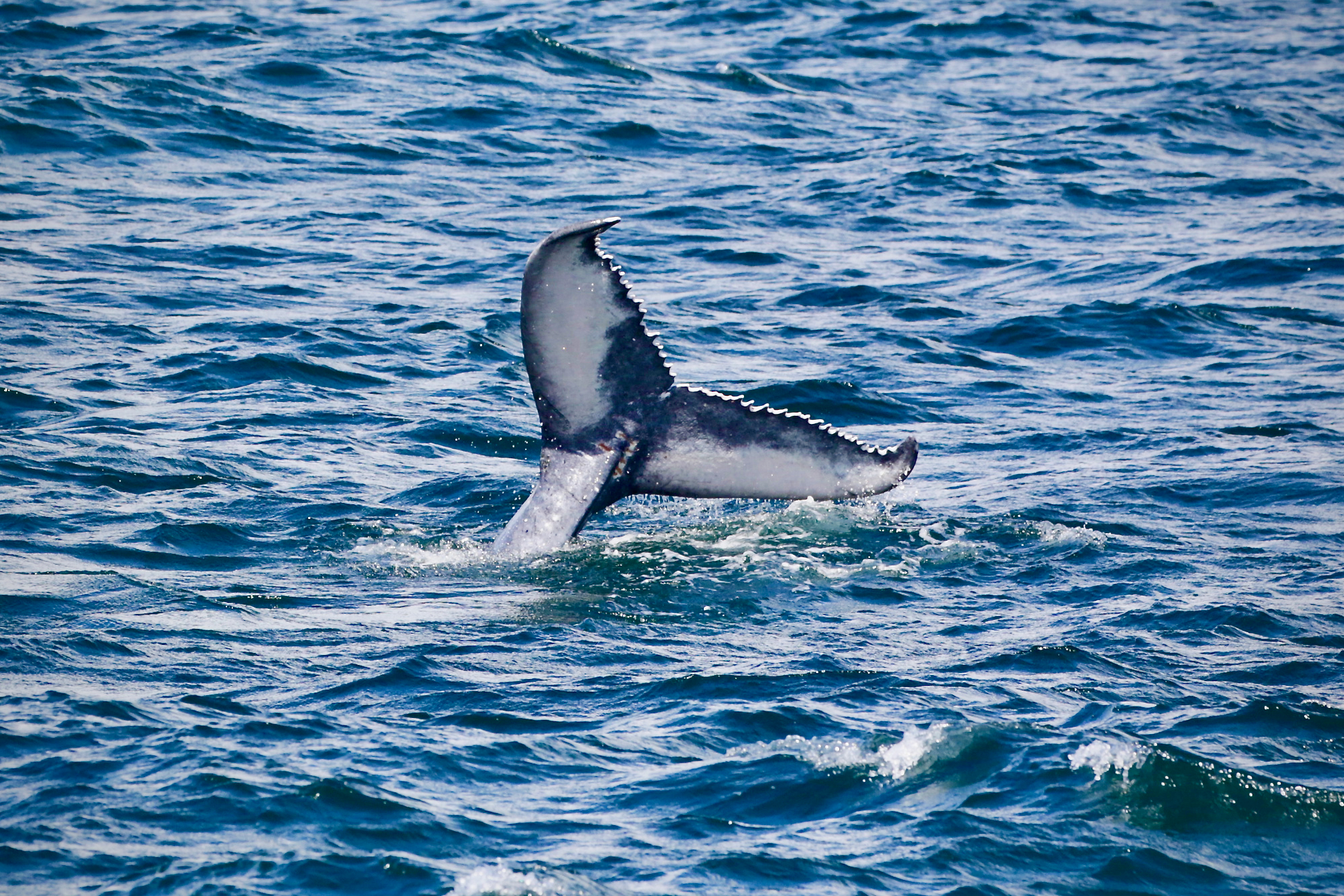
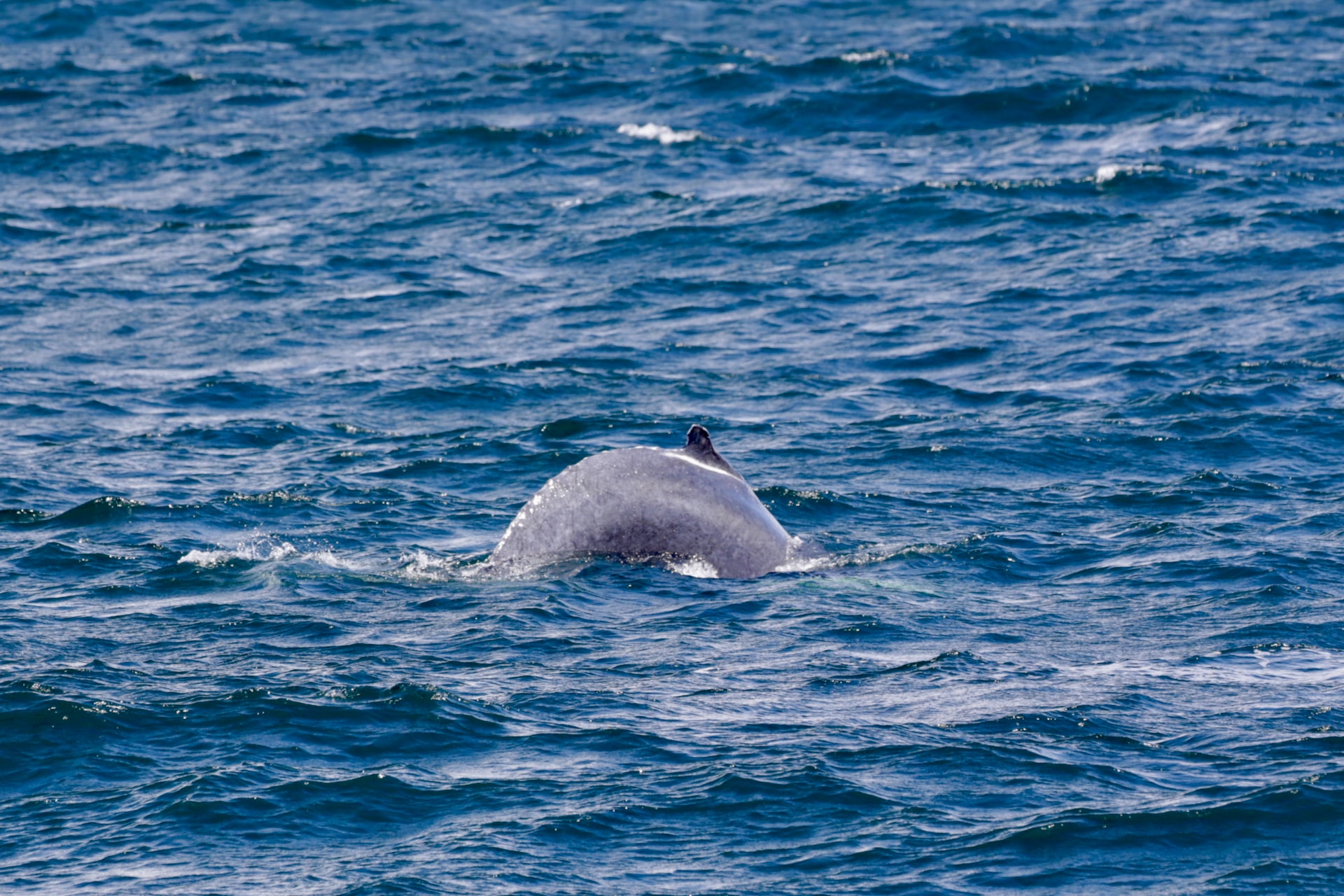
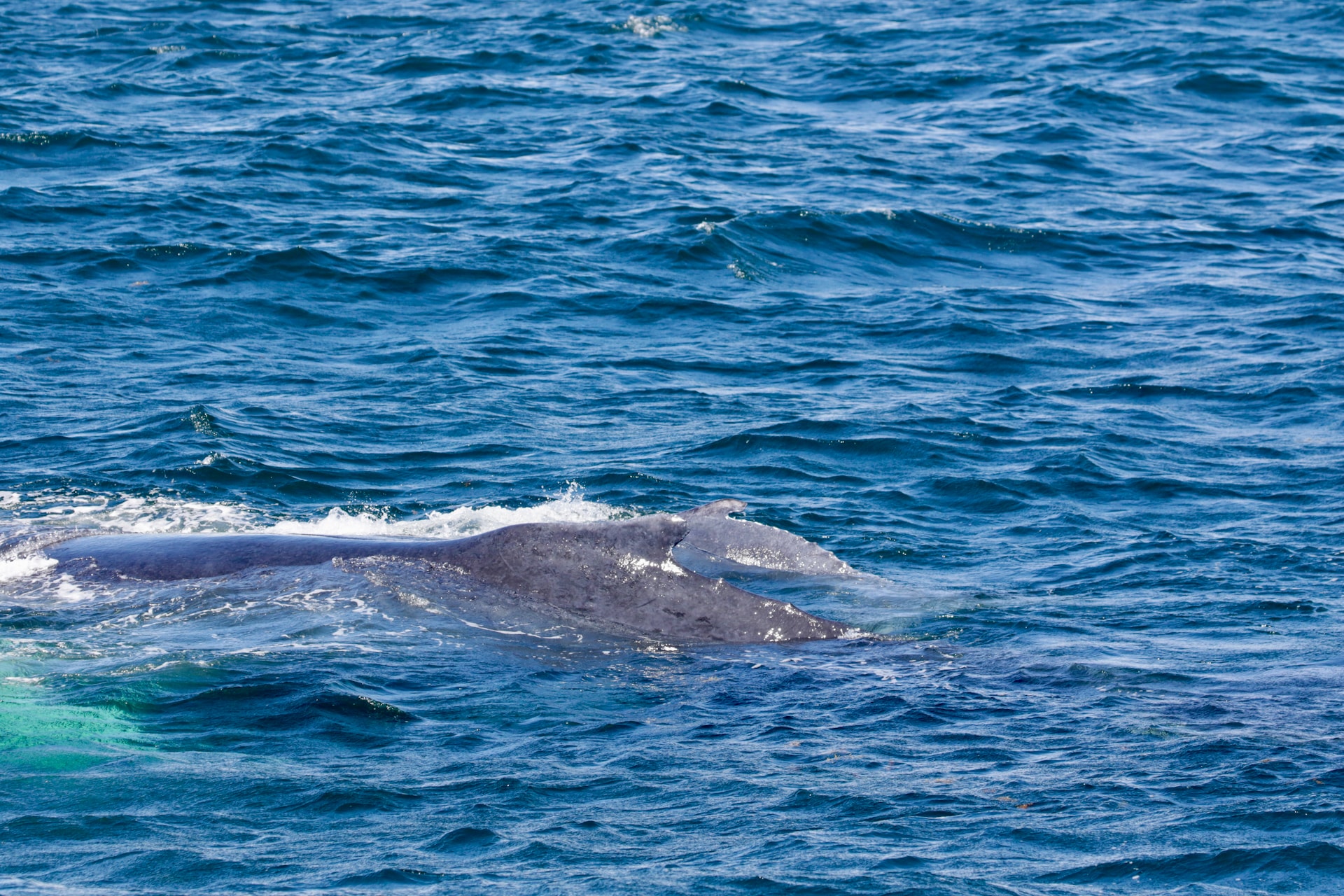
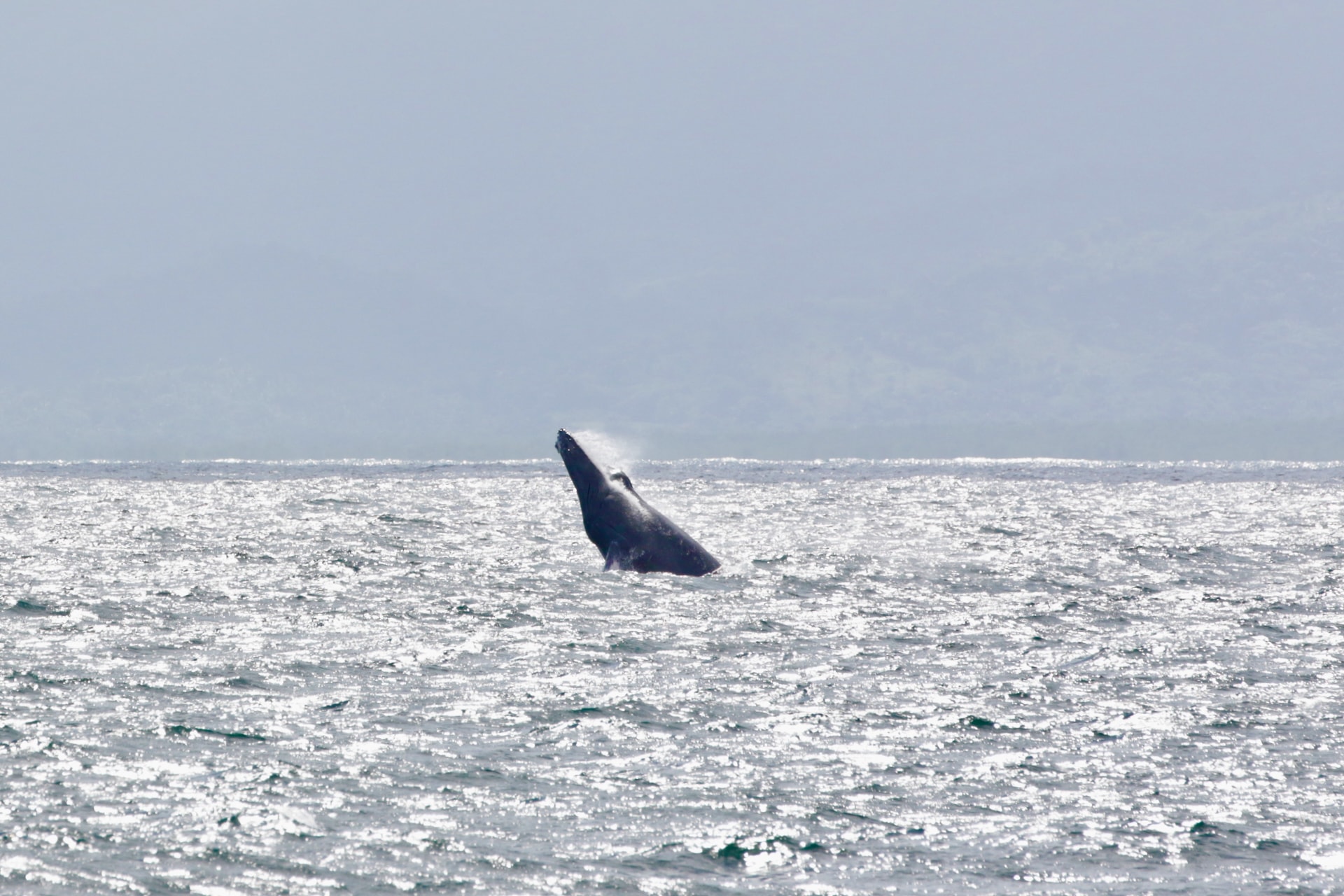
Humpbacks grow to about 15 meters (50 ft) in length and weigh roughly 40 tons – so while they’re not the largest whales out there, they’re still impressively massive creatures. Their name comes from the distinctive way they arch their backs into an inverted U-shape when diving beneath the surface. They also perform several other spectacular moves: sometimes they breach headfirst out of the water, and other times they raise their tail flukes high above the waves – each fluke pattern is completely unique, like a fingerprint, which is how researchers identify individual animals.
Humpbacks are also famous for their complex songs – though you won’t hear these directly during your trip. Only males sing, and while scientists haven’t fully explained the purpose of these vocalizations, what’s remarkable is their sophisticated structure. Each individual has its own repertoire, and elements of their songs are adopted and shared among others. We learned all about this and much more from the onboard team while searching for our first sighting.
Kim Beddall’s Whale Watching Tour
We left from the Arena Tours office shortly after 8 AM. Normally, a minibus takes you to Samaná, but since the weather wasn’t great that day, almost everyone had canceled – except for a couple from France. So Isabel ended up renting a car and drove us herself. Along the way, she shared lots of stories about Las Terrenas (much of the information in our post about the town comes from this conversation). The agency clearly caters primarily to French clientele, and while Isabel spoke English, she mostly conversed with our travel companions in their native language. Fortunately, Andrea speaks some French, and the French woman was kind enough to translate too when needed.
If you’re not comfortable with French and prefer an English-focused experience, consider booking directly with Whale Samaná or confirming language preferences with Arena Tours beforehand.
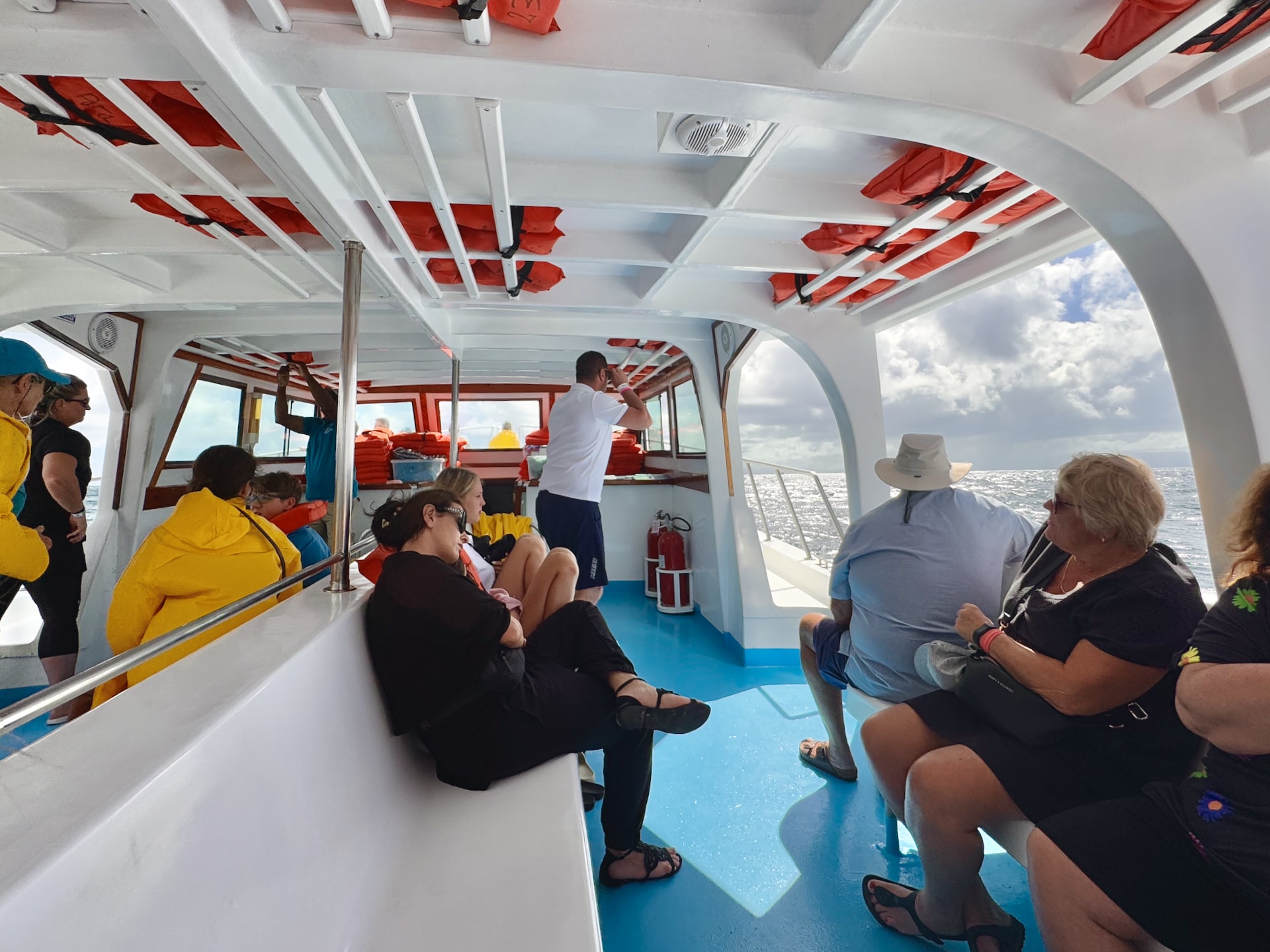
Kim Beddall’s tours run daily at 10 AM from Samaná’s dock from January 15 through February 11 (later in the season there are two departures per day – check their website for details). The Pura Mia is a fairly large vessel – about the same length as a humpback! – and we were part of a group of around 40-50 people. Whale watching here is governed by strict regulations: you can’t use sonar to locate animals, you can’t approach them head-on, you must maintain at least 50 meters (164 ft) distance (80 meters/262 ft if a mother is with her calf), and no more than three vessels can be near the whales at once for a maximum of 30 minutes – any additional ones must wait in line at least 250 meters (820 ft) away. Only operators with proper ministry permits are allowed to conduct excursions.
The Whale Samaná team strictly adheres to these rules. Unfortunately, we saw a number of smaller craft that clearly didn’t – some came within just a few meters of a mother swimming with her calf. Of course, everyone can decide for themselves whether they want to observe these magnificent animals by breaking the rules and disturbing them for their own benefit, or watch from a respectful distance while minimizing their impact on nature.
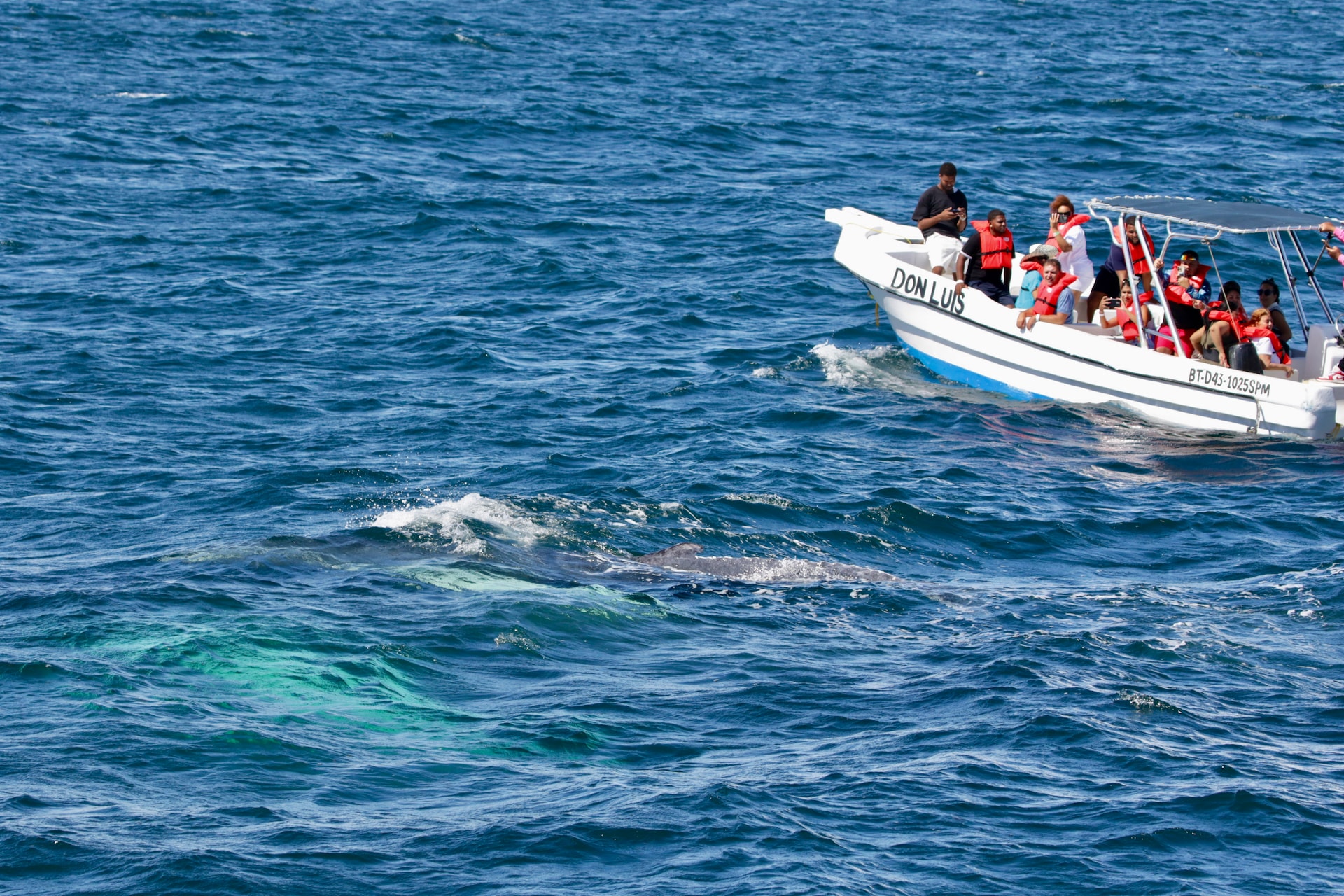
When choosing an operator, ask about their approach to wildlife regulations. Responsible companies like Whale Samaná maintain proper distances and follow all guidelines – your choice directly impacts animal welfare.
Kim Beddall demonstrates extraordinary expertise throughout the excursion – she’s essentially the Jane Goodall of whales. This Canadian conservationist has been following humpbacks in the Dominican Republic for 40 years and knows approximately 2,000 individuals “by name” – that is, by the unique patterns on their tail flukes. Not just Kim, but her entire team is incredibly skilled and friendly. During the quieter moments and on the way to the bay, they pass around photos, maps, and scale models, explaining everything about humpbacks in multiple languages (when we visited, they presented in English, Spanish, and French). You can tell the whole group is passionate about what they do and holds deep respect for marine life.
UPDATE: It is with great sadness that we learned Kim Beddall passed away in Samaná on August 13, 2025, at the age of 69. We feel incredibly fortunate to have experienced this tour under her guidance, and we’re confident her team continues to run these trips in a manner worthy of her legacy.
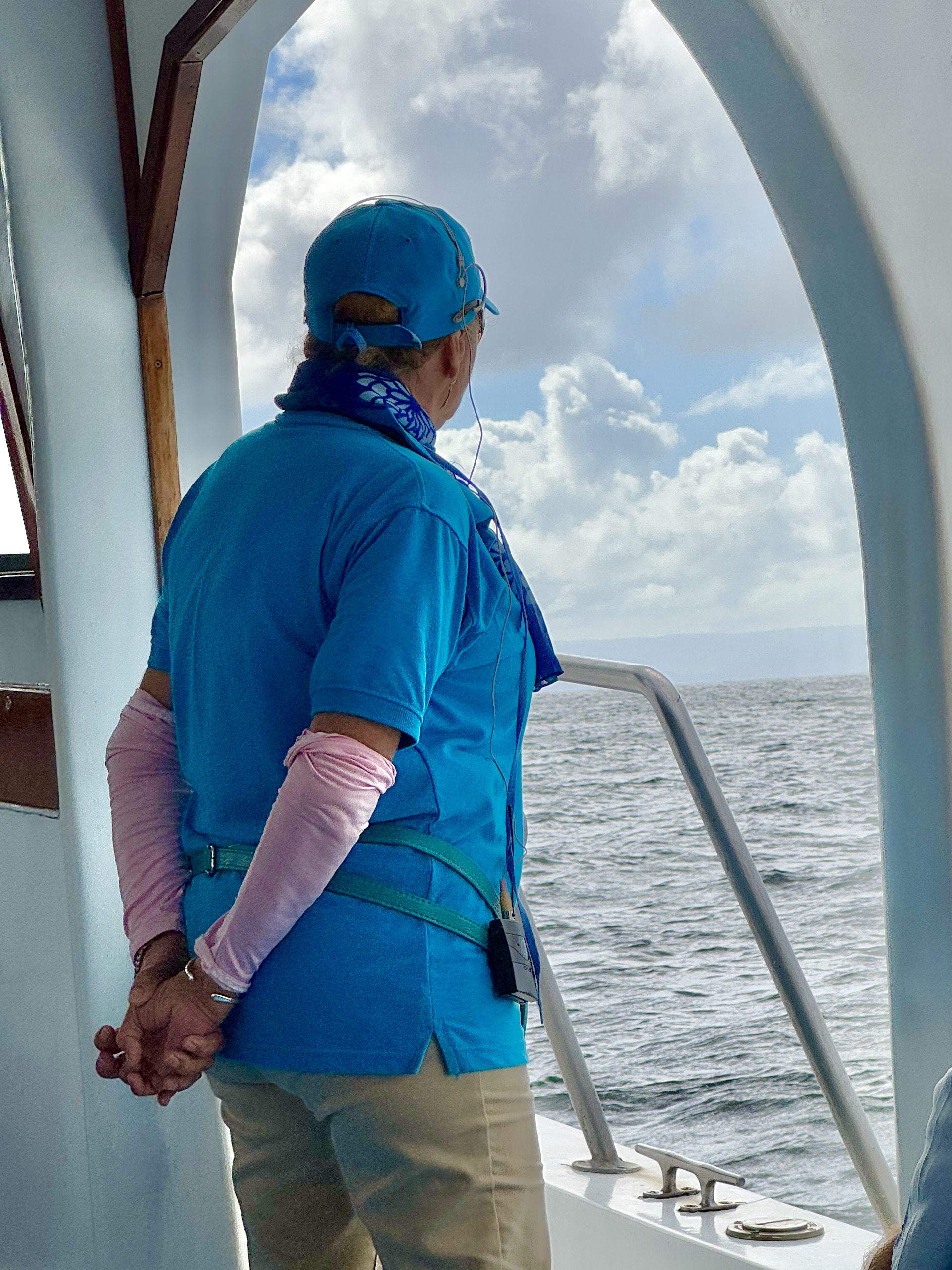

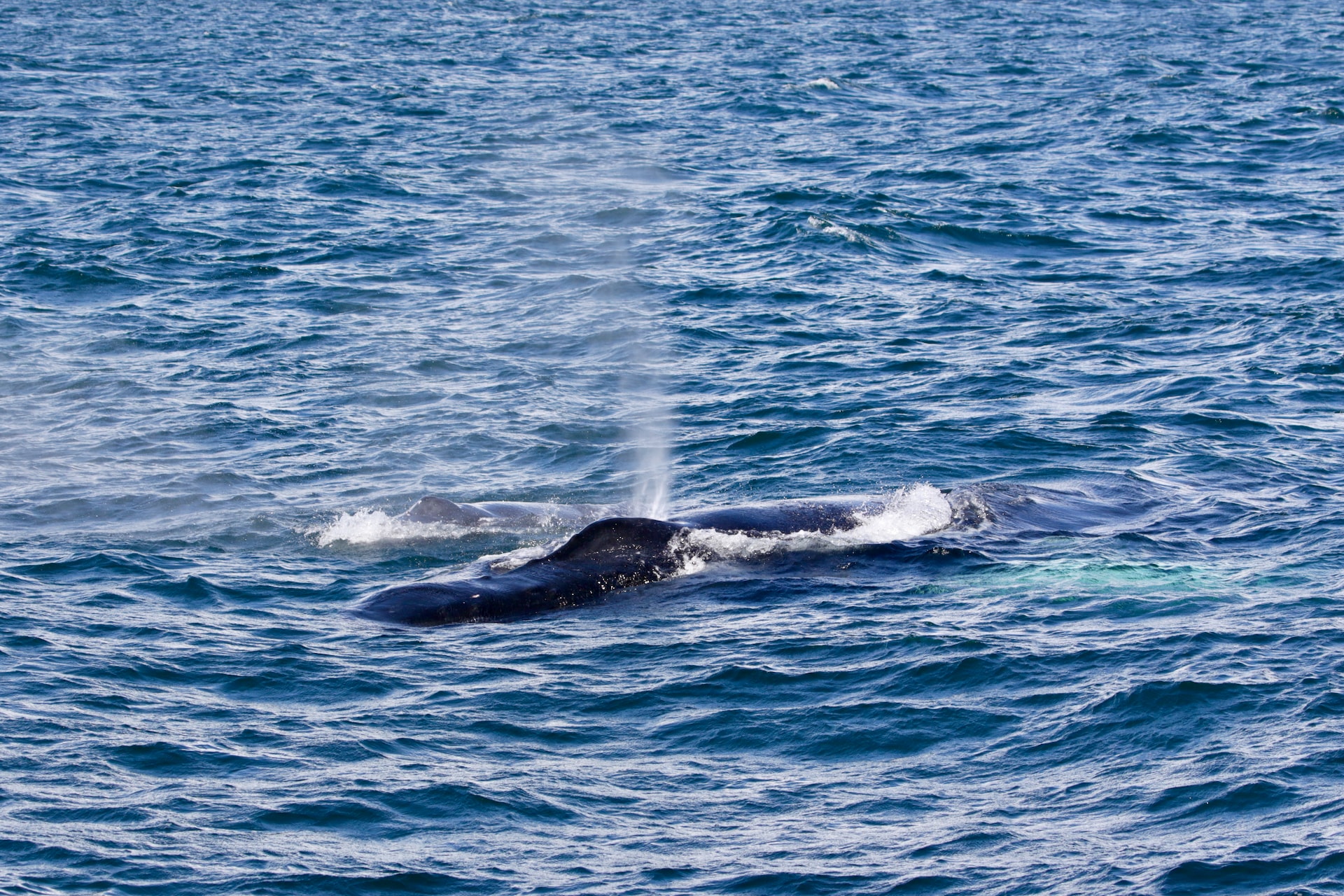
When we set out that morning, the first half hour or so was relatively uneventful – though we were learning everything there is to know about humpbacks during this time. We felt a bit worried about what would happen if we didn’t spot any, but we were told sightings are essentially guaranteed during this season, so we waited patiently. Then suddenly, on the starboard (right) side, two puffs appeared in the distance – the telltale sign of whales surfacing to exhale through the blowholes on their backs. The onboard team constantly scans 360 degrees and announces whenever they spot activity in any direction (using clock positions, like “whales at 9 o’clock”).
Once an animal is spotted, the vessel begins following it while Kim tracks the time with a stopwatch to predict when it will surface again for air (typically about 15 minutes). Throughout our journey, we saw numerous “blows,” witnessed the characteristic breaching from a distance, and observed the arched backs that give humpbacks their name. But the real highlight came toward the end when we spotted the season’s second calf swimming close to its mother – we followed this new little family for quite a while.
The Pura Mia has two levels: a covered seating area below (where Kim gives her talks) and an open deck above. Whales are likely to appear on both sides during the trip, so there’s no need to push or rush from one side to the other – the team emphasizes this as well. The more adventurous can head to the bow, where there are no benches but you get an almost 180-degree unobstructed view. We spent some time up there, but keep in mind that the rocking is much more pronounced at the front than midship, so when the waves pick up, you really need to hold on tight – and you might start feeling queasy.
If you’re prone to seasickness, take medication before boarding and stick to the middle or lower deck where the motion is less intense. The staff also distributes anti-seasickness wristbands, but medication tends to be more effective.
There are restrooms on board, and the staff hands out water, soft drinks, cookies, and gummy candies – if you’re feeling up to it. When we went in early February, the sea wasn’t showing its friendliest face. On the way out, the excitement distracted me from the fact that I’m hardly an old sea dog. On the return trip, however, seasickness hit me hard. Thankfully I didn’t actually throw up (I credit the medication more than the wristband), but during the last half hour I sat with my eyes closed, meditating to whale songs playing over the speakers, visualizing myself as a humpback swimming peacefully in these beautiful waters. At one point it even started pouring rain, but rain ponchos were distributed to everyone, so that wasn’t a problem either.
Tips for Photographing Whales
If you’re lucky enough to see humpbacks, you’ll naturally want to capture the moment, right? My quick tip: leave it to the pros. These animals move fast – surfacing and diving again in seconds – and the vessel is constantly swaying (even in calmer waters), so without specialized gear and experience, your chances of getting good shots are slim.
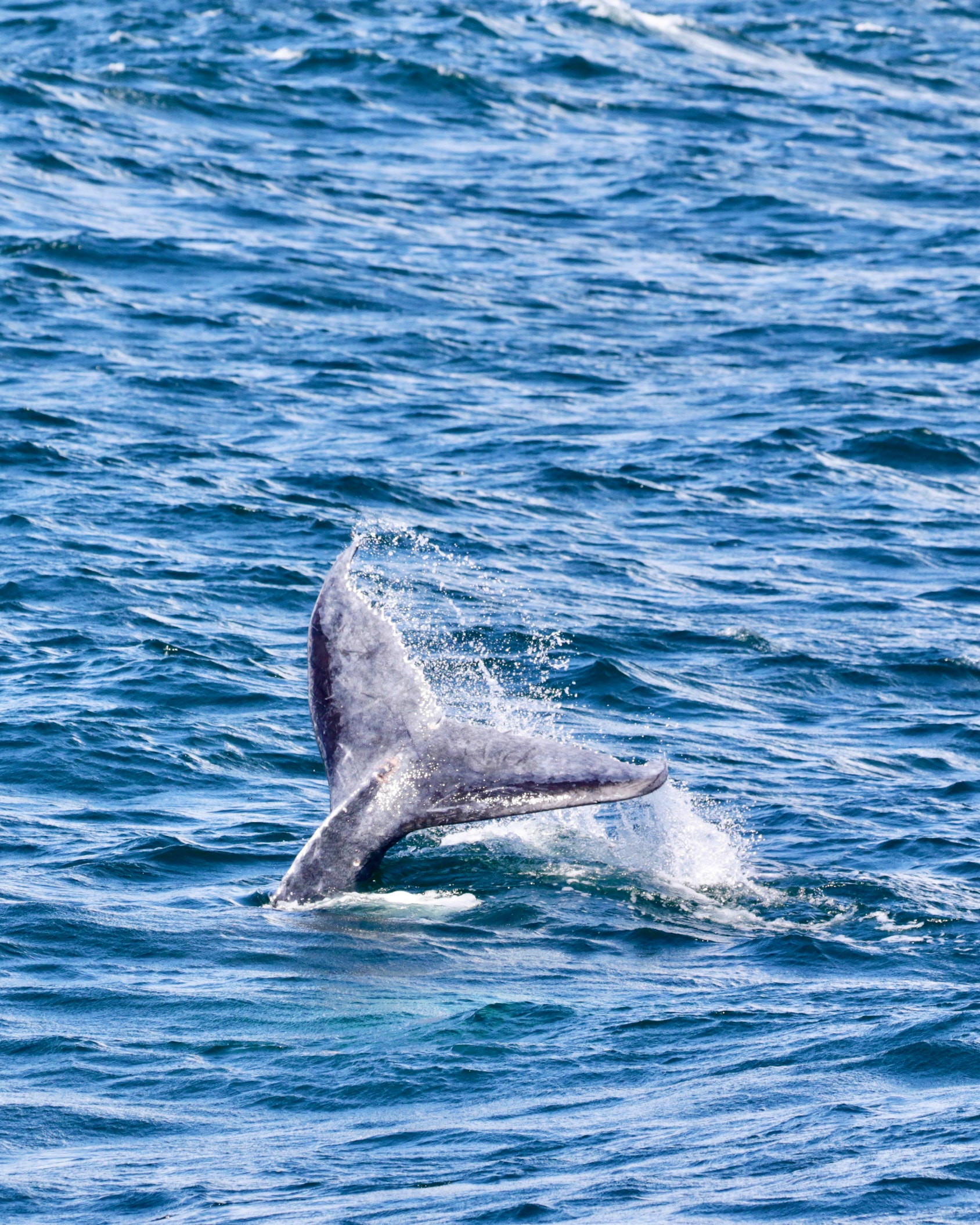
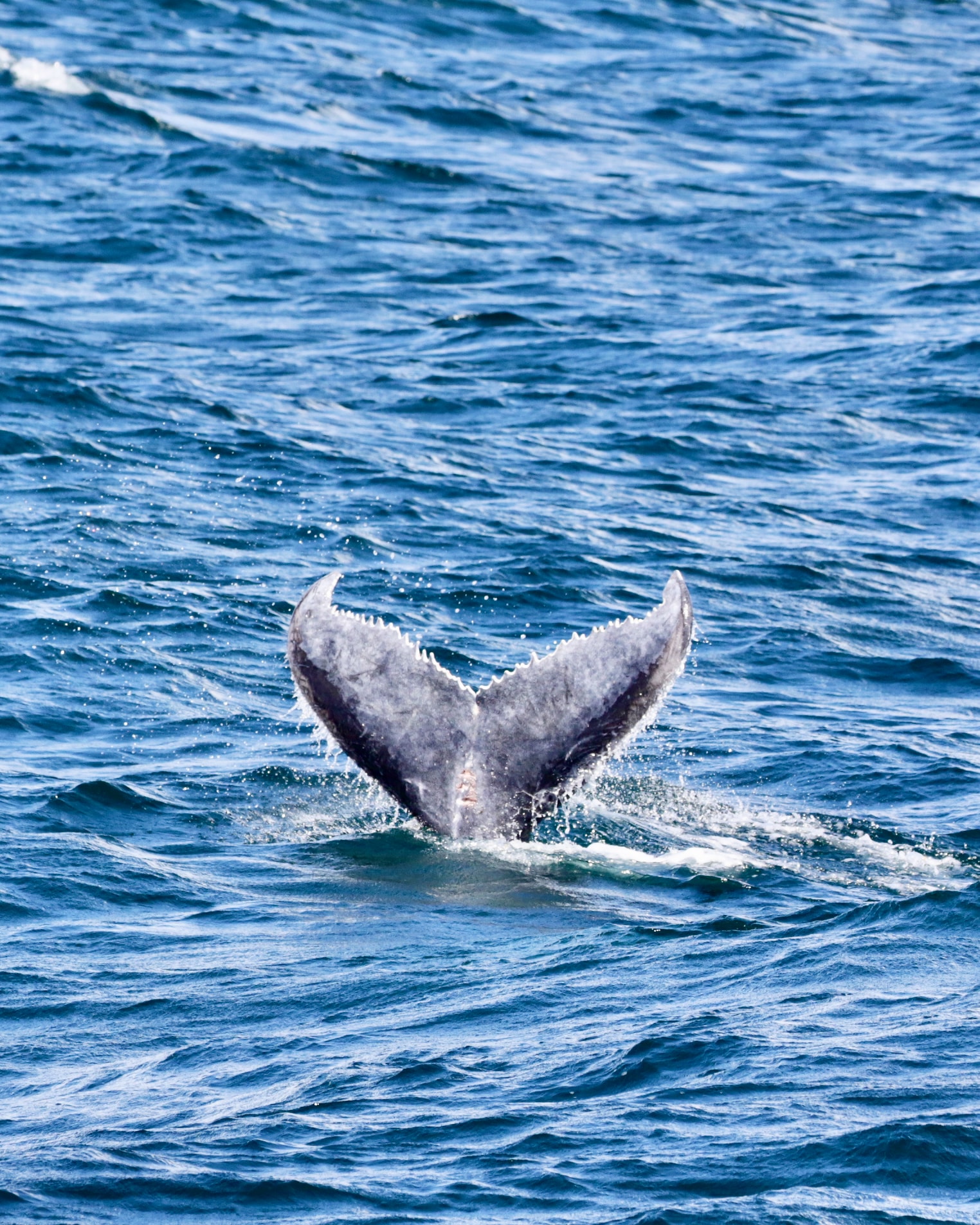
Of course, I tried with my iPhone, but most of the photos in this post weren’t taken by me. Every tour has a dedicated photographer on board (ours was Eva, originally from Czechia), who shoots throughout the entire trip, quickly sorts through the images afterward, and shows you the best ones on an iPad. You can then purchase them (around $5 USD if I remember correctly) and receive them instantly via AirDrop or email.
The Rest of the Day
I can’t remember the last time I was so happy to be back on solid ground as when I stepped off the Pura Mia after nearly four hours at sea. At the dock, you have the option to board another vessel heading to the picturesque Cayo Levantado, also known as Bacardi Island, but our tour didn’t include this (and we weren’t particularly disappointed about that). We headed instead to a comedor (local eatery) across from the pier for lunch. Nothing fancy – the usual la bandera (literally “the flag”), which is the Dominican national dish: meat, beans, rice, some vegetables, fried plantains, plus water or soda and coffee. My insides weren’t quite ready for solid food yet, though. The place has a restroom, but I’d recommend using the facilities on the Pura Mia before disembarking – let’s just say the one here left something to be desired.
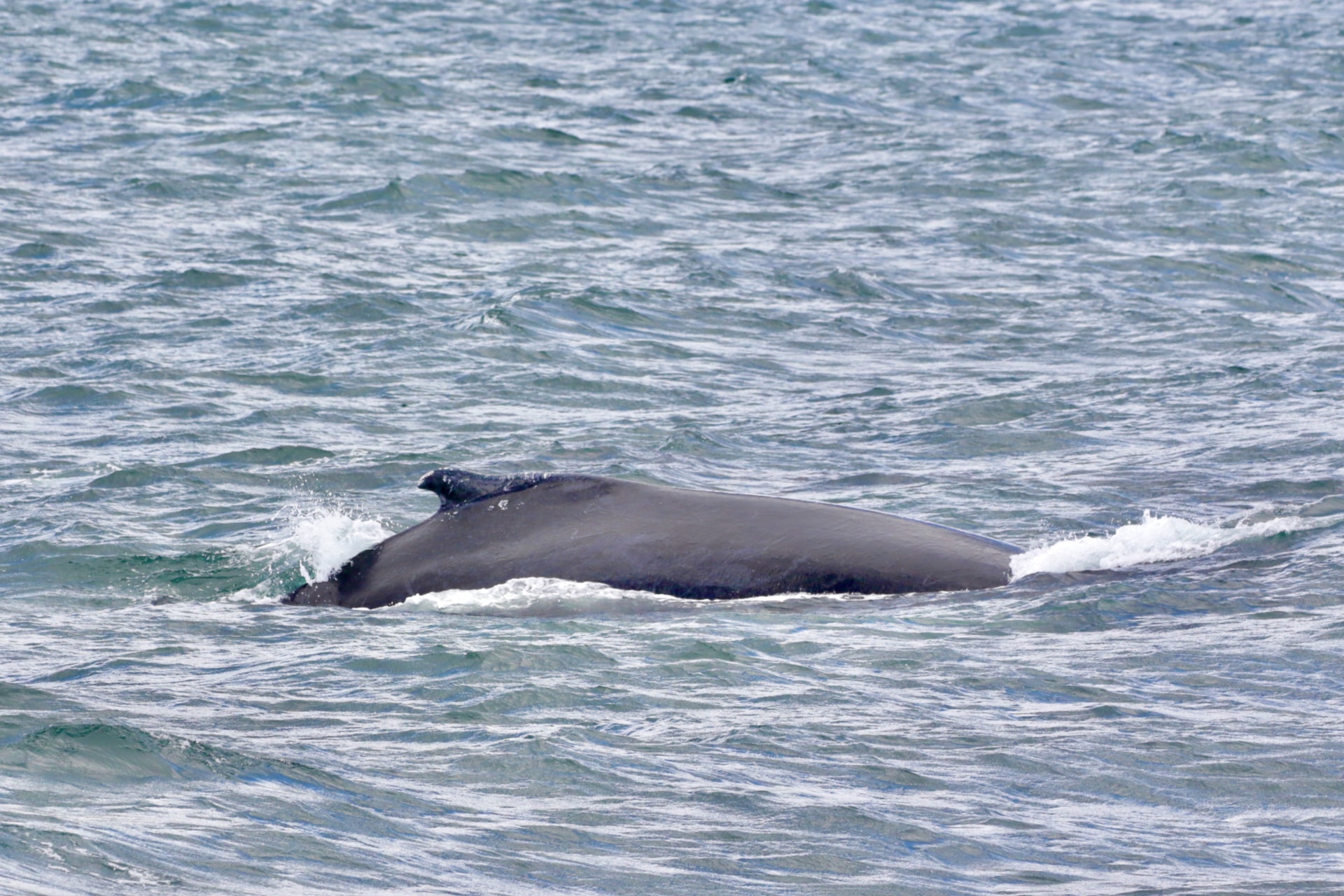
Our next stop was the whale museum in Samaná. Honestly, aside from a skeleton, there isn’t much to get excited about here. The tiny museum displays detailed panels with information about humpbacks, but we didn’t learn anything significant that Kim Beddall hadn’t already covered during the tour.
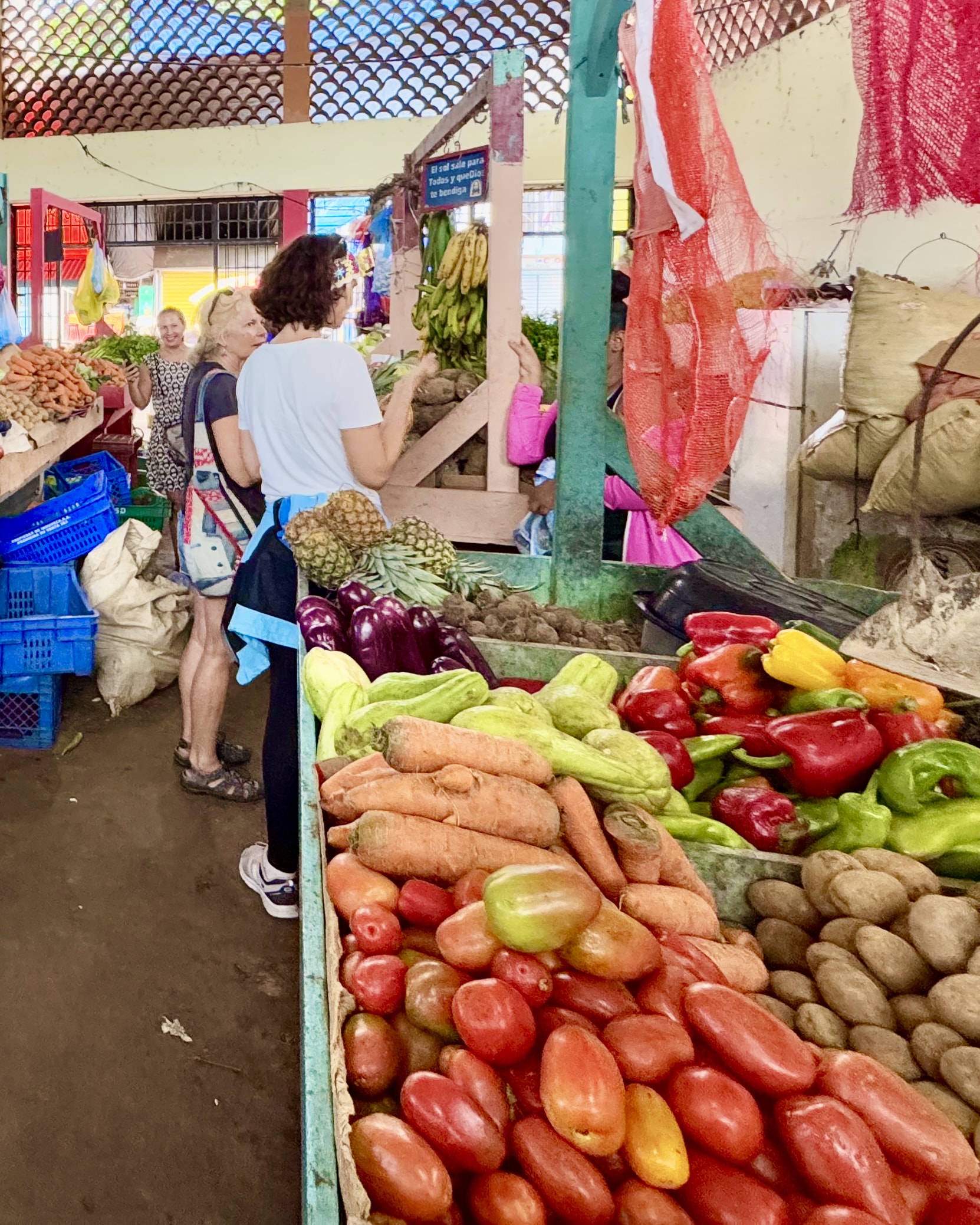
The drive back held a few pleasant surprises. At our French companions’ request, we made a quick stop at the local market (this isn’t normally part of the itinerary), where you could buy all kinds of fruits and vegetables. Isabel even explained which traditional local produce can be used to make which dishes and what she typically buys. A little later, we pulled over somewhere along the road between Samaná and El Limón because Isabel said this was the best place to get coconut bread and other sweet breads – so we stocked up. It really was delicious. From there, our final destination was the Arena Tours office back in the center of Las Terrenas.

Final Verdict: Is Whale Watching in the Dominican Republic Worth It?
If you happen to be in the Dominican Republic during whale season, you absolutely should not skip this experience – it’s one of the most thrilling natural phenomena in the country! What matters is choosing a reputable company that respects the environment and wildlife – we wholeheartedly recommend the Whale Samaná team. In our case, communication was a bit challenging – we also encountered this “French dominance” on the three beaches tour by another company, for example – but the bonus stops like the market and the coconut bread vendor more than made up for it.
If the weather’s nice and you enjoy beaches, it might be worth adding a visit to Cayo Levantado (Bacardi Island) to your itinerary, though some reviews we read suggested it’s somewhat overrated and suffers from overtourism. It’s also entirely possible to organize the trip with Kim Beddall’s team on your own – guaguas run regularly from downtown Las Terrenas to Samaná starting early in the morning. The roughly 90-minute ride costs 100 DOP (~$1.70 USD) each way.