I’m a firm believer in one-bag travel. For years, my Peak Design Travel Backpack 45L has been my only companion on trips around the world – and since I always use it in its non-expanded state, it’s really a 35-liter bag. This setup has worked flawlessly in every situation so far, but I had a feeling our Antarctica trip would test its limits.
The challenge isn’t really about what to pack for the ship itself. It’s that the southern hemisphere’s expedition season falls during summer, which means you need to be prepared for both extreme cold and genuine heat on the same trip. We were heading out for a full month, and beyond Antarctica, our itinerary included Buenos Aires and Santiago – both scorching hot at that time of year – plus hiking in Patagonia. We weren’t alone in this, either: nearly everyone we talked to on the ship had combined Patagonian hiking with the Antarctic voyage, just in varying order.
So yes, this looked like the toughest one-bag challenge yet. In this article, we’ll break down exactly what to pack if you’re planning a similar itinerary, and – with the benefit of hindsight – we’ll also share where we got it wrong. I’ll spoil the ending right up front: we pulled it off with carry-on luggage only, and ran into nothing dramatically missing along the way.
The Layering System: Why Merino Wool Makes One-Bag Antarctica Travel Possible
Before diving into the detailed packing list, let me explain the philosophy behind how we both approached packing. Instead of bulky, heavy individual pieces, think in layers. This isn’t just practical for hiking – where you’ll frequently add or shed layers (especially in Patagonia!) – it also means the same pair of pants you wore sightseeing in Buenos Aires works perfectly as a mid-layer in Antarctica, with a merino wool base layer underneath and waterproof pants over the top.
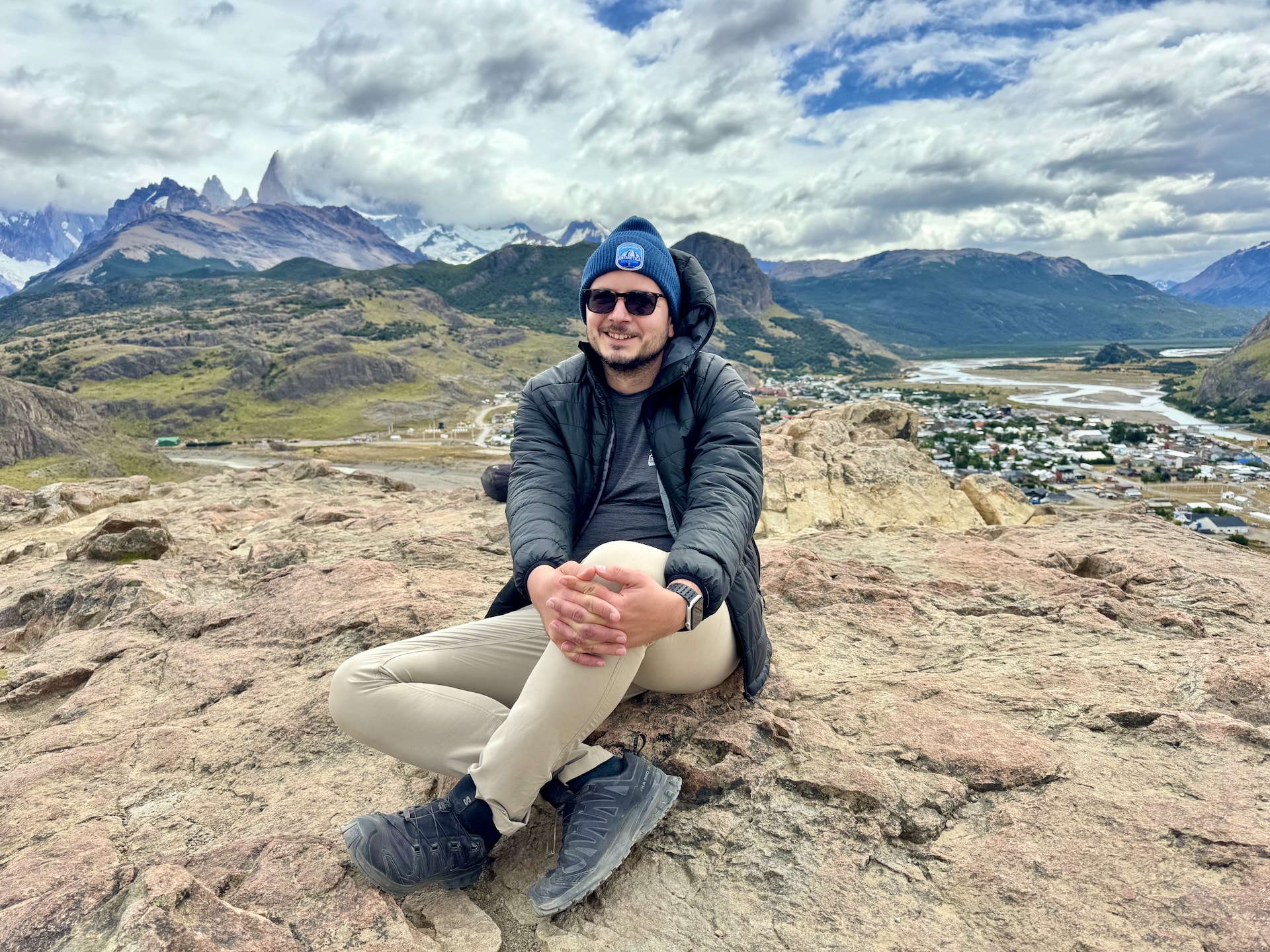
And that brings us to one of the most important factors: merino wool, the material that experienced travelers have been raving about for good reason. You can radically cut down the number of clothing items you need with this natural fiber, which keeps you cool in heat, warm in cold (even when wet!), and doesn’t need to go in the laundry after every wear because it simply doesn’t develop odor even when you’ve sweated through it. On top of my usual merino tops and socks, I decided this trip was the time to try merino underwear. I’d resisted the idea before – wearing the same boxers for days on end seemed questionable – but the reality is borderline miraculous: they genuinely feel just as fresh after four or five wears as they did the first time you put them on. It’s worth rotating your merino pieces, though – don’t wear the same item two days in a row, but let each piece air out for a day or two and cycle through a small rotation.
There are popular brands like Unbound Merino and Smartwool, but since those aren’t readily available where we live, we use Decathlon and Zulu products. The brand itself matters less – what counts is that the wool content is as close to 100% as possible, and the fabric weight sits around 150 gsm (grams per square meter). The lower the merino content, the less you benefit from the material’s properties (especially odor resistance); in my experience, around 70% is the threshold for t-shirts, but for underwear, don’t go below 100%. How soft the fabric feels also matters – wool can be notoriously itchy – so if you can, touch and feel items before buying. If that’s not an option, or if you simply want the best of the best, Unbound Merino products won’t disappoint.
Antarctica-Specific Gear: What to Pack (and What the Ship Provides)
Antarctica isn’t a conventional travel destination, so you’ll inevitably need some specialized clothing and accessories that you probably don’t use on most trips. Fortunately, the list isn’t as long as you might expect, because most expedition operators provide key items.
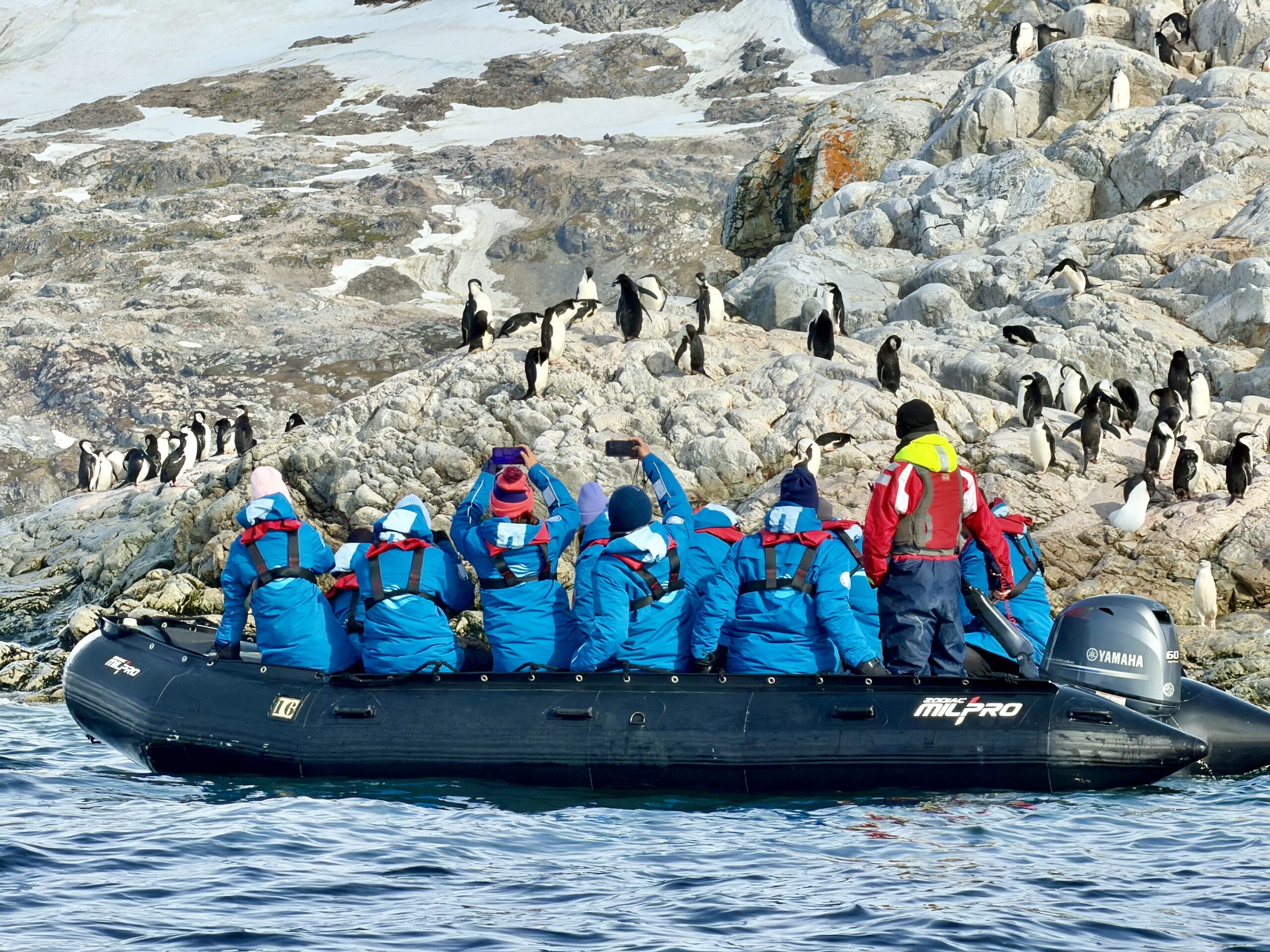
The most important requirement: a waterproof outer layer. This is non-negotiable, and some operators won’t even let you board a Zodiac without the proper gear. “Waterproof” here means truly waterproof – not the hiking pants that got you through a few hours of light rain on a trail somewhere. For one thing, you’ll be stepping directly into the water getting out of the Zodiac on nearly every landing, since Antarctica has no docks or piers. For another, waves can crash into the inflatable boat with serious force, especially in rough wind. On one of our outings, the guy sitting at the front had their life vest auto-inflate – the kind that triggers after a few seconds of submersion – that’s how much water was slamming in.
So, what you absolutely need: a waterproof jacket, waterproof pants, waterproof boots, and waterproof gloves. The good news is that most operators provide two of these four items. Mid-range and higher operators typically gift you a waterproof parka as your outer shell layer – you keep it after the trip. (This does, admittedly, complicate one-bag packing, since you now have to stuff a sizable parka into your backpack. We met someone on the ship who left theirs behind for exactly this reason.) Waterproof boots are also standard issue on most ships – you borrow them for the duration of the voyage. In most cases, operators provide high-quality Muck boots that are completely watertight and genuinely comfortable. The waterproof pants and gloves are the items you’ll likely need to pack yourself, since only the most premium operators tend to lend those out.
Before booking your expedition, ask the agency or operator exactly what gear is included, gifted, or available for rent. This can vary significantly between companies and even between different departure dates. Getting this sorted early is the single most important packing decision you’ll make for Antarctica.
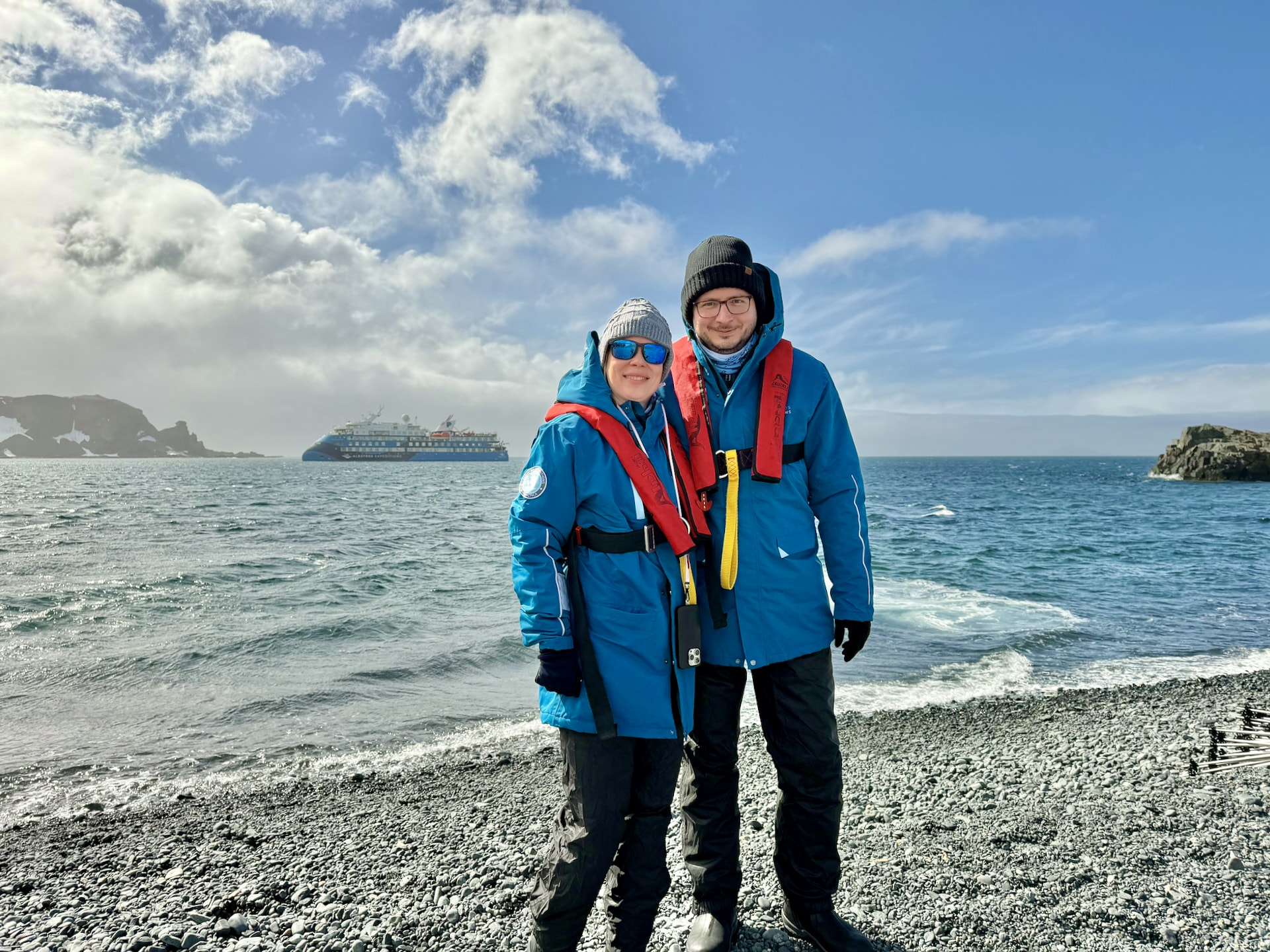
Beyond clothing, one essential to pack is sunscreen. The sun can be brutal, but even on overcast days, you must not skip sun protection – the ozone layer is thinnest directly above Antarctica. While it has been gradually recovering in recent years, the sun can still catch you off guard. Most of your body will be covered by clothing, but apply high-SPF sunscreen to your face, and pack SPF lip balm as well – I’d never used one before this trip, but was glad I brought it. Also keep in mind that snow and ice reflect sunlight from below, so you’re essentially being hit from both directions. Good sunglasses are a must – in bright sunshine on the ice, you’ll see almost nothing without them.
I used to be an enthusiastic hobby photographer and still love taking pictures, but I no longer travel with serious camera gear. An iPhone 17 Pro was my only camera on Antarctica, and honestly, it handled most situations well – though the phone’s 200 mm (8x) lens is obviously not the same as a dedicated telephoto. I don’t regret skipping the heavy equipment, but if you’re a dedicated photographer, this is the trip to bring your best gear with the longest focal lengths you own, primarily for wildlife photography.
You’ll also need to protect your equipment from water and cold. For Zodiac rides, pack everything in a dry bag (backpacks sit on the floor of the boat during landings and cruises), and keep spare batteries close to your body heat (an inside pocket of your parka works well). If you’re not bringing camera gear, you won’t need any bag or backpack on shore at all – we didn’t. The few things we needed fit easily in our jacket pockets, including a small water bottle, though we never once felt at risk of dehydration during a few hours on land. If you’re only using your phone for photos and video, it’s worth getting a waterproof case on a lanyard – the Zodiac rides aren’t just wet, they can be seriously bumpy, and it’s better to be safe.
On our trip, the expedition team provided hiking poles at each landing site (in various sizes), and these are genuinely worth using on terrain that’s often slippery from ice, mud, or – let’s call it what it is – guano. Finally, the one thing we didn’t bring but should have: binoculars. I considered buying a pair but ultimately decided against it, and I regretted that decision. Birds, whales, and distant wildlife are often can be observed from the ship’s deck, and binoculars are far superior to any camera zoom for the experience of actually watching them. On the Ocean Albatros, you could rent a pair for $65 for the entire voyage.
If you’ve done traditional cruises before, you might wonder about formal night dress codes. On expedition ships, there are none. No jackets, no dress shirts – just wear whatever’s comfortable and appropriate for the conditions. That said, nobody will bat an eye if you dress up – a Swedish gentleman on our ship wore a blazer and button-down to every dinner.
Patagonia Hiking Gear: What You Need Beyond the Antarctica Kit
After Antarctica, our route took us into Patagonia. This leg didn’t require much additional specialized gear – we completed the hikes around El Chaltén and Torres del Paine mostly in the same clothes we’d worn in Antarctica.
Layering and waterproof gear remain essential in Patagonia: the weather can shift dramatically within a single hour, with blazing sunshine giving way to winds that turn raindrops into horizontal projectiles from every direction. I never actually used the waterproof overpants here (and ended up completely drenched as a result), but a lightweight rain jacket with a high waterproof rating is non-negotiable.
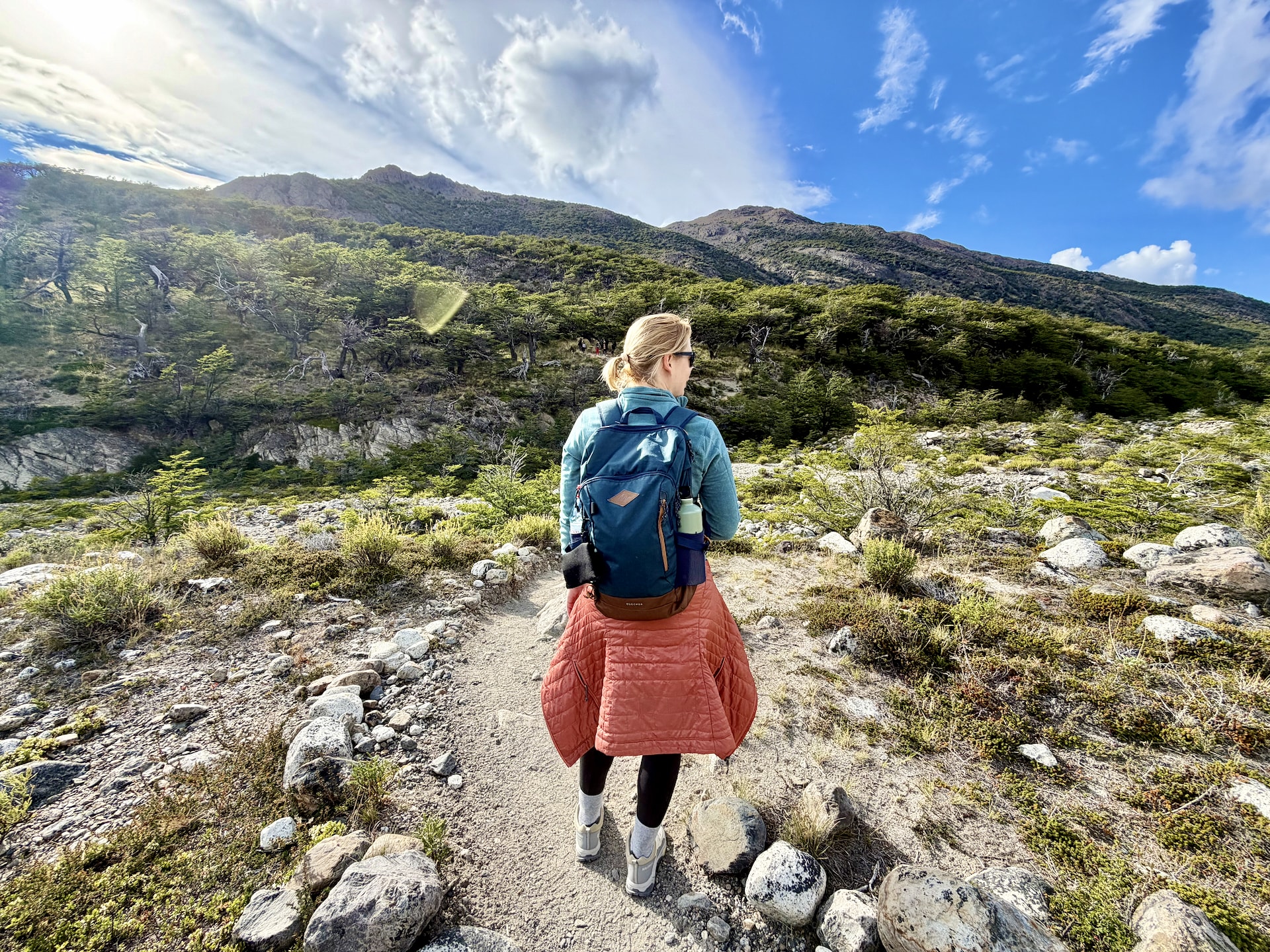
The biggest headache was the footwear question. There are two schools of thought: one says bring proper high-ankle hiking boots for the trails, the other says trail runners are the way to go. I can say without exaggeration that I spent months deliberating before we both landed on trail runners. They also work well on the ship – in fact, they’re an advantage on decks that are often wet and slippery. Plus, they’re far easier to squeeze into a backpack if needed.
For day hikes, you’ll also need a small daypack to carry water, food, layers you’re not currently wearing, and a few essentials like a power bank. I used my trusty Matador ReFraction packable backpack for this, and it came through once again.
A packable daypack often fits better inside a larger backpack when you lay it flat instead of rolling it into its own pouch. I’ve found this saves surprising amount of space.
For the more demanding trail sections – the Laguna de los Tres hike near El Chaltén and the Base Las Torres hike in Torres del Paine – trekking poles are highly recommended. Since you can’t bring collapsible poles in carry-on luggage, renting locally is the only option. Both national parks’ surroundings have plenty of rental shops, and in Chile our accommodation host even lent us a pair. In El Chaltén, unfortunately, we arrived too late and left too early the next morning, so we did the Laguna de los Tres without poles – it’s definitely doable, just less comfortable.
Renting and Buying Gear in Ushuaia and on the Ship
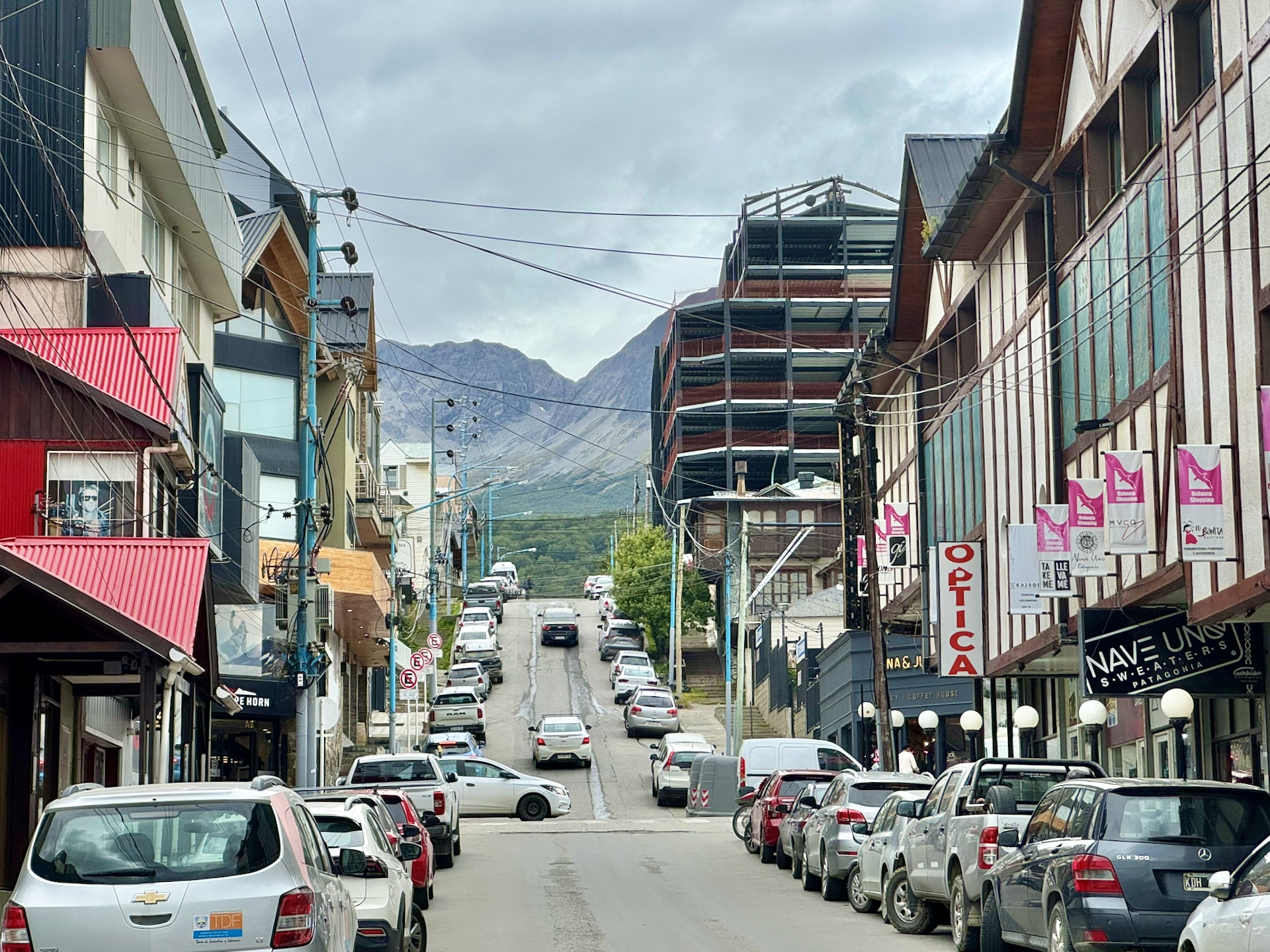
Speaking of rentals – even if you forget something at home or didn’t have time to buy it before the trip, it’s far from a disaster. I’m fairly sure Ushuaia has the highest concentration of outdoor gear shops per capita anywhere in the world. A significant portion of the city’s retail consists of stores selling hiking clothing and equipment, carrying every major global brand you can think of. We had everything we needed so we didn’t browse extensively, but from what we could tell, prices were roughly in line with international retail – perhaps slightly higher. That said, don’t plan to do your big gear shopping in Ushuaia: back home, you can usually find better deals during sales, at larger specialized retailers, or online. But it’s reassuring to know the option exists.
Several shops at the “end of the world” also specialize in rentals, offering waterproof pants, gloves, and full hiking kits. In our case, the Antarctica agency we booked through – Freestyle Adventure Travel – would have provided pants and gloves for free had we needed them. It’s worth asking your booking agent or operator what’s available, or who they recommend for rentals if you decide to go that route.
As a last resort, there’s the ship’s boutique – if it has one. The Ocean Albatros had a small shop on board, and alongside souvenirs, it stocked essential gear like hats, gloves, pants, and similar items. The prices were surprisingly reasonable, though the selection was limited to higher-end premium brands worn by the expedition guides (like Helly Hansen). But if your waterproof pants tear or you lose your gloves, you won’t have to sit out the remaining landings and Zodiac excursions.
What I Packed but Never Needed
After this many trips, my “unnecessary items” list is usually pretty short, and this time was no exception. Apart from emergency supplies that I always carry but hope never to need (certain medications, printed documents) and a few small things I tend to overpack (I always bring more carabiners than I could possibly use), there wasn’t a single piece of gear that didn’t get used at least once or twice during the trip. Oh wait – I almost forgot: the Matador Pocket Blanket never came out of my bag, and the money belt turned out to be unnecessary.
What I Didn’t Pack but Should Have
Fortunately, this list is short too. We spent a lot of time debating binoculars and ultimately didn’t buy a pair – and that’s genuinely the only thing I wished I’d had. The expedition team on the ship actually helps everyone set up and learn how to use binoculars, so even if you’ve never used a pair before, there’s no need to worry. A simple, compact model works fine, and even 10x magnification is enough.
Something I did bring, but the wrong version: gloves. I went with the Sealskinz Acle model because my hands don’t get cold easily, and I’d been happy with the brand’s Bacton beanie. The store where I bought them listed them as waterproof, but checking the Sealskinz website afterwards revealed they’re only “water repellent.” This became painfully obvious when a storm caught us in the Zodiac and the gloves soaked through completely, which – combined with cold, howling wind – was a decidedly unpleasant experience. After that full soaking, they seemed to repel even less water than before, getting wet again both in Antarctica and during heavy rain in Torres del Paine. I can’t emphasize this enough: find gloves that are genuinely waterproof and warm enough for your comfort level. It makes a bigger difference to your overall well-being than you might expect.
And one small regret: serious camera gear. I mentioned above that I used to shoot with something more capable than a phone (a DSLR), and while I haven’t missed it in recent years, there were moments in Antarctica where I thought about how a proper telephoto lens would capture the wildlife, or how these landscapes deserved to be preserved in the best possible quality. So if you’re even mildly into photography and own the equipment, don’t leave it at home. Just know that it seriously threatens the one-bag concept.
Complete Antarctica and Patagonia Packing List
Here’s the full breakdown, organized by category, of everything I packed for the 4-week Antarctica–Patagonia trip. I’ve included items I acquired along the way (🎁) and flagged items that were only used at specific legs of the journey – so if your itinerary doesn’t include one of these, you can safely skip them: ❄️ – Antarctica, ⛰️ – Patagonia (hiking), 🏙️ – cities (Buenos Aires and Santiago, where it was hot), ✈️ – worn during the outbound flight from the Northern Hemisphere (“fortunately” it’s cold at home in winter). Items that turned out to be unnecessary also got a flag (🚫).
Bags
- Travel backpack – in my case the Peak Design Travel Backpack 45L
- One large and one small packing cube (older Peak Design Packing Cube Medium and Small)
- Packable daypack (Matador ReFraction)
- Sling bag (Aer Day Sling 3)
Tops
- Compact packable insulated hooded jacket (mine is from Decathlon, similar to the Patagonia Nano Puff) ✈️
- A packable lightweight rain jacket (e.g. Helly Hansen Loke Jacket)
- A lightweight merino wool hoodie (e.g. Unbound Merino Compact Travel Hoodie)
- A mid-weight fleece jacket (Cotopaxi Abrazo Fleece Full-Zip Jacket) ✈️
- One long-sleeve merino wool t-shirt (e.g. Unbound Merino Long Sleeve Merino Crew)
- Four short-sleeve merino wool t-shirts (e.g. Unbound Merino Crew Neck T-Shirt) ✈️
- One merino wool polo shirt (e.g. Unbound Merino Polo) 🏙️
- One plain cotton t-shirt for sleeping
- The gifted Albatros Expeditions parka (received upon boarding) 🎁❄️
Bottoms
- One lightweight hiking pant (e.g. The North Face Basin Pants) ✈️
- Merino wool base layer pants ✈️
- One lightweight, stretchy pair of long pants (in my case Decathlon warm-weather golf pants, but something like Lululemon ABC Trousers works too) 🏙️
- One pair of lightweight shorts (e.g. Lululemon ABC Classic-Fit Short) 🏙️
- Waterproof overpants (e.g. Helly Hansen Gale) ❄️
- Swim trunks
Underwear
- 5 merino wool boxer briefs (e.g. Unbound Merino Boxer Briefs)
- One looser, longer cotton boxer brief for sleeping
- 3 pairs of low-cut socks (Uniqlo Low Cut Socks) 🏙️
- 4 pairs of merino wool hiking socks – two ankle-length, two mid-calf (e.g. Smartwool or Darn Tough) ⛰️✈️
- One pair of thick wool socks ❄️
Accessories
- Waterproof warm beanie (Sealskinz Bacton) ❄️
- A thinner beanie (gifted by Freestyle) 🎁
- Two neck buffs (one gifted by Freestyle) 🎁
- Waterproof gloves (e.g. Sealskinz Griston, though warmer options exist)
- A money belt 🚫
- Waterproof phone case on a lanyard ❄️
Footwear
- Trail runners for hiking and the ship (Salomon XA Pro 3D V9 Gore-Tex) ✈️
- Lightweight shoes for warm weather and cities (Tropicfeel Sunset) 🏙️
- Flip-flops
- Cheap disposable slippers for the plane and some accommodations
Electronics
- iPhone 17 Pro
- Apple Watch
- Universal travel adapter (Epicka Universal Travel Adapter)
- 1 longer (2 m / 6.5 ft) and 1 shorter (1 m / 3.3 ft) USB-C cable
- 1 6-in-1 (USB-A/C/Lightning) cable
- 1 Apple Watch charger
- Power bank (Nitecore NB10000 GEN3)
- Apple AirPods Pro 3
- A simple pair of wired earbuds (with USB-C adapter)
- 1 aux cable (for rental car music, just in case) 🚫
Small Pouches and Organizers
- 2-3 small zippered pouches (e.g. MUJI Polyester Two Zipper Case or MUJI Wrinkled Nylon Flat Pouch) – for cables, medication, etc.
- One clear zip-lock bag for documents
- 1-2 additional zip-lock bags
- A clear TPU pouch for liquids (MUJI TPU Clear Case)
- A hanging toiletry case for dry toiletry items (MUJI Polyester Hanging Case)
Toiletries
- Toothpaste
- 2 × 100 ml (3.4 fl oz) sunscreen in travel containers
- SPF 50 lip balm ❄️
- Hand sanitizer gel
- Disinfecting wipes (leftover from the Sofia incident…)
- Insect repellent spray (I know it’s controversial, but I’m a firm believer in DEET-based repellent)
- Solid deodorant
- Dry hand soap sheets (e.g. FOMIN Antibacterial Paper Soap Sheets)
- Foldable comb (MUJI Polypropylene Folding Hair Comb)
- Foldable toothbrush
- One small and one large nail clipper
- Cardboard nail file
- Tweezers
- Cotton buds
- Electric razor (Philips OneBlade)
Miscellaneous
- Passport
- Some cash (USD) and bank cards
- Every conceivable document printed out (flight tickets, bus tickets, insurance policy, ship ticket, passport copy)
- 2 pens (my beloved LAMY Safari rollerball and a MUJI)
- Sleep kit (foam and silicone earplugs, simple eye mask)
- Standard travel medicine kit and first aid supplies
- Far more carabiners than any reasonable person would need, in every conceivable size
- Small velcro strips (VELCRO Reusable Cable Ties)
- Small roll of black electrical tape
- Matador Pocket Blanket 🚫
- Sunglasses and prescription glasses (with case)
- Microfiber cleaning cloth
- 0.7 L (24 oz) water bottle
- Laundry detergent sheets (e.g. Earth Breeze)
- Crossword puzzle book
Carry-On Luggage Tips and Travel Logistics
If you’re traveling from the Northern Hemisphere, you get to wear your bulkiest, warmest clothes during the outbound journey – which means the rest of the list above actually fits inside a 35-liter backpack, if not comfortably. Compression packing cubes help too. From that point on, however – especially once you acquire the parka – things can get tight. An expandable backpack like the Peak Design helps here, or you can use the packable daypack as a personal item for overflow. One caveat: the Peak Design 45L in its expanded state technically exceeds most airlines’ carry-on dimensions, but you can take your chances. When I use the Matador backpack as a personal item, I always leave enough room inside it to stash the sling bag, just in case someone decides to get strict about how many items I’m carrying.
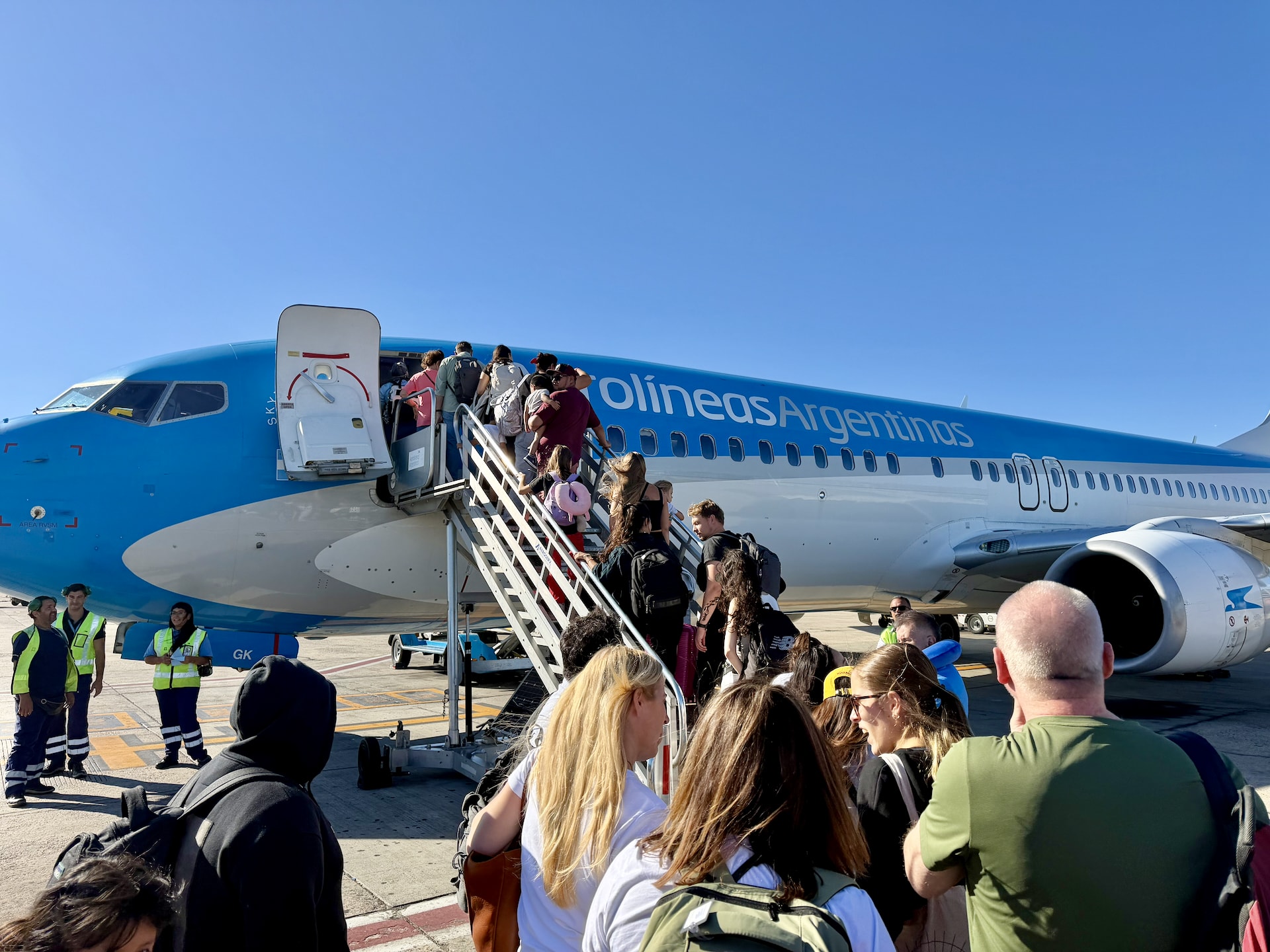
Airlines change their carry-on policies with alarming frequency these days – arguably more often than you’ll be swapping out your merino underwear. It’s not even the size limits that are hardest to meet: it’s the weight limits. The full list above, including the bag (which isn’t light), weighs roughly 9 kg (20 lbs). Aerolíneas Argentinas currently allows 8 kg (17.6 lbs) for carry-on on domestic flights and 3 kg (6.6 lbs) for a personal item, so on paper the combined 11 kg (24 lbs) works if you distribute the weight – but who knows what tomorrow brings. They didn’t seem excessively strict during our trip, although they did weigh carry-ons on our departure from Ushuaia, and we saw people being charged excess fees. You’ll notice I didn’t bring a laptop – adding one would push the total uncomfortably close to the weight limit. Bottom line: always check the current rules, weigh your bags before you leave, and if needed, buy a larger carry-on allowance (or checked bag) in advance, because upgrading at the airport will certainly cost more.
Naturally, we didn’t pack enough clothes to last the entire trip without doing laundry – though honestly, with this many merino pieces, you could probably survive a full month unwashed. We did laundry multiple times throughout the trip, strategically timed (for example, the low-cut socks were only needed in the warm cities at the beginning and end, so they could be washed mid-trip without any issues). Our first laundry stop was in Ushuaia on day 13, after the ship, followed by another wash later in Patagonia – though Andrea did wash some underwear by hand in the ship’s bathroom sink in between.
When it comes to packing cube organization, Andrea and I took different approaches. I stuck with my usual system: the larger Peak Design cube for “outer layers,” the smaller one for “inner layers.” She took a different route and packed everything Antarctica-related in one dedicated cube, so she only had to pull out that single cube when it was time for polar gear.
I normally don’t bother printing documents – I typically only carry my WHO vaccination booklet, two passport photocopies, and proof of insurance on paper. This time, though, I wasn’t taking any chances: I printed flight tickets, bus tickets, and ship boarding documents too. One bus company explicitly stated that printed tickets were required.
Final Thoughts
So, can you do a month-long Patagonia + Antarctica trip with only carry-on luggage? Absolutely. Would we do it the same way next time? Without question! I’ve been traveling with a single backpack for years – we both have – and I wouldn’t trade this way of traveling, and the freedom it provides, for almost anything.
Antarctica might seem intimidating from a packing standpoint, but as you can see above, beyond a couple of compact additional items, you don’t really need anything extraordinary. The usual tricks – merino wool, strategic layering – keep your bag lean and prevent you from dragging oversized suitcases through Patagonian streets that absolutely were not designed for wheeled luggage, or from stressing about whether your checked bag with all your Antarctica essentials will actually show up at the other end.