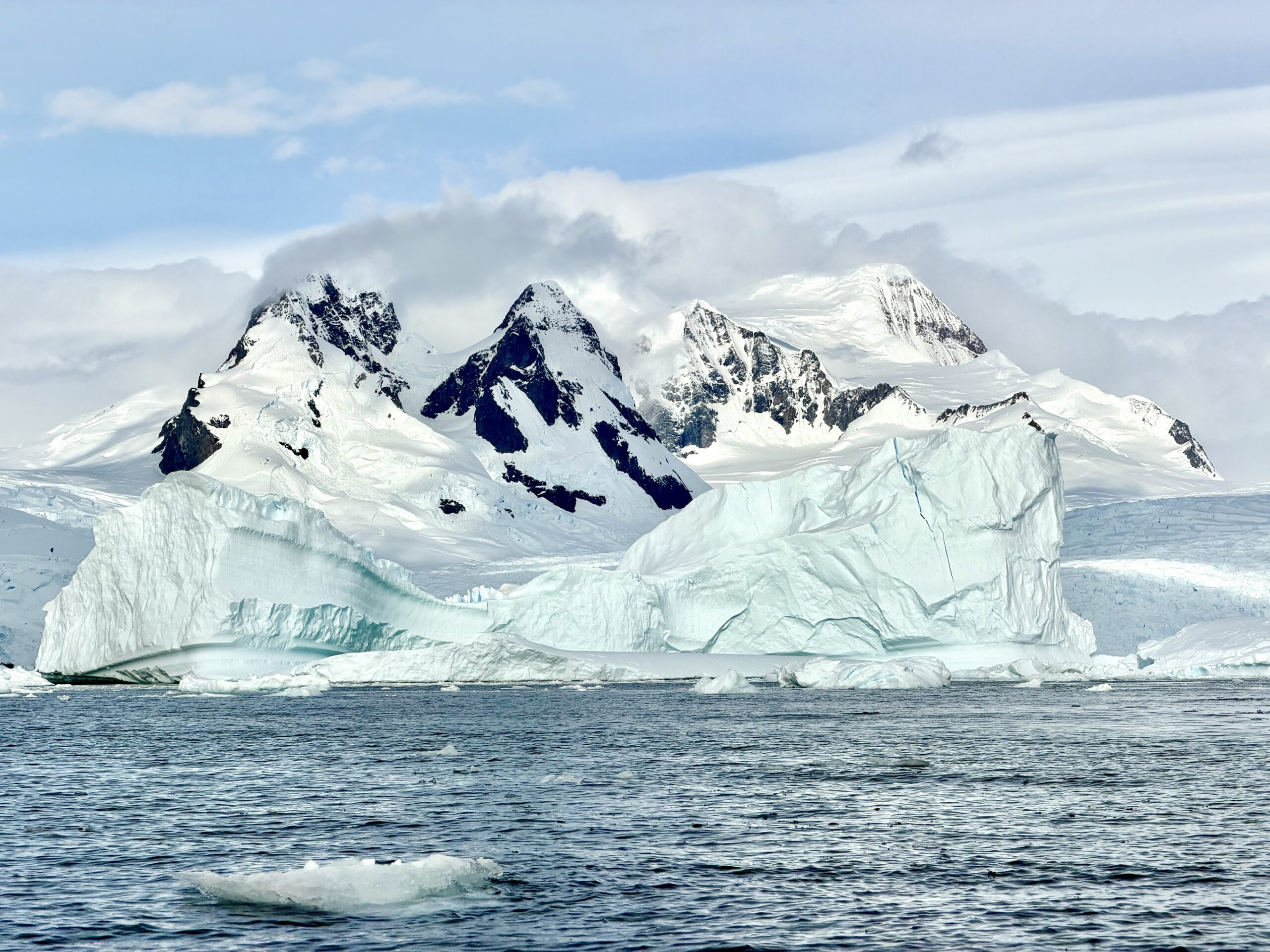
If you’re considering a classic Antarctic Peninsula cruise, you’ve probably read plenty of glossy itineraries that promise penguins, glaciers, and “the trip of a lifetime.” What’s harder to find is a candid, day-by-day account of what actually happens during those ten days. That’s what this article is.
We sailed from Ushuaia to the Antarctic Peninsula and back between January 23 and February 1, 2026, on the M/V Ocean Albatros, on what’s marketed as a “Classic Antarctica” expedition. This is our trip, our weather, our landings. Yours will be different – every Antarctic voyage is, because the schedule is rewritten daily based on ice, wind, and what the wildlife is doing. But the rhythm of the days, the structure of an expedition cruise, the textures and surprises – those translate. After reading this, you’ll have a much clearer picture of what you’re actually signing up for.
If you’re still in the planning phase, our complete Antarctica trip planning guide covers when to go, how to choose a ship, and how much it really costs. To pack for both Antarctica and Patagonia in a single carry-on, see our one-bag packing list. And for a deep dive into life on board the Ocean Albatros – cabins, meals, the typical day, Zodiac logistics – head over to our Ocean Albatros review.
A note on the structure before we start: a 10-day Antarctic cruise really gives you about four-and-a-half days of actual time at the White Continent. Two days each way are spent crossing the Drake Passage, the first day is mostly embarkation in Ushuaia, and the last day is just breakfast and disembarkation. So if you’re doing the math on time-on-ice versus money spent, this is the breakdown.
The voyage at a glance
- Trip: “Classic Antarctica”, round trip from Ushuaia
- Dates: January 23 to February 1, 2026
- Ship: M/V Ocean Albatros, Albatros Expeditions
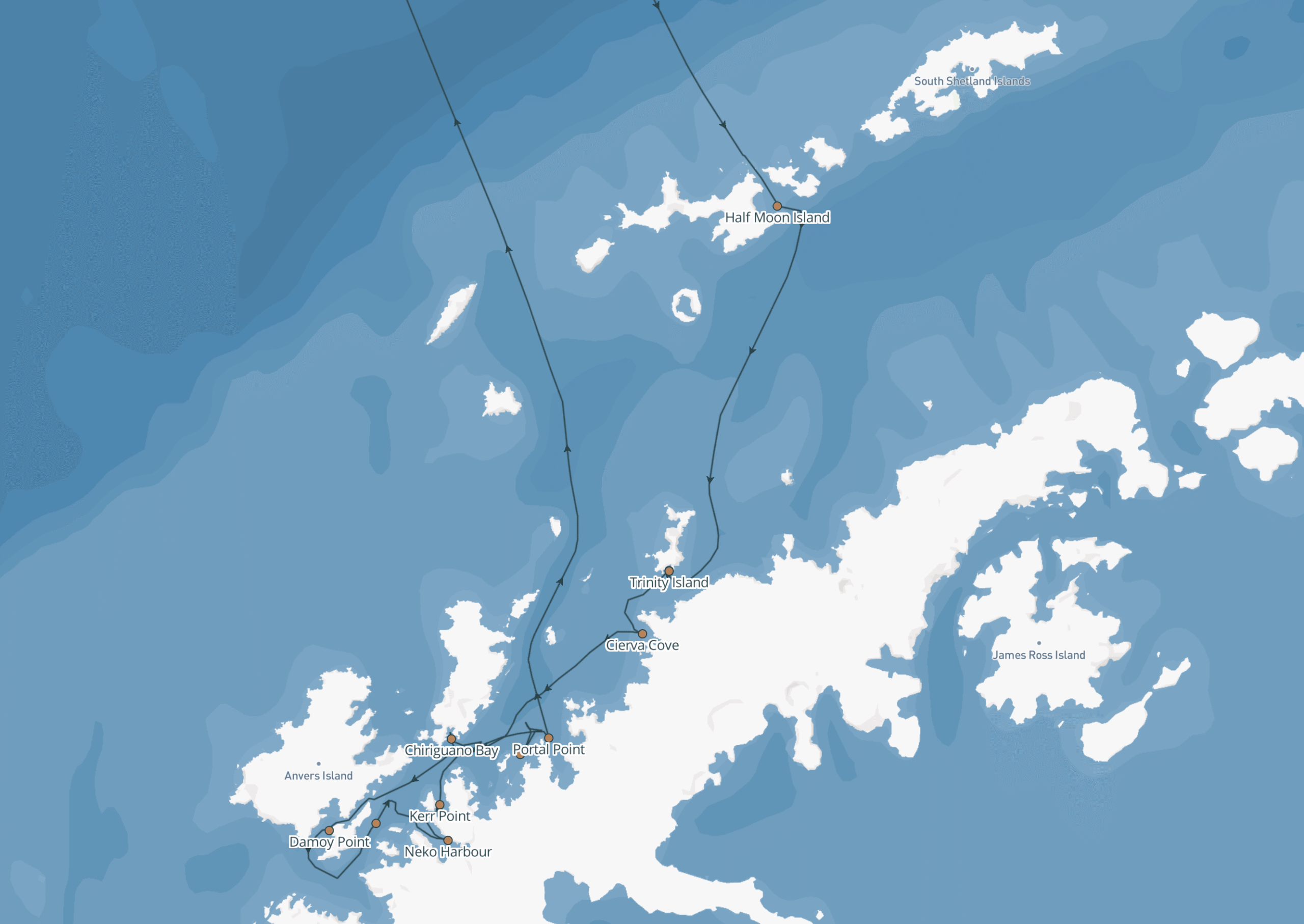
- Distance: 2,900 km (1,572 nautical miles)
- Time actually in Antarctica: about four and a half days of the ten
- Excursions lost to weather: two, both replaced with lectures
| Day | Where | What actually happened |
|---|---|---|
| Day 1 | Ushuaia, Beagle Channel | Luggage dropped in town at 9 AM, free morning, aboard at 3:20 PM |
| Day 2 | Drake Passage, southbound | Four-meter swells all night, rated a two out of ten. IAATO briefing and biosecurity inspection |
| Day 3 | Half Moon Island, South Shetlands | First landing. Chinstrap colony, fur seals, skuas |
| Day 4 | Mikkelsen Harbour, Cierva Cove | First landing on the Peninsula itself. First big icebergs, gentoos, a leopard seal |
| Day 5 | Damoy Point, Port Lockroy, Neumayer Channel | Morning cruise cancelled. Damoy Hut museum and gentoo chicks, then 40 knots caught the afternoon Zodiac cruise |
| Day 6 | Neko Harbour, Danco Island | Continental landing beside an active tidal glacier. Weddell seal, a bay full of humpbacks |
| Day 7 | Portal Point, Cape Reclus | Foyn Harbour cancelled at 25 knots. Happy Whale workshop, Polar Plunge |
| Day 8 | Drake Passage, northbound | Disembarkation briefing. Rougher going than the way down |
| Day 9 | Drake Passage, Cape Horn | Four-meter westerly swells, lecture program, the charity auction |
| Day 10 | Ushuaia | Docked around 4 AM, off the ship at 8 AM |
Day 1: Embarkation in Ushuaia and the Beagle Channel
Boarding day actually starts hours before you board. Around 9 AM, we dropped our checked luggage at a designated collection point in town. From there, the bags travel separately to the ship – you won’t see them again until you find them waiting in your cabin.
That left us a free morning and early afternoon in Ushuaia. We wandered the main street, ducked into a couple of shops, had lunch, and walked out to the harbor. We also spent some time around Laguna del Diablo on the edge of town – an easy stroll if you have time to kill before the ship leaves.
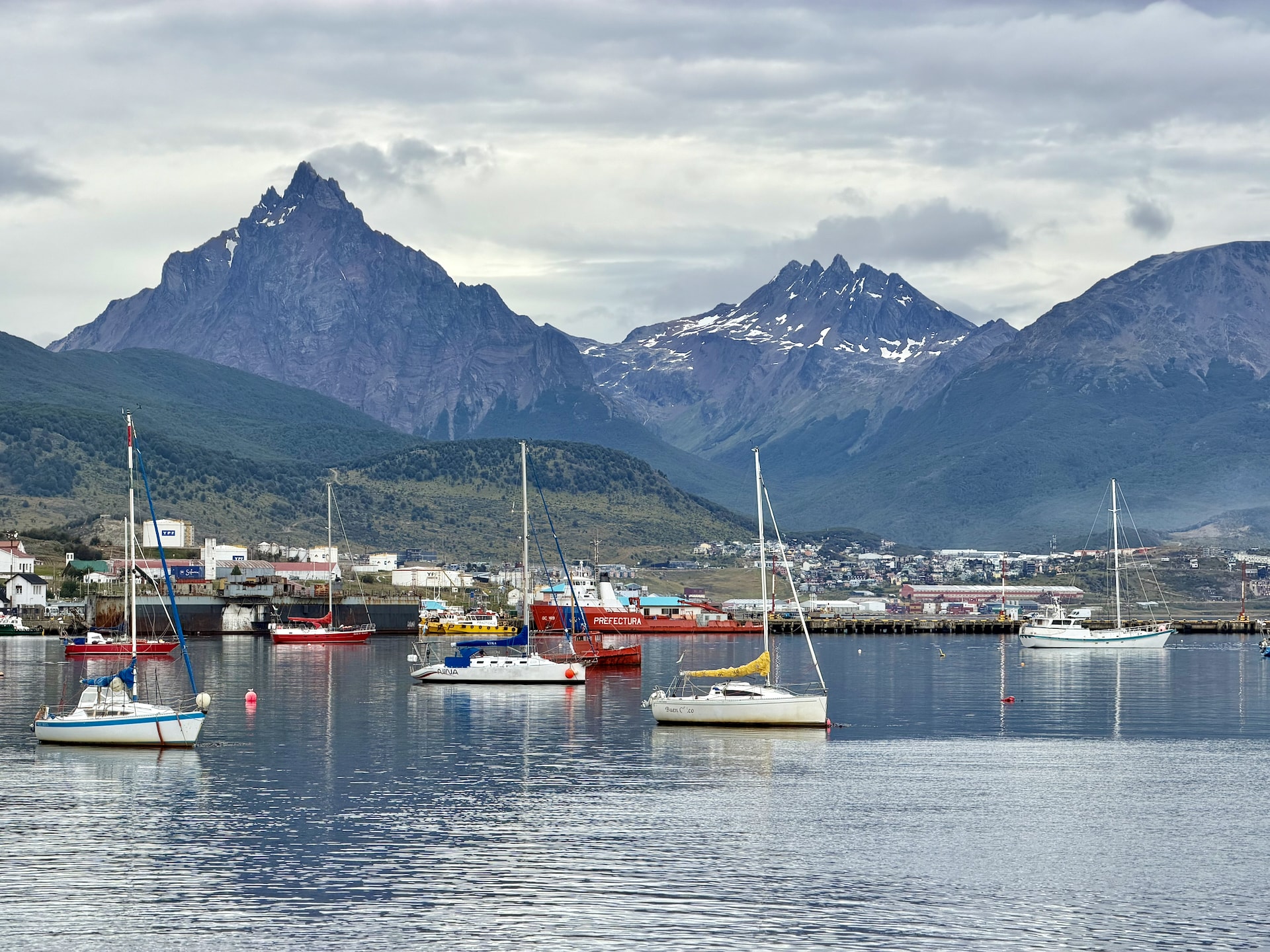
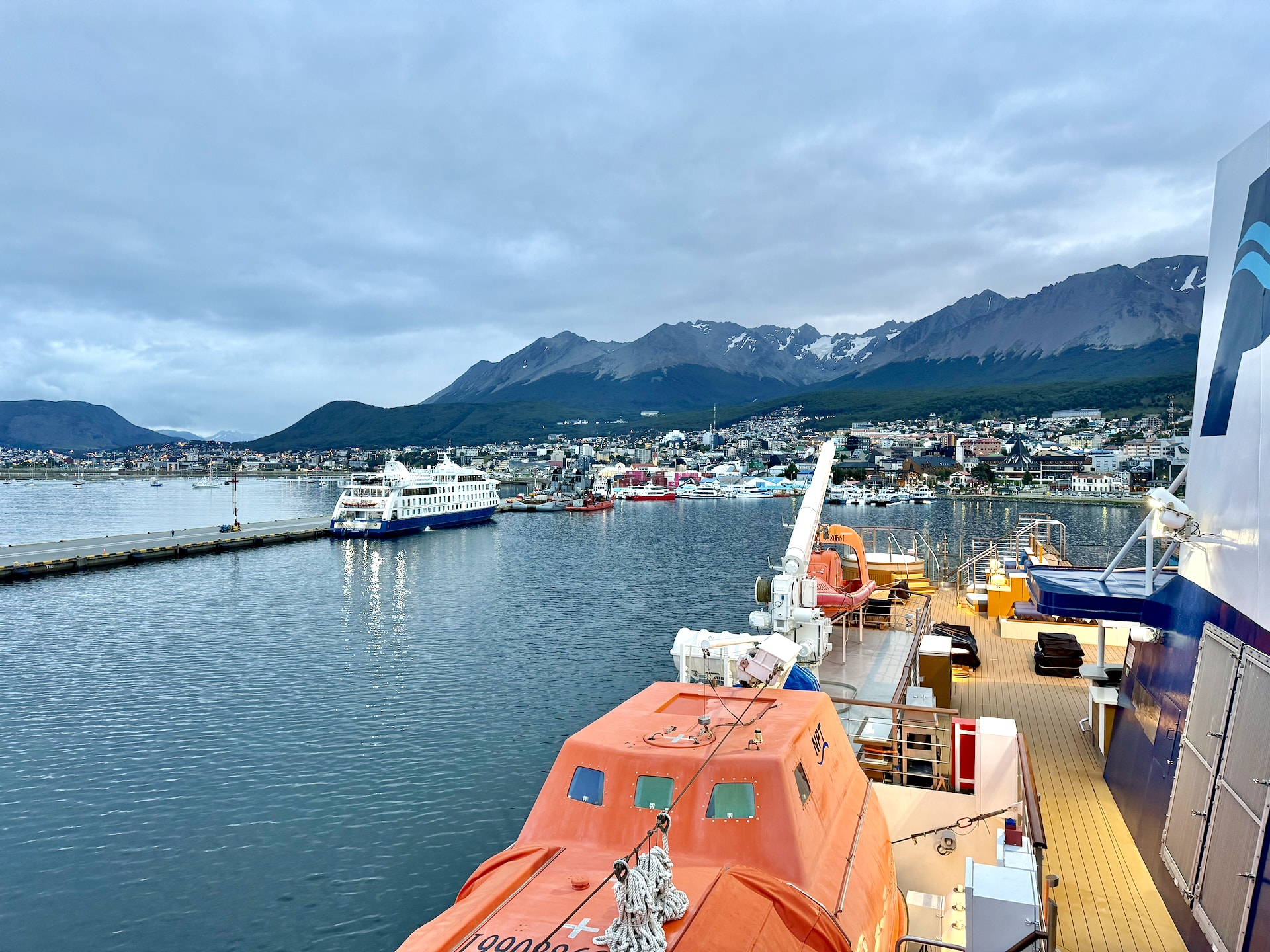
Buses to the port departed in waves through the afternoon. Ours pulled out shortly after 3 PM, and by 3:20 we were stepping aboard the Ocean Albatros. The welcome aboard was warm: cocktails, juice, sandwiches, and small cakes laid out in the lounge area. A staff member greeted everyone. Departure ended up being slightly later than planned because one passenger’s flight was delayed – which was funny, because we’d been told repeatedly during pre-trip communication that the ship doesn’t wait for anyone. Apparently they sometimes do, within reason.
Always arrive in Ushuaia at least one full day before embarkation. Flights from Buenos Aires get delayed and canceled regularly, and if you miss the ship, there’s no catching up – the next “port” is two days of Drake Passage away.
After boarding, our cabin steward Ramón introduced himself and gave us a quick orientation. We’d booked a French Balcony cabin and discovered, to our delight, that we’d been upgraded to a Balcony Cabin (Category C SP) on Deck 6. We have no idea why – possibly because the ship wasn’t full, possibly because we’d booked through Freestyle Adventure Travel, possibly luck. We weren’t complaining.
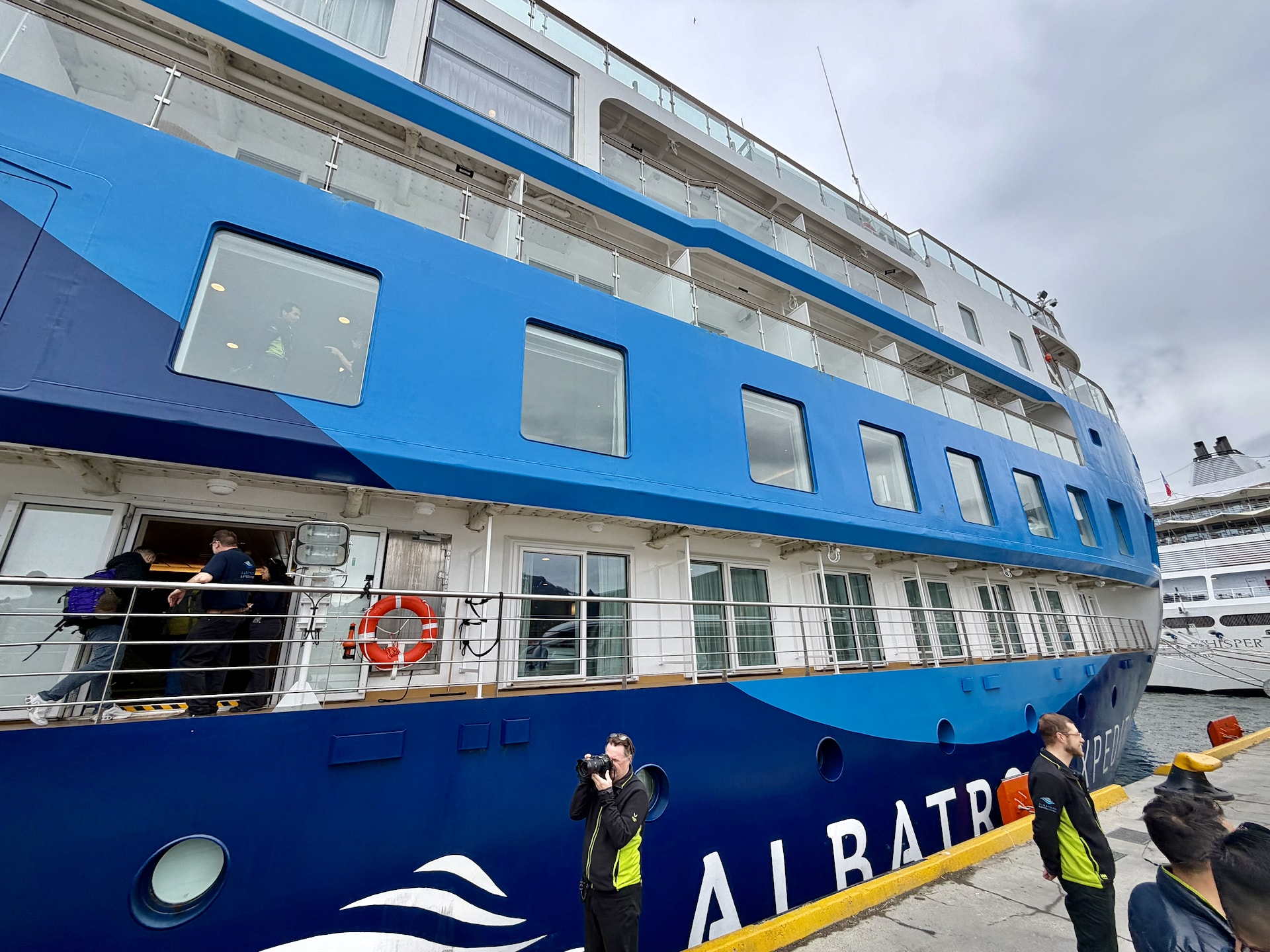
Twenty minutes after boarding, we were on the Lecture Lounge deck collecting our complimentary blue Albatros Expeditions parkas (which you keep at the end of the trip), and five minutes after that we were on the balcony in those same parkas, taking the world’s first of approximately 4,000 photos.
The mandatory safety drill came next. Life jackets in hand, everyone reported to the Lecture Lounge for the briefing, then split into groups and walked through the actual evacuation route up to the lifeboats on the upper deck. Diego Punta Fernández, our Argentine expedition leader, opened the proceedings with what would become a familiar cadence: clear, friendly, deeply professional, and direct.
A buffet dinner followed – the first hint that the food on board would be exceptional throughout. Then we cast off, sliding down the Beagle Channel past Tierra del Fuego’s dark, rugged peaks toward open water. The light at sunset was extraordinary. Dolphins appeared alongside the bow. The forecast called for a kind Drake Passage – we didn’t yet know that “kind” still means four-meter (13 ft) swells.
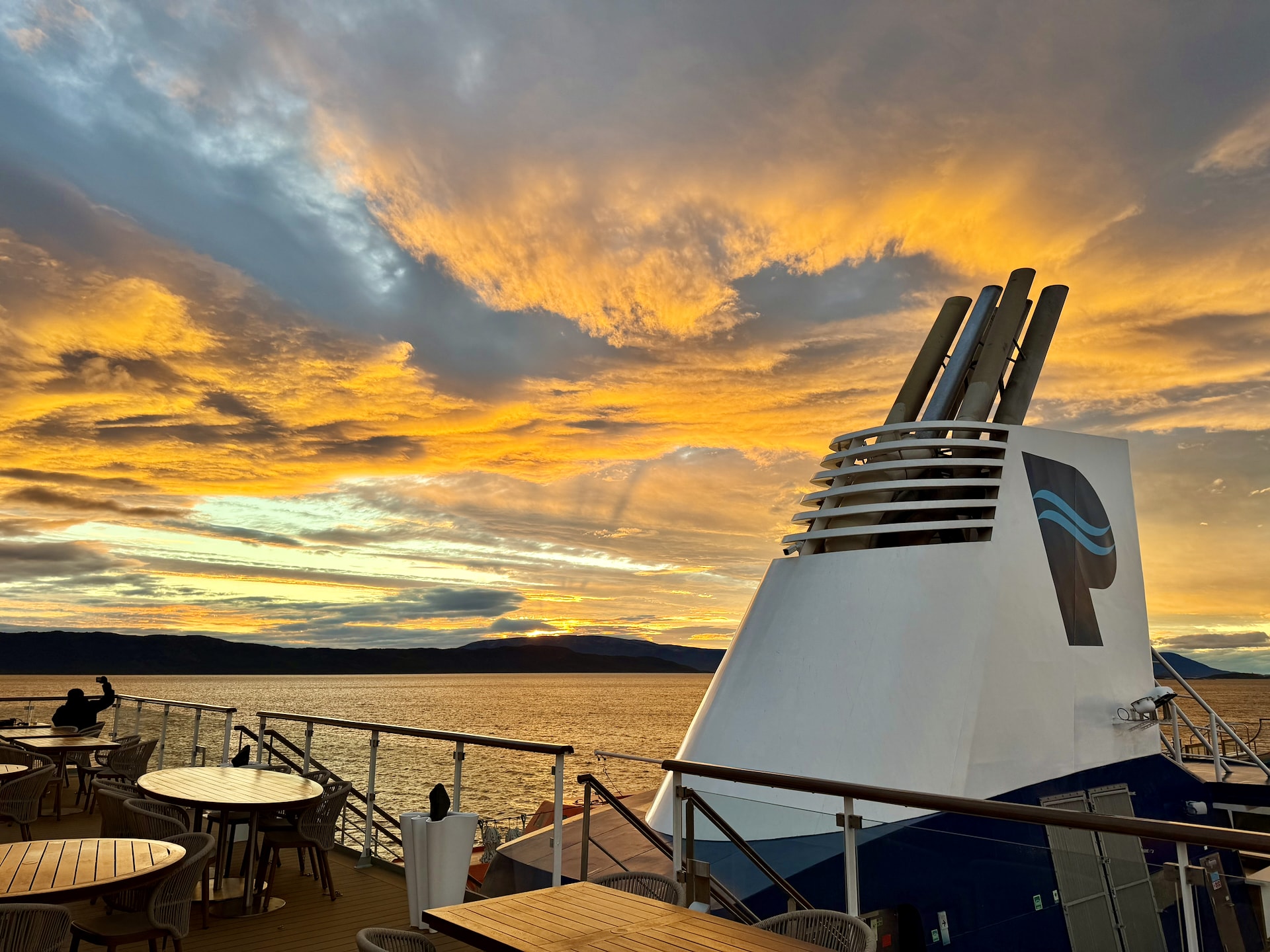
We took our seasickness medication preemptively before bed. The reception desk also hands out free seasickness pills, and a bowl of crystallized ginger sits on the counter at all times. Take your pick.
Day 2: Crossing the Drake Passage in Four-Meter Swells
We barely slept. The ship rolled in every direction at once – pitch, heave, yaw, the works – and we spent most of the night convinced we were about to be ejected from bed. By morning we crawled to breakfast and asked one of the expedition guides how the night had been on the standard ten-point scale.
“A really nice Drake Lake,” she said. “I’d give it a two.”
For context: Drake Lake is the calm version. Drake Shake is when things actually get bad. A “two” meant four-meter waves all night. We did not want to know what an eight feels like.
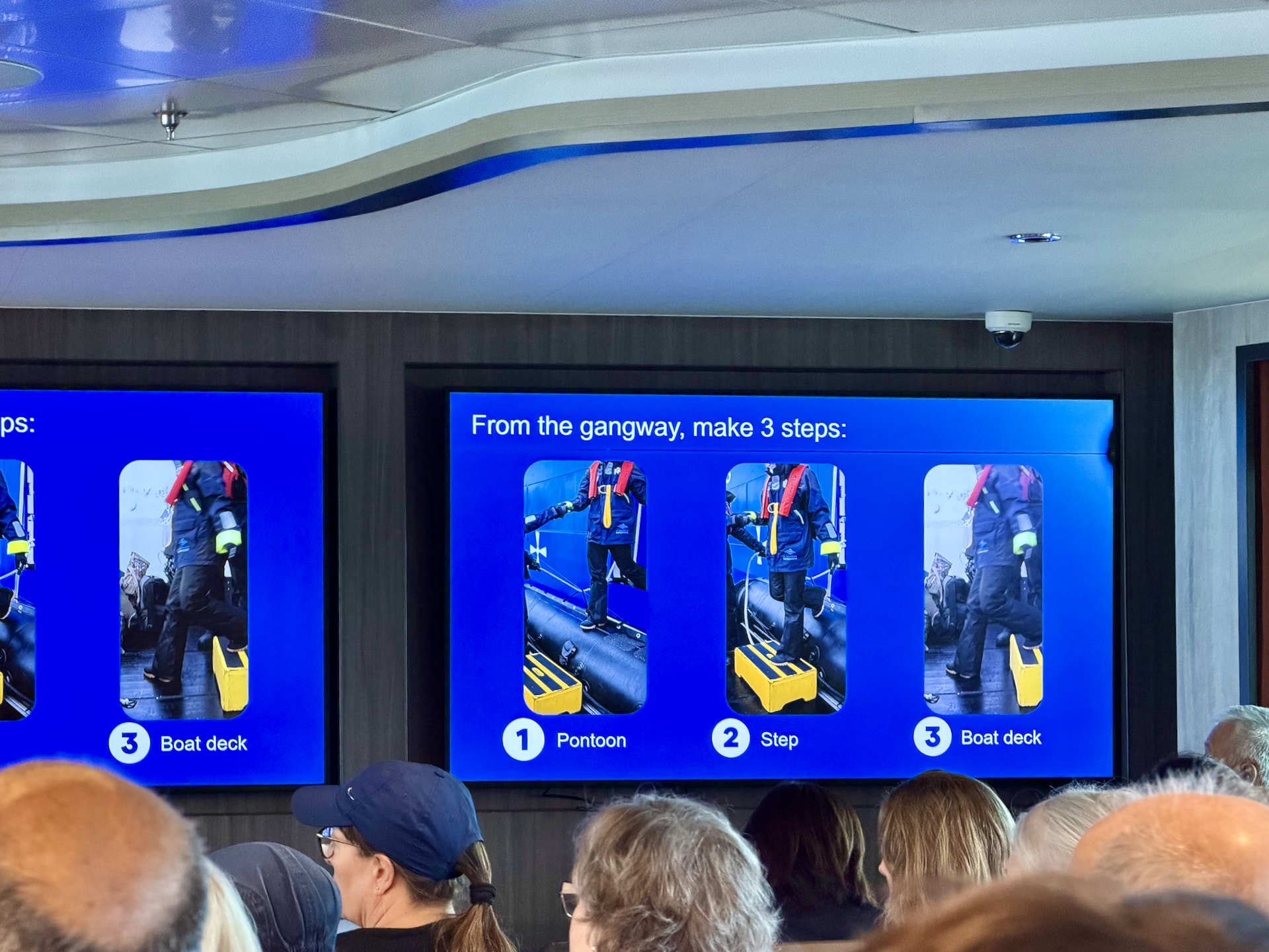
The day’s program was the standard Drake-southbound rhythm. At 9:30 AM, the mandatory IAATO and Zodiac briefing in the Lecture Lounge: how to behave around wildlife, the five-meter distance rule for penguins, why bird flu has changed Antarctic biosecurity, how to step in and out of a Zodiac without ending up in the water.
Then came the biosecurity inspection. By color group, we hauled every piece of outerwear we planned to take ashore – hats, gloves, waterproof pants, anything that’s been outside before – down to the Lecture Lounge. Expedition guides vacuumed each item and used tweezers to extract any seeds, dirt, or organic material. Brand-new gear straight from the packaging is exempt. They take this seriously: avian flu has hit Antarctic colonies hard in recent years, and tourists are a known vector.
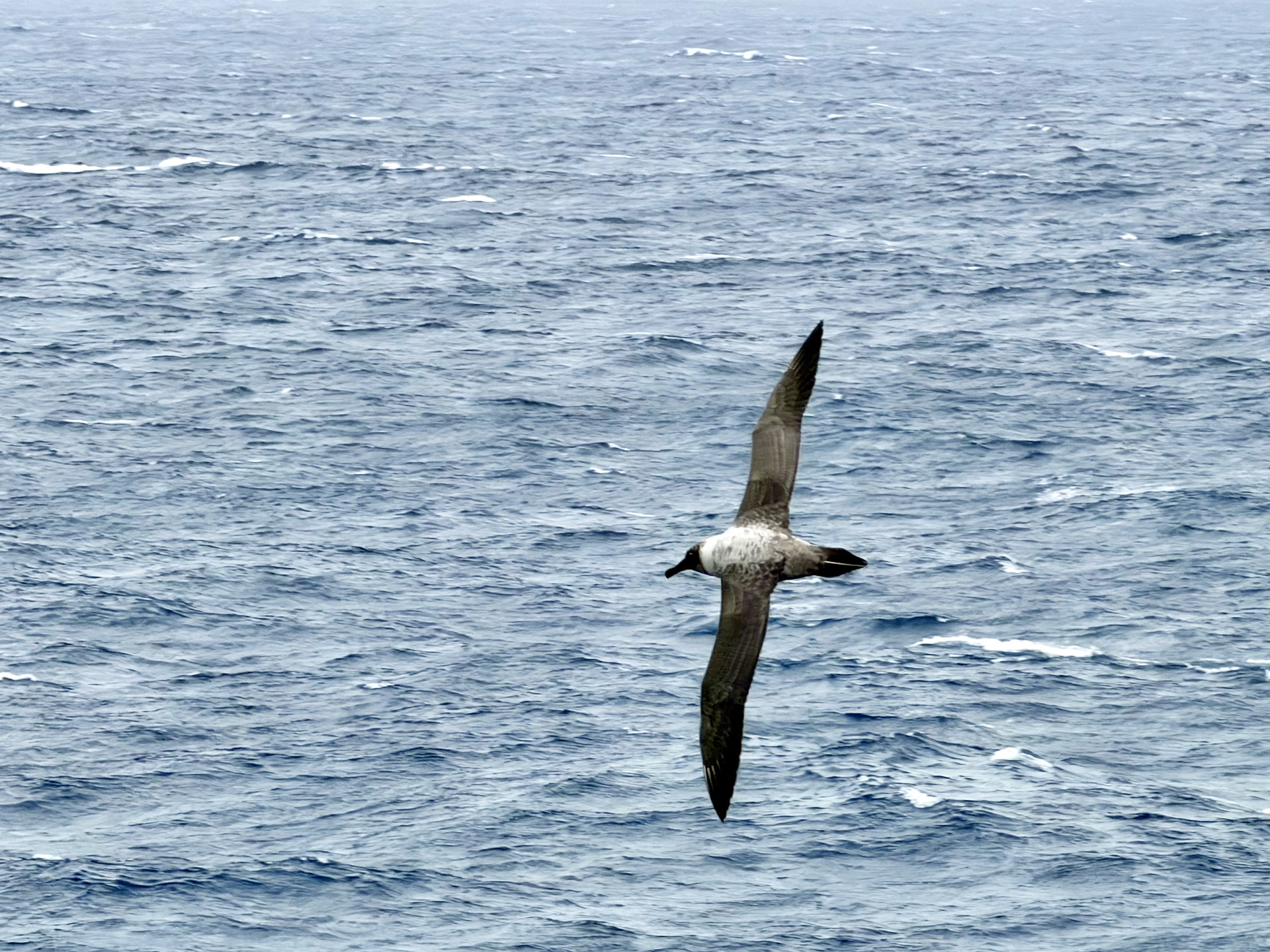
Lunch on Deck 5, then a proper lecture: Franziska, the resident ornithologist, on the seabirds of the Southern Ocean. After her talk, we joined the citizen science seabird survey on deck – thirty minutes of structured observation off the port side (the left side of the ship facing forward, in case the nautical vocabulary is new). We saw exactly one bird: a light-mantled albatross. Naturally, the starboard side was crawling with petrels and shearwaters at the same moment, but the protocol calls for a single side.
Afternoon tea on Deck 5 covered the bases for those of us who’d skipped the survey. Captain Mikael Svedberg made his first appearance later, raising a glass with passengers in a champagne toast. At the evening recap, Diego announced excellent news: we were making such good speed that we’d be doing our first landing the following afternoon at Half Moon Island. Cue collective excitement.
Day 3: First Antarctic Landing at Half Moon Island
The seas were calmer overnight, but we still didn’t sleep – this time from anticipation rather than turbulence.
Breakfast at 8 AM, then a slow morning. The kayaking program briefing ran in parallel with the camping briefing, neither of which we’d signed up for. We were spectators. From the cabin TV, we watched Lucia, Emilio, and James walk through the fundamentals of how to survive a night on the Antarctic Peninsula in a bivvy bag. Spoiler: you dig a snow trench and try not to think about it too hard.
At 11:45 AM, Diego’s voice came over the intercom: “Land ahoy.”
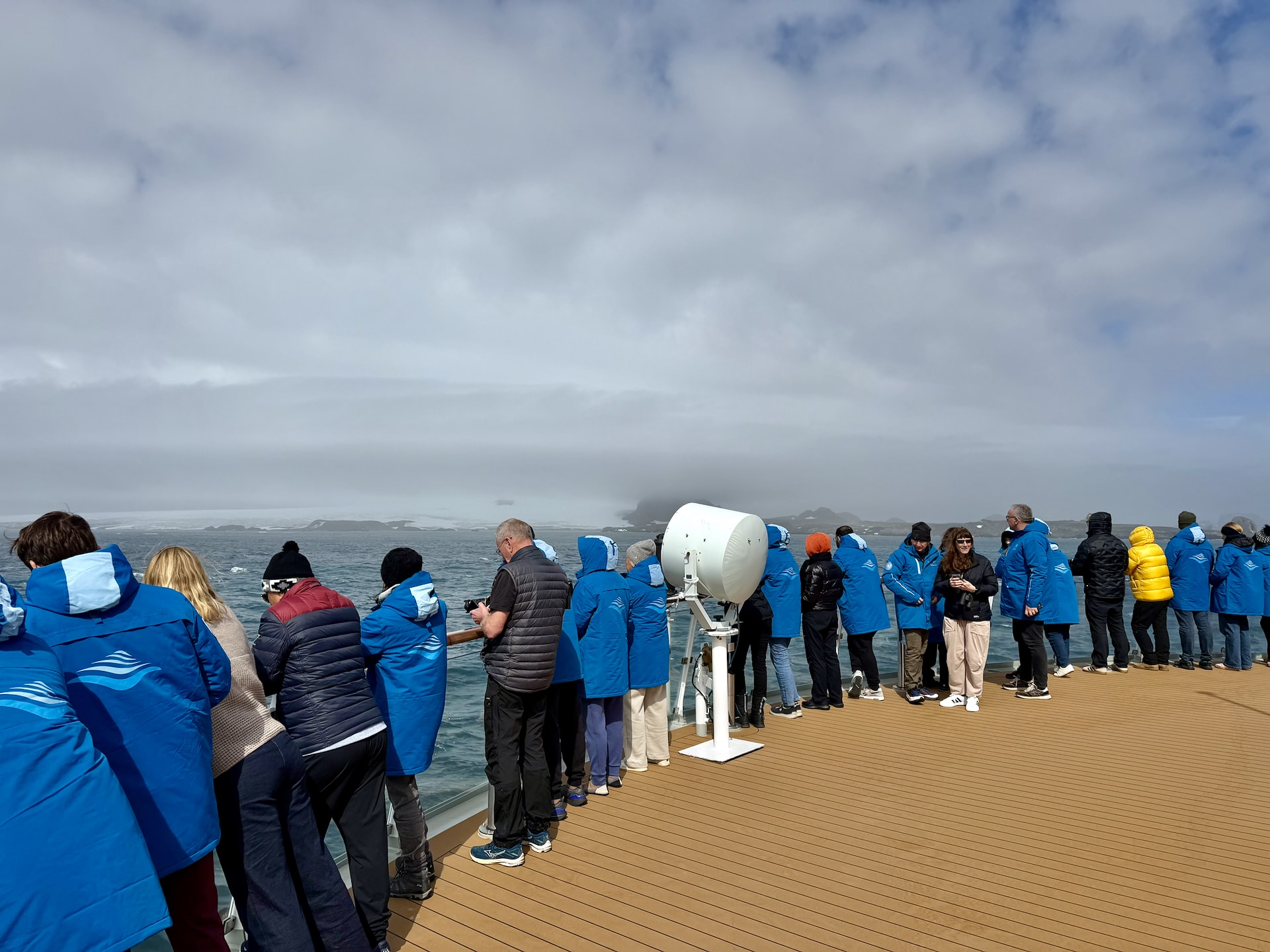
The ship surged out onto the bow. The first sight of Antarctica – even the rocky, less-glaciated South Shetlands version of it – is a quiet kind of moment. Nobody high-fives. Most people just stand at the rail and stare, occasionally glancing at each other to confirm that this is actually happening. Years of wanting to be here, condensed into a horizon line.
The terrain here is more rocky than glaciated this far north, but in the distance you could already see the kind of scale that no photograph captures. Dolphins appeared in the water. Penguins porpoised alongside the bow. Birds wheeled overhead in numbers we hadn’t seen before.
Captain Svedberg threaded the Ocean Albatros through McFarlane Strait, which separates Greenwich Island from Livingston Island. Half Moon Island sits in the middle of it, a small crescent of rock and gravel that is in some ways the perfect first stop: accessible, dramatic, and home to two completely different things to see in a single landing.
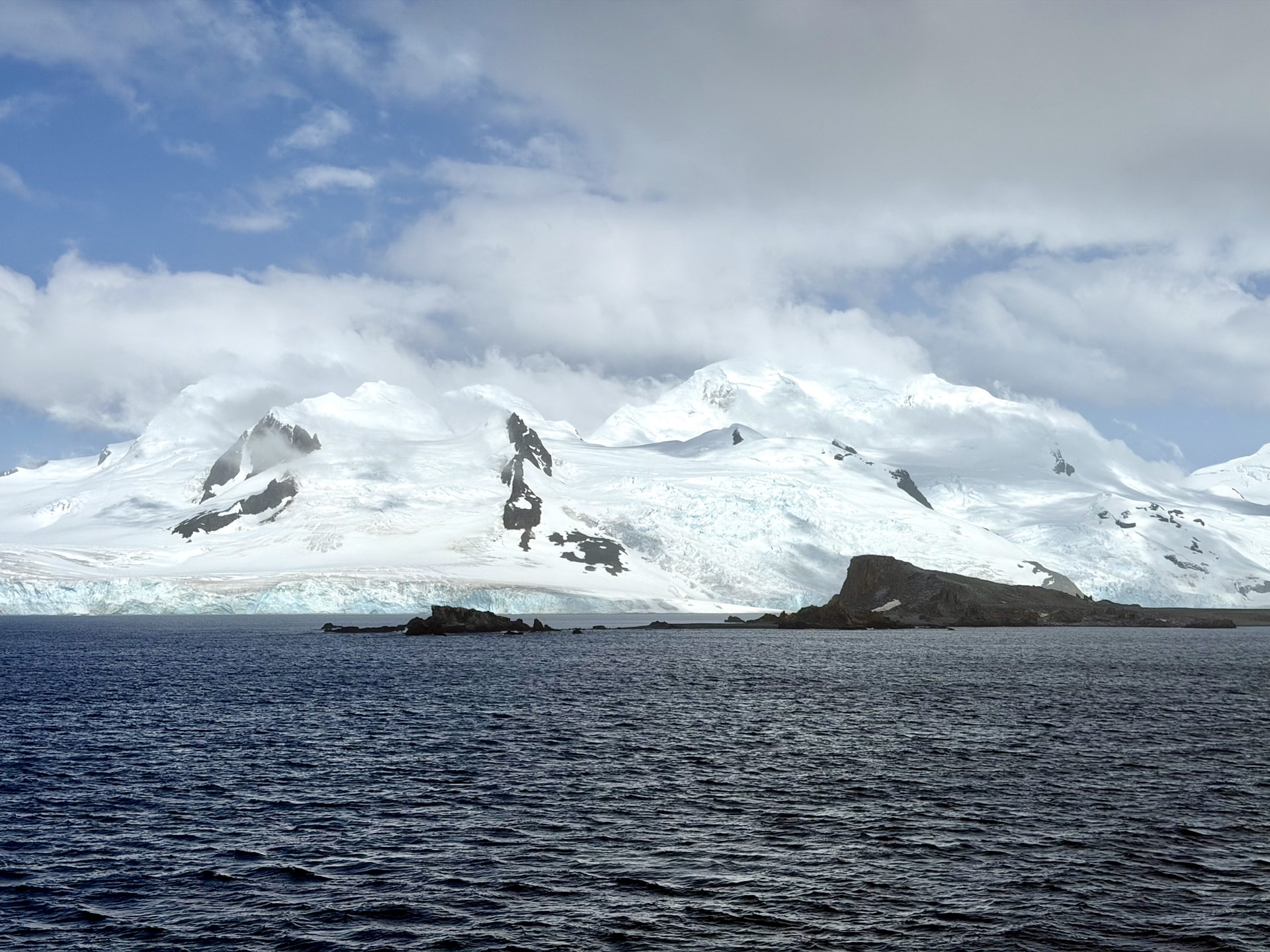
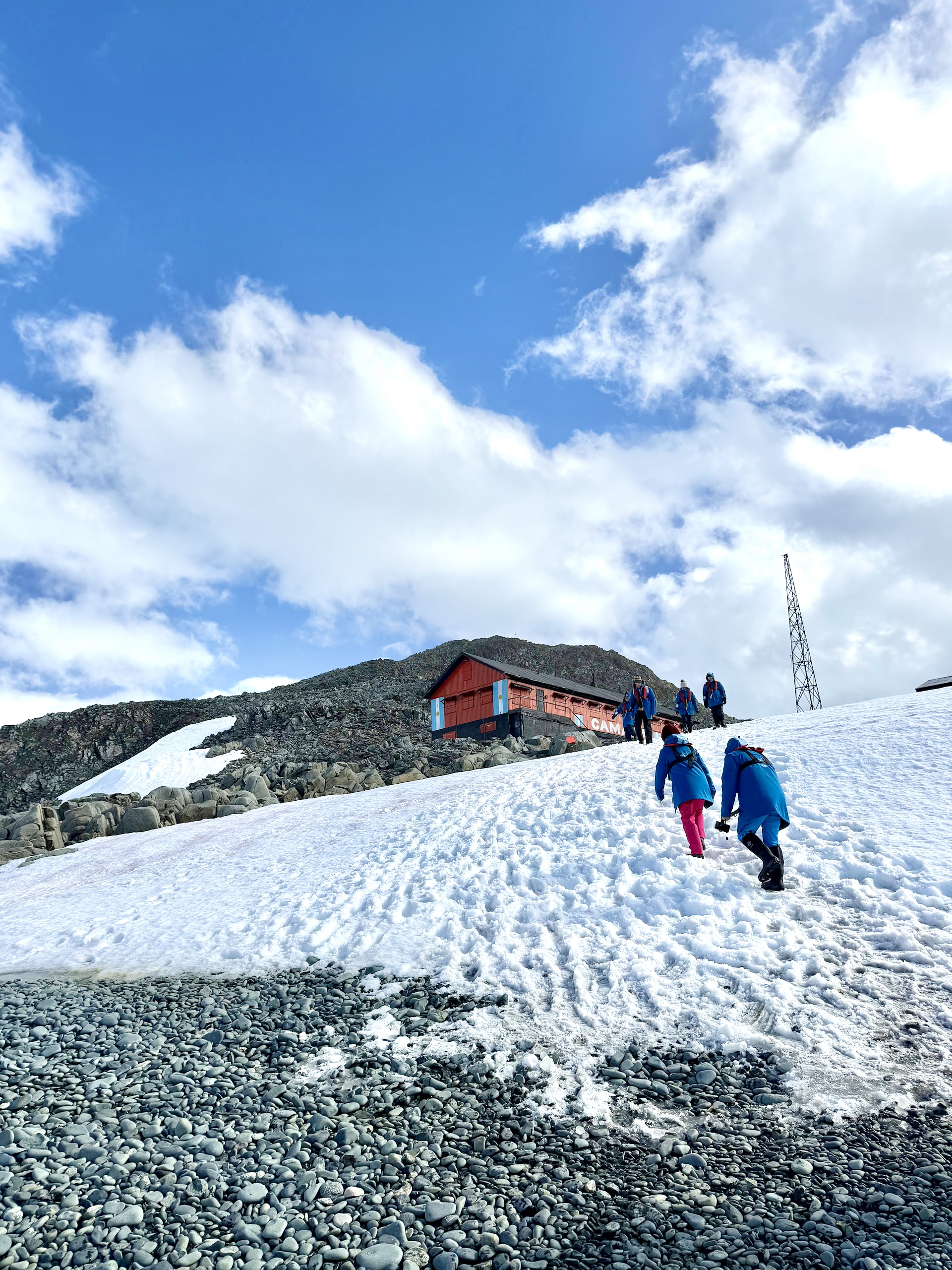
The 2:30 PM landing was unusual in that there were two simultaneous landing points. Half the ship went to the chinstrap penguin colony first; the other half went to Cámara, an Argentine summer research station. After about an hour, the groups walked across to swap. No Zodiac cruise on this stop – everyone was on land, just in two different places.
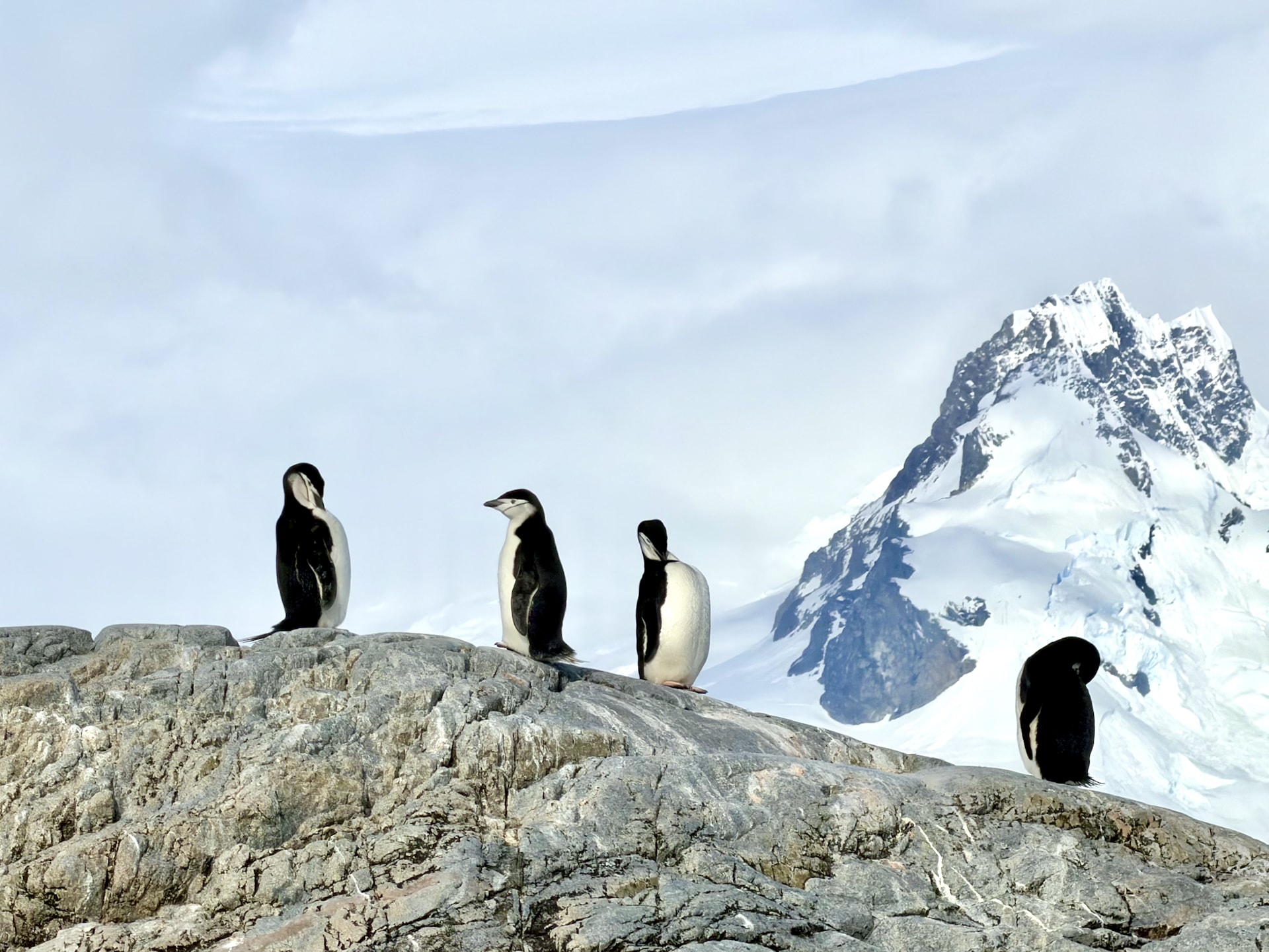
Our Blue Group went to the chinstraps first. Stepping off the Zodiac and onto Antarctic soil for the first time is hard to describe without resorting to the kind of language we generally avoid in this blog. I’ll just say: it lands. Every photograph you’ve ever seen, every documentary, every story – they all collapse into the present moment, and you’re standing on it, and there’s a chinstrap penguin walking past your boots like you’re a piece of furniture, and you have to actually concentrate not to cry. They have no native land predators, which means they have no fear of humans. The five-meter rule exists for our impact on them, not for our safety. They’ll walk right up to you, and you have to back away.
Three things they don’t tell you about penguins until you actually see them:
The first is that you smell them before you hear them, and you hear them before you see them. The colony was perceptible from the ship as a faint whiff on the wind. By the time we were on shore, the smell – months of accumulated guano on bare rock – was unmistakable. Penguin guano color is also a health indicator: pinkish means the birds are well-fed on krill. Greenish means trouble.
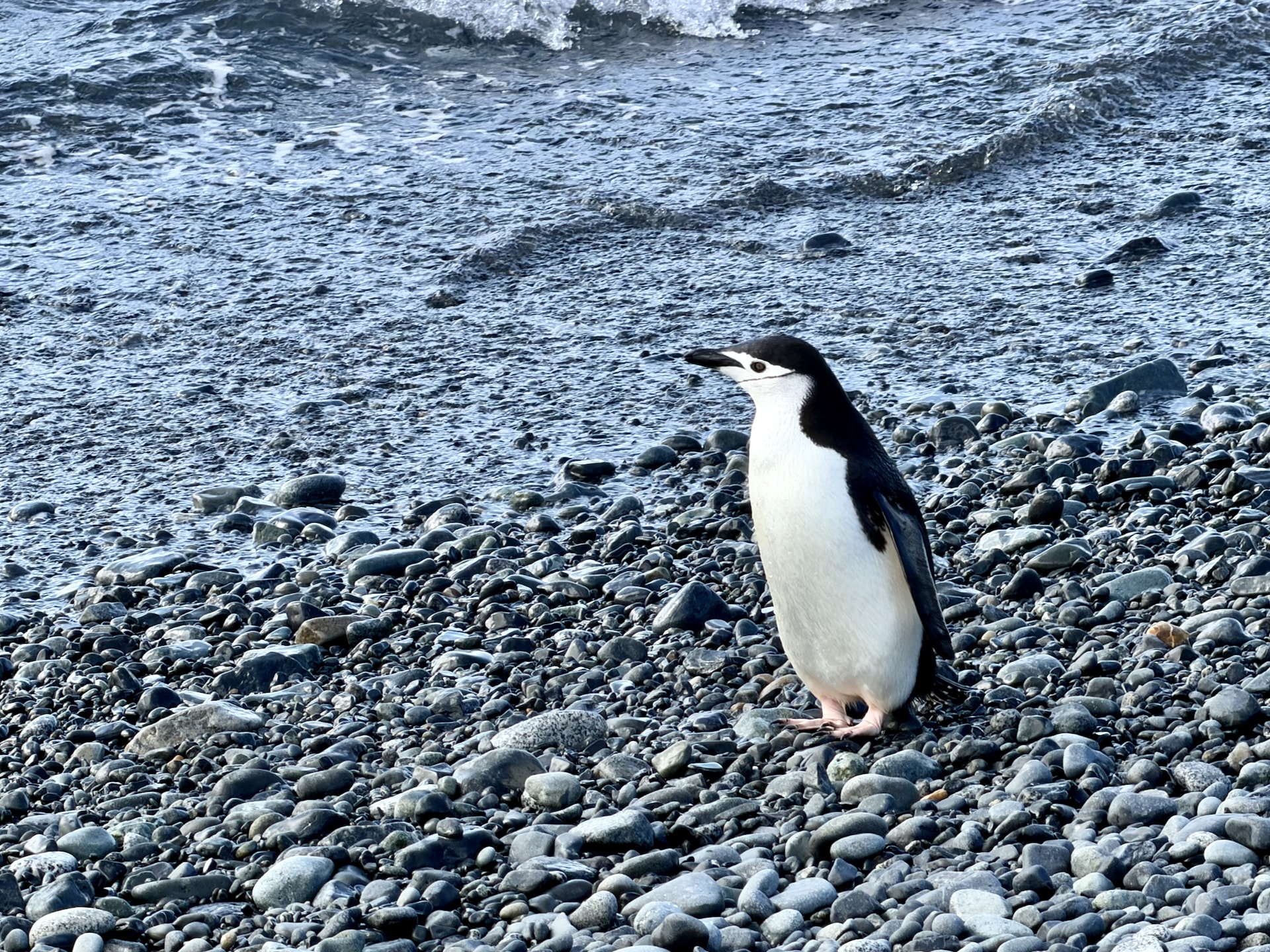
The second is that they’re loud. Chinstraps are relatively restrained vocally, but the gentoos we’d meet on later landings are essentially feathered megaphones, and they have very specific calls. (In Hungarian they are called szamárpingvin which translates to “donkey penguin”, and now I completely understand why.)
The third is that the chicks were everywhere. We’d timed the trip well: by late January, the chinstrap chicks had hatched but hadn’t yet fledged, so the colony was full of fluffy, half-sized versions of their parents demanding food. The colony at Half Moon holds about 2,000 breeding pairs of chinstraps – the size becomes apparent when you’re walking through it.
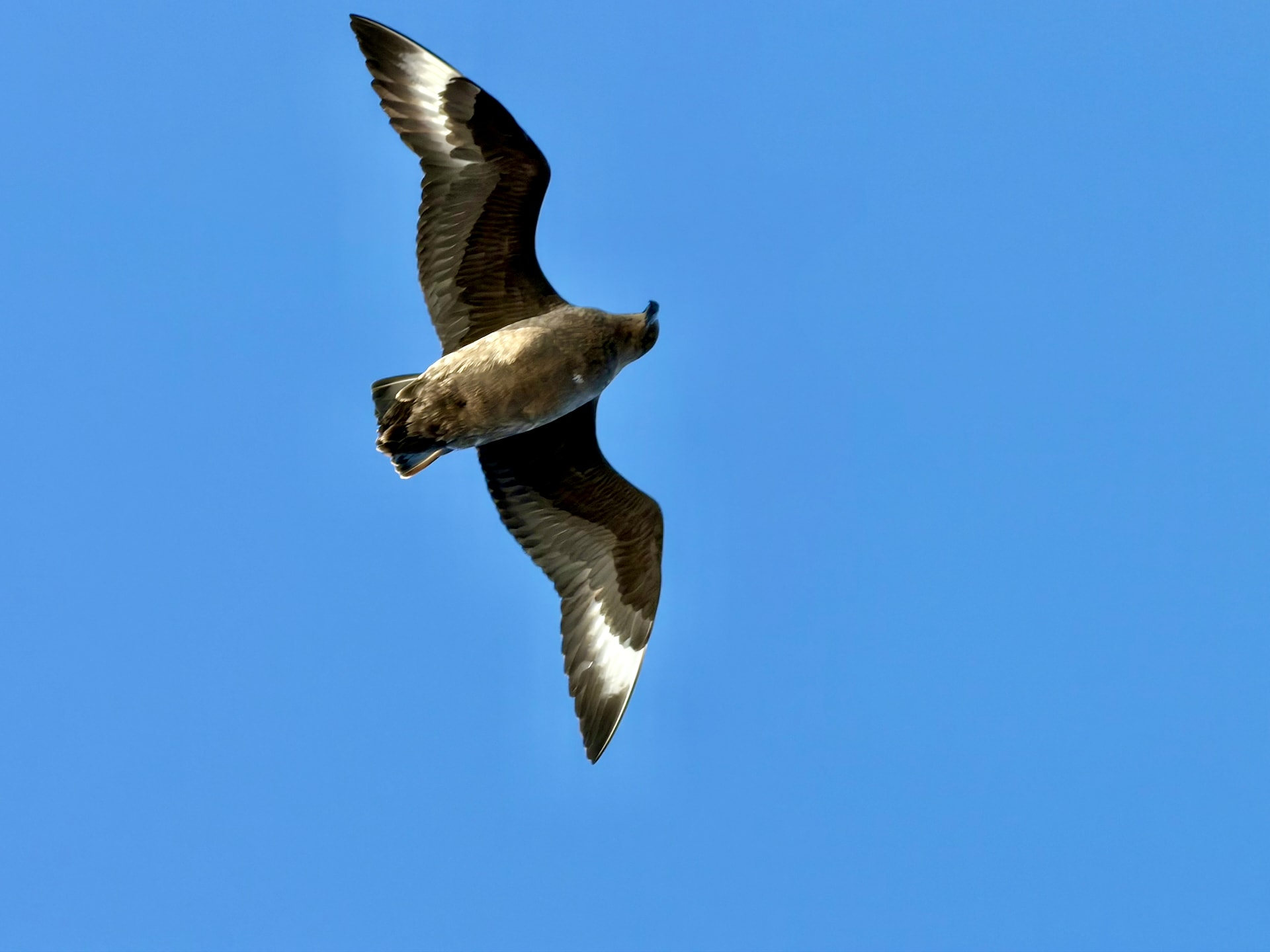
We also saw our first Antarctic fur seal at Half Moon, and our first photographic National Geographic moment: a brown skua picking apart what was left of a fur seal carcass on the rocks, with old whale bones half-buried in the gravel as backdrop. (You can identify a brown skua from a giant petrel by the white wing patches that flash when they spread their wings.) There would be more of these moments. Many more.
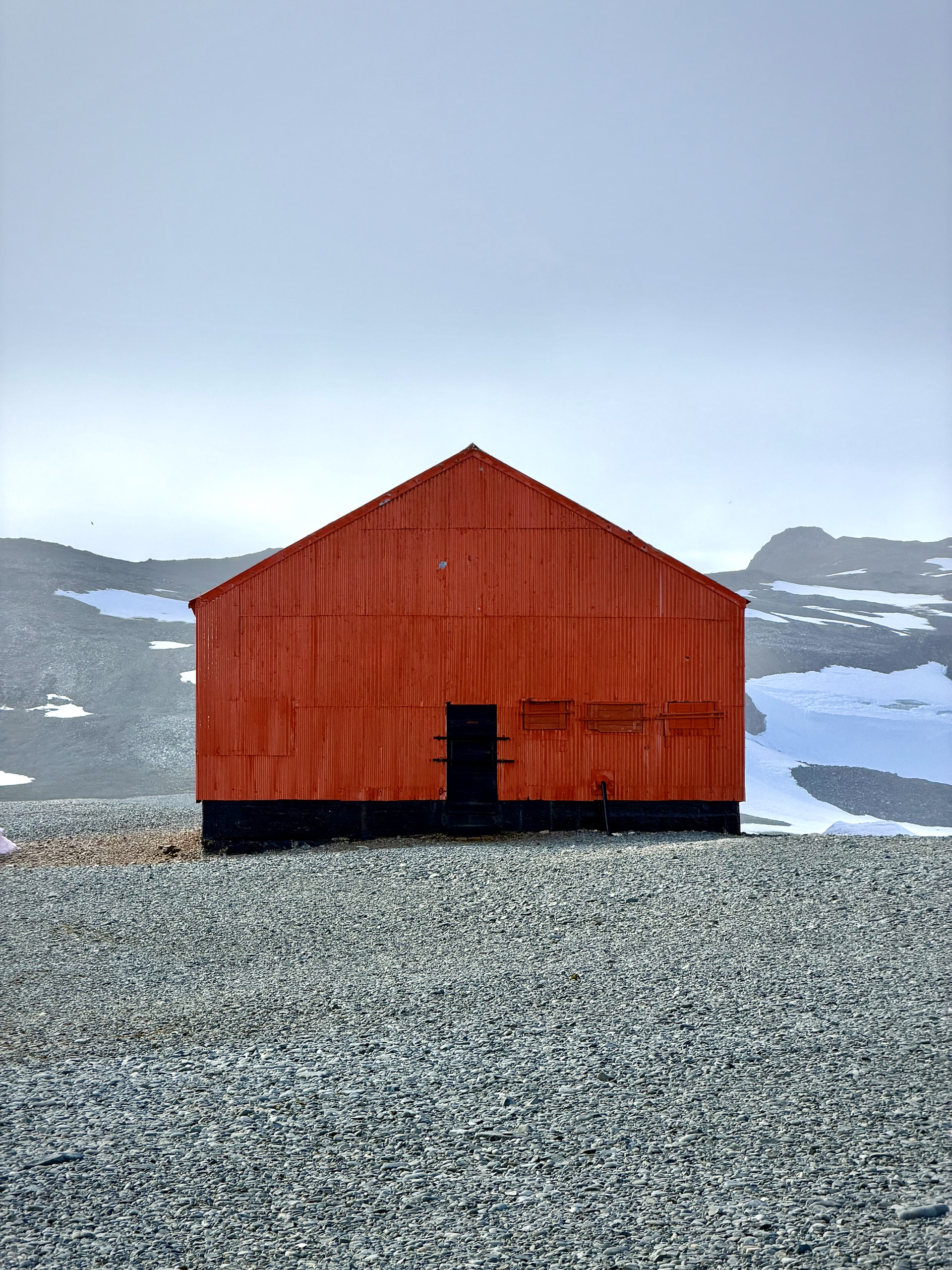
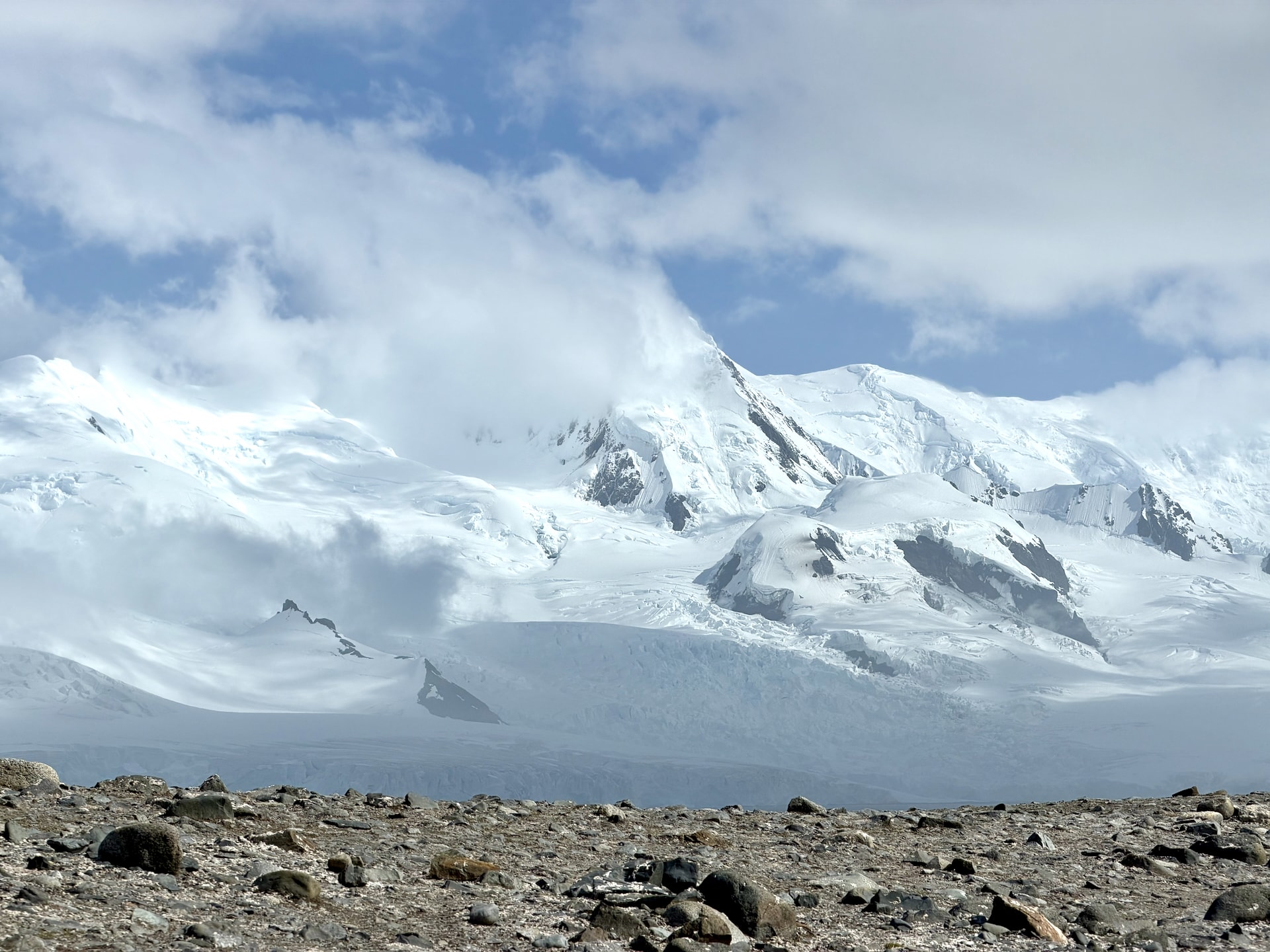
After the chinstrap colony, we walked across to Cámara Station. This is a seasonal Argentine base – not staffed during our visit – consisting of a few small red-painted buildings. We met the other groups halfway, took photos by the station, and looked south. From here you could finally see what Antarctica looks like at scale: huge mountains, glaciers tumbling into the sea, and a sense of distance that no telephoto lens captures.
We were on shore for about two hours. Back on the Zodiacs, back on the ship, hot drinks waiting. The evening recap announced the winner of the iceberg challenge – an onboard contest to predict when we’d see our first iceberg. (Insider tip if you do this: the ship’s instruments detect icebergs long before human eyes do. The first one always shows up earlier than people guess.) Dinner followed, and then the evening film: The Thing. Billed jokingly as a documentary by the expedition team, which of course it isn’t. Popcorn was provided.
Day 4: Mikkelsen Harbour, Cierva Cove, and Our First Icebergs
Day four was when we shifted into proper expedition rhythm. Diego’s wake-up call hit at 7 AM. Breakfast 7:00 to 8:30. By 8:30 we were at the mudroom door for the first true Antarctic landing of the trip – on the actual peninsula, not the South Shetlands.
The ship had repositioned overnight to Mikkelsen Harbour, in a small bay tucked along the western edge of the Peninsula. Gone was the previous day’s sunshine; in its place, the moody, gray, slightly drizzling Antarctica that everyone secretly hopes to see at least once.
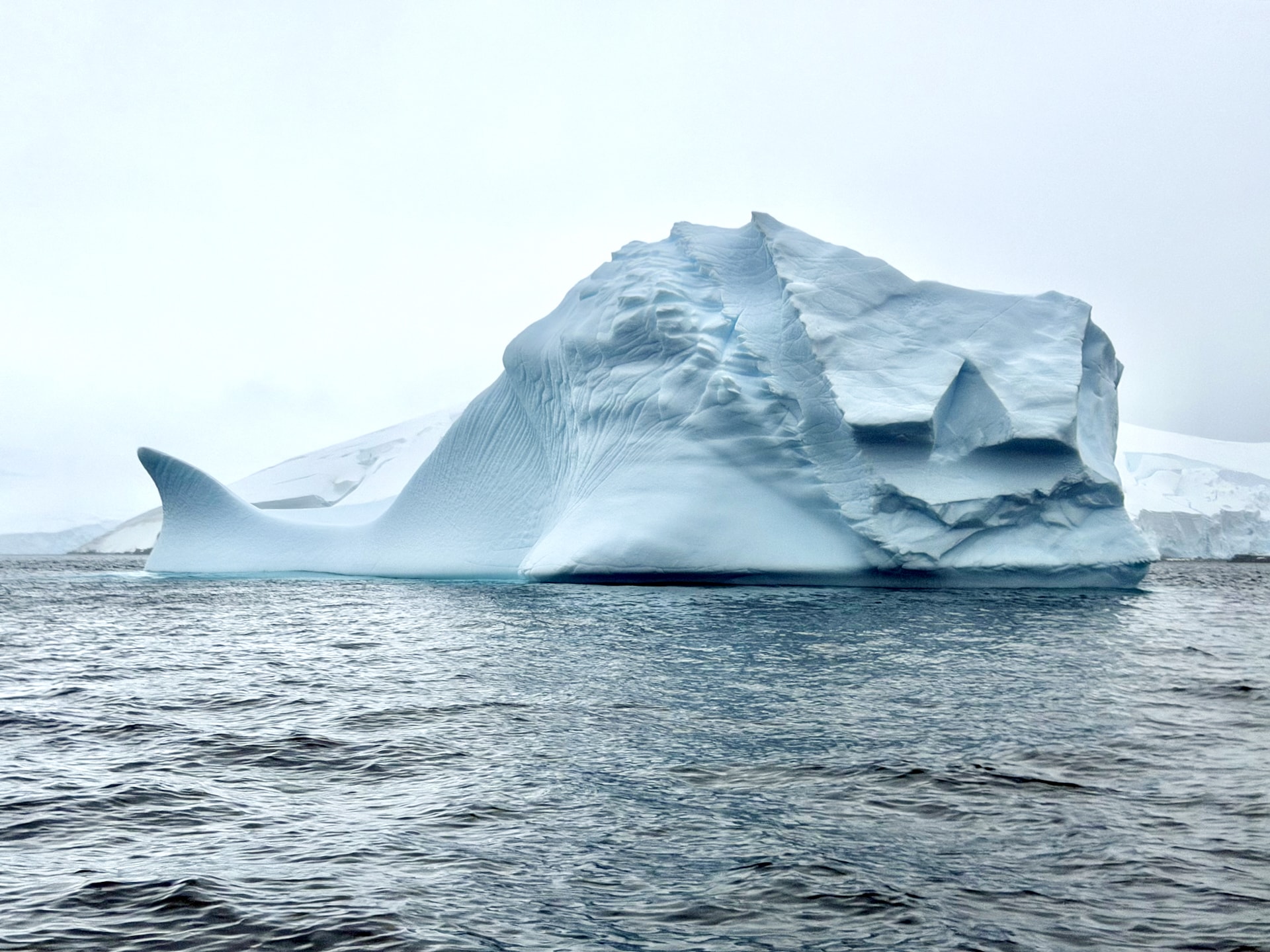
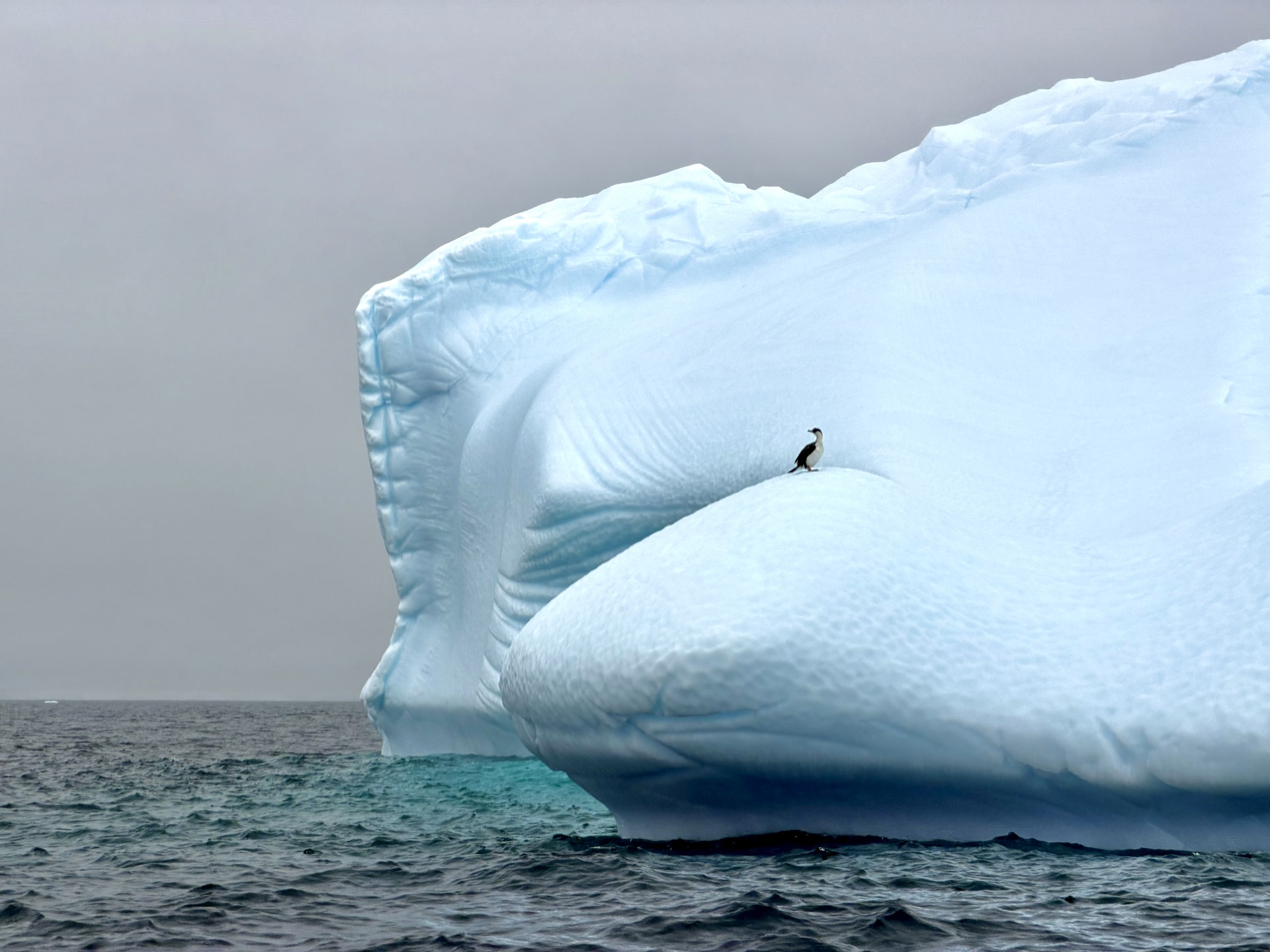
Our group started with the Zodiac cruise. It was outstanding. The icebergs in the bay were the first proper ones we’d seen up close, and they all looked completely different from one another – some smooth and rounded, some sharply geometric. One had a strange, blockish bulge so I dubbed it the Cubist Whale. Our guide explained that icebergs constantly rotate and reshape: as they melt, their center of gravity shifts, large pieces calve off, and the whole thing eventually flips. What you’re looking at in any given iceberg is a momentary snapshot of a sculpture that keeps editing itself.
After the cruise, we landed on D’Hainaut Island. The “harbor” of Mikkelsen Harbour was a fur seal staring at us right next to our landing point. Behind it, a strikingly large whale skeleton bleached against the rocks – a relic of the whaling era that scarred this region a century ago.
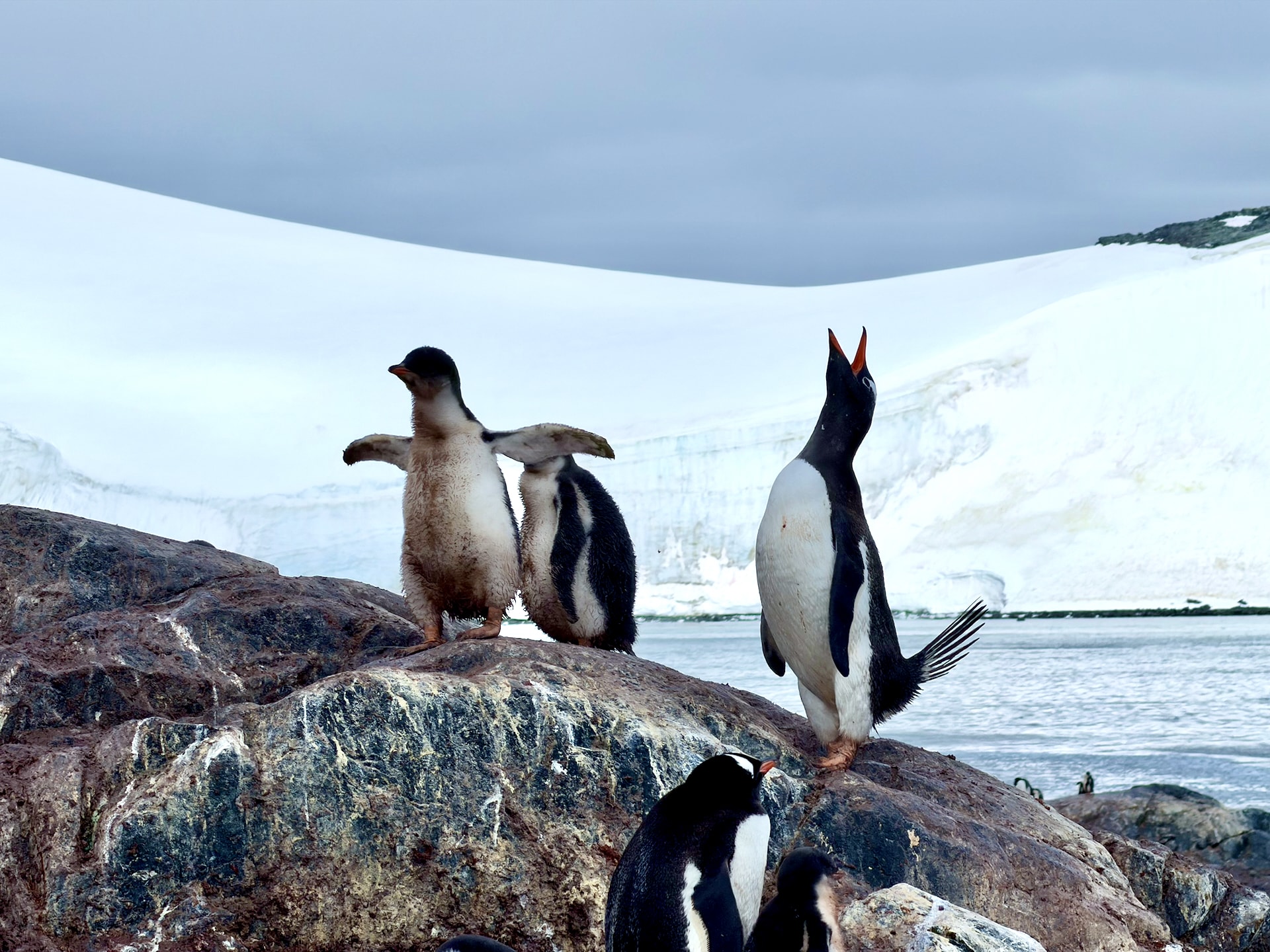
Beyond the skeleton, a substantial gentoo penguin colony covered the slopes. There was no snow on the island in late January, which meant we were walking through several months’ accumulated guano to reach the higher viewpoints. It was sticky. It was slippery. It was slightly horrifying. It was real Antarctica, in a way that the postcard version isn’t. The expedition team had handed out hiking poles for a reason – we used them. We saw at least one fellow passenger lose their footing and discover firsthand what guano feels like up close.
Hiking poles are provided for every landing and are absolutely worth using, especially on landings without snow cover where guano makes rocks treacherously slippery. Use them. Your dignity will thank you.
Up on the higher ground, I spent ten minutes watching a gentoo build its nest. Gentoos build with pebbles, and the level of deliberation is genuinely fascinating. They examine each stone, walk it carefully into position, place it just so, sometimes nudge it a centimeter to the left and step back to assess. Sometimes the pebble falls from the beak entirely and the bird looks at it on the ground, briefly stunned, before picking it up again. It’s both elegant and slightly slapstick.
Coming back down meant another walk through the guano, and our first encounter with the guano scraper where you scrub the worst off your boots before getting back in the Zodiac. The biosecurity protocol on the ship handles the rest.
Lunch at the usual time, then 2:30 PM Zodiac cruise at Cierva Cove. Cierva is home to the Argentine Primavera research station, which was actively being resupplied during our visit – which meant a Zodiac cruise only, no landing. This was actually the only afternoon of the entire trip when the ship didn’t deploy everyone simultaneously. Half went out cruising while the other half stayed on board for Will’s lecture on the history of aviation in Antarctica. The lecture was perfectly placed: the glaciers and peaks around Cierva Cove are named after early aeronauts, including Juan de la Cierva himself.
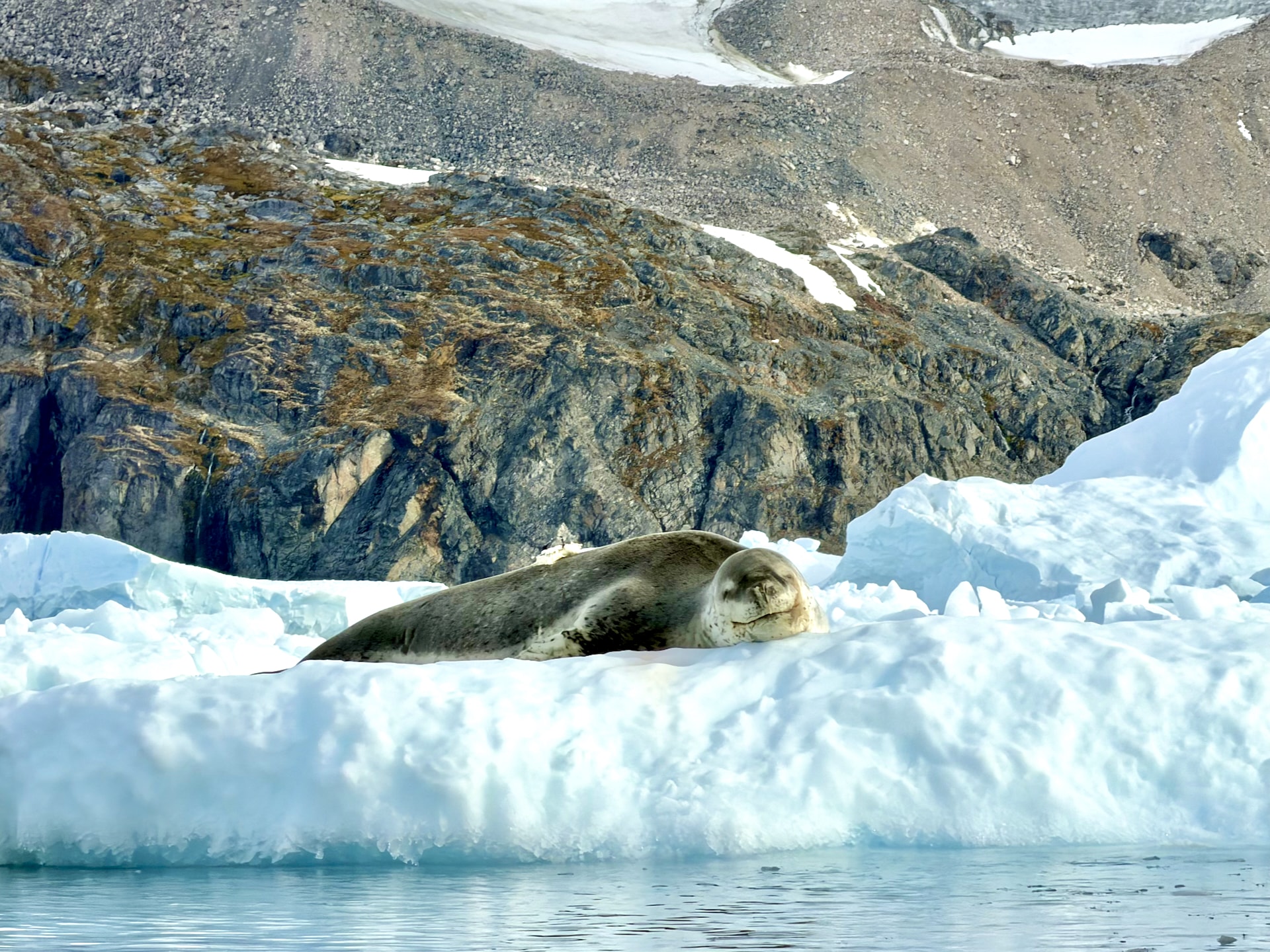
By the time our Blue Group got out on the water, the sun had broken through. The cruise wound past chinstrap colonies on Penguin Island and over to Primavera Station, where gentoos hung around the base. And then the day’s National Geographic moment: a leopard seal had killed a chinstrap and was processing the carcass right next to our Zodiac. Our driver killed the engine and we drifted, watching.
I’ll spare the graphic details – they involve flinging the carcass into the air and slamming it back into the water repeatedly to strip the feathers and skin. There’s blood in the water. It’s National Geographic in the most literal sense: this is a wild predator doing what wild predators do, a few meters from a rubber boat. We watched for perhaps ten minutes. Nobody on the Zodiac said much.
We also drifted into a stretch of brash ice – the small chunks that float around the bigger bergs – and our guide cut the motor again so we could just listen. Antarctic ice fizzes as it melts. The sound is exactly like a glass of champagne held very close to your ear: tiny, continuous pops as compressed air bubbles – trapped for thousands of years inside compressed snow that became ice, that became a glacier, that became an iceberg, that finally cracked into pieces small enough to drift past us – escape into the sea. We pulled a piece of clear ice into the Zodiac and passed it around. It was unbelievably dense, far heavier than ice has any business being. The air popping out of it was last in contact with the atmosphere when humans were still figuring out how to make bronze. It’s hard to put down. We saw a tagged leopard seal resting on a floe and learned what the tracker on its back was for.
This was when I revised my opinion of Zodiac cruises. Going in, I’d assumed the landings would be the highlight and the cruises would be the filler. By the end of the trip, I’d come to the opposite conclusion: the cruises put you closer to wildlife you can never approach on land, and the soundscape of a stationary Zodiac in the brash ice is something I think about often.
The evening program was a talk-show format hosted by Nico, where passengers had submitted questions and the expedition guides answered live. It was a mix of personal stories, terrible jokes, and occasional flashes of real introspection. The team is open and personable throughout the trip, but seeing them riff together in front of an audience makes it clear how much they genuinely care about this place.
Day 5: Damoy Point and a 40-Knot Antarctic Storm
We got an early wake-up call on day five – 6:30 AM – because the forecast was deteriorating, and Diego wanted to get the morning Zodiac cruise into Chiriguano Bay started before conditions worsened. The photo group launched first. They were back within a few minutes.
The wind had jumped, the rain was sheeting down sideways, and the photo group came back agreeing that yes, calling it off was the right call. The morning’s program was canceled. As always when this happens on an expedition ship, the schedule simply shifts to lectures.
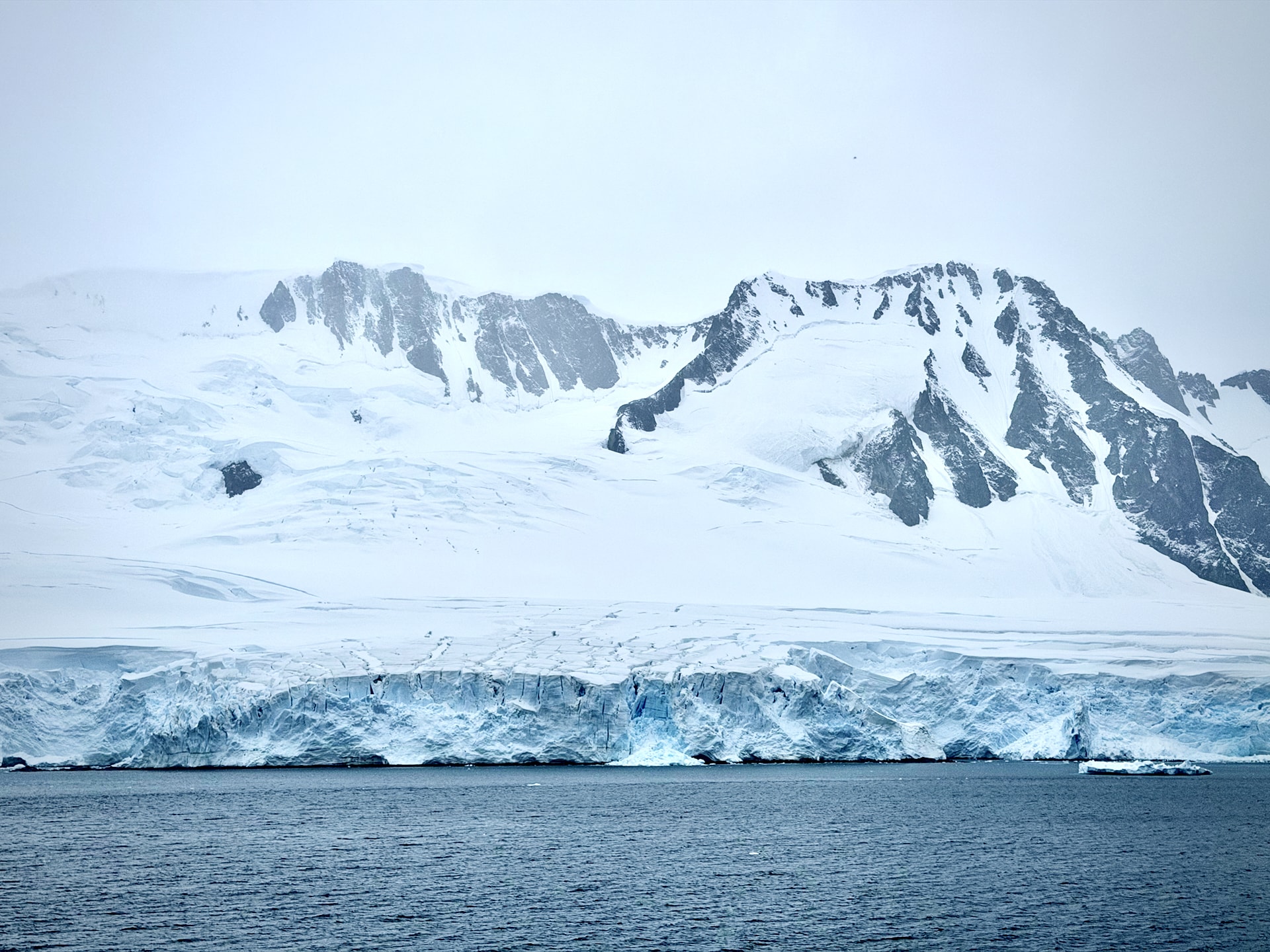
Suzie gave a talk on the seals of Antarctica – the six pinniped species you might encounter, including the three we’d already seen: Weddell, leopard, and Antarctic fur. Then Julien, a French geologist with a PhD and an enthusiastic delivery, walked us through plate tectonics and how the continents shifted to put Antarctica where it is. By lunchtime, the ship was sliding north through the Neumayer Channel, between Anvers and Wiencke Islands in the Palmer Archipelago.
The Neumayer Channel is the kind of place where photographs fail. Mountains rise sheer on both sides and the channel is narrow enough that the ship feels like it’s threading a needle, and wide enough to feel infinite at the same time. Even in low cloud, mist, and rain, it was the most cinematic stretch of the trip. Maybe more so because of the weather, which gave it a quality I can only describe as otherworldly.
After lunch, the afternoon program was a landing at Damoy Point on Wiencke Island, plus a Zodiac cruise. Our Blue Group landed first.
Damoy Point is home to the Damoy Hut, a former British transit station and ski-way that has been preserved as a museum. The Voyage Log calls it “Antarctica’s only protected historic transit facility,” which captures its specific significance: the British Antarctic Survey used it from the 1970s until the early 1990s as a staging point for crews flying further south. Today the interior is preserved as it was – cans of food on the shelves, sleeping bags rolled on bunks, equipment stacked in corners – with explanatory plaques. Will, the resident historian, was inside answering questions when we arrived. There’s a guest book. We signed it.
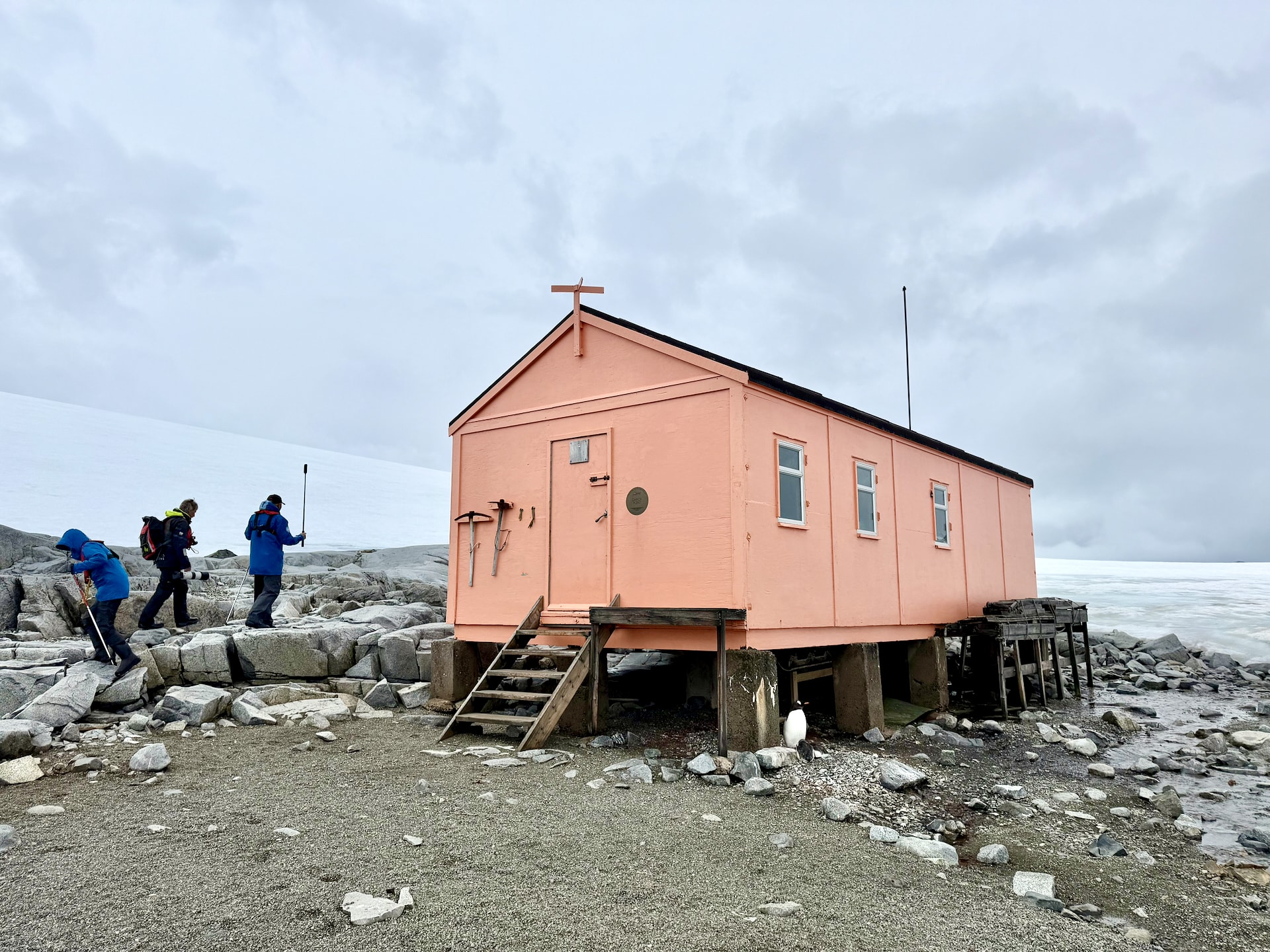
The hut sits in a small cluster of buildings that includes a contemporary Argentine refuge hut nearby. Around the area, gentoo penguins go about their business. One pair was nesting directly under the hut, with two impossibly fluffy chicks visible through the gap.
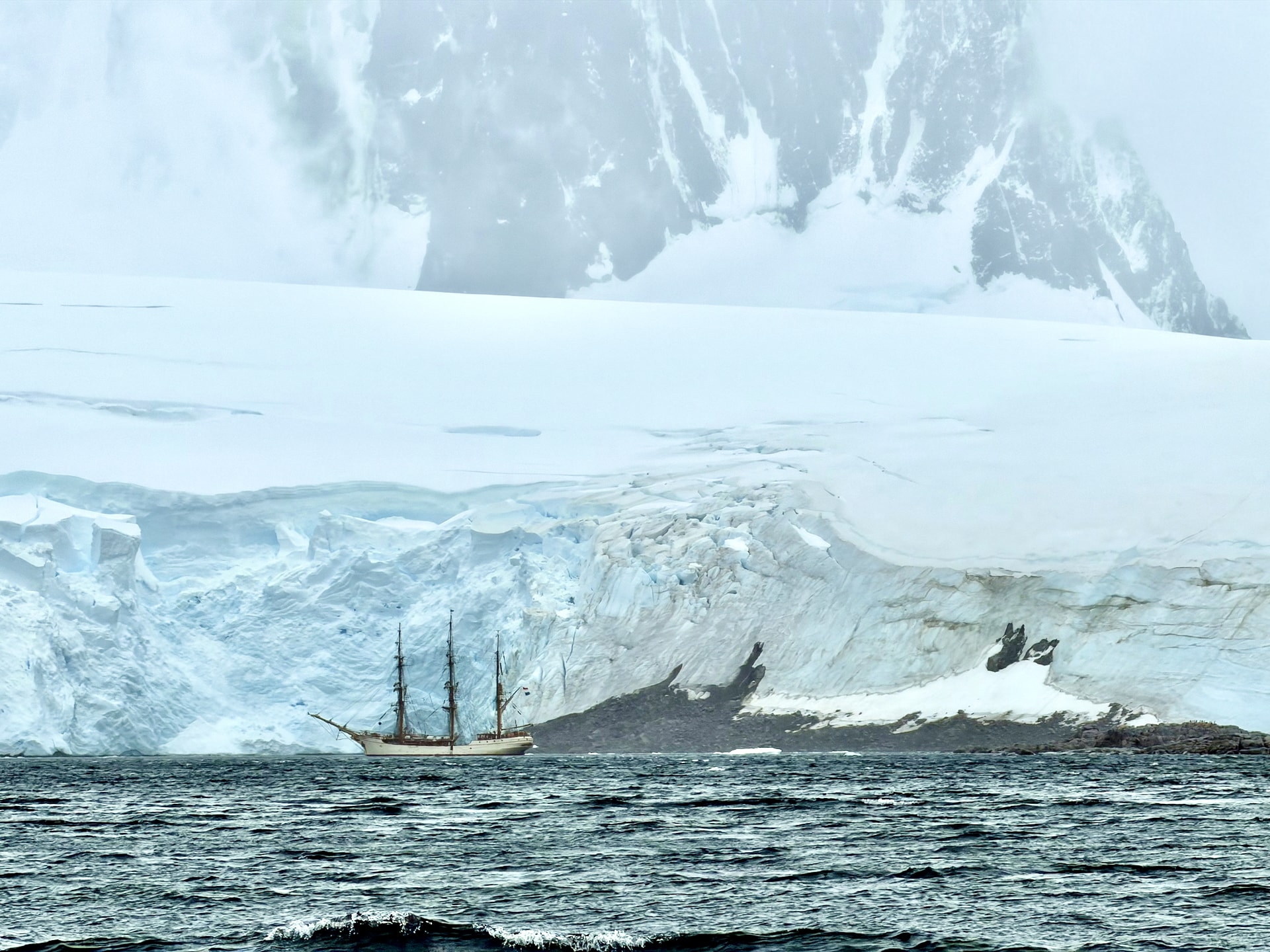
The Zodiac cruise came after the landing, heading toward Port Lockroy. We saw more gentoos in the water, more icebergs, and a striking three-masted sailing ship anchored at Port Lockroy itself – a tall ship doing some kind of polar charter.
And then Mother Nature decided to remind us who’s in charge.
Just as we’d reached the furthest point of the cruise from the Ocean Albatros, the wind kicked up to 40 knots – about 75 km/h (47 mph). The rain went horizontal. The bay turned into a chop. Our guide – Deb, who also runs the boutique on board – turned the Zodiac for home and we braced.
This is the moment that taught me why every garment you wear needs to be properly waterproof, and why the gloves I’d believed were waterproof were not. The water hit us in solid sheets every few seconds. So much water hit the front of our Zodiac that the auto-inflating life jacket on the American man sitting at the bow actually went off – the sensors decided he was in the water. We were sitting in the back, which mostly spared us, except for hands and gloves and faces and anything else exposed. Deb drove the boat with absolute composure, which is the only reason this story is the kind of story you tell over dinner instead of the kind you tell to an emergency responder. By the time we reached the ship, my hands were too cold to grip the rope properly.
The hot towel they hand you back at the ship is one of the best things I’ve ever experienced in my life. The hot chocolate came in a close second. The evening program was chair yoga and a meditative reading session in the Observation Lounge, which we skipped in favor of crawling under our duvet.
The gloves were Sealskinz Acle. The shop that sold them listed them as waterproof; Sealskinz’s own site calls them water repellent, which is not the same word and, as it turned out, not the same thing. After that soaking they repelled even less than before, and got wet through again later in the rain in Torres del Paine. Two lessons, both cheap: check the manufacturer’s own wording rather than the retailer’s, and treat genuinely waterproof gloves as non-negotiable rather than a nice-to-have. The full gear breakdown is in our one-bag packing list.
Day 6: Neko Harbour, Danco Island, and a Bay Full of Humpbacks
Every day on this trip, I thought “it can’t get better than this,” and every day it did. Day six really was the best.
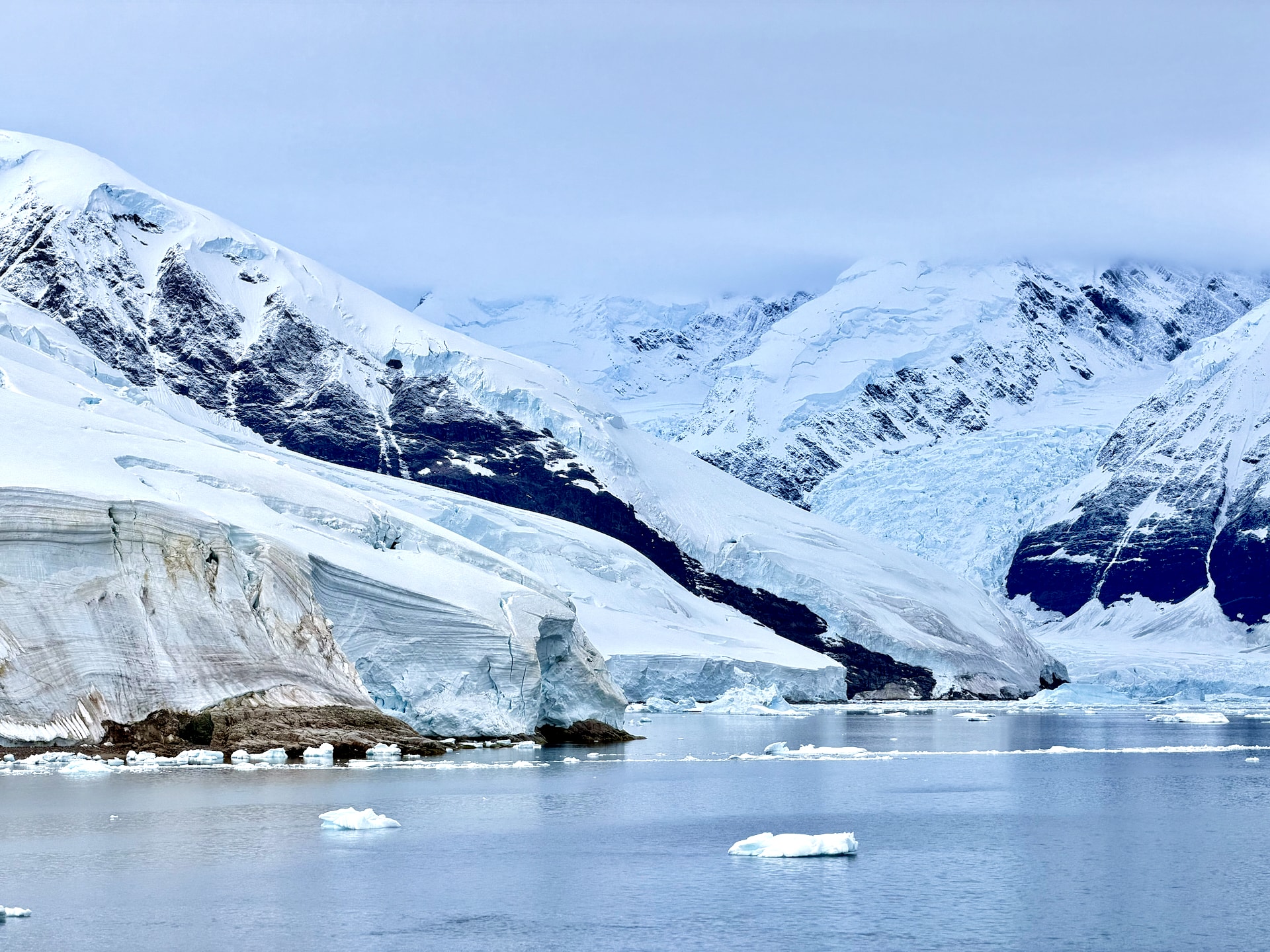
7 AM wake-up, breakfast 7:00 to 8:30, landing and Zodiac cruise starting at 8:30 at Neko Harbour. This is the proper Antarctic continent itself, not an island off the peninsula – although honestly, treating the offshore islands as somehow not Antarctic is a bit like saying Manhattan doesn’t count as North America. They count. But the formal seventh-continent moment is real, and Neko Harbour was where ours happened. Albatros Expeditions had set up a flag and a sign for the obligatory photo, and people lined up to take their pictures.
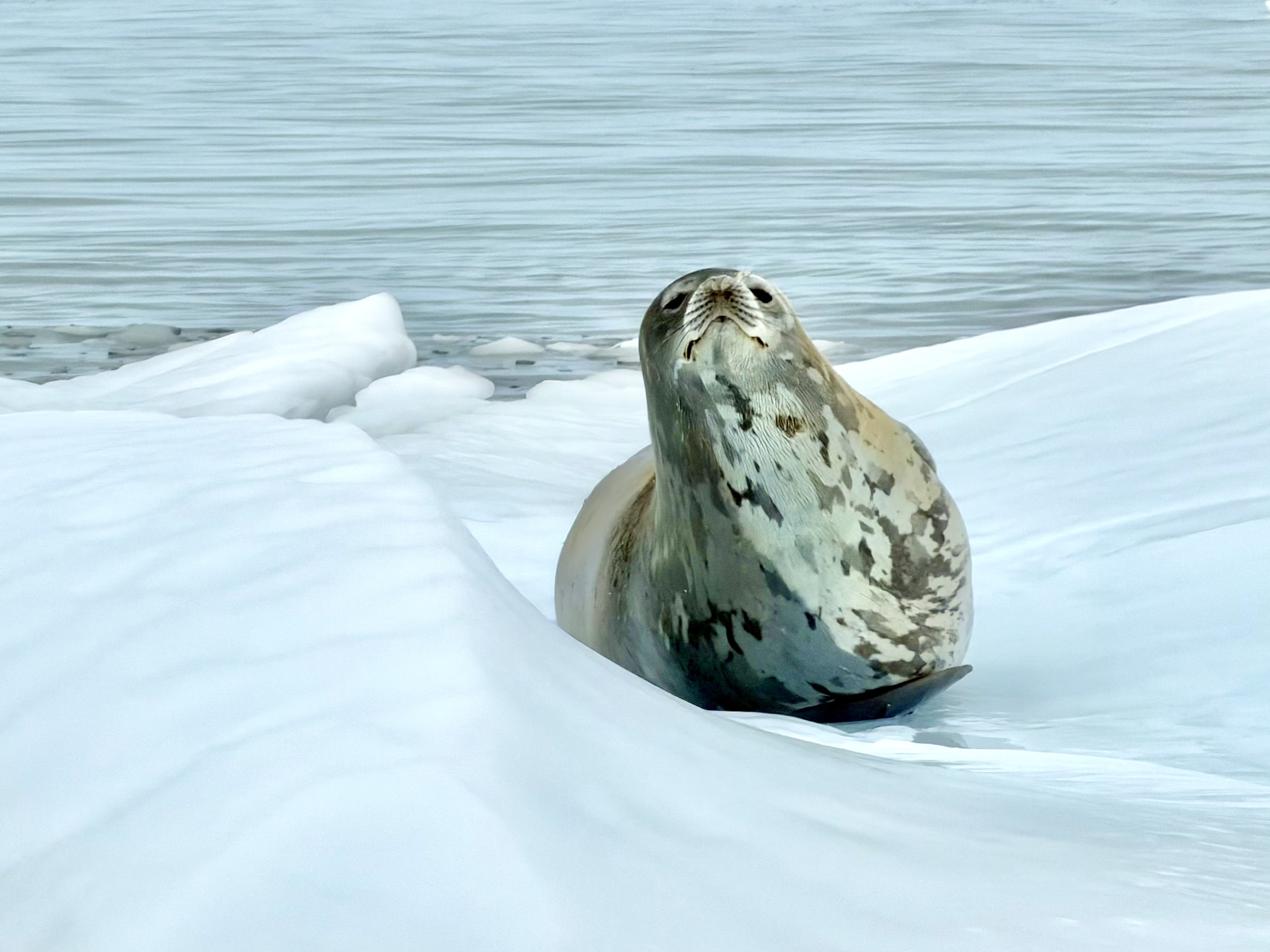
Our Zodiac cruise came first. We pulled close to the face of an active tidal glacier, where you can see (and hear) the ice creaking, cracking, and slowly grinding seaward. The water was almost completely flat – like a mirror – and from the boat you could actually watch ripples spread out from where the glacier was dropping ice. A Weddell seal was resting on a floe so close we could count the spots on its flank.
Then, just as we were preparing to switch to the landing, a substantial avalanche came down from one of the surrounding peaks, crashing into the bay maybe 200 meters (650 ft) away. The sound arrived after the visual – first a slow-motion white plume detaching from the mountainside, then the deep boom rolling across the water. There’s no equivalent in normal life for watching a piece of a continent come loose and fall.
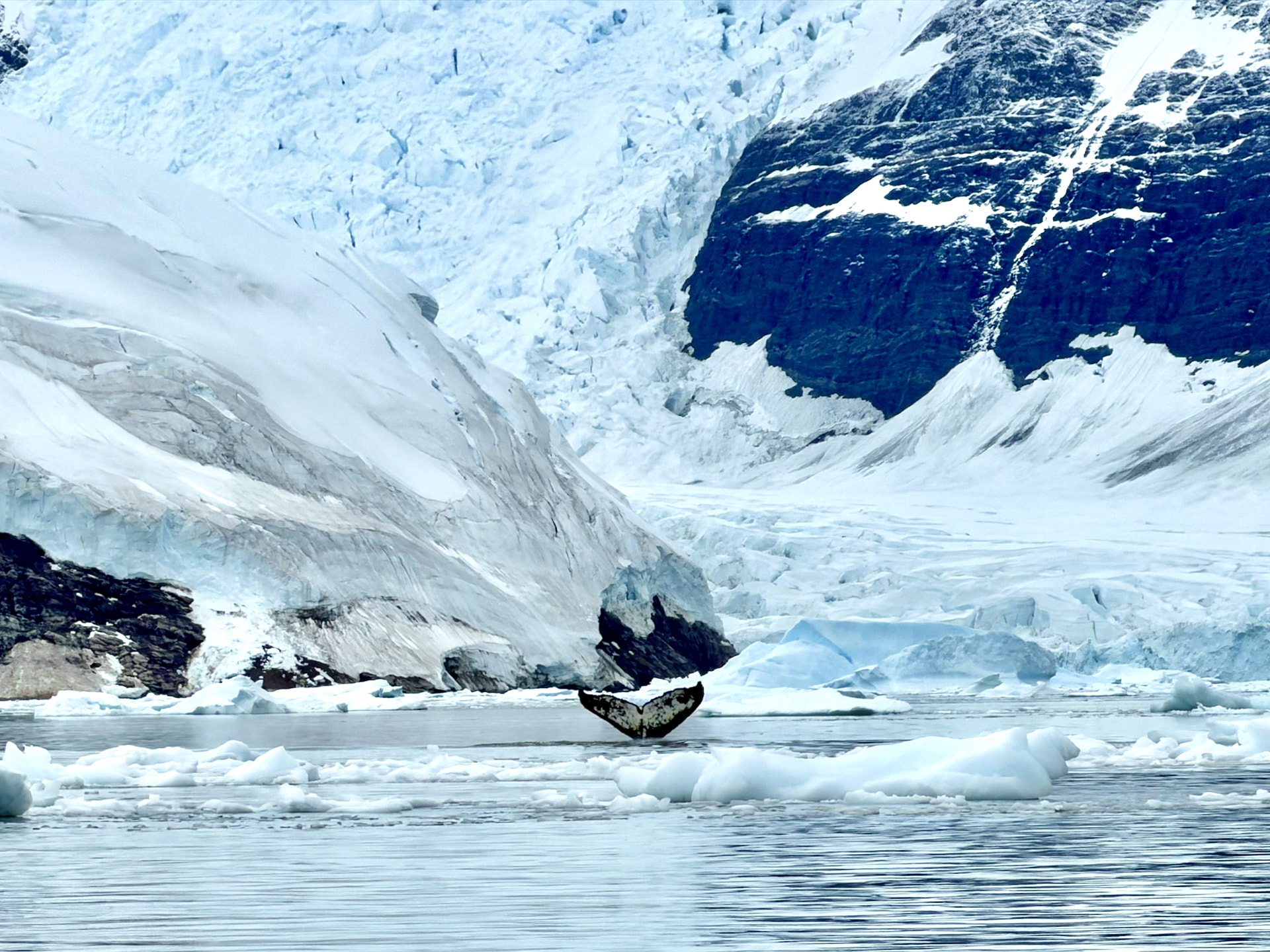
Humpback whales were everywhere in Neko Harbour that morning. Our cruise turned into a slow motion drift between blowing humpbacks, with tail flukes rising and falling against the glacier as a backdrop.
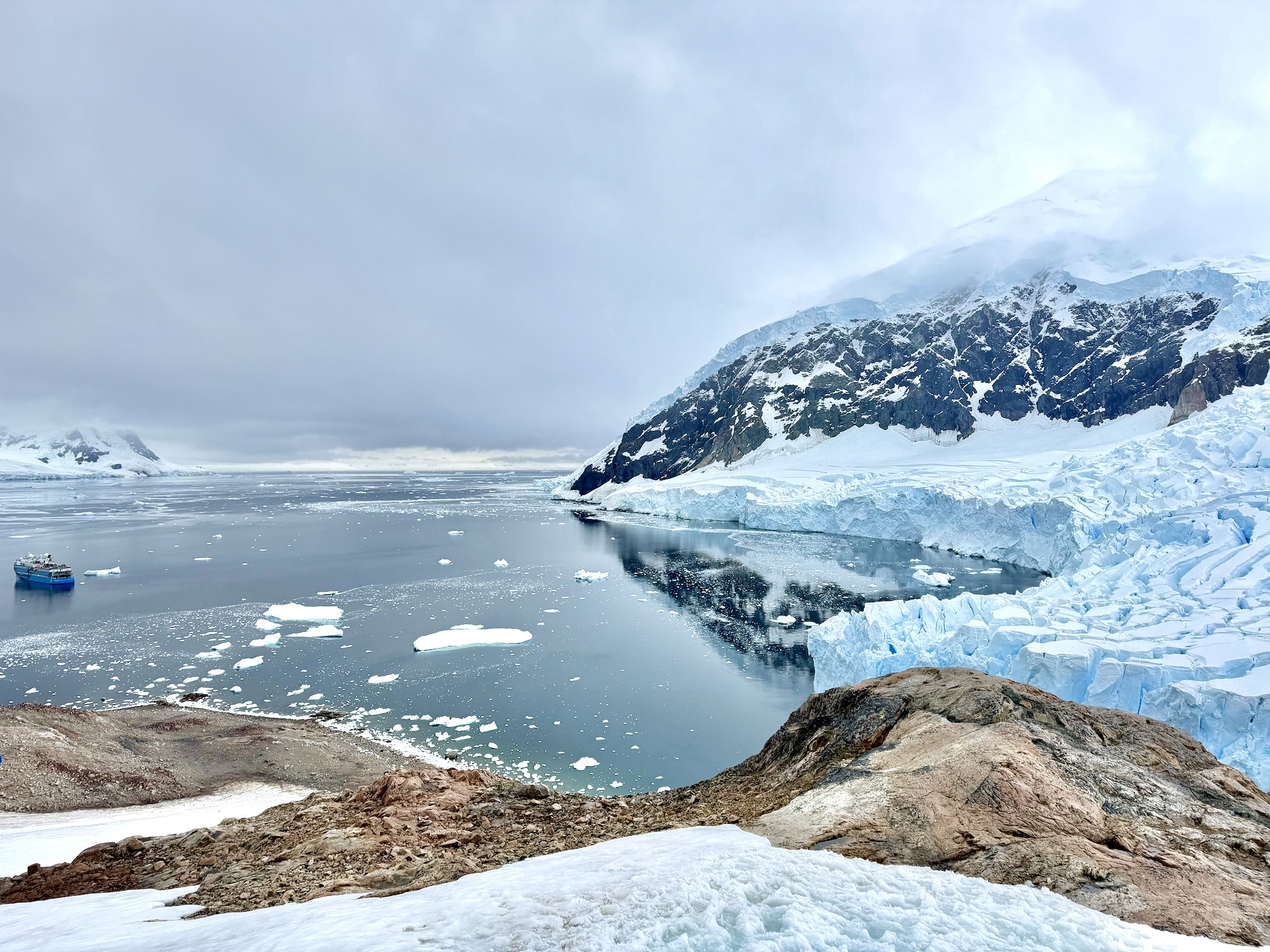
The landing at Neko involved the highest viewpoint of any landing on our trip. The expedition team flagged a route that climbed up to a saddle with panoramic views back over the bay. From up there, the ship looked tiny against the scale of the surroundings. This was the moment when you really feel like you’re on a different planet.
Lunch back on the ship was supposed to be an outdoor BBQ on Deck 7, but the rain had moved in and pushed it to the main restaurant. The BBQ menu was unchanged: ribs, sausages, burgers, corn, all the supporting pieces. Outdoor or not, it was excellent.
The afternoon was Danco Island, in the Errera Channel. Our Blue Group started with the Zodiac cruise. Our driver this round was Emilio. After what happened next, I want to formally nominate him for the title of Whale Whisperer.
We counted nine, maybe ten humpbacks feeding around us at one point. Emilio cut the engine and we drifted between them in silence.
This, on reflection, is my single favorite memory of Antarctica – something I didn’t fully realize until well after we got home. Sitting silent on the water, surrounded by feeding humpbacks, the way you hear them: a slow, deep exhalation, then the long pull of an inhalation, then nothing for a while. No splash. No drama. Just enormous animals breathing calmly around you, in their element, in no rush. It’s the most peaceful sound I’ve ever heard, and somehow the hardest one to describe. Whales feel like the quiet elders of this place – they don’t perform, they don’t hurry, they just rise to breathe. Months later, I still occasionally pull up the videos I shot on that drift, just to listen to it again.
And then, while we were sitting in the middle of that hush, two of the humpbacks decided to come check us out.
You could hear Andrea register what was happening. “They’re coming over here? They’re coming over here!” Two full-grown humpbacks aimed straight at our boat, and dove directly in front of us, lifting their tail flukes one after the other so close that you could have touched the second one if you’d reached over the side. There was about three seconds of absolute silence on the Zodiac. Then someone laughed, and someone else made a noise that wasn’t really a word, and then everyone was whooping at once – the most joyful collective sound I have ever been part of. Two enormous wild animals had just chosen, of their own free will, to come and look at us.
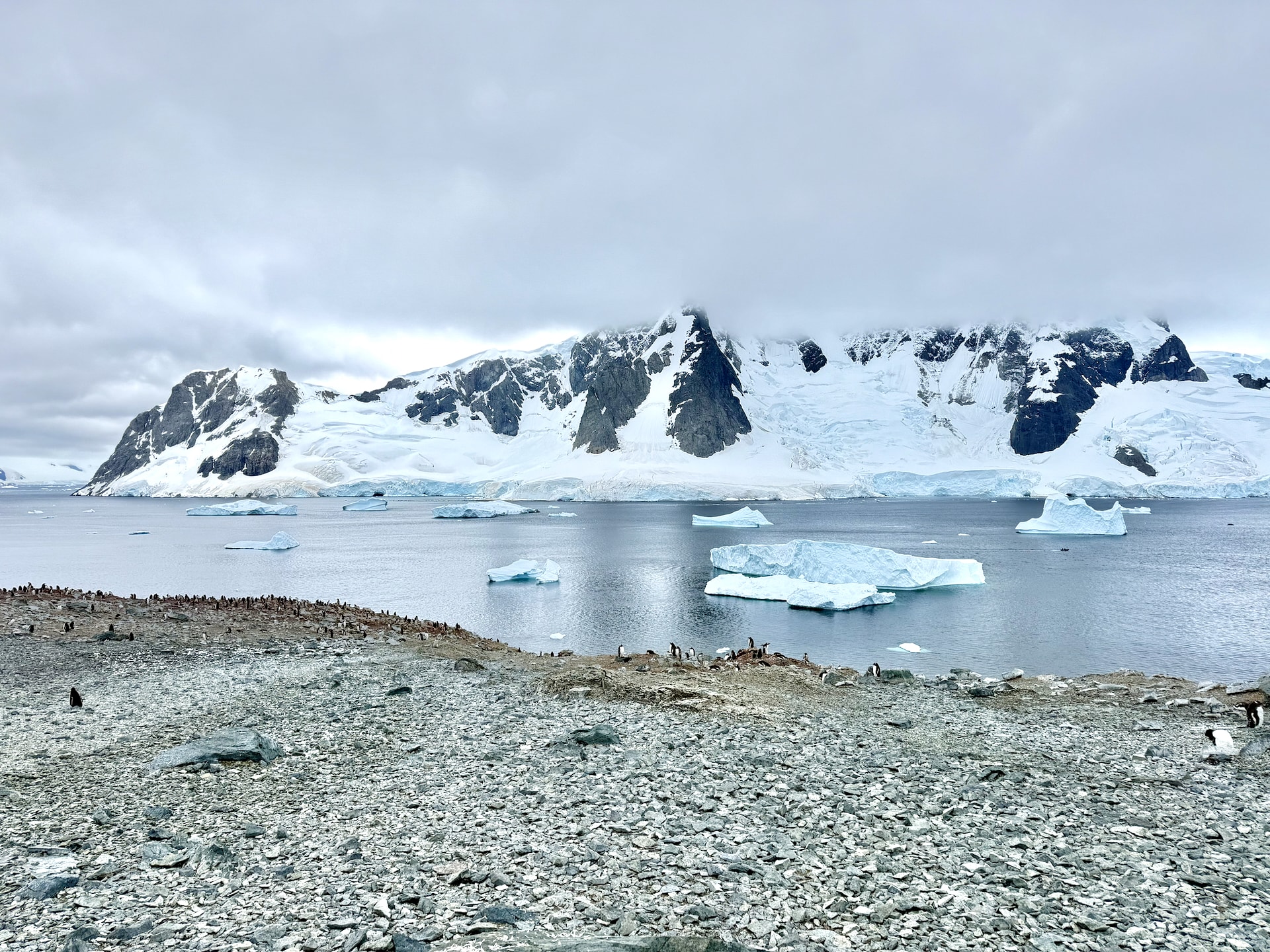
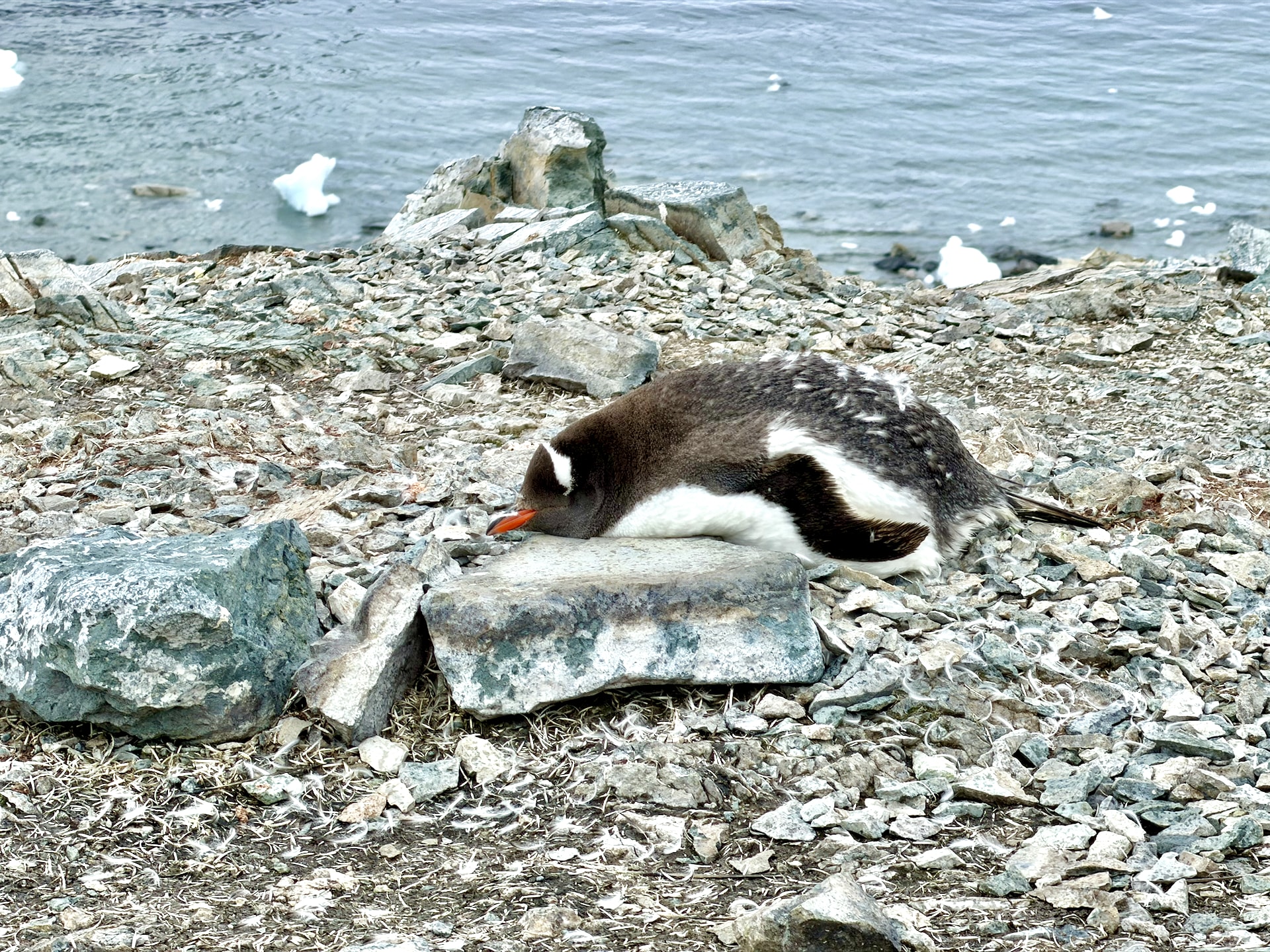
The Danco landing was lower-key by comparison – more gentoos, more ice, more spectacular scenery. The novelty here was the moulting penguins. By late January, many of the adult gentoos were partway through their annual catastrophic moult, during which they replace every feather and become temporarily flightless – erm, I mean, temporarily un-swimmable. Without waterproof feathers they can’t enter the water, and without entering the water they can’t feed. So they fast for about two to three weeks while they regrow their plumage. They look spectacularly miserable during this time. The technical scientific description is “really sad sweater.” They stand alone, slightly removed from the colony, staring into the distance like they’ve made some kind of terrible life decision. Then they finish, and they’re fine.
We saw a southern elephant seal further down the beach, plus minke whales offshore – although we mostly couldn’t tell them apart from the humpbacks at distance. The humpbacks made themselves obvious with their characteristic moves: arching the back at the surface, flicking the tail flukes high before a dive, and the side-roll wave with a pectoral fin in the air. The expedition team had taught us how to identify each species from its dorsal fin and behavior before, but to be honest, we would need more field experience for this.
Evening recap, another excellent dinner, then Franziska gave a talk on penguins and the Southern Ocean. The ship had repositioned to a potential camping site for that night, but precipitation rolled in and camping was canceled for safety reasons. A quieter evening to finish the best day.
Day 7: Portal Point, Cape Reclus, and the Polar Plunge
The morning was meant to be a Zodiac cruise at Foyn Harbour, off Enterprise Island – the wreck of the whaling ship Governøren sits there, a popular cruise site. We didn’t get to see it. The wind was running 25 knots, which is the operational ceiling for Zodiac cruises (anything beyond and they don’t launch). The expedition team sent a Zodiac out to assess, then it came back quickly. The morning was canceled.
For perspective: 25 knots was where they wouldn’t launch. Two days earlier we’d been out in 40 knots when the storm hit at Damoy. That gives some sense of how unforgiving the Antarctic weather can be when it decides to be.
The morning program shifted to lectures and the Happy Whale workshop. Happy Whale is a citizen science platform where photos of humpback flukes are submitted, and pattern-recognition AI compares them against the existing database of known individuals. Each humpback’s tail markings are as unique as a fingerprint. Several of our photos matched whales already in the database. One of the ship’s photographers, meanwhile, had captured a humpback that didn’t match anything – a new individual.
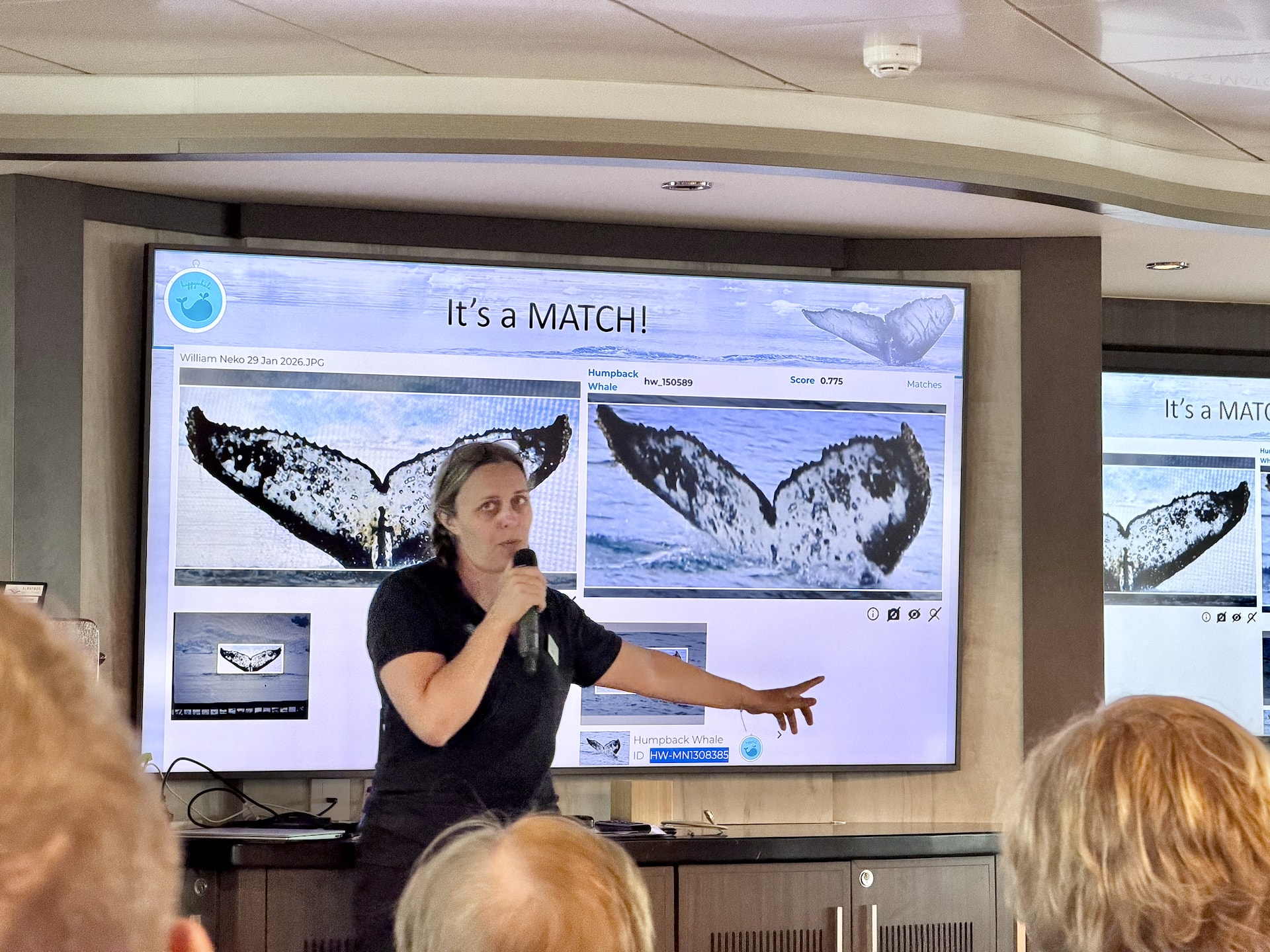
The Happy Whale rules are that anyone who submits a previously unknown whale can name it, but for $500. When a passenger finds one, they can pay the fee themselves. When one of the ship’s expedition photographers spots one, the ship covers the cost and runs a lottery: $10 per ticket, all proceeds going somewhere good, and the winning passenger gets to name a brand-new humpback whale.
The afternoon turned around. The wind dropped, the swell calmed, and we got our planned landing and Zodiac cruise at Portal Point near Cape Reclus – another stretch of proper continental Antarctica. Our Blue Group landed first.
What’s special about Portal Point is what isn’t there. There’s no penguin colony, no fur seals. Which means the landing area isn’t constrained by the usual wildlife protection rules. You can wander more freely – with the obvious exception of avalanche-prone areas, which the team had clearly flagged. We spent time sitting on rocks at the edge of the bay, walking out onto the snow, and just being still for a while. After six days of color groups and Zodiac schedules and recap sessions, having permission to simply stop and feel where you actually were was its own kind of luxury. Several of us sat alone for stretches. Nobody talked much. The expedition team was visibly looser too. A spontaneous snowball fight broke out between guides and passengers.
We sat on a rock and watched a single chinstrap penguin – clearly far from its home colony – wandering up the beach looking thoroughly confused. It studied the situation for several minutes, like someone waking up in an unfamiliar apartment after a rough night, before finally giving up, sliding into the water, and swimming off in some direction it had decided was the right one. It felt, on some level, like a metaphor.
The Zodiac cruise that followed was relatively uneventful – more humpbacks, some excellent icebergs in dramatic shapes, no storms. Which on a trip like ours is its own kind of luxury.
And then we got back to the ship for the Polar Plunge.
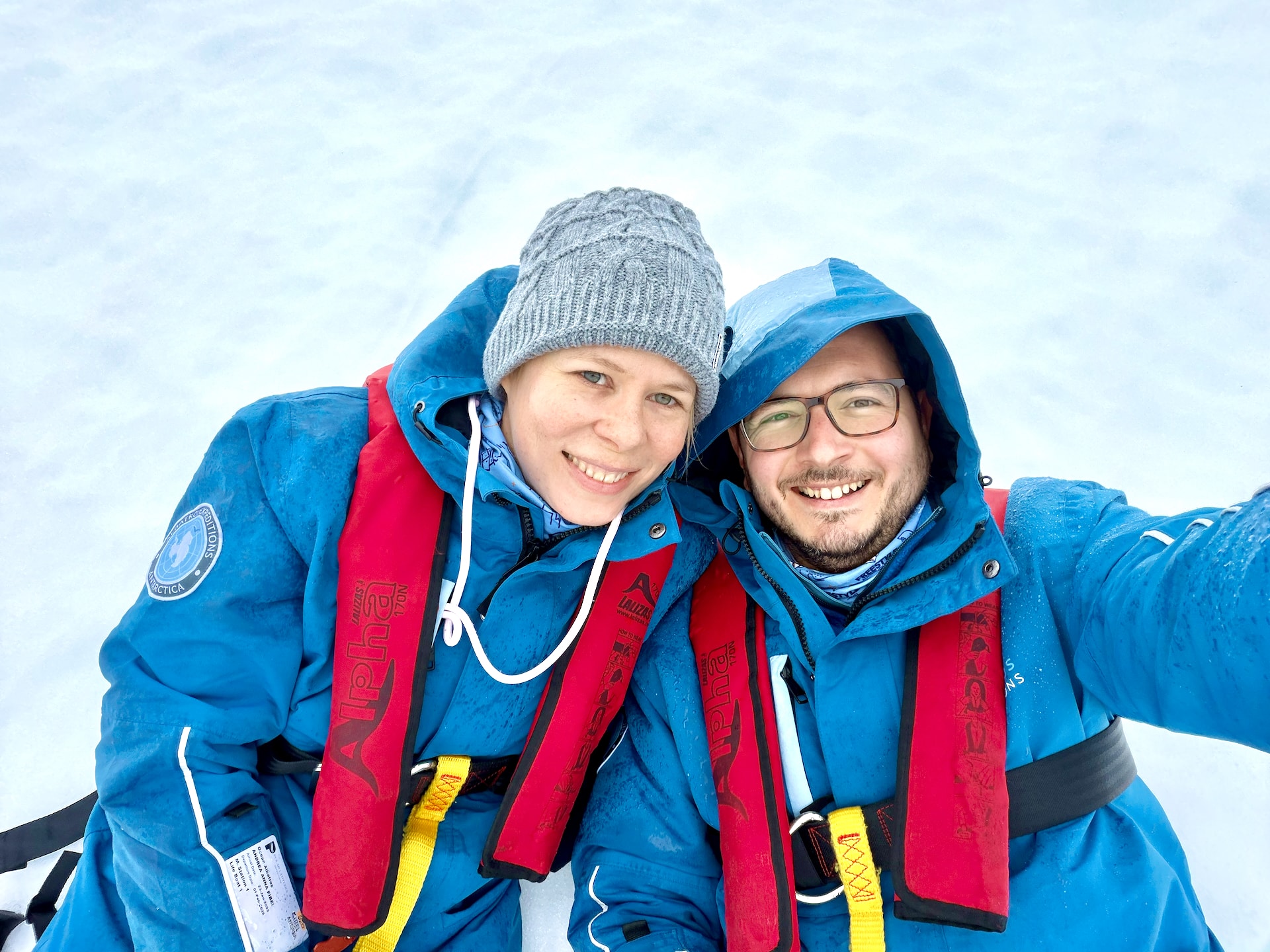
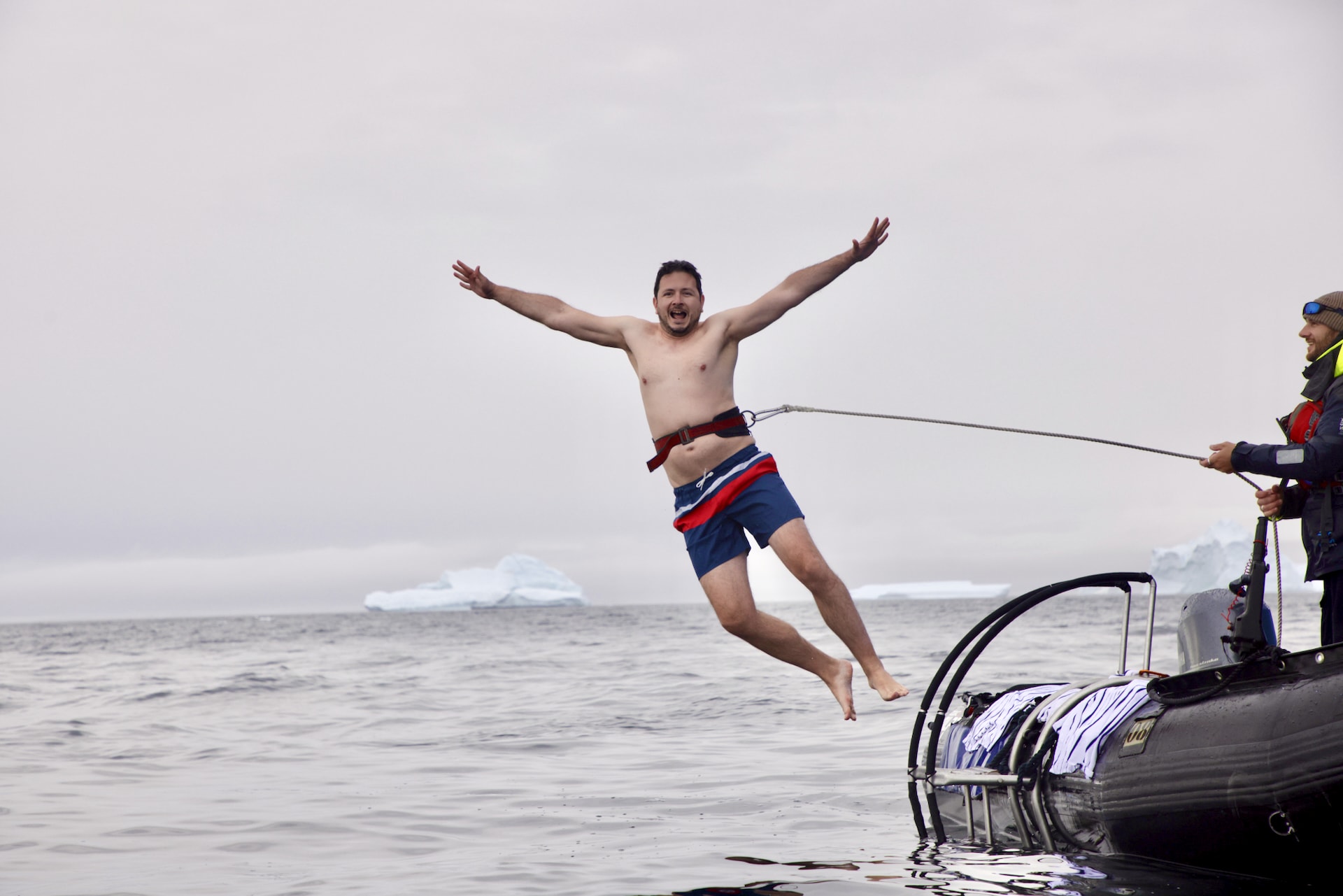
For the uninitiated: the Polar Plunge is the optional activity where you jump from a Zodiac into the Antarctic Ocean. The water at our plunge site was around 1°C (34°F). The setup is well thought out: a Zodiac is tethered to the ship’s stern to jump off from, two photographers shoot from a second Zodiac alongside, and a third Zodiac stays nearby with the ship’s medical team. Each jumper wears a tether around the waist that clips to the boat. You sign a liability waiver beforehand, just to make the legal situation clear.
More than half the ship did it – over a hundred people. We hesitated all week, then decided we hadn’t come this far to chicken out at the last hurdle.
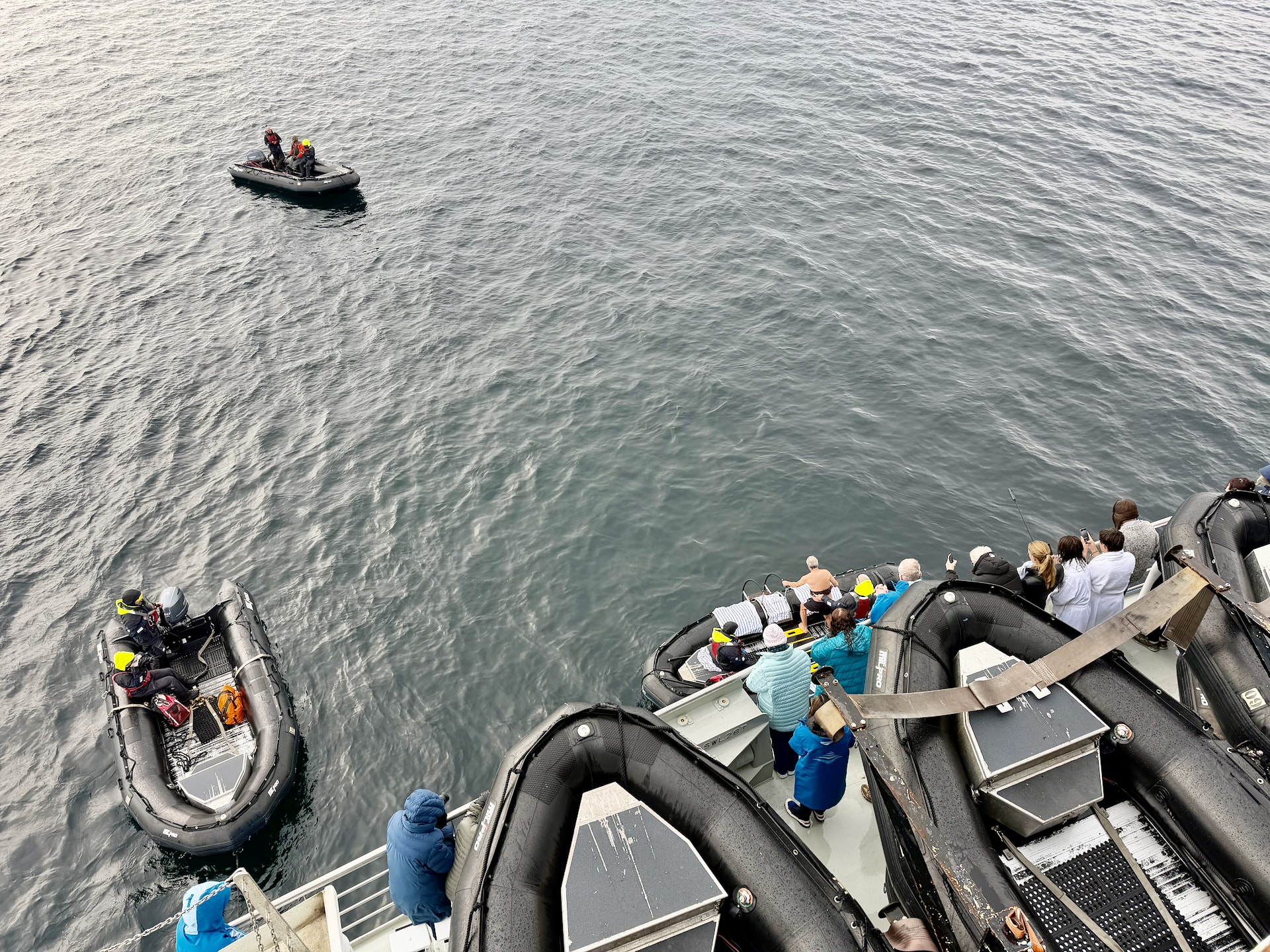
The actual experience: less shocking than expected, on entry. The water is cold, but the cold doesn’t fully register in the half-second between leaving the edge of the Zodiac and surfacing. What does register is the swim back to the ladder. Within a few strokes my arms felt like they weighed 200 kilos, and pulling myself up the ladder was the most physically difficult thing I’ve done in a while. The adrenaline is real. So is the hot chocolate, the hot chai, and the shot of vodka they hand you when you stagger back onto the deck. By the time you’ve thawed out, you’re laughing.
The audience watches from the rear decks above, cheering, with music going. Once you’ve jumped, you go back up to watch the rest. Recommended? Absolutely! If you’ve come this far, do it.
That evening was the Crew Talent Show. The hotel and operations crew – a substantial percentage of whom are Filipino – put on a multi-act variety show that included singing, dancing, and a traditional Filipino dance number. They were genuinely good. It’s one of the moments where you realize the people who’ve been quietly making your bed and serving your dinners all week have lives, talents, and personalities far beyond the uniform. After their show, the expedition team hosted an impromptu karaoke night that ran late. People drank more than usual. Tomorrow we’d be back in the Drake Passage. Tonight we celebrated.
Day 8: Drake Passage Northbound
The Drake had other plans for us on the way back.
The day started easy: no early wake-up call, breakfast at 8 AM, only one mandatory item on the schedule – the disembarkation briefing at 10 AM. This is when they explain the protocol for getting off the ship in two days’ time. Everyone gets sorted into new color-coded groups based on their flight times, and you receive ribbons in your group’s color to attach to your luggage. The ribbons drive everything: what time your bags are taken, which bus you board, which terminal you head to.
When booking your flight out of Ushuaia after the cruise, know that disembarkation typically happens by 8 AM. Morning flights from Ushuaia – even those leaving at 9 or 10 AM – are realistic to catch. We’d assumed we’d need to book a hotel night in Ushuaia after disembarkation, but in retrospect, we could have flown out the same day. Ask your operator if you’re unsure.
After the briefing, Suzie gave a lecture on whales and the history of whaling in the Southern Ocean. By lunchtime, the Drake was less polite than we’d hoped. The waves hadn’t grown enormously – about 3.5 meters (11 ft) – but the period between them was long, the swell was hitting us partly broadside, and the ship developed a deep, slow roll that made the Drake-Lake comparison feel optimistic. Plates slid across tables at lunch.
Many passengers skipped lunch entirely. I felt fine. Andrea felt less fine and spent the afternoon in the cabin. This is one of the random things about seasickness: I’d been queasier on the calmer southbound crossing than I was on this rougher one.
The afternoon’s lecture was Kate’s talk on Antarctic fish and invertebrates – under the sea and the creatures you don’t see. Halfway through her presentation, Kate paused, apologized, walked behind the wall at the back of the Lecture Lounge, and was audibly sick. Then she came back, apologized again, and finished the lecture as if nothing had happened. Tremendous respect. If anyone needed a final reminder that even seasoned Antarctic professionals are vulnerable to the Drake, that was it.
Afternoon tea at the usual time, followed by the Open Bridge program – they let passengers come up to the bridge, look at the navigation systems, and ask the officers questions. We had a Malaysian couple in our Blue Group, the husband of which had circumnavigated the world by sailboat. He asked extremely detailed technical questions of the second officer about the engines, fuel consumption, and ice handling. I asked the question I’d been carrying since the Neumayer Channel: this is supposedly an icebreaker, but I’d noticed that the captain was carefully avoiding even small ice chunks, which I’d expected the ship to just plow through.
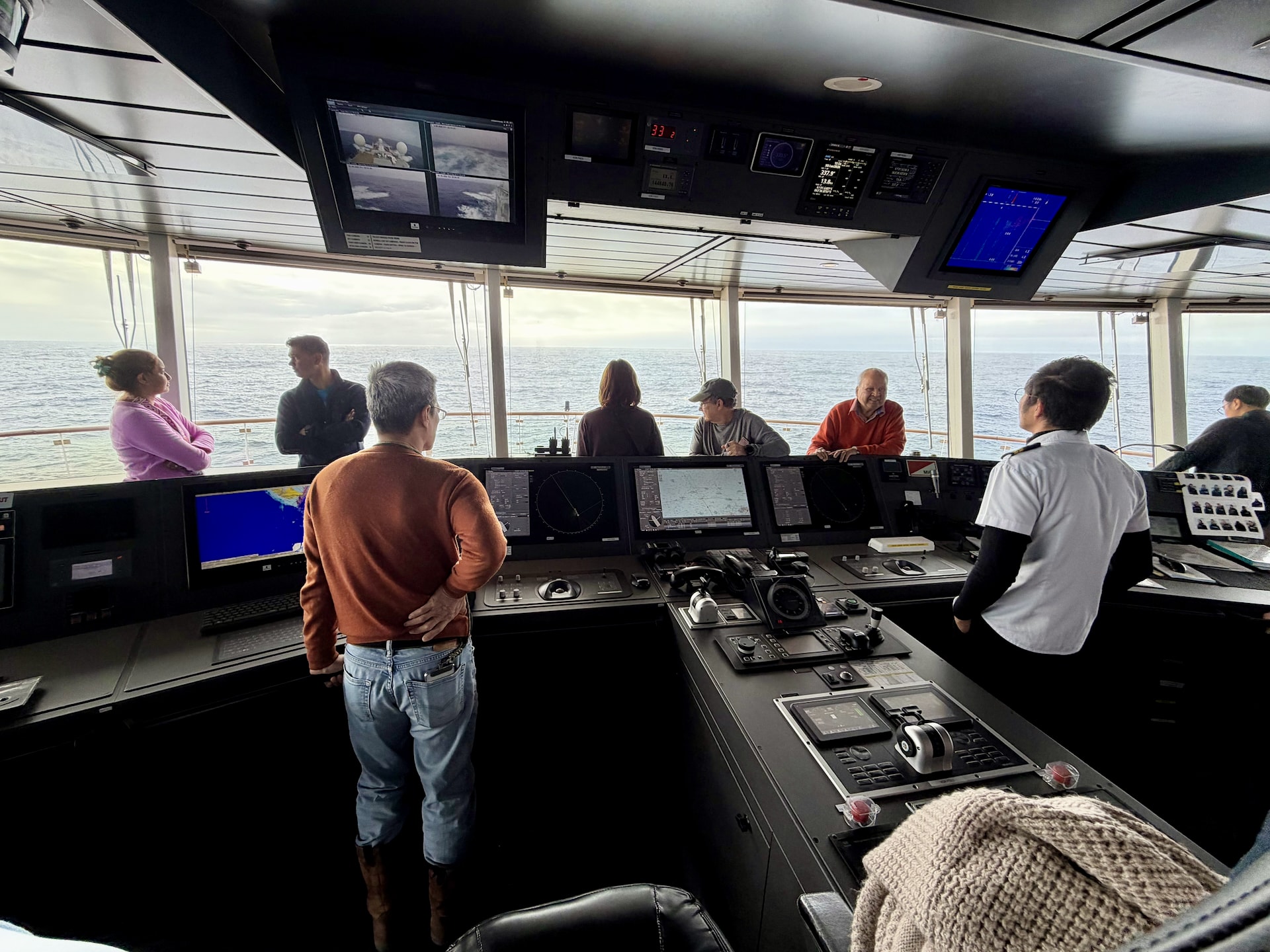
The answer, somewhat surprising: yes, the Ocean Albatros is rated Ice Class 1A, and yes, on paper she can break ice. In practice, the operating company doesn’t want their relatively new ship banged up unnecessarily, so they avoid contact with anything they can. You’ll see promotional photos of the ship powering through pack ice, but the reality is that they avoid it whenever they can. Which is fair enough, but worth knowing.
Evening recap, then a music quiz and karaoke after dinner.
Day 9: Cape Horn and the Charity Auction
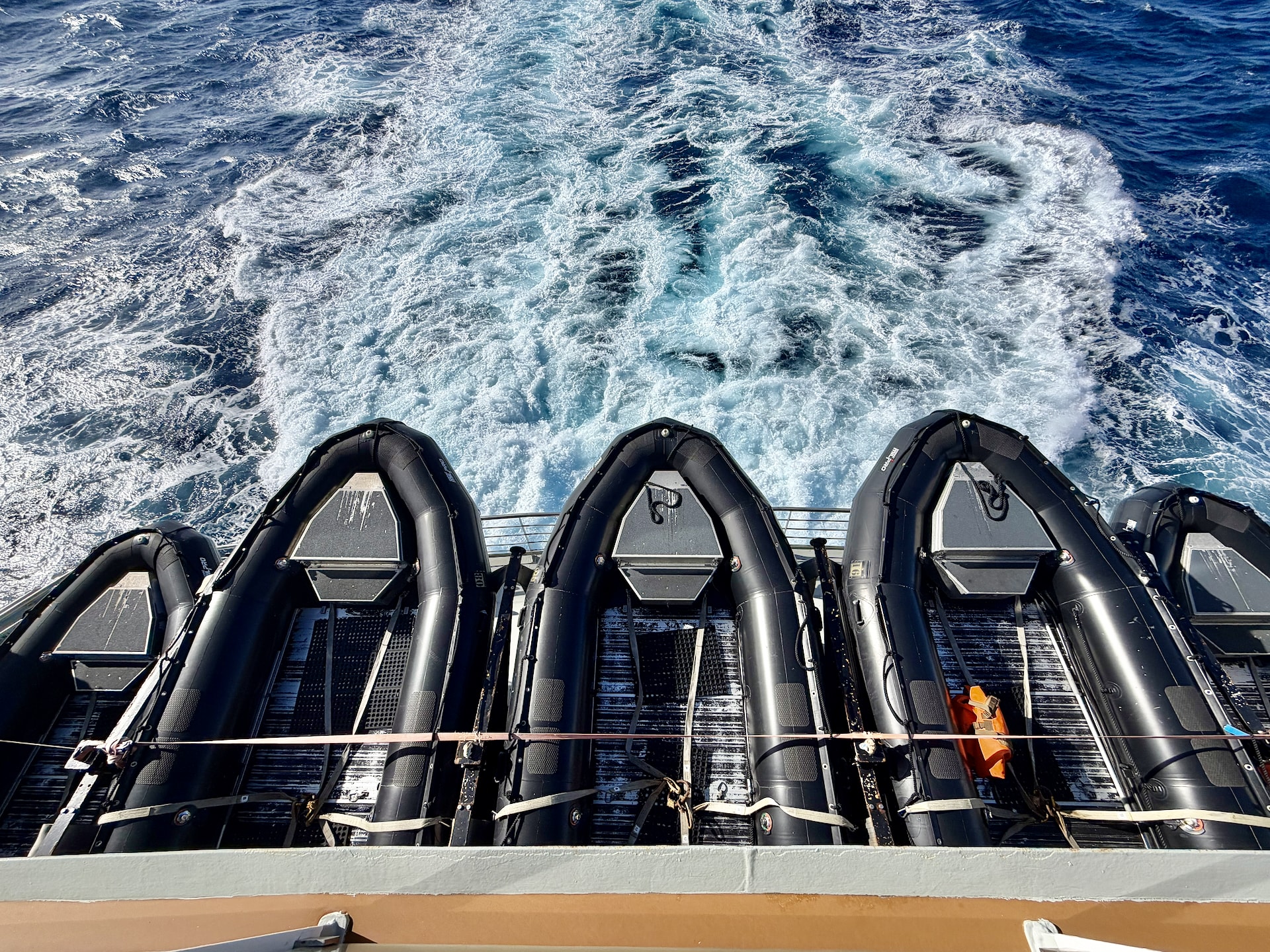
Day nine continued the rougher Drake crossing, heading north toward the Beagle Channel. Westerly winds picked up through the afternoon, with rolling swells averaging four meters (13 ft) according to the recap. The Voyage Log called this “the classic Drake character,” which is accurate.
Despite the motion, the day’s program was full. Steve gave a photography session on processing images in Adobe Lightroom – well-pitched for newcomers to the software, while those of us already familiar got the satisfaction of nodding along. Then Julien continued his Rock and Ice lecture series with part two, focusing on Antarctic geology in more detail.
Lunch, then Will’s talk on the heroic age of Antarctic exploration: the race between Roald Amundsen and Robert Falcon Scott to the South Pole, and Scott’s tragic return journey. Will is one of those lecturers who can make a story you’ve heard before genuinely fresh. He explored why Amundsen’s approach worked – ruthless logistics, Norwegian-style sled dogs, deliberate depot placement – and why Scott’s didn’t, in a way that gave new layers to a familiar narrative.
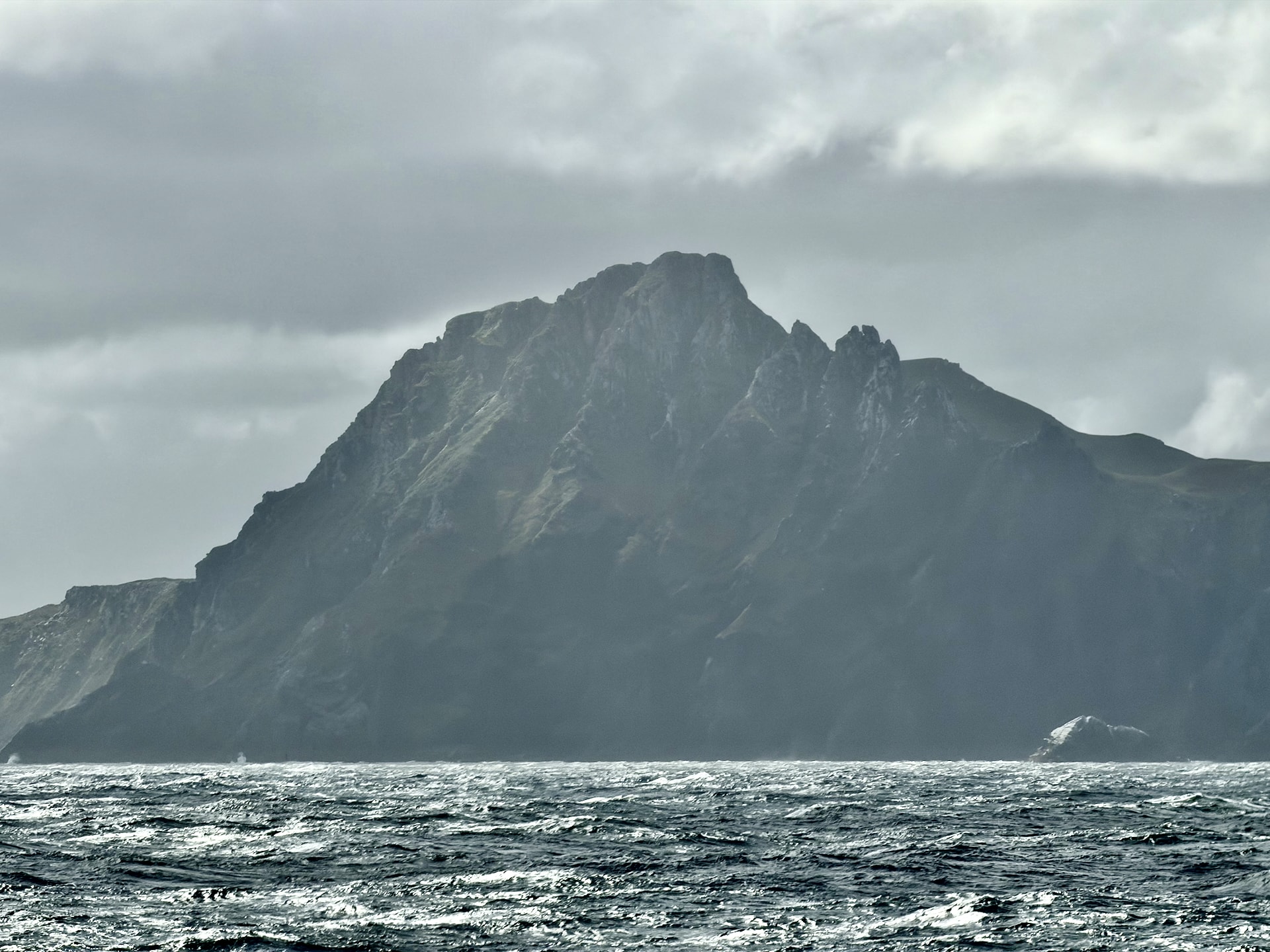
Late afternoon brought a visual treat: the Ocean Albatros passed within sight of Cape Horn, the southernmost point of South America. We’d been at sea so long that suddenly seeing land again – proper continental land, with people on it – felt strange. Cape petrels and several albatross species accompanied us throughout the day, weaving wide arcs around the ship.
Afternoon tea was followed by the trip’s charity auction, which deserves its own paragraph or two.
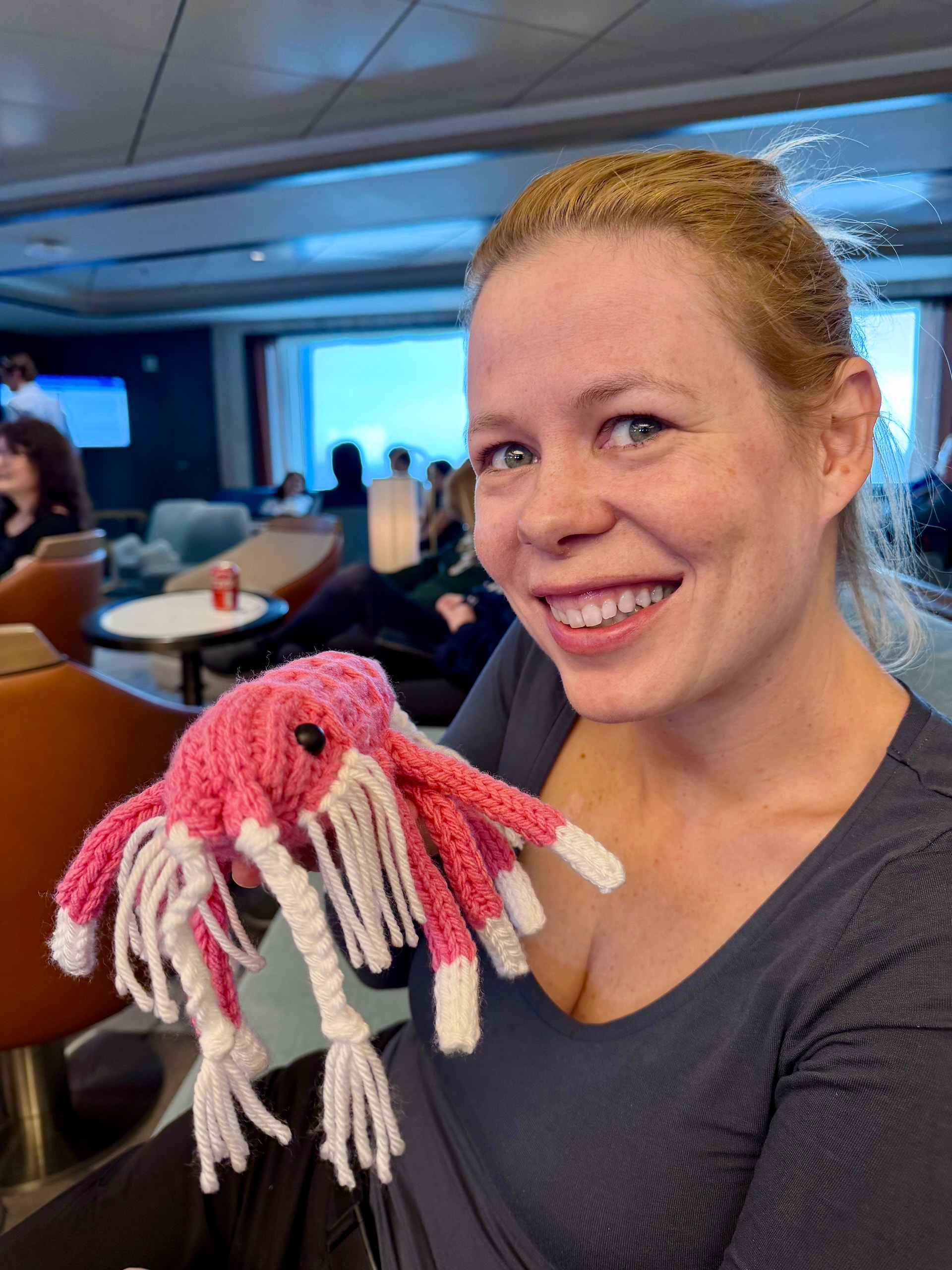
The auction is hosted by the expedition team, with proceeds split between citizen science programs and the ship’s hotel crew. Items run from the small souvenirs to the genuinely substantial. We bid on smaller things and ended up taking home a cute hand-crocheted krill that an Ushuaia artisan had made for the auction – Julien bid against me, which is how I ended up paying $80 USD for the world’s most expensive crocheted krill. Worth it. Proceeds went to citizen science.
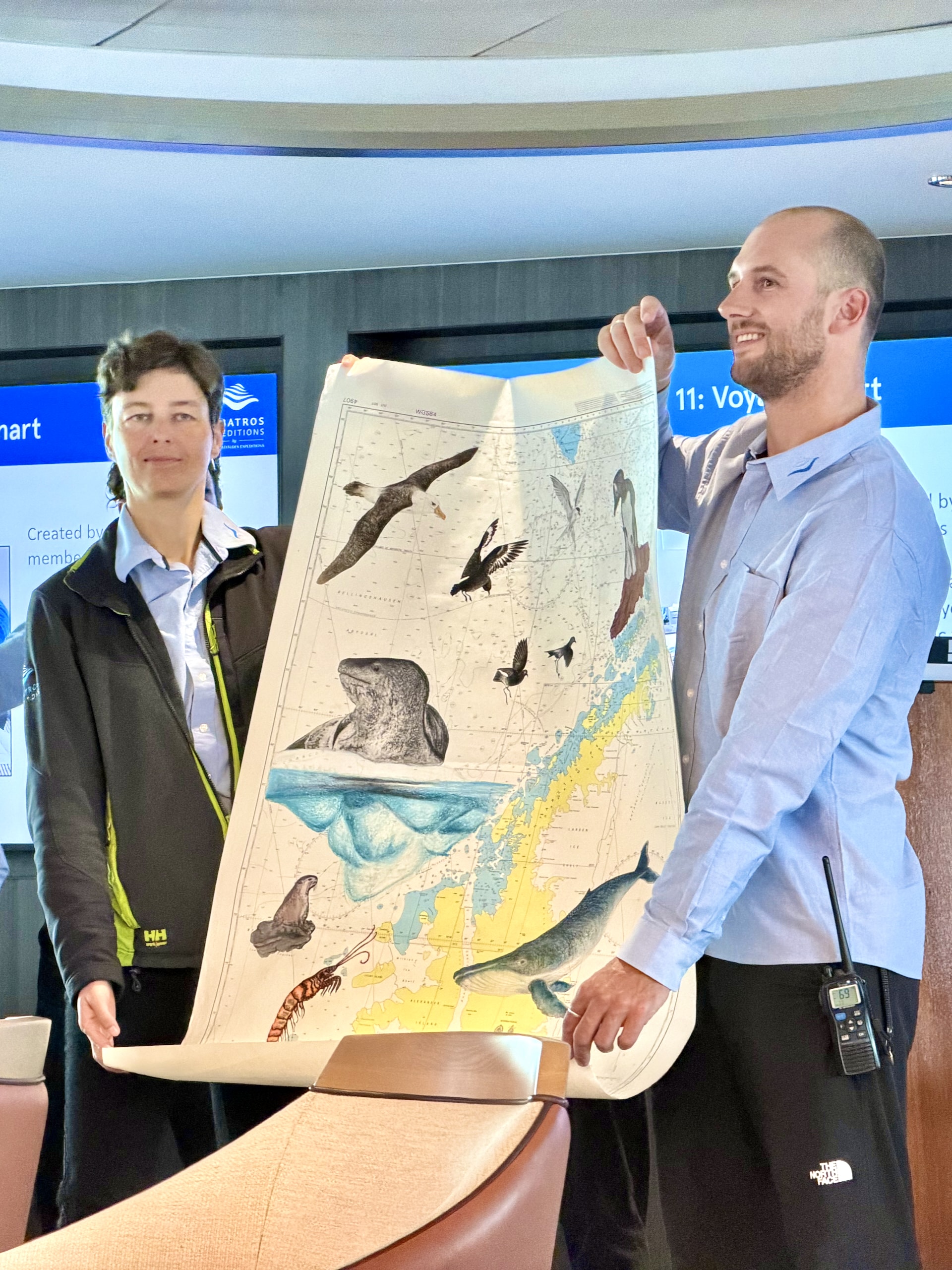
The bigger items got serious. Some of the most interesting ones to watch were the unique pieces: a mason jar of Antarctic sea salt that the captain had personally bucketed up from the ocean during the trip and the executive chef had then boiled and evaporated down to crystals on the galley stove. The ship’s last Albatros Expeditions flag, a collector’s item now that Polar Latitudes has acquired the company. And a hand-illustrated map – really a printed Antarctic Peninsula chart that the expedition guides had been embellishing for days, adding penguins, icebergs, whales, seals, and route markings in pen. You could spot the guides at it constantly, hunched over next to the the bar’s piano in the lounge during downtime, working in shifts. The detail by the end of the voyage was extraordinary.
Then the genuinely high-ticket items came up at the end of the auction, and the bidding turned competitive – we’re talking thousands of dollars per lot, with passengers facing each other down across the lounge in some genuinely intense moments. The proceeds from the largest items went directly to the hotel crew.
After the auction came Captain Svedberg’s farewell cocktails, and the photographers’ end-of-voyage slideshow – about forty minutes of music and the best photos from the trip, plus a separate sequence dedicated to the Polar Plunge. The expedition team includes several professional photographers who shoot continuously throughout the voyage with proper kit, and every guest receives the entire collection of their photos a few weeks after the trip. A Google Drive link arrives in your inbox with thousands of images, plus everyone’s individual Polar Plunge shots, plus a daily voyage log written by the expedition team. It adds up to several gigabytes – I had to upgrade my Google Drive storage just to hold it.
Dinner that night included the “Chocoholic” dessert bar: a chocolate fountain, churros, fruit, an array of chocolate desserts, ice cream. The kind of farewell dinner that makes you forget you’ve been at sea for 48 hours.
The evening program was an Antarctic trivia night with a twist – instead of straightforward trivia, the theme was “How big is it?” Teams had to estimate the size of various Antarctic things by marking points on a stretched rope laid across the lounge: a Zodiac (5.5 meters, or about 18 ft), an albatross wingspan, a leopard seal, a humpback whale (the rope wasn’t long enough – the answer required walking outside the lounge to reach the right distance). We didn’t win, but we didn’t come last either.
Day 10: Disembarkation in Ushuaia
The Ocean Albatros entered the Beagle Channel late on day nine, and by 4 or 5 AM we were docked in Ushuaia. The night had been completely calm.
Disembarkation followed the color-ribbon plan. To our surprise, breakfast was still served – one final excellent meal in the Jens Munk Restaurant on Deck 5. We’d packed the night before, the large bags go outside the cabin door overnight and the crew loads them onto the buses.
We settled the onboard account at reception, picked up our passports, and waited for our group to be called. Our color was one of the last off, since we weren’t rushing for a flight. We left the ship at 8 AM.
Gratuities on the Ocean Albatros are automatic. A nightly amount per person is added to your onboard account and settled with the card you register after boarding, so there are no envelopes and no cash to organise. Ours was $16 per person per night. You can ask reception to remove it if you would rather tip another way. For what we actually spent on board in total, gratuities included, see our Antarctica planning guide.
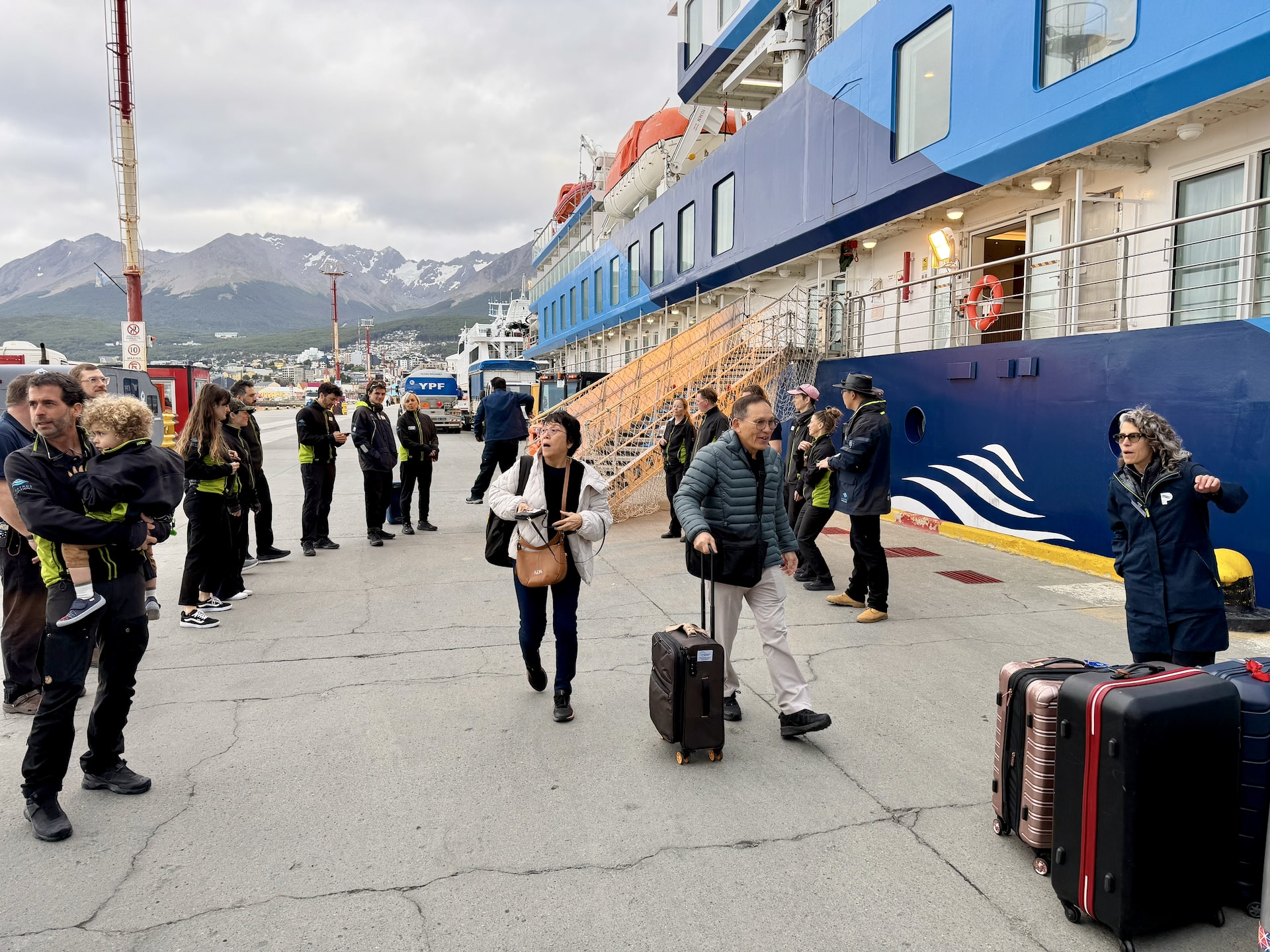
The disembarkation itself was unexpectedly emotional. The expedition team lined up at the gangway, hugging guests goodbye, and we realized somewhere on the way down the ramp how much these people had become part of the trip’s texture – Diego’s morning voice over the intercom, Suzie’s seal lectures, Emilio at the helm of our Zodiac among the humpbacks, Deb steering us through the storm. There were genuine hugs. You also see the team meeting their families on the dock – Diego’s wife had brought their small child to meet him – which is poignant because for many of them, this is just a quick break before the next trip. The ship turns around within hours: passengers off, fast cleaning, restocking, new passengers boarding the same afternoon. Some expedition team members stay on for the next voyage straight away. Diego, for instance, was heading out again that same afternoon.
The buses dropped us at the same luggage storage point in town where we’d checked in. Bags get held there until late afternoon, free of charge. We were back in Ushuaia by 8:30 AM. Almost nothing was open – it was Sunday morning – which gave the whole town a strange, slightly dreamy quality. The only people walking around at that hour were our fellow expedition guests, all looking equally disoriented to be on land again. People we’d shared Zodiacs and dinner tables with all week were now just other Sunday morning pedestrians, smiling at each other with the slightly stunned look of someone who hasn’t quite reentered ordinary reality. A couple of cafés were open, and we recognized faces in every single one of them.
We had one more night booked in Ushuaia. We rented a car that afternoon and drove the surrounding area, then visited Tierra del Fuego National Park the following morning at speed before flying on to El Calafate to start our Patagonia leg.
What a Classic Antarctica Cruise Actually Looks Like
So that was our classic Antarctica trip, day by day.
A few practical things to take away that aren’t always obvious from itineraries:
Of the ten days, only four to four-and-a-half are actually spent at the White Continent. Two days each way are at sea crossing the Drake. The first day is mostly embarkation. The last day is breakfast and disembarkation. If anyone tries to sell you a “10-day Antarctica cruise” without explaining this, ask the question.
We had two Zodiac excursions canceled by weather over the course of the trip (the morning of day five, the morning of day seven). At no point did we feel like we’d missed something we couldn’t replace. The expedition team’s ability to pivot is genuinely impressive – when something gets canceled, lectures happen, the ship repositions, and the next opportunity comes around quickly. Going in, we’d worried about losing landings to weather. Coming out, we understood that the weather is part of the experience, not an obstacle to it.
Your trip won’t be our trip. The landings will be different. The weather will be different. The wildlife encounters will be different. But the rhythm – wake-up call, breakfast, two excursions a day, recap, dinner, lecture, repeat – is consistent across operators and seasons. Hopefully this report has given you a clearer picture of what those days actually feel like.
Whether it’s worth doing at all – given the cost, the carbon footprint, and the very long flights to the bottom of the world – is its own question. We will address that separately.
More From Our Antarctica Series
If you’re working through Antarctica trip planning – or you’ve just finished reading this and want more – we’ve covered the topic from several other angles:
- Our full Patagonia and Antarctica itinerary maps the entire route, from Buenos Aires down to the Antarctic Peninsula and back.
- Our complete Antarctica trip planning guide walks through how to choose a season, an operator, and a budget bracket. Start here if you’re at the very beginning of your research.
- Our one-bag Antarctica and Patagonia packing list explains how to pack for both an expedition cruise and a Patagonia trip in a single carry-on – the gear-by-gear breakdown.
- Our Ocean Albatros review covers life on board – cabins, meals, the typical day, Zodiac logistics – in detail. This is the companion piece to the day-by-day report you’ve just read.
And once you’ve seen the route and the logistics, we asked the question everyone asks: was Antarctica actually worth it?