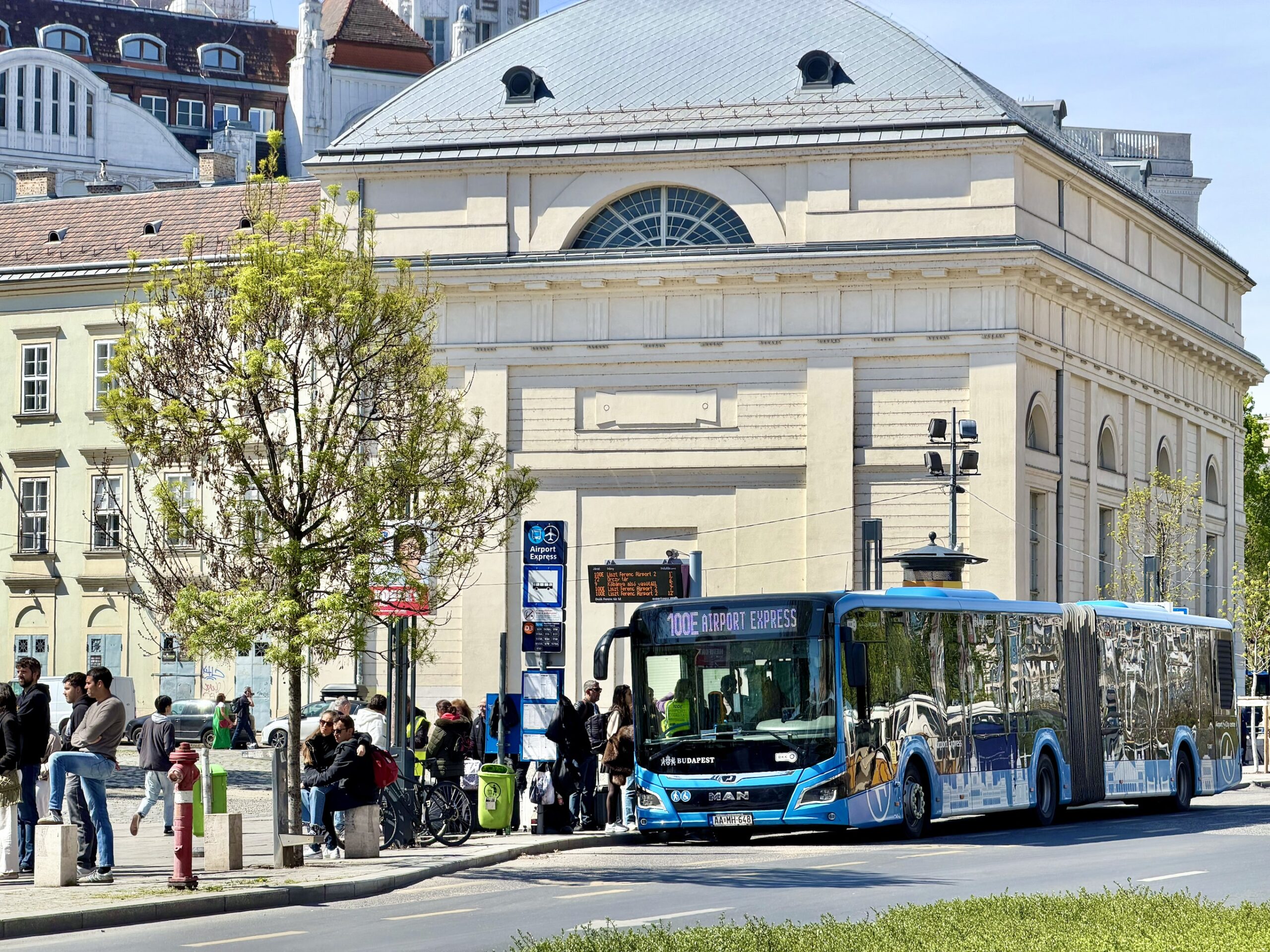
Budapest has genuinely good public transport. And I’m saying that not out of bias from living here and using it every day, but because I’ve been to enough places around the world to have a solid basis for comparison. Locals love to complain about it, and often with reason, but the truth is the network is impressively extensive, services run frequently (some of them 24/7), and prices are reasonable – as long as you know which ticket to buy.
That said, the system has a few pitfalls that I see tripping up visiting travelers on a daily basis. And while the local transport authority – BKK – does publish a very good summary, I figured it would be worth pulling together a comprehensive, detailed guide so you can navigate Budapest’s public transport like a seasoned local. This article is updated continuously, and currently reflects the situation as of spring 2026.
Getting Around Budapest: Your Options at a Glance
Budapest’s transport network covers four metro lines, an extensive tram and bus system, suburban trains, and even a chairlift and funicular – all under one ticketing system run by BKK. For most visitors it comes down to four things: download BudapestGO, buy the right ticket or pass, validate it before you ride, and know the 100E from the airport. The rest of this guide covers each in detail.
The BudapestGO App
I could start by introducing the routes or the network, but in my view the first and most important tip is this: before you even arrive, download the BudapestGO app from the Apple App Store or the Google Play Store. It’s a well-built app, fully available in English, and it makes using local transport vastly easier.
The headline feature is journey planning. You can get from anywhere to anywhere in the city; the app uses real-time vehicle positions, knows about delays and disruptions, and always plans an optimal route. You can save key destinations in advance and set your accommodation as your home address, so from anywhere in the city you’re two taps away from a route home. You can even plan a new route in real time from a vehicle you’re already riding, so if your plans change mid-journey, you’re still covered.
The journey planner shows the exact location of stops, walking routes between transfers, and even tells you which exit to take from a metro underpass to surface in the right spot. For most routes it offers several options – the fastest, the one with fewest transfers, and the one with the least walking.
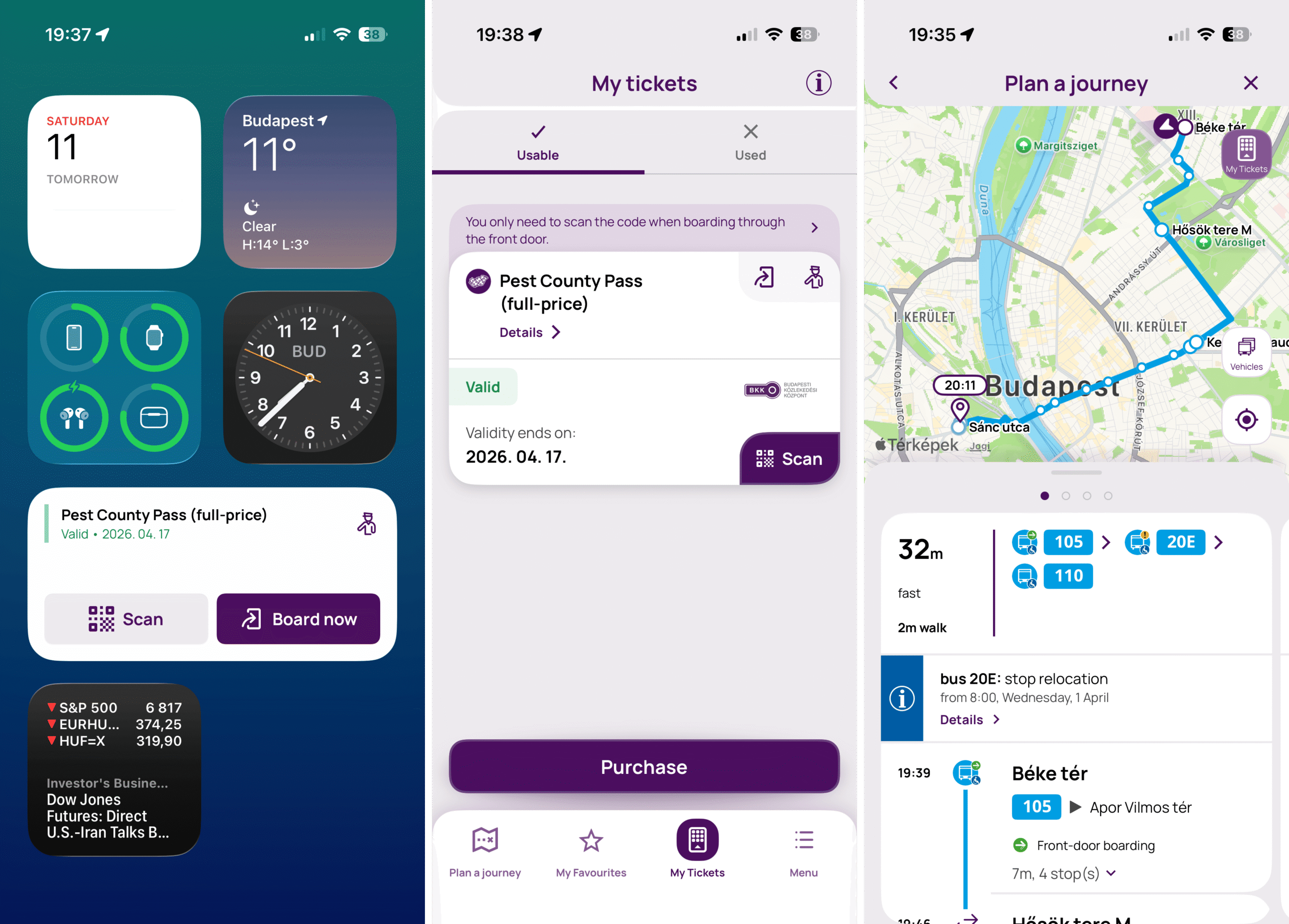
The second standout feature is buying tickets. Every ticket type is sold inside the app, so there’s no need to queue at machines, no risk of finding none nearby (or finding a broken one), and you can pay anytime with your bank card. We’ll cover the specific ticket types in a moment.
If you bought your ticket in BudapestGO, you also have to validate it through the app, which in theory is much easier than fighting your way through a packed bus to reach a physical validator. In practice, though, validation is the thing that really trips up first-time visitors (and even Hungarians from other parts of the country), so we’ll come back to that in detail further down.
Using BudapestGO requires a constant internet connection. The best solution for that is an eSIM. Of the providers I know, Manet eSIM currently has the best Hungary offer – 3 GB for just 2.40 EUR (~$2.6 USD), and 10 GB for 5.90 EUR (~$6.4 USD). Click here to buy! →
Google Maps obviously works in the city too, and it pulls the same real-time vehicle positions BKK provides. Between the two of us, Andrea uses Google Maps almost exclusively day-to-day, while I swear by BudapestGO – I find it handles transfers better, the real-time data feels more accurate, and it suggests less obvious “secret” routes that often turn out to be faster or more efficient.
Budapest Public Transport Tickets and Passes (2026)
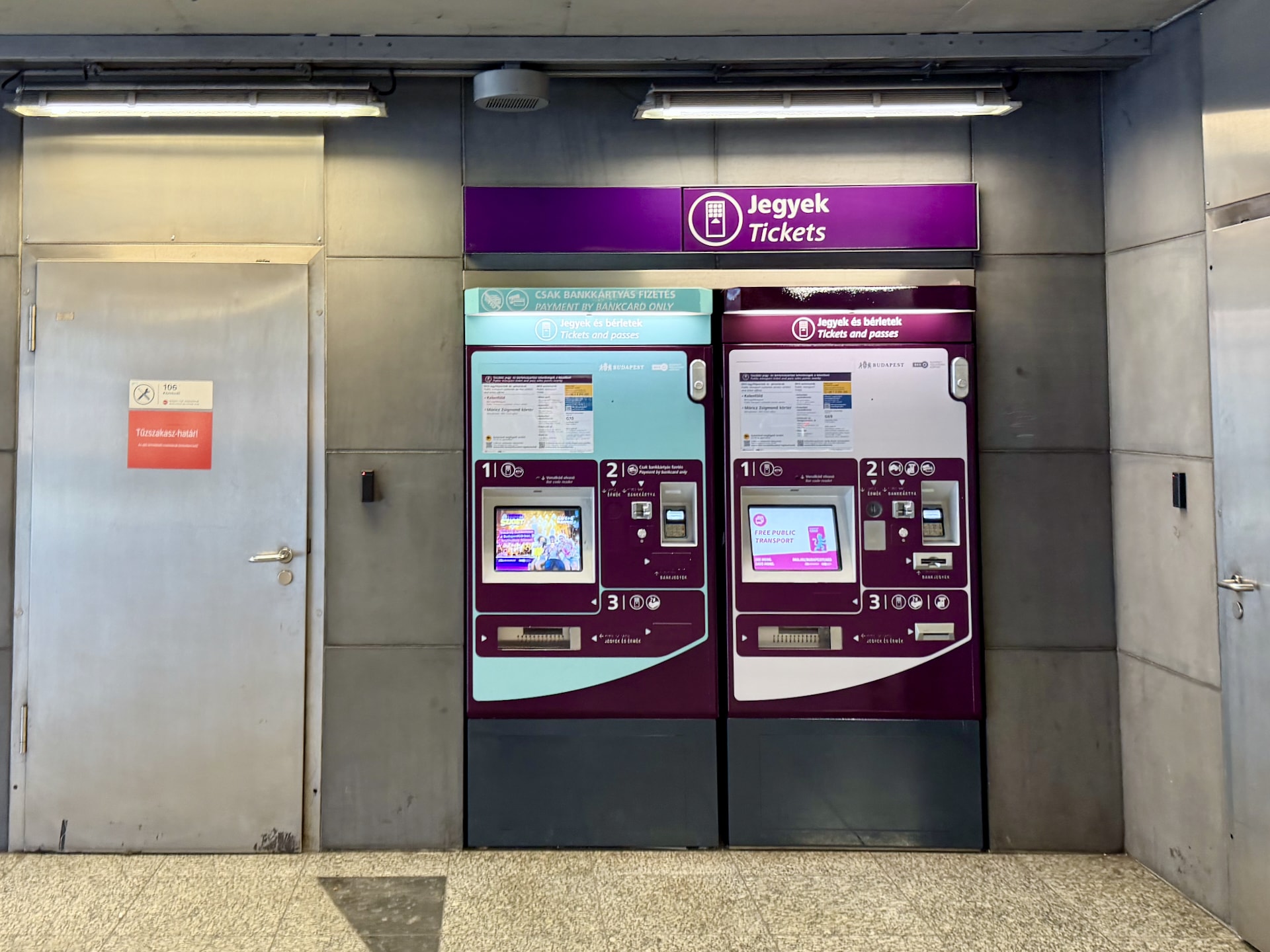
The ticket system and the available options are relatively straightforward. One thing to note up front: Budapest has only very limited time-based ticket coverage, with the emphasis still firmly on single-ride tickets (“vonaljegy”) and various passes. All the tickets and passes below are available from ticket machines (all of them accept credit cards, and most of them cash too), BKK customer service centers, or – easiest of all – through the BudapestGO app mentioned above.
Budapest Transport Ticket Prices (2026)
These are the single tickets currently available:
- Single ticket – 500 HUF (~$1.4 USD): The simplest ticket, valid for one journey without transfers or interruptions. The one exception: you can transfer between metro lines, you just can’t double back the way you came.
- 30-minute ticket – 600 HUF (~$1.7 USD): Lets you transfer as many times as you want between any vehicles within 30 minutes. The clock starts on first validation, and you can validate as many times as you need within that 30 minutes. This also means that if you board your last vehicle in the 29th minute, you can ride it all the way to the end of the line.
- 90-minute ticket – 850 HUF (~$2.4 USD): Same as its 30-minute sibling, just valid for 90 minutes. The same extension rule applies, as long as the last boarding falls within the 90-minute window.
- Block of 10 tickets – 4,500 HUF (~$12.6 USD): Available from machines and the app, this is a discounted (-10%) bundle of 10 tickets. Each one behaves like a regular single ticket.
- Airport shuttle bus single ticket – 2,500 HUF (~$7 USD): We’ll cover airport transit in more detail later. This ticket is valid for a one-way ride on the 100E airport bus.
- Add-on airport shuttle bus single ticket – 1,000 HUF (~$2.8 USD): If you have at least a MONTHLY pass, you can buy this discounted add-on ticket for the 100E.
- From-driver ticket – 700 HUF (~$2 USD): On all front-door boarding routes (more on those later) and a few other lines, you can buy a single ticket from the driver. I really only recommend this in absolute emergencies: it’s significantly more expensive than buying in advance, and an entire bus full of locals will glare at you the whole time as you hold things up – especially since you can only pay with exact cash, no cards accepted at the driver’s window.
Tourist Travelcards and Monthly Passes (2026)
There are two time-based ticket options designed specifically for tourists, but as you’ll see in a moment, the value for money is poor if you’re staying more than three days:
- 24-hour Budapest travelcard – 2,750 HUF (~$7.7 USD): Unlimited rides within Budapest’s city limits for 24 hours.
- 72-hour Budapest travelcard – 5,750 HUF (~$16.1 USD): Identical to the 24-hour version, only for 72 hours. In both cases, the clock starts from the validity date and time you select (date, hour, minute).
- Monthly Budapest pass – 8,950 HUF (~$25 USD): The clear winner if you’re staying longer than three days. Throw in the fact that it unlocks the “Add-on airport shuttle bus single ticket,” and a round trip to the airport ends up just 200 HUF (~$0.6 USD) above the 72-hour travelcard. Valid from the day you select until 2 AM on the same day of the following month.
For any pass, you’ll need to provide an ID number from a photo document – your passport, or an EU member state ID or driver’s license. Useful to know: passes work on any regular public transport vehicle within Budapest’s borders, so if it’s more practical, you can also use trains (handy for the Chinese Night Market, for example) and intercity buses.
Hungary County and Country Passes
A few years ago Hungary’s national public transport went through a major overhaul, and the various operators were corralled into a more or less unified system. This brought in County and Country passes, which are worth a closer look if you’ll be leaving Budapest during your stay.
The BudapestGO app sells two types of passes in this category, and in both cases the monthly version is the shortest duration available (though again, leaving the city only really makes sense if you’re here longer than 72 hours, at which point the monthly pass is already the better deal):
- Pest County Pass – 9,450 HUF (~$26.5 USD): Lets you ride any standard public transport within Pest County (2nd class trains and intercity buses numbered between 300 and 899). Useful if you want to visit Szentendre, the Royal Palace of Gödöllő, or Visegrád.
- Hungary Pass – 18,900 HUF (~$53 USD): A nationwide pass valid on trains (2nd class) and intercity buses to anywhere in the country. Ideal if you want to visit Lake Balaton or one of the wine regions. It also covers local city transport in Budapest plus Csongrád, Debrecen, Ercsi, Esztergom, Érd, and Miskolc.
Free Rides and Discounts (Seniors, Students, Children)
As a general rule, any person over 65 regardless of nationality or legal status can use public transport for free, with a valid photo ID (such as a passport) as proof. Children under 6 also ride free. Student passes and discounts are available to students from EU/EEA member states or Switzerland.
Budapest Card – Worth It or Not?
For tourists, the Budapest Card can be an attractive option under certain conditions – so let’s briefly walk through what it includes and how it works. The information below reflects the revamped Budapest Card lineup that took effect on May 1, 2026, with three different 72-hour variants (Classic, FLEXI, and PLUS) alongside the standard 24, 48, and 96-hour versions.
You’ll find a number of websites promoting or selling some kind of “Budapest Card” – often at a markup over the actual price. The only official online vendor is the BKK website.
What’s Included with the Budapest Card
The Budapest Card now comes in three different “flavors”: the standard Classic (in 24, 48, 72, and 96-hour durations), the FLEXI (72 hours only), and the PLUS (72 hours only). All three include unlimited free travel on Budapest’s public transport network as a baseline – with the exception of the 100E airport line, which still requires the separate ticket mentioned above.
The Classic Budapest Card is the most generous on free admissions: you get more than 30 free entries and discounts at over 50 venues. The headline freebies include a Danube sightseeing cruise (with four options to choose from), free admission to the permanent exhibitions of the Hungarian National Museum, Museum of Fine Arts, Hungarian National Gallery, Kunsthalle Budapest (Műcsarnok), Aquincum Museum, Vasarely Museum, Memento Park, Budapest History Museum, Underground Railway Museum, and others. Beyond the museums, free entry also covers the Pál-völgyi Cave in the Buda hills, the recently restored St. Stephen’s Hall at Buda Castle, the St. Lukács Thermal Bath, a round trip on the Zugliget Chairlift (Libegő), and the heritage trams that run along the Danube on weekends from May to October.
On top of the free entries, the Classic card brings discounts of 10–25% at venues like Madame Tussauds Budapest, Hospital in the Rock – Nuclear Bunker, Museum of Ethnography, the Synagogue on Kazinczy utca, the Dohány Street Synagogue, St. Stephen’s Basilica, and the Zoo. For thermal baths, you get 20% off at Széchenyi, Rudas, and Palatinus.
The PLUS card includes everything in the Classic, plus a few extras worth around 14,900 HUF (~$42 USD) on their own: a round trip between the airport and the city center on the 100E Airport Express bus (5,000 HUF [~$14 USD]), a round trip on the more than 150-year-old Buda Castle Funicular (5,500 HUF [~$15.4 USD]), one free lángos at Molnár’s Lángos (2,200 HUF [~$6.2 USD]), and one free chimney cake at Molnár’s Kürtőskalács (2,200 HUF [~$6.2 USD]).
The FLEXI card is the most flexible, but with the smallest selection: alongside free public transport, you pick 5 of the following 7 perks: a 100E airport round trip, admission to St. Lukács Thermal Bath, a guided walking tour of Pest and/or Buda, a Folklore Show with dinner at GastroCellar, a ride on the Official Budapest Castle Bus, one of four sightseeing cruises on the Danube, or free admission to one of: Budapest History Museum – Castle Museum, Hungarian National Gallery, Hungarian National Museum, or MOL Campus SkyDeck.
The full, current list of free entries and discounts with the Budapest Card is available on the BKK website.
Budapest Card Prices (24 Hours to 96 Hours)
Here are the options if the Budapest Card has caught your interest. These are the official prices, available directly from the provider:
- 24 hours Budapest Card Classic – 17,990 HUF (~$50 USD)
- 48 hours Budapest Card Classic – 23,990 HUF (~$67 USD)
- 72 hours Budapest Card Classic – 29,990 HUF (~$84 USD)
- 72 hours Budapest Card FLEXI – 27,990 HUF (~$79 USD)
- 72 hours Budapest Card PLUS – 39,990 HUF (~$112 USD)
- 96 hours Budapest Card Classic – 38,990 HUF (~$109 USD)
You can buy the card online, in person at BKK offices, or through a number of resellers. If you buy online, you’ll receive a voucher that needs to be exchanged for a physical card at one of these locations:
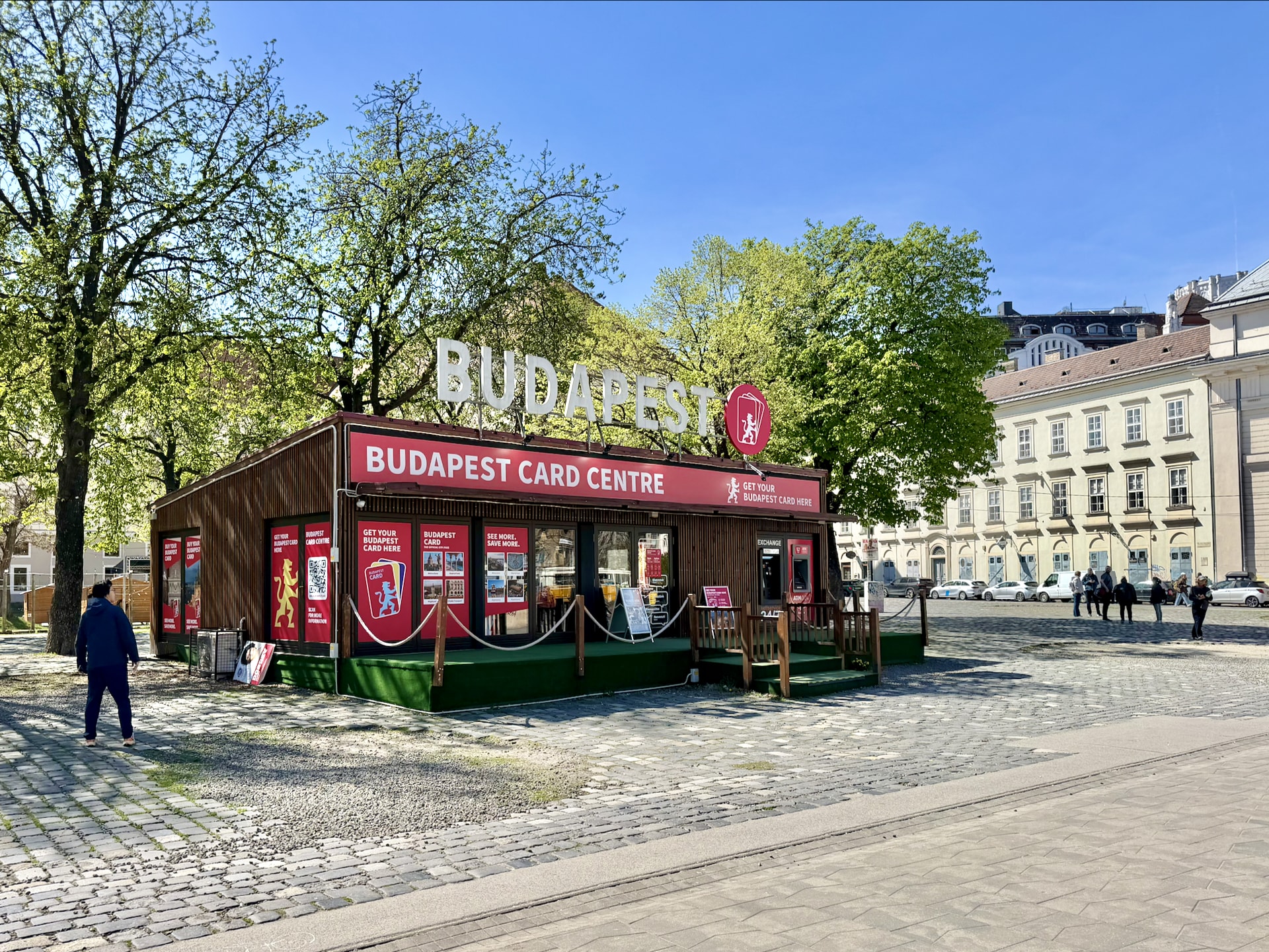
- BKK Customer Service Center – Budapest Card Centre, 1052 Budapest, Városháza Park / Deák Ferenc Square, next to the 100E Airport Express bus stop
- BKK Customer Service Center, Liszt Ferenc International Airport, Terminal 2A
- BKK Customer Service Center, Liszt Ferenc International Airport, Terminal 2B
- BKK Customer Service Center, 1051 Budapest, Deák Ferenc tér M
- BKK Customer Service Center, 1115 Budapest, Kelenföld vasútállomás – Őrmező Exit
- BKK Customer Service Center, 1077 Budapest, Baross tér, M4 Metro Underpass
- BKK Customer Service Center, 1012 Budapest, Déli pályaudvar
As you can see, the easiest approach is to buy online in advance and pick up the physical card at the airport when you arrive.
There’s an ATM at the Budapest Card Centre on Deák tér. I assumed it was the usual “tourist trap” machine, but I tested it for your sake – if you have HUF on a card like Revolut, you can withdraw cash from it fee-free. The currency exchange machine right next to it, on the other hand, uses a terrible rate.
The Honest Math – When It Pays Off
So now for the big question: is the Budapest Card worth it? There are situations where the answer is clearly yes, but you’ll need to move through the city at a brisk pace and pack in a lot of locations. If you’re not really a museum person, getting it just for transport doesn’t make sense – the regular tickets and passes listed above, especially if you’re staying longer than 72 hours, are far better value.
Let’s run through a concrete example with the 72-hour Classic card (one person): without the card, transport would cost 5,750 HUF (~$16 USD), and you’d still need to buy the 100E ticket separately (5,000 HUF [~$14 USD] for the round trip with or without the card), leaving 24,240 HUF (~$68 USD) of card value to recoup. You go on a mid-range sightseeing cruise (5,000 HUF [~$14 USD]), visit the Hungarian National Museum (3,500 HUF [~$9.8 USD]), the Museum of Fine Arts (5,800 HUF [~$16.3 USD]), and St. Lukács Thermal Bath (7,000 HUF [~$19.7 USD]). At this point you’re still slightly behind, but throw in any other free entry (a heritage tram ride, the Zugliget Chairlift, the Pál-völgyi Cave, the Hungarian National Gallery, the Kunsthalle, or any of the 30+ free venues) and you’ve broken even.
The FLEXI card sits in an interesting middle ground: at 27,990 HUF it’s actually 2,000 HUF cheaper than the Classic, but you only get 5 perks out of 7 to choose from (instead of dozens of free entries). It only makes sense if you know in advance you won’t have time for many museums and want to lock in specific experiences – like the airport round trip plus a walking tour, a cruise, and one bath visit.
The PLUS card is much more useful than it used to be. The 10,000 HUF gap over the 72-hour Classic buys you a 100E round trip (5,000 HUF), a Buda Castle Funicular round trip (5,500 HUF), a free lángos (2,200 HUF), and a free kürtőskalács (2,200 HUF) – about 14,900 HUF of value if you actually use everything, so a net gain of around 4,900 HUF on top of the regular Classic perks. It’s a genuine bargain if you’d take the 100E from the airport, want to ride the Funicular, and don’t mind eating Hungarian street food at specific vendors. (Whether those vendors serve the best lángos in town is another question – we certainly can point you to better ones.)
Bottom line: take a few minutes to sit down and do the math on whether the Budapest Card actually beats regular tickets and passes for your specific trip. To really see meaningful savings on the Classic, you’d need to visit a lot of otherwise-paid attractions that are free with the card – which might also turn your visit into a forced march. Even with the 96-hour version, you should plan on at least two paid attractions per day to make it worthwhile.
Ticket Validation – The One Thing You Can’t Get Wrong
If anything in Budapest public transport is genuinely confusing, it’s ticket and pass validation – which traces back to the fact that even in 2026, there’s still no truly universal electronic ticketing across the city.
How you validate depends on what kind of ticket you have (paper or digital BudapestGO) and what type of vehicle you’re on. You really can’t afford to skip or forget this part, because BKK inspectors can show up literally anywhere on any vehicle at any time. If you don’t have a valid ticket or pass, the on-the-spot fine is 12,000 HUF (~$34 USD), payable in cash or by card; if you pay later, it jumps to 25,000 HUF (~$70 USD) and has to be settled in person.
Validating Single Tickets
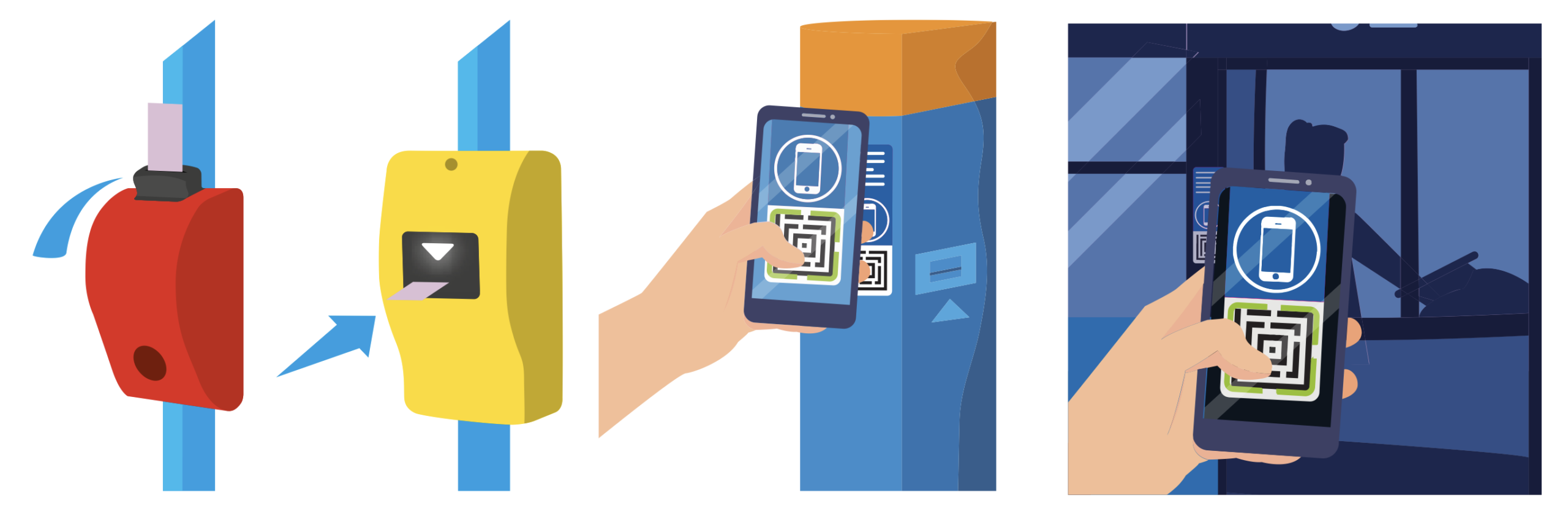
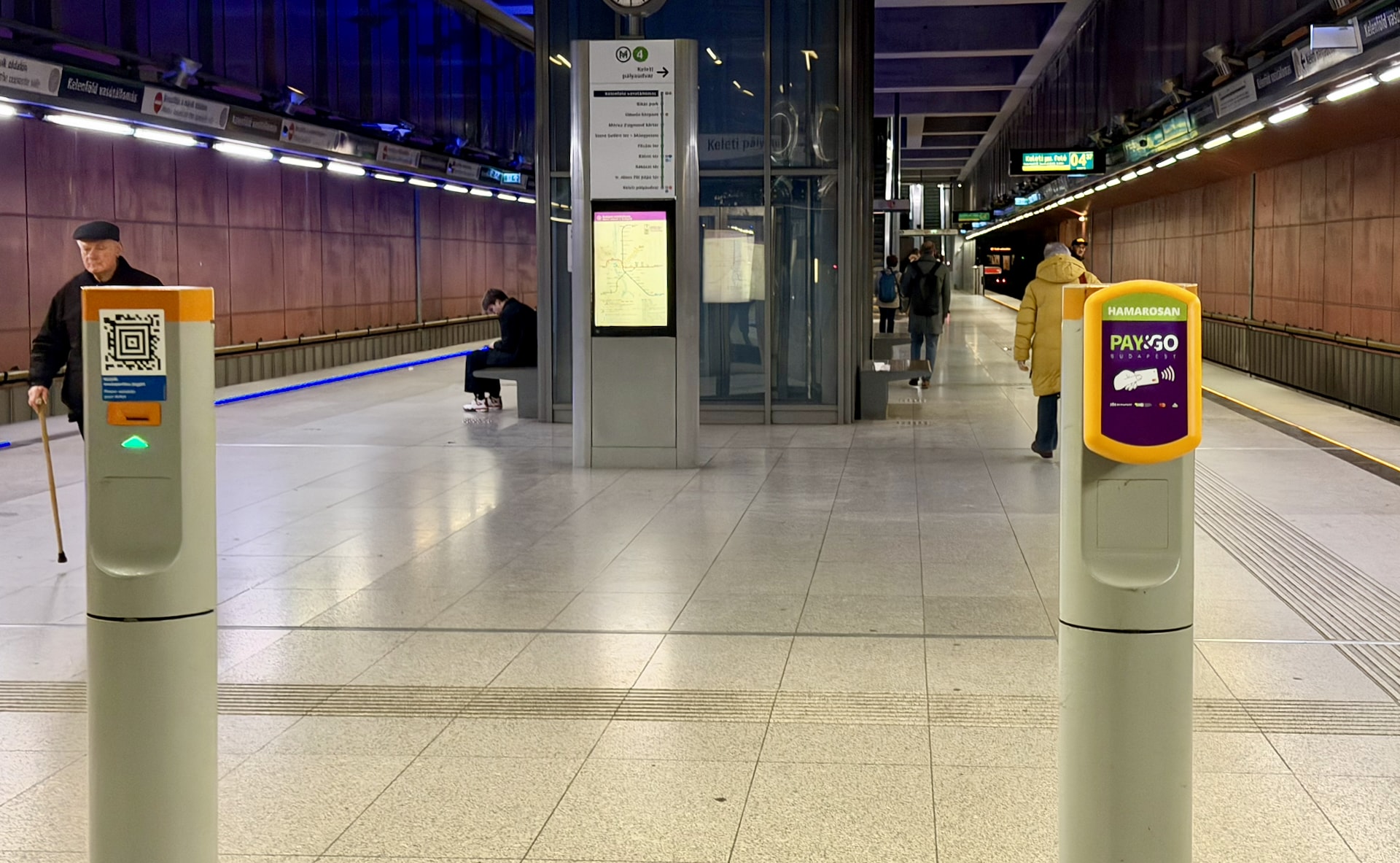
Let’s start with single tickets – the standard single-ride ticket, the 30- and 90-minute tickets, and the 100E ticket. These always need to be validated when you board. If your ticket is digital, use the BudapestGO app: scan the QR code posted at metro entrances, or by the doors (on the outside) of buses and trams, or next to the driver. If inspectors are stationed at the metro entrance, show them the validation screen that appears on your phone. The same procedure applies on front-door boarding routes (more on those soon) – there you show the screen to the driver.
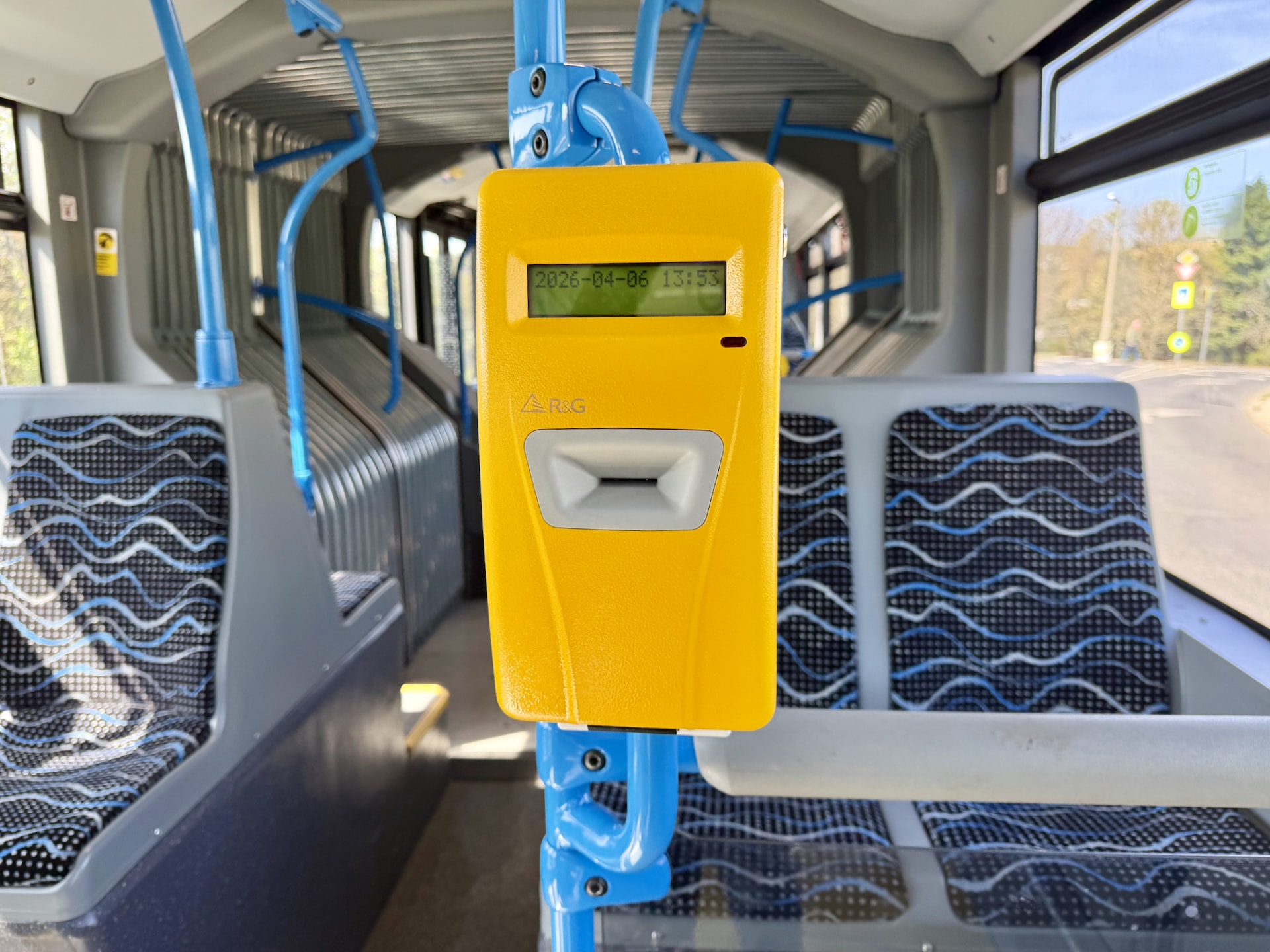
If you have a paper ticket, insert it into the validator. You’ll find these at every metro entrance and near every door on buses and trams. On front-door boarding routes, use the validator next to the driver. There are “modern” yellow validators that beep when validation succeeds – assuming your ticket isn’t too crumpled and the device isn’t having a bad day. On the truly ancient buses dragged out of the depot for replacement service, you may run into the retro red validators: push the paper ticket into the black slot on top, then pull the lever-slot toward you – this just punches a hole in the ticket.
Validating Passes
Passes are easier: you don’t need to validate them on every journey. For metros, you just walk in; for buses and trams, you just board. The exception is front-door boarding routes. On those, if your pass is digital, scan the posted QR code with BudapestGO the same way, or use the “Board now” button in the app or widget and select the vehicle (it lists nearby ones based on GPS). Show the resulting screen to the driver. If you have a paper pass or a Budapest Card, just hold it up to the driver.
What if an Inspector Shows Up?
You can run into inspectors anywhere, but they most often appear at metro entrances and inside metro stations near the escalators. If you’re heading into the metro and there’s an inspector posted there, validate your paper ticket clearly and visibly, then show it to them. For a paper pass, just hold it up. If you have a digital BudapestGO pass (still entering the metro), scan the QR code and show the resulting screen, or in the widget/app press the small inspector button to display a QR code that the inspector can scan.
If you’re exiting the metro, show the validated paper ticket (or the pass itself if you have one) – the inspector will scan the QR code on it. For digital tickets/passes, use the same inspector QR-code icon described above.
If an inspector boards any other vehicle, the procedure is the same as exiting the metro: show the validated paper ticket, paper pass, Budapest Card, or the QR code in BudapestGO. Don’t try to game the system by validating at the last second when you see them coming – they recognize the trick, and there’s no guarantee you’ll reach a working validator in time. Digital validation QR codes don’t exist inside vehicles either, only next to the driver. An unvalidated ticket is treated the same as having no ticket at all – meaning you get fined. Sure, inspectors are human too, and you might catch one who just tears up your unvalidated ticket and lets you off – but since one on-the-spot fine equals 24 single tickets, I really wouldn’t risk it.
There’s one more special case: the 100E airport add-on ticket. In that scenario, select the specific ticket in BudapestGO and scan the QR code by the door, then show the screen to the inspector – who will also ask to see the monthly pass the add-on was bought for.
Pay&GO – Tap Your Bank Card and Go
This is a genuine sore spot for any Budapest local: in a European capital, the rollout of contactless tap-to-pay has somehow been very, very limited. I still remember being in Kyiv with friends back in 2019, looking on with a mix of envy and disbelief that even they had it. Well, here we still don’t.
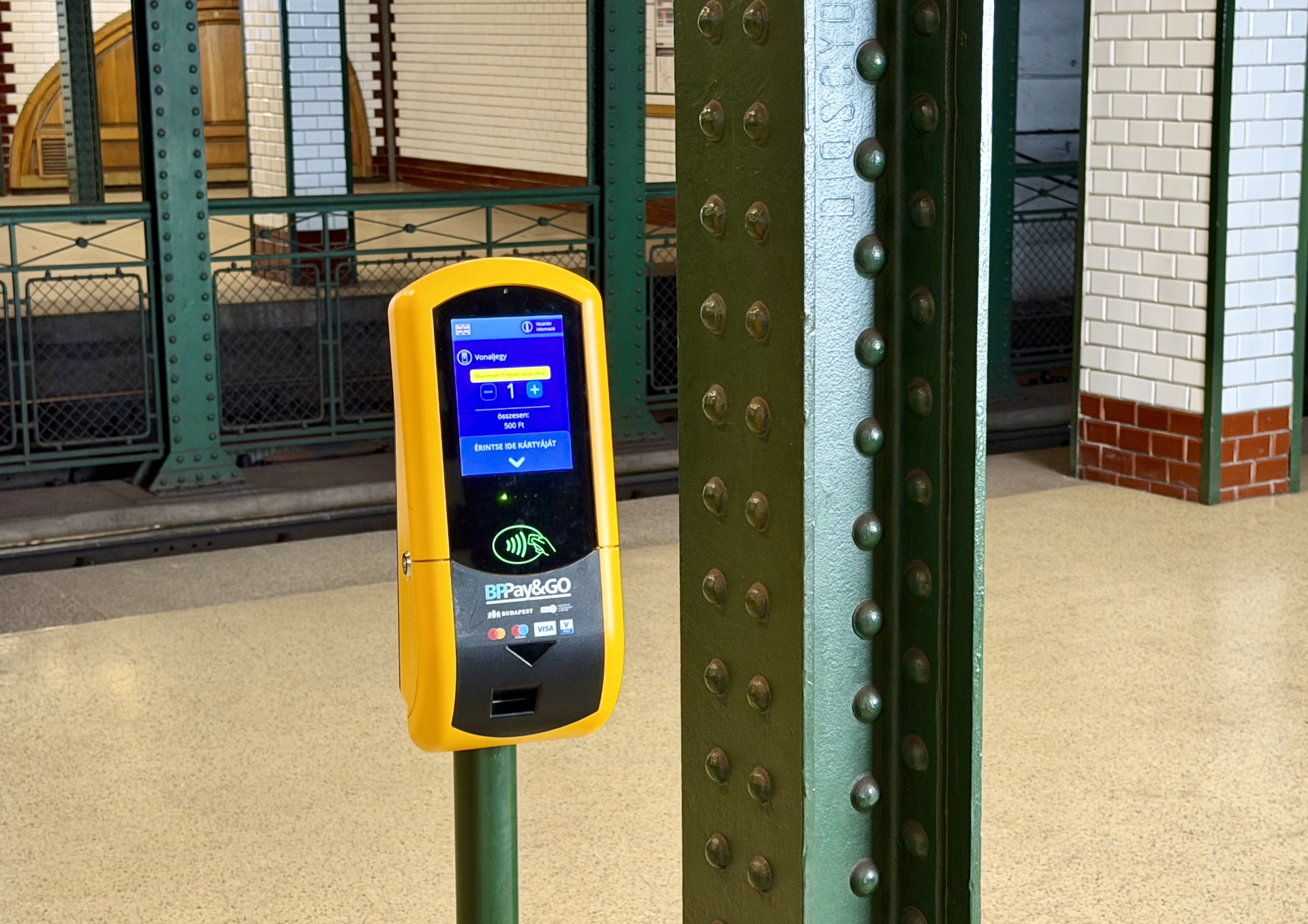
Fortunately this is changing, even if slowly. Pay&GO is available on the 100E airport express if you’re traveling on the standard 2,500 HUF (~$7 USD) ticket – just tap your card on the reader. You can buy several tickets at once this way; just set the quantity on the display before tapping.
Pay&GO also works on the metro lines – tap your card on the gates as you enter. The system is being rolled out across the city slowly, with all metro lines already online from April 22, 2026 and then the rest of the network by 2028. Until then, only single tickets are sold this way, but once installation wraps up, the daily, weekly, and monthly caps that work well in other cities will be introduced (the system charges your card up to a maximum amount per period, after which it automatically counts as a pass).
If you ride this way and an inspector boards, just hand them the card – they’ll scan it (don’t worry, it doesn’t charge anything) and see that you have a valid ticket. The service also works with digital wallets, but in that case you need to remember to give them the same device you boarded with (if you tapped in with an iPhone, don’t show the Apple Watch), and make sure the device hasn’t run out of battery in the meantime.
Getting to and from Budapest Airport
Most likely your first encounter with Budapest public transport will be when you want to get from Budapest Liszt Ferenc International Airport into the city. So here’s a quick rundown of the options. (A longer, more detailed article is in the works – check back later, or sign up for the newsletter!)
Embarrassingly, even in 2026, there’s still no rail link between Budapest Airport and the city center. We felt downright envious in Sofia when we could just take the metro into town. Construction is supposedly starting any day now, but locals have been hearing that for decades, so we’re treating the news with a dose of skepticism.
100E Airport Express – Our Recommendation
The most practical public transport option is the 100E airport express bus. As mentioned above, you’ll need either an “Airport shuttle bus single ticket” (2,500 HUF [~$7 USD]) or – if you have a monthly pass – the “Add-on airport shuttle bus single ticket” (1,000 HUF [~$2.8 USD]). It’s also one of the few routes where Pay&GO works (with the standard, more expensive ticket).
The bus stop sits between the Terminal 2A and 2B exits at the arrivals level, clearly signposted, and there’s usually a bus already waiting, so it’s easy to spot. The easiest approach is to buy your ticket in advance through the BudapestGO app, but there’s also a ticket machine on site.
The bus runs 24/7, though much less frequently in the early morning hours (every 30–45 minutes) than during peak times (every 5–6 minutes). It heads straight from the airport into the city center. The first stop is Kálvin tér (transfer to M3 and M4 metros), the second is Astoria (M2 metro), and the terminus is the de facto city center, Deák Ferenc tér (M1, M2, and M3 metros).
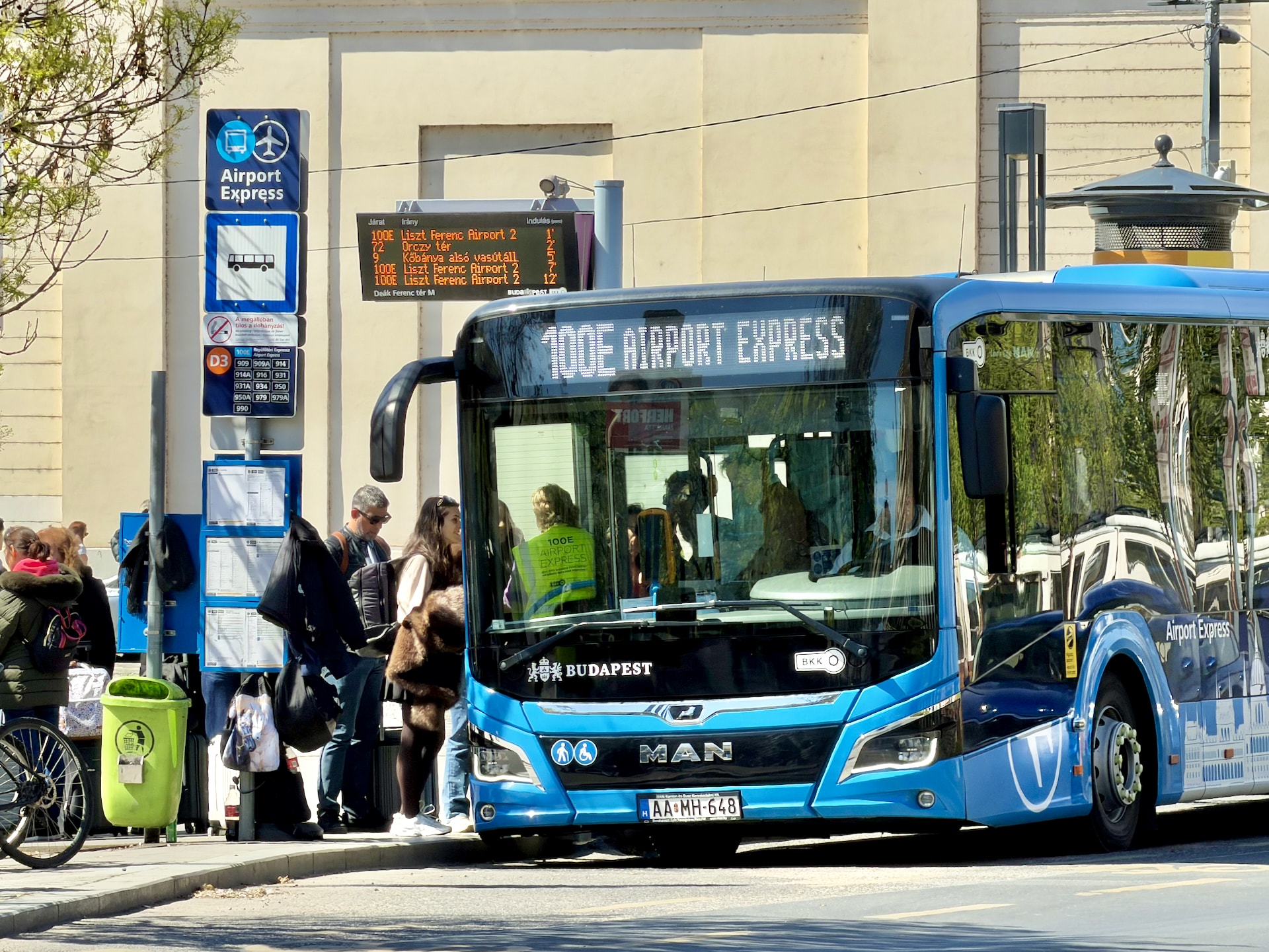
The official journey time is 32 minutes, and in practice it rarely takes longer unless something unusual is happening. So in just over half an hour you can be in the city center with no transfers, for 2,500 HUF (~$7 USD) at worst.
Going back to the airport, the same stops apply. The boarding point at Deák tér is on the opposite side from where you arrived – in front of City Hall, next to the big red Budapest Card Centre. On the return trip, the bus stops between the 2A and 2B entrances at the departures level; before arrival they announce which terminal will be in which direction.
200E + M3 Combo – The Budget Option
The budget option is the 200E airport bus combined with the M3 metro. You can board the 200E with any pass, single ticket, or Budapest Card – no special airport ticket or add-on required.
The bus departs from the same spot as the 100E. From the airport, it takes about 20 minutes to reach Kőbánya-Kispest M (a major transit hub), which is one of the M3 metro’s terminuses. From there you transfer to the metro, which takes another 20 minutes or so to get you to Deák Ferenc tér. The total trip runs 40-45 minutes. If you’re using single tickets, you’ll need two (you have to validate a fresh one when transferring), but any pass or Budapest Card covers the whole journey.
The 200E stops twice at Kőbánya-Kispest M station – get off at the first one. The transfer to the M3 metro is clearly signposted from there.
The return trip is the same: M3 metro, then transfer at Kőbánya-Kispest to the 200E.
miniBUD Shuttle and Private Transfers
We’re not big fans of these shared-minibus airport transfers — you’re already worn out when you arrive, and it can be infuriating that your address always seems to end up last on the route.
The transfer costs 17,990 HUF (~$50.5 USD) for one person round trip, but the bigger your group, the cheaper the per-person price. On arrival, the service desk is well signposted and you can buy a ticket on the spot, but it’s also possible to book online in advance. Depending on how many addresses are ahead of yours and where they are, the trip will take roughly 30–50 minutes. On the return leg, the minibus comes to your specified address at the agreed time.
Taxi from Budapest Airport
And finally, the classic taxi. Budapest Airport’s official taxi partner is Főtaxi (one of the city’s taxi companies), but the airport is also served by Uber (in cooperation with Főtaxi), and you can call a Bolt taxi just as easily.
Főtaxi has a kiosk right at the exit, usually with a long queue snaking out from it. When you reach the front, tell or show the dispatcher the exact address – they’ll print a small slip with the taxi’s license plate and the estimated total. Find the taxi and you’re off. Important: Budapest taxis have fixed rates, but those rates are based on distance and time, so the final amount on the meter can deviate slightly from the slip. Every taxi must accept card payment by law – don’t believe drivers who claim otherwise.
If you prefer apps, you can try Uber. These are standard yellow taxis in the city too. They have their own designated waiting area near the bus stops, between the 2A and 2B exits at arrivals. Hail an Uber the usual way through the app (and if for some odd reason you don’t have the Uber app yet, this link gets you 50% off your first 5 rides!), find the car by its license plate, and you’re on your way. Since Uber here is also a regular taxi, the same rule applies: you’ll see an estimated price in the app, but the meter calculates the final fare and that’s what gets charged to your card via the app.
The same goes for Bolt, which has a similarly solid app. You hail a car through the app; they don’t have a dedicated waiting area, but they wait outside the terminal and usually arrive within a few minutes. As you exit, you’ll see numbered zones marked on the columns just past the first lanes – it’s worth messaging the driver to let them know which zone you’re in. Bolt also counts as a regular taxi here, so the pricing rules are the same as for Főtaxi or Uber.
So how much will it actually cost? It depends heavily on traffic, but expect around 10,000-12,000 HUF (~$28-34 USD) to Deák Ferenc tér, with a journey time of 30-40 minutes depending on conditions.
Metro Lines – The Backbone
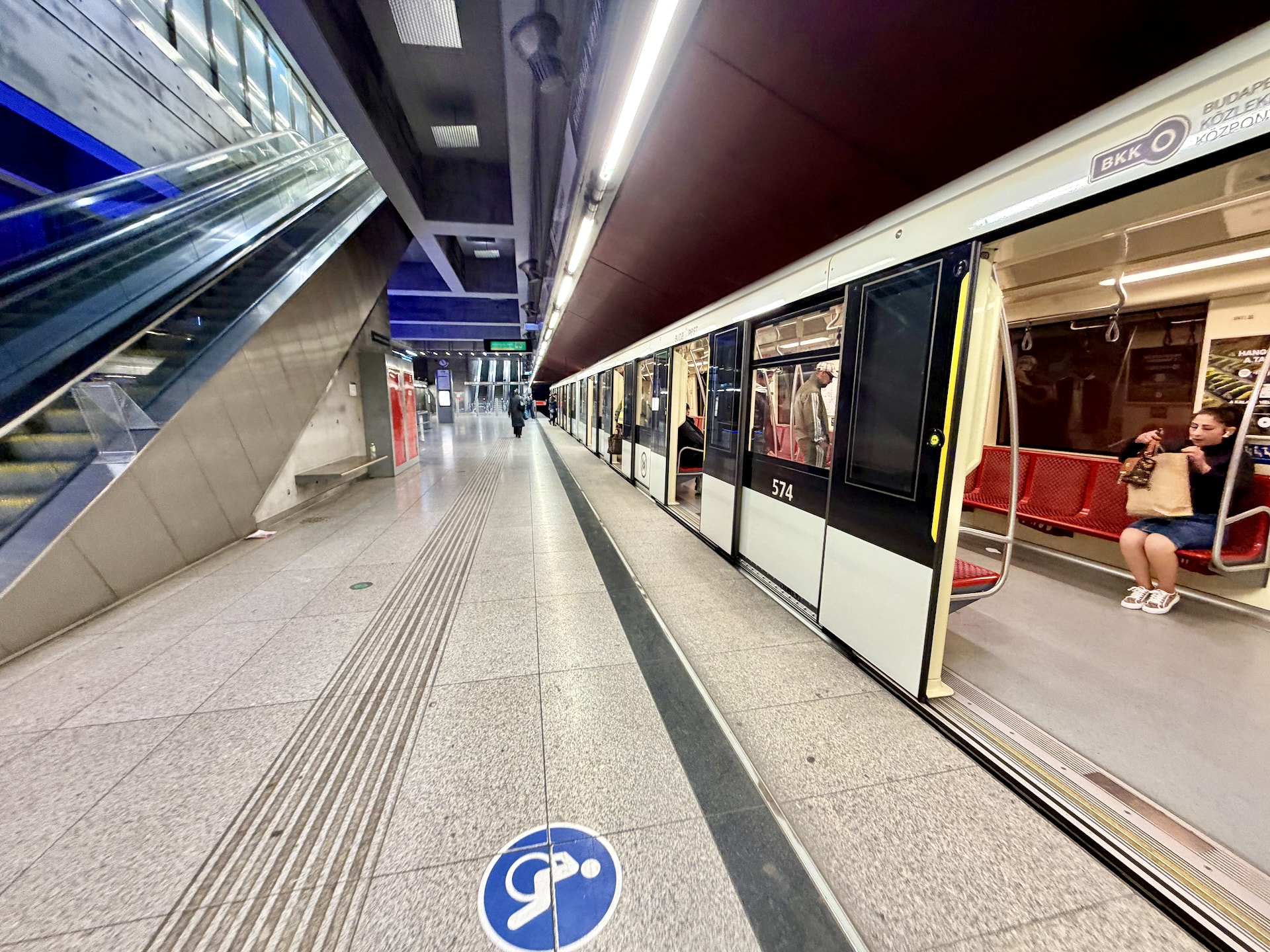
Here’s a quick overview of the city’s main public transport lines, starting with the metro network. Budapest has four metro lines, distinguished by both number and color (the line color, not the trains themselves). It’s not unusual for a local to refer to the M3 as the “blue metro” or the M2 as the “red metro.” Curiously, though, the M4 is never called the “green metro,” and the M1 isn’t called the “yellow metro” – in fact, it’s not even called “M1” or considered a metro, but rather the “kisföldalatti” (little underground)!
M1 (Yellow) – The Heritage Line
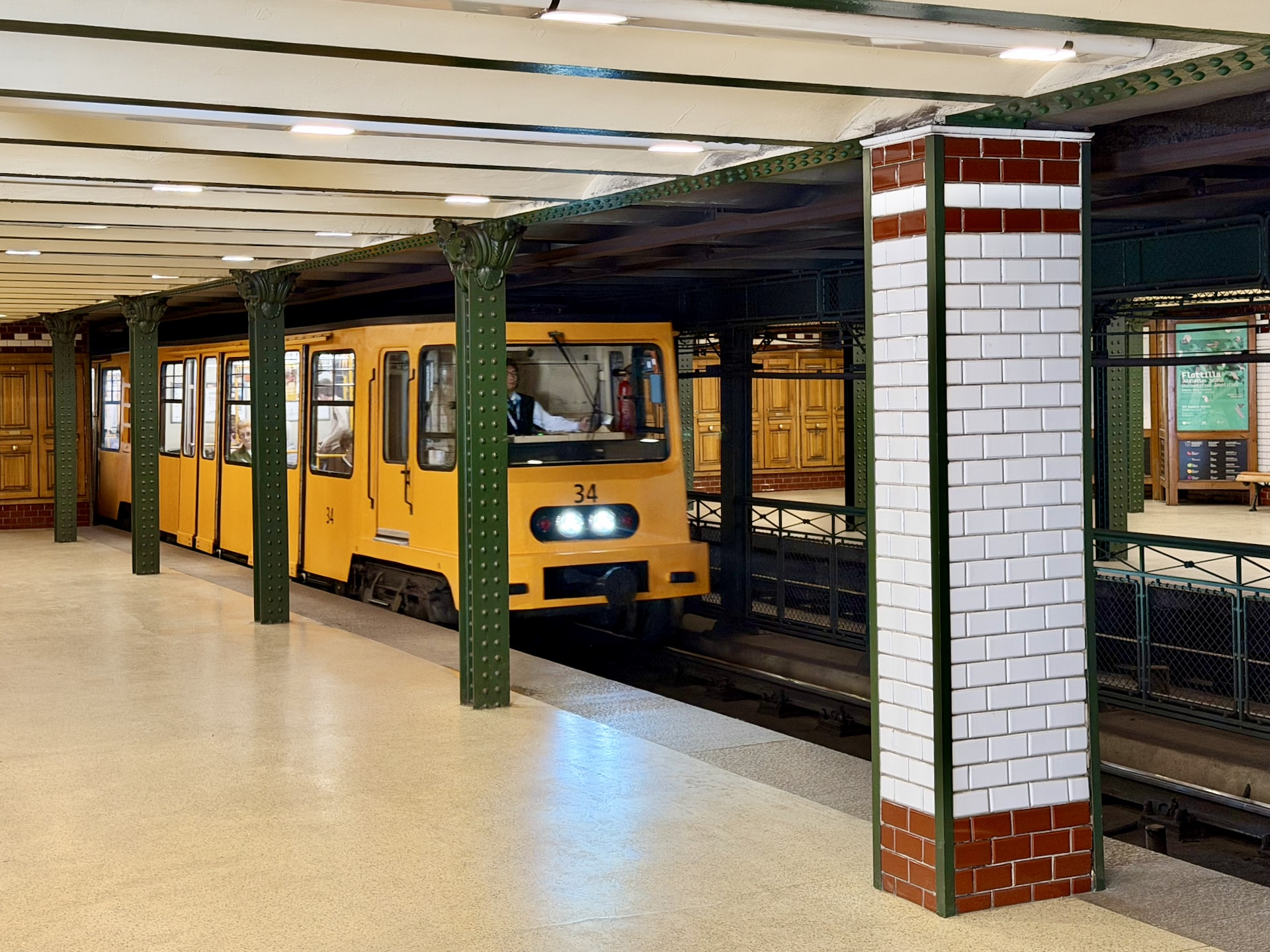
Budapest’s – and continental Europe’s – first underground transit line, opened on May 2, 1896. Its official name is the Millennium Underground Railway. The line is short, running from Városliget (City Park) along Andrássy út, through Deák tér, all the way to Vörösmarty tér. It’s distinctly different from the others in design and rolling stock: it sits much shallower (essentially just below street level), and runs smaller, yellow, shorter trains (hence the “little underground” nickname).
For such a short line, it covers a remarkable number of historically significant locations: Városliget and Széchenyi Thermal Bath, Heroes’ Square, the Opera House. It runs every 3-4 minutes during peak hours, but service stops before midnight and only resumes early in the morning.
M2 (Red) – The East-West Line
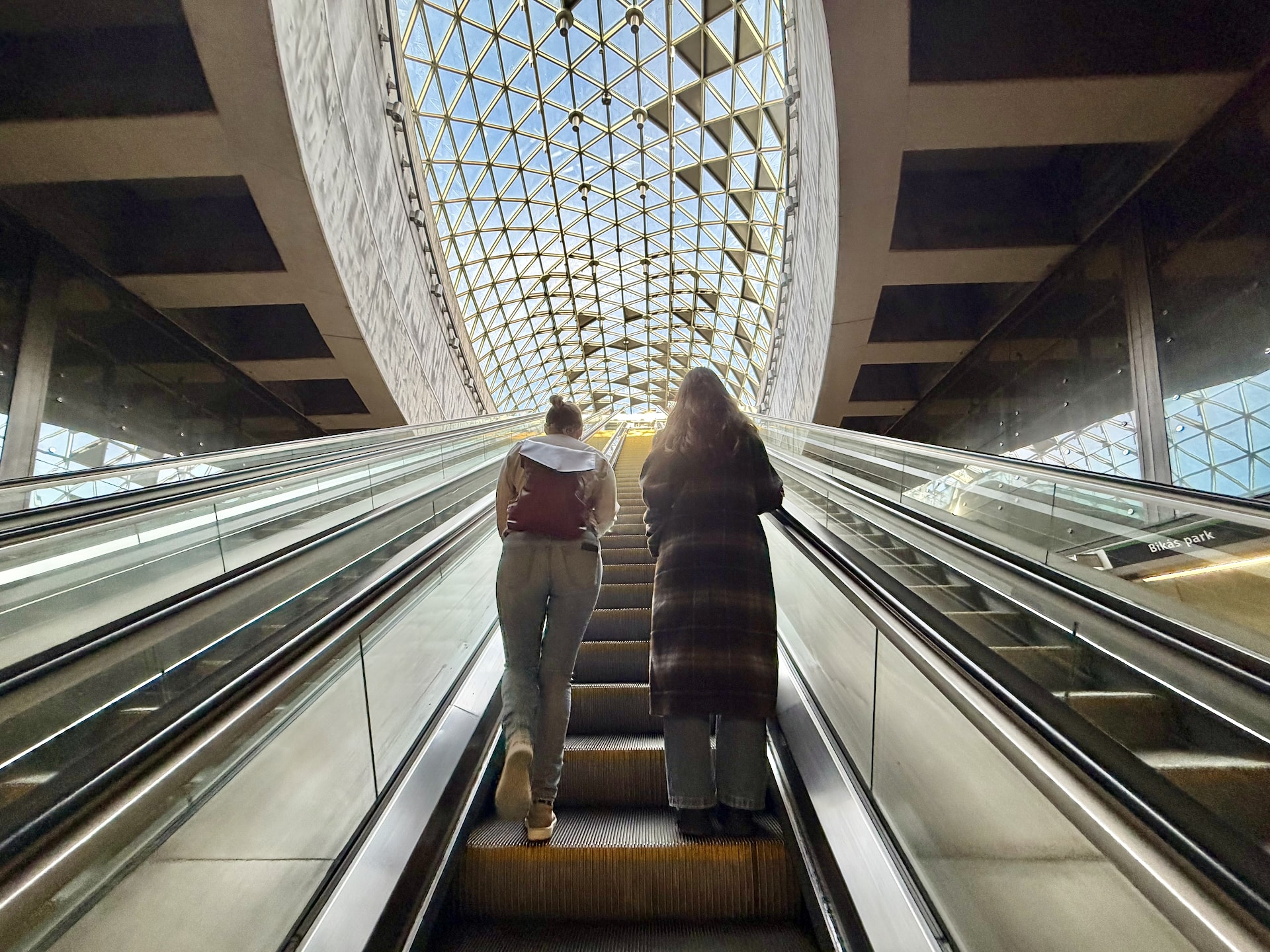
The second-oldest metro line, with classic Soviet-style deep stations along most of its length (Széll Kálmán tér is almost 40 meters / 131 ft below ground!). It reached its current length in 1972, and its most recent renovation was completed in 2007. It runs every 3-4 minutes during peak hours, until 1 AM on weekends and midnight on weekdays.
It’s one of the two metros that crosses to the Buda side – running between Déli pályaudvar and Örs vezér tere. Key stations include Déli pályaudvar, Széll Kálmán tér (for getting up to Buda Castle), Batthyány tér (Danube panorama from the Buda side), Kossuth Lajos tér (Parliament), Deák Ferenc tér, and Keleti pályaudvar.
M3 (Blue) – The North-South Line
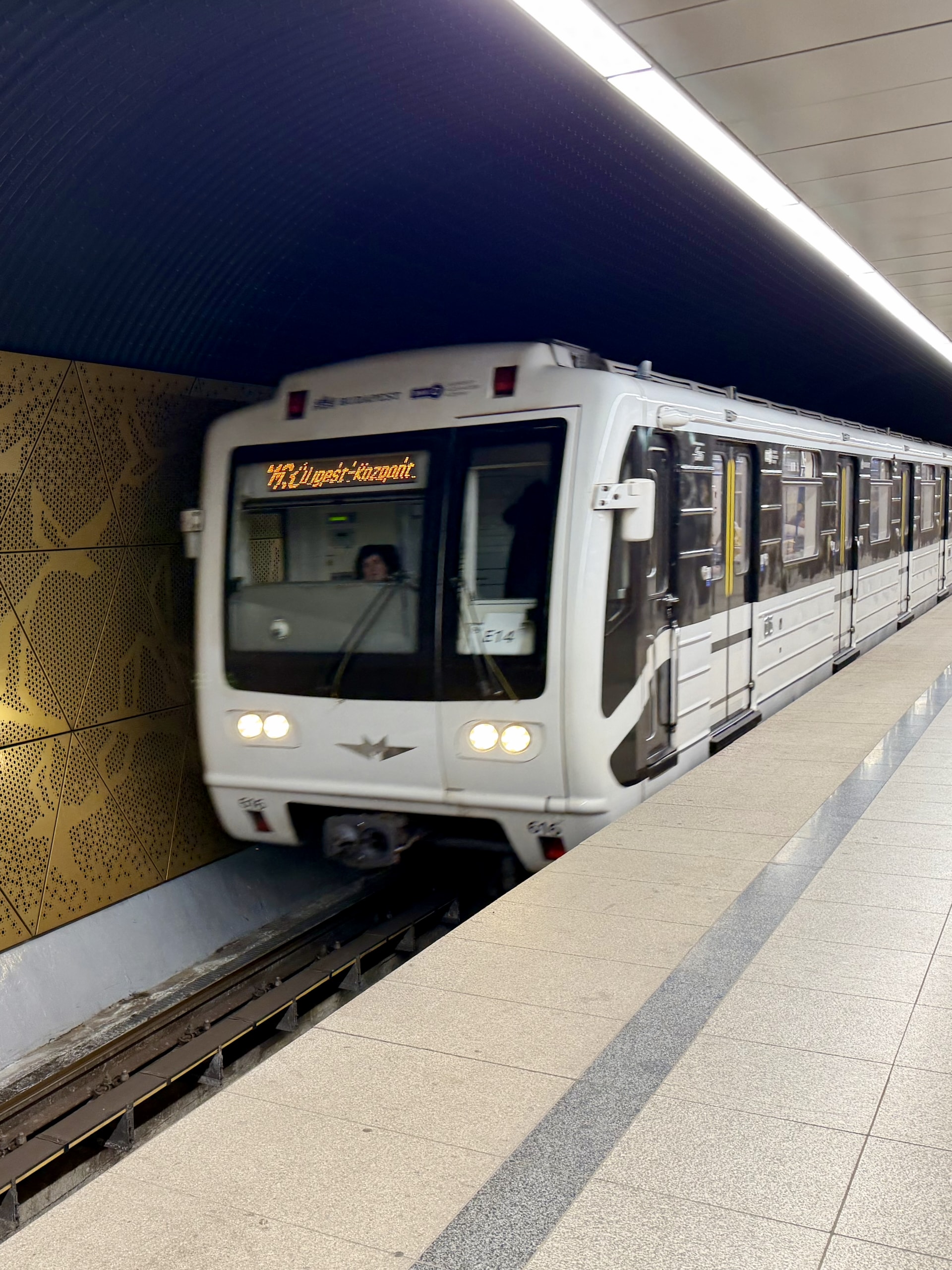
The longest metro line in Budapest, built between 1970 and 1990 and visually very similar to the M2 along its central section. Its renovation wrapped up in 2023, and if you want to trigger a local, ask them what they think of the “refurbished” trains.
From a tourist perspective, it has fewer headline stations – it’s more of a daily-use line: it stops at Nyugati pályaudvar, Deák tér, and of course Kőbánya-Kispest (200E bus). Like the M2, it runs every 3-4 minutes during peak hours, with extended service until midnight on weekdays and 1 AM on weekends.
M4 (Green) – The Newest Line
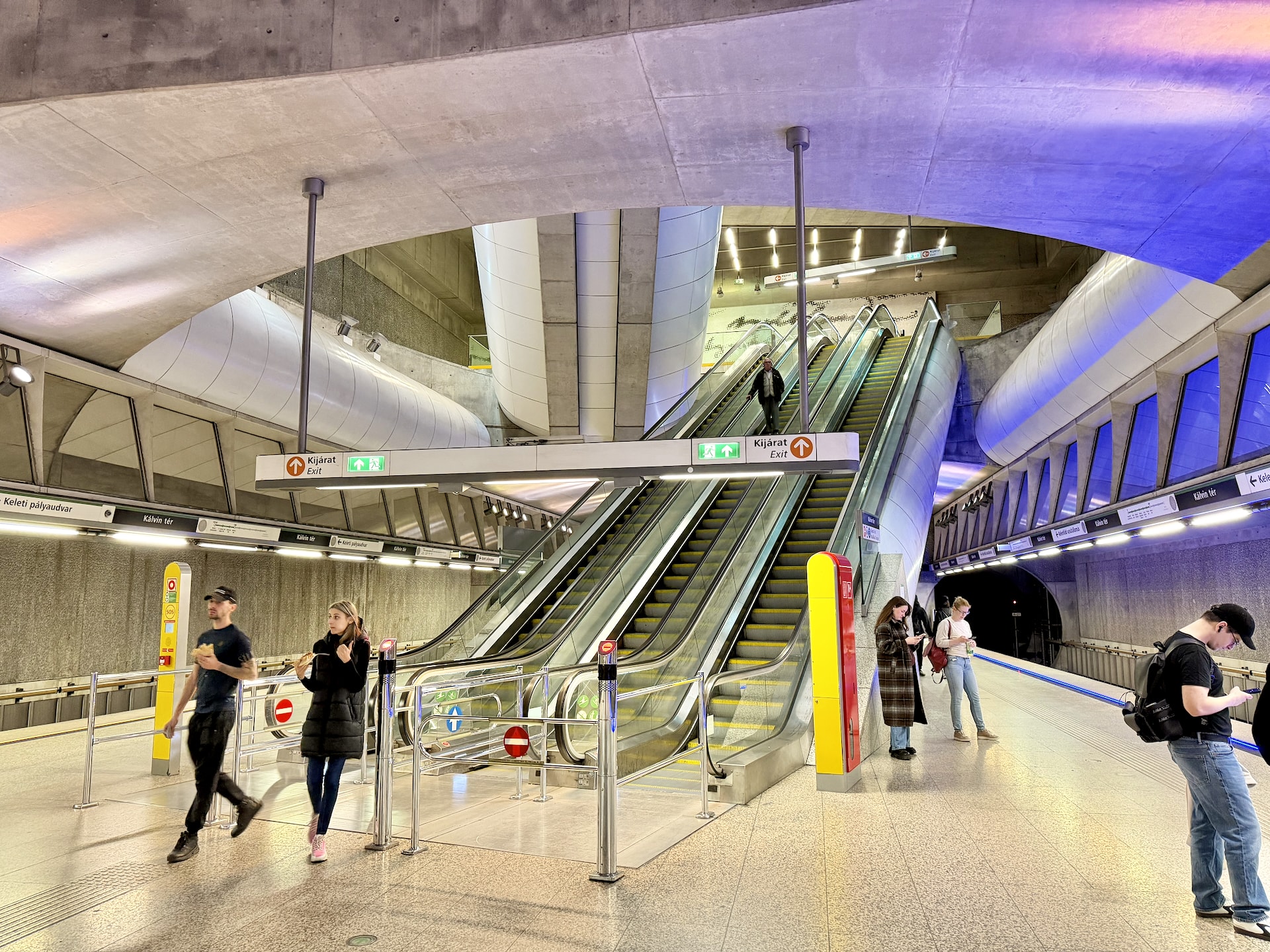
Opened in 2014, and arguably a contender for the world record in longest planned-and-built metro line (the original decision to start preparations for construction in 1978 was made back in 1976). But after such a long wait, Budapest went all in: many of the stations are architecturally striking (and have won several awards), with five Hungarian architecture firms designing what amounts to concrete cathedrals.
This line also crosses to Buda, connecting Kelenföld railway station (trains to Lake Balaton) with Keleti pályaudvar (trains in many directions), passing through Gellért tér (the currently-under-renovation Gellért Thermal Bath), Fővám tér (Great Market Hall), and Kálvin tér (100E) along the way. It runs every 2-3 minutes during peak hours, with the same extended operating hours as its two “bigger metro” siblings.
Budapest Trams, Buses, and Trolleybuses Worth Knowing
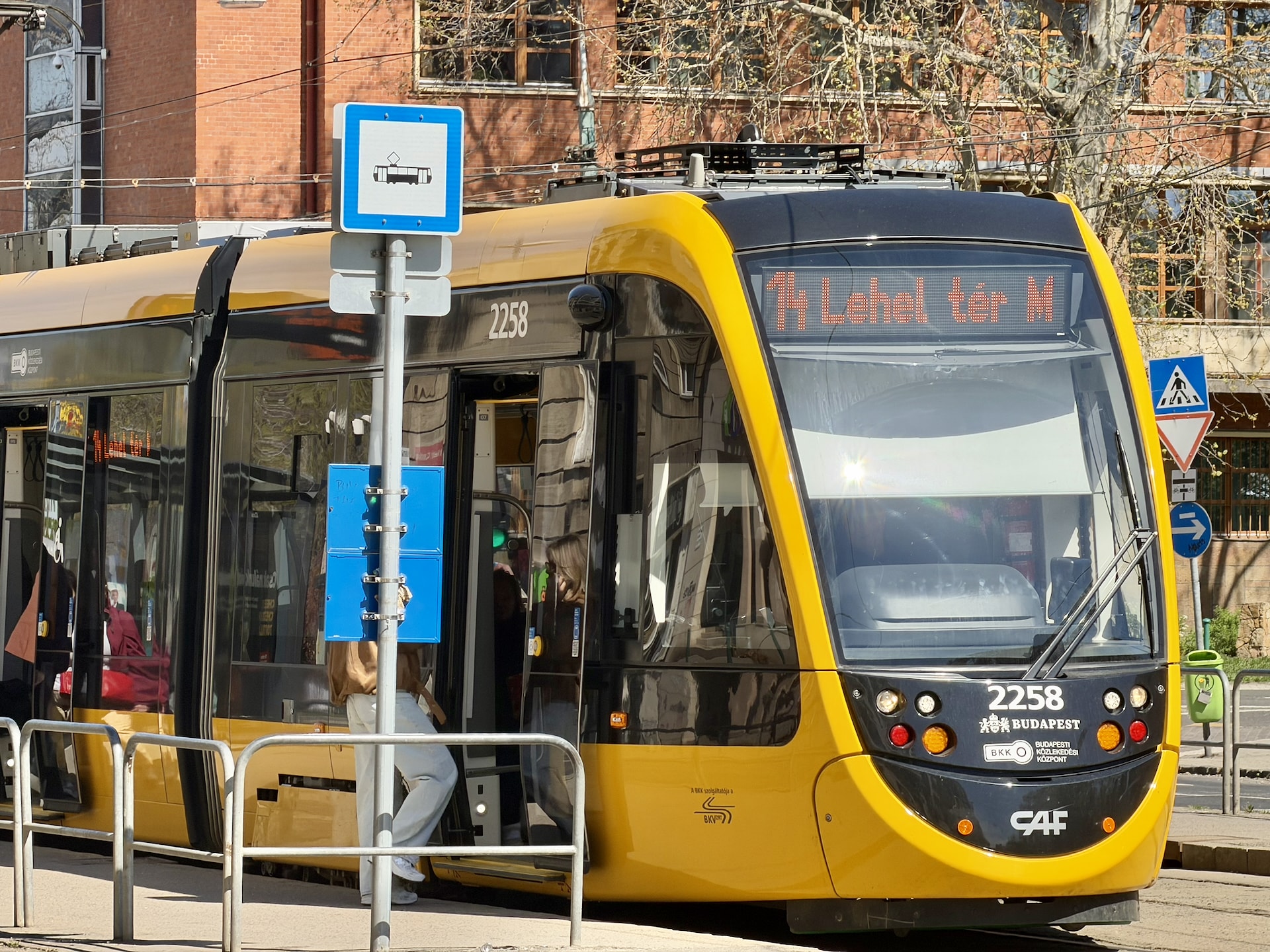
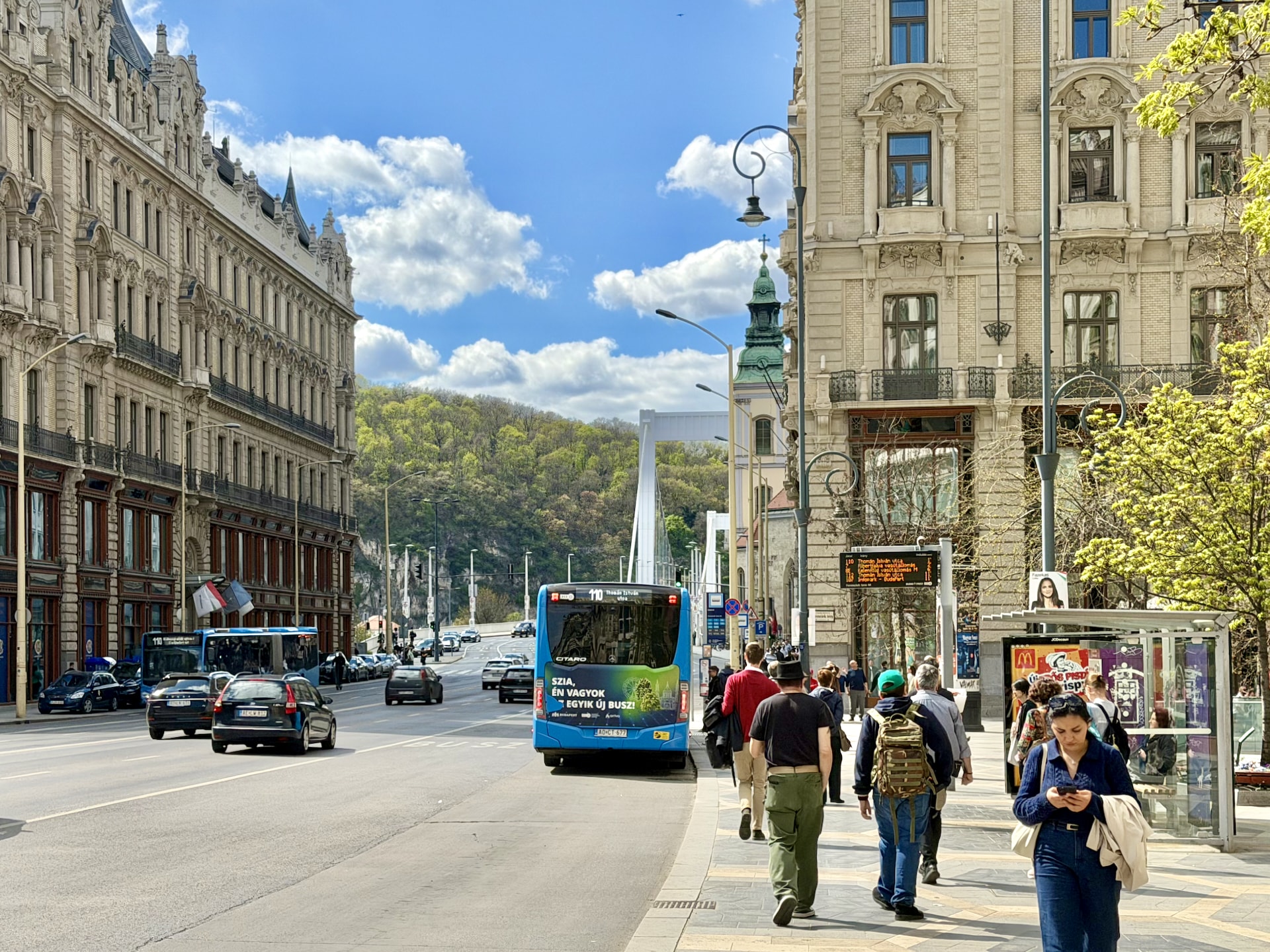
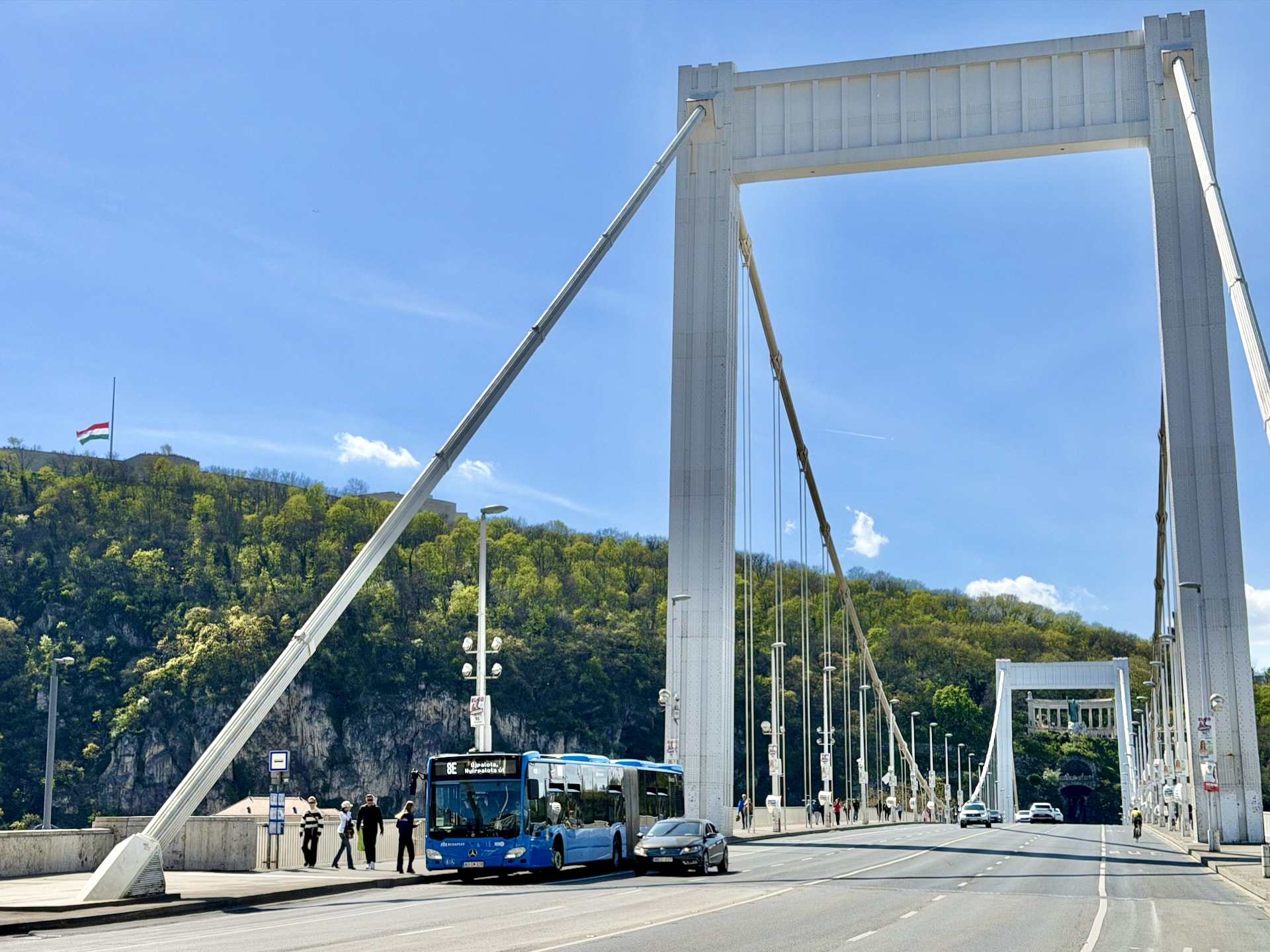
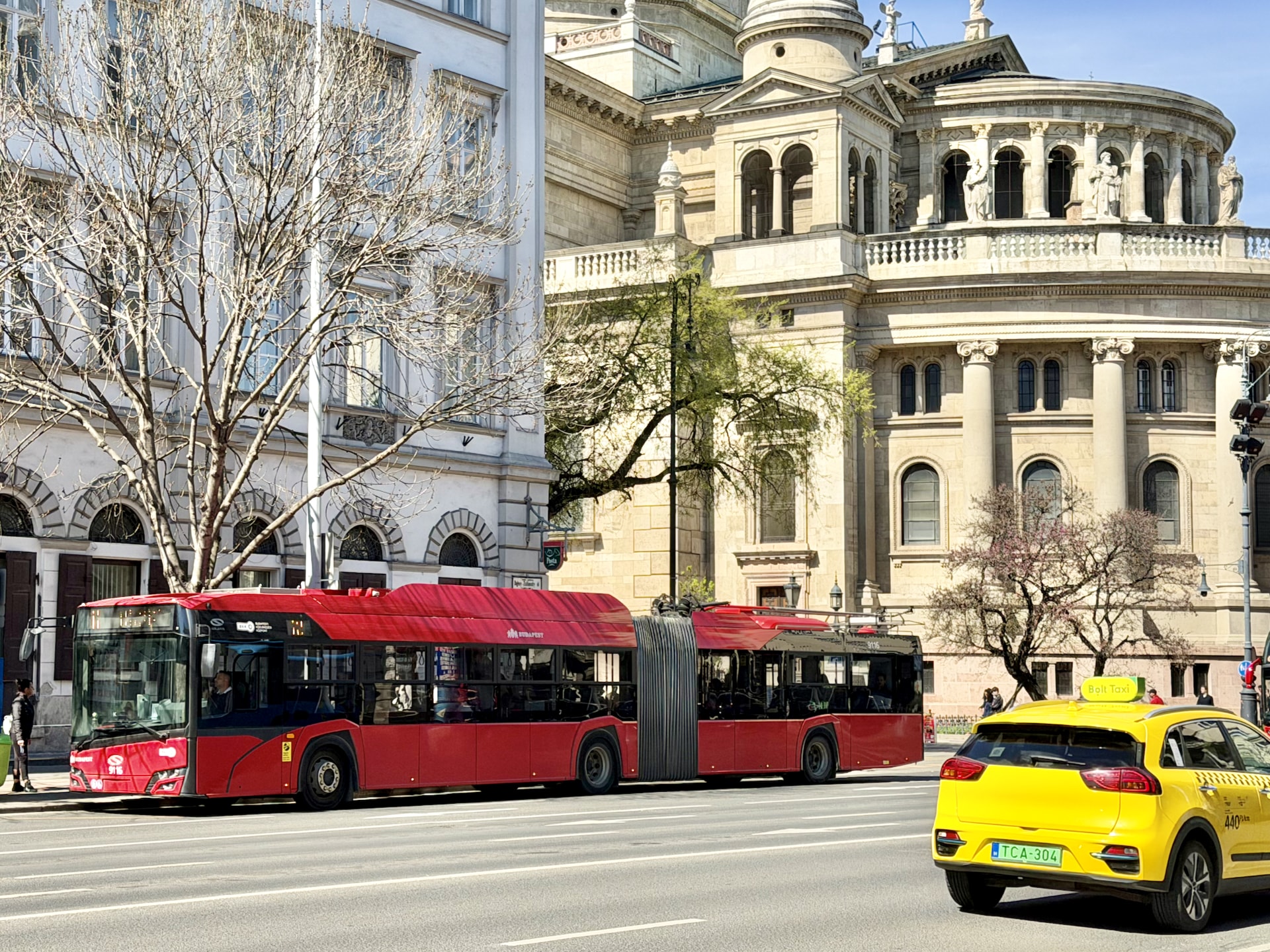
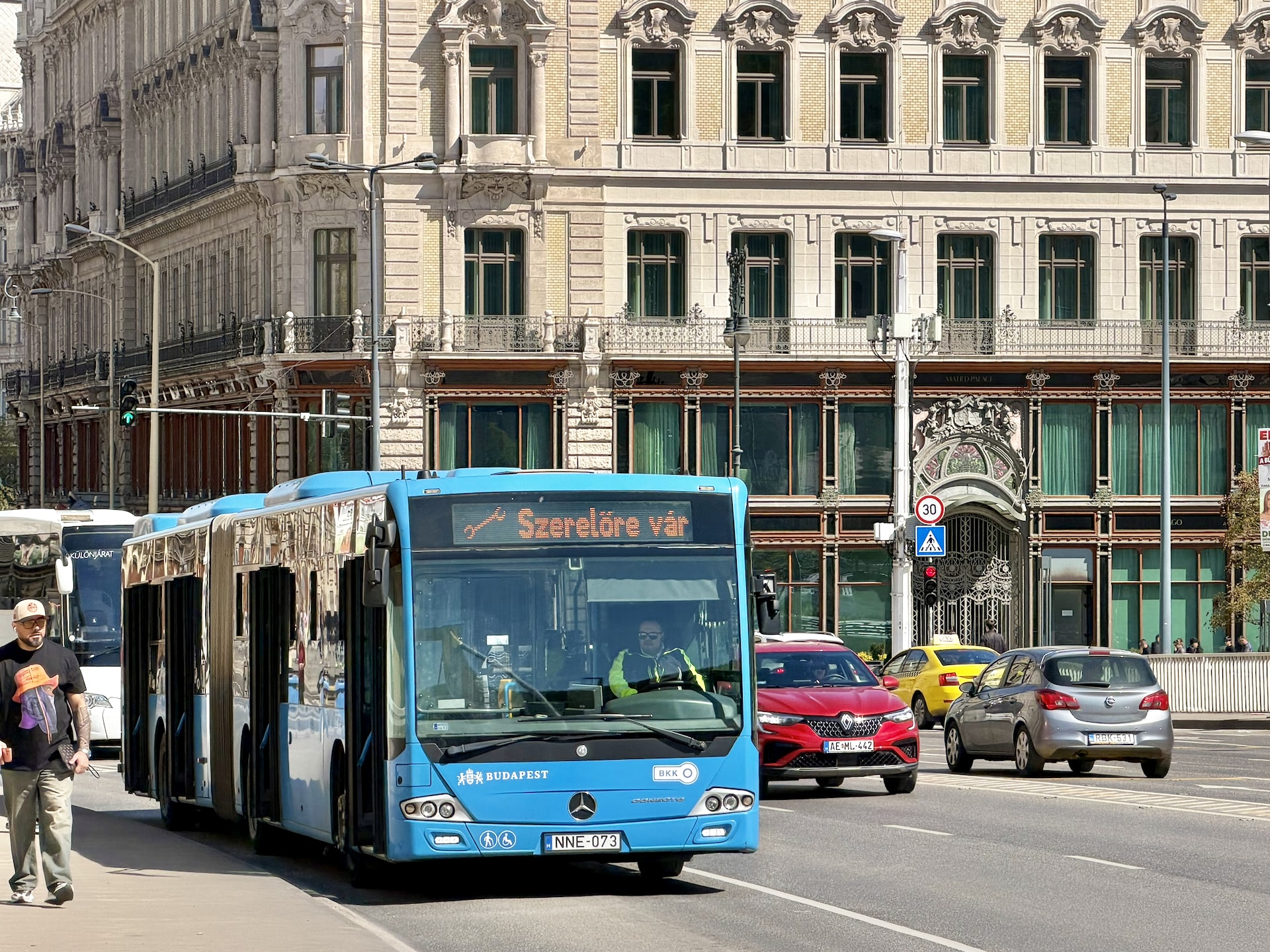
Budapest is criss-crossed by countless bus routes, trolleybuses, and trams – which have once again become a defining feature of city transit. While the vehicle fleet is varied, the categories are easy to recognize by color: every BKK-operated bus is the same blue, trolleybuses are red, and trams are yellow. Here are some of the routes you’re most likely to encounter.
Budapest Trams Worth Riding (2, 4/6, 47/49)
These are the trams worth knowing:
- Tram 2: Like a Danube sightseeing cruise on rails. It runs past Parliament and then along the Danube embankment to Fővám tér and beyond. The cars on this line are pretty retro, but the views alone make it worth riding once.
- Tram 4/6: The pair of trams that runs along the Grand Boulevard (the route is mostly shared, with separate terminuses on the Buda side). These are the workhorses of Budapest’s tram network. During rush hour the frequency is so high that “tram” almost feels like the wrong word – it’s more like a giant moving walkway, and even then it’s almost always packed. “Négyeshatos” (the four-six) is basically an institution in its own right among locals. It runs 24/7, and the most telling fact is that even at its least frequent (between 3:30 and 4:45 AM), the gap is at most 15 minutes.
- Tram 19/41: Partially running along the Buda embankment, these are the Buda-side counterparts to Tram 2, part of Buda’s interconnected (“fonódó”) tram network.
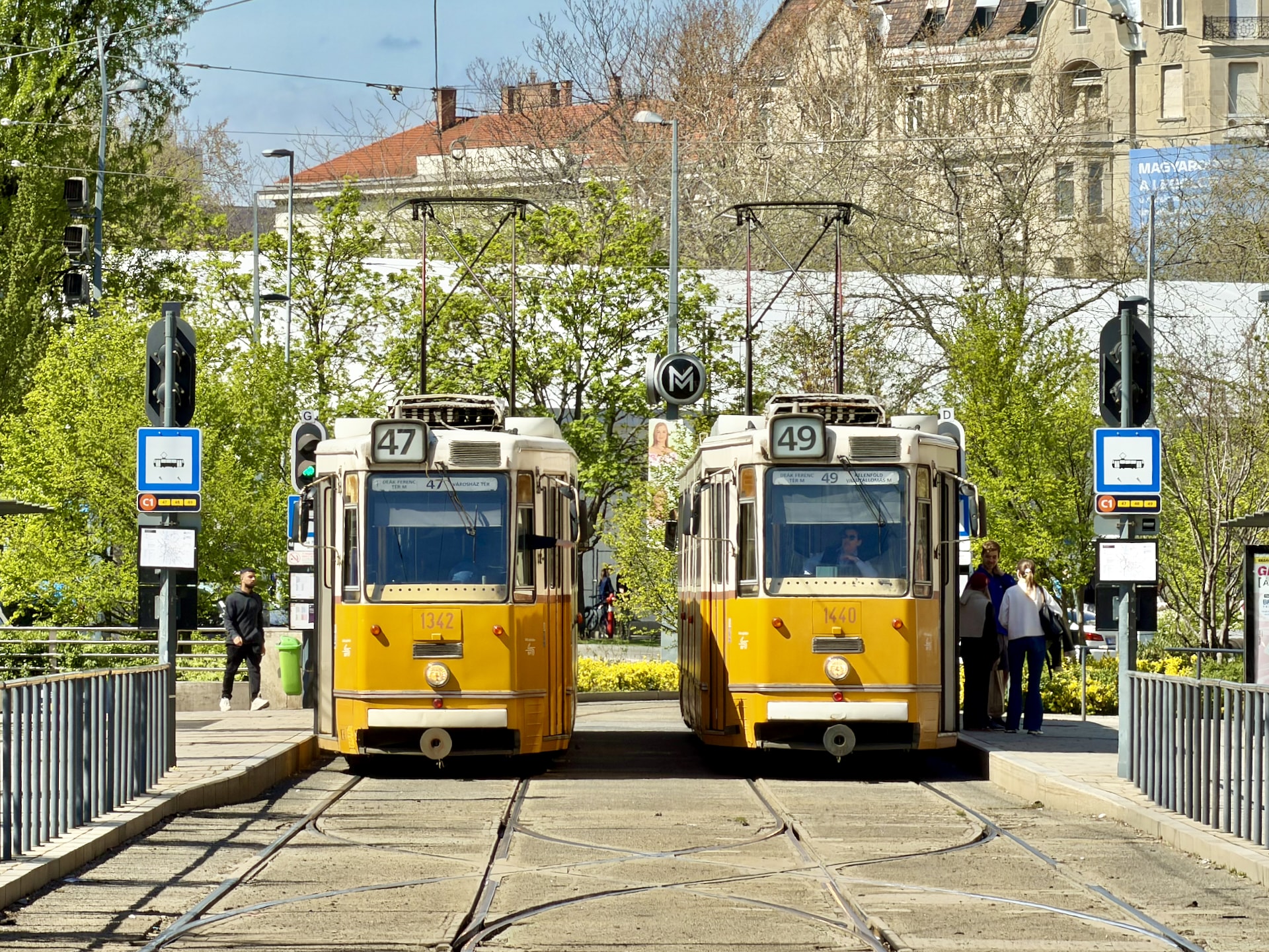
- Tram 47/49: Useful for quick trips along the Small Boulevard. Starting from Deák tér, they pass Astoria, Kálvin tér, and the Great Market Hall, then cross the Liberty Bridge (Szabadság híd) to Buda.
- Tram 1: As a visitor you probably won’t need this one as often, but it’s the bigger sibling of the 4/6 – at one point its trams held the world record for longest tram set (56 meters / 184 ft). In 2024, the Germans took the title with 58.6 meters (192 ft) in the Rhine-Neckar region.
Buses Worth Knowing
As mentioned, Budapest is criss-crossed by bus routes that can take you essentially anywhere in the city. The easiest approach is to plan your route with BudapestGO, but a few of the key lines are worth flagging:
- Bus 16/16A: This route runs up to Buda Castle from Deák Ferenc tér or Széll Kálmán tér, on tiny buses.
- Bus 105/210: A long and varied route, hitting both the pretty and less-pretty parts of Budapest. It runs the length of Andrássy út, stops at Deák tér, crosses the Chain Bridge to Buda, continues through the Castle Tunnel, and on weekends the 210 goes all the way to the edge of the Buda Hills at Normafa. This is also our “home line” – Andrea and I live along the 105/210 route.
One thing to flag: night transport is handled almost entirely by buses, which always have route numbers starting with 9 (914, 950, 907, etc.). Over 40 night routes serve the city after regular transport shuts down, with Deák tér and Astoria as the biggest hubs. BudapestGO helps with night-route planning too, and most lines have synchronized transfers.
Front-Door Boarding
If ticket validation wasn’t confusing enough, front-door boarding on buses and trolleybuses takes the confusion to the next level. It used to apply only on certain routes along their entire length, then it became “certain routes only on weekends along the entire length,” and now it’s basically every possible combination – on parts of certain routes only, only in the morning and evening, only on weekends, or always. Honestly, you’d need a PhD to track which is which.
The basic principle: on front-door boarding routes, you can only get on through the front door, and as you board you must validate your ticket or show your valid pass to the driver. If you’re using a digital BudapestGO ticket or pass, scan the QR code on the outside of the door, or in the app tap “Board now” to select the specific vehicle (by route number and license plate). It’s worth doing it this way – when the bus appears on the horizon, tap “Board now” in the app or widget, select it, and you avoid having to hunt down the QR code with your phone camera through the crush of boarding passengers, or fumble for the app at the door while holding everyone up. (If you have a paper pass, get it ready in your hand.)
At bus stops, a tiny yellow-background notice on each route’s sign indicates whether that route is front-door boarding, and if so, under what mystical alignment of conditions (every second Tuesday after a full moon between 7:23 and 7:47 PM, when Jupiter aligns with Saturn…). The current front-door status of a vehicle is also shown on the main display at the front of the bus, alternating with the destination – when active, the message “Felszállás az első ajtón – Front-door boarding” appears, so keep an eye out for that. Thankfully, the BudapestGO app also flags when a route is on front-door boarding at your stop, with a small green arrow on the vehicle icon plus a “Front-door boarding” label. One more reason to use BudapestGO!
On these routes, the rear doors for disembarking sometimes open later – occasionally the announcement system mentions this. So if you’ve signaled but the door isn’t opening, don’t panic right away. Sometimes the driver notices that someone boarded through the wrong door and refuses to leave the stop until that person walks up to the cab and shows their valid ticket. The PA system announces this too, but I see plenty of cases where people are listening to music or chatting and don’t notice – which leaves the bus stuck at a stop for long minutes, much to the locals’ growing irritation.
One more thing: on front-door boarding buses, don’t just stop near the front door after boarding if there’s space further back. Move as far back as possible – since everyone has to board through the front, congestion can build up shockingly fast even when there’s plenty of room on the bus.
Chairlift, Funicular, and Cog Railway
Beyond the standard vehicles and routes, there are a few oddities in Budapest’s public transport system worth a quick mention.
One is the chairlift – usually associated with ski resorts, but you can use one to ride up to the (not particularly high) Buda Hills from the city. The Zugliget Chairlift starts at one of the terminuses of bus 291 (the other being Nyugati pályaudvar), and from there it takes 12 minutes and 262 meters (860 ft) of climb to reach Budapest’s highest point, János-hegy. (Yes, Hungary is a flat country – we call a 527-meter / 1,729 ft hill a “mountain.”) The architecturally interesting Elizabeth Lookout offers great views of the surroundings in good weather. The chairlift costs 3,000 HUF (~$8.4 USD) one way or 4,000 HUF (~$11.2 USD) round trip (or free with the Budapest Card). Operating hours depend on the season; check the BKK website for current times. Important: it doesn’t run in bad weather.
The second oddity is the Buda Castle Funicular, opened in 1870, which runs from the Buda end of the Chain Bridge (next to the tunnel) up to the castle – useful if you don’t want to walk the stairs or take the bus, and want to enjoy the Pest-side panorama on the way up or down. The ride itself is only about a minute and a half each way, and a round trip costs 5,500 HUF (~$15.4 USD), or 4,500 HUF (~$12.6 USD) one way. The upper terminus is Szent György tér, between Buda Castle and Sándor Palace (the office of the President of Hungary). The funicular operates daily from 8 AM to 10 PM.
Finally, the third special vehicle is also tied to the Buda Hills: the cog railway, which officially carries the route 60 and has been running since 1874 – the third such system in Europe. It runs from Városmajor up to Széchenyi-hegy (465 m / 1,526 ft), every 20 minutes on weekdays and every 15 minutes on weekends. Despite the third “cog” rail, it’s officially classified as a tram, so any standard ticket or pass covers the roughly 15-minute ride.
Taxis in Budapest
Five taxi companies are officially licensed to operate in Budapest: Bolt, City Taxi, Elit Taxi, Főtaxi, and Uber Taxi. Two of these are internationally recognized brands – Bolt and Uber (which, as mentioned above, operates as a traditional taxi company here). Only get into a taxi that displays one of these logos. By law, all taxis are yellow and must clearly display the company’s sign on the roof, which makes them easy to spot from a distance.
You can hail taxis on the street, and there are usually a few waiting at designated taxi stands, but I wouldn’t recommend either approach. Unfortunately, even today it’s still relatively common for foreigners to get taken advantage of – at best you’ll be taken on a “scenic route” (the long way around to your destination), but tampered meters still happen too, and in those cases the bill can reach genuinely outrageous numbers. If something does go wrong, you can file a complaint with the company or with BKK – every car has the driver’s ID number visible inside and out.
My recommendation: if you’re going to take a taxi in the city, hail it through an app (like Bolt or Uber), and pay through the app too, not in cash or by card directly (drivers are required to accept cards – don’t believe the “oh, I just lost signal” excuse, they have signal).
Pricing is uniform: the base fare is 1,100 HUF (~$3.1 USD), then 440 HUF (~$1.2 USD) per kilometer or 110 HUF (~$0.3 USD) per minute (when the car is moving slower than 15 km/h / 9.3 mph). The meter is always the deciding factor, so the upfront estimate in the Bolt or Uber app can be off in heavy traffic, for example. Compared to public transport, taxis are expensive – even short rides inside the inner districts can easily run 4,000–5,000 HUF (~$11.2–14 USD).
Bikes, E-Scooters, and Micromobility
Budapest has several micromobility options, so let’s quickly cover those too.
Bubi Bike-Share – Currently in Transition
The most prominent is the Bubi bike-share system, which is unfortunately mid-upgrade right now (Generation 3 is on the way, with electric bikes joining the lineup). It’s expected to relaunch in June 2026 with broader coverage and more bikes (5,000 standard and 1,000 electric) and stations than before. We’ll update this article as soon as the new Bubi actually launches.
In the inner city you can get from A to B quickly by bike, but I’d really only recommend this for experienced cyclists, because Budapest isn’t exactly a top performer in the bike-friendly-cities ranking. While there are more and more bike lanes appearing, their design and connections still leave something to be desired, so if you don’t have experience cycling in big-city traffic, choose another form of transport.
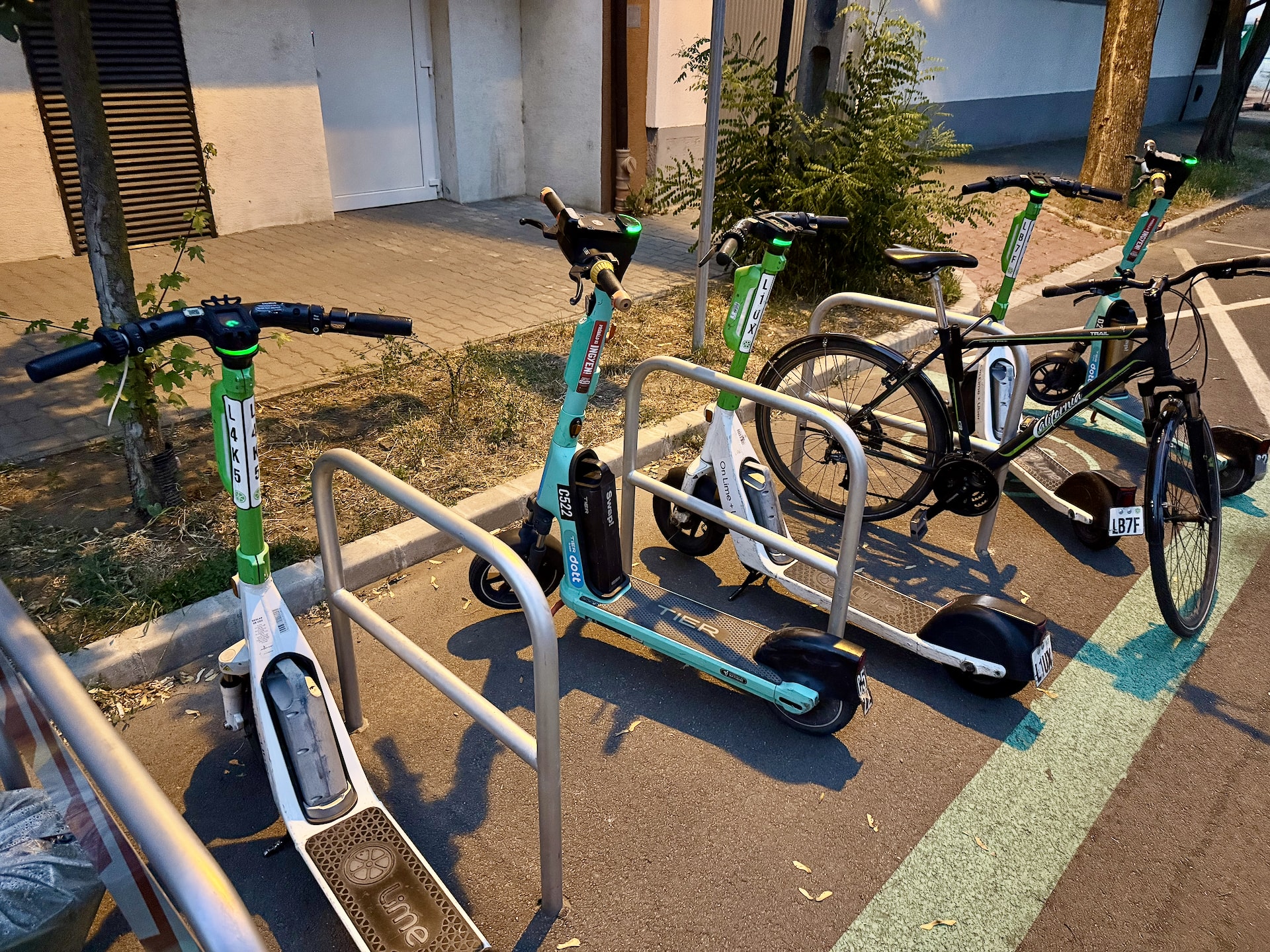
E-Scooters (Lime and Tier)
The e-scooters that have been kicked out of several other major European cities are still available here. Two providers operate in Budapest: Lime and Tier. Pricing is similar between them – just under 300 HUF (~$0.8 USD) to unlock, then 95 HUF (~$0.3 USD) per minute of use.
A few rules to keep in mind: helmets aren’t mandatory but are obviously recommended. Budapest districts handle parking differently – in some you can leave the scooter anywhere, in others only in designated scooter parking spots up to capacity. The apps handle this (showing the parking zones and refusing to end the ride in the wrong spot), but it’s worth paying attention to which zone you’re in or heading into, to avoid unpleasant surprises.
There are reduced-speed zones too, where the scooter caps the maximum speed at 17 or 15 km/h (10.6 or 9.3 mph). In the inner city there are also quite a few zones where e-scooters are banned outright; if you ride into one, the scooter automatically slows down and stops. These zones are clearly visible in the Tier and Lime apps.
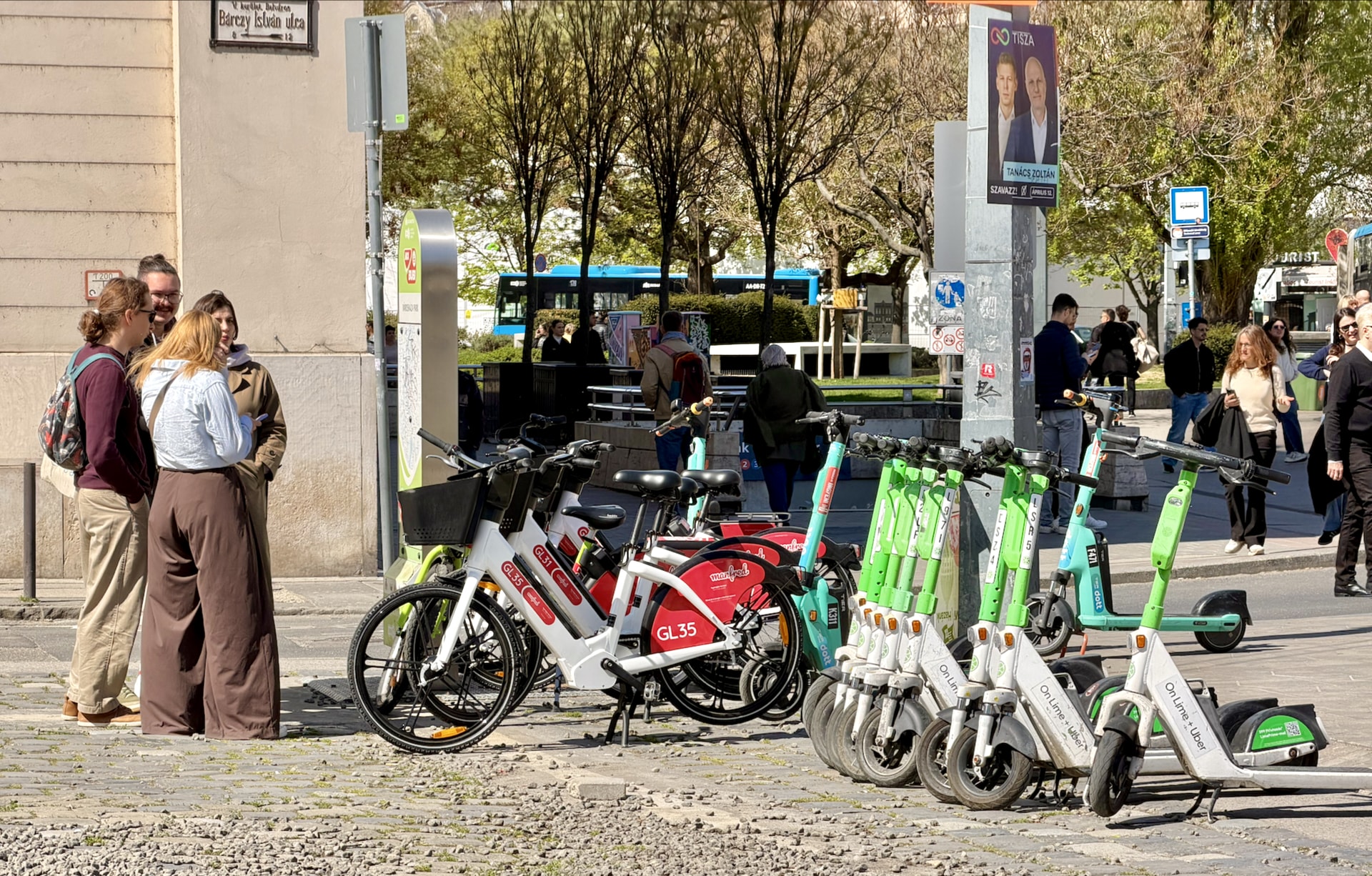
E-scooter regulation is somewhat patchy, since the Hungarian traffic code (KRESZ), drafted many years ago, doesn’t really account for them. As a rule of thumb, the same rules apply as for bikes: if there’s a bike lane or the road is suitable for cycling, you shouldn’t ride on the sidewalk, and all traffic rules obviously apply (lights, right-of-way, etc.). Locals are divided on e-scooters, especially when they see two drunk shouting tourists on a single scooter – needless to say, riding under the influence is forbidden. Don’t leave them in the middle of the road or other inconvenient spots either (where this is even possible) – the app can identify who used the scooter last, and if someone reports inconvenient parking, the provider issues a fine.
I don’t want to sound too “boomer” about e-scooters – I regularly use both providers myself in good weather – but I stick to places with bike lanes that are well-suited for them, and tend to use them more in the outer parts of the city.
Local Tips for Budapest Public Transport
A few quick, random tips from us as people who use Budapest’s public transport almost every day:
- When buying a pass through the BudapestGO app, you have to wait 2 minutes before it becomes valid – this is to prevent buying one at the last second when an inspector boards. Normally it’s not an issue.
- If you’re in the city longer than 72 hours – and you’re not visiting 3+ paid attractions per day – the monthly pass is by far the best deal. For shorter stays with lots of sightseeing, the Budapest Card.
- Take advantage of the option to buy your chosen ticket/pass – and even the (add-on) 100E ticket – in advance through BudapestGO. That way you have one less thing to worry about on arrival, and unvalidated tickets/passes can be refunded through the app if your plans change.
- Many streets and squares in the city share names across districts (and even neighboring towns). Keep this in mind when planning routes. There are several “Deák terek” in different districts, for instance, and the Bolt app doesn’t even default to the central one. Always check the district – easy to figure out from the postcode, since the middle two digits indicate the district (e.g., 1051 → District 5).
- On buses and trolleybuses you always – and on trams almost always – need to signal your intent to get off using the buttons near the doors; otherwise the vehicle won’t stop, or won’t open that door. The buttons are roughly at hand height; the ones higher up are emergency alarms.
- You don’t need to wave to flag down a bus, though – if there are people at the stop, the bus will stop. But if you’re alone at the stop and don’t want to board a particular vehicle, signal clearly by, for example, stepping back from the curb.
- The M1 metro is worth riding for a few stops just for its historic design – the stations are period-accurate, and the trains resemble their older counterparts.
- The M4 metro is fully driverless and automated, so if that interests you, board the very front or very end for some great videos and timelapses.
- The three main railway stations (Nyugati, Keleti, Déli) serve trains in different directions. Their names originally indicated the direction of departure (Nyugati: West, Keleti: East, Déli: South), not where they’re located in the city. By now it’s all well and truly tangled: most international trains leave from Keleti (the Railjet to Vienna and Salzburg, for instance), Nyugati serves the southeast within Hungary (Szeged, Kecskemét, the Great Plain) and is also where the Nightjet leaves from, while Déli is the gateway to Lake Balaton (which actually is south of Budapest) – but it’s also where the RegioJet to Vienna leaves from. Worth mentioning Kelenföld station too: it’s a bit out of the way, but thanks to the M4 metro it’s well connected to the city, and almost every train heading to or from Déli/Keleti stops here. MÁV (the national rail operator) reshuffles departure stations from time to time, so always check where your train actually leaves from.
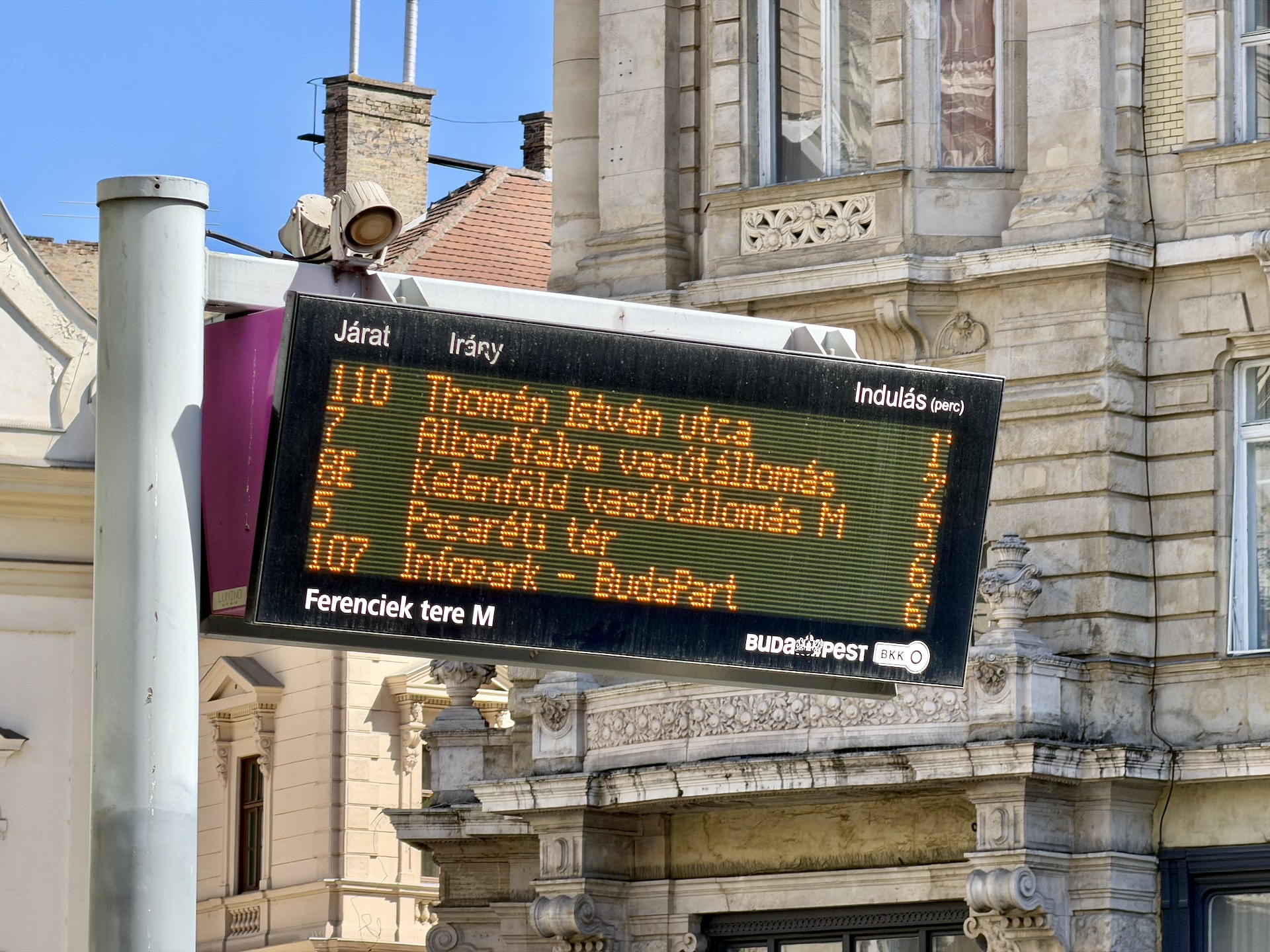
- Every major stop has BKK FUTÁR display screens that show upcoming services in real time, with arrival times in minutes and occasional service disruption notices.
- Significant disruptions and unexpected events are automatically announced on the affected vehicles and on connecting routes – thankfully, in most cases also in English. In the BudapestGO app, every such event appears in real time with a detailed description or a modified route shown on a map.
Frequently Asked Questions
How much do Budapest public transport tickets cost in 2026?
A single ticket is 500 HUF (~$1.4 USD), a 30-minute transfer ticket 600 HUF (~$1.7 USD), and a 90-minute ticket 850 HUF (~$2.4 USD). A discounted block of 10 single tickets costs 4,500 HUF (~$12.6 USD). You can buy any of them in the BudapestGO app or from machines at metro stations.
Is the Budapest Card worth it?
Only if you’re visiting several paid museums and attractions at a brisk pace, where the free entries add up past the card’s price. For transport alone it doesn’t make sense: if you’re staying longer than 72 hours, the monthly pass at 8,950 HUF (~$25 USD) is far better value than any tourist travelcard.
What is the best way to get from Budapest Airport to the city center?
The 100E airport express bus. It runs 24/7 straight into the city and terminates at Deák Ferenc tér (connecting to the M1, M2, and M3 metros). It needs a dedicated “Airport shuttle bus single ticket” for 2,500 HUF (~$7 USD) – a regular transit ticket does not work. If you hold a monthly pass, the add-on version is just 1,000 HUF (~$2.8 USD).
Do I need to validate my ticket on Budapest public transport?
Yes – every single ticket must be validated when you board, and passes must be ready to show. Inspectors can appear on any vehicle at any time, and an unvalidated ticket means an on-the-spot fine of 12,000 HUF (~$34 USD), rising to 25,000 HUF (~$70 USD) if you settle it later.
Which Budapest trams should tourists ride?
Tram 2 runs along the Danube past Parliament and is essentially a sightseeing cruise on rails. Trams 4 and 6 are the workhorses of the city, running the Grand Boulevard 24/7 at very high frequency. Trams 19/41 and 47/49 cover the Buda embankment and the Small Boulevard.
What does the green arrow in BudapestGO mean?
It flags a front-door boarding route at your stop: you can only board through the front door, and you must validate your ticket or show your pass to the driver as you get on. BudapestGO marks these with a small green arrow on the vehicle icon plus a “Front-door boarding” label.
Quick-Reference Cheat Sheet
If you remember nothing else from this article, remember these:
- Download BudapestGO before you arrive – buy tickets, plan routes, validate digitally. It’s the single most useful thing you can do.
- From the airport: 100E bus to Deák tér in ~32 minutes for 2,500 HUF (~$7 USD). Budget alternative: 200E + M3 metro for the price of one ticket (or two if using single tickets). Avoid the occasional unofficial taxi touts.
- Best ticket value: Single ride – 500 HUF (~$1.4 USD). Stay 3+ days – monthly pass (8,950 HUF [~$25 USD]) beats the 72-hour travelcard, especially with the cheap 100E add-on.
- Budapest Card: Only worth it if you’re hitting many paid attractions per day. For transport alone, regular tickets/passes win.
- Validate every single ticket – at metro entrances, by the doors on buses/trams, or via QR code in BudapestGO. Passes don’t need validating except on front-door boarding routes.
- Front-door boarding = board only at the front, show ticket/pass to driver. Watch for the small yellow notice on the stop sign and the bus front display.
- Pay&GO (tap your card) currently works only on the 100E and the metro lines.
- Inspectors are everywhere – metro entrances especially. Fine for no valid ticket: 12,000 HUF (~$33.7 USD) on the spot, 25,000 HUF (~$70.2 USD) later. Don’t risk it.
- Taxis: Only use Bolt, Uber, City Taxi, Elit Taxi, or Főtaxi. App-hailed and app-paid is safest. Airport to Deák tér: ~10,000–12,000 HUF (~$28–33.7 USD).
- Trams worth riding: Tram 2 for the Danube views, Tram 4/6 for moving anywhere along the Grand Boulevard 24/7.
- Night transport: Bus routes starting with 9 take over after the regular network shuts down. Major hubs: Deák tér, Astoria.
- Bubi bike share is currently offline, expected to relaunch in June 2026 with electric bikes.
- One last thing: When you buy a pass in BudapestGO, wait 2 minutes for it to become valid. Keep your passport or EU ID number handy when buying – you’ll need it.