Antarctica is not a “book a flight and wing it” kind of destination. Getting to the southernmost continent requires months of planning – ideally more than a year. That doesn’t mean you’ll be working on it every single day, but you should be prepared for a process that’s significantly more involved than your typical trip. In this post, we’ll share everything we’ve learned about timing, booking, and logistics from our own experience.
The idea of getting to Antarctica first took shape in my head a little over 10 years ago. In my reckless youth, I decided I wanted to set foot on every continent before turning 40 – which naturally meant Antarctica had to be on the list. It was never the driving force behind my travel decisions, but the thought was always quietly simmering in the background. Then the years flew by, and in 2024 it hit me: I needed to get serious about organizing an Antarctic trip, because I’d be turning 40 in February 2026. So in September 2024, I sent my very first email to an agency that specializes in exactly this kind of expedition.
Best Time to Visit Antarctica: Season by Month
Before you can figure out when to start organizing, you obviously need to understand the Antarctic season. Travel to Antarctica is only really possible during summer – and frankly, even if it were possible during the six months of darkness, you wouldn’t want to go. Since we’re talking about the Southern Hemisphere, that means roughly November through March, the austral summer.
Different months come with distinctly different characteristics:
- November: The beginning of the season, right at the tail end of the truly harsh, cold period. The landscape is still far icier and snowier than it will be later, and the icebergs are much larger. Days are shorter, weather is colder, but prices are somewhat lower. As for wildlife: penguin nesting and mating season is just getting started, so you won’t see any chicks yet. Because of the ice, there’s a good chance several landing sites that are easily accessible later in the season will still be off-limits.
- December: The start of peak season. Days are getting significantly longer (20+ hours of daylight), the weather turns warmer, and by the end of the month, the first penguin chicks start hatching and seals begin pupping. Since this is already peak season, temperatures aren’t the only thing rising – so are the prices, and ships start filling up. If South Georgia (more on that later) is on your radar, note that Prion Island is closed due to wandering albatross nesting.
- January: Full-blown peak season. The weather is much more stable than usual (though we managed to disprove that – see our day-by-day trip report), and temperatures are relatively warm, generally a few degrees above 0 °C (32 °F). As the ice retreats, the window opens for crossing the Antarctic Circle, and days are even longer than in December. Adorable, fluffy penguin chicks are everywhere, and whales become increasingly frequent visitors in the bays. Peak season also means peak prices and the most ships in the area. We traveled between January 23 and February 1, 2026.
- February: Whale season peaks. Humpbacks and other species feast on the krill-rich waters – and this is also when your best chance of spotting orcas comes around. Penguin chicks enter their awkward “teenage” phase, and some start braving the water for the first time. On land, there’s less ice and snow and more guano. Days are getting shorter again and temperatures cool slightly, but hover around 0 °C (32 °F). Ice coverage is at its lowest, making this the easiest time to cross the Antarctic Circle.
- March: Late season, late summer. The weather turns cooler and even more unpredictable, and days are getting noticeably shorter – but this does create opportunities for dramatic sunset photography. Penguin chicks start swimming actively, much to the delight of leopard seals. Whales are still plentiful, but you can sense the wildlife winding down and preparing for winter. Fewer ships are around, and prices drop.
How Far in Advance Should You Book an Antarctica Cruise?
I’d say you should start the actual planning process 12 to 18 months before your chosen travel dates. In practice, this means that when a new season kicks off – or around September/October – offers for the following season tend to become available (though some operators announce trips up to 2 years in advance). This is also when early bird discounts appear, typically offering 10–20% off.
It’s also worth keeping in mind that while roughly 40 companies operate about 60 ships in Antarctic waters during the season, tickets on the more popular ships during peak periods can sell out fairly early. At the very least, there’s a solid chance the cheaper cabins won’t be available even a full year before departure.
We “pulled the trigger” in September 2024 – that’s when I contacted a few tour agencies with a fairly specific idea in mind: ideally, we’d travel so that February 10 would fall on a landing day, but dates before that would work too. We were interested in “Classic Antarctica” type trips (more on that later) but weren’t ruling out a “Crossing the Antarctic Circle” voyage if it fit the budget. By late September, we nearly booked what looked like a fantastic deal, but it was literally snatched away from us by minutes. After that, we exchanged emails with the agency every month or two, but the right deals just didn’t materialize. Then finally, in late April 2025 – nine months before departure – we found an offer we considered reasonably priced, the dates worked, and we liked the ship, so we locked it in.
When booking an expedition that costs several thousand dollars per person, use a travel credit card that offers purchase protection and travel perks. Not only can you accumulate significant points or miles on a purchase this size, but many cards also provide (at least partial) trip cancellation coverage, which adds an extra layer of security for such a major expense.
How Much Does an Antarctica Trip Cost?
And now we arrive at the dirty subject of money. It probably goes without saying that Antarctica is an expensive undertaking. It won’t come as any great revelation when I tell you that this was by far our most expensive destination ever – several times the cost of any previous trip, including ones that lasted more than a month. One important note: all prices you’ll see everywhere are quoted per person – that’s how both agencies and expedition operators list them.
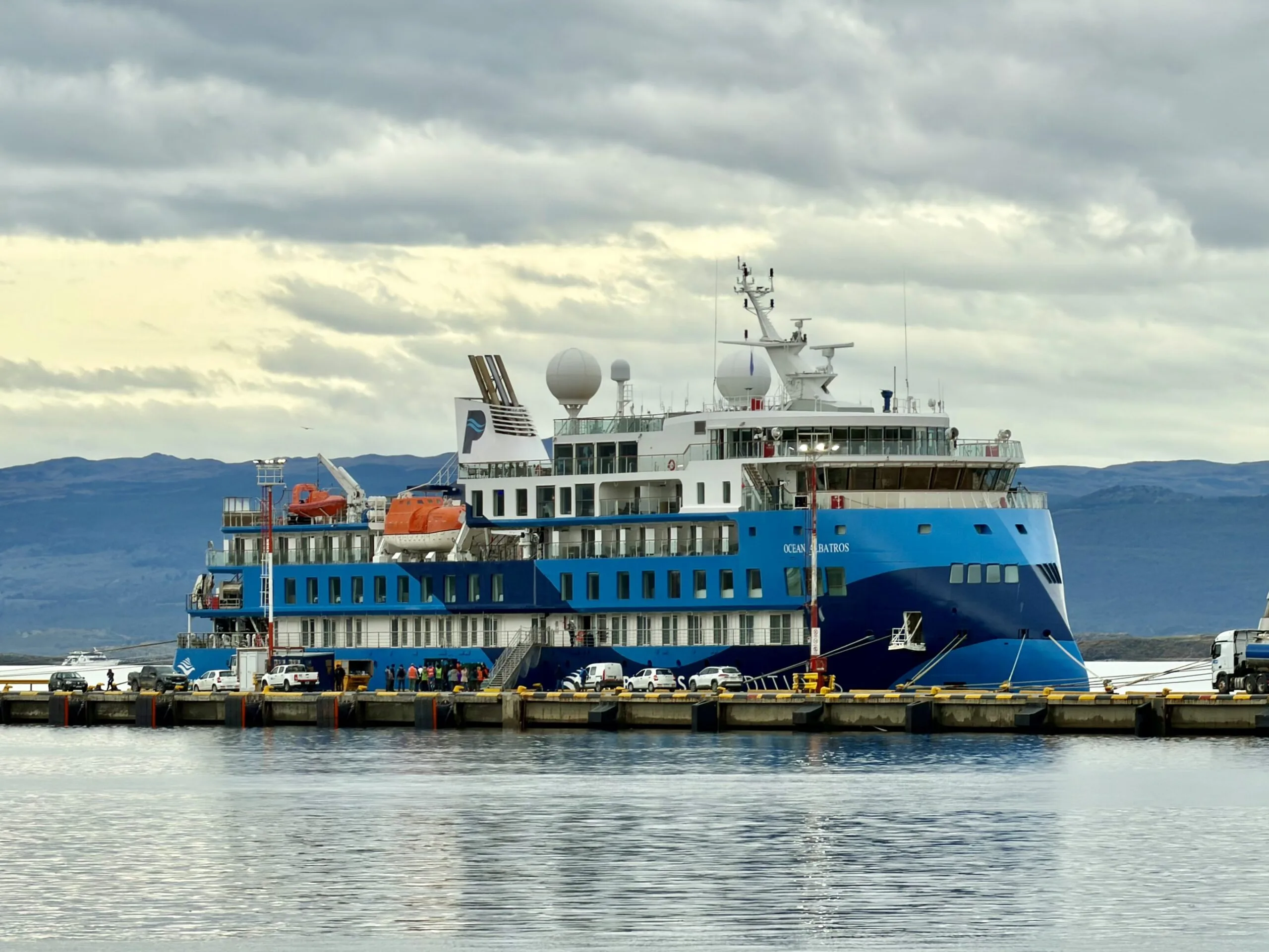
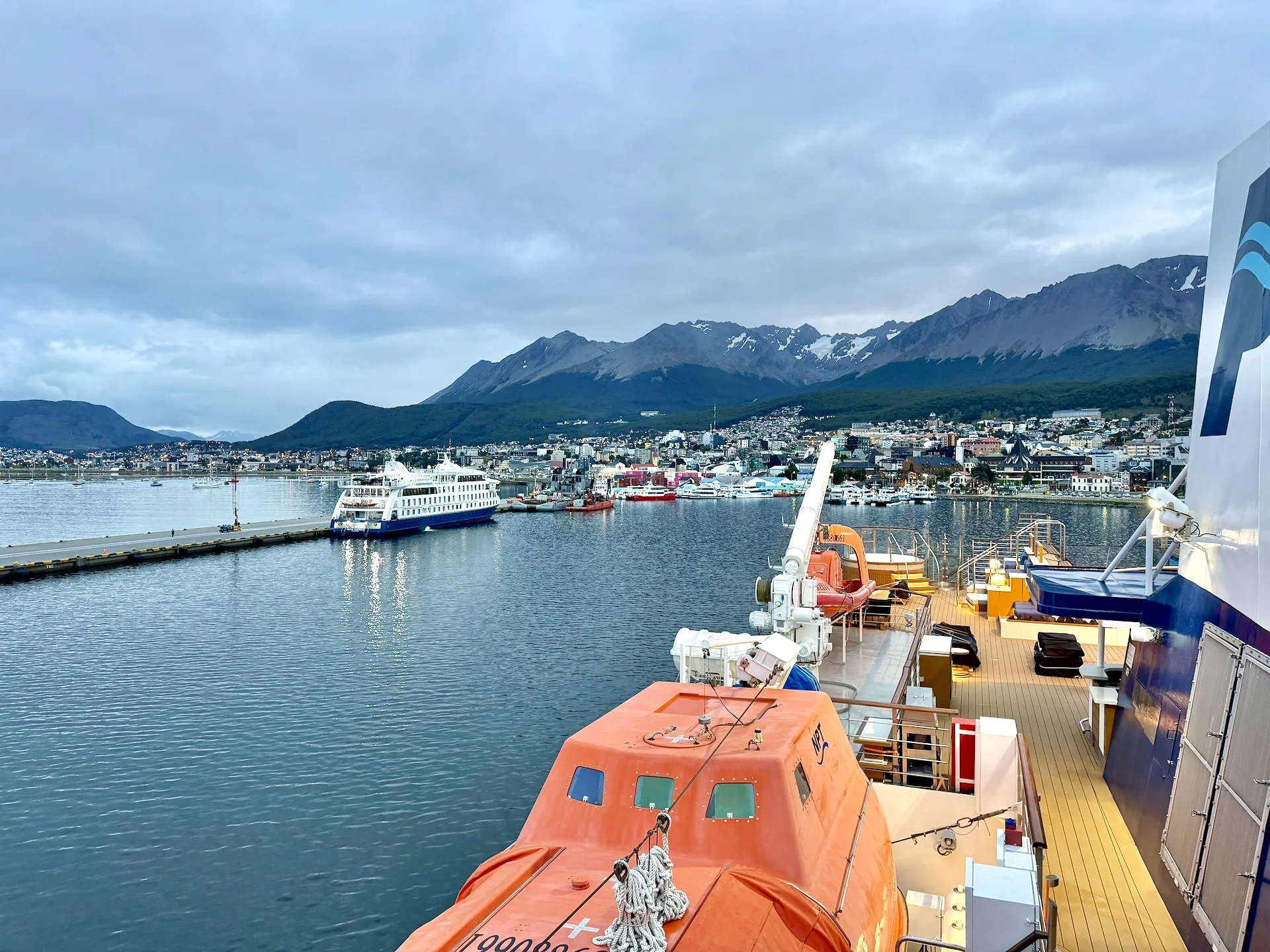
But let’s get to the specifics. We paid exactly $10,281 USD per person for a 9-night Classic Antarctica voyage in a “French balcony” cabin (floor-to-ceiling window) aboard the Ocean Albatros, which at the time of booking was part of the Albatros Expeditions fleet (the company was later acquired by Polar Latitudes). This was nominally a 15% early bird discount – the cabin’s list price at the time was $12,095 USD. We actually got extremely lucky, because when we walked into our room, we discovered we’d been upgraded to a Superior Balcony Stateroom – meaning we got a cabin nearly 10 m² (107 sq ft) larger, plus an actual balcony, which turned out to be a really wonderful bonus.
I’d say we paid roughly an average price for the 2025/2026 season, but there are significantly cheaper options and much, much more expensive ones out there. The lower end starts somewhere around $6,000, while the upper end depends on trip type, cabin category, and operator – roughly $25,000 to $50,000 (and there are truly extreme expeditions with flights to the South Pole for around $100,000, but we won’t get into those here). If you’re genuinely set on getting to Antarctica, though, the earlier you act, the better. When I first started looking into this years ago, you could get what we paid $10,000 for at around $6,000–$8,000. On the Ocean Albatros right now, our cabin category for January 2028 costs $14,361 USD per person with the early bird discount and one night’s accommodation in Ushuaia included (the 2027 spots are mostly sold out) – so prices are climbing significantly year over year.
Prices also vary considerably depending on the length and type of trip you choose, as well as how you cross the Drake Passage (I’ll cover those options in the next section). As for discounts, we specifically wanted to hold out for the November 2024 Black Friday period, banking on some incredible deals. In reality, nothing came up that hadn’t already been available before. From that perspective, I think it’s practical to establish a relationship with one or more agencies – they’ll be the first to know about deals, and they’ll reach out if something matching your wish list goes on sale. In fact, operators often push their remaining berths through agencies at prices they’d rather not publish on their own websites.
And that brings us to the legendary last-minute option. The story goes that you can score cabins at a fraction of the original price by simply showing up in Ushuaia, making the rounds of agencies and ship operators, and booking a few days before departure. The opportunity does exist, but it’s not quite as rosy as many people think. During our trip, we became friends with Alka, a retired British backpacker who’d gotten on our ship that exact way, so I grilled her on how it actually went. She arrived in Ushuaia without a booking, counting on last-minute availability. She ended up paying $7,500 for a ticket on our ship in a porthole twin cabin (which she shared with Wendy, an incredibly sweet 85-year-old Australian lady), but the ship wasn’t departing for almost two weeks, so she went to Chile in the meantime to avoid burning through cash in expensive Ushuaia. Meanwhile, a $6,000 offer for a lower-category ship also came her way, but by then she’d already bought her plane tickets and booked her accommodations, so the savings would’ve been wiped out by what she’d lose.
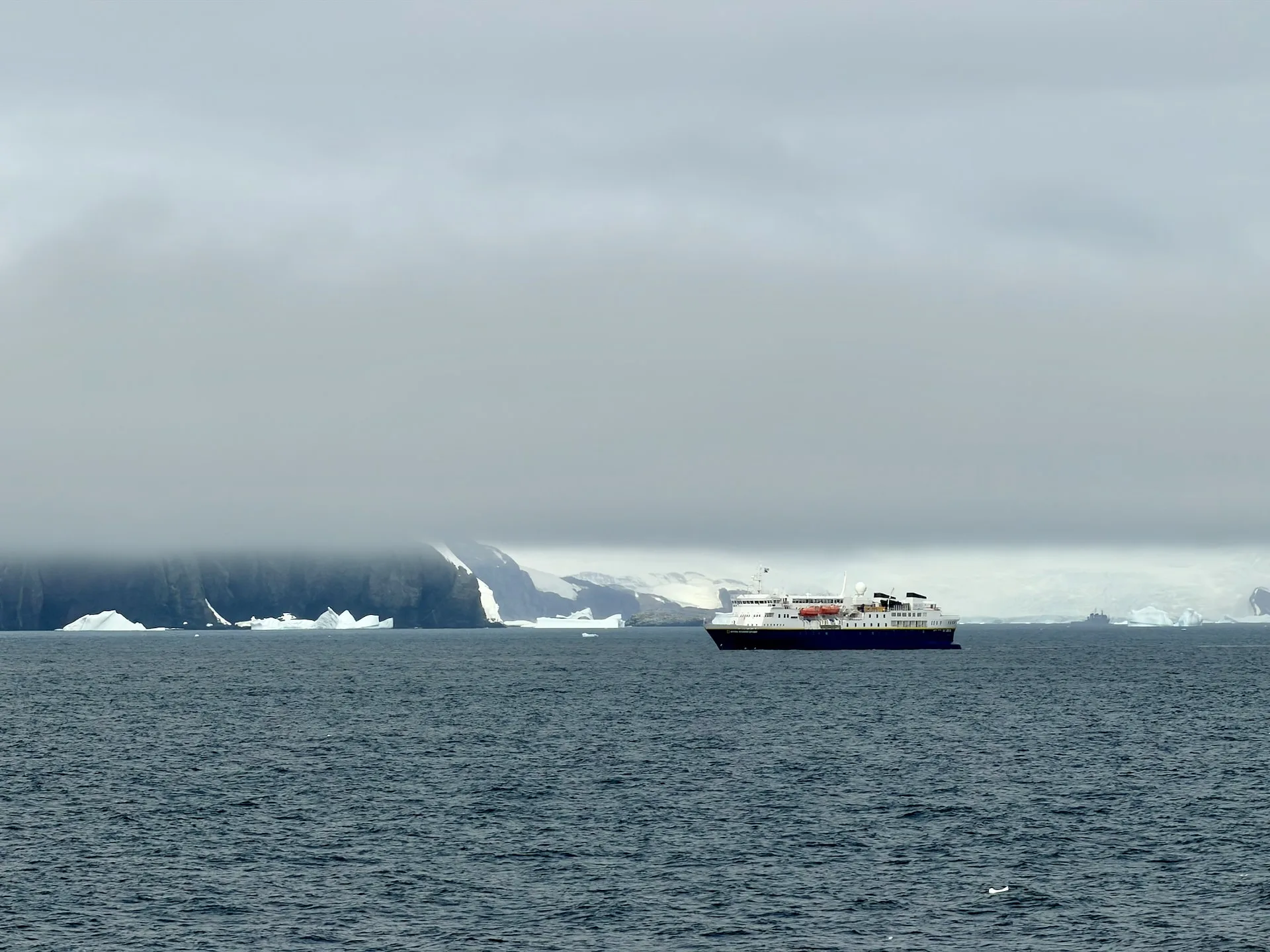
So weigh your options: if you definitely want to reach Antarctica, book ahead. If your itinerary is completely flexible, you can try the last-minute approach, but there’s a real chance there won’t be availability (especially if you’re not traveling solo), or the wait will be so long it simply isn’t worth it. Ushuaia is not exactly a budget destination – one to two weeks of waiting can easily eat through $1,000–$2,000, and that’s not even factoring in the value of your time.
A quick note on solo travelers. Some ships have single cabins, but these tend to be significantly pricier than splitting a triple or twin cabin with someone, where you’d pay the “standard” per-person rate. Quite a few solo travelers were on our ship, and the cabin assignments clearly took not just gender but also age groups into account. You can, of course, book a double cabin for yourself – in that case, expect a surcharge of 50–70% on top of the regular ticket price.
Types of Antarctica Trips: Classic, Circle Crossing, and South Georgia
As I mentioned earlier, there isn’t really one single thing called “a trip to Antarctica.” You can choose from quite a variety of trip types and lengths, and the specific sites you’ll visit can vary considerably too – and I’m not even talking about the on-the-ground changes dictated by weather once you’re there.
Broadly simplified, I’d sort the trips into three main categories:
- Classic Antarctica
- Antarctic Circle Crossing
- Falkland Islands + South Georgia + Antarctic Peninsula
These roughly follow the same order in terms of both duration and price. The destination in every case is the Antarctic Peninsula – how far south the ship goes depends on the trip type. We did a Classic Antarctica voyage, which is the most common type. These typically cover 9 nights including the Drake Passage crossings, giving you roughly 4 to 4.5 days on the seventh continent in practice. Keep an eye out for trips advertised as “10 nights” or “11 days” – these may include a night in Buenos Aires or Ushuaia, which feels a little sneaky to me. This is the shortest and cheapest category, and I’d estimate the range at $6,000–$15,000 with reasonable trade-offs (meaning you’re not in the owner’s suite, etc.).
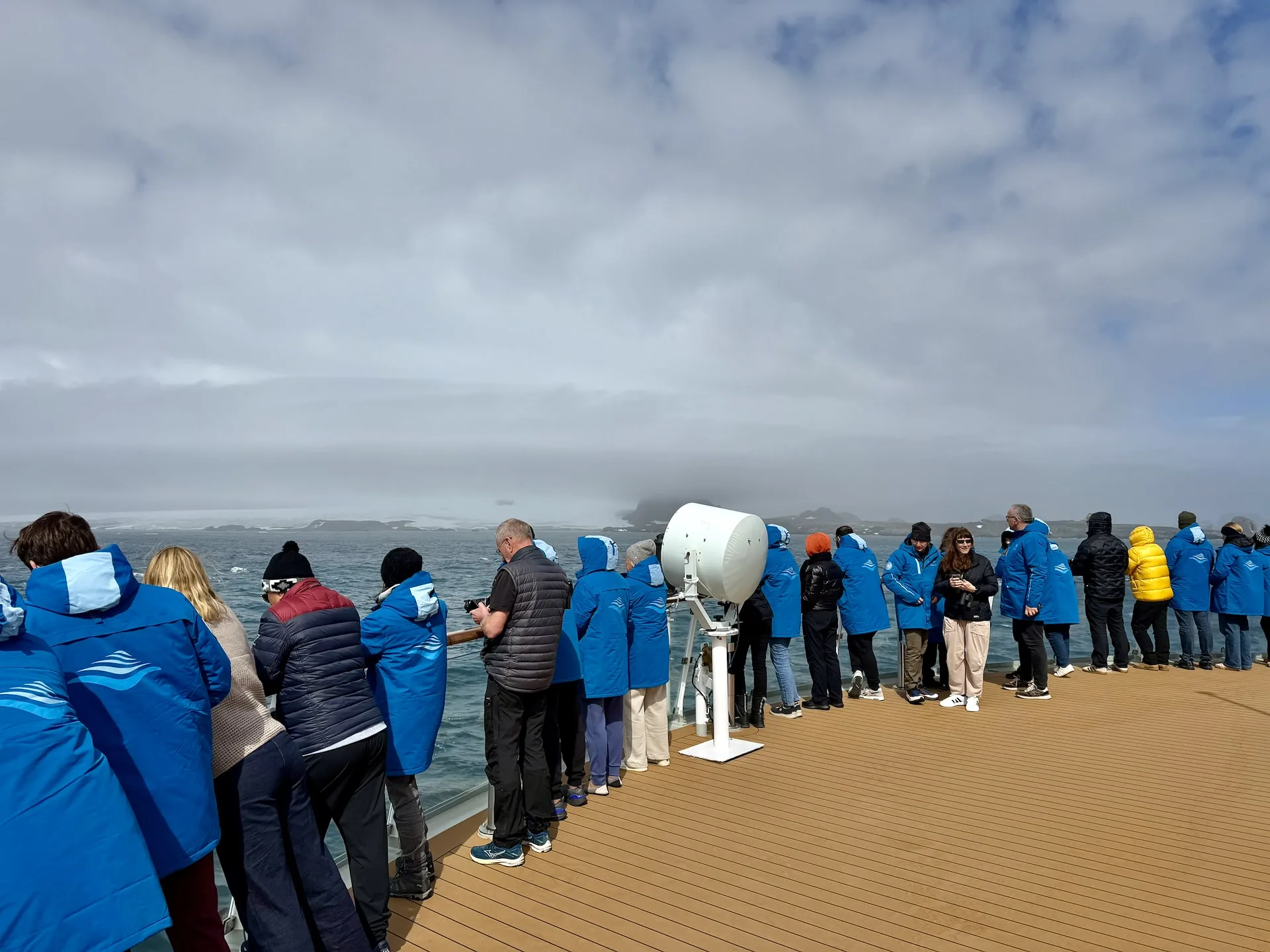
The next category is the Antarctic Circle Crossing. It’s very similar to the Classic route, with the key difference that the ship (weather permitting) crosses the Antarctic Circle (66°33’S latitude) – meaning you go farther south than the average trip. Significantly fewer people make it here, though it’s not as if the region is crowded to begin with, or that you’re constantly bumping into other ships. Budget-wise, expect to add roughly $3,000–$5,000 on top of the Classic category.
Finally, the king category – literally, ha! – is the Falkland Islands + South Georgia + Antarctic Peninsula itinerary. These typically run for more than 20 days and cover not just the Antarctic Peninsula but also the “nearby” islands. If your budget allows it, this route promises a truly once-in-a-lifetime experience, especially the South Georgia portion: it’s home to an extraordinary abundance of wildlife, including species you won’t encounter in Antarctica itself – like the king penguin. In terms of cost, this is clearly the premium option. It’s hard to come in under $20,000, and at the time of writing, a berth in a triple cabin on the Ocean Albatros for February 2027 costs $23,000 per person with the early bird discount. Our cabin category? $30,000 per person on sale.
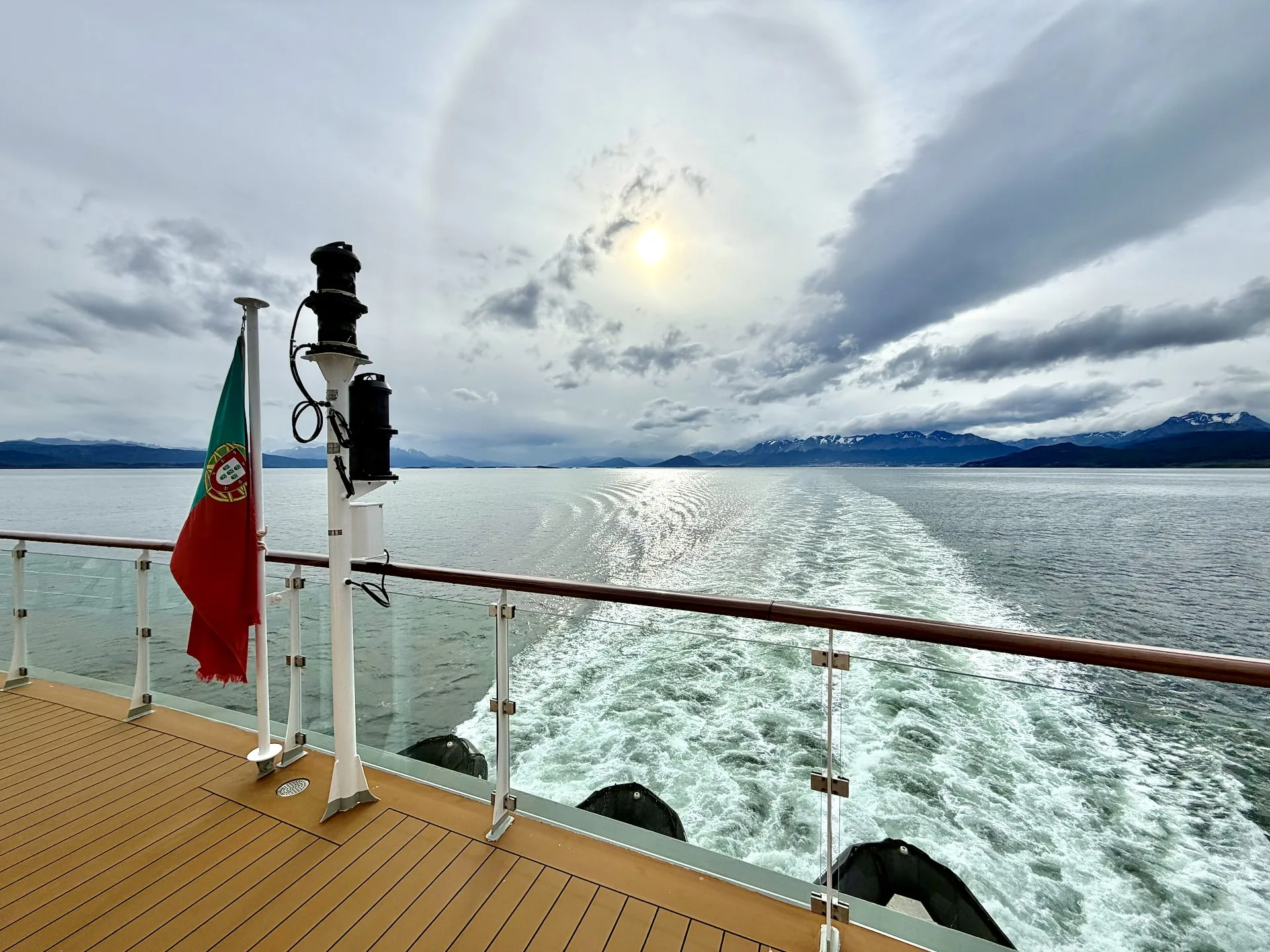
As I mentioned, combinations of these are also available – there are ultimate voyages that visit both island groups and cross the Antarctic Circle. One more variable is how you cross the Drake Passage. Several operators offer options where you fly across from South America in one or both directions, sparing you the experience of “rocking” across those notorious waters for two days each way. Naturally, this bumps up the price by several thousand dollars and shortens the trip, which could be a factor if you’re limited on time.
Hidden Costs and Onboard Extras on an Antarctica Expedition
Once you’ve settled on your route, duration, and travel method, don’t forget about the various additional charges. These include optional add-on activities available on the ships. The most common are kayaking, camping, and snowshoeing, but fancier ships may offer helicopter rides, while smaller expedition vessels sometimes provide snorkeling and diving. Prices for these start at around $200–$300 depending on the type, snorkeling/diving runs $600–$700, and the most expensive is helicopter touring – I can’t recall the exact figure off the top of my head, but when I was researching I think it was over $1,000. Many cruises also offer a photography program, which might sound steep at first glance (it was about $500 on our expedition), but it’s not a one-time event – it means you’re in a dedicated small group for every zodiac cruise and landing, focused on photography with an experienced photo guide. Always check with your specific operator or agency for details. The good(?) news is that the polar plunge – jumping into the ice-cold Antarctic Ocean – is free on every ship. Ours even came with complimentary hot chocolate, chai, and vodka.
If you’re prone to motion sickness, start preparing well before the Drake Passage crossing. We recommend beginning a scopolamine patch (available by prescription) or over-the-counter medication like meclizine at least 12 hours before hitting open water. Even if you normally handle boats fine, the Drake can be a completely different beast. Ocean Albatros had complimentary medication at the hotel desk.
Then there are the potential onboard extras. What’s included in the ticket price varies by operator and ship (daily meals – at least three – are always covered), such as whether alcohol is included and how much, whether internet is free or paid, and whether laundry services are available and at what cost. On the Ocean Albatros, the prices were surprisingly reasonable: a pint of draft beer was $7, a cocktail $9 at the bar, and one beer/wine/soda (in practice usually more) was included with dinner. Soft drinks in the cabin minibar ran about $4–$5. We didn’t pay for internet (500 MB per person was included free), but even the paid plans weren’t outrageous given the location: 10 GB cost $50 and 20 GB cost $85 – plus it was Starlink, so speed wasn’t an issue even on the complimentary tier. (There was supposedly free messaging service throughout the voyage, but for us it worked intermittently at best – mostly not.) It’s worth keeping in mind that cellular coverage drops almost immediately after departure (already in the Beagle Channel), so an eSIM won’t help here.
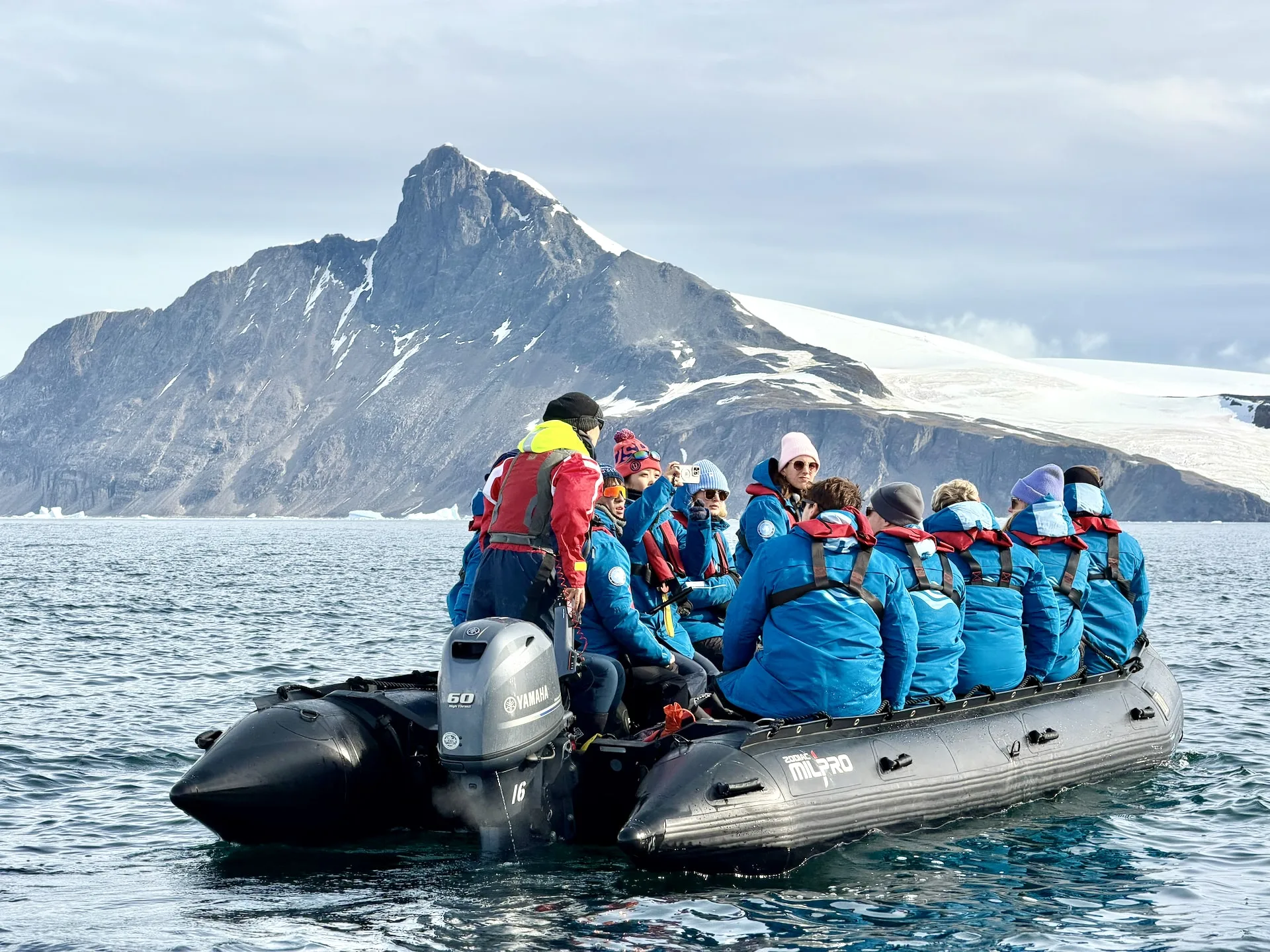
Laundry in our case was at standard hotel rates ($3 per shirt, for instance – we obviously skipped that), and I’ll be honest, we didn’t even look at the spa treatment menu. You can also spend money in the boutique that most ships have (souvenirs, or gear if you forgot something – binoculars could be rented for $65 for the entire trip), and there are usually charity auctions too (yes, that’s how I ended up with an absurdly cute crocheted krill). The optional-but-strongly-encouraged gratuities that are standard on cruise ships will also appear on your final bill unless you request their removal – in our case, this was $16 per person per night.
All told (minus the auction), the two of us spent a total of $401 USD onboard, covering gratuities, 8 drinks at the bar, one t-shirt, and two postcards with stamps (including postage) from the boutique.
Expedition Ship vs. Cruise Ship: Which Should You Choose for Antarctica?
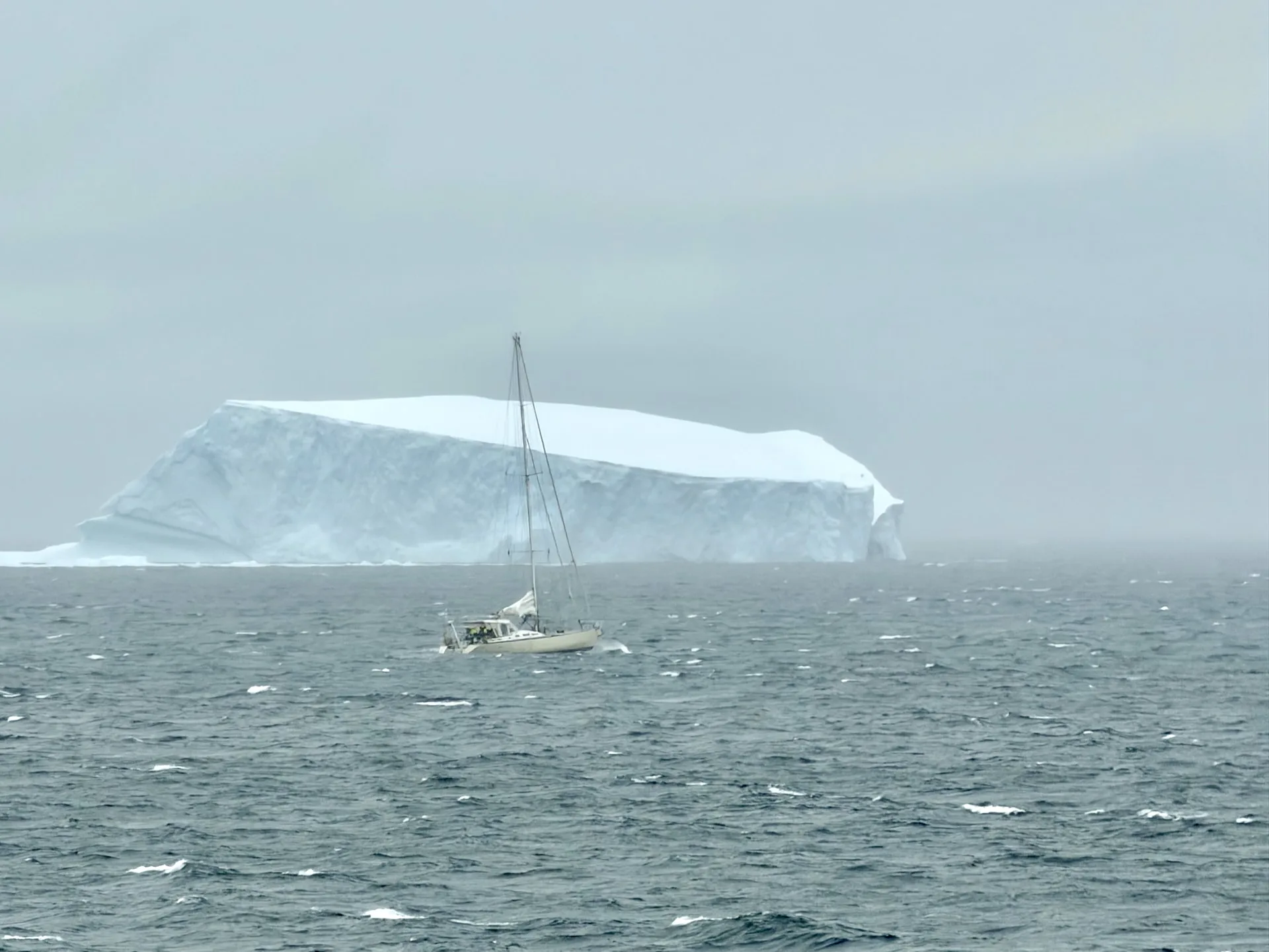
The type of ship you arrive on makes a world of difference: it fundamentally determines what kind of experience you’ll have and what activities you can participate in. By my own logic, I’d sort the ships into 3+1 main categories: large cruise ships, luxury expedition ships, small expedition ships, and the +1 being sailing vessels – we spotted both smaller and larger ones, but I’d file these under the “extreme” category.
The cruise ship is what you do not want. During summer, larger cruise ships do occasionally venture down to the seventh continent. “Larger” here is relative – we’re not talking about the truly gigantic Caribbean-style megaships, but vessels carrying 2,000–3,000 passengers, still at least ten times more than an expedition ship. These ships, however, weren’t designed for Antarctic expeditions – they don’t carry zodiacs, which means they can’t dock anywhere, so shore landings are completely out of the question. I’m not saying Antarctica doesn’t look magnificent from a ship’s deck, but zodiac cruises and landings account for about 90% of the experience. If you’ve come all this way, it would be a tremendous shame to miss out on them. On the plus side, these trips cost a fraction of an expedition – for January 2027, you can currently find a 17-day round trip from Buenos Aires in an inside cabin for around $3,200 USD per person.
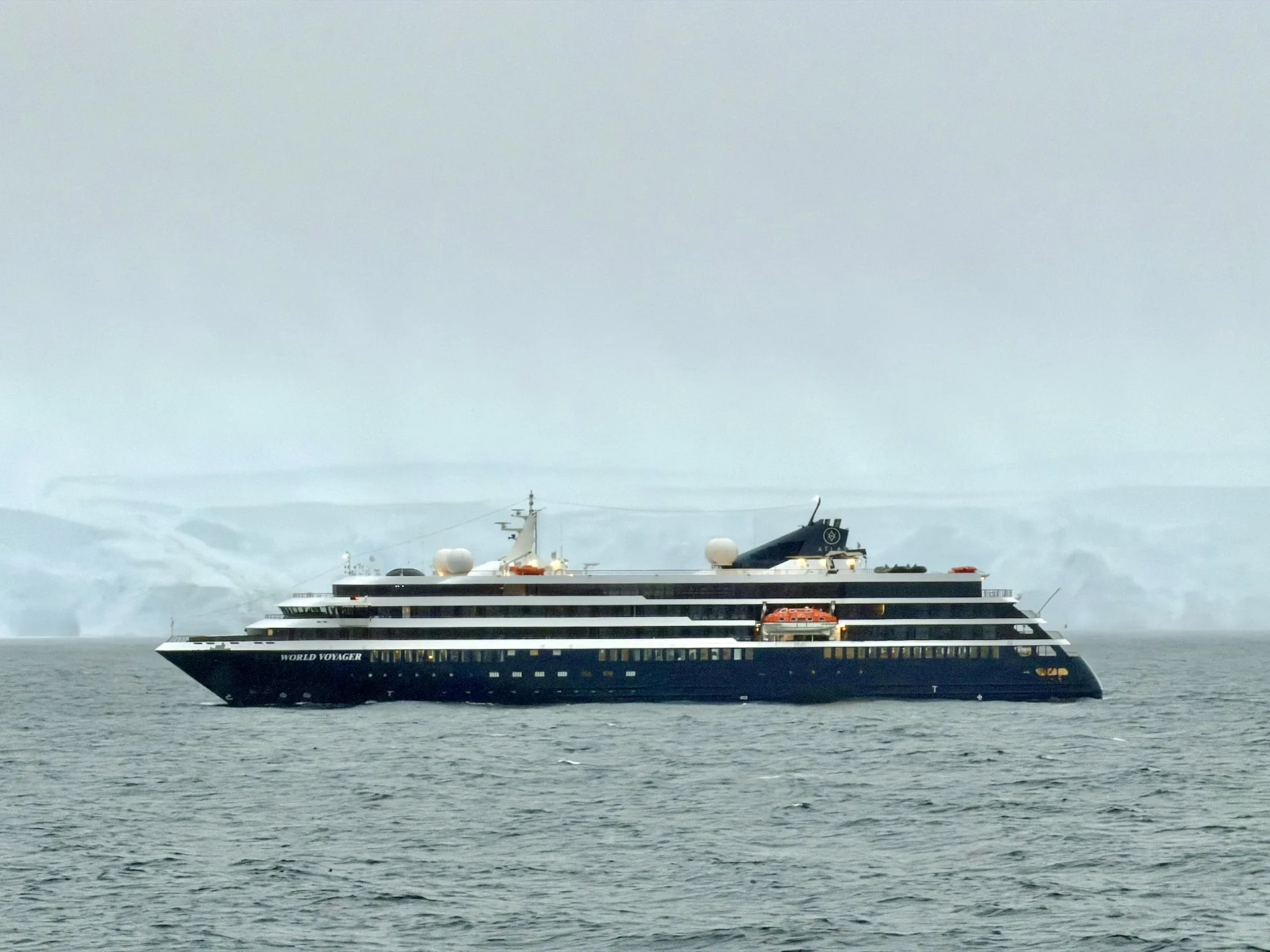
What you’re looking for is an expedition ship. I noticed two sub-categories here: the luxury version and the “traditional” type. Luxury ships are typically purpose-built for tourist expeditions, and conditions onboard are anything but the spartan setup the name “expedition ship” might suggest. These generally carry a maximum of around 200 passengers, which is also practical because IAATO regulations limit shore landings to 100 people at any one site at a time. I’d put our ship, the 169-passenger Ocean Albatros, in this category. The smaller capacity and ample fleet of zodiacs meant everyone could leave the ship at the same time – while one half of the group was on shore, the other was out on a zodiac cruise. (If you’re curious about what a typical day looked like onboard, read our detailed article on life on the Ocean Albatros.)
Among the non-luxury expedition ships, you’ll find several that were originally built as research vessels and later converted for tourist expeditions. These have their advantages and disadvantages. On the plus side, they tend to be even smaller than the luxury ships – capacities under 100 passengers are not uncommon. That means there’s a good chance everyone can go ashore at once, or the groups rotating between zodiac cruises and landings are much smaller. Prices are also somewhat lower, though unfortunately the gap has narrowed recently: a twin porthole cabin on the classic Ushuaia for a Classic Antarctica route in January 2027 is currently $10,800 USD, though a triple cabin or a twin with shared bathroom brings it down to $8,700 and $9,400 respectively. The $6,000 last-minute deal I mentioned earlier, by the way, was for one of these smaller 96-passenger ships.
Where Do Antarctica Cruises Depart From?
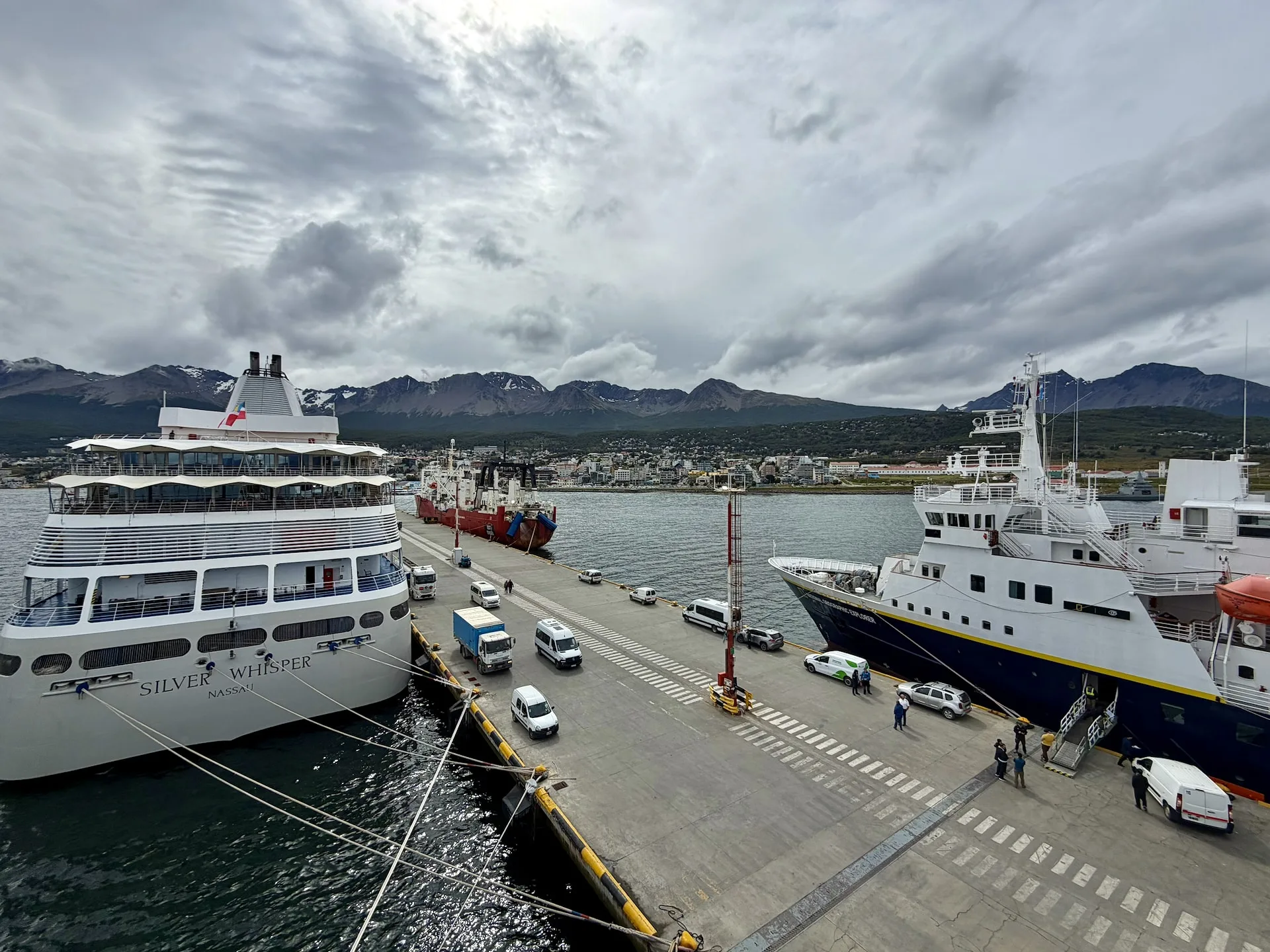
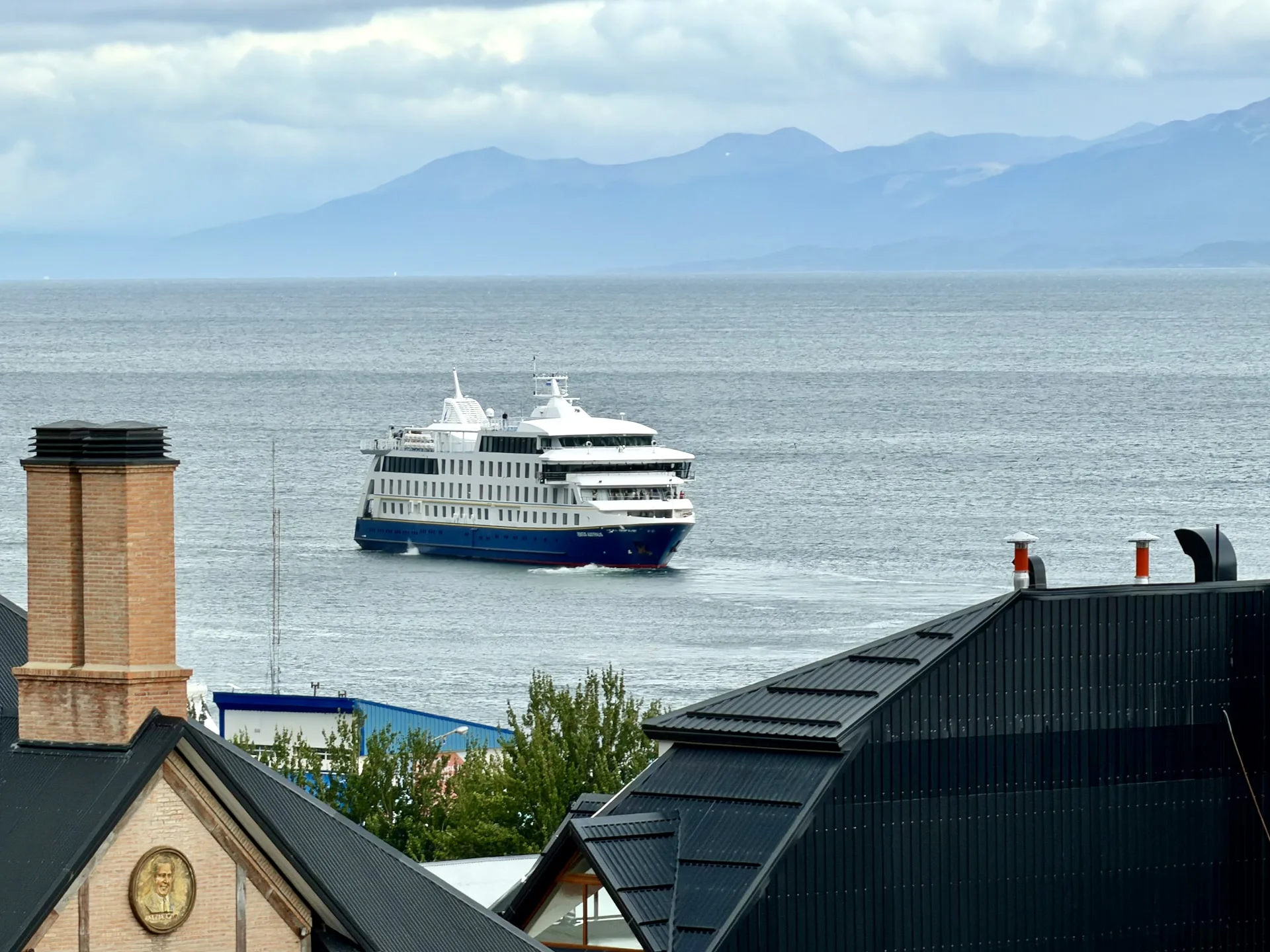
This will be a relatively short section. If you’re taking an expedition ship to the Antarctic Peninsula or surrounding islands, there’s about a 99% chance you’ll depart from and return to the world’s southernmost city: Ushuaia, Argentina. If you’re wondering what there is to do there before or after your voyage, check out our guide to things to do in Ushuaia before and after an Antarctica cruise. Getting to Ushuaia is straightforward – during the season, it’s not unusual for 5 to 8 flights a day to arrive from Buenos Aires, and there are also direct connections from São Paulo (Brazil), El Calafate, and Córdoba (both in Argentina).
If you’re flying across the Drake Passage – that stretch of water infamous for its storms and waves – in one or both directions, you’ll most likely depart from or arrive in Punta Arenas, Chile, which is a bit farther afield. For extreme expeditions heading to the South Pole, Cape Town, South Africa may serve as the departure point for the first flight.
And if you don’t mind spending up to a month on a ship (and your pockets are deep enough), you can also approach the continent from the other direction: there are voyages departing from Dunedin, New Zealand or Hobart, Australia that cruise around the Ross Sea region, stopping at genuinely remote islands along the way.
It’s worth to keep in mind, that while Ushuaia has excellent flight connections to several Argentine cities, don’t cut your arrival too close. Flight cancellations happen, and certain airlines in the region are rather notorious for them (*cough*, Flybondi…). We recommend arriving at least one day before your ship departs. We did exactly that, and besides our original flight, we could have made it on four later Aerolíneas Argentinas flights. The ship won’t wait for you, and it would be a real shame to miss one of the most extraordinary experiences of your life because of airline unpredictability.
Booking Direct vs. Using an Antarctica Travel Agency
When it comes to actually booking an Antarctic trip, I’d distinguish between two main approaches: booking directly with an expedition operator, or going through a specialized agency. We chose the latter – I’ll explain why in a moment – but first, let’s look at the direct booking option.
At least 40 different expedition and cruise operators run trips to Antarctica with more than 60 ships. Most of them accept direct bookings, but the numbers alone tell you this means browsing through quite a few company websites and subscribing to a lot of newsletters if you want to catch the deals. The mission isn’t impossible, but it’s certainly more complex than booking through an agency. I personally took a detailed look at several operators’ websites (partly out of genuine interest, partly out of pure longing), including: Albatros Expeditions (now Polar Latitudes), Quark Expeditions, Poseidon Expeditions, National Geographic-Lindblad Expeditions, Oceanwide Expeditions, Swan Hellenic, Silversea, and Antarpply Expeditions. The full IAATO member directory is available here.
In the end, we went the agency route. We never use these kinds of services for our “regular” travels, but Antarctica was a different ballgame. First, as I mentioned earlier, agencies often have access to prices that operators don’t advertise on their own platforms. Second, there’s a real sense of reassurance in dealing with a company that can offer genuinely unbiased expert advice on any question that comes up.
In practice, I looked closely at three agencies: Swoop Antarctica, Freestyle Adventure Travel, and the Antarctica Travel Group – the last of which actually grew out of a Facebook group. I’d strongly recommend joining that group regardless – not only will you find good deals, but the members are incredibly helpful and happy to answer questions. Ultimately, I reached out to Freestyle and ATG with our preferred dates and trip type, and we ended up booking through Freestyle, though the same offers were available at both.
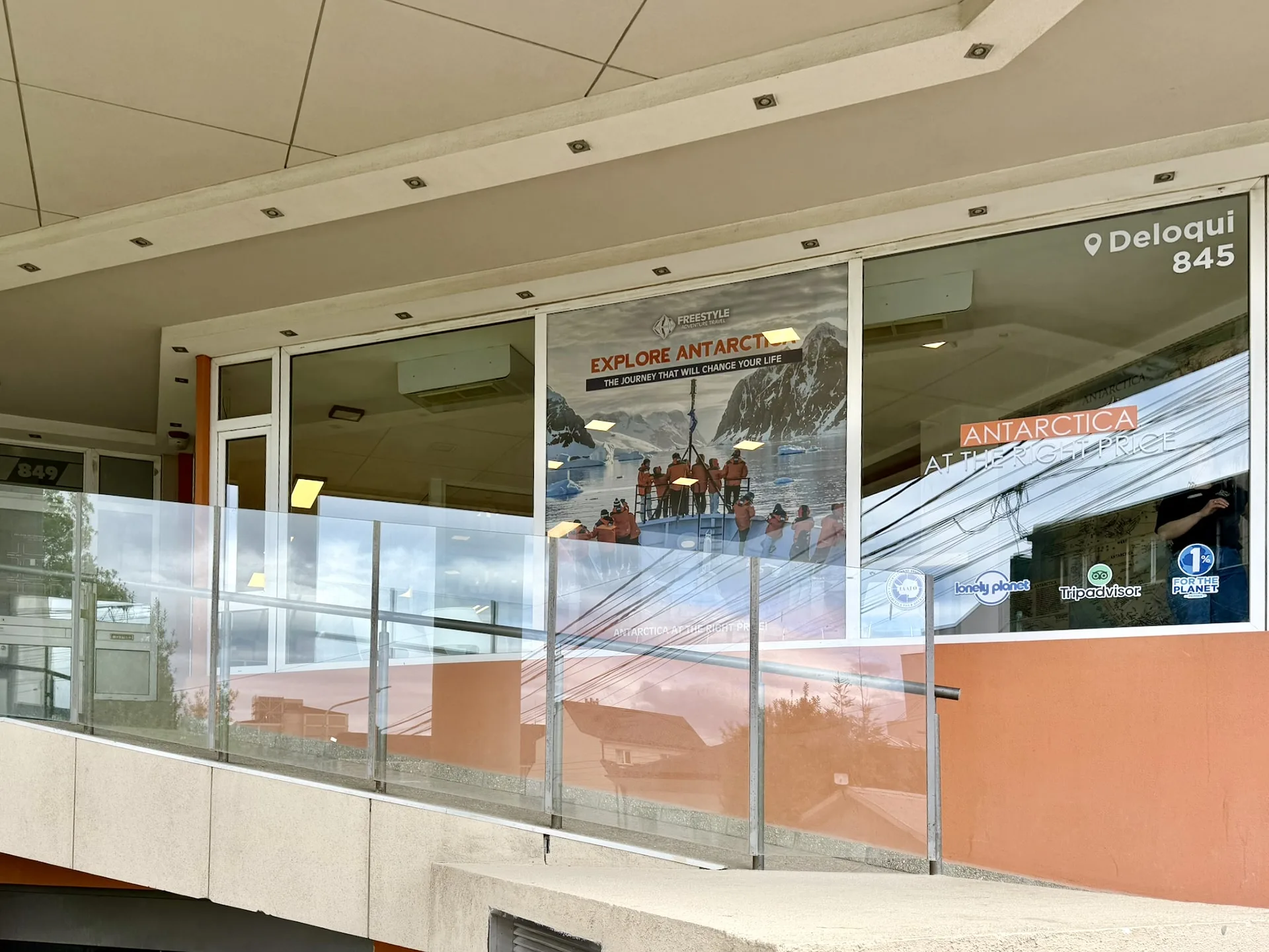
I genuinely cannot say enough good things about Freestyle. They answered every question thoroughly, both before and after booking. The entire process was seamless, they sent a wealth of information, and their reminder emails about upcoming to-dos arrived at exactly the right intervals before departure. Before setting sail, we visited their office in Ushuaia, where we picked up a complimentary hat and neck buff (they even threw in postcards!), and they also rent out gear – some of it free of charge. After our return, we popped in again, because by pure coincidence our second accommodation was in the same building as their office. We also met several fellow passengers on the ship who’d booked through Freestyle, and the aforementioned Alka found her last-minute deal on the Ocean Albatros through them as well.
Once you’ve booked your trip, unsubscribe from all the newsletters and mute the Facebook group. Trust me – you do not want to see the same voyage you just committed to being offered for several thousand dollars less. 😀
Travel Insurance for Antarctica: What Coverage Do You Need?
Insurance is an important consideration for any Antarctic trip. Your credit card’s bundled travel coverage won’t cut it here, and neither will most standard consumer-grade policies. The real requirement – and the one that significantly narrows your options – is the emergency medical evacuation coverage amount. Different operators require different minimums, but I’ve rarely seen anything below $200,000, and $500,000 is not uncommon. It’s important to note that this must be emergency evacuation coverage – not repatriation or anything similar. Antarctica is extremely remote from any facility capable of providing serious medical care, which is why rescue operations are so expensive.
Not all of our recommended insurance providers offer this level of coverage, but Freestyle also helped out with a list:
- IMG (Patriot Platinum or Ultimate plan)
- World Nomads (if you reside in an eligible country)
- Travelex
- AIG Travel Guard (Plus plan)
- Cover-More USA
- Travel Guard (Deluxe plan)
We went with IMG’s Patriot Platinum plan with $1,000,000 in coverage, purchased specifically for the Antarctic leg of our journey (the rest of our trip was covered by our regular insurance). It wasn’t expensive at all – just $25.25 per person.
Insurance terms and coverage limits change frequently, so even if you choose from the list above, read the fine print carefully to confirm the policy actually meets your expedition operator’s requirements. Cross-check with your agency or operator before finalizing – you don’t want to discover a gap in coverage when you’re already in Ushuaia.
Antarctica Trip Planning Checklist: 18 Months to Departure
To wrap things up, here’s a condensed timeline you can use as a reference while planning your own expedition:
- 18+ months before: Start researching trip types, operators, and agencies. Join the Antarctica Travel Group on Facebook. Decide on your preferred season, month, and trip category.
- 12–15 months before: Contact agencies and/or operators. Compare prices, ships, and itineraries. Watch for early bird discounts (typically 10–20% off).
- 9–12 months before: Book your expedition. Secure your cabin – popular categories sell out fast. Pay your deposit.
- 6–9 months before: Book flights to Ushuaia (or Punta Arenas). Arrange accommodation for your pre-departure night. Research and purchase travel insurance with adequate emergency evacuation coverage.
- 3–6 months before: Sort out any required gear you don’t already own. Start thinking about layering strategies and waterproof outerwear. Check whether your operator provides complimentary boots and parkas.
- 1–3 months before: Make your final payment (deadlines vary by operator). Book any onboard extras – kayaking, photography programs, camping. Confirm your flights and accommodations.
- 1–2 weeks before: Print (and digitally back up) all travel documents, insurance policy, and emergency contacts. Pack according to your operator’s recommended packing list. Download offline content for the Drake Passage days.
- 1 day before departure: Arrive in Ushuaia. Explore the town, stock up on any last-minute items, and get a good night’s sleep – you’ve earned it.
Related Posts
If you’re planning an Antarctica trip, these articles might also be useful:
- The Ultimate Patagonia and Antarctica Itinerary – the full route, from Buenos Aires to the Antarctic Peninsula and back
- Classic Antarctica Cruise, Day by Day – a candid ten-day account of what actually happens on the ice
- Ocean Albatros Expedition Cruise Review – life on board, from cabins and meals to Zodiac logistics
- How to Pack for Antarctica and Patagonia in One Carry-On Bag – complete packing list for the trip
- Essential Travel Health & Medicine Guide – including our recommended travel insurance options
- How to Stay Connected Abroad: The Complete eSIM Guide – although connectivity in Antarctica is limited, an eSIM is essential for the South American legs of your journey
- Was Antarctica Worth It? – our honest take on whether the experience justified the cost
Our Ushuaia guide is out now, covering what to do before and after your cruise. Subscribe to our newsletter so you don’t miss the next ones!